DD
MM
YYYY

PAGES

DD
MM
YYYY

spot_img

PAGES

Home Blog Page 5977

The Idea Of “Vaccine Passport” Is Scary

1

This would be fearful. Yes, the idea that one would need a passport, before air travel, that is linked, and  which authenticates that the owner has taken a Covid-19 vaccine should be a concern. But you may ask: if some countries already require yellow fever vaccination documentation, for entry, why not Covid-19 vaccination documentation?

Vaccination records aren’t new, but there will be new ways to use them: There’s nothing revolutionary about needing to prove you’ve had a vaccine. Some countries require evidence of a yellow fever shot before you can clear customs, and many schools will not let you enroll your children in school unless they’re up to date on mandatory immunizations. Official tracking of who gets what vaccine is old news too. National and local governments around the world run registries where doctors send their vaccination records.

This is going to become the new reality and I just think that it will happen, not in some big nations, but in those mid-tier nations which like to throw everything on people. The problem, though, is that instead of asking Americans and British to show they have been vaccinated, poor countries in Africa which currently are not under the most severe direct health-burden of coronavirus would be the target. So, there would be waivers for British and Americans, but Gambians, Nigerians and the typical must show vaccine-ready passports.

While coronavirus vaccines are distributed around the world, a Geneva-based nonprofit is teaming up with airlines and The World Economic Forum to create a “vaccine passport” app to ease air travel during the pandemic. They say the digital credentials can also be used at stadiums, movie theaters and offices. According to developers, users will receive a private QR code once test results or proof of vaccination are uploaded. IBM has developed a similar app, Digital Health Pass, that lets companies and venues customize what they require for entry to a physical location.

IBM has a product – Digital Health Pass – ready for customization for countries: the product is “ designed to provide organizations with a smart way to bring people back to a physical location, such as a workplace, school, stadium or airline flight. Built on IBM Blockchain technology, the solution is designed to enable organizations to verify health credentials for employees, customers and visitors entering their site based on criteria specified by the organization. Privacy is central to the solution, and the digital wallet can allow individuals to maintain control of their personal health information and share it in a way that is secured, verifiable, and trusted.  Individuals can share their health pass to return to the activities and things they love, without requiring exposure of the underlying personal data used to generate the credential.”


Alibaba, Ant Group, and China’s Ultimate Power Play

2

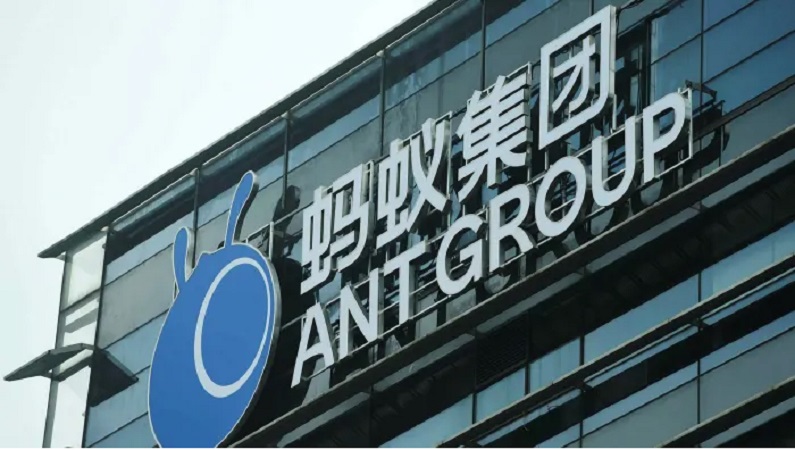
As the scuffle between Ant Group and the Chinese government continues, the real intent of the antitrust probe is beginning to come to light. On Sunday, China’s central bank said it had asked Ant Group Co Ltd to shake up its lending and other consumer finance operations.

The development is coming at the heels of suspension of Ant’s $37 billion mega IPO scheduled for Shanghai and Hong Kong markets in November.

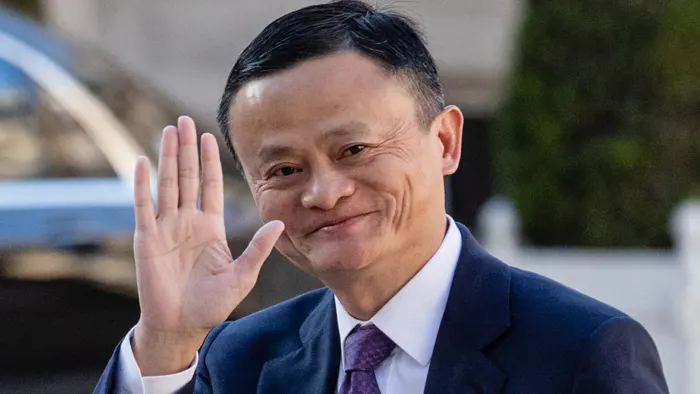
Regulators have been looking into the affairs of Alibaba’s Jack Ma, who heads a conglomerate of online technologies that include Ant. Ma owns one-third stake in Ant Group which has become a target in the latest Chinese attempt to regulate its online industry.

Ma became critical of many regulatory measures in China, especially the Basel Accord, a series of international regulations that require banks to hold a certain amount of capital, as outmoded for the modern era. Part of his complaints is about the inadequacies of the Chinese lending institutions.

He accused the institutions of having a “pawnship” mentality of using collateral instead of advanced credit ratings and watchdogs of not knowing the difference between regulation and supervision.

The criticism has sparked undue interest not only in Ma’s businesses, but other key investments currently commanding immense value, in some cases, above state-owned companies, including the central bank.

Regulators said Ant should rectify financial regulatory violations it has been accused of; in its subsidiaries that include credit, insurance and wealth management business, and overhaul its credit rating business to protect personal information.

The development has not only shattered the expectations of investors, it has also created future uncertainties for the shares of Ant. The company increased its buyback plan from $6 billion to $10 billion in effort to ease concerns of investors. The buyback program will be effective for two years through the end of 2022, but it failed to hold off the concerns of investors.

As a result, Alibaba’s shares slumped 9% to their lowest since June on Monday, knocking almost $116 billion off the tech giant’s Hong Kong-listed shares. That’s after its US stock had nosedived more than 15% last week Thursday, following the news that China has launched antitrust investigations into Alibaba’s chain of businesses, particularly the finance sector.

The company has lost more than $200 billion in market value since November, when Ant’s initial public offering was called off.

The concern of investors is based on the manner and weight of penalty the Chinese authorities will hand to Alibaba if it is found wanting in any area of the probe.

“The antitrust investigation into Alibaba has yet to specify the penalties, which is worrying investors a lot,” said Zhang Zihua, chief investment officer of Beijing Yunyi Asset, adding that the probe outcome could greatly change the company valuations.

While the Chinese authorities are not ignorant of the role of its online industry in its economy, the investigation has become a bitter pill they must give the players to show them who is calling the shots.

Ant was valued at about $315 billion before its IPO was halted. The company’s payment system commanded $17 trillion worth of transactions in one year, a market influence that would be severely undermined if Alibaba is penalized.

“The new regulations are hurting big internet platforms, so you see Tencent and other tech companies are also seeing their share prices going down,” said Li Chendong, a Beijing-based tech analyst, adding that Alibaba is the target of the regulators so the reaction is stronger.

The regulatory inquiry has been based on “choosing one from two”, a practice that forces merchants to sign exclusive cooperation pacts that prevent them from offering products on rival platforms. Alibaba had been warned earlier about the practice before the State Administrator for Market announced the probe on Thursday.

Founder of Alibaba

Bloomberg analysis noted that the worst case scenario would be for Ant to forgo its money management, credit and insurance business, halting its operations in the units that service half a billion people. Ant’s credit tech, which includes Huabei and Jiebei units, was the biggest revenue driver for the group, contributing 39% of the total revenue in the first six months this year, according to a report by Bloomberg.

The report noted that China’s private sector has maintained a delicate relationship with the Communist Party for decades, and has only recently been recognized as central to the nation’s future.

Analysts believe that the Communist party has become wary of the influence and freedom the tech billionaires in China have acquired, and wanted to make a statement by scapegoating Ant and Alibaba. It is also believed that Ma’s criticism bloated the “delicate relationship” that the Chinese authorities have been managing due to its economic value. Now they are ready to clip the wings of the tech giants to tell them who is in charge, even if it will come at a huge economic cost.

“That outcome would be underpinned by the idea that China’s leaders have grown frustrated with the swagger of tech billionaires and want to teach them a lesson by killing off their business – even it means short-term pain for the economy and markets,” Bloomberg noted.

This step may mean that investors’ confidence in Chinese online markets has been dampened, and big tech companies intending to go public will suffer the short term consequences. Ant’s IPO, which was going to be the largest in history, was halted, and there is no assurance it will be authorized in no distant future.

But the Chinese Communist Party doesn’t care, as long as the losses sound the “we are still in charge” warning to the tech companies and their billionaire owners.

“The Communist party is the end-all and the be-all in China. It controls everything. There is nothing that the Chinese Communist Party doesn’t control and anything that does appear to be gyrating out of its orbit in any way is going to get pulled back very quickly,” said Alex Capri, a Singapore-based research fellow at the Hinrich Foundation. He added that “we can expect to see more of that.”

Tekedia Mini-MBA Registration in East Africa

0

An amazing video from our East Africa partner, CareerSpot, on Tekedia Mini-MBA. If you are in East Africa, make registrations via this company. Contacts.

  • Tel: +254 (0)110299197 (Safaricom)
  • Email: info@careerspot.co.ke
  • mini-mba@careerspot.co.ke
  • Web: www.careerspot.co.ke

Tekedia offers an innovation management 12-week program, optimized for business execution and growth, with digital operational overlay. It runs 100% online. The theme is Innovation, Growth & Digital Execution – Techniques for Building Category-King Companies. All contents are self-paced, recorded and archived which means participants do not have to be at any scheduled time to consume contents.

It is a sector- and firm-agnostic management program comprising videos, flash cases, challenge assignments, labs, written materials, webinars, etc by a global faculty coordinated by Prof Ndubuisi Ekekwe.

“I will recommend [Tekedia Mini-MBA] to anybody who wants to change the world” – Temitope Farombi

0

I share this testimonial from Temitope Farombi: “I have learnt a lot from the Tekedia Institute mini MBA and I will recommend this course to anybody who wants to change the world.” People, I approve this message because it is a good one for everyone! Join us today here.

I really find it difficult to put words together to express my profound gratitude to Prof. Ndubuisi Ekekwe. He is building an army of nation builders through participatory learning. I have learnt a lot from the Tekedia Institute mini MBA and I will recommend this course to anybody who wants to change the world.

Source: Linkedin

Before Nigeria’s Bank of Industry Begins Disbursing The New $1 Billion Loan

1

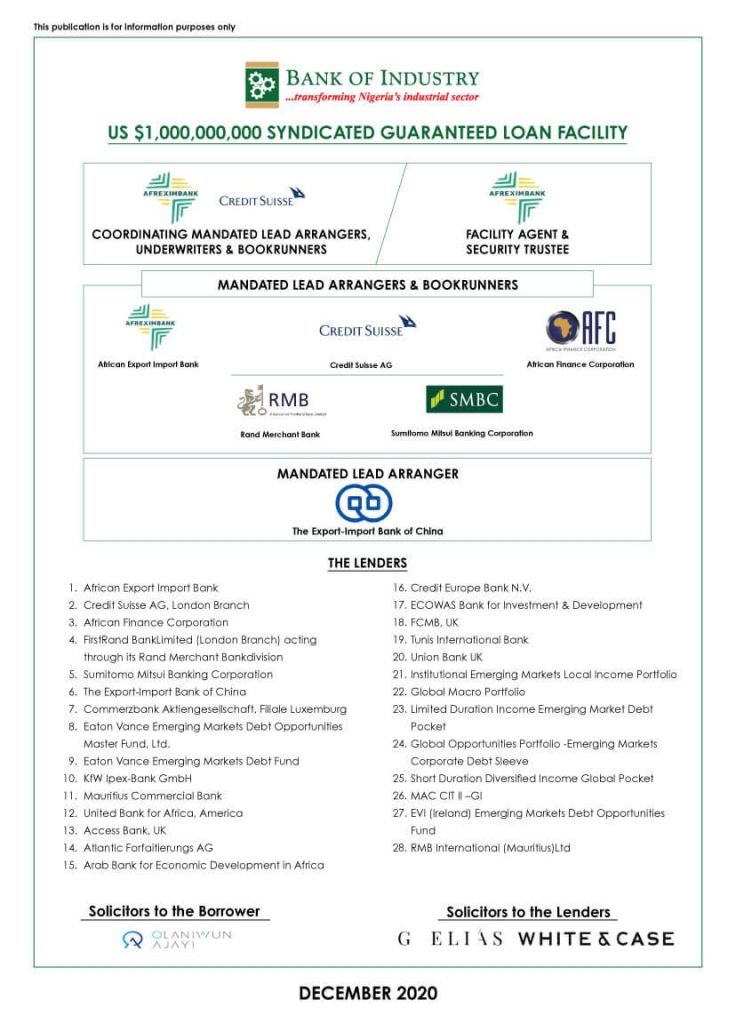
Congratulations to Bank of Industry for closing the $1 billion loan: “The transaction is aimed at further improving the capacity of the bank to continue to effectively support Micro, Small, Medium and Large enterprises (across key sectors) of the Nigerian economy with affordable loans of medium to long-term tenor, alongside moratorium benefits…The facility will be disbursed in Naira at single digit interest rates to borrowers with bankable projects.”.

 Between 2015 and October 2020, the Bank of Industry with the support of its various stakeholders disbursed over ?945 billion to 3,013,087 enterprises, thus creating over 6.87 million estimated direct and indirect jobs.

With the successful conclusion of this deal, the Board and management of Bank of Industry is confident that the bank is now better positioned to catalyze domestic production and facilitate job creation on a transformational scale, enhance local industry competitiveness, attract domestic and foreign investments, integrate our local industries into domestic, regional and global value chains, grow our export earnings and positively impact the overall economic development of Nigeria in line with its mandate and especially in light of the planned commencement of the African Continental Free Trade Agreement (AfCFTA) in January 2021.

This is a good deal. I will add that BOI adds a new layer in its operations: keep $10 million of that money for venture funding where founders and entrepreneurs do not have to provide collaterals to get the funds. Rather, BOI takes equity in the companies on behalf of the Nigerian people. Israeli has done this venture playbook successfully. 

More so, BOI needs to deepen its interests in digital and web companies. The current model is biased for “physical” businesses. The fact remains that most great digital businesses begin online and over time go “physical”. So, we do not have to be fixated at what is happening during the early phases. 

Amazon is as meatspace as Walmart with Whole Foods. Konga and Jumia are  big physical businesses. These businesses might not have been qualified to access BOI’s funds when they were being started. That re-calibration is important.