DD
MM
YYYY

PAGES

DD
MM
YYYY

spot_img

PAGES

Home Blog Page 598

Anthropic Hits $183bn Valuation with $13bn Raise, Underscoring Investor Bet on AI Future

0

Anthropic on Tuesday announced it has closed a massive $13 billion funding round at a $183 billion post-money valuation — roughly triple what the artificial intelligence startup was worth as of its last raise in March.

The round was led by Iconiq, Fidelity Management & Research Co., and Lightspeed Venture Partners, with other participants including Altimeter, General Catalyst, and Coatue, Anthropic said.

“This financing demonstrates investors’ extraordinary confidence in our financial performance and the strength of their collaboration with us to continue fueling our unprecedented growth,” Anthropic finance chief Krishna Rao said in a statement.

The company’s valuation has been on a steep climb since it launched its AI assistant Claude in March 2023. The Amazon-backed startup was founded by former OpenAI research executives, including its CEO Dario Amodei, who positioned Anthropic as a safety-first alternative in the rapidly evolving AI race.

Anthropic’s rise has placed it in direct competition with OpenAI, which rocketed into the mainstream following the release of ChatGPT in 2022. OpenAI is also preparing to sell stock as part of a secondary sale that would value the company at roughly $500 billion, as CNBC reported in August.

The rivalry reflects broader dynamics in the AI sector, where investors are pouring billions into leading firms amid surging global demand for advanced large language models. Tech giants have taken sides, with Amazon and Google both investing in Anthropic, while Microsoft remains OpenAI’s largest backer.

Anthropic said its run-rate revenue has soared to more than $5 billion as of August, up sharply from roughly $1 billion at the beginning of the year, driven by the adoption of Claude by large enterprises. The company now serves more than 300,000 business customers worldwide.

The fresh capital will be deployed to deepen Anthropic’s research into AI safety, meet growing enterprise demand, and support international expansion, underscoring its ambition to challenge OpenAI’s dominance in the generative AI space.

The record funding also highlights a broader investor bet on the future of AI. Despite billions of dollars already funneled into the industry — with Microsoft’s $13 billion investment in OpenAI standing out as the most notable example — AI startups are still largely unproven in delivering long-term financial returns.

By March 2025, OpenAI closed a record-setting $40 billion funding round at a $300 billion valuation — the largest capital raise ever by a private technology company. Earlier last month, it followed up with another $8.3 billion injection tied to that same round. In August, Bloomberg reported that the company has $6 billion secondary offering under discussion, with its valuation expected to climb to around $500 billion.

This shows that investors continue to double down, signaling faith that the sector will eventually reshape entire industries and yield enormous profits. But for now, revenues are climbing quickly, while the massive scale of investment has outpaced realized profits. Yet the ongoing willingness of investors to pour more capital into firms like Anthropic suggests they view AI not as a passing hype cycle, but as the foundation of the next great technological revolution.


UK Invests $7.5 Million to Boost Climate-Resilient Farming in Northern Nigeria

0

The United Kingdom has announced a $7.5 million debt investment aimed at enhancing agricultural productivity and climate resilience among smallholder farmers in Northern Nigeria, a region that remains the country’s breadbasket yet one of its most vulnerable to climate change.

The funding, which flows through British International Investment (BII) to the agritech enterprise Babban Gona, is expected to reach up to 140,000 farmers by 2029. It is aimed at dismantling structural barriers that have long constrained rural farmers—limited access to finance, weak input supply chains, inadequate agronomic training, and unreliable market access.

At its core, the initiative is also about future-proofing Nigeria’s food supply against climate risks. Recurrent flooding, prolonged droughts, and shifting weather patterns have already eroded farm productivity and destabilized incomes across much of the north.

Florence Eshalomi, the UK’s newly appointed Trade Envoy to Nigeria, described the investment as a practical extension of the Enhanced Trade Partnership Agreement signed in 2024, which set the tone for a new era of economic collaboration under President Bola Tinubu’s government.

“These first steps show that the UK government is keen to build on our longstanding relationship and cultural ties,” Eshalomi told Nairametrics. “We’re committed to working closely with President Tinubu’s team to secure impactful trade deals and development partnerships.”

She emphasized the symbolic weight of recent engagements—the Foreign Secretary’s and Mayor of London’s visits to Nigeria, as well as the influence of the Nigerian diaspora in the UK—as signs of intensifying bilateral ties.

British Deputy High Commissioner in Lagos, Jonny Baxter, underscored the need for urgent support for smallholder farmers, who are responsible for much of Nigeria’s staple food production.

“The UK is making this $7.5 million debt investment to address key challenges facing smallholder farmers, including poor access to finance, quality inputs, agronomic training, and reliable markets,” Baxter said.

Although northern states produce up to 60% of Nigeria’s maize, he noted that smallholders still face stubbornly low productivity, with climate change magnifying the risks of crop failure.

Struggles with Low Yields and Post-Harvest Losses

For Babban Gona’s Managing Director, Kola Masha, the scale of the challenge is both daunting and urgent. “Northern Nigeria accounts for 50–60% of the country’s maize production, yet smallholder farmers in the region continue to struggle with low yields and post-harvest losses of up to 30%,” Masha explained.

“These farmers operate on small plots with limited access to credit, quality inputs, and agronomic training. Climate risks are compounding these issues, threatening both food security and livelihoods.”

The UK’s capital injection will bolster Babban Gona’s AI-powered service platform, which offers farmers end-to-end solutions—ranging from credit and climate-smart training to improved seed and fertilizer access, as well as post-harvest support like storage and market linkage.

Trade Ties Beyond Agriculture

The investment also fits into a wider story of deepening UK-Nigeria trade relations. In July, the Mayor of London’s office unveiled plans to address long-standing financial bottlenecks that Nigerian firms face when seeking to expand operations in Britain.

During a recent trip to Lagos, Deputy Mayor of London Howard Dawber identified banking access as a major obstacle. Many Nigerian businesses, despite proven credibility and strong balance sheets, continue to face hurdles in opening accounts in London.

He pledged to work with UK regulators to explore flexible risk assessments and technical fixes that could remove these barriers and allow legitimate firms to conduct cross-border business more seamlessly.

To many in Nigeria, the UK’s investment is more than just agricultural financing—it is a signal of renewed external confidence in the country’s private sector at a time when food security is fragile and the climate crisis is accelerating. It also represents a model of how international trade, development priorities, and local entrepreneurship can converge to produce solutions with long-term economic impact.

If successful, Babban Gona’s expansion could help stabilize food prices, reduce rural poverty, and shield vulnerable farmers from environmental shocks, while giving UK-Nigeria relations fresh momentum built on shared development goals.

OpenAI to Acquire Statsig in $1.1bn All-Stock Deal, Names Founder Vijaye Raji CTO of Applications

0

OpenAI announced in a blog post on Tuesday that it agreed to acquire the product testing startup, Statsig, and bring on its founder and CEO, Vijaye Raji, as the company’s Chief Technology Officer of Applications.

OpenAI is paying $1.1 billion for Statsig in an all-stock deal — one of the largest acquisitions ever for the ChatGPT maker — under the company’s current $300 billion valuation, OpenAI spokesperson Kayla Wood told TechCrunch.

The acquisition marks OpenAI’s latest effort to build out its Applications business, helmed by the former CEO of Instacart, Fidji Simo, who started work at the company a few weeks ago. Raji will report to Simo and will head product engineering for ChatGPT, the company’s AI coding tool Codex, and future applications that OpenAI plans to build.

The company says that bringing Statsig’s experimentation platform in-house will accelerate product development across the Applications organization.

As Raji comes on board, OpenAI is making changes to its leadership team.

The company’s Chief Product Officer, Kevin Weil, will become VP of a new group called OpenAI for Science, he announced in a post on LinkedIn. Weil says the goal of his new organization “is to build the next great scientific instrument: an AI-powered platform that accelerates scientific discovery.” Weil says he will work closely with Sebastien Bubeck, an OpenAI researcher and the Former VP of AI and Distinguished Scientist at Microsoft.

“I’m able to do this because the product and design leaders at OpenAI are amazing, and now are complemented by Fidji Simo beginning her role as CEO of Applications,” said Weil. “OpenAI’s products have been my life since I joined, and they’re in great hands.”

Meanwhile, OpenAI’s current head of engineering, Srinivas Narayanan, announced in a post on LinkedIn that he would transition to a new role as the company’s CTO of B2B Applications. In the role, Narayanan says he will collaborate directly with OpenAI’s COO, Brad Lightcap, who oversees many of the company’s relationships with enterprise customers.

OpenAI says the Statsig acquisition is pending regulatory review. Once completed, the company says that all Statsig employees will become OpenAI employees. However, the product testing startup will “continue operating independently and serving its customer base out of its Seattle office,” the company said in a blog post.

This deal draws a notable parallel with Meta’s recent acquisition of Scale AI and the onboarding of its founder, Alexander Wang, into a key leadership role. In Meta’s case, the move was not only about acquiring advanced data-labeling and AI scaling technology but also about securing the vision and leadership of a founder who had built infrastructure critical for AI development.

Meta positioned itself to accelerate its AI ambitions by absorbing both the company and its leadership talent. With its Reality Labs bleeding billions, Zuckerberg appears to be shifting Meta’s core bet toward AI, betting that breakthroughs in LLMs, autonomous agents, and eventually artificial general intelligence (AGI) will define the next era of computing.

Scale AI, now a major partner, provides the data infrastructure necessary to train such systems. Wang, its founder, launched Scale at 19 and turned it into a key supplier of high-quality datasets to firms like OpenAI, Nvidia, and the US government. His move to Meta, insiders say, gives the company deep bench strength in both talent and tools.

OpenAI’s $1.1 billion purchase of Statsig mirrors this approach: it is less about acquiring a product alone and more about embedding the strategic mind behind it — Vijaye Raji — into its leadership core.

Analysts believe that this reflects a growing pattern in the AI sector, where acquisitions are increasingly doubling as leadership and talent pipelines. The integration of founders directly into high-level roles ensures that their product philosophies and technical expertise do not just get absorbed into the larger company but also actively shape its future direction.

U.S. Revokes TSMC’s Export Waiver for China Operations, Raising Uncertainty for Global Chipmakers

0

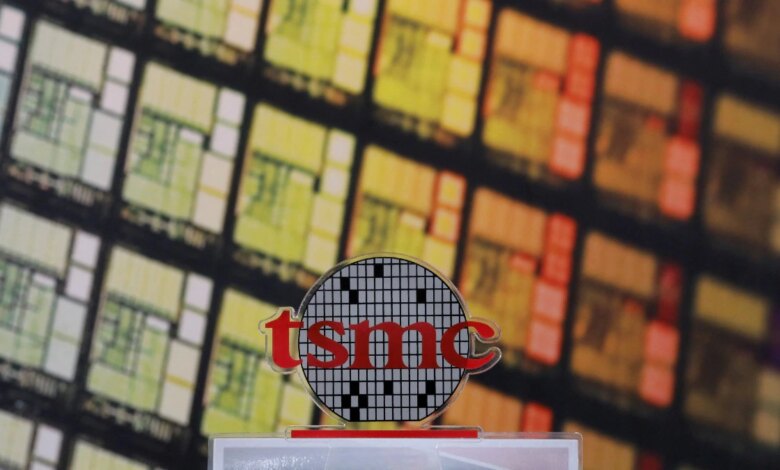
The U.S. has revoked Taiwan Semiconductor Manufacturing Co.’s authorization to ship key equipment to its main China facility, the chip manufacturer said on Tuesday.

The change removes a fast-track export privilege known as Validated End User (VEU) status, effective December 31, TSMC said, meaning future shipments of American chipmaking tools to TSMC’s Nanjing site will require U.S. export licenses.

TSMC said it was evaluating the situation and communicating with the U.S. government, adding that it remains “committed to ensuring the uninterrupted operations of TSMC Nanjing.”

The U.S. granted waivers to TSMC and other foreign chipmakers operating in China after issuing sweeping restrictions on chipmaking equipment to China in 2022.

The authorizations for Samsung and SK Hynix’s China plants were revoked on Friday, with an effective date 120 days later.

The revocations come despite a series of decisions by President Donald Trump to loosen export restrictions on technology, with his administration pledging to rescind Biden-era curbs on global access to AI chips in May and approving licenses last month to sell certain advanced semiconductors to China, including for Nvidia’s H20 chips.

The Commerce Department said Friday that the U.S. planned to grant license applications to allow the foreign companies to operate their existing facilities in China, but not to expand capacity or upgrade technology.

It is unclear how quickly licenses may be approved, potentially slowing deliveries. Reuters last month reported on how thousands of export license applications have been held up, creating a backlog, including for chipmaking equipment.

In June, the news broke that the U.S. was considering revoking the authorizations to the South Korean chipmakers as well as TSMC, making it harder for the foreign chipmakers to operate in China.

The Special Waivers at Risk

After the U.S. imposed export curbs to restrict China’s access to high-end chipmaking tools in 2022, it made an exception for certain non-Chinese manufacturers operating in China. Samsung and SK Hynix—the dominant players in memory chip production—and TSMC, the world’s largest contract chipmaker, received temporary authorizations that let them continue importing U.S. equipment without seeking individual licenses for every shipment.

By 2023 and 2024, the companies had received what the Commerce Department refers to as “Validated End User” (VEU) status, allowing them a more stable and streamlined supply of restricted goods. VEU status not only eased export bureaucracy but also enabled predictable manufacturing operations, as long as the companies adhered to certain conditions, including limits on specific equipment and mandatory compliance reporting.

Lessons from Past U.S. Export Control Reversals

The sudden removal of VEU privileges has revived memories of past U.S. export control reversals that left foreign firms struggling to survive. One of the most prominent examples was ZTE in 2016 and 2018, when Washington banned American suppliers from selling critical components to the Chinese telecom equipment maker. The restriction crippled ZTE’s production lines and nearly pushed the company into collapse until Beijing intervened diplomatically, and ZTE paid a $1.3 billion settlement to regain access.

Another case was Fujian Jinhua Integrated Circuit Co., a state-backed Chinese memory chipmaker, which was added to the U.S. Entity List in 2018. The ban on U.S. chipmaking tools cut off the firm’s access to technology it depended on, stalling its production capacity indefinitely and eventually forcing it into bankruptcy.

Even outside China, Russia’s technology sector in 2022 became a vivid illustration of how U.S.-led controls could devastate entire industries. Following Moscow’s invasion of Ukraine, sweeping restrictions on chip exports to Russia caused the country’s electronics, aerospace, and defense manufacturers to face severe bottlenecks, with reports of factories resorting to dismantling appliances to extract chips.

These precedents highlight the risks for non-Chinese firms like TSMC, Samsung, and SK Hynix. While their operations in China are not directly targeted, the removal of VEU status means their access to U.S. equipment is now subject to the same uncertain licensing process that has left thousands of applications in uncertainty.

For TSMC and its peers, the revocation threatens to inject new instability into their carefully balanced China operations. Although President Trump’s administration has signaled a willingness to relax Biden-era curbs in other areas—such as AI chips—the selective tightening on VEU status illustrates how geopolitical calculations can override earlier waivers.

With the U.S. Commerce Department promising to approve licenses only for “sustaining” existing operations, rather than expanding them, chipmakers face the real prospect of stagnation in their China plants. Industry analysts warn that prolonged delays in license approvals could disrupt supply chains and, in a worst-case scenario, mirror the crippling impact seen in previous cases like ZTE and Fujian Jinhua.

Although TSMC insists it will maintain “uninterrupted operations” in Nanjing, history suggests the company’s ability to do so depends heavily on the pace of U.S. license approvals—and on whether political winds in Washington shift again.

Bitcoin Rebounds Above $111K as Analysts Call Correction ‘Healthy,’ Ether Builds Momentum

0

Bitcoin bounced back on Tuesday, climbing 2.4% in 24 hours to trade above the $110,000 mark after briefly dipping to $107,300 earlier in the week.

Analysts say the pullback reflects a typical correction within historical norms, even as market signals suggest the structure remains “fragile.”

The leading cryptocurrency has been consolidating inside a descending parallel channel, facing resistance near $110,500. A decisive daily close above this level could mark a breakout from the downtrend, paving the way toward the $110,000–$117,000 liquidity zone, where the 50-day and 100-day simple moving averages converge. Clearing this area would improve chances for a rally toward fresh all-time highs.

Analysts Weigh In

CryptoQuant analyst Darkfost noted that Bitcoin’s 12% decline since its August peak of $123,000 is well within the range of historical bull market pullbacks.

He emphasized that corrections of 20–25% are more typical during strong cycles, arguing that speculation about the bull run ending is premature. This correction is nothing unusual. Bitcoin’s upward trend could very well continue, he said, adding that such pullbacks help reset leverage and create fresh entry points for long-term investors.

Also, Crypto influencer Bitcoin Vector pointed out that $110,000 has emerged as a strong resistance zone. He believes downside pressure is easing and upward momentum could resume if Bitcoin closes above $111,000. Meanwhile, liquidity maps show heavy clusters between $110,000–$111,000 and $105,500–$107,000, which could act as short-term reversal points, according to analyst AlphaBTC.

Cointelegraph reports that Bitcoin must reclaim the 20-day EMA at $112,500 to avoid the risk of sliding toward $105,000, or even $100,000 in a deeper correction.

With Bitcoin reaching new highs of $124,128 on Aug. 14, a 50% drop would drag it back to around $60,000 a level last seen in October 2024. That kind of move would leave Strategys Michael Saylor red-faced after declaring in June that winter is not coming back.

However, several other analysts are still holding out for prices above $150,000 by the end of this year.

Ether Quietly Builds Pressure

While Bitcoin wrestles with resistance, Ethereum (ETH) is quietly preparing for its next move. The crypto asset has reportedly taken the lead in investor preference. According to CoinShares, crypto inflows hit $2.48 billion last week, with Ethereum accounting for $1.4 billion—far outpacing Bitcoin’s $748 million.

In August alone, Ethereum attracted $3.95 billion, pushing monthly inflows to $4.37 billion and year-to-date totals to $35.5 billion. By contrast, Bitcoin saw net outflows of $301 million during the same period.

After reclaiming its 2021 all-time high of $4,870 on August 22, ETH has entered a consolidation phase, according to Polymath co-founder Trevor Koverko. He expects a breakout by November, citing strong ETF inflows and growing activity on Ethereum’s Layer-2 networks.

“Ethereum looks poised for a grind higher over the next one to two months,” Koverko said, noting that bullish sentiment among treasury executives is rising rapidly.

Future Outlook

Despite optimism around both BTC and ETH, prediction markets remain cautious. On Polymarket, traders assign a 68% chance that Bitcoin will dip below $100,000 again before 2026, highlighting lingering uncertainty.

For now, Bitcoin appears to be in a liquidity hunt, balancing between support at $107,000 and resistance near $111,000. Whether bulls can reclaim momentum will determine if the correction is just another pause in the uptrend or the start of a deeper retracement.