DD
MM
YYYY

PAGES

DD
MM
YYYY

spot_img

PAGES

Home Blog Page 5981

The UK Finally Secures A Brexit Deal

0

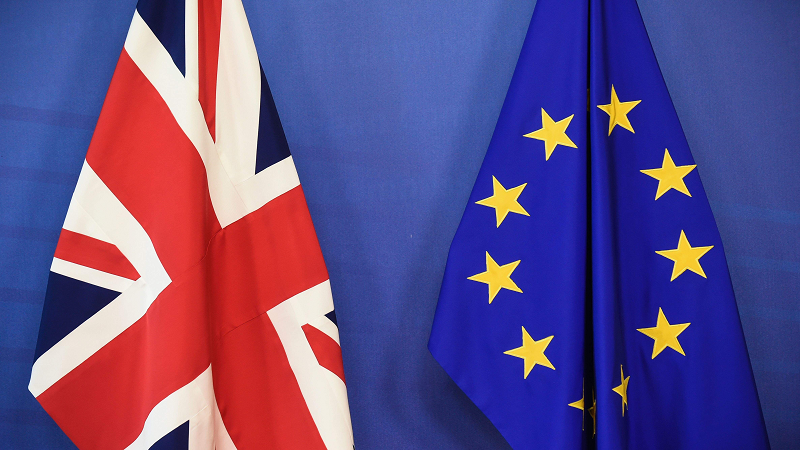
The UK finally made a Brexit and security deal with the EU, averting a “no deal” exit from the bloc eight days before the December 31 deadline.

The prolonged negotiation placed both the EU and Britain on a difficult path, as both sides are still battling the COVID-19 pandemic. The deal which upholds the existing zero-tariff zero-quota agreement on imports and exports valued at £668bn ($771bn) has set a new record in the history of the former partners.

While British Prime Minister Boris Johnson still has a battle of approval to face at home, many Britons think it was a great deal.

“Deal is done. Everything that the British public was promised during the 2016 referendum and in the general election last year is delivered by this deal.

“We have taken back control of our money, borders, laws, trade and our fishing waters.

“The deal is fantastic news for families and businesses in every part of the UK. We have signed the first free trade agreement based on zero tariffs zero quotas that has ever been achieved with the EU,” a UK source said.

As the deadline for the deal drew near, talks between both sides were dragging along fishing right on British waters, with British Health Minister Matt Hancock accusing the European Union of making unreasonable demands to hinder a deal.

The final push for the deal which hung on giving EU ships access to British fishing waters and a “level playing field” on standards and state aid, was settled in the eleventh hour and documented in 2,000-page legal text to end the over four years negotiation.

What the deal means for both sides.

The UK source said the deal would end free movement and allow the introduction of a points-based immigration system. It will also end the seamless trade with the bloc that UK is currently enjoying in the single market, and introduce new border checks on UK goods.

Also, bureaucracy bottlenecks created by the new deal means that traders will fill an estimated 200 million customs declarations a year, a development an official said would cost the UK 4% of GDP in the long term compared to staying in the bloc.

However, the deal will require ratification by EU leaders who are expected to give provisional approval for the deal so that it can come into effect this year.

Independent reported that the ratification will pave way for a treaty governing trade between the former partners on the basis of zero tariffs and zero quotas, as well as future co-operation in areas such as security and law and order.

But if the EU leaders fail to ratify the deal, a short period of no-deal could still happen in early January.

In the UK, MPs and peers are expected to reconvene in Westminster on 30 December to rush the agreement into law in a single day.
But that is not certain as division along party lines is posing a challenge that may jeopardize the deal. Independent reported that hardline Brexiteers on the backbench Tory European Research Group have signaled that they are not prepared to act as a rubber-stamp. Consequently, they are reconvening their Star Chamber of legal experts led by Sir Bill Cash to examine the documents to see if any part of it undermines UK’s sovereignty.

Who wins?

The Brexit deal comes at a time when the UK is struggling to keep its economy battered by the pandemic afloat. Experts believe the deal should give a short-term boost to the economy, but the trade agreement will still leave the country poorer as it battles with its worst recession in 300 years.

The UK enjoyed trade rights and benefits that it is no longer entitled to due to the deal, and will have to reel through the consequences amidst economic chaos.

“The United Kingdom has chosen to leave the European Union and the single market, to renounce the benefits and advantages held by member states. Our agreement does not reproduce these rights and benefits, and therefore despite this agreement there will be real changes in a few days from now,” said EU chief negotiator Michael Barnier.

The UK’s win is based mainly on avoiding a “no deal” Brexit. CNN noted that the deal seems to mostly cover trade in goods, where the United Kingdom has a deficit with its EU neighbors, and excludes key service industries like finance, where it currently enjoys a surplus.

“The good news is that a disruptive and acrimonious ‘no deal’ has been avoided. The bad news for the UK in our view, is that the EU appears to have secured a deal which allows it to retain nearly all of the advantages it derives from its trading relationship with the UK, while giving it the ability to use regulatory structures to cherry pick among the sectors where the UK had previously enjoyed advantages in the trading relationship,” JPMorgan’s Malcolm Barr wrote in a research note.
Central Bank of Nigeria Revokes Licenses of 7 PSPS and 1 SSP

0

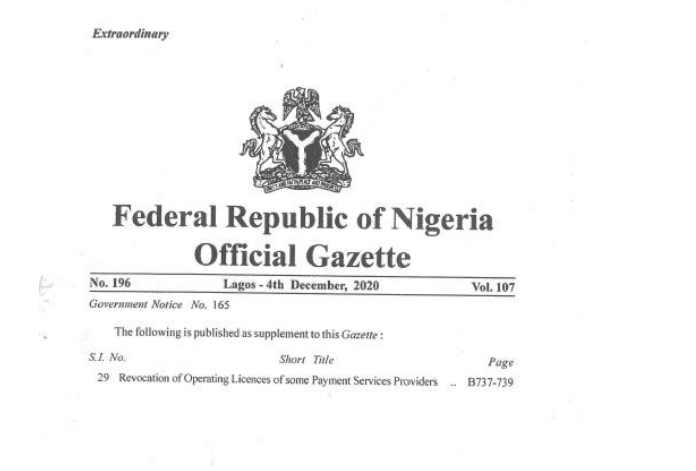
The Central Bank of Nigeria (CBN) has revoked the operating licenses of 7 payment service providers and one switch service provider. These entities have failed to meet their statutory obligations, according to a  Federal Republic of Nigeria Gazette.

The 7 payment service providers are:

  • Easifuel Limited
  • Transaction Processing System (TPS)
  • Grand Towers Limited
  • Paymaster Limited
  • E-Revenue Gateway Limited
  • Eartholeum Network Limited
  • Globasure Limited.

The affected switch service provider is 3Line Card Management Limited.

MTN Remains Dominant In Nigeria [Plot]

0

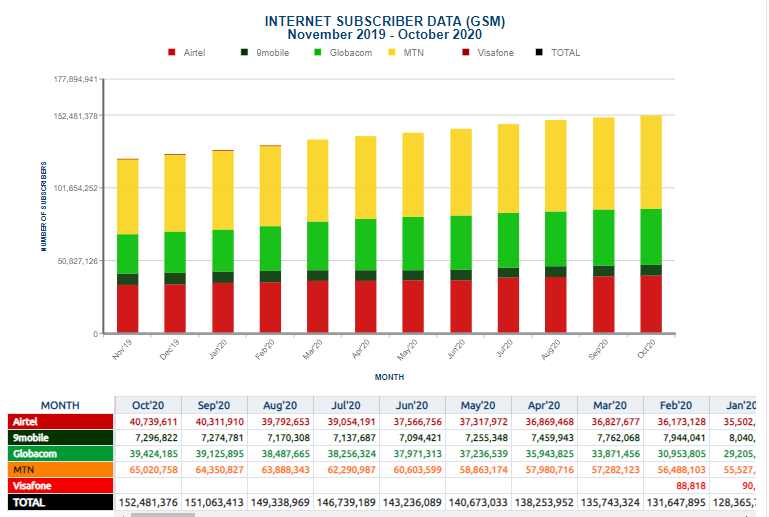
As at October 2020, MTN has about 25 million subscribers ahead of its next competitor, according to NCC, the industry regulator, data. On the voice telephony, the data is presented below.

The report released by Nigerian Communications Commission (NCC) shows that MTN leads the pack of the GSM operators in Nigeria, with active subscribers for telephony services of 83,331,682 as of October 2020, representing 40.14% of the entire operators’ subscriber base.

According to the report, MTN is followed by Airtel with 56,214,072 telephony subscribers (27.08%), Globacom 55,079,362 (26.53%), and 9Mobile with 12,953,121 subscribers (6.24%).


My 2020 Best Project – Silicon Organism

0

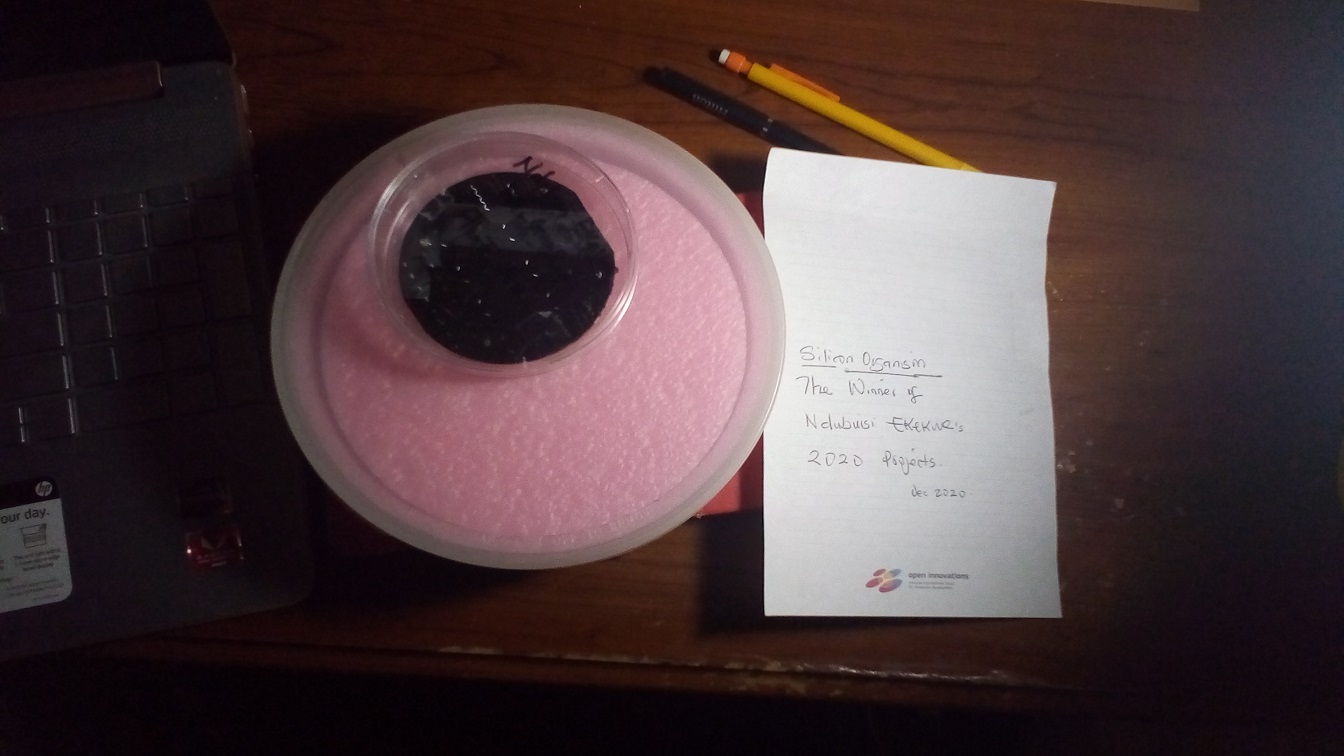
In the next few days, 2020 would be history. I just took a stock of my 2020 projects. I do a lot of things with startups, companies, designs, advisory, etc.  A Kenyan bank CEO woke me up yesterday: he wanted my perspective on something. Today, I share that my best project in 2020 is codenamed Silicon Organism. It is an integrated circuit which is designed to mimic human biology. 

Some founders have gone to a venture capital firm in California, and in their pitch, they referenced my work. The VC asked them to reach out to me. They made me happy – and we got into a long-time good party. And we delivered the chip. It goes into the heart of an AI system which I cannot write much here. 

On my design table, there is a notepad. It was given to me by the Mayor of Moscow when he invited me to Russia. That was the only time I met a politician who appreciated the power of engineering. Whenever I tear a piece, it reminds me that those who know will appreciate – a really good circuit.

What is your best project of 2020?

Is Xmas Christmas?

1

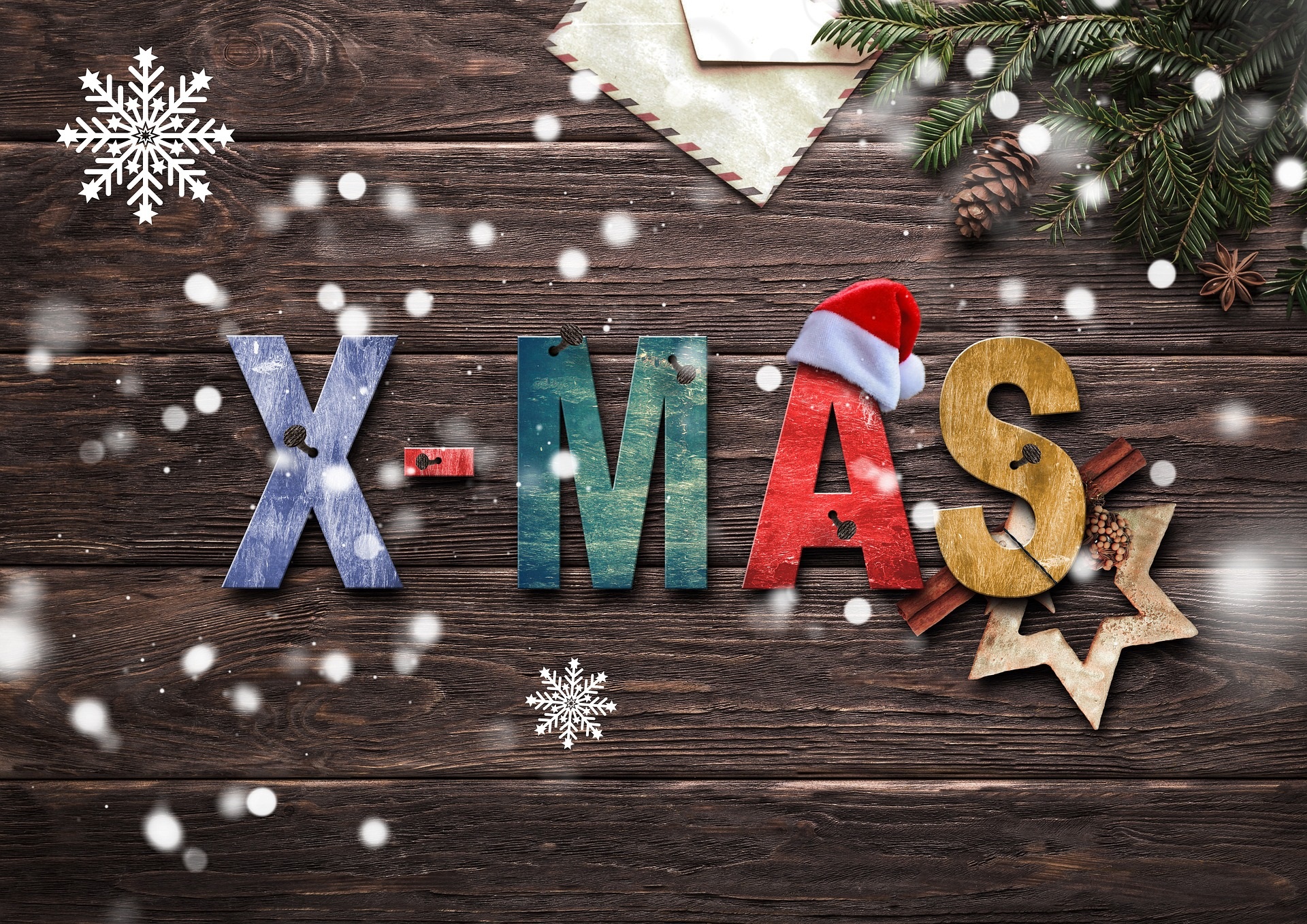
One of the arguments that heat up during the Yuletide is the Xmas vs Christmas controversy. There is always a debate on whether Christmas should be abbreviated as Xmas or not. According to many people, the ‘X’ in “Xmas” is not of Christian origin. These people hold that the replacement of “Christ” with an “X” is a deliberate attempt by secularists to shift attention from Jesus, who is the sole reason for the celebration. In fact, some people see this abbreviation as meaning “Cancelling Christ”, hereby insinuating the “X” is Anti-Christ. Someone also insisted Xmas was deliberately inserted on the day Christmas is celebrated to replace Christ’s birthday with that of Malcolm X. But the question you should ask yourself is, is Xmas and Christmas one and same thing? Are they both referring to the annual feast Christians celebrate on 25 December? But before you arrive at a conclusion, let’s first trace the etymology of the term, “Xmas”.

The Etymology of ‘Xmas

In the Greek language, the 22nd letter of the alphabet is ‘chi’, which is represented by ’X/?’ (just the way alpha is represented by A/?) and is pronounced /kh/. Further, the term for “anointed one” is spelt as “X??o???”, which is transliterated as ‘Christos’ and has been shortened today to ‘Christ’. Also, the Greek abbreviations for ‘Christ’ (X??o???) are X, Xt, and Xp. It should, therefore, not be a surprise that X is used to replace ‘Christ’ in Christmas to form ‘Xmas’.

Why the Recent Rejection of the Term

It is uncertain why the term is suddenly drawing negative attentions despite existing in writing since 1100. Initially, the word, Christmas (which is a compound formed by combining Christ + Mass) was spelt Xres Mæsse during the 12th century. By the 16th century, its spelling has changed to Xtemas. This has metamorphosed to Xmas, as is seen today. Some etymologists have, however, claimed that Xmas is an abbreviation of Christmas that came into existence in the 16th century; a claim that will soon be disproved of.

Was the Term Initially Spelt as “Christmas”?

Answering this question will require that you find scripts written during the time Christmas came into existence. But then, the history of Christmas itself is shrouded in controversy. However, the Roman Sun God origin sounds more logical and will, hence, be used for this essay. Anyway, since we don’t have access to scripts written in the 2nd or 3rd century, where Christmas was mentioned, we have to apply another option here – logic.

To start with, Jesus Christ was a Jew and so his name wasn’t even Jesus to start with (his Jewish name was Yehoshua). ‘Jesus’ is a corrupt version of his Greek name “Iesous” just the way “Christos” and later “Christ” is a corruption of Greek “X??o???”. Also, the “anointed one” in Hebrew is transliterated into today’s “Messiah”. This is just to drive it home that “Christ” is Greek, not Hebrew.

In Greek, the alphabet ‘chi’ is represented with x and not ‘chi’ (remember omega is ? in Greek and zed is z in English). So, you don’t spell a corresponding word with ‘chi’ but with ‘x’. Furthermore, the time Christmas originated, the English were not among the world civilisations to reckon with; the Roman and the Greek were considered the elites of the time. It will, therefore, be a fallacy to claim that the feast was given an English name (Christmas) during inception. It should also be considered that while the feast originated from a Roman pagan tradition, it must have been given a Roman name (unverified by the writer for now) and, later, a Greek name (the civilisations of the period). Whatever this Greek name would have been, it will be closer to Xmas than to Christmas (because of the Greek orthographic style). Hence, Xmas (or its earlier versions), and not Christmas, must have been the proper name for the feast. And no matter the name, it is time to also have vintage canvas wall art photos prints.

Conclusion

There is no need insinuating that Xmas is created by secularists to remove Christ from the centre of the celebration. Maybe those saying this have not bothered to trace the etymology of the term. Today, I believe the world knows why 25th December is earmarked for celebration and that is all that matters. However, if the problem is that Xmas is pronounced as [eksm?s] instead of [kr?sm?s], as many Nigerians do, it should be understood that borrowed words usually adopt the grammatical conventions of the new language. Nevertheless, it should be noted that both Xmas and Christmas have the same pronunciation [kr?sm?s] “krismas”; only their spellings are different.

Sources

  • “Greek”. Omniglot, https://www.omniglot.com/writing/greek/htm.
  • Hillerbrand, Hans J. “Christmas Holiday.” Britannica, 16 Dec 2020, https://www.britannica.com/topic/Christmas.
  • “Xmas.” Online Etymology Dictionary, https://www.etymonline.com/word/xmas.
  • “Why is ‘Christmas’ Abbreviated as ‘Xmas’?” Dictionary.com, https://www.dictionary.com/e/xmas-christogram/.