DD
MM
YYYY

PAGES

DD
MM
YYYY

spot_img

PAGES

Home Blog Page 5996

The New Central Bank of Nigeria Rule Strikes The Fintech Community

2
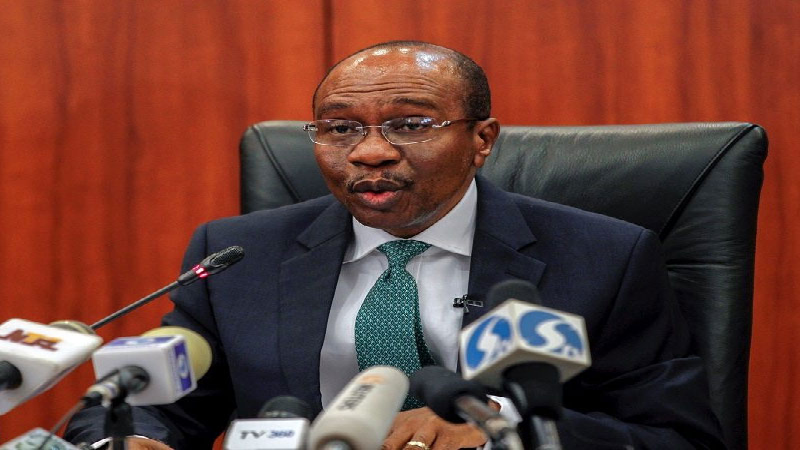
Nigeria's central bank boss

A Federal High Court sitting in Asaba Nigeria has ruled that it is illegal for banks to charge depositors N50 stamp duty: “… there was no express provision in the Stamp Duties Act or any law authorizing the deduction or imposing any obligation to deduct and remit N50 as stamp duty on teller deposits or electronic transfers of monies…” I hope the CBN and banks do not appeal! Lol.

But the CBN of course has more ammunition in its pencils and biros: the apex bank has approved new licensing for different categories of payment  companies in Nigeria, Samuel Nwite reports. It is a good move as it provides clarity to the players on what the government expects from them.

Notwithstanding, expect major pains, and more than 50% of fintechs would need to mutate as a result of the new rule. I can count 10 startups which hold customers money, and which by this new rule must upgrade their licenses or leave the business. Next week would be a busy one for most fintech boards!

The central bank explained that under the new license, only MNOs are permitted to hold people’s money.

“Only MNOs are permitted to hold customer funds; companies seeking to combine activities under the switching and MNO categories are only permitted to operate under a holding company structure with the subsidiary entities.

“Payment system companies in the PSS category may hold any of payment solution service provider (PSSP), payment terminal service provider (PTSP) and super agents license or a combination of all.

“All licensed payment service providers are required to obtain a no-objection from the payments system management department. Collaborations between licensed payment companies, banks and other financial institutions in respect of products and services are subject to CBN’s prior approval,” CBN said.

According to the Apex bank, the minimum capital requirement for MNOs is N2 billion; switching and processing, N2 billion; PSS, N250 million; super agent, N50 million; payment solution service provider, N100 million; and payment terminal service provider, N100 million.

Yet, this is not the rule we have been waiting for. Yes, when will the government provide clarity on the cryptocurrency sector in Nigeria? A needed regulation has been hanging for a long time even when the industry is developing at a very fast rate.

Court Rules Stamp Duty on Bank Transactions Illegal As CBN Approves New License for Nigerian Payment System

Court Rules Stamp Duty on Bank Transactions Illegal As CBN Approves New License for Nigerian Payment System

17
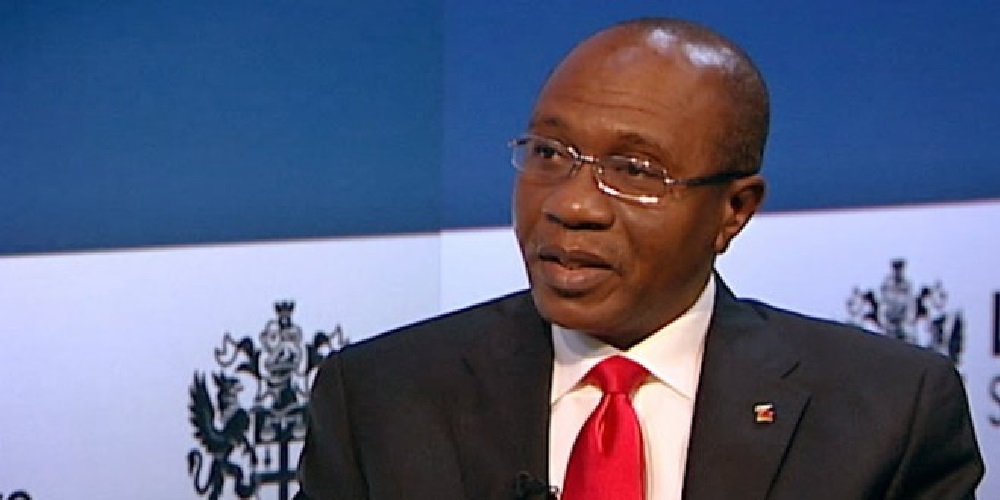
Godwin Emefiele (CBN governor)

In favor of the people, a Federal High Court sitting in Asaba Delta State has ruled that it’s illegal for banks to charge depositors N50 stamp duty.

The ruling delivered on December 9 puts an end to the controversial policy introduced by the Central Bank of Nigeria (CBN) earlier. The presiding Judge, Justice Nnamdi Dimgba said in the verdict that the CBN and all banks should immediately stop further collections of stamp duty fees from Nigerians because the Stamp Duties Act does not have provision for such taxes.

“… there was no express provision in the Stamp Duties Act or any law authorizing the deduction or imposing any obligation to deduct and remit N50 as stamp duty on teller deposits or electronic transfers of monies from N1,000 (one thousand naira upwards and accordingly nullified same, the conduct of the 1st and 2nd defendants in continuing to impose, direct the imposition, receive and or charge, deduct or remit the said sum of N50 as stamp duty on teller deposits or electronic transfers of money transactions from N1,000 upwards from the account of the plaintiff domiciled with the 2nd defendant is wrong in law, dismissive and contemptuous of the lawful orders of superior courts of competent jurisdiction, condemnable, null and void and of no effect,” the court’s judgment said.

A Nigerian businessman, Rupert Irikefe had, last year, filed a suit against the CBN, Attorney-General of the Federation and Zenith Bank, challenging the decision to impose N50 stamp duty charge on depositors.

Following CBN’s directive, Nigerian banks have been charging N50 on transactions above N1,000, a development that was seen as exploitation by depositors.

The court awarded Irikefe N50,000,000 in damages for the inconveniences and pains caused by the unlawful and arbitrary imposition of the N50 stamp duty on his account.

Justice Dimgba reprimanded Zenith Bank for its actions given that Appeal Court had in 2014, ruled in favor of depositors in a similar case. Dimgba said the Appeal Court should have served as a basis for the bank to reject the directive of CBN on N50 stamp duty charges.

Meanwhile, the central bank has approved new licensing for different categories of payment in Nigeria. This decision was communicated on Thursday through a circular signed by Musa Jimoh, director of payments, system management department of CBN, to all financial institutions.

Fintech community will need some adjustments

The apex bank said the approval stems from its commitment to promote a strong and credible payment system as it offers clarity for new and existing market participants based on the significant evolution and innovation in Nigeria payment system.

The payment licenses are thus streamlined according to permissible activities in four broad categories including switching and processing, mobile money operations (MNOs), payment solution services (PSSs) and regulatory sandbox.

The central bank explained that under the new license, only MNOs are permitted to hold people’s money.

“Only MNOs are permitted to hold customer funds; companies seeking to combine activities under the switching and MNO categories are only permitted to operate under a holding company structure with the subsidiary entities.

“Payment system companies in the PSS category may hold any of payment solution service provider (PSSP), payment terminal service provider (PTSP) and super agents license or a combination of all.

“All licensed payment service providers are required to obtain a no-objection from the payments system management department. Collaborations between licensed payment companies, banks and other financial institutions in respect of products and services are subject to CBN’s prior approval,” CBN said.

According to the Apex bank, the minimum capital requirement for MNOs is N2 billion; switching and processing, N2 billion; PSS, N250 million; super agent, N50 million; payment solution service provider, N100 million; and payment terminal service provider, N100 million.

Both developments are a win for Nigeria: The High Court judgment has eased the pain of arbitrary charges that have been imposed on Nigerian depositors by the apex bank; on the other hand, CBN’s licensing for new categories of financial services has provided regulatory bases for fintech in Nigeria.

With the fintech ecosystem on the rise, interested players now have a guideline to develop their payment systems.

The 2021 Outlook: Growth After A Redesign [Video]

0

Topic:  The 2021 Outlook in Nigeria, Africa & Global: Growth After A Redesign

Date:  Saturday, Dec 12, 2020

Time: 4pm – 5.30 pm WAT

Presenter: Prof Ndubuisi Ekekwe, Lead Faculty, Tekedia Institute

Zoom Link{completed]

About Tekedia Institute

Tekedia Institute offers an innovation management 12-week program, optimized for business execution and growth, with digital operational overlay. It runs 100% online. The theme is Innovation, Growth & Digital Execution – Techniques for Building Category-King Companies. All contents are self-paced, recorded and archived which means participants do not have to be at any scheduled time to consume contents.

It is a sector- and firm-agnostic management program comprising videos, flash cases, challenge assignments, labs, written materials, webinars, etc by a global faculty coordinated by Prof Ndubuisi Ekekwe.

We offer Tekedia Mini-MBA and Tekedia Advanced Diploma Programs; learn more here:  https://school.tekedia.com/


[Video] The 2021 Outlook Webinar – Ndubuisi Ekekwe & Tekedia Community

0

Greetings. Thanks for joining us at Tekedia Institute for the webinar on “The 2021 Outlook – Growth After A Redesign”. The video is now available.

As noted, here are elements we need to consider as we build for 2021:

  • Hybridized Supply Chain: Flexible, adaptive, global and local, at the same time.
  • Remote Everything: The web will run the world across sectors.
  • Digitization and Cloud Migration: The pace will accelerate.
  • Semi-automation: Disintermediation of humans will accelerate.

If you are selling or offering services, find how to deliver services in or around these elements because they will drive business, in the next coming years in Nigeria, and Africa, in general.

Tekedia Institute is a United States/Nigeria-based institution with focus on business management and leadership development. It runs a popular training program called Tekedia Mini-MBA which has been attended by professionals from at least 30 countries.

Oil Price Rises Above $50, But It’s Good and Bad News For Nigeria

0
Oil workers

The oil market heaved a sigh of relief on Thursday in London following the commencement of COVID-19 vaccine inoculation. Global benchmark futures surged 2.8% to climb above $50 per barrel, reaching a nine-month high.

The gain marks a significant market rebound since the oil industry came under the heavy weight of coronavirus.

Moderna and Pfizer announced the success of their respective vaccines trials, boosting the chance of global economy rebound and accelerating the pace of oil market recovery. The weakened U.S. dollar is also a factor in the oil price increase. Bloomberg said it raised the appeal for commodities priced in this currency and helped thrust Brent past $50.

Though it is expected that vaccine rollouts would spur the oil market recovery, analysts are surprised it is coming this fast.

“I am a bit surprised that it happened now. I have been advocating $50+ Brent, but I thought that would happen after we see inventories and demand look better,” Bart Melek, the head of global commodity strategy at TD Securities.

Bloomberg reported that key technical indicators are signaling that benchmarks are overbought and U.S. inventories recently are piling higher, which suggest the possibility of the market getting ahead of itself.

Data from Energy Information Administration said U.S. inventories expanded a whopping 15.2 million barrels last week in the biggest build in government data going back to 1982, with the exception of one week in April. At the same time, domestic gasoline demand is the lowest it has been for this time of year since 1997.

The report noted that supply and demand dynamics have drastically improved from just a few months ago. Inventories are drawing down globally, and there are signs the market is handling increased output better than anticipated. But, it will be months before the vaccine is distributed widely enough to fully reopen the economy.

“The distinct FOMO-type shift in financial market sentiment is supported by a global physical market that is absorbing barrels at a more robust-than-consensus pace,” RBC analysts including Helima Croft and Micheal Tran said in a report. “Asia refinery runs remain firm, global floating storage levels are being dismantled at a vigorous pace and European mobility is accelerating amid loosening regional lockdowns.”

Some measures by oil exporters which include keeping a tight rein on output, contributed to the astonishing surge, and there are indicators that it will be sustained in the long term.

The Bloomberg report noted that the swift reshaping along oil’s forward curve underscores the confidence in a long-term recovery. The curve is now trading in a structure known as backwardation that makes it profitable to roll contracts from one month to the next, which is also attracting a rush of new flows to the market.

The signals are notable across continents even amidst the economic pressure stemming from the second wave of COVID-19.

There are glimmers of a recovery in Europe in addition to Asia’s full-throttle return. The U.K., which emerged from a second lockdown this month, saw road fuel sales jump by almost 10% last week. Fuel use in Brazil has surpassed pre-virus levels. Still, it’s a less certain picture in the U.S., where gasoline consumption has dropped to the lowest since May, the report said.

Good and bad news for Nigeria.

Africa’s largest oil producer Nigeria has a tough future to reckon with as the price surges. The largest economy in Africa removed fuel subsidy earlier in the year as she gears toward full deregulation, which means, the Nigerian oil market now sells at international market price.

While the rising oil price will put more money into Nigeria’s government purse and help stabilize naira, the country’s currency, against dollar, it will spark industrial action as the cost will gradually become unaffordable.

In September, Nigerian labor unions were close to embarking on indefinite nationwide strike following an increase in the price of fuel. It was aborted when the negotiations between government and labor unions yielded a deal that includes the exclusion of minimum wage earners from income tax.

Pump price in Nigeria has been moving up and down since the removal of the fuel subsidy. Each time it goes up, uproar follows, signaling that there would be a showdown between Nigerian government and its people when the global economy fully recovers and the oil market bounces back.

Nigeria is facing its worst recession in decades, degenerating its revenue woes, and thus cannot afford to subsidize fuel for now. On the other hand, the larger number of Nigerians living on N30,000 ($80) monthly minimum wage or less, cannot afford to buy fuel at international price.

Against this backdrop, the rising oil price is to Nigeria, a test of economic dichotomy.