DD
MM
YYYY

PAGES

DD
MM
YYYY

spot_img

PAGES

Home Blog Page 5998

The Elon Musk Message On Innovation; Innovation Can Be Learned [Video]

1

“There should be more focus on the product or service itself, less time on board meetings, less time on financials…A company has no value in itself. It only has value to the degree that is an effective allocator of resources to create business services that are of a greater value than the costs of the inputs,” Elon Musk, Tesla CEO said.

This thing they call “profit,” Musk added, “should just mean over time that the value of the output is worth more than the inputs..When I go spend time on the factory floor or really using the cars or thinking about the rockets…that’s where things have gone better,” Musk said at the WSJ summit.

Elon Musk is the generation’s finest innovator and the second richest person in the world as market caps of Tesla, and privately held SpaceX, have grown over the last few months.

His message is simple: the only force which can overcome the frictions in the lives of people or processes of firms is a product or service! If you combine factors of production to get good products/services, you capture revenue from demand (i.e. the customers). And if that combination is done very well, such that what the demand is paying for is more than what you had spent in combining those factors of production,  you can pick a “profit” in the process.

LinkedIn brought three core points out of the interviews.

Can innovation be learned? Absolutely, says Tesla and SpaceX founder Elon Musk. In an interview with The Wall Street Journal, he reveals three questions budding innovators should answer in order to make your product a winner:

  • Have you tried it? If it doesn’t work for you, then you can’t expect it to shine for others.
  • How can you make it better? Examine negative feedback from colleagues, customers and trusted mentors to improve as best you can.
  • Are you spending too much time in conference rooms? Theory is great, but investigating the actual product and its production process can yield better insights.

Watch his video.

Markets Reward The Generation’s Finest Innovator

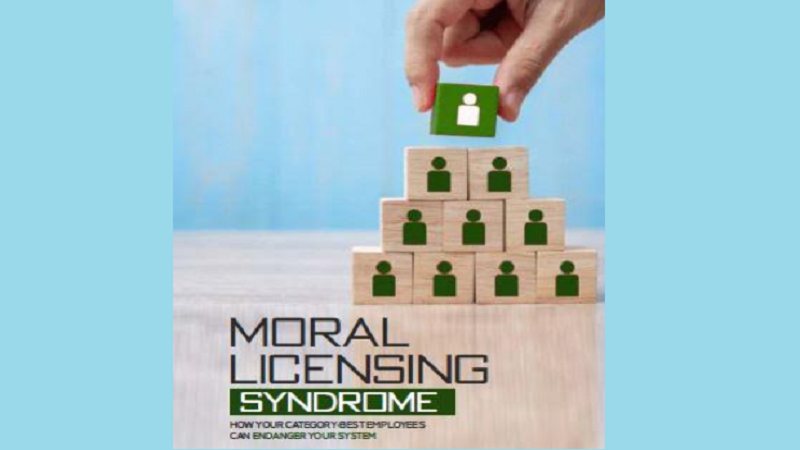
Handling the Moral Licensing Syndrome in an Organization: A Peep into Ismail Tiamiyu’s New Guide Book

0

For anyone that is not directly in the business of human resources management, encountering Ismail Tiamiyu’s treatise on the subject of moral licensing might sound very strange. Of course, as it is difficult to judge how delicious a pot of soup is until the content is tasted, so it will be for anyone looking at the book from a distance. However, a closer look at the book would reveal what the subject matter is all about.

The book concentrates on a subject matter that is very important in the workplace. Moral Licensing Syndrome, according to the author, is a moral dilemma faced by an employee when their past successes or track records push them to disregard rules or cheat the system. 

So, if by now your curiosity is tickled to want to have an understanding of the whole subject, then the book to order is Ismail Tiamiyu’s Moral Licensing: How your Category-best Employees can Endanger your System. So, what is it with the book? How can this book be useful to both interested and general readers? What are the major take-aways from the book? The answers to these questions are the focus of subsequent paragraphs.

With the book, Tiamiyu has made an effort to simplify a subject matter that could be complex to understand especially to lay readers and difficult to deal with by the concerned professionals. He does this in the book by harnessing storytelling resources backed up with some insights to illustrate the concept. In addition, the book is well arranged such that it is easy to follow. From the first chapter to the last chapter, it is easier to map the meaning, definition, problems and solutions to the issue of moral licensing. 

The prologue is a story that illustrates the dilemma a board of directors could find itself with the best salesperson of the company having character issues. Then, the first chapter introduces concepts while the second chapter focuses on definition and manifestation of MLS in people. The third chapter examines the conditions that reinforce MLS in employees while the fourth chapter looks at the negative effects as well as control of MLS. The last chapter is a recap of the entire information in the book. So, it is a real guide book that is well-arranged and well written in a simple language that is easy to comprehend.

Tiamiyu, who holds a first degree in Sociology, is a Research and Development expert. He makes his background reflect in the book with his copious citations of scholarly work. This does not make the book too difficult to understand as he breaks it down. When asked what his motivation for writing the book was, he said wanted to resolve frictions usually generated by Moral Licensing Syndrome in the workplace. 

He also asserted that his offering is his own contribution to generating a growth-driven process for administrators and managers towards resolving the Moral Licensing Syndrome in organizations.  Thus, the book is recommended for employers, managers, human resource professionals, employees and anyone who is interested in people’s management.

Crucial Elements of Success

0

One of the mistakes people make is assuming that success (or rather, wealth) comes from hard work alone. And when people define “hard work”, they give it the analogy of stress. Of course, when you bring “hard” and “work” together, the space in between the words is assumed by “stress”; except that it is silent. But I believe people that work hard understand how stressful that could be.

Anyway, this essay isn’t about hard work as the key to success; it’s about other, rarely mentioned, elements that must be present before success could be achieved. As implied earlier, “success” here is aligned with “financial independence”, which is something every human on Earth craves for. But do you really need to work yourself to death in order to become financially free? Did wealthy people actually work sleeplessly and tirelessly to become who they are? Can you really achieve success from hard work alone?

I believe you must have heard the “if making money na by hard work, bricklayers for done hammer” ideology. I used to think that was scandalous until I started toiling day and night with little result. In fact, I realised that if I force myself to sleep better and longer, I achieve more. If not for anything, my brain will be more active after a good rest. But many of us are still keeping vigils, planning and executing works in order to make it. I say “kudos” to those of us on this lane; it’s actually not easy. But then, as you work hard, remember you should also seek these other elements that must be added to the sauce called “success” before it becomes palatable.

  • Opportunities

You must have heard that “opportunity comes but once”. My friend’s mother will tell you that opportunity can come a second, a third and infinite time. But then, it takes longer to come back after each visit and it also comes less juicy than before. Hence, if you miss an opportunity to scale through, you don’t have to lose hope because another one will come, definitely. But you might have to work extra hard to find it; and when you do, it might not be as juicy as the previous one(s).

But the problem remains, “How do you know an opportunity when you see it?”

Of course, you don’t run around every shiny juicy thing that resembles opportunity; there are many decoys out there. You wouldn’t want yourself trapped in the false opportunity only to miss the real one. So the major challenge we all have is differentiating between real and false opportunities.

Like a popular quote implies, sometimes, opportunities come in ways we don’t recognise them. Honestly, most of us realised we missed juicy chances after we’ve lost them. I don’t know why but it happens. But then, a few of us are lucky to have opportunities coming after us, even waiting for us, until we embrace them. This is why we need to add other ingredients to that sauce in order to make “opportunities” pursue us.

  • Skills Acquisition

If you ask me, I’ll say this is the only ingredient, other than hard work, you have control over. Note that “skills” here is not “certificates”: certificates should be evidence that skills were acquired and not the other way round. Hence, if you have certificates you can’t defend, please shelf them; don’t bring them out because they won’t take you to the top, and keep you there.

But one question people ask regarding this element is, “which skills do I need to succeed?”

Well, you need to spend your time, energy and MONEY picking up skills and learning strategies that are required in whatever area you’re pursuing opportunities – it’s up to you to cut your niche. Remember the higher and better your skills are, the higher the chances you have of making it through. But please, as you go for “hard” skills, also seek for “soft” ones. Nobody wants to work with a foul-mouthed professional, even if he’s the last one in the market. A lot of people will prefer working with an amateur with excellent interpersonal skills to a callous expert. So, make yourself likeable as well. And learn patience too.

  • Luck

This is where divine intervention comes in. Some people will rather replace the term “luck” with “grace”, “blessings”, “destiny”, or “privilege”. Well, they are almost saying the same thing here. So, whatever term you choose, hold onto it.

So, you need a sprinkle of luck (not salt) on the sauce to get there. Just one lucky move could be all you need to get into the system. But then, you need your skills – both hard and soft ones – to remain there.

A lot of people are already privileged or lucky to have resources and connections that will lead them up. All that people in this category need to make it the extra mile is their skills. But for those of us that have to work from scratch in order to rise to the top from the dust, we need to positively pray for opportunities to come our way. Hence, you might have all the certificates in this world but without this divine intervention, opportunities will continue to fly over your head until you start accusing your village people.

Well, here is the simple mathematical equation: success = hard work + opportunities + skills + luck.

Anyone that chooses just one out of the combination will find it hard to climb that ladder. So, when people complain about working hard and earning nothing, ask them to add the other ingredients. But you see those people that combine only opportunities and luck without adding skills or hard work, well, they may rise, but they will crash land soon. Likewise, picking up dozens of skills without seeking opportunities and the other elements will only leave you unemployed, broke, frustrated, and antagonistic. This could explain why we have many people with “big” certificates and no jobs.

The New Central Bank of Nigeria Rule Strikes The Fintech Community

2
Nigeria's central bank boss

A Federal High Court sitting in Asaba Nigeria has ruled that it is illegal for banks to charge depositors N50 stamp duty: “… there was no express provision in the Stamp Duties Act or any law authorizing the deduction or imposing any obligation to deduct and remit N50 as stamp duty on teller deposits or electronic transfers of monies…” I hope the CBN and banks do not appeal! Lol.

But the CBN of course has more ammunition in its pencils and biros: the apex bank has approved new licensing for different categories of payment  companies in Nigeria, Samuel Nwite reports. It is a good move as it provides clarity to the players on what the government expects from them.

Notwithstanding, expect major pains, and more than 50% of fintechs would need to mutate as a result of the new rule. I can count 10 startups which hold customers money, and which by this new rule must upgrade their licenses or leave the business. Next week would be a busy one for most fintech boards!

The central bank explained that under the new license, only MNOs are permitted to hold people’s money.

“Only MNOs are permitted to hold customer funds; companies seeking to combine activities under the switching and MNO categories are only permitted to operate under a holding company structure with the subsidiary entities.

“Payment system companies in the PSS category may hold any of payment solution service provider (PSSP), payment terminal service provider (PTSP) and super agents license or a combination of all.

“All licensed payment service providers are required to obtain a no-objection from the payments system management department. Collaborations between licensed payment companies, banks and other financial institutions in respect of products and services are subject to CBN’s prior approval,” CBN said.

According to the Apex bank, the minimum capital requirement for MNOs is N2 billion; switching and processing, N2 billion; PSS, N250 million; super agent, N50 million; payment solution service provider, N100 million; and payment terminal service provider, N100 million.

Yet, this is not the rule we have been waiting for. Yes, when will the government provide clarity on the cryptocurrency sector in Nigeria? A needed regulation has been hanging for a long time even when the industry is developing at a very fast rate.

Court Rules Stamp Duty on Bank Transactions Illegal As CBN Approves New License for Nigerian Payment System

Court Rules Stamp Duty on Bank Transactions Illegal As CBN Approves New License for Nigerian Payment System

17
Godwin Emefiele (CBN governor)

In favor of the people, a Federal High Court sitting in Asaba Delta State has ruled that it’s illegal for banks to charge depositors N50 stamp duty.

The ruling delivered on December 9 puts an end to the controversial policy introduced by the Central Bank of Nigeria (CBN) earlier. The presiding Judge, Justice Nnamdi Dimgba said in the verdict that the CBN and all banks should immediately stop further collections of stamp duty fees from Nigerians because the Stamp Duties Act does not have provision for such taxes.

“… there was no express provision in the Stamp Duties Act or any law authorizing the deduction or imposing any obligation to deduct and remit N50 as stamp duty on teller deposits or electronic transfers of monies from N1,000 (one thousand naira upwards and accordingly nullified same, the conduct of the 1st and 2nd defendants in continuing to impose, direct the imposition, receive and or charge, deduct or remit the said sum of N50 as stamp duty on teller deposits or electronic transfers of money transactions from N1,000 upwards from the account of the plaintiff domiciled with the 2nd defendant is wrong in law, dismissive and contemptuous of the lawful orders of superior courts of competent jurisdiction, condemnable, null and void and of no effect,” the court’s judgment said.

A Nigerian businessman, Rupert Irikefe had, last year, filed a suit against the CBN, Attorney-General of the Federation and Zenith Bank, challenging the decision to impose N50 stamp duty charge on depositors.

Following CBN’s directive, Nigerian banks have been charging N50 on transactions above N1,000, a development that was seen as exploitation by depositors.

The court awarded Irikefe N50,000,000 in damages for the inconveniences and pains caused by the unlawful and arbitrary imposition of the N50 stamp duty on his account.

Justice Dimgba reprimanded Zenith Bank for its actions given that Appeal Court had in 2014, ruled in favor of depositors in a similar case. Dimgba said the Appeal Court should have served as a basis for the bank to reject the directive of CBN on N50 stamp duty charges.

Meanwhile, the central bank has approved new licensing for different categories of payment in Nigeria. This decision was communicated on Thursday through a circular signed by Musa Jimoh, director of payments, system management department of CBN, to all financial institutions.

Fintech community will need some adjustments

The apex bank said the approval stems from its commitment to promote a strong and credible payment system as it offers clarity for new and existing market participants based on the significant evolution and innovation in Nigeria payment system.

The payment licenses are thus streamlined according to permissible activities in four broad categories including switching and processing, mobile money operations (MNOs), payment solution services (PSSs) and regulatory sandbox.

The central bank explained that under the new license, only MNOs are permitted to hold people’s money.

“Only MNOs are permitted to hold customer funds; companies seeking to combine activities under the switching and MNO categories are only permitted to operate under a holding company structure with the subsidiary entities.

“Payment system companies in the PSS category may hold any of payment solution service provider (PSSP), payment terminal service provider (PTSP) and super agents license or a combination of all.

“All licensed payment service providers are required to obtain a no-objection from the payments system management department. Collaborations between licensed payment companies, banks and other financial institutions in respect of products and services are subject to CBN’s prior approval,” CBN said.

According to the Apex bank, the minimum capital requirement for MNOs is N2 billion; switching and processing, N2 billion; PSS, N250 million; super agent, N50 million; payment solution service provider, N100 million; and payment terminal service provider, N100 million.

Both developments are a win for Nigeria: The High Court judgment has eased the pain of arbitrary charges that have been imposed on Nigerian depositors by the apex bank; on the other hand, CBN’s licensing for new categories of financial services has provided regulatory bases for fintech in Nigeria.

With the fintech ecosystem on the rise, interested players now have a guideline to develop their payment systems.