
DD
MM
YYYY

PAGES

DD
MM
YYYY

spot_img

PAGES

Home Blog Page 6

Hong Kong Pushes Banks Toward Post-Quantum Cryptography by 2030

0

The Hong Kong Monetary Authority has delivered a sobering assessment of the banking sector’s preparedness for one of the next major cybersecurity challenges: quantum computing.

In its latest evaluation, the regulator found that Hong Kong banks scored an average of just 2.3 out of 10 on quantum readiness, highlighting how far the financial industry still has to go before it can defend itself against the risks posed by future quantum computers.

Even more concerning, roughly half of the surveyed banks admitted they have no formal post-quantum migration strategy, leaving critical financial infrastructure vulnerable as quantum technology advances.

Quantum computing promises breakthroughs across science, healthcare, logistics, and artificial intelligence by solving problems that are impossible for today’s computers. The same computational power also threatens modern encryption standards that secure digital banking, payment networks, customer data, and financial communications.

Algorithms such as RSA and Elliptic Curve Cryptography, which underpin much of today’s internet security, could eventually be broken by sufficiently powerful quantum computers. Although experts believe practical cryptographically relevant quantum computers are still several years away, the threat is no longer considered theoretical.

Cybersecurity professionals have increasingly warned of harvest now, decrypt later attacks, in which hackers steal encrypted information today with the intention of decrypting it once quantum technology matures.

Sensitive financial records, customer identities, and confidential transactions could all become targets under such a scenario. Recognizing this growing risk, the HKMA has taken a proactive stance by introducing a comprehensive roadmap for financial institutions.

Rather than simply highlighting weaknesses, the regulator has issued a practical toolkit designed to help banks assess their existing cryptographic infrastructure, identify vulnerable systems, and develop structured migration plans toward post-quantum cryptography (PQC).

The authority has also established a clear objective: banks should reach full quantum readiness by 2030. This long-term deadline reflects the complexity of transitioning an entire financial ecosystem to new cryptographic standards.

Replacing encryption is not as simple as installing a software update.

Banks operate thousands of interconnected systems, ranging from online banking platforms and mobile applications to payment gateways, ATMs, trading infrastructure, cloud services, and third-party integrations. Every component relying on current encryption standards must eventually be upgraded without disrupting financial stability or customer services.

The HKMA’s findings reveal an uneven level of awareness across the industry. While some major institutions have already begun conducting quantum risk assessments and pilot programs, many smaller lenders remain in the early stages of understanding the problem.

The average readiness score of 2.3 out of 10 suggests that most organizations are still focused on identifying risks rather than implementing concrete solutions. Hong Kong’s initiative aligns with a broader global movement among financial regulators.

Governments and cybersecurity agencies worldwide have accelerated efforts to encourage the adoption of post-quantum cryptography following the publication of new quantum-resistant encryption standards.

Financial institutions are increasingly expected to inventory cryptographic assets, prioritize critical systems, and begin gradual migration well before quantum computers become capable of breaking existing encryption.

Strengthening quantum resilience is also a matter of maintaining its reputation as one of the world’s leading international financial centers. As digital finance, tokenized assets, and cross-border payment networks continue to expand, ensuring that banking infrastructure remains secure against emerging technological threats will become increasingly important.

The HKMA’s assessment serves as both a warning and an opportunity. A readiness score of 2.3 out of 10 underscores the magnitude of the work ahead, but the regulator’s structured toolkit and 2030 target provide a clear path forward.

Banks that begin preparing now will be better positioned to safeguard customer trust, comply with future regulations, and remain resilient in the quantum era.

Fanatics Acquires CFTC-Registered Exchange to Expand Prediction Markets Ambitions, as TokenWorks Expands FWA Capabilities

0

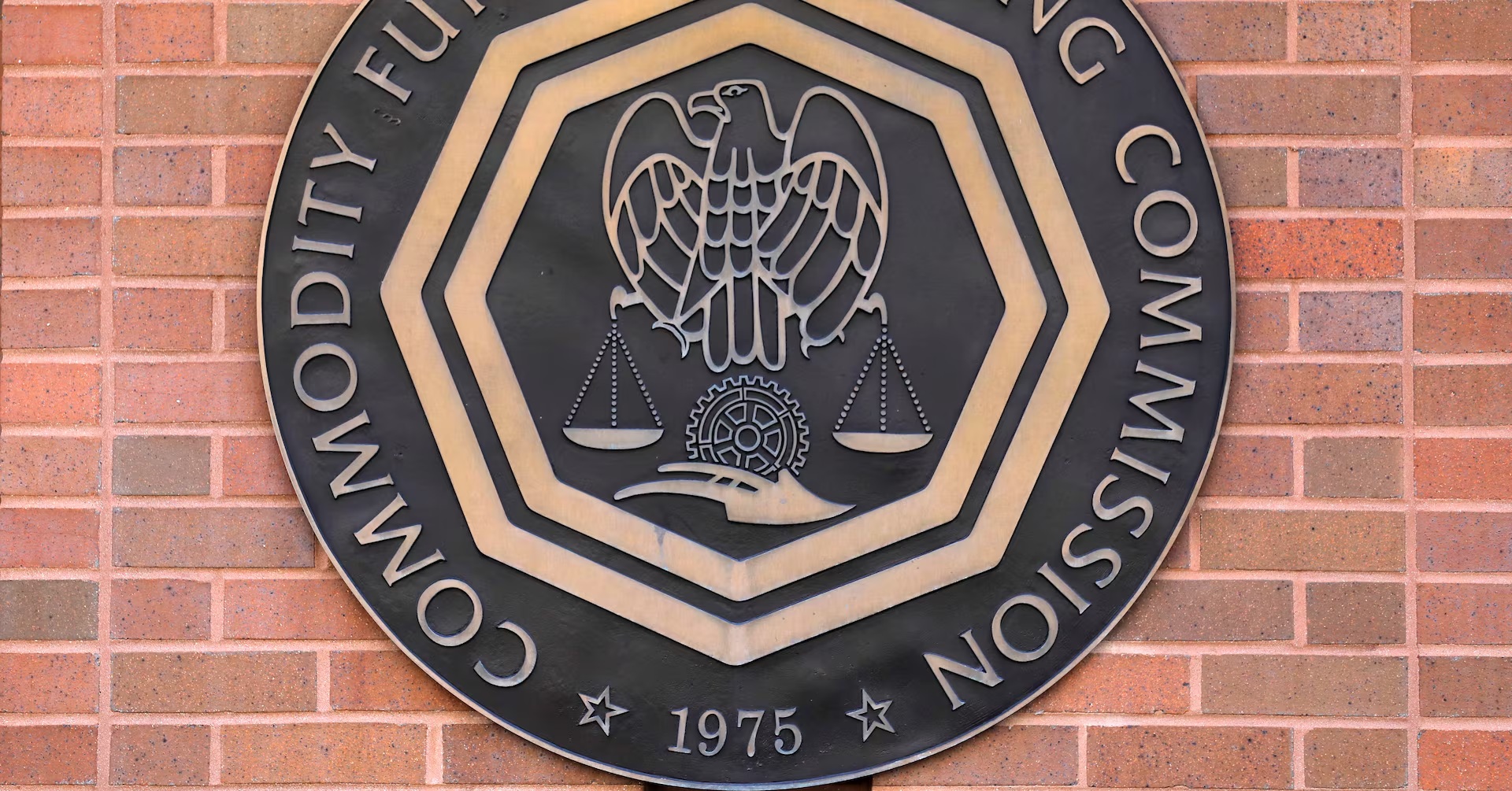
Fanatics, the global sports merchandise and digital sports platform, is making a major move into the rapidly growing prediction markets industry by acquiring a Commodity Futures Trading Commission (CFTC)-registered exchange.

The acquisition represents a strategic effort by the company to strengthen its position in event-based trading and build a more comprehensive predictions market product that combines sports, entertainment, and financial-style contracts.

Prediction markets have gained significant attention in recent years as platforms allow users to trade contracts based on the outcomes of real-world events.

These markets enable participants to speculate on questions such as sports results, political outcomes, economic events, and cultural trends.

Unlike traditional betting systems, prediction markets are structured around trading probabilities, with prices reflecting collective expectations about future events. By purchasing a regulated exchange, Fanatics gains access to critical infrastructure needed to operate within the evolving prediction market landscape.

A CFTC-registered exchange provides regulatory recognition, compliance frameworks, and technological capabilities that can help Fanatics develop a more sophisticated and scalable product.

The move comes as competition in prediction markets intensifies. Companies across the financial technology, cryptocurrency, and sports sectors are exploring ways to capitalize on growing consumer interest in interactive forecasting platforms.

Existing prediction market operators have attracted millions of users by offering markets around elections, sports, and major global events, demonstrating demand for alternative forms of engagement beyond traditional entertainment.

The opportunity aligns closely with Fanatics existing sports ecosystem. The company already has a large audience through its sports merchandise business, collectibles marketplace, and digital platforms.

Integrating prediction markets could create a new layer of engagement for sports fans by allowing them to participate in markets related to games, player performances, championships, and other sporting events.

The acquisition highlights the increasing convergence between sports, finance, and digital assets. Modern consumers are becoming more comfortable with platforms that blend entertainment and financial mechanics, particularly among younger demographics.

Prediction markets fit into this trend by transforming opinions and knowledge into tradable positions. Regulation remains one of the most important factors shaping the future of the prediction market sector.

The industry has faced debates over whether event contracts should be classified as financial instruments, gambling products, or a separate category. By acquiring a CFTC-registered exchange, Fanatics appears to be positioning itself within a regulated framework rather than relying solely on emerging or uncertain market structures.

The company’s expansion could intensify competition with established prediction market platforms and financial technology firms entering the space. As more companies explore event-based contracts, differentiation will likely depend on user experience, market variety, liquidity, and regulatory compliance.

Fanatics’ move reflects a broader shift in how consumers interact with information and entertainment. Prediction markets are becoming more than speculative tools; they are evolving into platforms where communities express opinions, analyze data, and participate in real-time economic activity surrounding major events.

The acquisition of a regulated exchange gives Fanatics the foundation to build a stronger prediction market ecosystem. While the long-term success of the initiative will depend on regulatory developments and consumer adoption, the company’s entry signals that prediction markets are moving closer to mainstream adoption.

As sports, technology, and financial innovation continue to merge, Fanatics’ investment could mark a significant step toward creating a new category of interactive entertainment where fans are not only spectators but active participants in predicting the outcomes they care about.

The company’s expansion demonstrates the growing belief that prediction markets could become a major component of the next generation of digital consumer platforms.

TokenWorks Expands FWA Capabilities as Fomo’s Weekly Revenue Reaches a New Record

The digital asset industry continues to evolve at a rapid pace, with infrastructure providers and consumer-facing applications introducing new innovations that broaden blockchain adoption.

Two recent developments underscore this momentum: TokenWorks has added wrapped ERC-20 token support to its Financial Web Assets (FWA) platform, while trading application Fomo has recorded its highest-ever weekly revenue.

These milestones highlight the growing sophistication of blockchain infrastructure and the increasing engagement of retail users across decentralized finance and digital trading platforms.

TokenWorks’ integration of wrapped ERC-20 tokens into its FWA platform represents an important step toward improving interoperability across blockchain ecosystems.

Wrapped tokens allow assets from one blockchain to be represented on another, enabling users to interact with decentralized applications without being restricted by the native network of their holdings.

By supporting wrapped ERC-20 assets, TokenWorks expands the range of financial products and services available through its platform, making it easier for users to access liquidity, lending, trading, and other decentralized financial opportunities.

Interoperability has become one of the defining priorities for the blockchain industry. As multiple Layer 1 and Layer 2 networks compete for users and developers, solutions that seamlessly connect ecosystems are becoming increasingly valuable.

Wrapped assets play a central role in this vision by allowing value to move across networks while preserving compatibility with Ethereum’s widely adopted ERC-20 token standard.

TokenWorks’ latest upgrade therefore strengthens its position as an infrastructure provider focused on enabling cross-chain financial applications. The addition of wrapped ERC-20 support could also attract institutional participants seeking greater flexibility in digital asset management.

Institutions increasingly demand infrastructure capable of supporting multiple token standards while maintaining compliance, security, and operational efficiency. Expanding compatibility with widely used token formats enhances the platform’s appeal to developers, businesses, and financial organizations building next-generation blockchain products.

Trading application Fomo has reached a significant commercial milestone, reporting its highest weekly revenue since launch. The achievement reflects growing activity on the platform as traders continue to engage with digital assets, speculative markets, and emerging on-chain opportunities.

Record revenue often indicates rising transaction volumes, stronger user retention, and increased demand for trading-related services.

Fomo’s performance also highlights the resilience of retail participation in crypto markets.

Even as broader market conditions fluctuate, traders continue to seek platforms that provide intuitive interfaces, fast execution, and access to diverse investment opportunities. Applications capable of delivering engaging user experiences while maintaining reliable infrastructure are increasingly positioned to capture market share in the competitive trading ecosystem.

The combination of expanding infrastructure and growing user activity creates a positive feedback loop for the broader blockchain economy. Platforms such as TokenWorks improve the technological foundation that enables seamless asset movement.

While applications like Fomo demonstrate how enhanced infrastructure can translate into higher user engagement and stronger business performance. These developments reinforce the industry’s transition from experimental technology toward mature financial ecosystems capable of serving both retail and institutional participants.

Continued innovation in interoperability, tokenized assets, and user-focused trading platforms is expected to remain a defining trend for the digital asset sector. As infrastructure providers broaden compatibility across blockchain networks and consumer applications continue attracting larger audiences.

The crypto industry moves closer to delivering a more connected, accessible, and scalable financial system. The latest achievements from TokenWorks and Fomo illustrate how technological progress and commercial success increasingly go hand in hand, reinforcing confidence in the long-term evolution of blockchain-based finance.

SpaceX’s SPCX Shares Hit New All-Time Low of $110 Amid Growing Investor Concerns

0

SpaceX’s publicly traded shares under the ticker SPCX have fallen to a new all-time low of $110, marking another challenging chapter for one of the world’s most closely watched aerospace companies.

The decline reflects mounting investor concerns over broader market conditions, execution risks, and uncertainty surrounding the company’s future growth trajectory.

While SpaceX remains a global leader in commercial space exploration, satellite communications, and reusable rocket technology, the latest share price movement highlights that even industry pioneers are not immune to shifts in market sentiment.

The drop to $110 comes during a period of increased volatility across both technology and aerospace stocks. Investors have become more cautious as higher interest rates, slowing economic growth, and geopolitical tensions continue to weigh on high-growth companies.

Businesses with ambitious long-term investment strategies often experience greater pressure during uncertain market cycles, as investors increasingly prioritize profitability and stable cash flows over future growth potential.

SpaceX has built its reputation by consistently pushing the boundaries of space innovation. Through its Falcon rocket family, Starlink satellite internet constellation, and ongoing Starship development program, the company has transformed expectations for the commercial space industry.

Its reusable rocket technology has significantly reduced launch costs while creating new opportunities for government agencies, private businesses, and international customers.

Despite these achievements, investors remain focused on the substantial capital required to maintain SpaceX’s ambitious roadmap. Projects such as Starship testing.

Starlink expansion, deep-space exploration, and future Mars missions demand billions of dollars in continued investment. While these initiatives could unlock enormous long-term value.

They also increase financial risk, particularly during periods of tighter capital markets. Another factor contributing to the stock’s weakness is uncertainty surrounding revenue growth.

Although Starlink continues expanding globally and launch demand remains healthy, analysts are closely monitoring whether these businesses can generate sufficient profits to justify the company’s long-term valuation.

Competition within satellite internet services, launch providers, and emerging space technology firms is also becoming more intense, placing additional pressure on future earnings expectations.

Investor psychology has played a significant role in the recent decline. Financial markets often react strongly to negative momentum, with declining prices encouraging further selling as traders attempt to minimize losses.

This creates a cycle where weak sentiment can temporarily outweigh the company’s underlying fundamentals. Long-term investors, however, may interpret the current valuation differently, viewing lower prices as an opportunity if they remain confident in SpaceX’s technological leadership.

The broader space industry itself remains positioned for significant expansion over the coming decade.

Governments are increasing investments in national space programs, commercial satellite deployments continue to accelerate, and demand for secure global communications infrastructure is expected to grow.

SpaceX remains one of the few companies with the engineering expertise, operational experience, and launch capacity to capitalize on these long-term trends. Near-term challenges cannot be ignored.

Regulatory approvals, successful Starship milestones, competitive pressures, and macroeconomic conditions will all influence investor confidence in the months ahead.

Markets will closely watch upcoming operational updates to determine whether SpaceX can maintain its pace of innovation while demonstrating stronger financial performance.

SPCX’s fall to a record low of $110 serves as a reminder that market valuations are influenced by both company performance and broader economic sentiment. While the current decline reflects heightened caution among investors.

SpaceX’s long-term outlook will depend on its ability to convert technological leadership into sustainable revenue growth, operational efficiency, and consistent shareholder value.

As history has shown, innovative companies often experience periods of significant volatility before their long-term vision is fully realized.

Robinhood Explores Partnership With Crypto.com to Expand Prediction Markets

1

Robinhood is reportedly in talks with Crypto.com to integrate prediction market contracts into its trading platform, marking another significant step in the convergence of traditional fintech, cryptocurrency, and event-based financial products.

If finalized, the partnership could strengthen Robinhood’s ambitions to become a broader financial marketplace while providing millions of users with access to blockchain-powered prediction markets.

Prediction markets allow participants to buy and sell contracts based on the outcome of future events. These events can range from elections and economic indicators to sporting competitions, entertainment awards, and even cryptocurrency price movements.

Instead of simply placing a wager, traders purchase contracts that reflect the probability of a specific outcome occurring, with prices fluctuating as market sentiment changes.

Robinhood adding prediction markets represents a natural extension of its mission to democratize access to financial products. The company has already transformed retail investing by offering commission-free stock trading, cryptocurrency investing, options trading, and retirement accounts.

Introducing prediction market contracts would diversify its offerings even further, enabling users to express market views on real-world events through regulated financial instruments.

Crypto.com has steadily expanded beyond its origins as a cryptocurrency exchange. The platform now offers a wide range of financial services, including digital asset trading, payment solutions, staking, derivatives, and institutional products.

Its expertise in blockchain infrastructure and digital asset settlement could provide Robinhood with the technological backbone needed to support efficient and scalable prediction market trading.

The timing of these discussions is notable. Prediction markets have gained renewed popularity over the past two years as investors increasingly seek alternative ways to participate in global events.

Advances in blockchain technology have also improved transparency, liquidity, and settlement efficiency, making decentralized and tokenized prediction markets more attractive to both retail and institutional participants.

A collaboration between Robinhood and Crypto.com could significantly expand the visibility of prediction markets. Robinhood serves millions of active users, many of whom are already familiar with trading stocks, exchange-traded funds, options, and cryptocurrencies.

Integrating prediction contracts into the same interface could dramatically lower the barrier to entry for new users while increasing trading activity across event-based markets.

The move also reflects a broader trend toward financial platform consolidation.

Rather than offering isolated products, leading fintech companies increasingly aim to become comprehensive financial ecosystems where users can manage investments, payments, savings, digital assets, and speculative products within a single application.

Prediction markets fit neatly into this vision by combining elements of investing, forecasting, and market intelligence. Regulatory considerations will remain central to any potential rollout.

Prediction markets often operate within complex legal frameworks because certain contracts may resemble gambling or derivatives depending on their structure and jurisdiction.

Both Robinhood and Crypto.com would need to ensure compliance with relevant financial regulations and licensing requirements before launching such products at scale.

If an agreement is reached, the partnership could intensify competition across the prediction market industry. Existing platforms have demonstrated growing demand for event-based trading, particularly during election cycles, major sporting events, and macroeconomic announcements.

Robinhood’s extensive retail customer base could accelerate mainstream adoption and encourage other brokerages and exchanges to develop similar offerings.

Robinhood’s reported discussions with Crypto.com signal the continuing evolution of digital finance. As blockchain technology becomes increasingly integrated into mainstream financial services, products once considered niche are entering the portfolios of everyday investors.

Whether the partnership is finalized or not, the talks underscore the growing importance of prediction markets as a new frontier in financial innovation, blending real-world information, market efficiency, and digital asset infrastructure into a rapidly expanding investment category.

Egypt’s Fincart Secures $2.8 Million Seed Funding to Expand AI-Powered E-Commerce Platform Across MEA

0

Egypt-based logistics and e-commerce technology startup Fincart has raised $2.8 million in a seed funding round to accelerate the growth of its AI-powered shipping and operations platform across the Middle East and Africa.

The funding round was co-led by Launch Africa Ventures and Antler, with participation from Yango Ventures, Five35 Ventures, Bluestream Capital, Hi2 Global, Kalahari Venture Capital, and several other regional investors.

The newly secured capital will be used to further enhance Fincart’s technology platform, expand its team, strengthen strategic commercial partnerships, and accelerate its expansion across key markets in the Middle East and Africa.

Speaking on the round, Fincart’s co-founder and chief executive officer Mostafa Masry said,

“With our strategy focused on strengthening the e-commerce ecosystem, this investment will enable us to deepen our partnerships, enhance our AI-powered platform, expand our infrastructure, and accelerate our growth across Africa and the Middle East”.

Also commenting, accounting manager at Fincart Mohamed Elafndy said,

“Proud moment for Fincart. Having been part of this journey as Accounting Manager for the past two years, I’ve watched Fincart grow from an ambitious idea into a platform that’s redefining how e-commerce merchants manage shipping, access financing, and scale across the Middle East and Africa.

“This funding marks a new chapter, and I couldn’t be more excited for what’s ahead as we expand into new markets and continue building the largest integrated courier network in the region.”

The raise comes 18 months after Fincart’s undisclosed pre-seed round and coincides with the startup’s pivot from a logistics management platform into an AI-powered operating system for e-commerce merchants.

According to the company’s CEO, the pivot was driven by merchants’ reliance on a myriad of software to manage shipping, customer support, marketing, and payments.

Notably, the recent investment secured, underscores growing investor confidence in technology solutions that improve operational efficiency and financial access for e-commerce businesses in emerging markets.

Founded in 2023 by Mostafa Masry and Nihal Ali, Fincart was established to address a critical challenge facing the rapidly growing e-commerce sector in Egypt and the wider Middle East and North Africa (MENA) region.

The founders observed that despite the industry’s strong growth, merchants were losing significant revenue due to unreliable shipping services, fragmented customer support, and limited operational tools for scaling their businesses.

To solve these challenges, Fincart developed an AI-powered end-to-end operating platform designed to help e-commerce businesses improve sales, streamline deliveries, and enhance customer support.

Rather than offering a single solution, the company provides merchants with a comprehensive operating system that simplifies logistics and optimises day-to-day operations.

Fincart’s mission is to help e-commerce merchants unlock new revenue opportunities by eliminating operational inefficiencies.

Through access to one of Africa’s largest courier networks and data-driven solutions such as its Instant Cash Out service for cash-on-delivery (COD) payouts, the company aims to empower the next generation of direct-to-consumer (D2C) brands to compete more effectively in an increasingly digital marketplace.

Since its launch, Fincart has attracted a growing portfolio of customers, including leading brands such as Decathlon, Carina, and In Your Shoe.

The company reports achieving fourfold year-over-year growth, driven by its focus on transforming logistics challenges into improved customer experiences, stronger retention, and sustainable business growth.