DD
MM
YYYY

PAGES

DD
MM
YYYY

spot_img

PAGES

Home Blog Page 6

Trump Ends Iran MoU: Bitcoin Plunges Below $62,000 as Geopolitical Tensions Return

0

Bitcoin experienced a sharp sell-off on Wednesday, briefly dropping below the $62,000 level after President Donald Trump announced that the U.S.-Iran Memorandum of Understanding (MoU) is over.

The move erased recent gains and triggered nearly $450 million in cryptocurrency liquidations across the market.

According to real-time data from Binance, Bitcoin fell from around $62,941 to as low as $61,926 within a short window following the news. The decline represented a roughly 1.5-2% drop in minutes, highlighting the market’s continued sensitivity to U.S. foreign policy statements.

The MoU, signed in mid-June 2026, marked a significant diplomatic effort mediated with support from countries including Pakistan, Qatar, Saudi Arabia, and Turkey.

Key elements reportedly included reopening the Strait of Hormuz to maritime traffic and extending a ceasefire, which helped ease oil supply concerns and boosted risk assets at the time.

Bitcoin and broader crypto markets had rallied on the initial peace signals, with BTC climbing above $66,000 in the weeks following the announcement.

Long-term holders continued accumulating, while technical traders pointed to the breach of short-term resistance levels and successful defense of key support zones.

Some market participants highlighted the move as a classic “fakeout” trap for shorts, with prices rebounding strongly after an initial Monday dip.

The Strait of Hormuz is a critical chokepoint for global oil shipments. Any disruption or renewed tensions there can spike energy prices, increase inflation fears, and prompt investors to reduce exposure to risk assets like stocks and cryptocurrencies.

Crypto traders have noted that Bitcoin often moves in tandem with equities and commodities during major geopolitical events rather than acting purely as a “digital gold” safe haven.

Following the recent decline in the price of Bitcoin, the crypto community reacted with a mix of frustration. Many users on X, pointed to repeated instances where Trump’s statements have coincided with market volatility. “Geopolitics is the new technical analysis,” one trader remarked.

Others expressed fatigue with comments like “Sad to see this starting all over again.” Some dismissed the move as short-term noise, predicting a quick recovery if tensions do not escalate further.

Larger accounts warned of continued liquidations if risk-off sentiment persists, while a few viewed the dip as a potential buying opportunity.

ING technical Analyst Roelof-Jan van Den Akker says Bitcoin recent rebound could prove limited and temporary. ING expects a resumption of Bitcoin’s previous downtrend with a break below the July 1 low in the near-term and towards $47,705.

He further warns investors to be mindful of implications of a weekly close below the crucial horizontal support level at $54,450.

However, despite forecasts of deeper corrections, Bitcoin’s ability to reclaim $64,000 has shifted sentiment, with several analysts now discussing targets in the $65,000–$70,000 range if momentum holds.

The sell-off extended beyond Bitcoin. Ethereum, Solana, XRP, and other major tokens also posted losses. Traditional markets showed similar caution, with oil prices ticking higher on renewed uncertainty.

This event comes amid ongoing discussions about U.S. fiscal policy, Federal Reserve actions, and institutional crypto adoption.

The coming hours and days will be critical. Traders are watching for any follow-up statements from the White House or Iranian officials. A full breakdown of the MoU could lead to higher volatility, while de-escalation signals might support a rebound.

As always in crypto, external macro and geopolitical forces remain dominant drivers. Investors are advised to manage risk carefully and stay informed on both on-chain data and global headlines.

Vercel Acquires Tekedia Capital Portfolio, Better Auth

0

Good People, it is with great excitement that I announce the acquisition of one of our portfolio companies, Better Auth, by the industry-leading decacorn, Vercel. Founded by a self-taught tech prodigy from Ethiopia, Better Auth has ascended to become a preeminent force in open-source authentication.

Tekedia Capital congratulates the Better Auth team and looks forward to Vercel’s stewardship of this innovative platform. You can read the full details here: https://vercel.com/blog/vercel-acquires-better-auth.

This acquisition follows the recent purchase of another portfolio company by OpenAI last month, with a public announcement to follow shortly. May the harvest season be bigger for Tekedia Capital community.

The Technology of Nations

1

In 1776, Scottish philosopher and economist Adam Smith published his magnum opus, An Inquiry into the Nature and Causes of the Wealth of Nations. By a stroke of historical coincidence, the United States adopted its Declaration of Independence the same year, severing ties with the British Empire. Since then, America has eclipsed the former British Empire in nearly every facet of human endeavor. Figuratively speaking, the Americans were discipled by Dr. Smith; they embraced his vision of the free market, arguing that capitalism, more than any other economic structure, would best serve mankind. By laying this foundation at the dawn of the Industrial Revolution, Smith established the pillars of modern economics.

Smith’s advocacy for the “invisible hand” served as a warning against monopolies and excessive government interference, asserting that prudent resource allocation is impossible under state domination. To understand the necessity of his “free market” argument, one need only look at the colonial-era American farmer: he could grow cotton but was forbidden from processing it, forced instead to send raw material to England and import the finished product back at a premium. Smith’s thesis was clear, influential, and provided a structural foundation for economics comparable to Isaac Newton’s Principia Mathematica for physics, or in modern terms, Bill Gates’ Windows for the information economy.

Reading The Wealth of Nations today, one must admire the intellectual rigor Smith applied to an era before global technological penetration. He observed that nations once competed on par in agricultural productivity because subsistence farming lacked the division of labor. A farmer in Africa and a plantation worker in Alabama operated with similar inefficiency because they were generalists, performing every task on their own.

However, the Industrial Revolution changed everything. The British Empire became an engine of wealth creation through automation and the division of labor. While Smith noted that agricultural productivity remained relatively flat due to a lack of specialization, other industries thrived by organizing workers into specific roles – bricklayers, carpenters, and painters – thereby boosting output.

Fast-forward to the 21st century, and it is evident that technology has become the primary driver of structural change. It has introduced new business models like outsourcing, which is essentially a modern evolution of the division of labor. Today, wealth creation is inextricably linked to technology. Nations that prioritize the creation, diffusion, and penetration of technology consistently lead the global stage.

Largely, it is difficult to separate the health of a modern economy from its technological infrastructure; advanced nations are technology juggernauts, while the least developed economies struggle with low technology penetration. And history proves that major scientific breakthroughs beget great civilizations. Whether it was the geometry used to master agriculture along the Nile in Ancient Egypt or the logistical constructs that powered the Roman Empire, knowledge has always been the precursor to dominance. The steam engine defined the Industrial Revolution, just as the transistor transformed the 20th century and continues to fuel today’s innovation.

Good People, technology defines our competitive space. While wealth is the primary byproduct of technological advancement, it is not always the initial driver; many of the world’s most powerful technologies, such as the internet and radar, originated from military necessity rather than commercial pursuit. To understand modern national competitiveness therefore, we must view it through a technological lens. If we replace Dr. Smith’s concept of “wealth” with “technology,” we arrive at a new framework: The Technology of Nations. If Smith gave us process mechanica and Newton gave us mathematica, Gates has certainly pioneered clickatica.

Today, Bill Gates’ ‘clickatica’ is evolving into the ultimate realization of Pythagoras’ principle: that the universe is, at its core, numbers. My hope is to see a child from Africa take the lead in this next phase of human evolution. We must determine how to secure that position, for whoever commands this era will define the future for their people

SEC Plans Safe Harbor Framework as SpaceX Launches New AI Model

0

The coming weeks could mark an important turning point for both the cryptocurrency industry and the artificial intelligence sector as regulators and technology companies introduce major initiatives aimed at shaping the future of innovation.

Reports that the U.S. Securities and Exchange Commission (SEC) plans to unveil a Safe Harbor proposal this month, alongside the anticipated release of a new AI model from SpaceX, highlight how regulation and technological advancement are increasingly evolving side by side.

The SEC’s proposed Safe Harbor framework has generated significant interest across the digital asset industry. For years, blockchain developers, startups, and investors have argued that regulatory uncertainty has slowed innovation in the United States.

Many cryptocurrency projects have struggled to determine whether their digital assets should be classified as securities, exposing them to potential enforcement actions and limiting their ability to raise capital or launch products.

A Safe Harbor proposal could provide a temporary regulatory framework allowing qualifying blockchain projects to develop decentralized networks without immediately facing securities law enforcement. Such a policy would give developers time to build functional ecosystems while working toward decentralization and transparency requirements.

If carefully designed, the proposal could encourage responsible innovation while maintaining investor protections, striking a balance between technological progress and regulatory oversight. The impact of such a framework could extend beyond startups.

Venture capital firms, institutional investors, and established financial institutions have increasingly shown interest in blockchain technology but continue to seek regulatory clarity before committing significant capital.

A predictable legal environment could unlock additional investment, accelerate tokenization initiatives, and strengthen America’s competitiveness in the rapidly growing digital asset economy.

At the same time, attention is also focused on SpaceX as the company is expected to release a new artificial intelligence model today. Although SpaceX is globally recognized for revolutionizing space transportation and satellite communications, its growing involvement in AI reflects the expanding role of artificial intelligence across multiple industries.

Advanced AI models are becoming essential for aerospace engineering, autonomous systems, satellite operations, scientific research, and complex mission planning. A new AI model from SpaceX could demonstrate capabilities that extend beyond traditional chatbot applications, potentially supporting engineering analysis, data processing, autonomous decision-making.

The release also reflects a broader trend in which leading technology companies are investing aggressively in frontier AI. Competition has intensified as organizations race to develop increasingly capable models that can improve productivity, accelerate scientific discovery, and create new commercial opportunities.

AI is no longer viewed simply as a software feature but as a foundational technology expected to reshape nearly every sector of the global economy.

The SEC’s anticipated Safe Harbor proposal and SpaceX’s latest AI release illustrate two complementary forces shaping the future of innovation.

On one hand, governments are working to establish regulatory frameworks that provide clarity without suppressing technological progress. On the other, private companies continue pushing the boundaries of artificial intelligence and advanced computing.

Success in emerging technologies will depend on both innovation and effective governance. Regulatory certainty encourages investment, while technological breakthroughs create new economic opportunities.

If the SEC delivers meaningful guidance and SpaceX introduces another significant advancement in AI, this month could represent an important milestone for the evolution of digital finance, artificial intelligence, and the broader innovation ecosystem.

These developments reinforce the idea that the future will be defined not only by groundbreaking technology but also by the policies that enable it to flourish responsibly.

UniCredit Secures 47.6% Stake in Commerzbank, Tightening Grip on German Lender After Contentious Takeover Bid

0

Italy’s UniCredit has significantly strengthened its position in Germany’s Commerzbank after securing a 47.6% economic interest in the lender following the completion of its takeover offer, bringing the Italian bank closer to a potential cross-border banking combination that could reshape Europe’s financial sector.

The announcement on Wednesday marks another milestone in one of Europe’s most closely watched banking deals, even as the proposed tie-up continues to face stiff resistance from Commerzbank’s management and the German government.

UniCredit, Italy’s second-largest bank, said investors tendered 17.6% of Commerzbank shares during its voluntary takeover offer, lifting its overall economic interest in the German lender to 47.6%. The final result improved on the 12.5% level achieved before German takeover rules automatically extended the tender period by two weeks, allowing additional shareholders to participate.

The Italian lender has steadily increased its exposure to Commerzbank since September 2024, when it first disclosed that it had acquired a substantial stake in the Frankfurt-based bank. Prior to launching its tender offer in May, UniCredit had already built a 26.7% holding through direct share purchases.

In addition to the shares acquired through the offer, UniCredit has previously disclosed derivative positions that can be converted into another 3.2% stake in Commerzbank, further increasing its influence over Germany’s second-largest listed bank.

UniCredit has consistently presented the investment as part of a broader strategy to strengthen its position in Europe’s fragmented banking landscape.

Chief Executive Andrea Orcel has repeatedly argued that consolidation is necessary for European banks to compete more effectively with larger U.S. financial institutions, which benefit from greater scale, stronger capital markets and higher profitability.

A combination of UniCredit and Commerzbank would create one of Europe’s largest banking groups, expanding UniCredit’s presence in Germany, one of the continent’s most important banking markets.

Commerzbank serves millions of retail customers and is one of Germany’s leading lenders to small and medium-sized enterprises, making it a strategically valuable acquisition for UniCredit, which already owns Germany-based HypoVereinsbank.

Analysts have long argued that combining Commerzbank with UniCredit’s existing German operations could generate significant cost savings by eliminating overlapping functions, consolidating technology platforms, and improving operational efficiency. At the same time, the enlarged group would diversify UniCredit’s revenue base geographically, reducing its dependence on the Italian economy while strengthening its position across key European markets.

When UniCredit launched the tender offer in May, it stressed that its immediate objective was not to gain outright control of Commerzbank. Instead, the bank sought to raise its ownership above the 30% threshold that would give it greater flexibility to purchase additional shares in the open market without immediately triggering a mandatory buyout under German takeover regulations.

That strategy is seen as a cautious approach designed to gradually increase its influence while continuing discussions with regulators, shareholders, and political stakeholders. The latest increase in its economic interest significantly strengthens UniCredit’s position, although it does not automatically give the bank operational control of Commerzbank.

Political Opposition Remains A Major Hurdle

The takeover attempt has faced fierce resistance since it began. Commerzbank’s management has consistently rejected UniCredit’s approach, arguing that the German lender has a credible standalone growth strategy capable of delivering greater long-term value to shareholders.

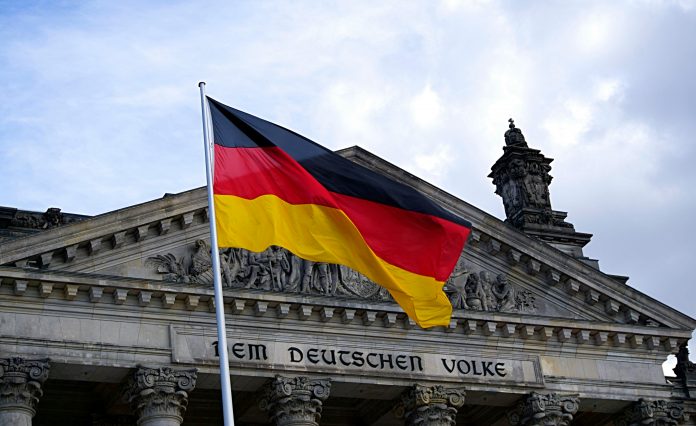
The German government has taken an equally firm stance. Berlin owns roughly 12% of Commerzbank, a legacy stake dating back to the global financial crisis, when the government rescued the lender during the 2008-2009 banking turmoil.

German officials have repeatedly described UniCredit’s approach as hostile and have expressed concerns about losing influence over one of the country’s most important financial institutions. The government’s opposition is also part of broader concerns in Germany about foreign acquisitions of strategically important companies, particularly in sectors considered vital to economic stability.

The offer also generated tensions between the two banks during its main phase. Commerzbank noted that many of the shares tendered into UniCredit’s offer had been submitted by investment banks acting as counterparties to derivative transactions rather than by long-term investors expressing support for the proposed combination.

According to Commerzbank, this meant the level of genuine shareholder backing for UniCredit’s proposal may have been lower than the headline figures suggested. UniCredit rejected suggestions that the transaction lacked legitimacy and has maintained that its growing ownership reflects confidence in the strategic merits of closer cooperation between the two banks.

In its statement announcing the results, UniCredit reiterated its willingness to continue discussions with all stakeholders.

“We will continue to seek a constructive engagement with all interested parties,” the bank said.

What Happens Next?

Although UniCredit has emerged with a significantly larger economic interest in Commerzbank, the path toward a full takeover remains uncertain. This is because any attempt to acquire control would likely require further regulatory approvals and could trigger additional scrutiny from German and European competition authorities.

Political resistance is also expected to remain a significant obstacle, particularly given the German government’s continued shareholding and public opposition to the transaction.

Market analysts say UniCredit may instead opt to remain a major shareholder for an extended period while seeking greater cooperation with Commerzbank or waiting for political conditions to become more favorable.

The outcome of the takeover battle is being closely watched across the European banking industry because it could serve as a test case for cross-border consolidation within the eurozone.

European banking executives and regulators have long argued that the region needs larger, more competitive banking groups capable of financing economic growth and competing with U.S. financial giants. However, national political interests, differing regulatory frameworks, and shareholder resistance have historically prevented many cross-border mergers from succeeding.

UniCredit’s growing stake in Commerzbank therefore represents more than an investment in a rival lender. It has become a focal point in the broader debate over whether Europe’s banking sector can overcome political and structural barriers to create stronger pan-European financial institutions capable of competing on a global scale.