DD
MM
YYYY

PAGES

DD
MM
YYYY

spot_img

PAGES

Home Blog Page 6

Fireblocks Brings In Former SEC Commissioner As US Crypto Rules Take Shape, as Israel’s Largest Bank Plans Crypto Trading by 2027

0

Fireblocks, the enterprise platform securing more than $14 trillion in digital asset transactions, today appointed Elad Roisman as Chief Regulatory and Policy Officer and General Counsel, Regulatory.

Roisman will lead Fireblocks’ regulatory strategy and policy engagement, along with legal work on regulatory matters. He will also serve as Fireblocks’ principal liaison to regulators and standards bodies as digital asset legislation and regulation takes shape across the United States, Europe, and other major markets.

He joins the leadership team and is based in Washington, D.C. Stablecoins have become a core settlement rail for institutions. Tokenized real-world assets, including money market funds and private credit, are moving from pilot to production as banks and asset managers bring traditional instruments onchain.

Regulation is catching up: the United States now has federal stablecoin law and is negotiating market structure legislation, the European Union is implementing MiCA, and supervisors across Asia and the Middle East are setting their own standards.

For the hundreds of banks, payment companies, and asset managers that operate on Fireblocks, those rules decide how fast they can build and grow onchain-based revenues.

As an SEC Commissioner and Acting Chairman, Roisman voted on more than one hundred rulemakings and over one thousand enforcement actions, and represented the agency before Congress and international bodies including the International Organization of Securities Commissions and the Financial Stability Board.

He previously served as Chief Counsel to the U.S. Senate Committee on Banking, Housing, and Urban Affairs, and as Chief Counsel at NYSE Euronext. Most recently, at Cravath, he advised financial institutions and fintechs on digital asset regulation and testified before Congress on market structure legislation.

Michael Shaulov, Co-Founder and CEO of Fireblocks, said: “Having people who understand the mindset and missions of regulators enables us to help inform policymakers and support our clients as rules come into place.”

That matters now more than ever, as stablecoins scale into everyday payments and real-world assets move onchain at institutional pace. Elad has both been a regulator and a legal advisor to many of the world’s most prominent financial institutions.

As customers move deeper into regulated finance, that experience will enable our infrastructure to adapt and lead in a dynamic regulatory environment.

Elad Roisman, Chief Regulatory and Policy Officer at Fireblocks, said: “Today, we stand at an exciting time where there has never been more interest and work done by regulators and legislators to enable further innovation in this important space.”

The work now is engaging with these policymakers on the rapidly evolving digital asset environment and supporting institutions as they build and grow the next phase of the financial system under the new regulations and laws. I’m energized to embark on that work with the industry leading team at Fireblocks.

Fireblocks is the world’s most trusted digital asset infrastructure company, empowering global institutions to build, manage and grow their business on the blockchain. With the industry’s most scalable and secure platform.

Fireblocks streamline stablecoin payments, settlement, custody, tokenization, trading, accounting operations, and compliance reporting – enabling everything from institutional finance to consumer-facing digital experiences across the largest ecosystem of banks, payment providers, stablecoin issuers, exchanges and custodians.

Thousands of organizations – including Worldpay, BNY, Galaxy, and Revolut – trust Fireblocks to secure more than $14 trillion in digital asset transactions across 150+ blockchains.

Israel’s Largest Bank Plans Crypto Trading by 2027

Israel’s largest bank is preparing to deepen its involvement in the cryptocurrency market, with plans to offer customers direct access to crypto trading by 2027.

The move would represent another significant step in the integration of digital assets into the country’s traditional financial system, potentially bringing Bitcoin, Ether, Solana and other major cryptocurrencies closer to mainstream investors.

Reports indicate that Bank Leumi, through its digital banking platform Pepper, is preparing to expand its cryptocurrency offering. The bank has previously positioned Pepper as a bridge between conventional banking and digital assets.

In 2022, Pepper announced a partnership with Paxos to enable customers to buy, hold and sell cryptocurrencies, initially focusing on Bitcoin and Ethereum, subject to regulatory approval.

The planned expansion comes as Israel’s banking sector becomes increasingly comfortable with crypto-related financial services.

The Bank of Israel has acknowledged the potential for crypto and blockchain technology to generate innovation in financial services, while emphasizing the importance of risk management, consumer protection and regulatory compliance.

The 2027 timeline is therefore important because it suggests that crypto adoption is moving beyond experimental initiatives toward a more structured banking product. Rather than forcing customers to rely entirely on centralized exchanges or external wallets.

Integration into a bank’s digital platform could allow investors to access cryptocurrencies alongside traditional financial products. Convenience is likely to be one of the strongest drivers of adoption.

Traditional crypto ownership can involve opening exchange accounts, managing private keys, navigating wallets and handling tax obligations. A bank-integrated service could simplify much of this process.

Bank Leumi’s earlier Pepper initiative specifically highlighted the ability to trade without downloading a separate crypto wallet, while tax collection could be incorporated into the transaction process.

However, the expansion also demonstrates how important regulation has become for institutional crypto adoption. Israel’s banking supervisors have required banks engaging in crypto-related activities to conduct risk assessments and demonstrate that they can manage these services safely and in accordance with applicable regulations.

Banks must also notify the banking supervisor before entering crypto-related activities. This regulatory framework could ultimately strengthen the market. Bank participation gives customers an additional layer of institutional oversight.

While regulators gain greater visibility into how digital assets and Stablecoins interact with the traditional financial system. At the same time, banks must manage risks associated with market volatility, money laundering, cybersecurity and consumer protection.

The broader trend extends beyond Israel. Banks around the world are increasingly experimenting with crypto trading, custody and tokenized assets. In July 2026, Swiss bank BancaStato launched regulated crypto trading through its banking applications.

Allowing customers to trade Bitcoin, Ethereum, Litecoin and Solana. For Israel, the significance of Leumi’s planned expansion goes beyond the bank itself. Direct cryptocurrency access through one of the country’s largest financial institutions could normalize digital assets for a much wider population.

If the 2027 rollout proceeds as planned, cryptocurrency trading may increasingly become viewed not as an alternative financial activity operating outside traditional banking, but as another investment service offered within it. That shift could mark an important milestone in Israel’s evolving digital-asset economy.

PayPal’s $53 Billion Rejection and JPMorgan’s Global Food Crisis Warning

0
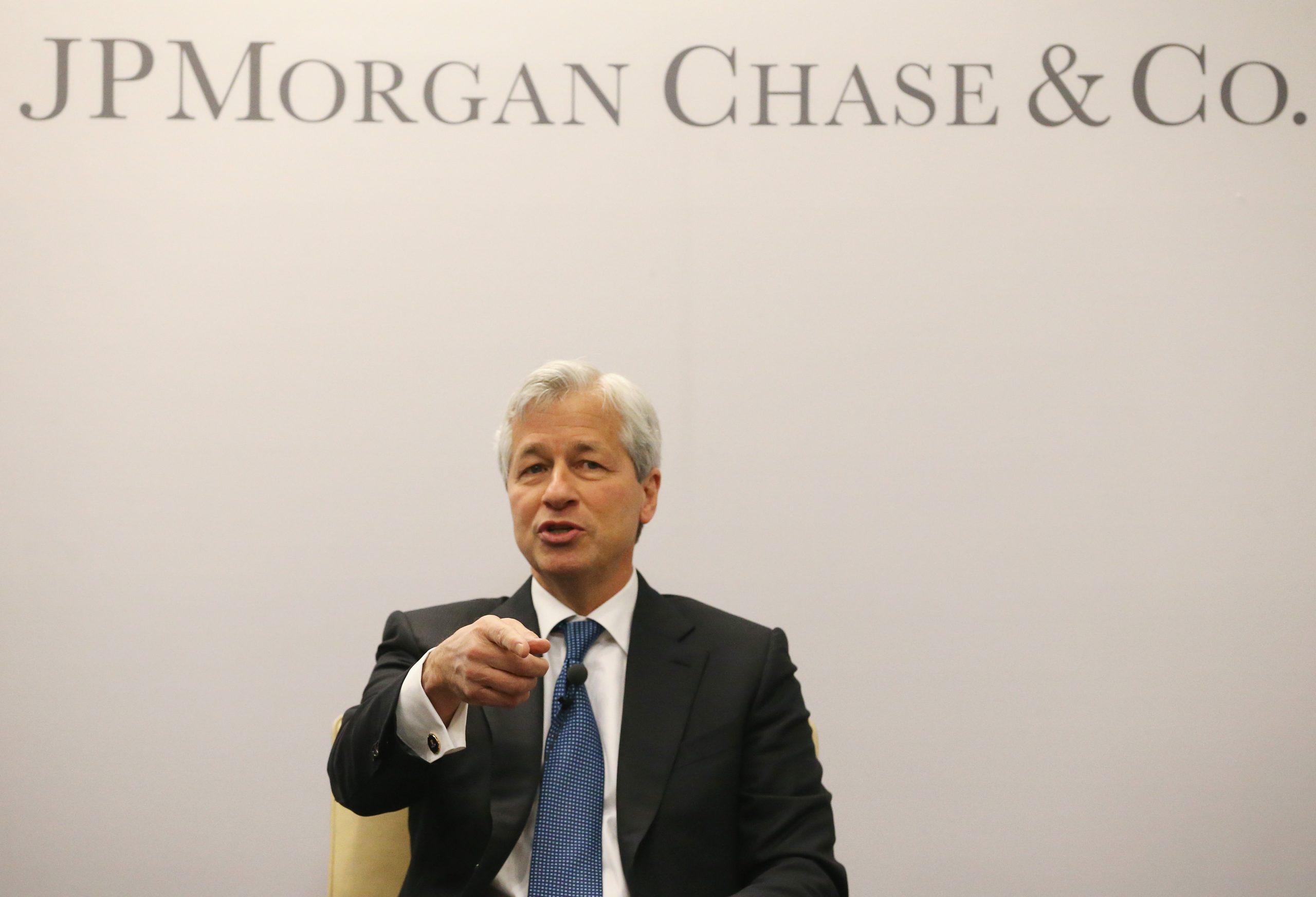
JP Morgan Chase puts contents through its CEO account, it goes viral. But the same content via JPMC account, no one cares (WSJ)

PayPal’s rejection of a $53 billion takeover proposal and JPMorgan’s warning of a possible global food crisis next year may appear to belong to separate worlds.

One concerns fintech consolidation and corporate valuation; the other involves fertilizer, shipping routes, climate and food inflation.

Yet both developments reveal a common vulnerability in the global economy: systems that look stable can become fragile when strategic pressures, supply disruptions and changing expectations collide.

In July, PayPal’s board rejected a $60.50-per-share proposal from Stripe and private-equity firm Advent International, valuing the payments company at more than $53 billion.

Reuters reported that the offer represented roughly a 28% premium to PayPal’s share price and was supported by about $50 billion in committed bank financing. PayPal nevertheless considered the proposal insufficient, effectively betting that its turnaround strategy can generate greater value independently.

The decision places pressure on PayPal’s leadership. Chief Executive Enrique Lores is pursuing cost reductions, organizational restructuring and greater use of artificial intelligence while attempting to accelerate growth across Venmo, Braintree and other businesses.

The company is asking investors to believe that operational improvements will eventually be worth more than the immediate premium offered by potential buyers. The story has not ended. Recent reports indicate that PayPal has reopened discussions with Stripe and Advent about a possible sale at a higher price.

The development suggests that the rejection was not necessarily a permanent refusal, but rather a negotiating position based on valuation.

At the same time, JPMorgan has issued a warning that carries consequences. The bank says global food production could face pressure from disruptions around the Strait of Hormuz combined with the possibility of a historically strong El Niño.

These forces could affect fertilizer supplies, agricultural costs, crop yields and ultimately food prices. JPMorgan’s own analysis highlights how geopolitical conflict and climate conditions can interact through supply chains.

The Strait of Hormuz is important because disruptions there can affect energy markets and shipping. Higher energy costs can feed into fertilizer production, transportation and farm operations. Fertilizer shortages or elevated prices can then reduce agricultural productivity, creating a second-round shock that reaches consumers far from the original conflict zone.

The potential El Niño risk adds a layer of uncertainty. Extreme weather can disrupt harvests, alter rainfall patterns and reduce yields in major agricultural regions. If that occurs while fertilizer and transportation costs remain elevated, food inflation could accelerate.

One recent report citing JPMorgan projections said global food inflation could rise from 2.8% in the first half of 2026 to 5% in the first half of 2027. The PayPal and food-supply stories illustrate two forms of economic repricing.

PayPal is negotiating over the value of a mature digital-payments network in an era shaped by artificial intelligence, stablecoins and new fintech competitors. Agriculture, is confronting the physical constraints of energy, fertilizer, logistics and climate.

For markets, the lesson is that valuation and resilience are becoming inseparable. Companies must prove that their strategies can withstand technological disruption, while governments and businesses must prepare for supply shocks that can move rapidly from geopolitical events into household budgets.

PayPal’s $53 billion rejection may lead to a larger transaction. JPMorgan’s warning may or may not become a food crisis. But both developments underline the same principle: in an interconnected economy, risks can quickly become financial realities.

Cboe Seeks Approval for 3x Bitcoin and Ethereum ETFs

0

The U.S. cryptocurrency exchange-traded fund market could be entering a more aggressive phase as Cboe BZX Exchange seeks approval from the Securities and Exchange Commission (SEC) to list triple-leveraged Bitcoin and Ethereum ETFs.

The proposed products would aim to deliver three times the daily performance of their respective underlying assets, potentially giving investors a new way to amplify exposure to the two largest cryptocurrencies.

According to the filing, the proposed funds would be sponsored by Volatility Shares and would primarily use futures contracts traded on regulated CME markets to achieve their investment objectives.

The broader filing also includes 3x products linked to gold, silver, crude oil and natural gas. However, the Bitcoin and Ether proposals stand out because they could become the first U.S.-listed ETFs offering triple daily leveraged exposure to these digital assets.

The development represents another significant expansion of crypto investment products within traditional financial markets. Spot Bitcoin and Ether ETFs have already created a regulated route for investors who want cryptocurrency exposure without directly holding digital assets.

Leveraged ETFs take that process considerably further by allowing traders to pursue amplified daily returns through a familiar brokerage structure.

Yet the 3x structure also introduces substantially greater risk.

If Bitcoin rises 5% in a single session, a fund targeting three times its daily performance could theoretically gain approximately 15%, before fees, expenses and tracking differences. The reverse is equally important: a 5% decline in Bitcoin could translate into roughly a 15% daily loss for the leveraged fund.

Moreover, investors cannot simply multiply the long-term performance of Bitcoin or Ether by three and expect the same result. Leveraged ETFs typically reset their exposure daily. Consequently, volatility and the sequence of daily returns can cause significant performance differences over longer periods. In highly volatile markets.

This compounding effect can erode returns even when the underlying asset eventually moves in the anticipated direction. That distinction makes these products fundamentally different from conventional spot crypto ETFs.

They are primarily designed as short-term trading instruments rather than straightforward buy-and-hold vehicles. Their potential appeal is therefore likely to be strongest among sophisticated traders seeking to capitalize on short-term movements in Bitcoin and Ether.

The timing is also notable. The proposed ETFs arrive as the cryptocurrency market continues to mature while investors debate the sustainability of institutional demand. Recent reports have pointed to periods of weaker flows into existing Bitcoin and Ethereum ETFs, making the push toward more leveraged products particularly interesting.

The proposal also demonstrates how rapidly the ETF ecosystem is evolving. Crypto products are moving beyond simple spot exposure toward increasingly specialized strategies involving leverage, options and derivatives. If regulators approve the proposal, it could encourage other issuers to pursue similarly aggressive products.

However, SEC approval is not guaranteed. The filing requires regulatory consideration because leveraged products fall outside certain generic listing standards. Cboe’s proposal highlights the growing institutionalization of cryptocurrency markets.

A 3x Bitcoin or Ethereum ETF could increase liquidity, trading activity and accessibility, but it would also magnify losses and introduce greater complexity. If approved, the products would mark another important milestone for crypto finance.

One that could expand market access while simultaneously testing how much leverage regulators are willing to permit in digital assets.

Kalshi Faces Order to Halt Most Prediction Markets in Washington State

0

Kalshi, one of the fastest-growing prediction market platforms in the United States, is facing another major regulatory setback after a Washington state judge ordered the company to sharply restrict its operations.

The ruling requires Kalshi to stop offering a broad range of event contracts to users in Washington state, intensifying a growing legal battle over whether prediction markets should be treated primarily as federally regulated financial products or as gambling activities governed by individual states.

The development is important because Kalshi operates under federal oversight from the Commodity Futures Trading Commission (CFTC). The company has argued that its event contracts fall under federal commodities law and therefore should not be subject to conflicting state gambling regulations.

Washington authorities, however, have taken the opposite position, arguing that contracts involving sports, elections and other events constitute unlawful gambling under state law.

The latest order came from King County Superior Court Judge John McHale, following an earlier preliminary injunction in July.

The judge concluded that Kalshi was likely violating Washington’s gambling laws and directed the company to significantly reduce the markets it makes available to residents. The restrictions cover contracts connected to sports, elections, politics, entertainment, culture, technology and science, among other categories.

Kalshi has challenged the state’s authority to impose these restrictions and maintains that federal law gives the CFTC jurisdiction over its event contracts. The dispute therefore extends beyond one company or one state.

At its core is a question about regulatory jurisdiction: can states classify federally regulated prediction contracts as gambling and prohibit them, or does federal commodities law preempt those state restrictions?

The conflict comes as prediction markets are rapidly expanding across the United States.

Platforms such as Kalshi and Polymarket have attracted significant attention by allowing users to trade contracts tied to elections, sports, economic indicators, weather, geopolitical developments and other real-world outcomes.

Supporters argue that these markets provide useful information by allowing participants to express expectations through financial positions. Critics contend that sports and political contracts increasingly resemble conventional betting and could create risks involving gambling addiction, market manipulation and conflicts of interest.

The Washington dispute is particularly significant because it could establish another important precedent for how prediction markets operate across state lines. Kalshi is already facing regulatory and legal challenges elsewhere.

Nevada’s gaming regulator, for example, has pursued penalties connected to alleged failures to comply with geographic restrictions, while Kalshi has argued that state enforcement efforts conflict with federal law.

The company has encountered scrutiny over the nature of individual markets. FlightAware recently sued Kalshi over contracts involving flight cancellations, alleging unauthorized use of its data and branding, although the lawsuit was subsequently withdrawn.

For Kalshi, the Washington ruling could mean greater reliance on geofencing and more complicated compliance systems. It also raises the possibility of a prolonged federal-state legal confrontation that could eventually require intervention from higher courts.

Importantly, the recent order concerns Washington state, not Washington, D.C. That distinction matters because prediction-market availability and legal challenges vary by jurisdiction. The broader issue remains unresolved: as prediction markets evolve into major financial and information platforms, regulators must determine where financial innovation ends and gambling begins.

Kalshi’s Washington battle therefore represents more than a dispute over individual contracts. It is part of a larger struggle over who gets to regulate the next generation of prediction markets—and whether the United States will develop one national framework or a fragmented state-by-state system.

World Liberty Financial Receives Preliminary Approval to Become a Bank

0

World Liberty Financial, the cryptocurrency venture closely associated with the Trump family, has received preliminary conditional approval from the U.S. Office of the Comptroller of the Currency (OCC) to establish a federally chartered national trust bank.

The development represents a significant step in the company’s effort to bring its stablecoin operations deeper into the regulated U.S. financial system. The proposed institution, World Liberty Trust, would not function like a conventional commercial bank.

A national trust bank can provide services such as asset custody, payments and stablecoin-related operations, but it generally cannot accept traditional customer deposits or issue loans.

This distinction is important because the approval does not mean World Liberty is becoming a full-service bank competing directly with institutions such as JPMorgan or Bank of America.

Instead, the proposed bank would focus heavily on USD1, World Liberty Financial’s dollar-backed stablecoin. According to reporting, USD1 has grown to more than $4 billion in circulation, making the stablecoin a central component of the company’s broader financial strategy.

With a national trust charter, World Liberty would be positioned to issue, redeem and safeguard USD1 under direct federal oversight rather than relying entirely on third-party infrastructure.

The application was originally submitted in January 2026, when WLTC Holdings sought authorization from the OCC to establish World Liberty Trust Company as a national trust bank. At the time, the company said the institution would be designed specifically around stablecoin issuance, custody and conversion services.

It also argued that bringing these activities under one regulated entity could improve efficiency for institutional users, exchanges and other digital-asset businesses. The preliminary approval, however, is not the final stage.

World Liberty must satisfy conditions imposed by regulators before receiving a final charter. Reuters reported that the conditions include maintaining at least $20 million in capital and implementing appropriate internal audit requirements. The OCC will continue supervising the institution as it moves toward final authorization.

The development carries considerable political significance. World Liberty Financial was founded by members of the Trump family and their business associates, making its banking application unusually politically sensitive.

Critics in Congress have questioned whether the venture’s connections to President Donald Trump and foreign investors could create conflicts of interest or national-security concerns. Congressional Democrats previously urged regulators to scrutinize the application closely.

For the broader cryptocurrency industry, the approval could nevertheless represent an important precedent. Digital-asset companies have increasingly sought federal banking charters as stablecoins move from niche crypto instruments toward mainstream payments and settlement infrastructure.

A regulated trust-bank structure could give stablecoin issuers greater credibility with institutional customers while bringing their operations more directly under federal supervision.

The World Liberty development therefore illustrates the accelerating convergence between cryptocurrency and traditional finance.

Stablecoins are increasingly being treated not simply as trading tools but as potential infrastructure for payments, treasury management and cross-border settlement. If World Liberty ultimately receives its final charter.

The company will have taken a major step toward controlling more of the infrastructure surrounding USD1. For the crypto sector, the case could become an important test of how Washington balances innovation, financial regulation, political conflicts and the rapidly expanding role of dollar-backed digital assets.