DD
MM
YYYY

PAGES

DD
MM
YYYY

spot_img

PAGES

Home Blog Page 6

Oil Tumbles, Treasury Yields Retreat And Gold Climbs As Hopes Of Renewed U.S.-Iran Talks Lift Global Markets

0

Global financial markets began August on a more optimistic footing on Monday as renewed hopes for diplomacy between the United States and Iran triggered a broad repricing across asset classes, sending oil prices sharply lower, pulling U.S. Treasury yields down, lifting gold and supporting equities.

The prospect of negotiations eased fears of a prolonged disruption to Middle East energy supplies, reducing inflation concerns that had intensified during the recent conflict and prompting investors to rotate back into risk assets.

U.S. stock futures pointed to a stronger opening, with S&P 500 futures rising 0.6% and Nasdaq futures gaining 0.4%, while European equities advanced after a volatile July dominated by geopolitical tensions and questions over artificial intelligence spending.

The biggest move came in energy markets.

Brent crude plunged more than 5%, falling $4.40 to $83.52 per barrel after U.S. President Donald Trump said negotiations with Iran would resume on Monday. Trump had previously halted plans for additional military strikes to pursue a diplomatic solution aimed at reopening the Strait of Hormuz, the strategic waterway through which roughly one-fifth of global oil consumption passes.

The decline in crude prices marked a sharp reversal after oil had surged during the U.S.-Iran conflict, when fears of supply disruptions and shipping risks in the Gulf pushed prices to multi-year highs. Lower oil prices immediately eased pressure on inflation expectations, reducing concerns that central banks would need to keep interest rates elevated for longer.

The optimism, however, was tempered by Iran’s response.

Iranian Foreign Ministry spokesperson Esmail Baghaei dismissed reports of imminent direct negotiations with Washington, saying Tehran currently has “no immediate plan” for talks with the United States and remains engaged only with Oman over discussions related to the Strait of Hormuz.

The easing in oil prices reverberated across fixed-income markets.

U.S. Treasury yields fell as investors reduced expectations that energy-driven inflation would force the Federal Reserve to tighten monetary policy further.

The benchmark 10-year Treasury yield declined seven basis points to 4.676%, while the policy-sensitive two-year yield fell six basis points to 4.231%. The 30-year Treasury yield slipped to 5.216%.

Bond prices and yields move in opposite directions, meaning investors returned to government debt as inflation expectations moderated.

The retreat partially reversed last week’s sharp selloff, when long-dated Treasury yields climbed to their highest level since 2007 after the Federal Reserve left interest rates unchanged at 3.5% to 3.75% but faced an unusually hawkish split among policymakers, with three officials voting for a rate increase.

Several Fed officials have warned that persistent inflation risks, including higher energy prices, could still justify tighter monetary policy if price pressures fail to ease.

“While the decline in short-dated yields reflects a more dovish near-term policy outlook, the rise in long-end yields signals growing concern that Chair Warsh may prove unwilling to act aggressively enough should inflation remain elevated,” said Seema Shah, chief global strategist at Principal Asset Management.

“The bond market is effectively testing the Fed’s credibility.”

Gold also benefited from the shift in market expectations.

Spot gold gained 0.3% to $4,052.96 per ounce, while U.S. gold futures edged 0.2% higher to $4,051.70.

The precious metal was supported by a weaker U.S. dollar and declining Treasury yields, both of which improve the appeal of non-yielding assets such as gold. The metal also continues to benefit from lingering geopolitical uncertainty, as investors maintain defensive positions even while hopes for diplomacy improve.

Gold has now posted its first monthly gain in five months after advancing about 1% in July, suggesting investors continue to view it as an important hedge against geopolitical risks, inflation shocks and market volatility.

Equity investors also drew support from another resilient corporate earnings season.

More than half of S&P 500 companies have now reported quarterly results, with approximately 86% exceeding analysts’ earnings expectations, according to research from Lombard Odier Investment Managers.

The earnings performance has helped offset concerns surrounding elevated valuations, slowing global growth and the enormous capital expenditure commitments tied to artificial intelligence infrastructure.

“For equity markets, the fundamental picture remains encouraging,” said Bruno Schneller, managing partner at Erlen Capital Management.

“Earnings have generally held up well, and companies with strong pricing power and resilient business models continue to outperform.”

European markets extended recent gains, with the pan-European STOXX 600 rising 0.4% and Germany’s DAX climbing 1.4% to a fresh intraday record.

Healthcare stocks attracted attention after reports that Bristol Myers Squibb and AstraZeneca held preliminary discussions over a potential merger that could create the world’s largest pharmaceutical company, with a combined value approaching $400 billion. AstraZeneca shares briefly fell nearly 7% following the report.

Asian markets painted a different picture.

Japan’s Nikkei 225 fell 1%, while South Korea’s KOSPI slumped more than 5%, extending a technology-led selloff that has gathered pace as investors reassess the sustainability of AI-related capital spending.

The weakness follows growing concerns that record investments in AI infrastructure may take longer than expected to generate meaningful returns, leading investors to rotate out of richly valued semiconductor and technology stocks. Those concerns have become one of the defining themes of global markets in recent weeks, particularly after several major technology companies reaffirmed plans to continue spending aggressively on AI infrastructure while offering limited visibility on the pace of future monetization.

Currency markets also reflected improving risk sentiment.

The Japanese yen strengthened to a three-month high after U.S. and Japanese authorities confirmed coordinated intervention to support the currency, while the weaker dollar added further support to gold and other commodities priced in the U.S. currency.

Markets will now turn their attention to July U.S. manufacturing PMI data later on Monday, alongside another busy week of corporate earnings, for fresh clues on the health of the world’s largest economy.
Cramer Says Iran War Basket Trades Create Investment Opportunities, and Amazon is Reshaping Wall Street’s View of AI Spending

0

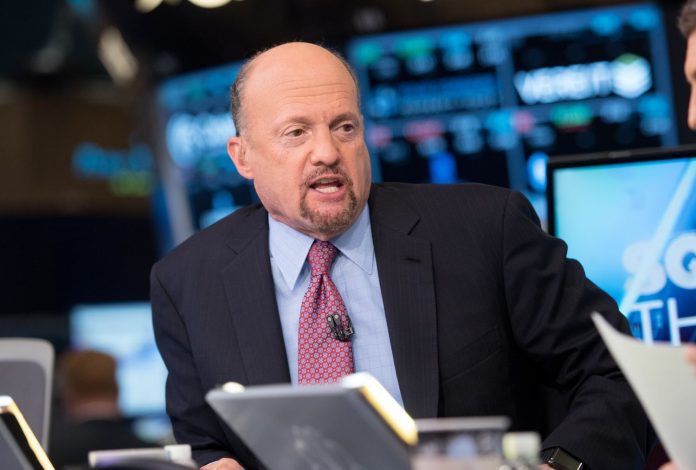
CNBC’s Jim Cramer says the prolonged U.S.-Iran conflict has amplified one of Wall Street’s most powerful trading trends, with investors increasingly buying and selling stocks in broad thematic “basket trades” rather than on company-specific fundamentals, creating pricing distortions that could offer opportunities for long-term investors.

Speaking on CNBC’s Mad Money on Monday, Cramer noted that the surge in basket trading has caused many stocks to move in lockstep with geopolitical headlines and broader market narratives instead of their underlying earnings prospects.

“The best thing? They create real opportunities, as the stocks divorce themselves from the fundamentals until the companies report,” Cramer said. “There are big gains to be had when the worth of the baskets blows up in the face of real earnings.”

According to Cramer, while thematic investing has become a dominant force in modern markets, earnings season continues to remind investors that long-term valuations are ultimately determined by business performance rather than short-term market sentiment.

Cramer said investors are grouping companies into thematic baskets that rise or fall together based on macroeconomic developments such as the Iran conflict, inflation expectations, artificial intelligence and consumer spending trends.

Those trades, he argued, have become particularly influential as geopolitical uncertainty drives rapid shifts in investor positioning.

While basket trading can dominate daily price movements, Cramer believes it often creates temporary disconnects between stock prices and corporate fundamentals, providing attractive entry points for patient investors.

Boeing Caught in Geopolitical Trading

One example, Cramer said, is Boeing.

The aircraft manufacturer’s shares have been trading alongside developments in the Middle East, rallying whenever diplomatic progress appears likely and retreating as tensions escalate.

Yet Cramer said those daily swings have little bearing on Boeing’s long-term investment case.

“Boeing, the company, not Boeing the trading plaything, gets valued on cash flow and production,” he said.

Instead of focusing on geopolitical headlines, investors should pay closer attention to the company’s production recovery and backlog of roughly 6,200 commercial aircraft, which provides years of future revenue visibility.

Retail Stocks Become Another Basket

Retailers have also become part of a broader thematic trade. According to Cramer, concerns that higher oil prices could fuel inflation prompted investors to rotate into defensive retailers such as Costco Wholesale and Walmart, companies viewed as beneficiaries when consumers seek lower prices during periods of economic pressure.

At the same time, investors sold more discretionary retailers, including Ralph Lauren, Target Corporation and Williams-Sonoma.

Cramer said the distinction has become exaggerated.

“Costco and Walmart are both excellent evergreen retailers,” he said. “You should own them regardless of the state of the war.”

His argument suggests investors should focus less on short-term macro themes and more on the long-term competitive advantages of individual businesses.

AI Creates Wall Street’s Biggest Basket Trade

Technology stocks have become the market’s largest thematic trade. For much of the year, investors overwhelmingly favored companies supplying artificial intelligence infrastructure, including semiconductor manufacturers and cloud infrastructure providers, while broadly selling enterprise software companies amid fears AI could disrupt traditional subscription-based business models.

Cramer said that trade has recently begun to unwind as investors recognize differences in company fundamentals.

Software companies such as ServiceNow and Salesforce have started outperforming as stronger earnings demonstrated that AI is enhancing rather than undermining many enterprise software businesses.

The shift illustrates Cramer’s broader point that earnings ultimately determine winners and losers, even after prolonged periods dominated by thematic investing.

“It’s good to see that the fundamentals still matter, even if it only happens during earnings season, four times a year,” he said.

Amazon Changes The AI Investment Narrative

Cramer also noted that Amazon Chief Executive Andy Jassy fundamentally changed Wall Street’s perception of massive AI-related capital spending during the company’s latest earnings call.

For months, investors questioned whether technology companies were investing too aggressively in data centers, chips and AI infrastructure without a clear path to generating adequate returns.

According to Cramer, Jassy provided the explanation investors had been waiting for.

“Until Jassy spoke, the market seemed highly skeptical of how these megacap tech companies were spending money,” Cramer said.

“That’s no longer the case.”

He said Jassy successfully shifted investor attention away from the size of Amazon’s capital expenditure budget toward the long-term economics of AI infrastructure.

Amazon recently increased planned capital spending from $200 billion to $220 billion, yet the stock recorded its biggest one-day gain in more than a decade after investors embraced management’s explanation of how those investments would generate future cash flows.

Jassy explained that much of the spending is front-loaded.

Capital is required initially to construct data centers and install servers, networking equipment and other computing infrastructure. Once operational, however, those facilities begin generating revenue almost immediately while continuing to produce cash flow for decades.

“Once a data center opens with servers plugged in,” Jassy said, “we start generating significant revenue right away and then get to monetize these data centers for 30-plus years without having to spend that startup capital again.”

For investors, the comments helped reframe AI infrastructure spending as a long-term investment rather than an ongoing cost.

Cramer contrasted Amazon’s communication strategy with those of several other technology giants.

He said Alphabet also increased its capital expenditure guidance but failed to clearly articulate how those investments would translate into future earnings.

“I believe the same numbers explained differently would’ve sent the stock higher, not lower,” Cramer said.

Microsoft, by comparison, has largely avoided investor skepticism because it is already generating substantial returns from its AI investments through the rapid expansion of Azure cloud services and increasing adoption of its Copilot AI platform.

The strongest criticism was directed at Meta Platforms.

Although Meta continues to spend aggressively on AI infrastructure, Cramer said management has yet to provide investors with a sufficiently detailed roadmap explaining how those investments will generate attractive financial returns.

In particular, he questioned whether Meta intends to commercialize excess computing capacity by renting it to external customers, a strategy adopted by cloud infrastructure providers.

“I was shocked and disappointed that Meta didn’t seem to have a plan,” he said.

Cramer’s assertion has brought to the fore two themes that are increasingly shaping global equity markets.

The first is the growing influence of thematic basket trading, where geopolitical events, inflation expectations and AI narratives can drive large groups of stocks irrespective of company-specific fundamentals. While those trades often dominate short-term market movements, earnings season continues to separate fundamentally strong businesses from weaker ones.

The second is the evolution of investor thinking around artificial intelligence spending. Markets are becoming less concerned about the absolute size of capital expenditure budgets and more focused on management’s ability to demonstrate how those investments will generate sustainable revenue, cash flow and long-term returns. Companies that clearly articulate that path, as Amazon and Microsoft have done, are now being rewarded, while those offering less visibility continue to face greater investor scrutiny.

CXMT Eyes Second Beijing Memory Chip Plant as China Accelerates AI-Driven Semiconductor Expansion

0

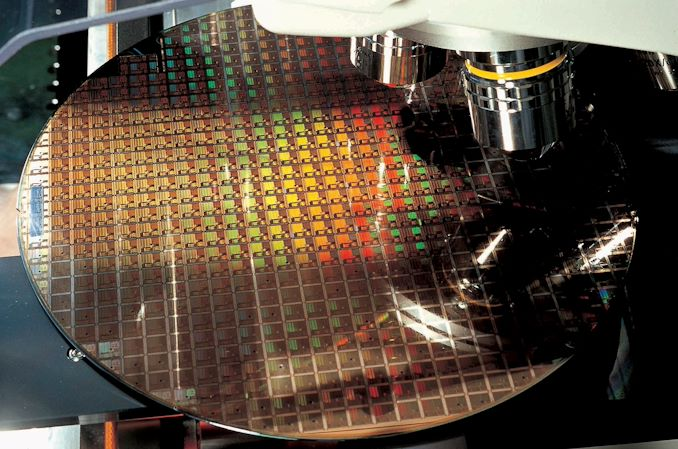
China’s leading memory-chip manufacturer, ChangXin Memory Technologies (CXMT), is considering building a second dynamic random access memory (DRAM) fabrication plant in Beijing as it accelerates a multibillion-dollar expansion aimed at capitalizing on surging global demand for AI memory chips and strengthening China’s semiconductor self-sufficiency ambitions.

According to two sources who spoke to Reuters, CXMT is negotiating financial support with the Beijing Economic-Technological Development Area, widely known as Yizhuang, as well as state-backed technology investment entities, in what could become another major investment in China’s rapidly expanding memory-chip industry.

The proposed facility would add to an aggressive capacity expansion already underway following the company’s record $8.6 billion initial public offering last month, the largest semiconductor listing ever completed on mainland China’s stock market.

Expansion Fueled By AI-Driven Memory Demand

The discussions come at a time when demand for high-performance memory chips has accelerated worldwide, driven by unprecedented investment in artificial intelligence infrastructure. The rapid deployment of AI servers, hyperscale data centers, and advanced computing systems has significantly increased demand for DRAM, a critical component used to process and store data in AI workloads.

The resulting supply constraints have created favorable market conditions for memory manufacturers, encouraging companies worldwide to expand production capacity.

For CXMT, the market upcycle provides an opportunity to scale production while narrowing the technological gap with global industry leaders. The company’s shares have risen approximately 13% since its stock market debut, reflecting investor confidence in long-term demand for memory semiconductors.

Sources said the proposed fabrication plant would be located in Yizhuang, roughly 20 kilometers southeast of central Beijing, where CXMT already operates a 12-inch DRAM fabrication facility through its subsidiary Changxin Jidian.

The company is seeking at least 60 million yuan ($8.9 million) in support from the development zone’s governing authority, while several state-owned technology enterprises have also expressed interest in participating in the financing.

The negotiations remain at an early stage, and both the funding structure and investment size could change before any final agreement is reached. It is also unclear whether financing would come directly from the development zone’s administrative authority or through affiliated state-backed investment vehicles.

Part of A Nationwide Manufacturing Expansion

The proposed Beijing project represents only one component of a much broader manufacturing expansion. Reuters previously reported that CXMT is already constructing new fabrication facilities in Shanghai and Hefei, while also holding discussions with additional local governments regarding future production sites.

When fully operational, those projects could increase the company’s production capacity to more than 600,000 wafers per month, approximately doubling its current manufacturing capability.

Industry estimates suggest that constructing a leading-edge 12-inch DRAM fabrication plant typically requires investments exceeding $10 billion, reflecting the enormous capital intensity of advanced semiconductor manufacturing.

Currently, CXMT operates three 12-inch DRAM fabrication plants—two in Hefei and one in Beijing—with each facility capable of producing roughly 100,000 wafers per month, according to sources familiar with the company’s operations.

The expansion also exposes the intensifying competition among Chinese regional governments seeking to attract strategically important semiconductor projects. Cities now view advanced chip manufacturing as both an economic growth engine and a national strategic priority, offering financing, tax incentives and infrastructure support to secure investments.

CXMT’s development has become closely associated with China’s so-called “Hefei model,” under which the Anhui provincial capital has successfully nurtured advanced technology companies through extensive government-backed financing and industrial policy.

Sources familiar with the matter said Beijing and Shanghai have likewise provided financial backing and policy support as each city seeks to strengthen its position within China’s semiconductor ecosystem.

The company’s existing Beijing operation already received investment from E-Town Capital, the state-backed investment arm of the Yizhuang development zone, alongside its affiliate Beijing E-Town Technology.

Although CXMT remains significantly smaller than the world’s dominant memory manufacturers, it has rapidly emerged as China’s national champion in DRAM production. According to Counterpoint Research, global DRAM production remains heavily concentrated, with Samsung Electronics, SK Hynix and Micron Technology controlling nearly 90% of the global market during the first quarter.

CXMT is currently the world’s fourth-largest DRAM producer but continues to trail the industry’s established leaders in both scale and technological sophistication.

Within China, however, its position has strengthened considerably.

Reuters reported last month that the company has begun raising DRAM prices for domestic customers, including Huawei, indicating growing pricing power as Chinese manufacturers increasingly rely on locally produced memory chips.

Memory chips are among the most critical components powering artificial intelligence, cloud computing, smartphones and high-performance computing systems, making domestic manufacturing a strategic priority for Beijing as technology competition with the United States intensifies.

Washington has continued to impose stringent export controls restricting China’s access to advanced semiconductor equipment and high-end AI chips, prompting Beijing to accelerate investment across the domestic semiconductor supply chain. Expanding indigenous DRAM production reduces China’s dependence on overseas suppliers while supporting national efforts to build a more resilient technology ecosystem capable of sustaining AI development despite external restrictions.

However, ChangXin Memory Technologies has become one of the cornerstones of China’s semiconductor self-sufficiency strategy, benefiting from years of state-backed investment aimed at building domestic capabilities in advanced memory manufacturing. While China has made significant progress in logic chip production through companies such as Semiconductor Manufacturing International Corporation (SMIC), memory semiconductors remain one of the country’s most strategically important areas for expansion.

FirstHoldCo Becomes Nigeria’s First N6tn Banking Group as Earnings Strength and Otedola’s Buying Spree Fuel Historic Rally

0

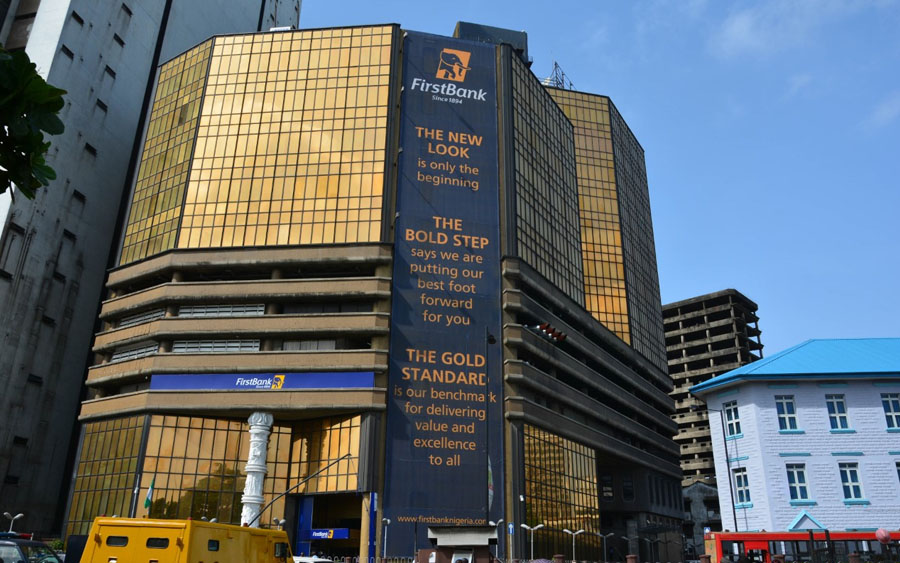
FirstHoldCo Plc has become the first listed Nigerian banking group to surpass a N6 trillion market capitalization, marking a historic milestone for the country’s financial services sector as investors continue to re-rate the stock on the back of strong earnings, improving fundamentals and sustained insider accumulation by billionaire businessman Femi Otedola.

During trading on Monday, August 3, the group’s shares climbed to N136.50, pushing its market value to approximately N6.21 trillion based on about 45.48 billion outstanding shares. The achievement cements FirstHoldCo’s position as Nigeria’s most valuable publicly listed banking group.

The milestone caps one of the strongest rallies on the Nigerian Exchange (NGX) in recent years and comes less than two weeks after the company crossed the N5 trillion valuation threshold for the first time during intraday trading on July 22 following the release of its robust half-year financial results.

At Monday’s intraday high, the stock had gained nearly 185% since the beginning of the year and more than 143% since the end of June, underscoring the extraordinary pace of investor demand.

A Historic Re-Rating In Just One Month

FirstHoldCo’s journey to a N6 trillion valuation has been remarkably swift. The banking group’s shares opened 2026 at N47.90, giving the company a market capitalization of approximately N2.13 trillion.

After briefly declining to N45 in January, the stock gradually recovered to N70 by the end of May, lifting its market value to around N3.11 trillion. That momentum temporarily stalled in June when the shares fell almost 20% month-on-month to N56.05, erasing roughly N562.9 billion from the company’s market value and reducing its market capitalization to N2.55 trillion.

The correction proved short-lived.

From the end of June through early August, the stock staged one of the strongest rallies recorded among Nigeria’s large-cap equities.

By the close of trading on August 3, FirstHoldCo’s share price had surged to N134, representing a 139.1% increase from its end-June level and a 179.8% gain since the start of the year. The rally added approximately N3.54 trillion in market value in just over one month, lifting the group’s valuation from N2.55 trillion at the end of June to N6.09 trillion by the close of trading. In effect, almost 90% of FirstHoldCo’s year-to-date increase in market capitalization occurred after June, highlighting how concentrated the re-rating has been.

The group’s market capitalization increased by 186.2% during the period, slightly outpacing the share price appreciation because the company’s outstanding shares rose modestly from approximately 44.45 billion at the end of 2025 to 45.48 billion.

On Monday alone, the stock closed 3.43% higher at N134, compared with N129.55 on July 31, with approximately 27.6 million shares changing hands.

Strong Earnings Underpin Investor Optimism

The rally has been supported by substantial improvements in the bank’s financial performance. For the first half of 2026, FirstHoldCo reported an 83.5% increase in profit before tax to N653.54 billion, reflecting stronger earnings across its banking operations.

Gross earnings rose 16.7% to N1.93 trillion, while operating income increased 25.8% to N1.38 trillion. Interest income climbed to N1.40 trillion, with net interest income reaching N879.13 billion, supported by higher yields and continued growth in interest-earning assets.

The group also generated N178.51 billion in net fee and commission income, reflecting sustained growth in transaction banking and non-interest revenue streams.

Operational efficiency improved significantly during the period.

The cost-to-income ratio declined to 44.2% from 50.5%, indicating stronger cost discipline, while impairment charges fell 37.4%, suggesting improving asset quality and lower credit losses.

Management has projected full-year profit before tax of more than N1.2 trillion, indicating confidence that the strong earnings momentum will continue through the second half of 2026.

Although FirstHoldCo’s financial performance has improved substantially, the pace of the share-price appreciation has exceeded earnings growth. As of August 3, the stock had gained nearly 180% year to date compared with the 83.5% increase in first-half pre-tax profit.

That suggests investors are valuing not only the earnings already delivered but also expectations of stronger future profitability, improved capital efficiency, continued balance sheet strengthening and enhanced corporate governance.

The market also appears to be assigning a premium to the company’s longer-term transformation strategy under its evolving ownership structure.

Otedola’s Accumulation Changes The Investment Story

A major catalyst behind the rally has been the aggressive accumulation of shares by Chairman Femi Otedola. During July, Otedola acquired 706.13 million shares through Calvados Global Services and an additional 1.779 billion shares directly, representing fresh investments approaching N300 billion.

Those purchases increased his beneficial ownership in the banking group to 25.87%, making him the largest shareholder.

The acquisitions have significantly reduced the stock’s effective free float while reinforcing investor expectations of a stable controlling shareholder committed to long-term value creation.

In an exclusive interview with Nairametrics, Otedola said he intends to increase his ownership beyond 51%, noting that firm shareholder control would enable him to execute the reforms and restructuring needed to unlock the group’s full potential.

He also disclosed that he has invested more than N600 billion of his personal wealth in FirstHoldCo.

The prospect of continued share purchases has strengthened investor demand, with expectations that additional accumulation could further tighten available supply and create a scarcity premium in the stock.

Alibaba Unveils Qwen3.8-Max, Its Most Powerful AI Model

0

Alibaba has unveiled Qwen3.8-Max, its newest and most powerful artificial intelligence model, marking another significant step in China’s effort to narrow the technological gap with leading U.S. AI companies and strengthen its position in the global race for frontier AI.

The model, which is scheduled for release next week, features 2.4 trillion parameters, making it the largest and most capable model in Alibaba’s Qwen family to date. Parameters are the internal numerical values learned during training that influence how an AI model understands language, identifies patterns and generates responses.

While parameter count is no longer the sole measure of AI capability, models at this scale typically possess greater reasoning capacity, stronger contextual understanding and broader task versatility when combined with advanced training techniques.

Alibaba’s announcement was well received by investors. Its U.S.-listed shares rose 4.5% in premarket trading, while its Hong Kong-listed shares gained 7%, reflecting growing confidence that the company remains one of China’s strongest contenders in generative AI.

Over the past year, Chinese developers have dramatically accelerated model releases, responding not only to intense domestic competition but also to rapid advances by U.S. companies including OpenAI, Anthropic, Google and xAI. The competitive landscape has shifted beyond chatbot performance to enterprise deployment, autonomous AI agents, multimodal reasoning and long-context processing, areas increasingly viewed as the next frontier of commercial AI.

A defining feature of Qwen3.8-Max is its one-million-token context window, allowing the model to process and reason across thousands of pages of documents or vast collections of multimedia content in a single session. That capability significantly expands the range of enterprise applications. Instead of analyzing isolated documents, the model can review entire legal case files, corporate archives, financial disclosures, scientific literature, or extensive technical documentation while maintaining contextual consistency throughout.

Long-context models are becoming more valuable for industries such as finance, healthcare, engineering, legal services and scientific research, where professionals routinely work with large datasets that exceed the limits of conventional AI systems.

Alibaba said the model is designed to support software engineering, research, coding, workplace productivity, visual intelligence and other complex, long-duration tasks.

Perhaps the most notable aspect of the announcement is Alibaba’s emphasis on autonomous execution rather than conventional chatbot interactions.

According to the company, Qwen3.8-Max demonstrated the ability to operate with minimal human intervention during internal testing.

“In one internal test, it spent 16 days building and improving an AI coding tool by writing code, testing it, fixing errors, and refining its work on its own,” Alibaba said.

That reflects one of the most important shifts occurring across the AI industry. Rather than simply answering prompts, leading AI developers are racing to build intelligent agents capable of independently planning projects, executing multi-step assignments, evaluating their own output and continuously improving results over days or even weeks.

If those capabilities prove reliable in commercial environments, AI could increasingly automate knowledge-intensive work traditionally performed by software engineers, researchers, analysts and consultants.

Enterprise Adoption Becomes The Next Battleground

Alibaba also highlighted the model’s ability to perform practical business tasks, including reviewing legal documents, conducting financial analysis and supporting architectural 3D modelling. That shows that competition among AI companies is now centered on enterprise productivity rather than consumer chatbots alone.

Businesses represent one of the largest long-term revenue opportunities for AI developers because enterprise customers are typically willing to pay premium subscription fees for models that improve productivity, reduce labor costs and accelerate decision-making. This shift mirrors recent moves by OpenAI, Microsoft, Anthropic and Google, all of which have expanded aggressively into enterprise AI software and workplace automation.

Alibaba said Qwen3.8-Max also represents a significant advance in multimodal AI. The model can understand hundreds of pages of documents, entire television series, or more than 100 hours of livestream video before transforming that information into searchable and interactive knowledge repositories.

Such capabilities demonstrate how AI models are evolving beyond text generation into comprehensive information-processing systems capable of analyzing text, images, and video simultaneously. Multimodal reasoning is widely regarded as one of the industry’s next major growth areas because businesses require AI systems capable of interpreting multiple forms of data within a single workflow.

Alibaba also released benchmark results comparing Qwen3.8-Max with leading global AI models. According to the company, the model achieved performance comparable to, and in some cases surpassing, Anthropic’s Fable 5 across several evaluation benchmarks. Alibaba said Qwen3.8-Max ranked second only to Fable 5 in Vision Arena and fifth in Text Arena.

Although benchmark results should be interpreted cautiously because methodologies vary and companies often highlight favorable tests, the findings nevertheless suggest Chinese AI developers continue to reduce the performance gap separating them from leading U.S. models.

China’s AI Competition Intensifies

The announcement comes only weeks after Moonshot AI introduced Kimi K3, a 2.8-trillion-parameter model that currently ranks as China’s largest AI model by parameter count.

The rapid succession of capable models shows that inside China’s AI ecosystem, competition is becoming as intense as it is outside. Companies including Alibaba, Moonshot AI, Tencent, Baidu and DeepSeek are competing aggressively to establish technological leadership while simultaneously expanding their enterprise customer base.

The pace of development has been particularly notable given continuing U.S. restrictions on exports of advanced AI chips to China. Rather than slowing innovation, those restrictions have encouraged Chinese developers to optimize model architectures, improve software efficiency, and maximize performance using available computing resources.

Beyond the technical specifications, Qwen3.8-Max indicates that, in the global AI race, the competition is no longer defined solely by who builds the largest chatbot. It now revolves around which companies can deliver AI systems capable of functioning as autonomous digital workers that generate measurable economic value across industries.