

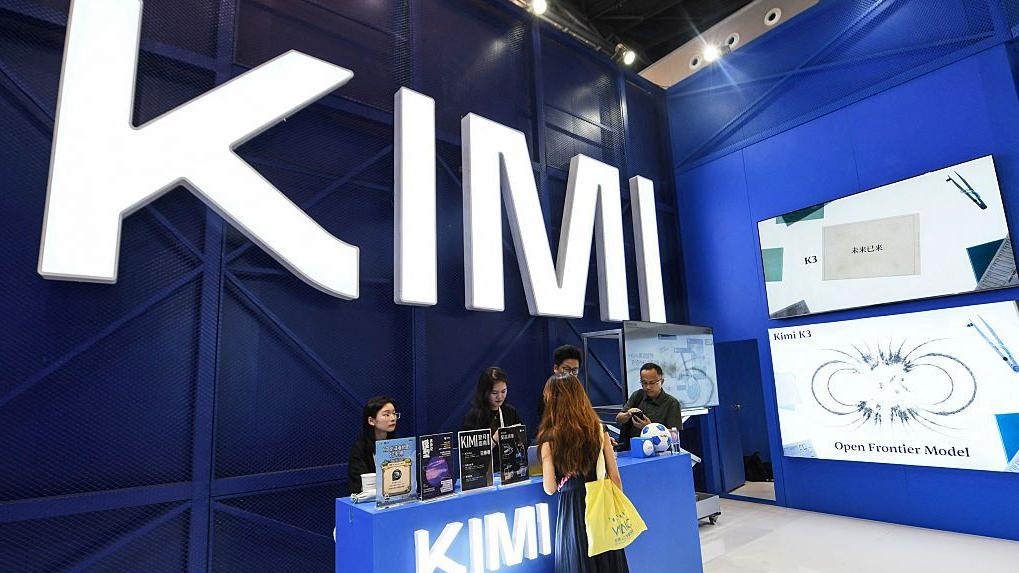
Chinese artificial intelligence startup Moonshot has unveiled Kimi K3, a 2.8 trillion-parameter model that it says is the world’s largest open-weight AI system, intensifying competition between Chinese and U.S. AI developers as Beijing’s open-source ecosystem rapidly closes the technological gap with Silicon Valley.
The launch represents another milestone in China’s accelerating AI development and reinforces a broader trend reshaping the global industry. Rather than merely catching up to U.S. leaders, Chinese AI companies are increasingly competing at the frontier through open-weight models that combine advanced capabilities with substantially lower deployment costs.
Moonshot said Kimi K3 delivers performance approaching Anthropic’s frontier Fable models, while offering enterprises and developers the flexibility to download, customize and deploy the model themselves, an attractive proposition as businesses seek alternatives to expensive proprietary AI services.
Register for the next Tekedia Mini-MBA.
Register for Tekedia AI in Business Masterclass.
Join Tekedia Capital Syndicate and co-invest in great global startups.
The announcement comes just weeks after Anthropic’s Fable and Mythos models were withdrawn from non-U.S. markets following U.S. government security restrictions, a development that has created new opportunities for Chinese developers to expand internationally, particularly in emerging markets.
Kimi K3 is the latest example of how Chinese AI firms are shortening the innovation cycle.
Companies including Moonshot, Z.ai, MiniMax, DeepSeek, Alibaba, Meituan and Zhipu have released capable foundation models over the past year, challenging the long-held assumption among Western analysts that Chinese AI technology trails American competitors by six months or more.

That perception has steadily weakened as Chinese models have demonstrated competitive performance across coding, reasoning, mathematics, and agent-based tasks while often costing significantly less to deploy.
The shift has been driven partly by China’s embrace of open-weight AI, allowing developers and enterprises to build customized applications without relying on proprietary cloud services operated by U.S. technology companies.
Unlike closed models from OpenAI, Anthropic and Google, open-weight systems provide access to model weights, enabling organizations to fine-tune models for specialized tasks, deploy them within private infrastructure and avoid recurring API fees.

A 2.8 Trillion-Parameter Model
Moonshot said Kimi K3 is the first publicly released open-weight model to approach the 3 trillion-parameter threshold.
Parameters are the internal mathematical variables an AI model learns during training. While a larger parameter count generally denotes greater model capacity, it does not automatically translate into superior performance. Training quality, architecture, data, and inference optimization are equally important.
Even so, Kimi K3’s scale places it among the largest AI models ever announced.
The model includes a one-million-token context window, allowing it to process and retain extraordinarily large volumes of text, code and documentation within a single prompt. That capability makes the model particularly suited for enterprise workloads involving extensive technical documentation, software development, legal analysis, scientific research and long-form reasoning.
Moonshot said the model was designed specifically for advanced reasoning, long-horizon coding and knowledge-intensive work requiring sustained contextual understanding.
Competitive Benchmark Performance
Moonshot claims Kimi K3 delivers performance approaching some of the world’s strongest proprietary AI systems.
According to the company, the model performed competitively with Anthropic’s Fable 5 while substantially outperforming Anthropic Opus 4.8, OpenAI’s GPT-5.6 Sol and GPT-5.5 in GPU kernel optimization, an important measure of how efficiently AI software utilizes computing hardware to maximize throughput and minimize latency.
Independent benchmark organizations also reported encouraging results.
Arena.ai ranked Kimi K3 first in web interface-building capability, while Vals AI placed it second overall behind Fable 5 and ahead of GPT-5.6 Sol.
Artificial Analysis found the model delivered performance broadly comparable to OpenAI’s GPT-5.5 and Anthropic’s Opus 4.8, particularly on evaluations measuring complex multi-step reasoning and agentic workflows.
Those results suggest Chinese models are becoming increasingly competitive across a broader range of enterprise applications rather than excelling only in isolated benchmarks.
Efficiency Becoming As Important As Scale
Moonshot said Kimi K3 incorporates two major architectural improvements designed to increase computational efficiency while enabling longer autonomous coding sessions with minimal human supervision.
That represents an important shift in AI development. Rather than simply building ever-larger models, leading developers are increasingly focused on improving inference efficiency, reducing latency and lowering deployment costs, all of which determine the commercial viability of large language models.
Lian Jye Su, chief analyst at Omdia, said cost remains one of China’s biggest competitive advantages.
“They can be run at a fraction of the cost that OpenAI charges its clients,” he said, while cautioning that model size alone does not guarantee superior performance.
Lower operating costs have become an increasingly powerful selling point as enterprises seek to scale AI deployment without dramatically increasing computing budgets.
Despite being open-weight, Kimi K3 is unlikely to be deployed locally by most organizations.
Ryan Fedasiuk, a fellow at the American Enterprise Institute, noted that operating a 2.8 trillion-parameter model would require computing infrastructure costing hundreds of thousands of dollars, placing self-hosting beyond the reach of most individual developers and smaller businesses.
Instead, the model is expected to be deployed primarily through cloud providers, enterprise AI platforms and specialized infrastructure operators.
Investors reacted quickly to the announcement.
Shares of Hong Kong-listed AI companies Zhipu and MiniMax fell 27.7% and 16.5%, respectively, before the close of trading, reflecting concerns that Moonshot’s technological lead could intensify competition within China’s increasingly crowded AI sector.
The reaction underscores how quickly competitive dynamics are evolving as Chinese developers release new frontier models at an accelerating pace.
Before Kimi K3, China’s largest publicly known models included Meituan’s LongCat-2.0 and DeepSeek V4-Pro, each containing approximately 1.6 trillion parameters. Several other Chinese developers have now crossed the trillion-parameter threshold, signaling that frontier-scale AI development is becoming increasingly widespread within China’s technology sector.
Direct comparisons with U.S. models remain difficult because companies, including OpenAI and Anthropic, do not disclose parameter counts for GPT-5.5, Fable or Mythos. Instead, performance comparisons increasingly rely on independent benchmark evaluations rather than model size alone.
Moonshot has emerged as one of China’s fastest-growing AI startups, supported by major investors including Alibaba and Tencent.
The company has expanded aggressively over the past year as competition intensifies among Chinese AI developers seeking to establish leadership in both domestic and international markets.
Bloomberg reported recently that Moonshot is seeking $2 billion in new financing at a valuation of approximately $30 billion ahead of a potential Hong Kong initial public offering.
Kimi K3’s release is seen as another indication that the competitive balance in artificial intelligence is evolving. While U.S. companies continue to lead in frontier proprietary models, Chinese developers have rapidly established themselves as leaders in the open-weight ecosystem by combining strong performance with lower deployment costs and greater customization.
That strategy is proving attractive to enterprises seeking greater control over AI infrastructure, particularly in regions where access to advanced U.S. models has become more restricted because of export controls and national security policies. The result is a bifurcated AI market: one centered on proprietary frontier systems from U.S. firms, and another built around increasingly powerful open-weight models from China.