DD
MM
YYYY

PAGES

DD
MM
YYYY

spot_img

PAGES

Home Blog Page 6

Falcon Finance, Meta and Bitmine Highlight the New Battle for Digital Market Control

0

The latest crypto and technology market signals are highlighting three very different forms of concentration: governance power, artificial-intelligence expectations and corporate accumulation of digital assets.

The developments involving Rarible, Meta and Bitmine show how rapidly capital and influence can shift when markets are increasingly organized around tokens, AI products and balance-sheet strategies.

At Rarible, the immediate issue is governance. A proposal associated with an entity identified as “Falcon Finance” is attempting to take control of the Rarible treasury, with the vote reportedly due to end in three days.

RARI is the governance token of the Rarible ecosystem, and the RARI Foundation remains responsible for the token and its governance following the 2026 separation of the Rarible brand and core platform assets from the foundation ecosystem.

The episode illustrates one of decentralized governance’s central tensions: voting rights can create community ownership, but concentrated voting power can also become a mechanism for transferring control over valuable assets.

The outcome therefore matters beyond one proposal. It raises questions about voter participation, delegated voting power, treasury safeguards and how much economic influence should be required to alter the direction of a decentralized organization.

Falcon Finance itself describes FF as its governance token, with holders participating in decisions concerning its own ecosystem.

Meanwhile, traditional markets are assigning extraordinary value to artificial intelligence. Meta shares jumped about 11% on Monday, adding roughly $192 billion to the company’s market value, as investors responded to early traction for its new Muse AI assistant.

Reuters reported that Muse, launched September 8 in the United States and Canada, can perform tasks such as emailing, booking travel and executing transactions, while Meta offers free and paid subscription tiers. The significance is not simply that Meta released another AI product.

Markets appear to be testing whether AI can become a direct consumer business rather than merely an expensive infrastructure project. Early adoption does not guarantee long-term monetization.

But the reaction demonstrates how quickly investor expectations can change when a technology appears capable of creating a new revenue channel. Crypto markets are experiencing their own version of balance-sheet conviction through Bitmine.

The company purchased another 27,562 ETH for approximately $75 million, bringing its holdings to about 5.98 million ETH, equivalent to roughly 4.9% of Ethereum’s circulating supply. That concentration is significant. Bitmine has also staked more than five million ETH.

According to reports, turning a large treasury position into an income-generating strategy through staking. Its chairman, Tom Lee, has argued that institutional investors remain underexposed to crypto after AI assets dominated investment attention earlier in the year.

These three stories converge around one theme: control. Rarible demonstrates control through governance tokens, Meta through control of an emerging AI consumer interface, and Bitmine through control of a substantial share of Ethereum’s supply.

For markets increasingly shaped by programmable assets and AI, ownership is becoming more than a financial statistic. It can determine who influences protocols, who captures emerging technology revenue and who possesses strategic exposure to scarce digital assets.

The next phase of the market may therefore be defined not only by prices, but by who controls the infrastructure underneath them.

The Bitcoin OG Who Just Turned $4,800 Into $51 Million

Few events in crypto illustrate Bitcoin’s extraordinary wealth creation story as vividly as an old wallet suddenly coming back to life. Lookonchain spotted a Bitcoin wallet moving its entire 600 BTC balance after more than 14 years of inactivity.

At current prices, the stash is worth roughly $51.28 million. When those coins originally arrived, however, they were worth only about $4,800, with Bitcoin trading near $8.

The mathematics are almost difficult to comprehend. A position that began at approximately $4,800 has grown to around $51.28 million, representing an increase of roughly 10,683 times.

It is the kind of return that belongs less to conventional investing and more to the early, experimental history of Bitcoin. The significance of the transaction extends beyond the size of the profit.

The wallet had remained dormant for more than a decade, surviving multiple Bitcoin bull markets, crashes, regulatory battles and technological changes without moving its holdings.

During that period, Bitcoin transformed from an obscure digital experiment into a globally traded asset with institutional investors, exchange-traded funds and corporations allocating capital to it.

For traders watching the blockchain, the movement raises an obvious question: why now? A transfer from an ancient wallet does not automatically mean the owner intends to sell.

Bitcoin can be moved for many reasons, including custody changes, security upgrades, estate planning, institutional arrangements or preparation for a future transaction.

Blockchain data can reveal what happened to the coins, but it cannot independently reveal the owner’s intentions.

That distinction matters because large dormant-wallet movements often generate immediate speculation. A 600 BTC transfer can attract attention precisely because the market knows that early holders possess enormous unrealized gains.

If the coins eventually reach exchanges, traders may interpret that as a potential source of selling pressure. If they move between private wallets, the immediate market implications can be considerably different.

There is also a psychological dimension to the transaction. Holding an asset for more than 14 years requires surviving extraordinary volatility. Bitcoin has experienced drawdowns that would have tested even sophisticated investors.

An early holder who purchased or received coins when Bitcoin traded around $8 witnessed the asset rise into the hundreds, thousands, tens of thousands and eventually much higher levels.

The wallet therefore represents something larger than a profitable trade. It is a snapshot of Bitcoin’s monetary experiment becoming a mature financial market. Yet the story also carries an important warning for today’s investors.

The spectacular return of an early Bitcoin holder is an outcome shaped by timing, extreme volatility and an exceptionally long holding period. It should not be interpreted as a forecast of future returns.

Bitcoin’s market structure today is fundamentally different from the environment in which those 600 BTC were acquired.

For the crypto market, dormant whales remain one of the blockchain’s most fascinating features. Every old address carries a fragment of Bitcoin’s history, and occasionally one moves, turning an otherwise invisible fortune into a market event.

This 600 BTC transfer does exactly that. It connects Bitcoin’s earliest years with its present valuation, showing in a single transaction how dramatically the asset has changed—and how extraordinary the financial consequences have been for those who held through the journey.

Texas’ AI Power Boom Meets the Limits of the Grid

0

Texas built much of its modern economic identity around abundance: abundant land, abundant energy and a political culture designed to attract capital. Artificial intelligence is now testing how far that model can stretch.

Governor Greg Abbott’s decision to halt new state permits for data centers until regulators complete detailed audits of their electricity and water demands signals a shift from simply attracting AI infrastructure to determining who pays for it.

Abbott directed the Texas Commission on Environmental Quality to stop issuing permits sought by data center projects until the Electric Reliability Council of Texas (ERCOT), the Public Utility Commission and the Texas Water Development Board provide the necessary information.

The review will examine electricity consumption, water use, grid reliability, infrastructure costs and the effects on surrounding communities. The scale of the underlying challenge is substantial.

ERCOT has been considering more than 474 gigawatts of requests to connect to the Texas grid, according to Abbott’s office, with roughly 90% of those requests associated with data centers. That proposed load is more than five times Texas’ record peak electricity demand.

The numbers explain why the economics of AI infrastructure are becoming inseparable from energy policy. A data center may represent billions of dollars of investment, construction activity and technological capacity.

But it creates a persistent demand for electricity and, depending on its cooling technology, significant water requirements. The central question is therefore moving beyond whether Texas wants AI investment. It is increasingly about how that investment integrates with the physical infrastructure already serving households and businesses.

Abbott has made one principle particularly explicit: data centers should pay their own infrastructure costs rather than shifting them onto residential electricity customers. His June directive instructed regulators to require data centers to fund the electric infrastructure necessary to serve their operations.

ERCOT is expected to complete its broader audit by December. The review is intended to establish a more detailed picture of projects seeking grid connections, including their expected electricity consumption, water sources, cooling systems, onsite generation plans and public incentives.

The politics surrounding the issue are becoming equally important.

President Donald Trump has promoted rapid AI development as part of the United States’ competition with China, framing technological leadership as a strategic priority. Yet Texas is now imposing additional scrutiny on precisely the infrastructure required to expand that AI capacity.

That tension illustrates a broader contradiction in the AI economy. National policymakers can view data centers as strategic infrastructure, while residents experience them through more immediate questions: electricity bills, water availability, noise, land use and whether promised economic benefits justify the costs.

Public opinion adds another layer. Recent polling has found substantial opposition to new AI data centers, with concerns extending across partisan lines. An AP-NORC/University of Chicago survey, for example, found that about 60% of Americans supported limiting the number of new data centers, while concerns about electricity and water consumption were widespread.

For Texas, the permitting freeze is therefore less about abandoning AI than redefining the terms of expansion. The state remains one of America’s most important destinations for technology investment, but the latest policy makes clear that access to Texas’ power and water cannot be treated as unlimited inputs.

The next phase of the AI boom will consequently be measured not only in chips, models and valuations, but also in megawatts, gallons and transmission lines. Texas is forcing that accounting into the center of the AI debate—and the outcome could influence how America builds the physical infrastructure behind its artificial-intelligence ambitions.

Kimi K3 and ChatGPT College Plan Signal AI’s Shift Toward Specialized Workflows

0

Artificial intelligence is increasingly moving beyond the chatbot window and into the infrastructure of work, education and decision-making.

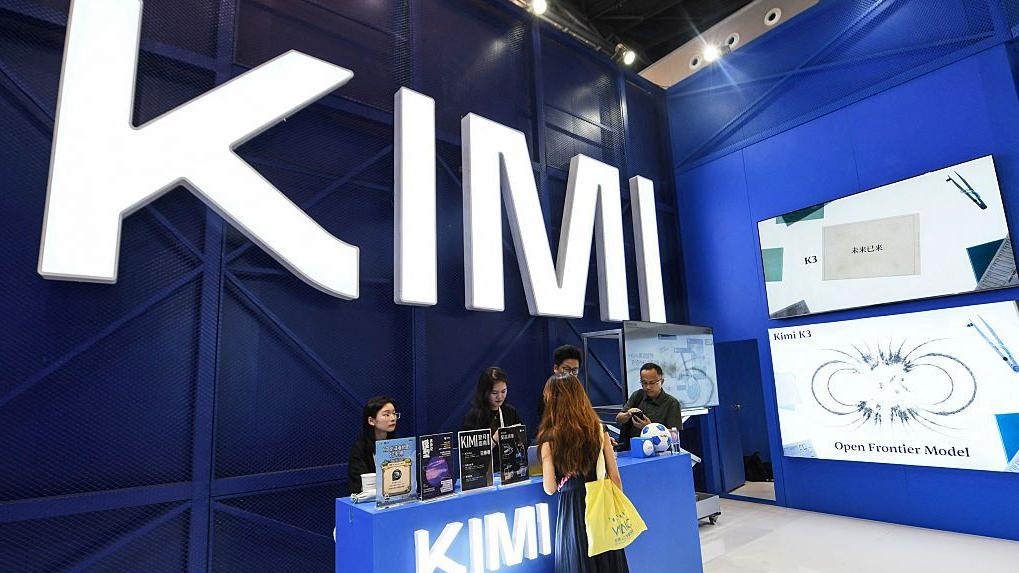
Two developments this week illustrate that shift from different directions: Moonshot AI’s Kimi K3 has become generally available through Amazon Bedrock, while OpenAI is building a “College Plan” section inside ChatGPT designed around student profiles, college tracking and application-task management.

The developments suggest that the next phase of AI competition will be defined not only by model intelligence, but by where that intelligence becomes embedded. Kimi K3’s arrival on Amazon Bedrock is significant because it brings Moonshot AI’s open-weight model into one of the world’s major cloud AI platforms.

AWS says Kimi K3 has 2.8 trillion parameters, native vision capabilities and a one-million-token context window, positioning it for long-running coding sessions, large-document analysis and other knowledge-intensive workflows.

AWS also says the model delivers an approximately 2.5-fold improvement in scaling efficiency compared with Kimi K2.  The one-million-token context window is particularly important. Instead of repeatedly forcing an AI system to forget and reload information.

Developers can give the model access to enormous repositories, collections of documents or visual materials within a single workflow. That changes the economics of AI-assisted programming and research.

Kimi K3 also becomes the first open-weight model on Bedrock to support explicit prompt caching, allowing repeated context to be reused with lower latency and input costs.

For businesses, the attraction is not simply raw model size. Amazon Bedrock provides an enterprise environment with access controls, encryption and auditing. AWS says data processed through its open-weight models remains within its AWS data boundary, with zero data retention for inference requests and zero operator access during inference.

The emerging ChatGPT “College Plan” points toward a different but equally important frontier: AI as a persistent personal planning system. Rather than simply answering questions about universities, such a system can organize a student’s profile, track prospective colleges and manage application tasks and deadlines.

That represents a shift from conversational assistance toward workflow management. The implications extend beyond admissions. Applying to college involves fragmented information: academic records, standardized tests, essays, recommendation letters, financial considerations, deadlines and institution-specific requirements.

Bringing those elements into one AI-assisted environment could reduce the administrative burden students face. It could also allow AI to transform scattered information into an ongoing plan rather than a series of disconnected conversations.

Yet this model introduces questions around privacy, accuracy and agency. Student profiles can contain sensitive educational and personal information, while admissions requirements can change. AI-generated recommendations therefore need verification against official university information rather than being treated as authoritative.

The broader competition is becoming clearer. Kimi K3 shows how powerful open-weight models are moving into mainstream cloud infrastructure, while the College Plan concept shows how AI companies are embedding intelligence into highly specific life workflows.

The competitive advantage may increasingly come from context: knowing the documents, deadlines, preferences and tasks surrounding a user’s problem. AI is therefore evolving from a tool people visit into infrastructure that accompanies them.

For developers, that means larger and more capable models. For students, it could mean an AI system that helps organize an otherwise complicated journey. The companies that successfully combine intelligence with persistent context, useful workflows and trustworthy data handling may shape the next chapter of consumer and enterprise AI.

Russia Plans Regulated Cryptocurrency Market Under Central Bank Oversight

0

Russia is moving closer to a formal cryptocurrency market, with the country’s central bank saying the industry could begin operating within a legal framework before the end of 2026.

The statement marks a significant shift in a country that has spent years balancing the potential economic value of digital assets against concerns over financial stability, money laundering and capital controls.

Vladimir Chistyukhin, first deputy governor of the Bank of Russia, said regulators were working through a substantial package of subordinate legislation needed to make the new framework operational.

The plan involves 27 regulatory acts: seven higher-priority measures and 20 second-tier rules. The central bank expects the latter to be adopted by the end of October, while several of the initial measures have already reached Russia’s Justice Ministry.

The development follows legislation adopted by Russia’s State Duma in July. The law, which came into force on September 1, establishes a legal structure for cryptocurrency transactions through regulated intermediaries. It allows both qualified and non-qualified investors to participate, although retail investors face restrictions.

Non-qualified investors must pass a test and can purchase selected highly liquid cryptocurrencies up to ?300,000 per year through one intermediary. Qualified investors face fewer restrictions.

That distinction is important because Russia is not simply opening the door to unrestricted cryptocurrency adoption.

Instead, it is attempting to build a supervised market in which exchanges, intermediaries and digital repositories operate under defined rules. The Bank of Russia has already proposed requirements for digital depositories, including minimum capital ranging from ?50 million to ?250 million depending on their activities.

The architecture reflects a broader transformation in how governments are approaching crypto. Rather than treating digital assets solely as an alternative financial system operating outside traditional institutions, regulators increasingly want to bring them inside the financial perimeter.

Exchanges can become regulated gateways, custodians can become accountable infrastructure providers, and blockchain-based assets can be subjected to reporting and investor-protection requirements. For Russia, the implications extend beyond domestic speculation.

Cryptocurrency has increasingly been discussed as an instrument for international economic activity, particularly as Russian companies face restrictions affecting conventional cross-border finance.

Earlier proposals from the central bank envisioned participants in foreign economic activity receiving access to a broad range of cryptocurrency transactions.

Yet legalization does not mean cryptocurrencies will become ordinary money inside Russia. The regulatory approach separates investment and trading from domestic payments.

Russian authorities have also sought tighter controls around self-custodied wallets and anonymous crypto circulation, reflecting concerns about illicit finance and regulatory visibility.

This creates an interesting contradiction at the heart of Russia’s crypto strategy. The state wants the economic and technological benefits of digital assets while retaining strong control over how those assets enter the financial system.

The resulting market could therefore look less like an open, permissionless crypto economy and more like a regulated extension of the existing financial sector. The end-of-year target will depend on implementation.

Passing legislation establishes the foundation, but exchanges, custodians, registries and other market infrastructure must still become operational. If regulators complete the remaining rules on schedule, Russia could enter 2027 with a substantially more formal cryptocurrency industry than it had at the beginning of 2026.

The significance extends beyond Russia itself. As the United States, Europe and other major jurisdictions continue developing frameworks for digital assets, Russia’s move adds another major economy to the global experiment in regulated crypto markets.

The emerging question is no longer simply whether governments will permit cryptocurrency. Increasingly, it is how much of the crypto economy governments will allow—and under whose rules.

AI Spending Could Hit $1tn Next Year as Hyperscalers Fuel a New Investment Boom, Dimon Says

0
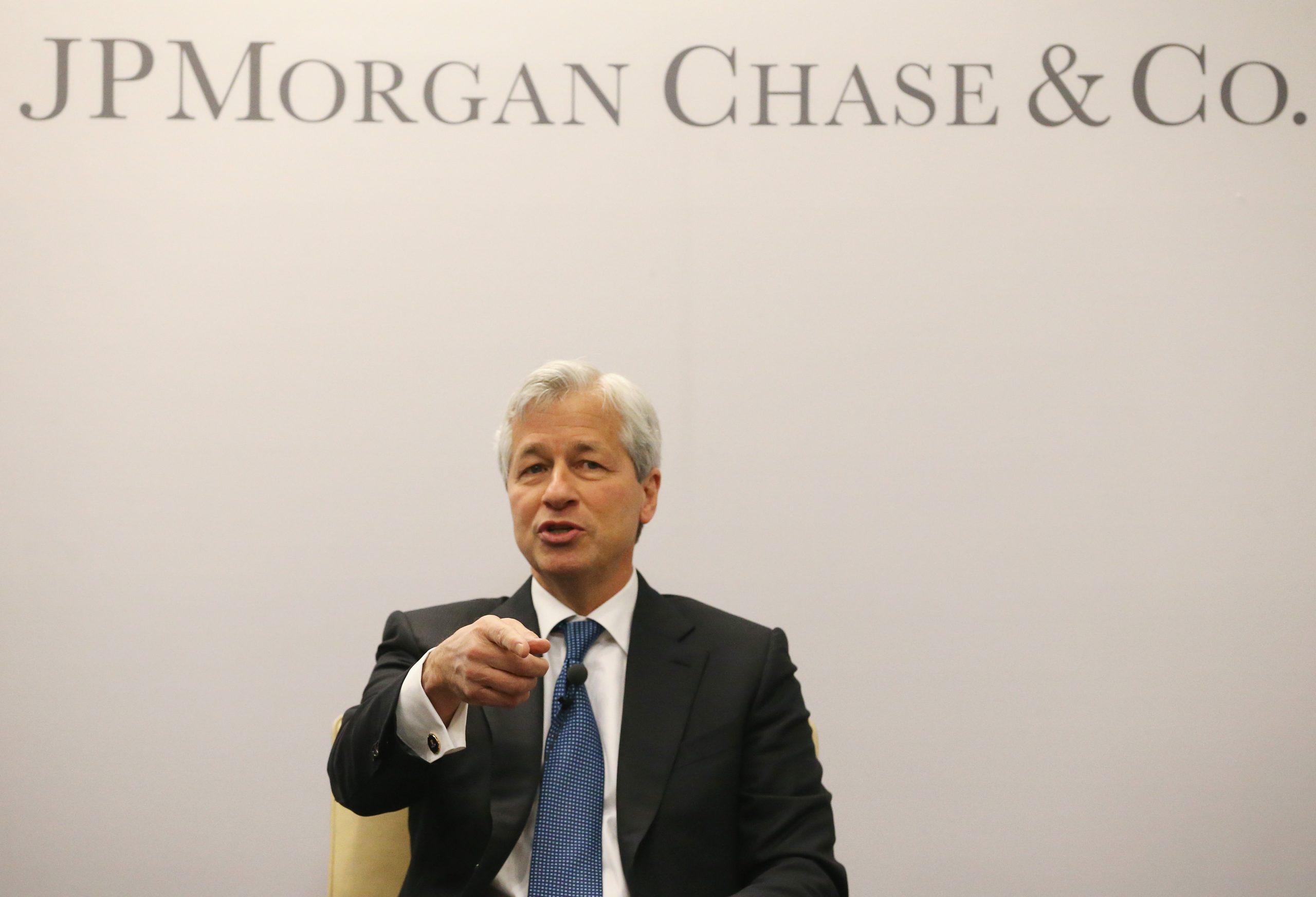
JP Morgan Chase puts contents through its CEO account, it goes viral. But the same content via JPMC account, no one cares (WSJ)

The artificial intelligence investment boom is showing few signs of slowing, with spending across the hyperscaler ecosystem potentially reaching $1 trillion next year, JPMorgan Chase CEO Jamie Dimon said, highlighting the growing influence of AI infrastructure on the broader economy.

Spending by hyperscalers and companies across their infrastructure ecosystem has more than doubled from about $300 billion last year to roughly $700 billion this year, Dimon said. If that pace continues, investment could approach $1 trillion in 2027.

“That’s like 1% increase to GDP each year,” Dimon told CNBC-TV18 on the sidelines of the 11th annual JPMorgan India Conference.

He said the investment boom was supporting economic growth but could also add to inflation as companies hire workers, build factories and power plants, and purchase equipment and materials.

The scale of the spending is increasingly making AI more than a technology-sector story. The buildout requires semiconductors, data centers, electricity generation, transmission infrastructure, construction and specialized equipment, creating demand across multiple parts of the economy.

That spending can boost economic activity in the short term, but Dimon said the longer-term effect could be different. He described AI as an “unbelievable technology” and said its rapid expansion appeared likely to continue, while potentially producing deflationary effects as companies become more productive and efficient.

The tension between those two effects is becoming central to the economic debate around AI. The initial construction boom can increase demand for labor, energy and equipment, while the technology itself could eventually reduce the cost of producing goods and services by automating work and improving productivity.

For investors, however, the size of the spending does not guarantee that every company benefiting from the AI buildout will generate attractive returns.

Dimon cautioned against trying to identify the winners too early, drawing a comparison with the internet boom. Many companies that appeared well positioned during that period ultimately failed, while some less prominent businesses emerged as major long-term winners. That history is relevant to the current AI cycle because enormous amounts of capital are being committed before the industry has established which business models will ultimately capture the largest share of the economic value.

Dimon also pushed back against the idea that every AI investment must produce an immediately measurable financial return.

“Sometimes it’s just table stakes,” he said, arguing that companies may have to invest in AI simply to remain competitive.

He pointed to improvements in customer experience as an example of a benefit that can be difficult to quantify and said businesses could become more efficient at deploying AI over time.

That is believed to have resulted in a more complicated investment equation. AI spending can be economically necessary even when the direct return on a specific project is difficult to isolate. Companies may be investing not only to generate new revenue but also to reduce operating costs, improve products and prevent competitors from gaining an advantage.

At the same time, the scale of investment raises questions about the durability of the current capital cycle. Data-center construction, advanced chips and power infrastructure require enormous upfront commitments, while AI models and computing hardware continue to evolve rapidly.

Dimon said he was also watching several other forces that could keep interest rates elevated, including heavy demand for capital from infrastructure projects, remilitarization and government deficits.

He warned that there “may be a market correction,” although he said he was not certain AI would be responsible for it.

His comments come as investors continue to assess whether the rapid expansion of AI infrastructure can translate into sustainable earnings growth. The spending itself is measurable. The eventual economic return remains much harder to establish.

Dimon also maintained a cautious view on inflation. He said he hoped price pressures would ease but warned that “there’s a chance it won’t, and it may even go up a little bit,” while arguing that the Federal Reserve should remain committed to its 2% inflation target.

The inflation question could result in a broader discussion if AI infrastructure investment remains at its current pace. Data centers require large amounts of electricity, while construction projects compete for labor, equipment and materials. Those pressures can raise costs before productivity gains from AI become large enough to offset them.

Beyond the AI economy, Dimon said the United States and China appeared to be making progress ahead of a summit between President Donald Trump and Chinese President Xi Jinping. He said the two countries should “fully engage” on trade, AI, and security, describing the discussions as important to the global economy.

On India-U.S. relations, Dimon called for the two countries to return to negotiations and complete a trade agreement.

“It obviously hasn’t moved forward,” he said. “I hope it’s not put on the back burner.”

Dimon also said he understood U.S. concerns about India’s purchases of Russian oil but argued that Washington should consider India’s refining requirements and avoid measures that could hurt India and global oil markets.

His broader outlook on India was more expansive. Dimon said the Indian economy could grow to three times its current size over the next decade and confirmed that JPMorgan plans to continue expanding its operations in the country.

“We’re going to keep on building,” he said.

For the AI industry, however, the more consequential part of Dimon’s assessment is the sheer scale of capital now being committed. Moving from $300 billion in hyperscaler ecosystem spending last year to $700 billion this year and potentially $1 trillion next year would make AI infrastructure one of the largest investment cycles in the global economy.