
DD
MM
YYYY

PAGES

DD
MM
YYYY

spot_img

PAGES

Home Blog Page 60

Implications of Low Short Interest in the S&P 500

0

Short interest remains low relative to historical norms over the past 10–15 years. The median short interest for S&P 500 stocks is around 1.6%–2.4% of float or market cap as of late 2025/early 2026, depending on the measure, median stock ~1.6% per Nasdaq data; higher aggregates ~2.4%–2.7% in some reports.

This is near decade lows, particularly since post-COVID declines in 2020, and has been generally declining since peaks around 2016. Over the last decade: Typical median short interest in S&P 500 stocks ranged from 1.6% to 2.9%.

It peaked higher in earlier periods e.g., >3% in 2008. Recent reports describe S&P 500 short interest as at decade lows or seven-year highs in some weighted measures, but overall sentiment and data point to low bearish betting amid the bull market.

Some sources note elevated short interest in dollar terms ~$820 billion at end-2024 due to higher stock prices or in specific sectors/small-caps, often for hedging mega-caps rather than outright bearishness. However, as a percentage of float, the standard measure for comparison, levels are not exceptionally high compared to the past decade.

High short interest would signal heavy bearish bets, but current data suggests limited short selling in the ongoing rally. Current data confirms that short interest in the S&P 500 remains low by historical standards, particularly when measured as a percentage of float or shares outstanding.

Median short interest for S&P 500 stocks is around 2.7% of market capitalization as of January 2026, with some measures near 1.6%–2.4%. For large-cap stocks including most S&P 500 constituents, the short interest ratio is near decade lows.

Proxy via SPY ETF: Short interest ~113 million shares, with days-to-cover ~1.5–1.6 (very low). Futures short positions also declined ~32% year-over-year. This low level reflects limited bearish conviction among investors amid the ongoing bull market.

Low short interest indicates few investors are actively betting on a broad market decline. This suggests widespread optimism, driven by expectations of solid earnings growth ~15% projected for 2026, potential Fed rate cuts, and AI-related productivity gains.

It acts as a contrarian “wall of worry” absence—markets often climb when bears are scarce, but extreme low short interest can signal complacency.

Reduced Fuel for a Short Squeeze

Unlike periods of high short interest like in 2021 meme stocks, there’s little potential for forced covering to propel explosive upside. Rallies would rely more on fundamental buying rather than short covering.

With few shorts to cover on bad news, downturns face less natural buying support. Pullbacks could accelerate if sentiment shifts due to higher-for-longer rates, tariff impacts, or AI spending slowdowns. High valuations, CAPE ratio ~40+ leave the market “priced for perfection,” amplifying risks from disappointments.

Recent increases in short interest to 2.7% median appear driven by hedging mega-cap tech stocks rather than pure downside bets. Dollar-value shorts hit records ~$820B end-2024 due to higher prices, but percentage terms remain low—reflecting portfolio protection in a top-heavy index, not widespread fear.

Broader Market Dynamics for 2026

Analysts forecast modest gains, average target ~7,100–7,300, implying ~4–7% upside from late-2025 levels, but with growing risks: softening labor market, policy uncertainty, and narrow leadership. Low shorts support continued upside in a “no-landing” economy but highlight fragility—any reversal in catalysts could lead to sharper volatility without short-covering backstop.

Low short interest is supportive of the bull case in the near term— limited downside conviction but increases asymmetric risk to the downside if conditions deteriorate. It’s a sign of strength in the rally, yet a potential warning of over-optimism at elevated valuations.

Hyperliquid Early Dominance Shows its First Mover Advantages

0

Hyperliquid recently recorded the highest daily net inflows among major blockchains, pulling in approximately $80.4 million in a single 24-hour period. This outperformed other tracked networks, with no close competitors on that day.

Data from Artemis Analytics showed Hyperliquid with roughly $194.9 million in inflows and $114.5 million in outflows, resulting in the $80.4 million net figure. This reflects strong capital attraction to its derivatives-focused Layer-1 blockchain, driven by high perpetual futures trading activity and protocol revenue exceeding $1 million daily throughout early 2026.

Hyperliquid’s growth aligns with its broader momentum: TVL around $4-6 billion. Dominance in on-chain perps. Sustained user deposits. In 2025 year-end rankings. Ethereum led with ~$4.2 billion net inflows, followed by Hyperliquid at ~$2.9 billion.

Daily inflows can fluctuate significantly based on trading volume and market sentiment. Hyperliquid also frequently ranks high or leads in daily fees and revenue among blockchains, often generating $1-2 million+ per day, which supports its buyback mechanisms for the HYPE token.

This recent daily inflow leadership highlights Hyperliquid’s rising prominence in DeFi, particularly for high-volume trading. Solana’s DeFi ecosystem has shown resilient growth in inflows throughout 2025 and into early 2026, driven by institutional interest via ETFs, high on-chain activity like memecoins, DEX trading, and upgrades improving scalability.

However, on-chain net inflows remain modest compared to leaders like Hyperliquid, with fluctuations tied to market sentiment. Recent On-Chain inflows 24-hour net inflows: shows approximately $3.28 million per DeFiLlama data, positive but small relative to Solana’s scale.

This reflects steady user deposits into protocols, supported by surging DEX volume ~$5.8 billion in 24h and stablecoin activity. Stablecoin supply on Solana stands at ~$14-15 billion, with recent surges like +$900 million in single days late 2025/early 2026 indicating capital entering for trading and yield.

2025 Full-Year Trends

Solana’s TVL grew significantly, ending around $9-13 billion range, peaking higher before corrections, up sharply from prior years, placing it as the #2-3 chain behind Ethereum. Institutional inflows via Solana ETFs/ETPs: ~$3.6 billion in 2025 per CoinShares, a ~10x increase from 2024, making Solana one of the top altcoin beneficiaries.

Cumulative ETF assets under management crossed $1 billion by early 2026, with consistent positive flows even during price dips like +$95 million in late December 2025; +$6.8 million on Jan 5, 2026. Broader ecosystem revenue: Apps generated $2.39 billion in 2025 +46% YoY, fueled by DEX volume hitting $1.5 trillion.

Early 2026 Momentum

Positive start with ETF inflows continuing like the multi-million daily in first week. TVL currently ~$8.77 billion, slight 24h dip of -3.45%, but stable overall. High activity: 2.2+ million daily active addresses, supporting ongoing capital attraction.

Compared to Hyperliquid’s recent $80 million daily peak, Solana’s on-chain net inflows are lower daily but benefit from broader institutional channels (ETFs) and retail/memecoin-driven volume. Strong institutional adoption— ETFs projected to accelerate in 2026 with potential new approvals and network upgrades like Alpenglow for faster finality position Solana for sustained inflows.

Short-term variability: shows on-chain flows are positive but not dominating daily rankings; price/TVL corrections in late 2025 reflected macro risks, but fundamentals (volume, users) remain robust. Solana ranks highly in DEX/perps volume and stablecoin transfers, often outpacing Ethereum in retail-driven metrics.

Inflows can fluctuate rapidly with market conditions. Hyperliquid’s performance attracts “serious money”— whales, high-frequency traders, while Solana’s ETFs e.g., potential Morgan Stanley products draw TradFi billions.

Derivatives dominance: On-chain perps are DeFi’s growth engine, potentially capturing 25-50% of spot/perp volume by end-2026 as DEXs improve execution. Hyperliquid’s rise pressures incumbents e.g., Solana-based perps like Jupiter, spurring upgrades (privacy, interoperability, RWAs).

Regulatory scrutiny on derivatives, macro downturns, or unlock-driven outflows could reverse flows. Hyperliquid’s inflow leadership underscores DeFi’s pivot to high-efficiency trading infrastructure, potentially accelerating on-chain derivatives toward a $1T market.

Solana’s trends point to deeper TradFi integration. These dual paths suggest a more mature, fragmented DeFi landscape in 2026—specialized chains thriving alongside broad ecosystems—driving innovation but increasing competition for capital. Flows remain highly sensitive to market sentiment and upgrades.

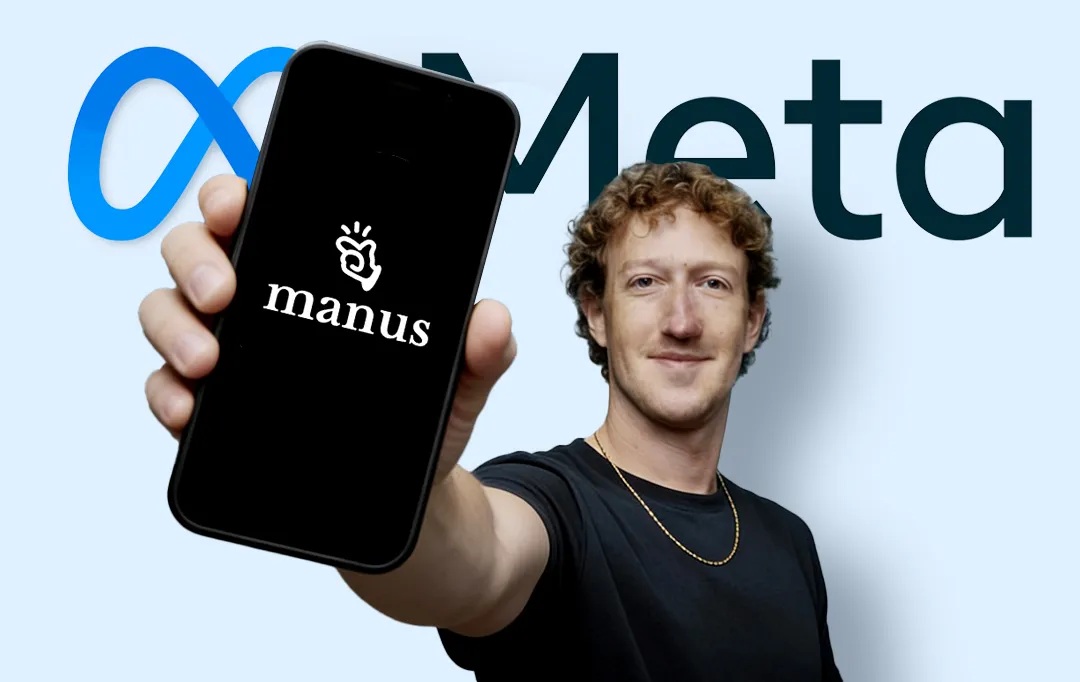
China to Probe Meta’s $2bn Manus Deal As AI’s Growth Plays More Role in Geopolitical and Regulatory Tensions

0

China said on Thursday it will investigate Meta’s roughly $2 billion acquisition of artificial intelligence startup Manus, a move that highlights Beijing’s increasing scrutiny of advanced AI technologies and their cross-border transfer amid intensifying global competition in the sector.

Meta acquired Singapore-based Manus last month as part of its push to deepen automation and AI agent capabilities across its consumer and enterprise products. While the companies did not disclose financial terms, the Wall Street Journal reported that the deal was valued at more than $2 billion, citing people familiar with the transaction.

China’s Ministry of Commerce said it will conduct an assessment and investigation into whether the acquisition complies with the country’s laws and regulations governing export controls, technology import and export, and overseas investment. The ministry’s statement, translated by Google, suggests the probe will examine both the origins of Manus’s technology and how intellectual property developed in China may be transferred or used following the acquisition.

“The Chinese government consistently supports enterprises in conducting mutually beneficial transnational operations and international technological cooperation in accordance with laws and regulations,” Ministry of Commerce spokesperson He Yadong said at a press briefing, signaling that while Beijing is not rejecting overseas deals outright, it intends to assert regulatory oversight over strategically sensitive technologies.

Manus traces its roots to the Chinese startup Butterfly Effect, also known as Monica.im, before being spun out into a separate entity that relocated its headquarters to Singapore earlier this year. The move came as the company sought to position itself more clearly as a global AI player at a time of rising regulatory and geopolitical friction between China and the United States over advanced technologies.

The startup drew significant attention in March after launching its first AI agent, which can assist with tasks such as market research, coding, and data analysis. It was widely described in Chinese tech circles as a potential “next DeepSeek,” a reference to another fast-growing AI firm that gained prominence for its rapid technical progress.

As part of its global expansion plans, Manus reportedly laid off most of its staff in Beijing in July. The company said the Meta acquisition would not change its operational base, with Manus continuing to operate from Singapore. As of December, the startup said it had 105 employees across Singapore, Tokyo, and San Francisco.

Manus has also pointed to strong commercial traction. The company said it surpassed $100 million in annual recurring revenue in December, just eight months after launching its product, which it described as the fastest any startup had reached that milestone from zero revenue. In April, it raised $75 million in a funding round led by U.S. venture capital firm Benchmark, further raising its profile among Western investors.

In a statement released in December, Meta said the acquisition would see “Manus’s exceptional talent” join its AI teams to help deliver general-purpose AI agents across Meta’s consumer and business offerings, including within Meta AI. The deal fits squarely into Meta’s broader strategy of accelerating product-focused AI development as competition intensifies with rivals such as OpenAI and Google.

Analysts say China’s move reflects a broader shift in how Beijing views advanced AI capabilities.

“China’s probe underlines that it considers advanced AI agents, models and related IP to be strategic assets,” Nick Patience, AI lead at The Futurum Group, told CNBC.

He added that a prolonged approval process, potentially with conditions on how technology developed in China can be used, is more likely than an outright block, but that the investigation itself gives Beijing leverage in a high-profile, U.S.-led acquisition.

The scrutiny comes as governments around the world tighten controls on the flow of advanced technologies. China has, in recent years, expanded export control rules covering areas such as semiconductors, AI algorithms, and data-related technologies, often in response to U.S. restrictions on chip exports and investment flows. Deals involving AI firms with Chinese roots have increasingly become focal points for these regulatory battles.

For Meta, the investigation creates a new challenge to an already aggressive AI expansion. The company has spent billions of dollars to strengthen its position as generative AI becomes central to consumer products, advertising tools, and enterprise software. In June, Meta invested $14.3 billion for a 49% stake in data-labeling and AI infrastructure startup Scale AI, bringing its founder and CEO, Alexandr Wang, into Meta’s leadership ranks. In December, Meta also announced the acquisition of AI wearable startup Limitless.

Internally, Meta chief executive Mark Zuckerberg has been reshaping the company’s AI strategy. The firm has deprioritized its long-standing Fundamental Artificial Intelligence Research (FAIR) unit in favor of a more product-driven generative AI team, as Meta seeks to rapidly improve and commercialize its Llama family of AI models, CNBC has previously reported.

China’s probe into the Manus deal is the latest example of how corporate AI strategy is increasingly entangled with national policy and geopolitics. Even as global tech companies race to secure talent and technology, cross-border acquisitions in AI are likely to face longer timelines, stricter conditions, and heightened political sensitivity, especially when they involve firms with roots in both China and the United States.

Judge Clears Path for Jury Trial in Musk–OpenAI Showdown Over For-Profit Shift

0

A U.S. judge on Wednesday set the stage for a jury trial in billionaire Elon Musk’s closely watched lawsuit accusing OpenAI of abandoning its founding mission, marking a significant escalation in a legal fight that cuts to the heart of the artificial intelligence industry’s rapid commercialization.

U.S. District Judge Yvonne Gonzalez Rogers, speaking at a hearing in Oakland, California, said there was “plenty of evidence” suggesting OpenAI’s leadership made assurances that the organization would remain a nonprofit focused on public benefit. She ruled that the disputes were sufficiently factual and contested to warrant a jury trial, rather than being resolved by the court at an early stage. The trial is scheduled for March, with the judge saying she would issue a written order addressing OpenAI’s bid to have the case dismissed.

The decision keeps alive Musk’s claims at a time when competition for dominance in generative AI is intensifying and scrutiny of how leading AI developers are structured, funded, and governed is growing. Musk, who co-founded OpenAI in 2015 but left in 2018, now runs xAI, whose chatbot Grok competes directly with OpenAI’s ChatGPT.

At the center of the lawsuit is OpenAI’s evolution from a nonprofit research lab into a capped-profit entity that has entered into multibillion-dollar commercial partnerships, most notably with Microsoft. Musk argues that the shift violated explicit promises made when he provided early funding and support, while OpenAI says the restructuring was necessary to attract capital and pursue its mission at scale.

Musk is seeking unspecified monetary damages tied to what he describes as “ill-gotten gains.” He claims he contributed about $38 million, roughly 60% of OpenAI’s early funding, along with strategic guidance and credibility, on the understanding that the organization would remain a nonprofit dedicated to advancing artificial intelligence for the benefit of humanity.

The lawsuit accuses OpenAI co-founders Sam Altman and Greg Brockman of orchestrating a for-profit pivot designed to enrich themselves, culminating in major commercial deals with Microsoft and the company’s recent restructuring. OpenAI, Altman, and Brockman have denied the allegations, portraying Musk as a disgruntled rival attempting to hobble a leading competitor.

In a statement after the hearing, OpenAI said: “Mr Musk’s lawsuit continues to be baseless and a part of his ongoing pattern of harassment, and we look forward to demonstrating this at trial.”

Musk’s xAI did not immediately respond to a request for comment, but Steven Molo, a lead trial lawyer for Musk and xAI, said the team welcomed the opportunity to put evidence before a jury.

“We look forward to presenting all the evidence of the defendants’ wrongdoing to the jury,” he said.

Microsoft, a key OpenAI partner and co-defendant, also sought to have the claims against it dismissed. Its lawyer argued there was no evidence the company had “aided and abetted” any wrongdoing by OpenAI. Lawyers for OpenAI pressed the judge to rule against Musk, contending he had not provided a sufficient factual basis for claims including fraud and breach of contract.

OpenAI has also argued that Musk waited too long to bring the case. Gonzalez Rogers said the jury would be asked to consider whether the lawsuit was filed outside the statute of limitations, making timing itself a central issue at trial.

Beyond the courtroom, the dispute highlights a broader fault line in the AI sector. As generative AI systems become more powerful and commercially valuable, tensions are rising between ideals of open, public-benefit research and the financial realities of building and deploying cutting-edge models. Musk has positioned himself as a critic of what he sees as excessive concentration of AI power and profit, even as he builds his own rival platform.

The case poses reputational as well as legal risks for OpenAI, reopening questions about its original commitments at a moment when regulators, policymakers, and the public are increasingly focused on transparency and accountability in AI development. The jury trial offers a public forum for Musk to press claims that the organization he helped launch strayed from its original purpose.

With a March trial now on the calendar, the dispute is expected to be one of the most consequential in the AI industry, as it will have a significant impact on OpenAI’s future.

Global Defense Stocks Rally on Trump’s Call for Increased U.S. Military Spending

0

Global defense equities climbed sharply on Thursday, with major aerospace and defense shares extending gains after U.S. President Donald Trump called for a significantly larger U.S. defense budget in 2027.

Trump’s proposal, posted on his Truth Social platform, suggests raising the U.S. military budget to $1.5 trillion, a more than 66% increase over the roughly $901 billion approved for 2026.

In his post, Trump described the proposed budget as essential to building what he called the “Dream Military” — a force capable of keeping the United States “SAFE and SECURE, regardless of foe,” citing what he characterized as “very troubled and dangerous times.”

Investors clearly took the initiative as a bullish signal for defense spending ahead. U.S. contractors were among the top gainers in premarket trade: Northrop Grumman rose around 6–8%, Lockheed Martin climbed roughly 6–7%, RTX (parent of Raytheon) added more than 4%, and smaller specialized firms such as Kratos Defense saw even larger percentage gains. European aerospace and defense equities also strengthened, with the Stoxx Europe Aerospace & Defense index reaching new all-time highs before settling slightly lower later in the session.

Beyond Western markets, some Asian defense names participated in the broader rally, with firms such as Mitsubishi Heavy Industries and Bharat Electronics recording moderate share price gains, illustrating the global dimension of investor response.

Geopolitical Drivers Underpinning Rally

The broader geopolitical backdrop has lent additional impetus to defense sector optimism. In early January, U.S. forces carried out an operation resulting in the capture of Venezuelan President Nicolás Maduro and his wife — a dramatic escalation that has major implications for regional security dynamics and defense planning. Following the raid, the Trump administration has indicated plans to manage Venezuelan oil assets and has revived debate over U.S. strategic interests in territories such as Greenland and potential military options in Colombia.

These developments have heightened perceptions of geopolitical risk and suggested a potentially more assertive U.S. foreign policy stance, reinforcing the appeal of defense and aerospace companies whose products and services are core to military capability and sustainment.

Market Reaction: Contracts, Cash Flows, and Valuation

Analysts say the prospect of a sharp increase in baseline defense spending boosts the outlook for long-term government contracts, which are a fundamental driver of revenue for large contractors. Lockheed Martin’s extensive portfolio — including fighter jets, missile systems, and advanced space systems — is seen as particularly positioned to benefit from expanded budget allocations. Northrop Grumman’s intelligence, surveillance, and reconnaissance platforms and RTX’s radar and missile defense systems are similarly viewed as integral to an enlarged U.S. defense force structure.

European defense stocks — often tied to NATO commitments and cross-Atlantic interoperability — rallied as investors anticipated indirect benefits from stronger U.S. defense leadership and spending. Names such as BAE Systems, Leonardo, Rheinmetall, and Renk also posted meaningful gains.

While markets initially reacted enthusiastically, some caution remains over the feasibility and implementation of such a substantial budget increase. A proposal of this magnitude would require congressional approval, and budget experts have pointed to procedural, fiscal, and political hurdles. Nonetheless, the immediate reaction in equity markets reflects a pricing-in of potential future earnings growth tied to defense expenditure.

Policy and Broader Economic Implications

Trump’s budget call comes amid broader debate in Washington over defense priorities, procurement timelines, industrial base capacity, and the balance between shareholder returns and investment in manufacturing. Recent Trump commentary has also criticized certain defense firms for stock buybacks and dividend policies at times when military equipment deliveries are perceived to lag, suggesting potential executive and regulatory scrutiny in addition to spending shifts.

Longer-term implications for global markets could include a recalibration of risk assets if investors increasingly favor sectors tied to government spending over cyclical areas more sensitive to economic growth. In the United States, a surge in defense spending could also influence inflation expectations, capital allocation, and fiscal policy debates heading into election years.