DD
MM
YYYY

PAGES

DD
MM
YYYY

spot_img

PAGES

Home Blog Page 600

Nigeria’s Private Sector Records Strongest Growth in 19 Months as PMI Climbs to 54.2

0

Nigeria’s private sector is showing signs of renewed strength, recording its fastest expansion in more than a year and a half, according to the Stanbic IBTC Bank Purchasing Managers’ Index (PMI).

The index rose to 54.2 in August, up from 54.0 in July, marking a 19-month high in new order growth and a four-month high in output.

The PMI, which has stayed above the 50.0 growth threshold for nine straight months, highlights continued improvement in business conditions despite lingering economic headwinds.

Demand Rebound and Sector Trends

The August uptick reflects sharper increases in both output and new orders, fueled by stronger customer demand and a growing willingness among clients to commit to fresh projects.

According to the survey, activity expanded in three out of four monitored sectors—services, construction, and agriculture—while manufacturing lagged. Firms responded to the higher demand by increasing staff levels for the third consecutive month. However, the pace of job creation slowed compared to July.

Purchasing activity also moderated, but remained resilient as businesses stocked up in anticipation of future growth. Significantly, companies cleared backlogs for the first time in five months, pointing to rising operational efficiency.

Despite these gains, business confidence softened for the second consecutive month. Companies cited expansion plans such as opening new branches and boosting marketing as reasons to remain cautiously optimistic about future growth.

Inflation Pressures Lose Steam

One of the key highlights of the August report was the continued easing of inflationary pressures. Input costs climbed at their slowest pace since March 2023, while output price inflation fell for the fourth month in a row—its lowest level since April 2020.

Staff cost inflation also slowed to a three-month low. Where wages did increase, they were largely linked to incentives for quicker project delivery and cost-of-living adjustments.

Muyiwa Oni, Head of Equity Research for West Africa at Stanbic IBTC Bank, explained: “The continued moderation of input and output prices suggests that inflation is likely to remain soft in the near term. This may incentivize the Monetary Policy Committee (MPC) of the Central Bank of Nigeria to adopt a more accommodative stance by September.”

Stanbic IBTC projects that headline inflation will ease further in August, to between 21.45% and 21.63% year-on-year. A sharper drop is expected by November, with inflation potentially falling to between 17.19% and 17.92%. The bank anticipates up to 150 basis points in cumulative rate cuts in 2025—a potential boost for borrowing, investment, and overall private sector momentum.

Why This Matters: Backdrop of Nigeria’s Fragile Economy

The positive PMI figures arrive at a time when Nigeria’s economy has struggled under a prolonged period of high inflation, currency volatility, and rising costs of doing business. Since 2023, businesses have faced an unprecedented squeeze from fuel subsidy removal, sharp increases in electricity tariffs, and a weakened naira that made imports more expensive.

The private sector’s resilience, as captured in the PMI, is particularly noteworthy because it signals that firms are adapting to these shocks. Still, the uneven sectoral performance—with manufacturing failing to keep pace—shows that recovery is fragile and uneven.

Nigeria’s history with inflation also complicates the outlook. Periods of easing price pressures have often been followed by sudden reversals, triggered by fuel price adjustments, foreign exchange shortages, or spikes in food prices. Analysts warn that while Stanbic’s projections are optimistic, much will depend on policy consistency and whether the Central Bank aligns monetary easing with fiscal discipline from the government.

Nigeria’s PMI and Economic Turning Points

The Stanbic IBTC Bank Nigeria PMI, compiled by S&P Global, has become one of the most reliable barometers of the country’s economic health since its launch in January 2014. Covering agriculture, mining, manufacturing, construction, wholesale, retail, and services, the index is based on surveys of around 400 private sector companies.

Historically, Nigeria’s PMI has swung in response to major economic shocks. During the COVID-19 lockdowns, the index plunged below the 50 threshold, signaling contraction across industries. Similarly, in 2016, when Nigeria slipped into recession due to falling oil prices, PMI readings underscored the depth of the downturn.

The current nine-month streak of expansion, therefore, marks an important psychological shift. It suggests that, even amid foreign exchange volatility, insecurity challenges, and uneven government reforms, the private sector is showing adaptability and resilience.

Tips for Sending Money to Mexico Without Bank Hassles

0

Moving to another country comes with its own challenges, but supporting loved ones in Mexico shouldn’t be a complicated process. With technology and new financial solutions, it’s easier than ever to connect your hard work to your family’s needs. However, many people feel overwhelmed by hidden fees, slow transfers, and confusing paperwork.

That’s why it’s important to look for options that put simplicity and savings first.

If your goal is to send money to Mexico (enviar dinero a Mexico) efficiently, a little guidance can make all the difference. With the right knowledge, you can avoid frustrating experiences at traditional banks and make every dollar count. Let’s read about them in detail.

Choose the Right Transfer Service

When you need to transfer money to Mexico, choosing the right service is the first step to ensure a smooth transaction. There are many options available, but some offer faster delivery times, lower fees, and better exchange rates than others. Always compare the different services before deciding which one to use. Be sure to look for platforms with high security standards, so your money reaches its destination without any issues.

Avoid Bank Transfers for Convenience

Bank transfers may seem like the obvious choice, but they can come with hidden fees, poor exchange rates, and slow processing times. If you’re trying to transfer money to Mexico quickly, bank transfers might not be the best option. Instead, explore alternatives like digital wallets or peer-to-peer transfer services. Many money transfer platforms offer online services where you can send funds directly to a recipient’s account, debit card, or mobile wallet.

Use Cash Pickup Locations for Quick Delivery

Sending money to Mexico doesn’t always need to involve bank accounts. If you want to ensure a quick delivery, you can opt for cash pickup locations. These are widely available across the country and provide a fast and easy way to transfer funds. Once the recipient picks up the cash, they can use it however they like, making this a great option for emergency situations. With cash pickup services, there are often minimal fees involved.

Consider Currency Exchange Rates

When sending money to Mexico, exchange rates play a significant role in how much the recipient will receive. Even a small difference in rates can make a big impact, especially when sending large sums. Make sure you understand the current exchange rate before transferring money, and check if the service you’re using offers competitive rates. Some money transfer platforms may offer fixed exchange rates, while others use floating rates, which can fluctuate.

Seek Out Special Offers and Savings

Before sending money, be sure to check for any ongoing promotions or discounts offered by transfer services. Many platforms offer special deals for new customers, such as fee-free transfers for the first transaction. These promotions can significantly reduce the cost of sending money to the country. It’s also worth looking for seasonal discounts or referrals. If you know someone who has used the service before, ask for a referral code.

When you want to send money to Mexico (enviar dinero a Mexico), the goal is often to keep the process hassle-free and budget-friendly. By selecting the right transfer service, considering alternative methods like cash pickup, and double-checking your details, you can avoid common pitfalls. Always keep an eye on exchange rates and take advantage of promotions when available.

Chinese President Xi Calls for SCO AI Cooperation, Rejects ‘Cold War Mentality’ at Largest Summit Yet

0

Chinese President Xi Jinping on Monday urged members of the Shanghai Cooperation Organization (SCO) to deepen cooperation on artificial intelligence, while warning against what he described as a “Cold War mentality.”

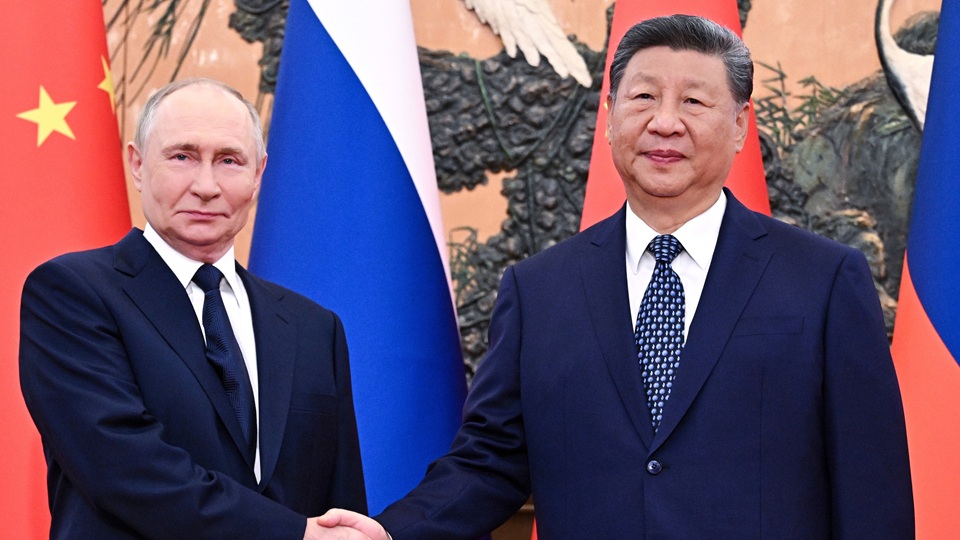
Xi made the remarks in Tianjin at the largest-ever summit of the SCO, attended by more than 20 foreign leaders, including Russian President Vladimir Putin and Indian Prime Minister Narendra Modi. The gathering comes as Beijing positions itself as a global peacemaker amid ongoing trade frictions with the United States, Russia’s protracted war in Ukraine, and instability in the Middle East following the Israel-Hamas conflict.

According to CNBC, Xi highlighted that China has already invested $84 billion across SCO countries and pledged support for 10,000 students through Beijing’s “Luban” vocational education program. He framed the summit as an opportunity to open a “new phase of high-quality development and cooperation” for the bloc.

Over the weekend, Xi held at least 10 bilateral meetings on the sidelines of the summit, including with Turkish President Recep Tayyip Erdogan and Cambodian Prime Minister Hun Manet. His Saturday meeting with Modi ended with both sides affirming that China and India should prioritize partnership over rivalry.

“A stable relationship and cooperation between India and China and their 2.8 billion peoples on the basis of mutual respect, mutual interest and mutual sensitivity are necessary for the growth and development of the two countries,” India’s Ministry of Foreign Affairs said in a statement.

Xi’s remarks come at a time of heightened tensions with Washington, which has openly declared its intention to lead the AI evolution. The U.S. under President Donald Trump has imposed strict export controls on advanced semiconductor chips and other critical technologies to China, moves seen as an effort to curb Beijing’s ability to develop next-generation AI systems.

These restrictions have severely limited the ability of Chinese firms to access cutting-edge processors needed to power large-scale AI models, forcing Beijing to accelerate domestic chip production.

Xi’s call is also widely viewed as part of Beijing’s pushback against what it considers U.S. “containment measures” in technology. The chip export curbs, introduced under the guise of national security, have already sparked friction between the world’s two largest economies, with ripple effects across global supply chains and AI research collaborations.

Historical Roots of the SCO

The SCO, founded in 2001, traces its origins to the “Shanghai Five” mechanism of the mid-1990s, originally created to resolve border issues among China, Russia, and Central Asian states after the Soviet collapse. Over time, it evolved into a broader political and security grouping aimed at stabilizing Eurasia and countering the influence of Western military alliances.

With NATO expanding eastward and the U.S. building security partnerships across Asia, the SCO emerged as a Eurasian counterweight—emphasizing non-alignment, sovereignty, and multipolarity. Today, the organization encompasses not only China, Russia, and Central Asian republics, but also India, Pakistan, and Iran, representing nearly half the world’s population and a growing share of global economic activity.

For Beijing, the SCO is both a geopolitical shield and an economic platform. Unlike NATO, it does not operate as a formal military alliance, but it coordinates on counterterrorism, economic integration, energy, and increasingly, technology. Xi’s emphasis on artificial intelligence cooperation reflects a desire to anchor the SCO’s next chapter in emerging industries while reinforcing its founding mission to balance against Western dominance in global governance.

While it is unclear if this SCO summit will produce concrete breakthroughs, analysts suggest that Beijing’s détente with India could bolster its influence within the bloc.

“The improvement of relations with India is a big deal. It allows India to access highly critical intellectual property that it needs if it is to industrialize and boost manufacturing,” said Marko Papic, chief strategist at GeoMacro Strategy BCA Access, in an email to CNBC.

“But, over the long term, the U.S. is losing the propaganda battle to paint China as the trouble-maker-in-chief. And that only further ossifies multipolarity,” Papic added.

Henry Huiyao Wang, founder and president of the Center for China and Globalization, noted that China’s initiatives extend beyond economics. “China could take advantage of its good relations with Russia to help broker the deal for the Russian war in Ukraine,” Wang said, adding that SCO members like China and India could act as guarantors of security.

Wang suggested the SCO could evolve into a diplomatic force comparable to Western blocs.

“President Trump is trying to make a lot of peace, but I think with the help of China, we could do the same too,” he said Monday on CNBC’s The China Connection.

Tianjin Declaration and New Initiatives

At the summit, SCO leaders signed the “Tianjin Declaration” and approved a long-term development plan through 2035. While the full text was not immediately released, Chinese state media reported the adoption of 24 documents covering cooperation on security, economic growth, and cultural exchange.

Xi announced the creation of new platforms for collaboration in the green industry, new energy, digital economy, technology innovation, and vocational training. He also unveiled plans for an SCO Development Bank, framed as another multilateral financial institution alongside the Beijing-based Asian Infrastructure Investment Bank.

“Global governance must be achieved by coordination and cooperation, not by unilateral bullying,” China’s top diplomat Wang Yi said, fielding a question about Xi’s proposed Global Governance Initiative.

Xi’s new “Global Governance Initiative” follows earlier banners like the Global Development Initiative and the Global Security Initiative. In his speech, he argued that hegemonism and protectionism persist “despite 80 years of peace” since the end of World War II, warning that “global governance has come to a new crossroads.”

Calling for equal application of international law, Xi cautioned against “the house rules of a few countries” being imposed on others.

It is believed that his appeal for cooperation highlights China’s strategy of presenting itself as a proponent of shared technological growth, in contrast to Washington’s more restrictive stance.

Bill Gates Urges Gen Z to Embrace AI, but Warns It Won’t Guarantee Safety from Job Dislocation

0

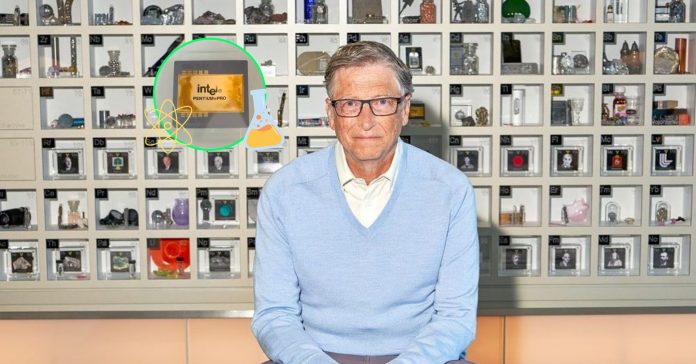
Bill Gates has long been a voice on technology’s potential to reshape society. Now, as artificial intelligence accelerates workplace disruption, the billionaire Microsoft cofounder says the ability to use AI tools is both “fun and empowering” — advice he especially directs at Gen Z.

However, whether early adoption of smart systems will be enough to shield graduates from economic dislocation remains deeply uncertain.

Speaking with CNN, Gates described AI as a force that can unlock creativity and productivity, yet he also tempered expectations.

“Embracing [AI], and tracking it, will be very, very important,” he said. “That doesn’t guarantee we’re not going to have a lot of dislocation.”

He recommended that young people “be curious, read, and use the latest tools.”

AI has shaken up entry-level careers

Gen Z is entering a job market that feels unusually unforgiving. On TikTok and other platforms, frustrated applicants have voiced despair about constant rejection emails and the sense that the system is broken. The data backs them up. Entry-level job postings in the U.S. have fallen by about 35% since January 2023, and roles most vulnerable to automation — research, administrative assistance, data gathering — have been among the hardest hit.

A recent survey cited by Fortune found nearly half (49%) of Gen Z job hunters believe AI has eroded the value of their degrees. Meanwhile, the unemployment rate for recent college graduates climbed above 6% in the 12 months ending in May, compared to the broader U.S. rate of about 4%.

Global firms are already restructuring around AI. At Carlyle, a major investment firm, tasks once assigned to new analysts — combing through articles, requesting documents, and processing data — are now being executed by AI systems. Junior staff are hired not to perform the initial research but to verify the accuracy of machine-generated work. Smaller businesses are following suit. Bill Balderaz, CEO of Ohio-based consulting firm Futurety, told the Wall Street Journal he skipped hiring an intern this summer, choosing instead to run social media copy through ChatGPT.

A cycle of disruption — with a twist

Although this dislocation echoes earlier periods of technological upheaval, what makes today’s AI disruption more acute is its reach. Instead of erasing only low-skilled jobs, it is undermining entry-level white-collar roles that traditionally served as stepping-stones into higher-paying careers. Without those on-ramps, Gen Z risks being blocked from traditional career ladders.

How Gen Z is repositioning itself

Faced with these pressures, many young workers are recalibrating their ambitions. Much like investors retreat to Treasury bonds during times of economic turbulence, Gen Z is gravitating toward stability in trades and people-centered professions.

A recent survey of 1,000 Gen Z workers found that 53% are considering skilled or licensed trades such as construction, plumbing, and electrical work — fields where automation has made less headway, according to Fortune. These roles can offer solid earnings, with elevator installation jobs paying six-figure salaries without requiring a four-year degree. Others are gravitating toward healthcare, education, and social work — careers rooted in empathy and human presence that machines cannot yet replicate.

Gates’ advice — to stay curious and master emerging tools — is consistent with his lifelong advocacy for technological literacy. But the uncertainty surrounding AI’s effect on the labor market means curiosity alone may not protect a generation from economic volatility.

For Gen Z, the question is not whether to use AI, but whether mastering it will be enough to carve a secure path through a shifting, unforgiving job landscape.

This RWA Crypto Is Tipped For 100x Before XRP ETF Approval

0

Investors keep scanning the market for the next big run before a possible XRP ETF greenlight. One RWA project is building real utilities today. Avalon X (AVLX) links token holders to real estate benefits and gated perks. Value-backed access can move faster.

Why Does XRP Lead Cross-Border Payments?

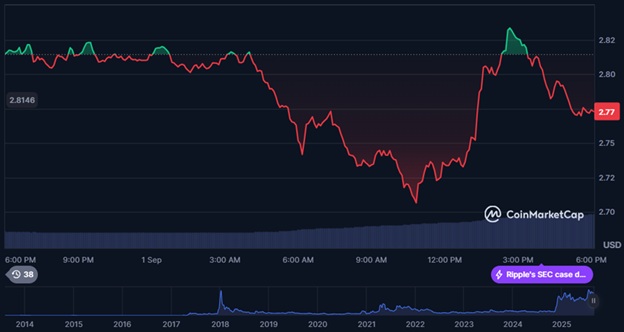
XRP remains a leading liquidity token for cross-border value transfer. The current market price is 2.77 dollars at the time of writing. Cryptocurrency markets experienced declines in early September, with major tokens including XRP facing price corrections.

Traders now watch the path to a United States spot XRP ETF. Currently, no XRP ETF applications have received approval. Live trackers show pending status across issuers, and applications remain in review. Filings and coverage continue to shape expectations. Reports indicate BlackRock has not filed an XRP ETF application, which may extend approval timelines. Other applications have seen deadline extensions, which pushes the discussion into October decisions and beyond.

Taken together, the message is simple. The market is preparing for possible approval, but the decision window remains open. Price and sentiment will react to each notice and each comment thread. Legal clarity supports the core utility case. The long SEC dispute moved toward closure in August, with coverage stating that the 2023 ruling is now final and cannot be appealed. XRP traded on exchanges is not a security, while institutional placements require registration. This reduces headline risk and helps exchanges and partners plan integrations. It also helps institutions frame risk controls while they wait for final ETF outcomes.

XRP, therefore, sits in a unique spot in this cycle. It offers deep liquidity and an established payments use case. It sits at the center of a potential ETF wave that could unlock new demand if approvals arrive. Until then, price action will track crypto beta and the evolving ETF calendar.

What Makes Avalon X Different from Other RWA Projects?

Avalon X (AVLX) is a real world asset platform focused on property-backed utilities. It works with Grupo Avalon to connect token utility to tangible developments in the Dominican Republic and beyond . AVLX functions as a utility token providing access to benefits rather than representing property ownership. Holders unlock tiered perks, staking, and future redemption stays that tie back to real use. The maximum supply totals 2 billion tokens, with 7% allocated for deflationary mechanisms designed to create long-term scarcity.

The presale is live at a price of 0.005 dollars per token in Stage 1, and a ten percent bonus is active for early buyers. Investors can purchase using ETH, USDT and other cryptocurrencies, or card through a four-step flow that starts with account creation and ends with a dashboard receipt. Tiers amplify utility. Gold adds extra tokens and raffle entries. Diamond adds a higher bonus, a discount on future Avalon stays, and whitelist access. Platinum adds the biggest bonus a week at an Avalon development and priority service at properties, plus a 50% discount on future stays.

A $1M giveaway will select ten winners of $100k in AVLX each. A townhouse giveaway also runs, with entries tied to presale participation and referrals through the dashboard. An audit by CertiK reinforces trust across the stack ahead of listings and expansion. Avalon X maps a direct path from presale to exchange listings and to real-world redemption.

Eco Valley Townhouse Giveaway

The roadmap runs from 2025 to 2027 and targets investor access and property utility at scale. The mission is to democratize high value real estate while keeping AVLX a pure utility asset for users.

Should Investors Consider Avalon X Alongside XRP?

Avalon X for real-world utility and XRP for scale can sit on the same watchlist today. XRP adds liquidity and an ETF story. Together they frame a balanced bet on access and adoption.


Join the Community

Website: https://avalonx.io/

$1M Giveaway: https://avalonx.io/giveaway

Telegram: https://t.me/avlxofficial