DD
MM
YYYY

PAGES

DD
MM
YYYY

spot_img

PAGES

Home Blog Page 6000

The Observations of IMF’s Article IV Mission on Nigeria’s Economy

0

An International Monetary Fund (IMF) staff team led by Jesmin Rahman conducted a virtual mission from October 30 to November 17, 2020 in the context of the 2020 Article IV Consultation with Nigeria.

The mission made observations about Nigeria’s economy which was highlighted as follows-

  • 1. Real GDP is contracting, inflation is increasing, and external vulnerabilities remain large.
  • 2. Major policy adjustments embracing broad market reforms are needed.
  • 3. Exchange rate and monetary policy reforms, increased revenue mobilization and structural reforms will help to unlock Nigeria’s growth potential.

At the conclusion of the mission, Ms. Rahman issued the following statement:

“The COVID-19 global pandemic is exacting a heavy toll on the Nigerian economy, which was already experiencing falling per capita income and double-digit inflation, with limited buffers and structural bottlenecks. Low oil prices and sharp capital outflows have significantly increased balance of payments (BOP) pressures and, together with the pandemic-related lockdown, have led to a large output contraction and increased unemployment. Supply shortages have pushed up headline inflation to a 30-month high.

“Under current policies, the outlook is challenging. Real GDP is projected to contract by 3¼ percent in 2020. The recovery is projected to start in 2021, with subdued growth of 1½ percent and output recovering to its pre-pandemic level only in 2022. Despite an expected easing of food prices, inflation is projected to remain in double-digits and above the Central Bank of Nigeria’s (CBN) target range, absent monetary policy reforms. Following a significant decline in revenue collections—from levels that were already among the lowest in the world—fiscal deficits are projected to remain elevated in the medium term. There are significant downside risks to this near-term outlook arising from the uncertain course of the pandemic both globally and in Nigeria.

“Recognizing the gravity of the situation, the Nigerian authorities have undertaken commendable and timely measures to counter the pandemic’s impact on lives and livelihoods. The Federal Government adopted a revised budget in July which removed fuel subsidies and prioritized spending to make room for a support package, which included higher subsidies on CBN credit intervention facilities and regulatory forbearance measures to ease debt service in affected sectors. The authorities have also taken courageous steps to remove costly and untargeted subsidies in the power sector, which were largely benefiting better-off households.
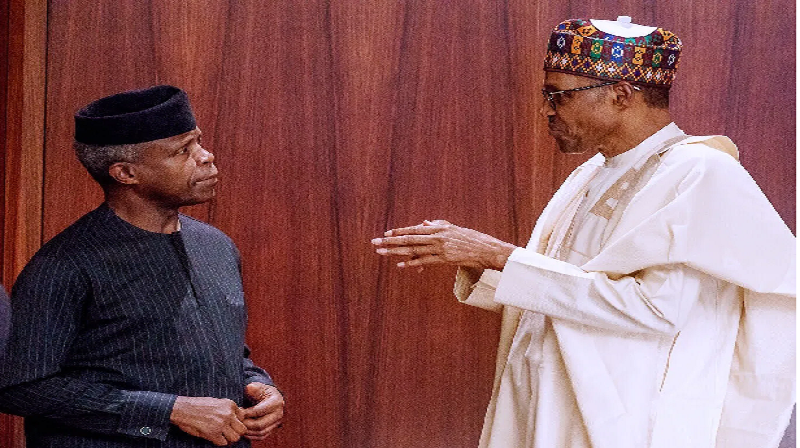
Nigerian president and vice president

“But more needs to be done. Major policy adjustments embracing broad market and exchange rate reforms are needed to address recurrent BOP pressures and raise the medium-term growth path.

“A durable solution to Nigeria’s recurrent BOP problems requires recalibrating exchange rate policies to reduce BOP risks, instill market confidence and facilitate private sector planning. The adjustments in the official exchange rate made earlier this year are steps in the right direction and the mission recommended a multi-step transition to a more unified exchange rate regime, with a market-based, flexible exchange rate.

“Significant revenue mobilization—including through tax policy and administration improvements—is required to create space for higher social spending and reduce fiscal risks and debt vulnerabilities. With high poverty rates and only a gradual recovery in prospect, revenue mobilization will need to rely initially on progressive and efficiency-enhancing measures, with higher VAT and excise rates awaiting until stronger economic recovery takes root.

“The mission welcomed this year’s reduced dependence on central bank financing of the budget and recommended its complete removal in the medium term. This could be accomplished by improving budget planning and public finance management practices to allow for flexible financing from domestic markets and better integration of cash and debt management.

“The mission also welcomed fiscal transparency measures introduced to facilitate tracking and reporting of budget emergency funding. New budget lines have been created, with information on monthly expenditures using emergency funding posted on the Ministry of Finance’s Transparency Portal. The Bureau of Public Procurement has also issued guidelines on COVID-19 emergency fund use, and the Nigeria Open Contracting Portal has been publishing related procurement contracts. Further steps are needed to ensure more consistent access to the Transparency Portal and publication of contract details relating to beneficiary ownership.

“The mission welcomed the recent submission of the Petroleum Industry Bill (PIB) to the Parliament. The Fiscal Framework chapter of the bill appropriately rebalances the government take in onshore/offshore production, with the aim of providing a fair share to the government while remaining attractive to investors.

“The mission agreed with the CBN that the accommodative monetary stance remains appropriate in the near term given the constrained fiscal space, large fiscal financing needs and strained sovereign external market access. However, if BOP and inflationary pressures intensify, there might be a need to withdraw liquidity or raise rates. Given weak transmission and record low market interest rates, further cuts in the Monetary Policy Rate are unlikely to provide additional support to the economy. In the medium term, the operational monetary policy framework, along with policy strategy and communication, should be strengthened to establish the primacy of price stability.

“While the banking sector has been resilient thanks to the ample pre-crisis buffers, the mission recommended vigilance and corrective actions to prevent an increase in financial stability risks arising inter alia from increasing non-performing loans. In this connection, debt relief measures for clients should remain time-bound and limited to clients with good pre-crisis fundamentals, in line with existing regulations. The minimum loan to deposit ratio should be reconsidered because of the risk to financial stability associated with pushing credit possibly to higher-risk clients. Regarding financial inclusion, the mission welcomed notable progress in narrowing gender and regional gaps in access to financial services, including through fostering financial literacy, agency banking and use of fintech.

“On the structural front, the approval of the power sector recovery program financing plan, the ratification of the African Continental Free Trade Area (AfCFTA), and the completion of key road projects are positive steps. Going forward, the mission recommended decisive actions to tackle governance weaknesses and implement regulatory and trade-enabling reforms, including the lifting of trade restrictions, to unlock Nigeria’s strong growth potential. Moreover, it is critical to continue strengthening the anti-corruption framework and implement plans to improve the effectiveness of the AML/CFT framework.”
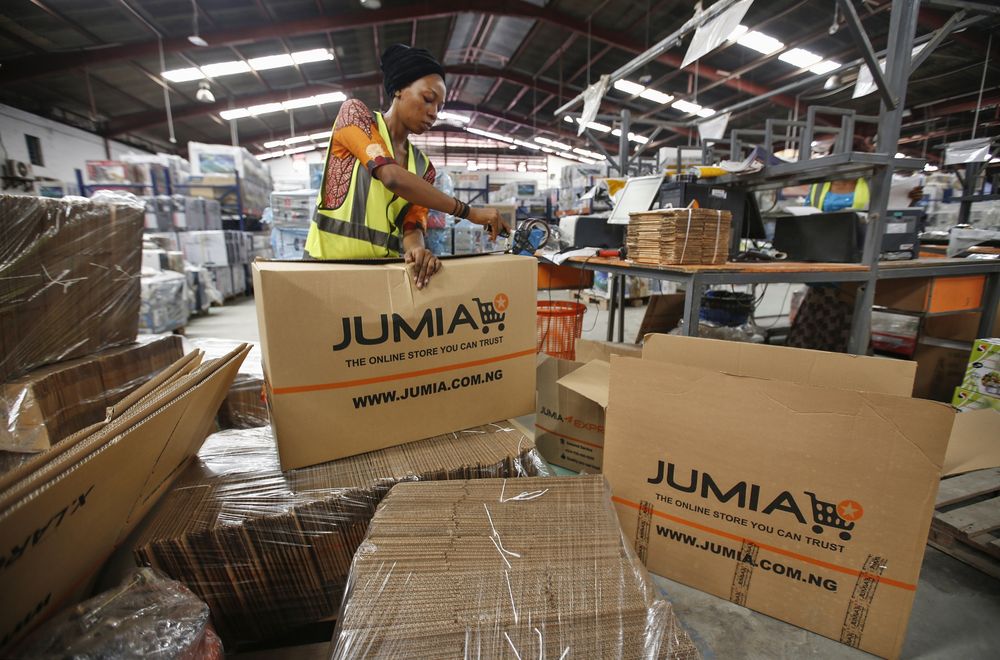
Jumia Evolves – To Spin off Logistics and Payment

1

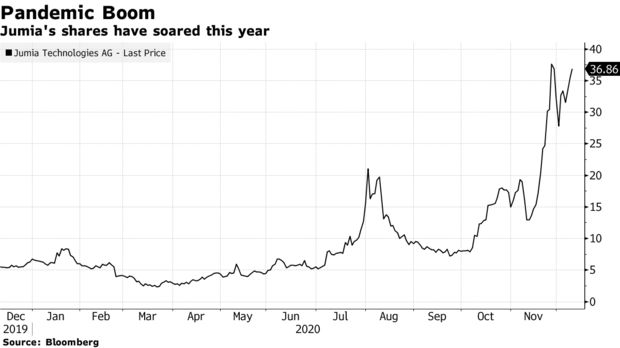
Jumia’s stock has accelerated by over 500% in the last 12 months. Jumia has also strategically cashed out when it unloaded more shares. There is no better party than what Jumia is having when it comes to Africa-operating companies! But rising stock price can cave to gravity if the path to profitability is not assured. So, Jumia is going to deal with that. And to do, it wants to take out the physical part of the business – logistics – and the payment arm. In other words, Jumia wants to spinoff the logistics and payment units.

We created something that does not really exist in Africa, which is an end-to-end logistics partner on the continent. We have built it from the get-go so that one day we are in the position to carve it out if we want to.

The focus is on reducing losses and controlling costs, and deciding where to allocate our resources. No one questions the relevance of e-commerce as a business — and the opportunity in Africa is massive. Seven years ago, people were questioning how we are even going to do this, now the only question remains on profitability.” co-Chief Executive Officer Sacha Poignonnec

The logistics business is a huge pain point for Jumia. It is the part of the business which dominates the distribution cost of its marginal cost. And that makes it unprofitable. By spinning it out, Jumia will become an electronic business with no physical weight. Sure, that can affect Jumia’s execution, if the integration of the spurn out logistics is not well harmonized with the ecommerce unit.

Jumia has opened its African logistics network to third parties, helping to add volumes and negotiate better pricing on shipping and control costs, Poignonnec said. The company has also benefited from a reluctance so far by industry giants Amazon.com Inc. and Alibaba Group Holding Ltd. to expand significantly on the continent, with Naspers Ltd.’s Takealot one of few similar businesses.

In fintech, as I have noted, JumiaPay offers much if Jumia can make it a business of its own. I made a case for spinning it off so that it can better compete as a sole fintech company in Africa, in close partnership with Jumia. That gives it the freedom to serve other companies. It mirrors how Alipay and Alibaba operate.

So, spinning off JumiaPay will be a win for Jumia. It can help it get more value. Think of how PayPal ($125 billion market cap) has become bigger than eBay ($33 billion market cap). I can tell you that JumiaPay will be bigger than Jumia in Africa.

Jumia stock

LinkedIn Summary

In Aug 2019, I argued that Jumia should spinoff JumiaPay: “So, spinning off JumiaPay will be a win for Jumia. It can help it get more value. Think of how PayPal ($125 billion market cap) has become bigger than eBay ($33 billion market cap). I can tell you that JumiaPay will be bigger than Jumia in Africa.” Today, Jumia has announced that it would spin off JumiaPay. Expect JumiaPay to challenge Flutterwave, Opay and other paytechs.

Also, in many posts, starting with the seminal one in Harvard, I made it clear that African ecommerce companies could struggle to become profitable if the logistics business is inside them. Why? Logistics is physical and there is nothing electronic in any ecommerce that picks the tab. It has to do with logistics marginal cost which is dominated by the distribution cost. Today, we are learning that Jumia is spinning off the logistics unit.

Jumia’s stock has accelerated by over 500% in the last 12 months. That is a massive value created for American investors.

Spinoff : JumiaPay Is A Better Business Than Jumia

Nigeria’s Broken Track to Covid-19 Vaccine Race

0

Do not mock Nigerian scientists and engineers. But feel free to mock the political leaders. I read one extremely unfair article, making a mockery on how Nigerian scholars are not participating in the global Covid-19 vaccine race. If not that our pragmatic and virtuoso innovation systems of the 1960s were broken, by successive visionless men, our Oxfords and Johns Hopkins would have risen. This is the fact:

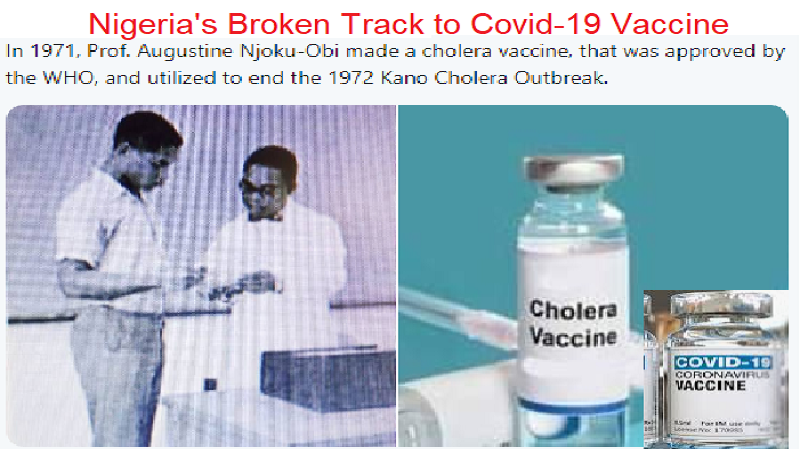
Prof. Augustine Njoku-Obi, his son married from my clan, was one of the finest vaccine creators of his time. He may not sound a name. But he could have been the father of cholera vaccine in the world. He was the man who invented the cholera vaccine that stopped the Kano Cholera outbreak in 1972. The World Health Organization (WHO) approved the vaccine in 1971 and when the outbreak came in Kano, Nigeria deployed the vaccine. 

Our professors are at home now [too bad], bargaining for their wages. It used to be different – they used to be at the forefront. So, instead of mocking the university system, let us during the next election vote for competence over tribal sentiment.

I am from Ovim, Abia state- we voted against all ruling parties in the last election: we voted against APC in presidency, PDP in governorship, PDP in senate and PDP in house. The conclusion was this: the incumbents failed and must be replaced. Abia state has more than 95% literacy rate, Ovim has close to 99%. They told the governor point blank: we would not vote for you because you have not done well! I wish Nigeria can replicate that model – vote for competence and not tribal sentiments.

2022 Will Begin Nigeria’s Data-Powered Application Utility Era

1

In June 2017, I predicted that  2022 will be the inflection year where mobile internet will begin to seed new business models in Nigeria (and Africa) at scale. It will be the year of new growth vistas in the nation.

In today’s videocast, I make a case that Africa will enter the era of affordable broadband internet in 2022. That will be the year we will begin a new dawn of immersive connectivity where you can eat and surf all you can. Industry players will take off the Internet meter and then focus on service, experience and quality. From satellite broadband vendors to the MNCs with balloons and drones, the sector will become very competitive and service will drive growth. This has happened in the past – every decade, Africa experiences a major industrial transformation. We saw that in banking and voice telephony. 2020s, starting at 2022, will be the decade of immersive connectivity.

This month, we are learning that the cost of 1GB of data in Nigeria has fallen below N500 ($1.30). With this trajectory, Nigeria will hit a new dimension in our application utility era which I have predicted will begin in 2022 at scale. People, there are many reasons to be excited about the future: it has abundance. Yes, data will unlock new business models in our economy. If the price of data drops and new people go online, good things will happen.

The Federal Government of Nigeria announced today that it has succeeded in slashing the cost of internet data by 50%, a development which has seen the cost of 1GB data reduced from N1,000 to less than N500.

The announcement was made by the Minister of Communications and Digital Economy, Dr. Isa Ibrahim Pantami, who said the development was in line with the directive he gave to the regulatory agency (NCC) to put measures in place to reduce the average cost of data in the country.

“The average cost of 1GB of data has reduced from the January 2020 cost of N1,000 to N487.18 in November, 2020.

“This was based on a report by the Nigerian Communications Commission (NCC) submitted to the Honourable Minister following the implementation of the directives,” Dr Pantami’s Technical Assistant, Mr Femi Adeluyi said in a statement issued on Thursday in Abuja.

Yet, this is not a good time to celebrate: we may have affordable data but we do not have reliable data! Simply, the quality of service must improve in Nigeria. The voice era of the 2000s was not smooth. The mobile internet era of the 2010s has patches. We must ensure that this application utility era has robust quality.

Go Data. Go Growth. Go Shared Prosperity.


Nigeria Slashes Internet Data Cost by 50%

Pass – Simplifying Checkout Pages

0

I need to ring a special bell. Thanks MAX.NG for the open clouds for Pass – One-click checkout . MAX is not just the leading on-demand motorcycle-taxi hailing platform in West Africa. It is solving a persistent problem in Nigerian transportation system and Africa as a whole using data and mobile technology to formalize West Africa’s fragmented and highly inefficient informal motorcycle taxi industry.

By reducing the whole checkout process to a single click, Pass is making the online shopping experience a much less tedious experience. Portfolio Pass provides technologies which are helping companies remove their friction.

I will ring a BELL soon. Lol