DD
MM
YYYY

PAGES

DD
MM
YYYY

spot_img

PAGES

Home Blog Page 6001

How To Make An IPO Super Successful

0
Dara Khosrowshahi rings the opening bell during the Uber's IPO on the floor of the NYSE in New York on May 10. Photographer: Michael Nagle/Bloomberg

The goal of every human activity is growth. So, every human being is in constant search for how to grow at a fast pace. Is that true with you? Yes, I think.

This is the most interesting aspect. The ultimate goal of every entrepreneur is to grow his business to attain the level of initial public offering(IPO).

It is very important to entrepreneurs, because it is only a few that get to that zenith of business management. 

Do you believe that your business will get to that mark someday? If you believe and you are also working towards it, then this is one of the best marketing strategies you need to make your IPO a super success.

You see, there are three metrics that are very important in every IPO. 

As I analysed on my Linkedin page about the proposed Ant group initial public offering, which was planned to be listed on Shanghai Stock Exchange and the Hong Kong Stock Exchange. 

The three metrics are; the per share value, the total fund raised and the business valuation.

So, a successful initial public offering will record high per share value, high valuation and huge fund raised.

The interesting part is this; this is where investors (shareholders) and founders make money. 

I will be showing you the marketing strategy that can make your IPO a super success. Follow me to the end. Are you ready?

The IPO Winning Marketing Strategy

Before your company list on a stock exchange, you will be given a period of time to carry out proper marketing and publicity. The essence is to sell the shares to many people, so that investors can subscribe.

The higher the demand, the higher the per share value. Here is what makes up this marketing strategy.

Innovative Edge

During this period, the investors are only interested in one thing. Other things may not interest them as you may assume they do. 

The one thing that moves investors to invest, as Gary Herbert explained is the edge of your business or product.

It is during the marketing, you need to show to investors the true edge of your product. That is what will sell your IPO, and that is what will buy the investors.

Do you know why this is very important? It is because investors have many investment options, the one that truly stands out will reduce their investment risk.

The next step is critical

Marketing Medium

Investors can not be found just everywhere. They are special people and are very busy with what concerns them. That means, the social media platforms may not be the suitable channel you should adopt in reaching the investors, as you prepare for your IPO.

Yes, here is the channel that you should use in reaching them. You have to find out where the potential investor gets their information from. 

You have to know the magazine, the channel etc. With that, you will have the knowledge of where they can be found and can be reached.

Copywriting As a tool of marketing

There is no better tool to use in converting a potential investor to an investor than copywriting. Copywriters have over time understood what makes people make purchasing decisions the way they do. 

They have mastered the art and science of human logic and psychology.

They know how to convince investors with their words in print , in such a way that your IPO will be oversubscribed.

So, the professionals you need to handle your marketing before your IPO are the copywriters.

The Expected Outcome

When this strategy is well executed, you will end up having an oversubscribed initial public offering. The three metrics will grow in no time that your share price on the stock exchange will keep rising.

You and the initial investors will make huge money from your investment. It will be a great day for everybody.

This was how copywriter Harbert Gary used this strategy to market a company that is into bottled water product’s IPO and it recorded very huge success.


Welcome African Biosciences To Tekedia Institute

0

Tekedia Institute is honoured to welcome African Biosciences team to our institute. African Biosciences https://www.africanbio.com/ is a leading life sciences research company in Nigeria. It was founded by Prof Ikhide Imumorin. At the Institute, we are working with organizations from different industries, assisting them on their innovation and growth journeys. Learn more about our programs.

Register and Start Learning Immediately for Tekedia Advanced Diploma

0

You asked for it, and we have made it available – the ability to begin learning at Tekedia Institute more regularly instead of waiting for the Tekedia Mini-MBA editions. The Advanced Diploma programs in Tekedia are here to deepen your knowledge and accelerate your business missions.

Each track of Tekedia Advanced Diploma programs runs for 8 weeks (2 months). A track has no Live Zoom component, and it is completely self-paced and online. Upon payment, you have immediate access to start learning. The program includes class notes, flash cases and videos, but no webinar. Each track costs $100 or N36,000 naira per participant.  The tracks:

-Advanced Diploma in Logistics & Supply Chain Management

-Advanced Diploma in Business Innovation, Growth & Sustainability

-Advanced Diploma in Project Management

-Advanced Diploma in Risk Management

– Advanced Diploma in Business Administration

-Advanced Diploma in Innovation & Design Thinking

And the big one, since Dec 7, all new members are learning at our new portal. Register at Africa’s modern school and advance your mission at school.tekedia.com.

Tekedia Advanced Diploma – Immediate Access Upon Payment

Apple Partners Cloudfare to Protect User-privacy, Dares Google and Facebook

0

Apple has taken another confrontational step to protect user-privacy. The Silicon Valley tech giant is teaming up with Cloudfare to develop a new internet protocol that will prevent internet service providers (ISPs) from seeing websites visited by internet surfers.

This is coming after the smartphone maker changed its privacy policy to limit advertisers’ access to users’ private information. The policy change called iOS 14, has brewed fresh discord between social media companies, particularly Facebook, whose CEO Mark Zuckerberg, has called Apple out for the decision, and Apple.

The iOS 14 will prevent apps from tracking users using their unique device identifier without their explicit permission, which means it will be difficult for advertisers like Facebook to harvest personal data for targeted ads.

“We expect these changes will disproportionately affect Audience Network given its heavy dependence on app advertising. Like all ad networks on iOS 14, advertiser ability to accurately target and measure their campaigns on Audience Network will be impacted, and as a result publishers should expect their ability to effectively monetize on Audience Network to decrease,” Facebook said after Apple announced the new policy.

While Facebook, Google and others rue the development, Apple is taking further steps to curtail the amount of users’ personal information available to them.

On Tuesday, Apple’s senior VP of software Craig Federighi said during the European Data Protection and Privacy Conference, that Google and Facebook risk being removed from the iOS store if they don’t comply with the new Cupertino’s privacy rules.

The iOS 14 means that companies no longer have the freedom to track people’s movement online, and it was implemented by Apple through the introduction of the App Tracking Transparency (ATT) feature.

It irks many companies who have said they wish it’s “never implemented at all.” Facebook said it’s going to halve advertising earnings since it limits its tracking capabilities and will drastically reduce the amount of ads it serves.

Federighi indicated in his comment that the complaints will not affect Apple’s decision to show more respect to people’s private data. Apple had delayed the release of the new privacy feature in its mobile operating system following Facebook’s complaints.

But in a blog post on December 4, Apple said the new privacy policy information will hence apply in its App Store to “help users understand an app’s privacy practices and also learn about some of the data types the app may collect, and whether that data is linked to them or used to track them.”

Federighi said the new policy enforcement will begin in early 2021.

“We’ll begin requiring all apps that want to do that to obtain their users’ explicit permission and developers who fail to meet that standard can have their apps taken down from the App Store,” he said.

Apple seems to be carrying the moral burden of respecting and protecting private information alone while other tech companies prey on it. Federighi indirectly pointed at Facebook and Google as the beneficiaries of the immoral private data invasion, and are doing everything to stop moves geared towards changing the status quo.

“When invasive tracking is your business model, you tend not to welcome transparency and customer choice,” he said, adding that “some companies are going to do everything they can to stop app-tracking transparency,” and their complaints about Apple’s new private policy are false. “We need the world to see those arguments for what they are: a brazen attempt to maintain the privacy-invasive status quo.”

Federighi said the kicking against the Cupertino policy will eventually die down; making reference to when Apple brought out its browser version ITP, and the advertising industry claimed it would “sabotage the economic model of the internet” but eventually adapted. He said the newly introduced ATT will end up that way; “companies will adapt while users benefit.”

Apple has under its control, a staggering number of internet users that will impact the revenue of the advertising industry. It has expected a fight-back from the advertisers and is standing its ground on the ATT.

Federighi said the world’s most valuable company will need to “work in true partnership… and collaboration” to change technology, particularly on the issue of user-privacy. This means Apple’s partnership with Cloudfare to develop a new internet protocol is geared toward creating a new internet environment, where user-privacy is free from invasion.

But it is still a long walk. For the proposal to be adopted, it must be endorsed by the Internet Engineering Task Force, the non-profit organization which oversees the approval of new protocols.

Nigeria Slashes Internet Data Cost by 50%

0
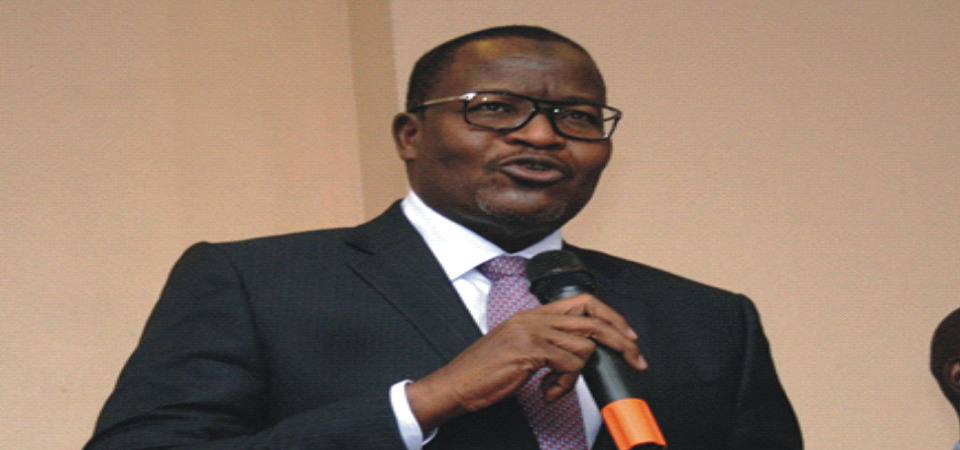
Nigeria's minister of digital economy

The Federal Government of Nigeria announced today that it has succeeded in slashing the cost of internet data by 50%, a development which has seen the cost of 1GB data reduced from N1,000 to less than N500.

The announcement was made by the Minister of Communications and Digital Economy, Dr. Isa Ibrahim Pantami, who said the development was in line with the directive he gave to the regulatory agency (NCC) to put measures in place to reduce the average cost of data in the country.

“The average cost of 1GB of data has reduced from the January 2020 cost of N1,000 to N487.18 in November, 2020.

“This was based on a report by the Nigerian Communications Commission (NCC) submitted to the Honourable Minister following the implementation of the directives,” Dr Pantami’s Technical Assistant, Mr Femi Adeluyi said in a statement issued on Thursday in Abuja.

He explained that “the Honourable Minister had inaugurated a Committee that developed the Nigerian National Broadband Plan (2020-2025) on the 16th of December, 2019. The Plan was unveiled and launched by His Excellency, President Muhammadu Buhari, GCFR, on the 19th of March, 2020.

“One of the goals of the Plan is to reduce the average cost of 1GB of data to a maximum of N390 by 2025.

“With the January 2020 baseline of N1,000 per GB, the maximum projected steady decrease for the end of each year was as follows: 2020 (N925), 2021 (N850), 2022 (N775), 2023 (N700), 2024 (N545) and 2025 (N390).

“In line with Dr Pantami’s commitment to under promise and over deliver, the measures have caused the current cost of data to reduce significantly beyond the December 2020 projection of N925.

“Based on the Report by NCC, the average cost of data as at November 2020 was N487.18, which amounts to 47.33% lower than the projected value.

“The Report also indicates that the cost of data in November 2020 was less than 50% of the cost of data in January 2020.

“The Federal Ministry of Communications and Digital Economy, through the NCC, will continue to ensure that consumers enjoy a price regime that supports fairness and is friendly to consumers.

“Policies are in place to ensure that operators adopt competitive pricing that eschews unjustifiable margins. The general public may also wish to note that complaints about rapid data depletion are also being investigated.

“For more enquiries, the Honourable Minister has directed NCC to respond to all issues raised by our citizens and customers.

“All hands will remain on deck to achieve the goals of the Broadband Plan as the Ministry supervises its implementation in line with our National Digital Economy Policy for a Digital Nigeria.”

The cost of broadband has been a big issue in the African internet space, especially in Nigeria that commands the largest telecom market in the continent. Consequently, Dr. Pantami had rolled out a digital roadmap, which was endorsed earlier in the year by Buhari, to address the challenge.

However, while the directive has resulted in celebration among internet users, experts believe it questions the government’s commitment to a free and competitive market, where market forces, rather than regulators, should determine the cost of commodities.

In July, South African satellite Television, DStv Multichoice was ordered  by the Nigerian House of Representatives to slash the cost  of subscription or develop pay per watch model as Nigerians lament that the cost was becoming unaffordable.

A month earlier, DStv had increased the subscription charges, citing forex situation and business-unfriendliness of the environment that keep adding to the rising cost of doing business in Nigeria.

However, the chairman of the House Ad-hoc Committee on broadcasting, Unyime Idem said the increased charges are unacceptable in the face of COVID-19 pandemic and ordered DSTV to halt every plan they have for increment until further notice.

The faceoff pushed DStv to drop its chase for football TV rights and concentrate on streaming.

While it is evident that Africa has the most expensive data cost, infrastructural decay and poor business policies by the government have been fingered as the reasons; and there have been little or no efforts by various African governments to address the deficiencies.

Experts are worried that constant government’s interference with pricing will not only hinder the market’s competitiveness, but will also spook potential investors who are contemplating the Nigerian market.