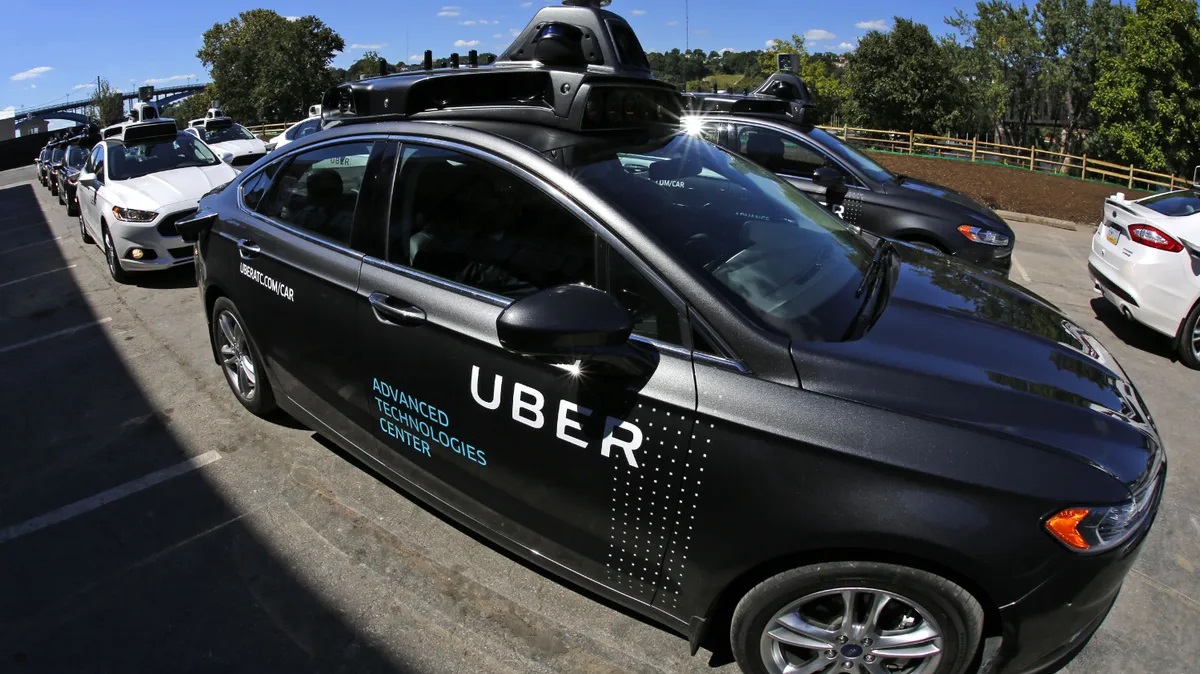
Uber is selling its self-driving car division to Aurora, and that is a good playbook. While the primary motivation may be finding a path to sustained profitability for the ride-hailing company, the decision is the right call. Uber is an aggregator and aggregators win by controlling demand, not supply. In other words, locking the demand (i.e. riders) will make Uber a natural partner for many self-driving brands in the world. This is a fundamental redesign which mobile internet has brought to business: controlling supply does not take you far if you have no way of controlling demand.
Uber in a surprising move is selling its self-driving car unit, Uber Advanced Technologies Group (ATG), to self-driving car startup Aurora, according to a statement made by the company on Monday.
The ridesharing company said the move would accelerate its goal to achieve “profitability” amidst the setbacks of COVID-19. In an era when autonomous vehicles are becoming a thing, Uber’s move to sell ATG and invest in Aurora has been borne out of a perceived future where driverless vehicles become the new normal.
Last year, ATG raised $1 billion from many investors including Toyota and Softbank at a valuation of $7.25 billion, but its valuation has since plunged.
Reuters reported that Uber is also investing $400 million in Aurora, in a deal that valued Aurora at $10 billion according to sources. Uber will hold about 26% ownership interest in Aurora on a fully diluted basis, according to the company’s filing statement.
See it this way: Uber will not lose much if suddenly autonomous cars become ubiquitous, disintermediating drivers, since the owners of these car firms must still need access to demand. Today, Uber has the demand, and would become a natural partner to any brand that wins. Building and wasting money building that supply offers only a marginal strategic benefit.
In August 2018, I wrote on a piece titled “Ube Should Exit Self-Driving Business” thus: “But Uber made a very poor strategic decision many years ago: getting into self-driving business. Sure, Uber’s major cost element is drivers, and removing drivers will improve its margins. But that argument does not account for the fact that Uber is not the right company to bring to fruition the generation-shaping technology leap of autonomous vehicles…Because it has the largest platforms, these entities will gladly consider Uber whenever the time arrives”
By pushing R&D heavy lifting work to Aurora Industries, Uber can position itself as a platform for any brand to party with. If Tesla is better, Uber will be there. If Toyota, that is it. Indeed, the worst thing that would happen in the sector is that there would not be drivers. But that does not mean there would not be demand (riders). Today, Uber holds those riders and it easily work with any brand.
And just in case, Uber is investing in Aurora – and that seals a good call: head, it wins; tail, it also survives.
Around the world, the emergence of ride-hailing companies has posed a threat to traditional taxi business. As a result, there is growing apathy between local taxi operators and their app-based counterparts, whose application of technology have given an edge over traditional taxis in the contested markets.
From the U.S. to the UK, local taxi operators have protested over the crippling impact the innovative app-based taxis have on their means of livelihood, as commuters prefer the ease the technology-based model offers.
Nigerian cab operators have also had their full share of the declining patronage, and now they are going digital in a bid to regain their market share.
As part of the effort to achieve this, an ICT firm, Univasa Nigeria Ltd has developed an app to enable local taxis in Lagos to have an online presence where they can be booked like Uber, Bolt and other ride-hailing companies operating in Nigeria.
The Cable reported that the platform was unveiled in an event held on Monday by Univasa Nigeria Ltd, in collaboration with the Lagos State Taxi Drivers and cab Operators Association (LSTDCOA), in Oshodi Lagos at the Association’s headquarters.
The app named “Baba dey online” is available for downloads in the iOS and Android Play stores.
Univasa Chief Executive Officer Ben Adeniyi said it was developed to end the discrimination against local taxis and help them win customers.
“Today, we are officially launching BabaDeyOnline for users to download on iOS and Google Playstore. This innovation will ease the stress of those who visit the taxi parks to order rides. We are leveraging on the perspective of the public to name this #BabaDeyOnline,” he said, adding that the Univasa app will help people to book Lagos taxis from the comfort of their homes.
It marks the second time the approach is being adopted in addressing the disparity that ride-hailing innovation has created in Lagos cab market, but there are a lot of bottlenecks to be cleared for the Baba Dey Online app to be a success.
Unlike app-based cabs, the Lagos yellow taxis operate only through their respective parks, making it difficult for them to operate in the same level with tech-based cabs who have unlimited space to operate in.
The LSTDCOA has 283 parks and 16 branches across Lagos, but yellow taxis are forbidden in estates, airports and many other affluent places in the State, limiting their opportunity even to cash in on the newly developed Baba Dey Online app.
In response to the development, the president of LSTDCOA Omolekan Taiwo said the Lagos State Government needs to accord yellow taxi operators a level playing ground as they move to embrace technology and close the existing gap created by lack of innovation in their operation.
“Univasa taxi apps came onboard at the right time, since technology is now the ultimate; we are ready to embrace Univasa taxi apps for all our drivers and the general public for usage. We are going to bring back all our members that have left the association due to lack of technology-based apps into our folds.
“However, I want to use this medium to appeal to the Lagos State Government through the Ministry of Transportation to give all the taxi app users a level playing grounds by allowing the yellow taxi access into all estates in Lagos State,” he said.
Although besides this, there are other factors that will impact how commuters embrace the yellow taxi app, including trip fares and vehicle conditions, that need to be addressed. Adeniyi said the operators will need to be trained firstly on how to use the app, which functions the same way as Uber and Bolt driver and rider apps. He added that there is ongoing effort to eliminate the stigma that has limited yellow taxis’ operation in the state.
Uber and Bolt became public enemy number one to local taxi operators in Lagos as they eventually became the preferred choice of commuters in the state due to their easy online-booking technology and the leisure they offer. Calls by the taxi union to get the Lagos State Government to ban the ride-hailing companies failed, leaving it with no option than to embrace the technology that has kept Uber and Bolt winning.
In response to the LSTDCOA’s SOS call, the state government had in March, through the Ministry of Transportation, launched theEko Cab app, in a bid to digitalize local taxi operations in the state and place them in parity with their online-based rivals.
There has been so far, insignificant success from the move, underlining the fact that it requires more than apps to accelerate digital transport systems and emphasizing the need for stakeholders to step in and fill the innovative gap.
Univasa’s Baba Dey Online app may be what the Lagos yellow taxis need to stay in business, but it will take much more than the app’s launch to make it work.
I am privileged to work remotely – what that means is that I have less firsthand knowledge of how horrible Lagos traffic is – I have however heard a lot from people; like my brother leaving Victoria Island at almost 8pm and getting home at around 10pm and calling it a miracle, to some guy – no joke – who spent 6 hours on an Istanbul to Lagos flight, then spent another 8 hours from Murtala Muhammed to Lekki Ajah, to people where I live hopping out at 4am in the morning to get to work at God knows when.
The most important trait of any entrepreneur is the ability to see opportunities where others see problems – Gokada was a miracle product that would have saved a majority of Lagosians from mental breakdowns and unnecessary stress (I wonder what the average lifespan of a working class, Lagos traffic marauding Lagosian is?), it apparently didn’t fall into the State Governments plan for a Mega Lagos – so that got scrapped.
A new class of people see opportunities in Lagos traffic and due to the unofficial nature of their business, scrapping them has turned out to be harder than thought.
Last week I worked on a case study of the economic opportunities in Lagos traffic – these are my notes from that case study.
The Power of Agglomeration
One of my parents is apparently old school and of the opinion that anything you put on the ‘internet’, everyone sees it – we all know this is not how things work (would have been good if it was, but apparently it isn’t), and the amount of people who see what you put on the internet is really a function of how many people are; interested in you (or that topic), and how many people you can get it in their face.
The idea that there is someone out there who needs your product – but doesn’t know it exists has created a need for advertising – trying to get a product in the face of as many people as possible – and with the advent of technology and data, trying to get the same product in the face of as many relevant people as possible. The need to consistently get the right people to see your product – and apparently see it so many times that they get tired of the annoying Facebook ad and just click buy has created a new asset class; Agglomeration.
I have observed three things in business; one is that everybody sells – two is that the more valuable what you sell is, the more you earn, and three is anything is a product, as long as it has value, and you can market it and sell it well – the third point is key.
Lagos Yellow Cab
In the past, trading was all about commodities (gold and wheat), then we started trading equities (which is really just imaginary ownership of a business or enterprise), then debt. Today – anything that has any relative value can be sold, and can be sold at a premium too. Tesla sells ZEV credits (an almost fictional product) to General Motors, Fiat Chrysler Automobiles, and other manufacturers, earning them US$594 million in 2019 alone, people are spending a minimum of US$4 billion daily to buy an imaginary digital currency called Bitcoin, McDonald made US$11.01 billion in 2018 annual revenues selling a big red banner with a yellow M on it to a minimum of 36,000 businesses for a US$45,000 franchising fee, 4% of all gross profits and in some cases rent, Apple reportedly sells the “rights to be its default search engine” to Google for US$12 billion, and because the other day I was watching a YouTube video from a German based business school – Advertisers pay YouTube hundreds of thousands of dollars to bombard my feed with ads that in some cases I consider to be extremely irrelevant.Agglomeration is the new market class. Motivational speakers always tell us there’s a price to pay for the fulfillment of your vision – they’re right. Facebook’s vision is to connect the world – Facebook’s vision is a lucrative one, because apparently connecting the world creates a lot of Agglomeration, and the price (or benefit) of connecting 2 billion people in 2019 was US$70.7 billion in annual revenue – I like that kind of vision.
Agglomeration is a powerful asset, it’s so powerful that through her blog (an Agglomeration platform), Linda Ikeji reportedly bought a N500 million (US$1.31 million) house at Banana Island in 2015 based primarily on the power of Agglomeration.
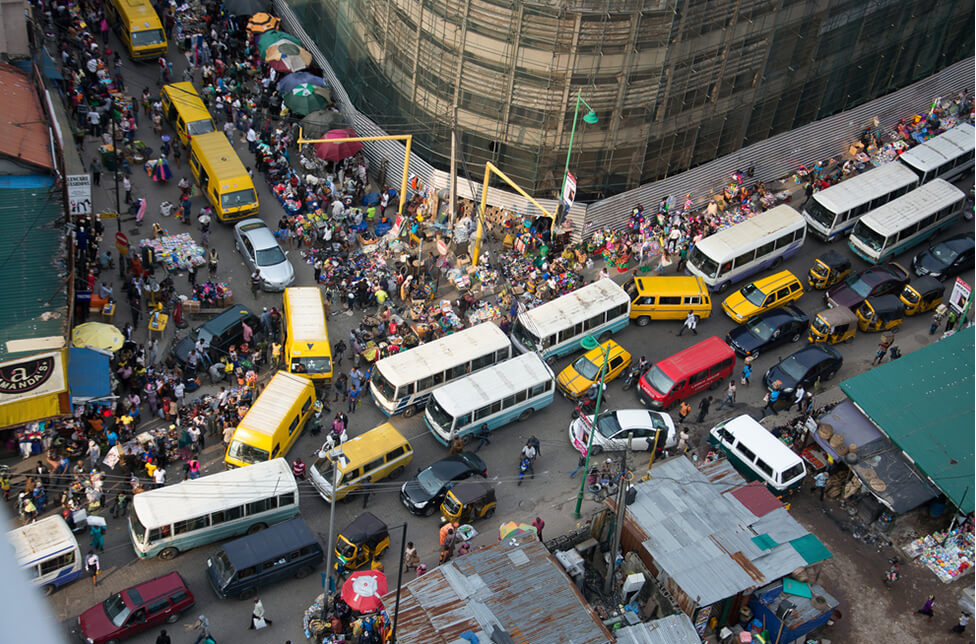
Except for the Experience (s/o to Pastor Paul Adefarasin and House on the Rock), no other event Agglomerates a larger number of Lagosians than Lagos traffic.
Agglomeration creates an opportunity to sell, market and advertise a plethora of products and services, and when no one pays an Agglomeration fee, the barrier to entry becomes extremely low.
Hawkers in Lagos take advantage of the free Agglomeration of commuters in Lagos traffic to sell products these commuters may need at that present point in time – or may not have the time to buy later on.
Finding ways to Agglomerate users is a key strategy that helps businesses up sell and cross sell various offerings to users. Always have an Agglomeration strategy.
Twitter influencers have one job – have fun and tweet all you like to gather followers, then help us market our products to your followers (base of Agglomeration).
eCommerce is essentially an Agglomeration strategy. I was in a conversation with someone the other day, and I jokingly said that if music doesn’t work out for the P-square duo since they split, they can both legit become Instagram Influencers.
Always have an Agglomeration strategy.
Interaction Layers
All products have three interaction layers – interaction layers influence how people come in contact with your product and eventually commit to it (purchase). The first interaction layer is desired; when a user desires a specific solution or experience – the job of the entrepreneur is to make sure that solution or experience exists. The next layer is search – knowing a product exists, but not knowing where (or how) to get it is a market friction in itself. Businesses have a mission to make sure the availability and the location of that product is known. And the final layer is request – this is where a user eventually makes the step or takes actions to get that product.
The first layer can be gamed – and Apple does just that. Every human being has a desire to stand out and feel unique – it’s why getting the first position in class is a priority for kids (or at least most kids), it’s why people respect celebrities, and it’s why people do crazy things on Instagram just to go viral and draw everyone’s attention to themselves.
Apple creates products that feed that innate desire. Below a certain market class, an iPhone isn’t just a smartphone, it’s one of the simplest and non-obtrusive ways to signal to people that you’re a higher specie (earn more than the average person). Not everyone will walk outside to see the car you drove in with – and you can’t carry your Lekki Phase 1 property on your head and come to church – you can however get the iPhone 12 Pro (even though both me and you know you don’t need that phone for any reason, and your iPhone XS was and is still doing a fine job), and flaunt it every time need be – like when the pastor says open your Bible, and you legit came to church with a physical Bible, but you prefer to open the one on your phone, But I digress.
Hawkers employ a DTC (Direct to Consumer) marketing approach that breaks through the first three interaction layers to create a solution that is extremely phenomenal.
When your stomach growls after two hours in traffic (which is normal), you don’t have to fantasize about a roll of gala, look for where to buy one and make an attempt to purchase (you’re stuck in your car, so you literally can’t do that), the guy in front of you wearing a worn out Arsenal jersey is already dangling the thing in your face, all you have to do is pick up N200 from your wallet and whistle – that roll of gala will be in your hand in seconds – without any receipts, thank you for your patronage(s), or come next time(s).
Now in practice – it isn’t really possible to remove all interaction layers and employ a DTC approach for all products – the key selling point of the DTC marketing approach is that the quality of the product in question doesn’t necessarily need to be gauged or verified a lot (the major verification for consumables is expiry date, and you can really do that with one glance). FMCG brands don’t necessarily see their DTC strategies as being a negative representative of their brand, and therefore they can apply it as much as they need to.
I may not always be correct, but in my opinion, no sensible person will (and should) buy any kind of smartphone that’s hawked in traffic, you might as well buy the new Oppo A93, and see a nice wrap of hot fufu neatly packaged inside the box when you get home – how they performed the switch is a question I’m not sure I can answer.
Ideally most businesses will be able to remove the first two layers – the third layer is a tricky interface all together. The key point to realize is that the lesser the layers – the quicker the sale.
A technology service and consulting business may operate with the first layer on – the client (a big firm) observes they have a need and informs you of the problem. Since you don’t already have a solution to that problem, the first interaction layer is still firmly in play. Your goal will be to build this solution (usually from scratch), and deliver it to the client. You obviously get paid well – but you make lesser sales per volume when compared to other businesses that already have an existing product on the market that people just have to buy into.
Conclusion
Agglomeration is a key strategy that all businesses must design and make provisions for. The lesser you depend on external sources for Agglomeration, the better.
Agglomeration is also very similar to businesses focusing on building platforms (and communities) rather than just products.
As much as possible, businesses should focus on reducing and removing the interaction layers their users go through before interacting with their solutions.
As I said earlier, this is not always possible due to the intricacies of every business.
However, every business can design innovative ways to make interactions with their products and solutions as easy as possible.
P.S: if you want to talk more about Agglomeration strategies, Interaction Layers and all things strategy or for Consultation services, contact me with email below.
Congratulations to portfolio Bitfxt which has launched BoundlessPay. The Boundlesspay app turns your phone into a mobile bank, making it possible that you can spend your popular cryptos wherever Naira is spent (more currencies in Africa coming). BoundlessPay is local, in Lekki, and powered by Bitfxt exchange.
More so, it connects to a community of products with a stablecoin powering decentralized finance, BITDeFI, which is available on Coinmarketcap. I want to thank our team, led by blockchain oracle, Franklin Peters, for executing at a high level. Please go and download BoundlessPay at Play store here.
Now, we have an exchange, a mobile “bank” and a DeFi, and are positioned to implement and execute any blockchain and crypto-related projects to power local and global commerce. To join this party, talk to Franklin.
Uber in a surprising move is selling its self-driving car unit, Uber Advanced Technologies Group (ATG), to self-driving car startup Aurora, according to a statement made by the company on Monday.
The ridesharing company said the move would accelerate its goal to achieve “profitability” amidst the setbacks of COVID-19. In an era when autonomous vehicles are becoming a thing, Uber’s move to sell ATG and invest in Aurora has been borne out of a perceived future where driverless vehicles become the new normal.
Last year, ATG raised $1 billion from many investors including Toyota and Softbank at a valuation of $7.25 billion, but its valuation has since plunged.
Reuters reported that Uber is also investing $400 million in Aurora, in a deal that valued Aurora at $10 billion according to sources. Uber will hold about 26% ownership interest in Aurora on a fully diluted basis, according to the company’s filing statement.
The report said Uber and Aurora will enter into a collaboration agreement to launch self-driving vehicles on the Uber ride sharing network.
Uber’s Chief Executive Officer Dara Khosrowshahi told Reuters in an interview that the sale will accelerate the ride-hailing company’s goal to achieve profitability on an adjusted basis by the end of 2021.
The company released a video showing the robotaxi driving around the city of Shenzhen, observing traffic rules and stopping when necessary for passenger to get in or alight.
Google was the first to set the unmanned wheels moving with its Waymo project that has successfully tested autonomous cars in U.S. cities. Tesla is also working to achieve its target of running self-driving ride-hailing cars in the near future. A target it previously set for 2020 but fails to meet.
The growing interest has made startups of autonomous vehicles targets of investors.
Nevertheless, Uber has been working to have a better earning report next year after 2020 financial woes. COVID-19 lockdowns, lawsuits and state of California’s attempt to compel gig companies to declassify their workers as contractors, increased the economic troubles of the cab company this year.
Uber reported gross bookings of $14.7 billion in Q3, recording a decline of 10% compared to the same quarter last year. Bookings generated $3.1 billion revenue for the company, 18% decline compared to the same period a year ago. Uber recorded a third quarter loss of $1.1 billion.
Uber trialed Uber Boat in Lagos
California is Uber’s largest market and has been hardly hit by the pandemic. On Monday, Governor Gavin Newsom imposed new restrictions that will confine Californians to their homes, following the recent surge in COVID-19 cases in the United States.
The development means that Uber will have to rely on its essential service (food delivery) once again to stay in business during the restriction. But it is a situation it is trying to avoid in the future with robotaxis.
Following the outbreak of coronavirus and the exigencies it ushered in, authorities saw an urgent need to place robots in many fields of human services, especially in areas where there is human to human contact. Therefore, there has been accelerated approval of robotic services by regulators recently.
Self-driving cars would have been operational during lockdowns, and help to elevate movement. Consequently, Uber and other companies are working to fix the friction of restricted human movement in times of novel health crises by making a push for autonomous vehicles.