

DD
MM
YYYY

PAGES

DD
MM
YYYY

spot_img

PAGES

Home Blog Page 6006

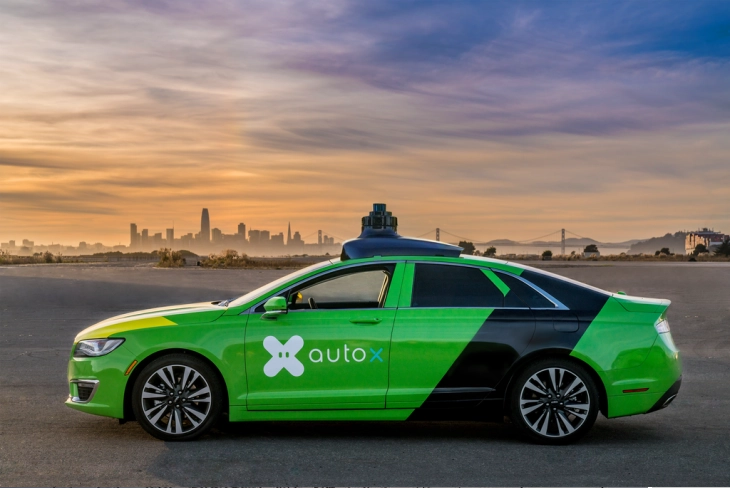
AutoX Sets the Driverless Taxi (Robotaxi) Pace in China

0

The world’s push toward autonomous vehicles is recording success as new technologies fill the gaps that have stymied its progress for long.

On Thursday, AutoX, an Alibaba backed startup announced the release of robotaxi driverless taxis in Shenzhen China. It is the first major breakthrough in using autonomous vehicles for public transport in China.

AutoX was founded in 2016 by Jianxiong Xiao, a former assistant lecturer at Princeton. The Shenzhen-based startup focuses on making the technology for self-driving vehicles, and it is in partnership with carmaker Fiat Chrysler to develop and roll out its robottaxis.

Like in the US and every other country experimenting with driverless cars, regulators in China had been warily giving approvals to companies operating automated vehicles. Before now, companies operating driverless vehicles in China faced strict rules, including having a driver inside the vehicles as a safety measure.

But that is where AutoX breaks the jinx. The company was able to get the authorities to approve the vehicles without backup drivers or any remote operators for its local fleet of 25 cars, it said. And the government unlike before is not restricting where in the city the AutoX operates.

The company said it would focus on the downturn area of the city as it pushes to satisfy the curiosity of both the government and the public through the tests.

“It’s a dream. After working so hard for many years, we’ve finally reached the point that the technology is mature enough, that we feel confident by ourselves, to really remove the safety driver,” AutoX CEO Xiao said in an interview.

AutoX said to beat the bottlenecks that had made it difficult for regulators to approve complete autonomous vehicles, it has to improve the technology to enable the vehicles to navigate around humans and other objects sensitively.

“The traffic scenarios are much more challenging,” Xiao said. “For our AI, we had to do a lot of work to adapt to the local Chinese way of driving.”

Xiao attributed the success to improved software and hardware, and said regulators were impressed by the AI software.

“We have over 100 vehicles driving every day on the road in China to capture data. The AI software is now better,” Xiao said, adding that “From a technical point of view, the car is ready,” and “it is very crucial to have this car, otherwise we cannot go driverless.”

The race to develop trusted automated vehicles has heated up in the past few years. In October 2020, Waymo LLC, a subsidiary of Google’s parent company, Alphabet, expanded its driverless cars services to the public, and it became the only self-driving commercial service that operates without safety backup drivers in the vehicle.

Waymo has partnered with vehicle manufacturers, including Daimler AG, Nissan-Renault, Fiat Chrysler, Jaguar Land Rover and Volvo, to develop the technology for delivery vans and class 8 tractor-trailers for delivery and logistics.

The company made a 2017 projection in 2012, which was adjusted to 2020, to deliver reliable commercial self-driving vehicles – and it’s living up to it.

Tesla is another automaker that has jumped on the robotaxi idea. The company’s founder and CEO Elon Musk, had in 2019 set a target of 2020 for a possible ride-hailing driverless Tesla cars. Although the company did not meet the projection, it added fame to the quest for autonomous vehicles.

AutoX had in the summer obtained approval to carry out completely autonomous tests on public roads in parts of San Jose, California, according to CNN.

The report said there has been rising domestic autonomous vehicle competition in China, as more driverless vehicles are being opened to the public.

In June, Didi, China’s biggest ride-hailing firm, started its own trial of autonomous vehicles in Shanghai, offering the public free rides, although not without a safety backup driver.

Baidu was also reported to be offering public rides in its driverless vehicles in some districts of Beijing.

But AutoX has an edge, with over 100 robotaxis deployed in five Chinese cities, including Shanghai and Wuhan, the company is the only one that has secured the right to offer autonomous ride services without backup drivers in China. Xiao said regulators will determine if the same rule will apply in other cities as the company aims to expand to more than 10 local cities.

AutoX vehicles are available to the public in Shanghai, and commuters can hail them through Alibaba’s Autonavi app, a Chinese mapping app.

The domestic competition for driverless vehicles in China, also underscores automakers’ push to grab a share of the automobile industry while it’s still ripe. The Chinese market has been leading globally when it comes to automobiles, and its market is projected to have $1.1 trillion value by 2040.

Huawei Misses Out as Qualcomm Launches Snapdragon 888 5G Chips

0
Most parts of the world have been pushing to cage Huwaei

On Tuesday, US chipmaker Qualcomm announced new products for future generation devices that include 5G enabled smartphones in a virtual event. The flagship offering for next-generation smartphones called Snapdragon 888 chip was just the news smartphone makers want to hear as the world gears up for the fifth generation internet.

Qualcomm is a leading supplier in the semiconductor industry who has a list of giant smartphone makers, including Apple, Samsung Electronics and leading Chinese companies such as Huawei Technologies, Oppo and Xiaomi in its supply chain.

The launch of Snapdragon 888 triggered excitement among Chinese smartphone makers. SCMP reported that senior executives at Xiaomi, Oppo, Vivo and Realme said via video played at the virtual event that they would soon launch smartphone products featuring the Snapdragon 888.

“I’m glad that our new flagship smartphone Mi 11 will be one of the first devices with the Snapdragon 888,” Xiaomi founder and CEO Lei Jun said.

Notably, Huawei was not among the vendors celebrating the launch of the new chip for obvious reason. In May 2020, the US Bureau of Industry and Security (BIS) amended the longstanding foreign-produced direct product (FDP) rule to target Huawei’s acquisition of semiconductors that are the direct product of certain U.S. software and technology.

In August, BIS amended and added another 38 Huawei affiliates to the Entity List, which imposes a license requirement for all items subject to the Export Administration Regulations (EAR) and modified four existing Huawei Entity List entries.

BIS also imposed license requirements on any transaction involving items subject to Commerce export control jurisdiction where a party on the Entity List is involved, such as when Huawei (or other Entity List entities) acts as a purchaser, intermediate, or end user.

The sanctions prevent Huawei’s attempts to circumvent U.S. export controls to obtain electronic components developed or produced using U.S. technology.

Based on the sanctions, US companies such as Qualcomm will need license from the EAR to sell chips to Huawei. Although Qualcomm said it has secured license to sell a number of products to Huawei, including some 4G products, it did not say if it was granted the unlikely license to sell 5G chips to the embattled Chinese company.

Huawei has been banned by the US government based on concerns that the telecom vendor would use 5G technology to harvest data for the Chinese government. The situation makes it unlikely that EAR will renege on its objective to allow Qualcomm to supply Huawei with the Snapdragon 888.

Chinese media outlet Paper.cn reported that Qualcomm president Cristiano Amon said at the virtual event that the company expects to work with Honor, the former Huawei sub-brand which was sold to a consortium of over 30 Huawei channel sellers on November 17 – and that cooperation is dependent on “future development.”

While the Chinese telecom giant has a slim chance to partake of the new 5G chip, the flagship offers advantage to other smartphone makers as the number of potential 5G users soar around the world. More than 1 billion people globally are expected to live in an area that will have 5G coverage by the end of year.

Qualcomm said the Snapdragon 888 is designed to power all 5G-connected devices like personal computers and cloud-based artificial intelligence (AI) products, providing users with a more immersive and interactive experience when using gadgets such as mixed reality glasses.

The Snapdragon 888 integrates Qualcomm’s third-generation 5G modern and Snapdragon x6o radio frequency system, and supports major global millimeter wave and sub-6GHz frequency bands, and works with stand-alone (SA) and non-stand alone (NSA) networking modes.

The new chip is also optimized for photography and videos taken by smartphones, enabling users to capture videos at 120 frames per second, with each frame containing up to 12 million pixels.

The new sixth-generation Qualcomm AI engine embedded in the 5G chipset delivers significant improvements in performance and energy efficiency, operating at 26 trillion operations per second compared with previous-generation platforms.

Missing out on the amazing technology of Snapdragon 888, means Huawei will continue to look for alternatives to US-made chips, as it struggles to stay in business amidst the severe impact of US sanctions.

She went, she saw and she conquered: Chatting with Kazeem Zainab on Leadership and Social Impact Training Experience

0

Tekedia: Could you please tell about yourself?

Kazeem Zainab: I am Kazeem Zainab Adewunmi, a Nigerian. A graduate of Sociology from Lagos State University. I am a Human Resource Enthusiast and a Fashion Entrepreneur. A serving Team Lead for Career and Leadership Hub, Nigeria, An undergraduate of SpringForth Leadership School, Graduate Advancement Program,  an ISERH Associate Ambassador,  A member of Young African Leaders Initiative (YALI), A Volunteer member of Health Volunteer Nigeria Initiative, A Volunteer Administrator for Humanity First Initiative and the CEO of Awesome Royal Collections. I am passionate about humanity and working towards enriching lives in the world we live in. I love volunteering, exploring and mentoring.

Tekedia: What was your experience like going through the ISERH class 5?

Kazeem Zainab: It’s quite a challenging one, I mean having to attend classes twice every week amidst other personal engagement but self motivation and a purpose driven mindset keeps me going. It’s an amazing moment learning from great minds amidst other scholars.

Tekedia: Can you highlight some of your take aways from the program?

Kazeem Zainab: First I would say, self-discipline, commitment and self motivation. Second, I was totally re- oriented about seeing things a different way. Third, I learnt the necessary skills needed to succeed as a leader and an Entrepreneur. I learnt how to relate in a social and corporate organizations.

Tekedia: What does it mean for you to have become the most outstanding student of the course?

Kazeem Zainab: It means a lot to me, I am really honored, it shows I didn’t just participated in the course, I was committed to it and I made it so practical. I’m glad, i fufilled my goals towards the course.

Tekedia: Going forward, what is your next step?

Kazeem Zainab:First and foremost, I would be taking up professional courses to advance my career opportunities. I’m definitely looking forward to a position where I can grow – personal and professional development is something that’s really important to me, since I hope to take up managerial and humanitarian responsibilities in the future. To sum it up, I’d love to explore opportunities where I can use my learned skills to make an impact that I can see with my own eyes, I’m always very motivated by being able to see the impact of my work on others.

Tekedia: Your advice for youths in Africa on personal and professional development?

Kazeem Zainab: Self-awareness and goal setting should always come first, As they serve as a guide all through to any steps to personal and professional self-development. My advice goes thus, do not relent, take charge of every opportunities and be prepared for challenges, as it’s synonymous to success.

Nigeria Has A Population of 200M But Only 30M Earn Income [Video]

2

In this video, I explain our thesis that Nigeria indeed has a population of 200 million people. We have used alternative data sources in our model, and then extrapolated. However, only about 30 million people earn income. The implication is clear: the 30 million will have to carry the other 170 million. Of course, included in that “income earners” bracket are those at minimum wage which could be $70 per month. That does mean many people focus on essentials as there is no free cash to waste.

Tekedia Advanced Diploma Programs Begin Anytime – Immediate Access Upon Payment

0

The next batch of Tekedia Advanced Diploma programs is immediate upon payment. Yes, upon payment, you have immediate access to start learning. Each track costs $100 or N36,000 and lasts for 8 weeks (2 months); fully online and self-paced, but no live session. Here are the tracks:

-Advanced Diploma in Logistics & Supply Chain Management
– Advanced Diploma in Business Innovation, Growth & Sustainability
-Advanced Diploma in Project Management
-Advanced Diploma in Risk Management
-Advanced Diploma in Business Administration
-Advanced Diploma in Innovation & Design Thinking

Click for curriculum and registration here – https://school.tekedia.com/course/diploma/