DD
MM
YYYY

PAGES

DD
MM
YYYY

spot_img

PAGES

Home Blog Page 6015

N3,000-N6,000 Lagos-Ibadan Train-fare: A Transport Alternative Nigerians Don’t Want

1

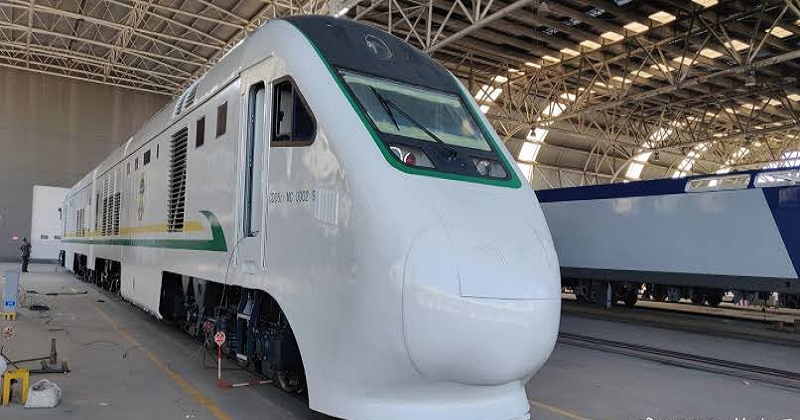
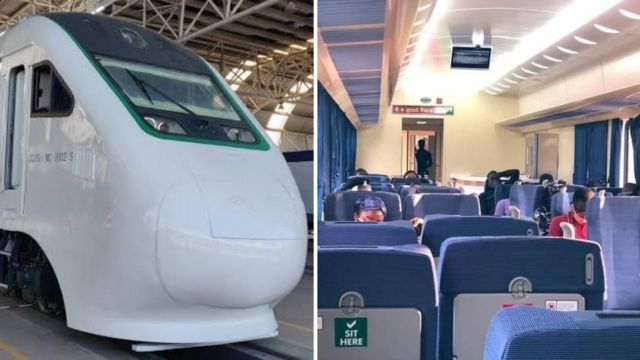
The Federal Government on Friday announced the approved charges on the new Lagos-Ibadan rail standard gauge which is billed to commence operation in January 2021.

The announcement was made by the Minister of Transportation Rotimi Amaechi during the inauguration of the Governing Council of the Chartered Institute of Transport Administration of Nigeria in Abuja.

Amaechi said the transport fare from Ibadan to Lagos will cost from N3,000 to N6,000, a replica of the Abuja-Kaduna model.

“I have received the mandate of President Muhammadu Buhari to inaugurate the Lagos/Ibadan rail project by January 2021, which will make Nigerians see the way the standard gauge railway looked like.

“Today I approved the charges on passengers from Lagos to Ibadan, we just transfer how we charged from Abuja to kaduna. We charge N3,000 per Economy seat, N5,000 for Business class, and N6,000 for first class, the same is applicable to Lagos to Ibadan.

“It should have started running by now before Mr. President inaugurates it by January,” the Minister said.

He added that there will be collaboration between the Ministry of Transport and the Chartered Institute of Transport Administration of Nigeria (CIOTA) to achieve the objective.

However, the announcement has not gone down well with Nigerians, who took to social media to register their displeasure.
“How can rail transport cost 3,000 from Lagos to Ibadan, who are the people advising these oga dem sef, your closest competitor is road transport. How much does it cost to move with that from Lagos to Ibadan, half the price then you’re in business,” a Twitter handle wrote.

Amaechi said the goal of the Transport Ministry is to bring the Lagos-Ibadan fares in tandem with the Abuja-Kaduna model, even though the distance and circumstances differ.

Abuja-Kaduna road is a distance of 189.4 km that takes about 2h 55 min to cover by road. Given the current security situation on the highway, there is willingness to pay among commuters as the fare is way cheaper than potential ransom. Kidnappers have overrun the highway, making rail transport and flights the only safe alternative for travellers.

On the other hand, Lagos-Ibadan is a 132km trip that can be covered in less than 3 hours, depending on the highway’s traffic. Therefore, the announced train charges seem unacceptable because the road transport to Ibadan is operational and cheaper.

“I know some blockheads will still come and defend it but the train ticket from Lagos to Ibadan shouldn’t go for anything more than 1,500 for the economy class. What then is the essence of the railway if it’s not affordable? How much is the minimum wage that one would pay 6k to & fro?” Wale Adetona wrote on Twitter.

With a commercial 18-seater bus, the cost of transport from Lagos to Ibadan ranges from N800 to N1,500, while smaller vehicles that offer more comfort charge from N2,000 to N3,000.

Globally, rail transportation offers ‘cheaper’ alternatives to road transport, a reason believed to be behind the federal government’s move to reintroduce trains to Nigeria’s transport sector. Therefore, Nigeria’s minimum wage of N30,000 monthly defies the logic behind N3,000 for 132km train ride.

Upon the conception of the Lagos-Ibadan light rail gauge initiative, many workers in Lagos began to entertain the idea of working in Lagos while living in Ibadan to save them the crazy cost of accommodation. But following this development, that idea seems more like the many dreams Nigerians have that would never come to pass.

“Lagos to Ibadan train services prices are out. It is 3k economy seat, 5k business seat and 6k first class. If you do economy and plan to live in Ibadan and work in Lagos, that means N6,000 a day and N180,000 a month. On transport alone. There’s no hope for the poor,” Dr. Olufunmilayo wrote on Twitter in response to the development.

Nigerians believe the exorbitant ticket charges are as a result of the Transport Ministry’s desperation to generate fund for the repayment of the Chinese loan used to fund the rail project, and it would cause more harm than good.

The Central Bank of Nigeria (CBN) Had A Great Week On Policies

14
Nigeria Naira US Dollar

The Central Bank of Nigeria (CBN) team just ended a great week on policies. I think they deserve our commendations. I understand that the economy is still hurting. But over the last few days, the CBN is recalibrating. I am reversing my projection on the continuous deterioration of Naira against the US dollars at scale; the marginal loss remains due to our poor productivity quotient and overall poor balance of trade. 

The CBN under Governor Emefiele ran a solid good monetary policy under President Jonathan. But at the inception of the President Buhari administration, he cannibalized what was working. It was very strange and I have written here to show my frustration on the evolution of these policies.

But today, they are getting back to the fundamentals. I expect more funding for startups. I also expect more remittance hitting Nigeria. In short, the biggest export Nigeria has run for years now is the human capital. And those citizens reward the nation via remittance. I estimate about $1.8 billion – $2.2 billion monthly remittance into Nigeria. If that happens, that means more foreign currency will be in circulation, giving Naira a breathing space.

Our total remittance as a nation is always at parity with the total executed national budget. In other words, even though we may have a budget of $30 billion, the execution is never 100%, and by the time you look at the percentage of execution, the number is always around the amount remitted into the economy from Nigerians living abroad. That remittance froze because the deal was not there: if you had sent $1,000 via Western Union last week, they would pay your family N384,000!

Hopefully, in two weeks, after they have adjusted to the new policy, Western Union will ask your bank to pay you $1,000 in cash or put the money in your dorm account. With that, more forex enters into Nigeria and more Nigerians in diasporas will have incentives to wire more.

“We are leaving no stone unturned to ensure that our customers instantly receive their transfers as cash (USD) or transfers into their domiciliary accounts. Our customers have the flexibility to choose the mode of receipt that suits them. It is strictly on their terms,” said a leading bank in Nigeria.

Central Bank Governor, Nigeria

This new policy will attain a full steady state in late Q1 2021 as there are many backlogs for foreign currency that any immediate supply would be swallowed up quickly. Also,  due to Christmas holiday coming, economic activity will slow down. But from March 2021, Naira will stabilize with the official and black rates fairly closer, provided Covid-19 does not add another shock in the crude oil market which may rattle the world oil demand. As I write, crude oil prices are hitting to close a 5th week of gain; a $50 per barrel on Brent crude is just around the corner.

That it took CBN this long to do this is unfortunate. But we have to be happy because it has been done. Well done CBN.

Arik Air Fires 300 Workers – Harsh Harmattan Coming To Labour

1

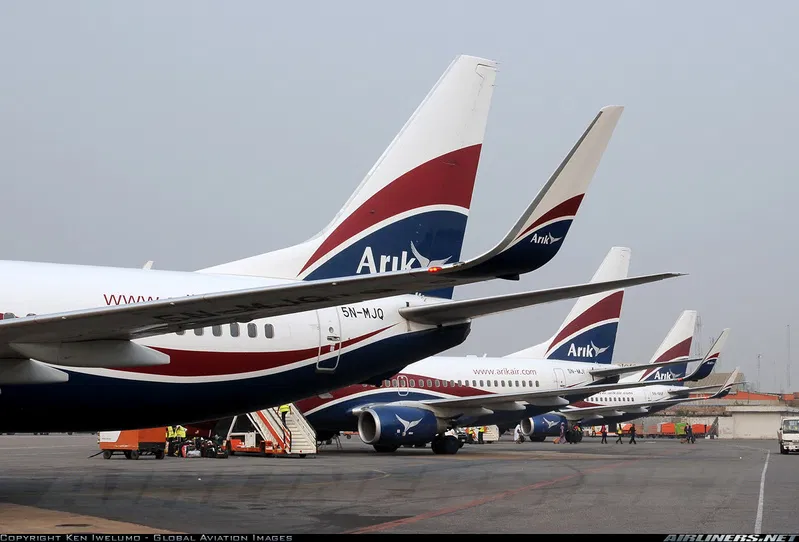
Nigeria has done well in managing and curtailing Covid-19 biological pandemic. Yes, to a large extent, our healthcare experts have overperformed. But the economic pandemic is about starting. This could become a really harsh harmattan for labour. You would expect that, as paralyses are coming from multiple fronts and some sectors remain severely under water. Today, Arik Air has drawn the first blood: “Arik Air management declares 300 staff redundant”. That is another way of saying that Arik has fired 300 people. Very painful!

The statement, titled ‘Arik Air management declares 300 staff redundant’, noted that a redundancy package would be provided for the affected workers with the help of the aviation unions.

“Arising from the devastating impact of the COVID-19 pandemic, leading to the constrained ability of the airline to complete heavy maintenance activities and return its planes to operations, stunted revenues against increasing operational costs, the management of Arik Air (In Receivership) has declared 300 staff members redundant to its current level of operations,” the statement said.

“The leadership of the impacted unions has been contacted to negotiate a redundancy package for the affected staff.”

The statement said over 50 per cent of Arik Air’s workforce of over 1,600 staff have been on furlough in the past six months on a base allowance.

“Decisions to let go of staff is naturally a difficult decision. Arik Air wishes the impacted staff well in their future endeavors,” the airline said.

As written there, a few months ago, Arik noted that it had put 50% of its workers on furlough. This sack is taking that redesign to a steady state which is a calamity for the families involved. As you count airlines, remember restaurants and private schools: most are not re-opening.

One quick thing, if Nigeria has data of its citizens, is to re-ignite the economy through consumption, by sending N10,000 to every citizen. If you do that, we can spend ourselves out of this while structural adjustments are done across sectors with growth-focused policies. But of course Nigeria does not have data and cannot send cheques to the citizens. I have called for sustained tax changes to stimulate venture funding in Nigeria. As population continues to rise, this economy cannot afford to shrink!

AutoX Sets the Driverless Taxi (Robotaxi) Pace in China

0

The world’s push toward autonomous vehicles is recording success as new technologies fill the gaps that have stymied its progress for long.

On Thursday, AutoX, an Alibaba backed startup announced the release of robotaxi driverless taxis in Shenzhen China. It is the first major breakthrough in using autonomous vehicles for public transport in China.

AutoX was founded in 2016 by Jianxiong Xiao, a former assistant lecturer at Princeton. The Shenzhen-based startup focuses on making the technology for self-driving vehicles, and it is in partnership with carmaker Fiat Chrysler to develop and roll out its robottaxis.

Like in the US and every other country experimenting with driverless cars, regulators in China had been warily giving approvals to companies operating automated vehicles. Before now, companies operating driverless vehicles in China faced strict rules, including having a driver inside the vehicles as a safety measure.

But that is where AutoX breaks the jinx. The company was able to get the authorities to approve the vehicles without backup drivers or any remote operators for its local fleet of 25 cars, it said. And the government unlike before is not restricting where in the city the AutoX operates.

The company said it would focus on the downturn area of the city as it pushes to satisfy the curiosity of both the government and the public through the tests.

“It’s a dream. After working so hard for many years, we’ve finally reached the point that the technology is mature enough, that we feel confident by ourselves, to really remove the safety driver,” AutoX CEO Xiao said in an interview.

AutoX said to beat the bottlenecks that had made it difficult for regulators to approve complete autonomous vehicles, it has to improve the technology to enable the vehicles to navigate around humans and other objects sensitively.

“The traffic scenarios are much more challenging,” Xiao said. “For our AI, we had to do a lot of work to adapt to the local Chinese way of driving.”

Xiao attributed the success to improved software and hardware, and said regulators were impressed by the AI software.

“We have over 100 vehicles driving every day on the road in China to capture data. The AI software is now better,” Xiao said, adding that “From a technical point of view, the car is ready,” and “it is very crucial to have this car, otherwise we cannot go driverless.”

The race to develop trusted automated vehicles has heated up in the past few years. In October 2020, Waymo LLC, a subsidiary of Google’s parent company, Alphabet, expanded its driverless cars services to the public, and it became the only self-driving commercial service that operates without safety backup drivers in the vehicle.

Waymo has partnered with vehicle manufacturers, including Daimler AG, Nissan-Renault, Fiat Chrysler, Jaguar Land Rover and Volvo, to develop the technology for delivery vans and class 8 tractor-trailers for delivery and logistics.

The company made a 2017 projection in 2012, which was adjusted to 2020, to deliver reliable commercial self-driving vehicles – and it’s living up to it.

Tesla is another automaker that has jumped on the robotaxi idea. The company’s founder and CEO Elon Musk, had in 2019 set a target of 2020 for a possible ride-hailing driverless Tesla cars. Although the company did not meet the projection, it added fame to the quest for autonomous vehicles.

AutoX had in the summer obtained approval to carry out completely autonomous tests on public roads in parts of San Jose, California, according to CNN.

The report said there has been rising domestic autonomous vehicle competition in China, as more driverless vehicles are being opened to the public.

In June, Didi, China’s biggest ride-hailing firm, started its own trial of autonomous vehicles in Shanghai, offering the public free rides, although not without a safety backup driver.

Baidu was also reported to be offering public rides in its driverless vehicles in some districts of Beijing.

But AutoX has an edge, with over 100 robotaxis deployed in five Chinese cities, including Shanghai and Wuhan, the company is the only one that has secured the right to offer autonomous ride services without backup drivers in China. Xiao said regulators will determine if the same rule will apply in other cities as the company aims to expand to more than 10 local cities.

AutoX vehicles are available to the public in Shanghai, and commuters can hail them through Alibaba’s Autonavi app, a Chinese mapping app.

The domestic competition for driverless vehicles in China, also underscores automakers’ push to grab a share of the automobile industry while it’s still ripe. The Chinese market has been leading globally when it comes to automobiles, and its market is projected to have $1.1 trillion value by 2040.

Huawei Misses Out as Qualcomm Launches Snapdragon 888 5G Chips

0
Most parts of the world have been pushing to cage Huwaei

On Tuesday, US chipmaker Qualcomm announced new products for future generation devices that include 5G enabled smartphones in a virtual event. The flagship offering for next-generation smartphones called Snapdragon 888 chip was just the news smartphone makers want to hear as the world gears up for the fifth generation internet.

Qualcomm is a leading supplier in the semiconductor industry who has a list of giant smartphone makers, including Apple, Samsung Electronics and leading Chinese companies such as Huawei Technologies, Oppo and Xiaomi in its supply chain.

The launch of Snapdragon 888 triggered excitement among Chinese smartphone makers. SCMP reported that senior executives at Xiaomi, Oppo, Vivo and Realme said via video played at the virtual event that they would soon launch smartphone products featuring the Snapdragon 888.

“I’m glad that our new flagship smartphone Mi 11 will be one of the first devices with the Snapdragon 888,” Xiaomi founder and CEO Lei Jun said.

Notably, Huawei was not among the vendors celebrating the launch of the new chip for obvious reason. In May 2020, the US Bureau of Industry and Security (BIS) amended the longstanding foreign-produced direct product (FDP) rule to target Huawei’s acquisition of semiconductors that are the direct product of certain U.S. software and technology.

In August, BIS amended and added another 38 Huawei affiliates to the Entity List, which imposes a license requirement for all items subject to the Export Administration Regulations (EAR) and modified four existing Huawei Entity List entries.

BIS also imposed license requirements on any transaction involving items subject to Commerce export control jurisdiction where a party on the Entity List is involved, such as when Huawei (or other Entity List entities) acts as a purchaser, intermediate, or end user.

The sanctions prevent Huawei’s attempts to circumvent U.S. export controls to obtain electronic components developed or produced using U.S. technology.

Based on the sanctions, US companies such as Qualcomm will need license from the EAR to sell chips to Huawei. Although Qualcomm said it has secured license to sell a number of products to Huawei, including some 4G products, it did not say if it was granted the unlikely license to sell 5G chips to the embattled Chinese company.

Huawei has been banned by the US government based on concerns that the telecom vendor would use 5G technology to harvest data for the Chinese government. The situation makes it unlikely that EAR will renege on its objective to allow Qualcomm to supply Huawei with the Snapdragon 888.

Chinese media outlet Paper.cn reported that Qualcomm president Cristiano Amon said at the virtual event that the company expects to work with Honor, the former Huawei sub-brand which was sold to a consortium of over 30 Huawei channel sellers on November 17 – and that cooperation is dependent on “future development.”

While the Chinese telecom giant has a slim chance to partake of the new 5G chip, the flagship offers advantage to other smartphone makers as the number of potential 5G users soar around the world. More than 1 billion people globally are expected to live in an area that will have 5G coverage by the end of year.

Qualcomm said the Snapdragon 888 is designed to power all 5G-connected devices like personal computers and cloud-based artificial intelligence (AI) products, providing users with a more immersive and interactive experience when using gadgets such as mixed reality glasses.

The Snapdragon 888 integrates Qualcomm’s third-generation 5G modern and Snapdragon x6o radio frequency system, and supports major global millimeter wave and sub-6GHz frequency bands, and works with stand-alone (SA) and non-stand alone (NSA) networking modes.

The new chip is also optimized for photography and videos taken by smartphones, enabling users to capture videos at 120 frames per second, with each frame containing up to 12 million pixels.

The new sixth-generation Qualcomm AI engine embedded in the 5G chipset delivers significant improvements in performance and energy efficiency, operating at 26 trillion operations per second compared with previous-generation platforms.

Missing out on the amazing technology of Snapdragon 888, means Huawei will continue to look for alternatives to US-made chips, as it struggles to stay in business amidst the severe impact of US sanctions.