DD
MM
YYYY

PAGES

DD
MM
YYYY

spot_img

PAGES

Home Blog Page 6016

Tekedia Advanced Diploma Programs Begin Anytime – Immediate Access Upon Payment

0

The next batch of Tekedia Advanced Diploma programs is immediate upon payment. Yes, upon payment, you have immediate access to start learning. Each track costs $100 or N36,000 and lasts for 8 weeks (2 months); fully online and self-paced, but no live session. Here are the tracks:

-Advanced Diploma in Logistics & Supply Chain Management
– Advanced Diploma in Business Innovation, Growth & Sustainability
-Advanced Diploma in Project Management
-Advanced Diploma in Risk Management
-Advanced Diploma in Business Administration
-Advanced Diploma in Innovation & Design Thinking

Click for curriculum and registration here – https://school.tekedia.com/course/diploma/


The Mission of Firms – Why We Have Companies [Video]

0

Dear Member,

Greetings. Welcome to another brief from Tekedia Institute, a management training and advisory institution. Our lesson today is on the mission of firms and why we need to have companies.

Business Lesson: In every market, there are frictions. Frictions extend into the needs of customers which they want fixed. A hungry man in Lagos, Nigeria, has a friction which is to find food and eat. A businesswoman looking for a loan has a friction of finding capital for her business. But due to information asymmetry (one party has more material knowledge than the other), markets are inherently imperfect, making it difficult for demand (the consumers or buyers) and supply (the providers) to come into an optimal equilibrium.

To overcome these challenges – the imperfection in markets and the friction experienced by market players, establishing companies becomes important. Through companies, factors of production are organized. And that organization of factors of production produces a force called “products and services”. Through products and services, companies exert forces which overcome the “frictions” experienced by customers. This is consistent with basic physics: a friction experienced by a customer must be overcome by a force (i.e. product or service) delivered by a provider. Companies exist to create products and services to fix market frictions!

Video: In this YouTube video, I explain deeper

News: The next class of Tekedia Advanced Diploma programs with tracks on project management, supply chain, business admin, innovation & design, risk management begins once you pay.  We have updated the structure – yes, upon payment, you have immediate access to start learning. It is 100% online, self-paced and runs for 8 weeks (2 months). Cost is $100 or N36,000. For curriculum, registration and more, click here – https://school.tekedia.com/course/diploma/

(If someone forwarded this newsletter to you, sign-up here. We produce it weekly. )

Regards,

Prof. Ndubuisi Ekekwe

Lead Faculty, Tekedia Institute

USA | Nigeria – https://school.tekedia.com/

Our contact: tekedia@fasmicro.com

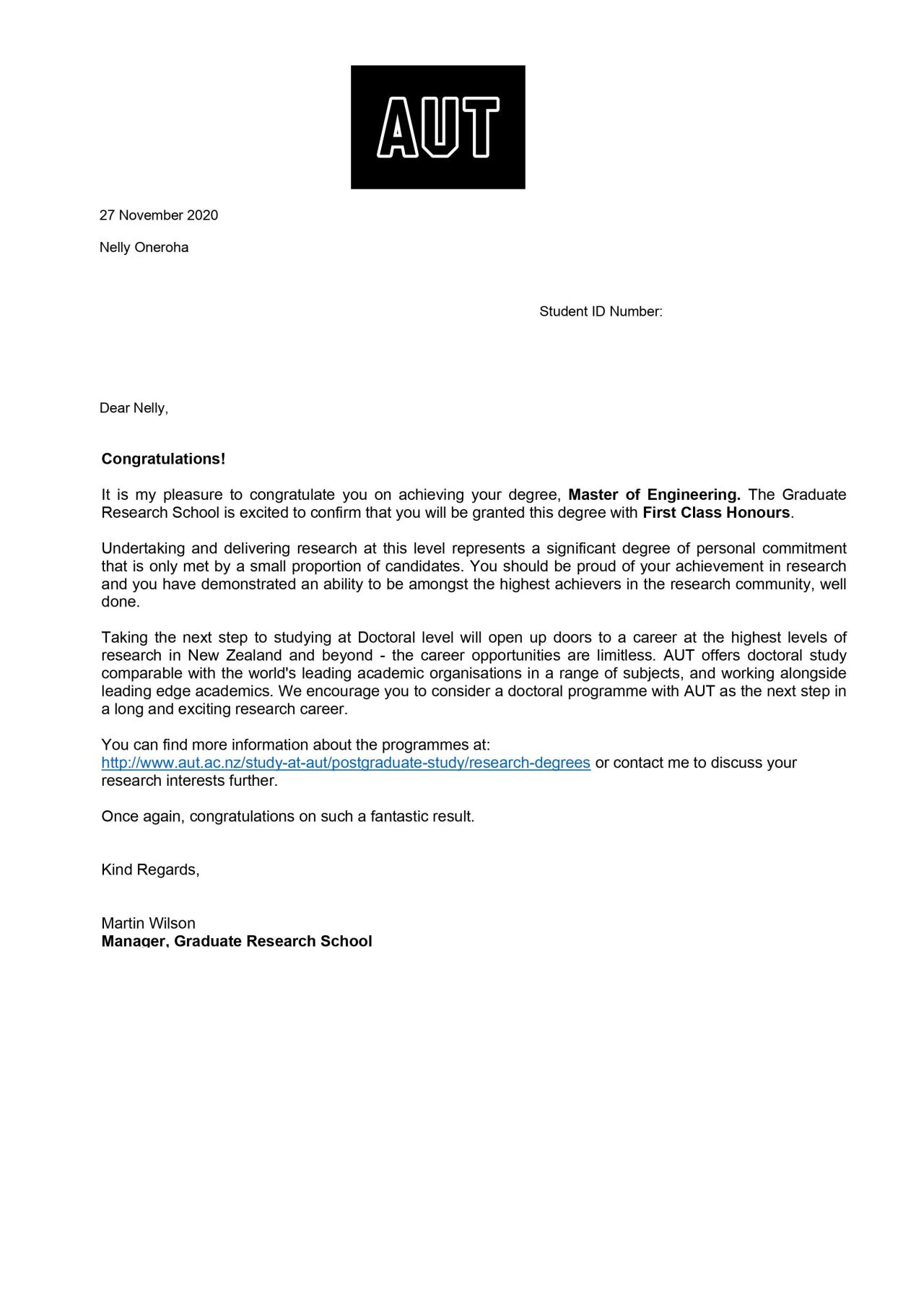
Shining From Africa to Oceania: A Chat with a Nigerian Engineer who made a First Class Honours in her Master’s Degree in New Zealand

0

As a young Nigerian woman, she threads where men tremble. She has a passion in Engineering with a special focus on renewable energy. She made a Second Class Honours Upper Division from the University of Port Harcourt, Nigeria in her undergraduate studies. She then proceeded to the Auckland University of Technology, New Zealand where she made a First Class in Electrical/Electronic Engineering in her Master’s Degree in the same course. She shared her experiences on her recent feat, her passion for Engineering and what the future holds with Rasheed Adebiyi. Here are the excerpts.

Tekedia : Could you please tell us about yourself?

Ajirioghene Nelly: My name is Nelly. I recently completed my master’s program at Auckland Unversity of Technology (AUT), New Zealand. I majored in Renewable Energy. I am a 2019 New Zealand Development Scholar. Before my studies at AUT, I had my bachelor’s degree at the University of Port Harcourt. I am passionate about the modern-day implementation of renewable energy across diverse disciplines and the current development of carbon reduction in the environment.

Tekedia: As a woman, what has it looked like pursuing a degree in a largely perceived male dominated profession in Engineering?

Ajirioghene Nelly : Engineering is indeed a male-dominated profession. Attending classes during university days, both in Nigeria and New Zealand, I found a small percentage of girls in every class, hardly ever up to 10%. It’s no doubt that the world is encouraging women in STEM. I think there is some kind of perception towards this profession and the efforts towards inspiring women to join the profession are flawed. For a profession so diverse with several challenges, I find it very interesting. I love it when I can solve problems and because of its diversity, I get to learn something new every day.

Tekedia: Securing a first class in the master’s programme should mean a lot to you. What exactly does it mean for you?

Ajirioghene Nelly: Achieving a first class honours means I can do more than I give myself credit for. It means I can accomplish anything I set my mind to do. From my numerous scholarship applications up until my studies at AUT, though challenging, I look back now thinking about the effort I put in and it was so worth it.

Tekedia: Studying in a foreign land times not an easy task for a lot of people. What were your experiences like?

Ajirioghene Nelly : Going to a foreign land was no easy feat at all. Culture shock is the norm for foreigners when they first arrive. It was no different for me when I arrived in New Zealand. Seeing an environment that doesn’t come close to anything I was used to. The Kiwis (New Zealanders) will always smile at you, a friendly bunch but most importantly, they go about their activities, minding their business. A reserved lifestyle that can seem very boring. The student support system at AUT was everything. They had workshops for international students dealing with study stress and culture shock. Even more so, I had my friends who were practically my family and they made New Zealand a home away from home.

Tekedia: What could you say about the educational system in Nigeria and New Zealand? What is your assessment?

Ajirioghene Nelly: The truth is Nigeria has a long way to go and I do hope we get there someday. The reason I was so passionate about attending a world-class university is because of the educational system in Nigeria. As an undergraduate, I knew little or nothing about the practical aspect of Electrical Engineering and as you know Engineering, in general, require a hands-on approach. The environment of most universities in Nigeria especially the public ones do not facilitate learning. My study in New Zealand exposed me to so many software tools; students worked in labs with each student to a computer. Unlike my undergraduate study in Nigeria, I took four courses per semester at AUT and the coursework was very demanding. You will think it’s not a rigorous process because as a full-time student in a Nigerian university, you’d probably be taking up to eight courses, if not more. I found each course that was taught in AUT to be very detailed.

Tekedia: Thank you for your time.

Ajirioghene Nelly: It is my pleasure


Pfizer Vaccine Offers UK Economy a Path to Recovery

0

The UK has authorized the use of Pfizer vaccine as it fights to contain the spread of COVID-19, becoming the first western country to license a vaccine against the virus.

The Medicines and Healthcare products Regulatory Authority (MHRA), authorized the emergency use of the vaccine following the announcement of its 95% efficacy by Pfizer.

Last month, Pfizer and BioNTech announced that clinical trials proved the vaccine to be over 90% effective, and they were waiting for regulator’s authorization for it to be administered.

With the result of the final trial, MHRA was given power to approve the vaccine by the government under special regulations before January 1, when it will be fully responsible for medicines authorization in the UK after Brexit.

The UK secured 40 million doses and is poised to start vaccinating next week following the recommendation of MHRA.

“The government has today accepted the recommendation from the MHRA to approve Pfizer/BioNTech’s COVID-19 for use. This follows months of rigorous clinical trials and a thorough analysis of the data by experts at the MHRA who have concluded that the vaccine has met its strict standards of safety, quality and effectiveness,” said a Department of Health and Social Care spokesman.

“The Joint Committee on Vaccination and Immunization will shortly also publish its latest advice for the priority groups to receive the vaccine, including care home residents, health and care staff, the elderly and the clinically extremely vulnerable. The vaccine will be made available across the UK from next week.”

The UK has come under decimating impact of the pandemic that has brought its economy on its knees as the government struggles to contain the second wave. The news of the Pfizer vaccine came as a relief in the face of government’s helplessness: faced with the dilemma of choosing between economy and life, the UK has been reeling from the mercy of the disease.

The vaccine is given as two injections, 21 days apart, with the second dose being a booster. Immunity is expected to kick in after the first dose and reach its full effect seven days after the second dose.

The health secretary Matt Hancock described the development as “fantastic news” and said the vaccination will start next week with the most vulnerable people.

“This is fantastic news. The MHRA, the fiercely independent regulator, has clinically authorized the vaccine for rollout. The NHS stands ready to make that happen,” he told Sky News. “From early next week we will start the programme of vaccinating people against COVID-19 here in the country. The MHRA has approved it as clinically safe and we have a vaccine, so it’s very good news.”

One of the greatest challenges of the Pfizer vaccine is the storage that requires a temperature of -70C, but it is not something the health ministry is not prepared for. Hancock said hospitals have been equipped with refrigerators to store the vaccine at the needed temperature.

On the other side of the good news is the announcement of the Moderna vaccine , whose efficacy is at 100%. Though the United States and the rest of the western countries are yet to approve it for use, it offers more hope to the world ravaged by the pandemic. The UK has secured seven million doses of the vaccine.

The Pfizer and BioNTech vaccine was developed in a record period of time that defied decade long norm. It thus provides succor to the raging health crisis that has thrown the UK government off.

On Wednesday, 648 deaths were recorded within 28 days of COVID-19 test, and 16,170 new cases were reported in the UK.

While the world celebrated the news, the World Health Organization’s Dr. David Nabarro said the Pfizer vaccine would not replace the other measures for long; “so we’ll have to keep doing the physical distancing, mask wearing, hygiene and isolating ourselves when we are sick.”

However, the UK has found a path to victory in its fight against COVID-19. Hancock said although the government doesn’t know how many people who need to be vaccinated before restrictions could be lifted, he is confident that from spring, from Easter onwards, things are going to be better.

Prime Minister Boris Johnson said: “it’s the protection of vaccines that will ultimately allow us to reclaim our lives and get the economy moving again.”

The UK economy slumped by 20% in the second quarter 2020 to record its worst performance since 1955, plunging the country into its deepest recession since 2009.

Sports and hospitality business are among the hardly hit sectors of the UK economy. Football games have been played behind closed since last season while restaurants and travels have been shut or limited. The government believes the vaccine will help lift the restrictions and allow people the freedom to engage in these businesses.

Zenith Bank Wins “Best Bank in Nigeria” Award

2

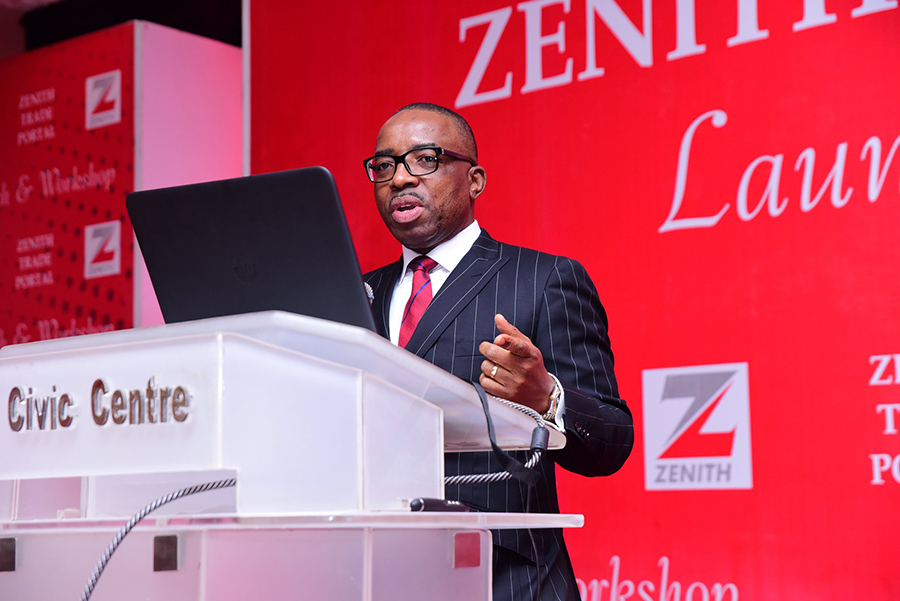
Zenith Bank Plc has emerged the Bank of the Year in Nigeria in the Banker’s Bank of the Year Awards 2020.

The award was announced Wednesday by the Banker Magazine, Financial Times Group, United Kingdom in a virtual ceremony.

Zenith Bank stood out in its ability to deliver returns, gain strategic advantage and serve the market, which are the criteria for the award.

The Group Managing Director, Zenith Bank Plc., Mr. Ebenezer Onyeagwu said the award is as a result of the talent and doggedness of the bank’s staff.

“It’s a thing of joy for us in the Zenith Bank to have been recognized by The Banker, Financial Times Group, as the Bank of the Year 2020 in Nigeria. I dedicate this award to our staff for their commitment, doggedness, creativity and very outstanding talents. It is in the talents of our staff that the Bank has continued to build dynamic competencies and capabilities that are driving our business for continued superior performance,” he said.

Mr. Onyeagwu added that the Bank’s growth has been made possible by the prodigy of the Group’s Chairman, Mr. Jim Ovia, who has pioneered the foundational roles and laid the structures that have resulted in the success. He thanked the Board for the deep insights and outstanding leadership they provide, and praised the bank’s teeming customers for their support.

The Banker’s Bank of the Year Awards is contested by the world’s leading financial institutions, with winners chosen across Africa, Asia-Pacific, central & eastern Europe, Latin America, the Middle East, North America and Western Europe.

Zenith Bank had earlier in the year won the Most Valuable Banking Brand in Nigeria for the third consecutive year, in the Banker Magazine; Top 500 Banking Brands 2020, and the Number One Bank in Nigeria by Tier-1 Capital. It also won the Bank of the Decade (People’s Choice) at the ThisDay Awards 2020.

The Bank had shown why it deserved the awards through its outstanding performance in the year. Zenith Bank was the leading Nigerian bank in the Q3 bankers report with COVID-19 defying Profit Before Tax (PBT).

The Bank had unaudited results of N509 billion, a 4% increase from the N491 billion it recorded in the same period the previous year. Zenith’s Profit Before Tax rose marginally to N177 billion at the end of Q3 2020, representing a 1% growth over the N176 billion posted in the corresponding period in 2019.

Its total deposit closed at N5.2 trillion at the end of Q3 2020, indicating a significant increase from N4.3 trillion it recorded in December last year. Retail also grew by 58% to N1.7 trillion at the end of Q3 2020, up from N1.1 trillion as at December 2019.

The results significantly separate Zenith Bank from other banks and demonstrate the Group’s ability to deliver optimal pricing for its interest-bearing assets and liabilities in a declining yield environment.