DD
MM
YYYY

PAGES

DD
MM
YYYY

spot_img

PAGES

Home Blog Page 6017

A New Course – Advanced Diploma in Innovation & Design Thinking

0

Good People, I invite you to check the curriculum for our newly created Advanced Diploma in Innovation & Design Thinking. It is a well designed program. Upon payment, you have immediate access to start learning. Check the curriculum and register on time here.

You asked for it, and we have made it available – the ability to begin learning at Tekedia Institute more regularly instead of waiting for the Tekedia Mini-MBA editions. The Advanced Diploma programs in Tekedia are here to deepen your knowledge and accelerate your business missions.

Each track of Tekedia Advanced Diploma programs runs for 8 weeks (2 months). A track has no Live Zoom session, and it is completely self-paced and online. The program includes class notes, flash cases and videos, but no webinar. Cost: Each track costs $100 or N36,000 naira per participant. 

We have many tracks, from logistics to risk management, business administration to project management, and more. Click here, learn more and register.

Tekedia Advanced Diploma – Immediate Access Upon Payment


Week 17 Session

0

Notes: Tekedia is offering a 50% discount to current co-learners for Edition 4 (you pay N25k or $70) or 2021 annual package (N50k or $140).Register here. Tekedia has included Advanced Diploma in Innovation & Design Thinking. It costs $100 or N36k. Upon payment, you have immediate access to start learning. Learn more about other tracks and payments here. Tekedia […]

This post is only available to members.

Innoson Motors Sues to Block GTBank’s Holdco Plan Until it Settles Alleged N32 billion Judgement

2

This will not just go away. As the CEO of GTBank, Segun Agbaje, completes his 10 years as the boss of a bank, reaching the regulatory limit, he has a plan of staying in charge. That plan would go via a holding company (holdco) which ensures he continues to run GTBank via proxy. For that to happen, GTBank Plc has to be de-registered to become a limited liability company while a new company, possibly “Guaranty Trust Holdings Plc” will evolve to become the new public liability company. 

Then the boss man will become the CEO of the new public company with a new CEO of GTBank Limited reporting to him. It is a playbook in Nigeria which has been used after the CBN imposed the 10 year maximum limit for bank CEOs. Segun has done a good job and investors welcome this redesign.

But there is a problem: Innoson Motors has gone to court asking the court that GTBank cannot have this transmutation until it pays its alleged N32 billion judgement debt. It looks ugly from there, and using the snail pace of Nigeria’s legal system, Segun could be out of job before this new court case is sorted out.

Read the full document below..

Court To Restrain GTB From Deregistering Itself As A Limited Liability Company.

Press Release
29/11/2020
For Immediate Release.

..As Innoson seeks an order restraining GTB from transmuting to a Private and a Financial Holding Company until GTB pays it over N32Billion Judgement debt

The Supreme Court of Nigeria has struck out GTB’s motion filed to set aside its earlier decision/order made on 27th February 2019 dismissing GTB’s appeal against Court of Appeal judgement of 6th February 2014 in favor of Innoson Nigeria Ltd

Recall that The Federal High Court, Awka Division on March 27th, 2019, pursuant to Supreme Court dismissing GTB’s appeal, granted leave to Innoson Nigeria Ltd to enforce and execute the judgment and Garnishee Order Absolute made by the court coram Shakarho, J at the Ibadan Judicial Division on the 18th of May 2010 and the 29th of July 2011 respectively. This order was concurrently affirmed by the Court of Appeal in the judgment of 6th February 2014 and by the Supreme Court in its judgment of 27th February 2019.

As Innoson Nigeria Ltd commenced the tedious act of the execution, GTB rushed to the court vide its desperate motion on notice seeking orders staying or suspending the execution embarked by Innoson Nigeria Ltd and also seeking orders setting aside the exparte Orders made by the Court granting Innoson leave to enforce the judgment and to issue the processes of executing same.

Whilst resfusing GTB’s application and staying further proceedings the court further held that the order it made on March 27th, 2019 in favor of Innoson Nigeria Ltd granting it leave to enforce the judgment and issue processes of execution of the judgment are valid; also that all the steps taken to levy executions in pursuance of that order are still valid and are not vacated; whilst all the prayers by GTB in its motion of 1st April 2019 are not granted.

GTB however rushed back to the Supreme Court and applied for an order setting aside the Supreme Court’s judgement dismissing its appeal against the above judgement. However, the Supreme Court struck out the motion on Tuesday, November 3rd, 2020.

While Innoson Nig Ltd awaits GTB to come up with a payment plan for it’s over N32Billion Judgement debt, GTB resorted to a scheme of de-registering itself as a public limited liability company and re-registering itself as a private limited liability company and a financial holding company as well. Innoson Nig Ltd, as its creditor, has as a result sued GTB at the Federal High Court and therein seeks the following order of perpetual injunctions:

(a) restraining the 4th Defendant (Corporate Affairs Commission) from deregistering the 1st Defendant (GTB) as a public limited liability company and or re-registering the 1st Defendant (GTB) as a private limited liability until it-GTB- pays the outstanding judgment debt of N32, 875, 204, 984.38k arising from Suit Nos: FHC/L/CS/603/2006 and No. FHC/AWK/CS/139/2012 respectively affirmed by the appellate courts in appeal Nos. CA/1/258/2011, SC.694/2014 and CA /E/288/2013 to Innoson Nig Ltd;

b. an order of perpetual injunction restraining the 4th Defendant (Corporate Affairs Commission) from registering or re-registering the 1st Defendant (GTB) as a holding or financial holding company whether as a public or private limited liability company until it- the 1st Defendant(GTB) -pays Innoson Nigeria Ltd the outstanding total judgment debt of N32, 875, 204, 984.38k (Thirty two Billion, Eight Hundred and seventy Five Million, Two Hundred and four thousand, Nine Hundred and Eight Four Naira, Thirty Eight kobo) arising from suit Nos. FHC/L/CS/603/2006 and FHC/AWk/CS/139/2012 respectively affirmed by the appellate courts in Appeal Nos. CA/1/258/2011, SC.694/2014 and CA/E/288/2013:

c. An order cancelling the 1st Defendant’s (GTB’s) special resolution and or any other of its resolution that it should be deregistered as a public limited liability company and or be re-registered as a private limited liability company and or a holding company until it -the 1st Defendant (GTB)- pays Innoson Nig Ltd the total outstanding judgment debt of N32, 875, 204, 984.38k (Thirty two Billion, Eight Hundred and seventy Five Million, Two Hundred and four thousand, Nine Hundred and Eight Four Naira, Thirty Eight kobo) arising from suit Nos. FHC/L/CS/603/2006 and FHC/AWk/CS/139/2012 respectively affirmed by the appellate courts in Appeal Nos. CA/1/258/2011, SC.694/2014 and CA/E/288/2013:

d. an order setting aside the 3rd Defendant’s (Security and Exchange Commission) No -objection to 1st Defendant’s proposal to be re-registered as a private limited liability company and as a holding or a holding financial company:

e. an order setting aside the 2nd Defendant’s (Central Bank of Nigeria) approval -in- principal granted to the 1st Defendant (GTB) to operate as a holding or a holding financial company.

f. an order of perpetual injunction restraining the 2nd Defendant (Central Bank of Nigeria) from granting the 1st Defendant (GTB) a financial holding company license and or a final approval to operate or carry on business as a financial holding company whether in its present name or as a private limited liability company until it, the 1st Defendant(GTB )pays the Plaintiff(Innoson Nig Ltd) the total outstanding judgement debt of N32, 875, 204, 984. 38k (Thirty Two Billion, Eight Hundred and Seventy-Five Million, Two Hundred and Four Thousand, Nine Hundred and Eighty-Four Naira, Thirty-Eight Kobo) arising from suit Nos. FHC/L/CS/603/2006 and FHC/AWK/CS/139/2012 respectively affirmed by the appellate courts in Appeal Nos. CA/1/258/2011, SC.694/2014, and CA/E/288/2013.

Cornel Osigwe
Head of Corporate Communications and Affairs
IVM Innoson Group

To Earn US Dollars Some Traders Are Funding YouTube Nollywood Channels

7

The year 2020 is challenging across all domains in Nigeria. Covid-19 came and threw everything out of order. The escalating insecurity paralysis moved to another dimension. We experienced police brutality which remains a wound in the hearts of many citizens, well beyond the physical wounds. Then the Naira. Yes, Naira is falling like a domino with economic gravity doing its thing.

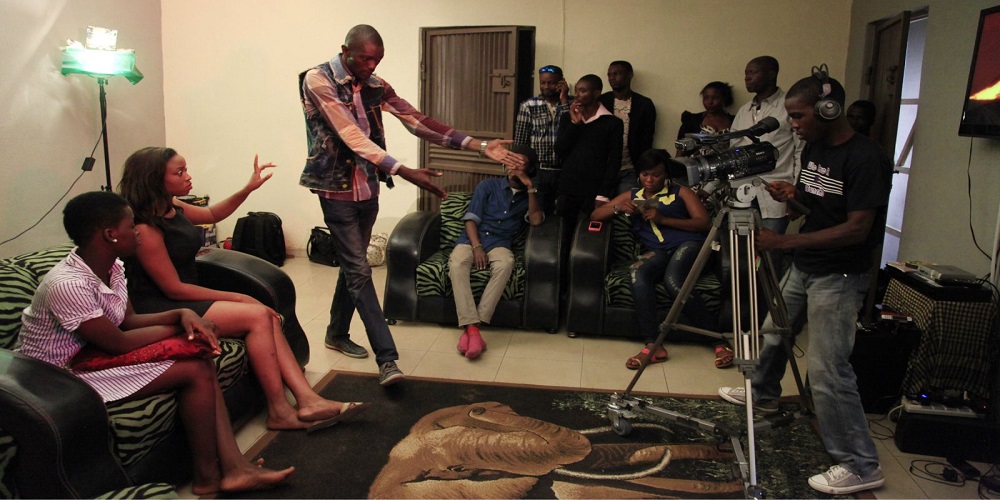
As the Naira pandemic unfolds, what can companies that need foreign currency for importation do? We are seeing micro-patterns, as I explained yesterday in Tekedia Live. Simply, some traders are banding together to fund Nollywood movies with the hope that those movies will earn decent income on YouTube via adverts. YouTube pays in US dollars and everyone wants to have a product that earns in foreign currency!

Unfortunately, that will not likely work. Why? YouTube devalues its own “metrics” more than even the Nigerian government does on Naira. On Dec 31 019, if you needed 1000 views to earn say $2, from Jan 1 2020, Google devalued, and that means you will need double the views (i.e. 2000 views) to earn that $2. By October this year, Google halved it again. Largely, Google does this and no one challenges it: you keep growing your audience but you keep making less money. On that construct, building to harvest dollars via YouTube ads may not work.

Pure and simple, import dependent businesses in Nigeria need to ask for a new economic playbook to change the trajectory on the Naira. Unless that is done, nothing else offers a long term solution.

Where is Naira Heading to?

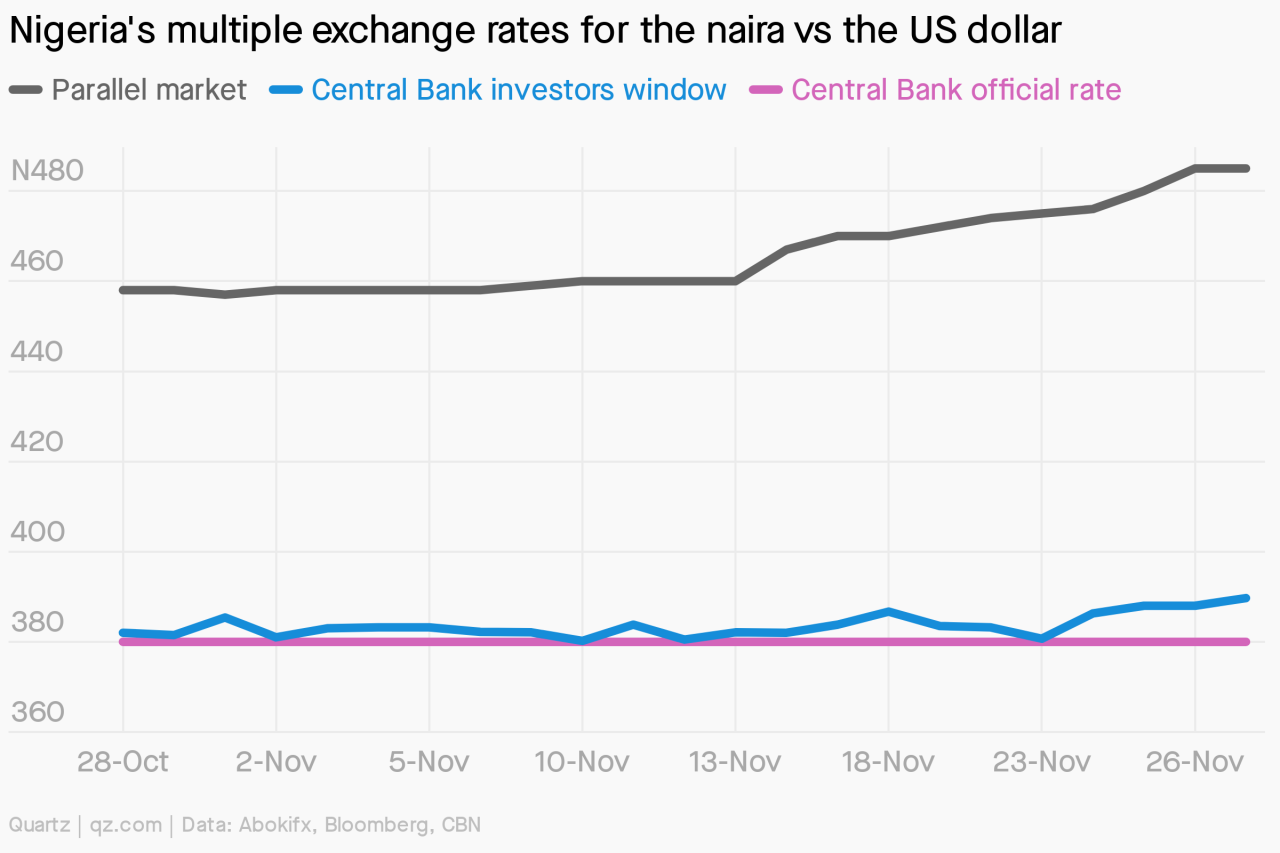
Where is this thing heading to? It seems by Dec 2023, Naira could be touching N800 per US$1 in the black market. That was my call in 2018. I also noted that by 2023, some commercial banks would be taken private, from the public markets. Unless we fix and bring stability on Naira, Nigeria has no game plan. By now, we ought to have called a national emergency on this paralysis. Yes, everything should be on the table to arrest the decay in our national currency.

Exchange rate risk in Nigeria


How Nigerian FM Companies Can Survive the New Recession

0

In 2016, the Gross Domestic Product contracted twice, which led to first economic recession during the first tenure of President Muhammadu Buhari. Some weeks ago, the National Bureau of Statistics through its economic report noted that the country has entered another economic recession after two contractions of the GDP. Before 2016 recession, there were indicators that showed that economy would enter recession. Critical economic indices such as inflation rate, oil price, foreign exchange rate, unemployment and underemployment rates and external reserve were severely affected.

These indicators are not quite different before the new recession. From the first quarter to the second quarter, macroeconomic and microeconomic performances were not good enough. The negative performance was further enhanced by the COVID-19 disruption. During the disruption corporate real estate and commercial real estate sectors were among the hardest hit in the Total Real Estate Solutions industry as social distancing and lockdown strategies are enforced for close to four weeks now. “The effect of the pandemic is enormous. Therefore, I am afraid if this goes on for another 6 months, the world might experience another great global recession,” Abdullah Oladipo, Project Team Lead at the Green Facilities, said in an interview.

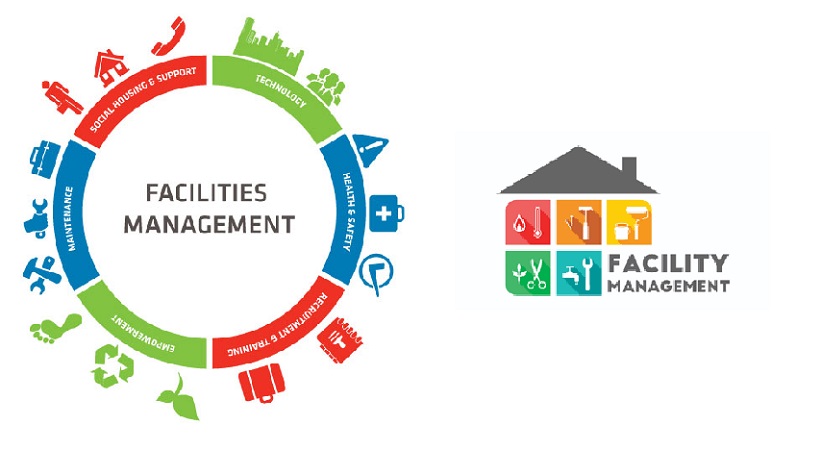
From all indications, the Facilities Management industry is expected to feel the heat of the recession because two critical industries [real estate and construction] it supports are among the hardest hit industries. Our analyst observes that as long as contraction exists in the new house building segment, reduction in mortgage lending rate, fluctuation on cost of materials and reduction in the execution of civil works, players in the FM industry are expected to feel the consequences. These factors have earlier been discovered to impact real estate and construction industries during the 2016 recession.

As the recession bites harder, we expect more duties for the players amidst fewer resources, which would increase stress among the employees. More duties would be coming from the clients, who want to save and expect sustainable value. Clients would be forced to renegotiate their contracts due to less financial capital.  In this regard, players need to embrace the new shifts, maximize value and manage morale of their employees, especially those on clients’ sites.

Our expectation is that players would adjust their pricing strategies. Like other industries, players in FM industry have premium, penetration, economy and skimming pricing strategies to choose from. Premium pricing is useful when strong competitive advantage exists. Penetration pricing becomes handy when there is a need to gain market share quickly by setting price low. Targeting mass market and high market share require economy pricing. Adopting skimming pricing means that companies will charge a high price for a solution till a certain period that competitors give room for low price choice.

This is the period the players need to employ the right strategy from these strategies. This is imperative as organisational buyers are expected to be more rational in their price negotiation. In our experience, we discovered that competence and connection of clients’ core values with the player’s own would be decisive factors during negotiation.