DD
MM
YYYY

PAGES

DD
MM
YYYY

spot_img

PAGES

Home Blog Page 6019

To Earn US Dollars Some Traders Are Funding YouTube Nollywood Channels

7

The year 2020 is challenging across all domains in Nigeria. Covid-19 came and threw everything out of order. The escalating insecurity paralysis moved to another dimension. We experienced police brutality which remains a wound in the hearts of many citizens, well beyond the physical wounds. Then the Naira. Yes, Naira is falling like a domino with economic gravity doing its thing.

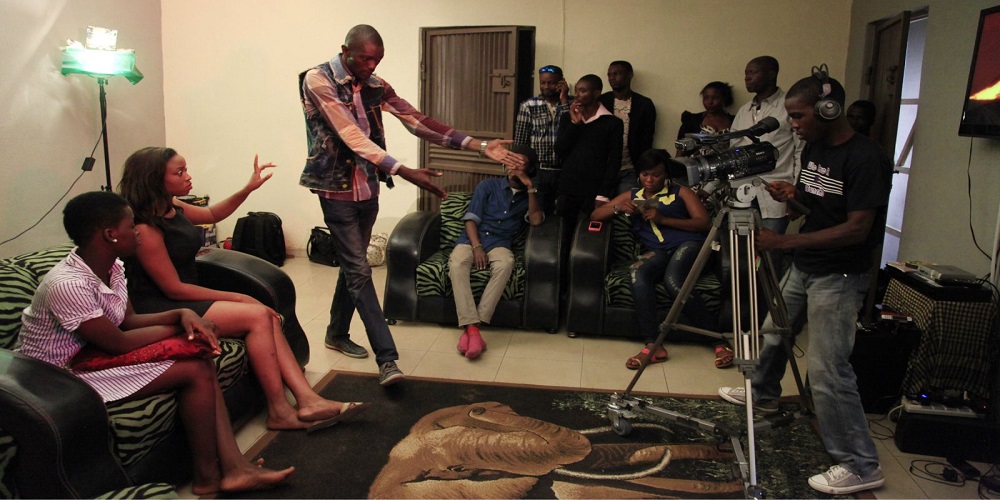
As the Naira pandemic unfolds, what can companies that need foreign currency for importation do? We are seeing micro-patterns, as I explained yesterday in Tekedia Live. Simply, some traders are banding together to fund Nollywood movies with the hope that those movies will earn decent income on YouTube via adverts. YouTube pays in US dollars and everyone wants to have a product that earns in foreign currency!

Unfortunately, that will not likely work. Why? YouTube devalues its own “metrics” more than even the Nigerian government does on Naira. On Dec 31 019, if you needed 1000 views to earn say $2, from Jan 1 2020, Google devalued, and that means you will need double the views (i.e. 2000 views) to earn that $2. By October this year, Google halved it again. Largely, Google does this and no one challenges it: you keep growing your audience but you keep making less money. On that construct, building to harvest dollars via YouTube ads may not work.

Pure and simple, import dependent businesses in Nigeria need to ask for a new economic playbook to change the trajectory on the Naira. Unless that is done, nothing else offers a long term solution.

Where is Naira Heading to?

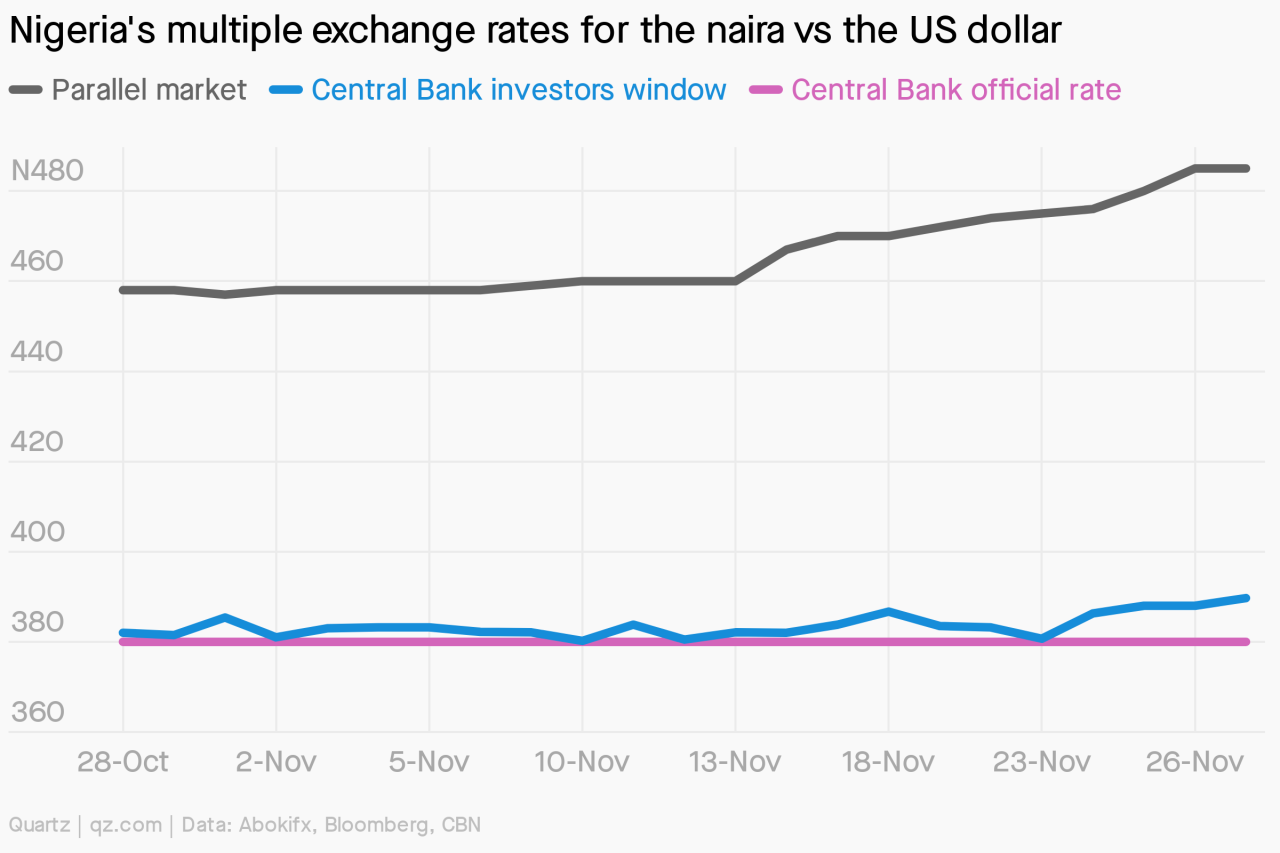
Where is this thing heading to? It seems by Dec 2023, Naira could be touching N800 per US$1 in the black market. That was my call in 2018. I also noted that by 2023, some commercial banks would be taken private, from the public markets. Unless we fix and bring stability on Naira, Nigeria has no game plan. By now, we ought to have called a national emergency on this paralysis. Yes, everything should be on the table to arrest the decay in our national currency.

Exchange rate risk in Nigeria


How Nigerian FM Companies Can Survive the New Recession

0

In 2016, the Gross Domestic Product contracted twice, which led to first economic recession during the first tenure of President Muhammadu Buhari. Some weeks ago, the National Bureau of Statistics through its economic report noted that the country has entered another economic recession after two contractions of the GDP. Before 2016 recession, there were indicators that showed that economy would enter recession. Critical economic indices such as inflation rate, oil price, foreign exchange rate, unemployment and underemployment rates and external reserve were severely affected.

These indicators are not quite different before the new recession. From the first quarter to the second quarter, macroeconomic and microeconomic performances were not good enough. The negative performance was further enhanced by the COVID-19 disruption. During the disruption corporate real estate and commercial real estate sectors were among the hardest hit in the Total Real Estate Solutions industry as social distancing and lockdown strategies are enforced for close to four weeks now. “The effect of the pandemic is enormous. Therefore, I am afraid if this goes on for another 6 months, the world might experience another great global recession,” Abdullah Oladipo, Project Team Lead at the Green Facilities, said in an interview.

From all indications, the Facilities Management industry is expected to feel the heat of the recession because two critical industries [real estate and construction] it supports are among the hardest hit industries. Our analyst observes that as long as contraction exists in the new house building segment, reduction in mortgage lending rate, fluctuation on cost of materials and reduction in the execution of civil works, players in the FM industry are expected to feel the consequences. These factors have earlier been discovered to impact real estate and construction industries during the 2016 recession.

As the recession bites harder, we expect more duties for the players amidst fewer resources, which would increase stress among the employees. More duties would be coming from the clients, who want to save and expect sustainable value. Clients would be forced to renegotiate their contracts due to less financial capital.  In this regard, players need to embrace the new shifts, maximize value and manage morale of their employees, especially those on clients’ sites.

Our expectation is that players would adjust their pricing strategies. Like other industries, players in FM industry have premium, penetration, economy and skimming pricing strategies to choose from. Premium pricing is useful when strong competitive advantage exists. Penetration pricing becomes handy when there is a need to gain market share quickly by setting price low. Targeting mass market and high market share require economy pricing. Adopting skimming pricing means that companies will charge a high price for a solution till a certain period that competitors give room for low price choice.

This is the period the players need to employ the right strategy from these strategies. This is imperative as organisational buyers are expected to be more rational in their price negotiation. In our experience, we discovered that competence and connection of clients’ core values with the player’s own would be decisive factors during negotiation.

Nigeria’s Electricity Grid Fails; Local Manufacturers Lose Market Share in West Africa

1

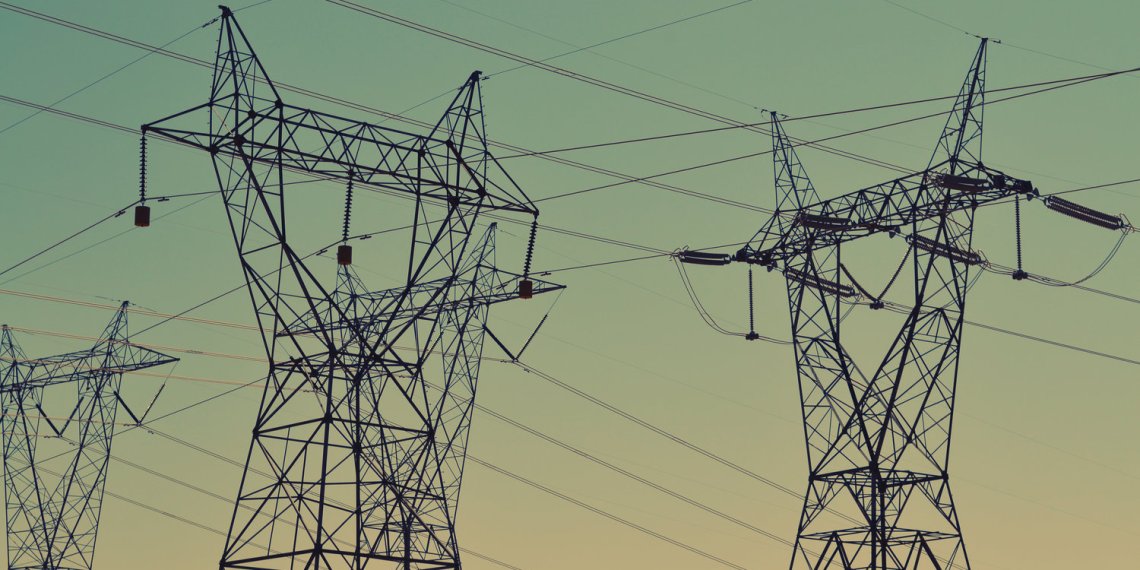
Nigeria’s electricity grid collapsed a few hours ago, leading to a major failure in the system: “We regret the inconvenience this has caused electricity consumers. Investigations would be conducted to establish the immediate and remote cause(s) of the multiple trippings as soon as the grid is fully restored”, noted TCN, the electricity transmission company. They have gotten some sections back as I write.

Meanwhile, the President of the Manufacturers Association of Nigeria (MAN), Mansur Ahmed, has noted that made-in-Nigeria products have lost competitiveness in the ECOWAS due to the closure of the border: “The increased traffic through our seaport as a result of the closure has increased the perennial congestion at the Apapa and Tin Can Island Ports, leading to greater challenges for exporters and increased demurrage cost, as well as other port levies...

Major manufacturers of beverages, polypropylene bags, tobacco, cement, toiletries, and cosmetics industries were losing markets they had worked very hard to secure in the West and Central African region.

“These manufacturers were hoping to leverage their market share to secure a strong position in the African Continental Free Trade Area, which kicks off in January 2021.

Simply, Nigeria closed land borders and made the seaports challenging for asking everyone to ship via the sea. Certain things in Nigeria do not make sense: you do not have capacity via the sea, and yet you are asking everyone to use the sea when the land is free! Can somebody explain what is happening in Nigeria?

Of course we have lost our mojo according to data from the IMF and World Bank.

Top 10 Fastest Growing Economies in Africa in 2018 (World Bank, IMF….)

[1] Ghana >>>>>>>8.3%
[2] Ethiopia >>>>>>8.2%
[3] Cote d’Ivoire>>>7.2%
[4] Djibouti >>>>>> 7.0%
[5] Senegal >>>>>>6.9%
[6] Tanzania >>>>> 6.8%
[7] Sierra Leone>>>6.3%
[8] Burkina Faso>>>6.0%
[8] Benin Rep>>>>>6.0%
[9] Rwanda>>>>>>>5.9%
[10] Niger Rep>>>>>5.2%
——————
[41] NIGERIA>>>>>>1.9%,
Note: Nigeria was Number [1] in 2012, 2013, 2014 and 2015. Also, Nigeria was the 3rd Fastest growing Economy in the World in 2014 now, the 88th. (Source: World Bank, IMF)

Exchange rate risk in Nigeria

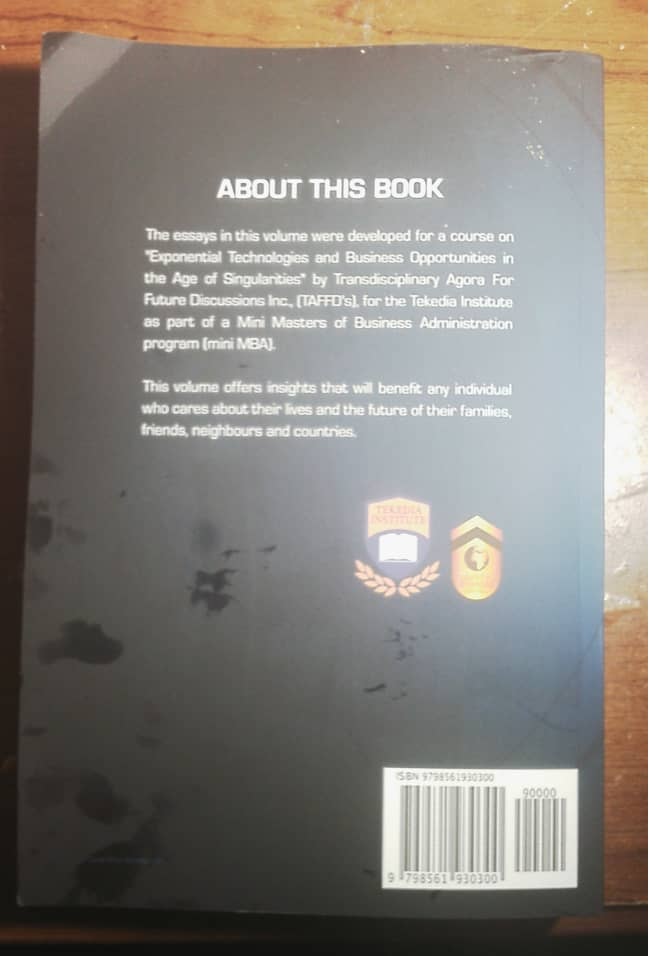
My Copy of “Seizing Our Singularity Future” Book

0

“Seizing Our Singularity Future” is out at Amazon. Four of our Faculty members, at Tekedia Institute, are the authors: Edward Hudgins, PhD, Chogwu Abdul, PhD, Gennady Stolyarov II and Brent Ellman. We want to thank Transdisciplinary Agora for Future Discussions Inc. ( TAFFD’s ) Georgia USA and its leadership for developing our course on “Exponential Technologies and Business Opportunities in the Age of Singularities”.

More books are coming: “Personal Finance and Wealth Management” and “Leadership and Knowledge Management”. Largely, if you prefer the courses over Written Materials, you will get them. My 57-page tome on our business models course, titled “The Grand Playbook of Business”, will be ready next year as a book also.

Would it not be good if you look for the Tekedia Institute’s logo before you buy another management book?

Tekedia Institute: “to discover and make scholars, noble, bright, and useful”.

Why CNN Must Apologise to Nigerians

6

One of the things my years of empirical studies have taught me is never to depend on media houses for unbiased information. Unless I am seeking people’s opinions or perspectives regarding an issue, I steer away from media reports. As absurd as this might sound, it should be noted that media owners are usually affiliated to political parties, or are sympathetic to certain causes. Hence, their reports usually tilt towards exaggerating or undermining issues to favour their affiliates. Nevertheless, several lawsuits have reduced the rate at which media houses report false information but it has not yet been totally eradicated.

For reasons best known to Cable News Network (CNN), they picked Nigeria as one of the places ripe for speculation and spread of unverified information. Without considering the implication of their actions, the media house speculated that tens of people were shot dead at the Lekki Toll Gate incident, which happened on October 20, 2020. On October 23, 2020, CNN Africa used their Twitter handle, @CNNAfrica, to insinuate that more than 38 persons were killed by soldiers at Lekki Toll Gate on that said night.

In their tweet, CNN Africa stated, “At least 38 persons were killed in Nigeria on Tuesday when the military opened fire on peaceful protesters. But the President failed to address the carnage during his speech on Thursday, drawing criticism from protesters who accuse him of failing to show empathy and unify the nation.”

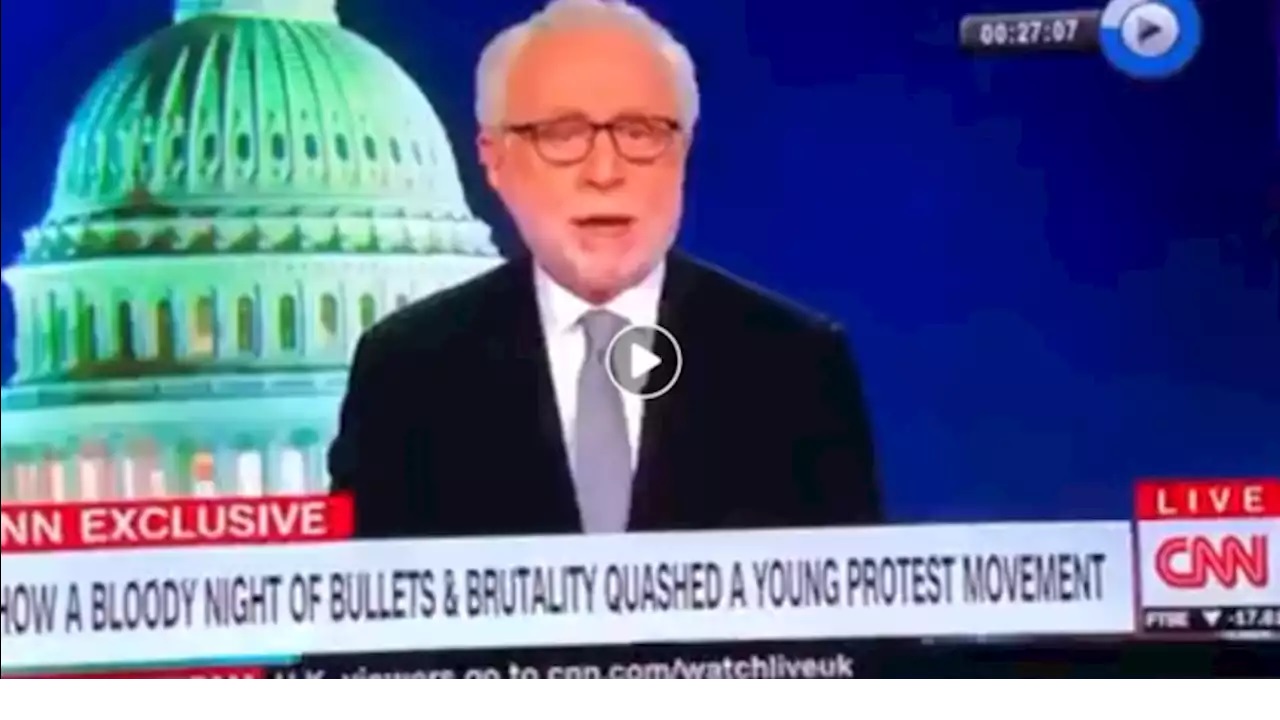
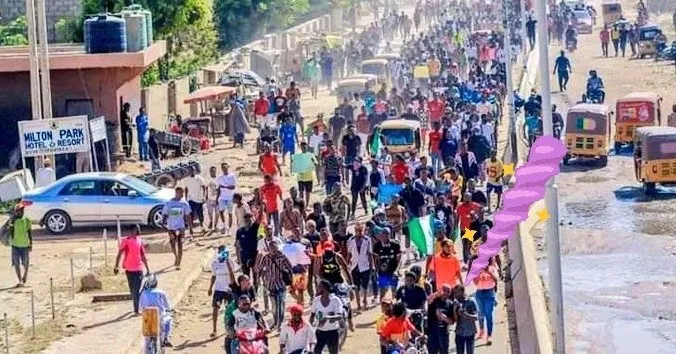
Of course, as expected, many Nigerians fell for this because, to them, CNN is a reputable media house that cannot report unverified and unverifiable news. But unfortunately for CNN, many Nigerians revisited that tweet when it released itsr “exclusive” investigation report that did not only present old videos that have been under debate for long but also failed to provide evidence of the killings. In this “mind-blowing” report, CNN could only “prove” that one person died after the Nigeria Army shot into a crowd of more than five thousand protesters at close range with live ammunition. Of course, they must have realised that Nigerians are not stupid as the world made them seem because people started making jokes with the irrationality of live bullets failing to slaughter people in their thousands. Even you would agree that it is impossible to shoot AK47 live ammunition into a crowd at close range without people flying straight to hell in their numbers. But this video could prove no such thing.
Anyway, after the release of this “exclusive” report by CNN, some well-meaning Nigerians began to ask for the CNN satellite video that shows the killing of more than 38 persons as was insinuated by the organisation on 23rd October. When it became apparent that CNN had been shoved to a tight corner because it shot itself on the foot, it became defensive. Instead of providing evidence on the killing of people at the toll gate, they tried to prove that the video provided from the Lekki Toll Gate CCTV was doctored. They also tried to justify their claim by saying that Brigadier-General Taiwo has proved, at the Lagos Judicial Panel of Inquiry, that men of the Nigeria Army went to Lekki Toll Gate with live ammunition. Well, they must have found out this latter claim did not prove the killing of people because soldiers would not have been deployed without live bullets to protect themselves and other citizens in case an assault happens.

It became apparent that CNN has no evidence to back up their claims when on 26 November, they took to their CNN Africa Twitter page again to twist their initial claim on the number of people killed on 20 October at Lekki Toll Gate. In this latest tweet, they said, “Clarification: This tweet from October 23 did not attribute the death toll from protests in Nigeria to Amnesty International. The tweet also did not make it clear that the death toll was for protests across the country.” In the news report attached to this tweet, it says that, according to Amnesty International, 38 people were “killed across the country on Tuesday alone…” In order words, these people were not killed at the Lekki Toll Gate “massacre”.

With this, it has become quite glaring that CNN had no evidence in the first place but went ahead to release defamatory information about the Nigerian government and the Nigeria Army. They knew the tension in the country during that period but they sent out more malicious information that could intensify the uprising. They knew that Nigerians believed so much in anything “foreign” but it didn’t deter them from dispensing these lies into the country. They seemed bent on seeing Nigeria burned down to the ground.

Today, CNN has caused a lot of damages to the image of the country. They incited more people into causing harm to others. People lost their lives, properties and sources of income because of the fake news that flew about during that period. Peace was disturbed and the economy became more destabilised; all thanks to the bearers of false information.

No matter what CNN does, no matter how it tries to manipulate information, it owes Nigeria and Nigerians an apology. It should look into its reports on ENDSARS protest and the ensuing violence and publicly retract anyone that has no objective and well verified evidence to back it up. They should carry out proper investigative journalism and stop using subjective materials in issues as delicate as this. Hopefully, when CNN learns its lessons, other media houses will follow suit.