DD
MM
YYYY

PAGES

DD
MM
YYYY

spot_img

PAGES

Home Blog Page 6025

The MultiChoice (DStv, GOtv) Triple Strategy for Africa

1

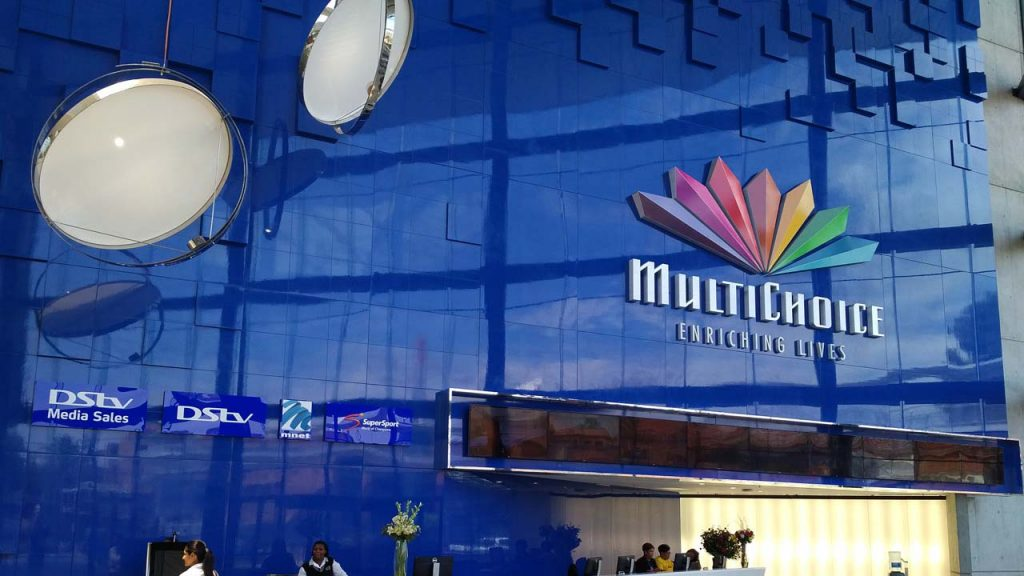
I have written on MultiChoice’s grand unification plan. The company continues to look for business models to keep it on top, and rule its markets. In this TC Daily newsletter piece, the plan is evident. Simply, the company is experiencing erosion on average revenue per user (ARPU) as Netflix continues to attract some of its most affluent customers; the ARPU has dropped from $25 five years ago to $18 today.

But the company is not giving up, it has a triple strategy which includes (1) make its satellite TV the best it could be via sports rights in Africa (2) offer a digital offering via Showmax, and become an (3)  aggregator where its main future competitor, Netflix, is added in the DStv Explora Ultra.

Since 2015, the DStv has been losing premium subscribers. Its premium subscribers are a combination of those who pay for the premium bouquet as well as those who pay for the compact plus bouquet.

The reduction in demand for the premium packages means that while the company is reporting more subscribers (19.5 million), its average revenue per user is down to $18 this year from $25 five years ago.

While more people are signing up to DStv’s cheaper bouquets, it is not far-fetched to assume that it is losing its higher paying customers, who pay as much as $57 per month to Netflix and other streaming services.

Cheap data. One problem Netflix has had to battle with on the African market is the cost of data. While Netflix costs $7.99 for a basic subscription, users still have to pay for the internet to use the service.

[…]

It may explain why DStv’s new approach is a mix of launching its own digital offerings (Showmax) as well as a recent attempt to become an aggregator by adding Netflix to the DStv Explora Ultra. (Source: TC Daily newsletter)

NB: DStv can make money on Netflix via DStv Explora Ultra by carrying it. But there is a risk: it is helping to make its competitor popular to its customers. Netflix can see this as a cheap advertisement knowing that once broadband cost drops in Africa, many users will go to its website, bypassing DStv, to sign up for its services. Largely, Netflix may be generous on the contract with DStv, seeing everything as a cost of entering a new market, Africa. 

What do you think? Is MultiChoice making a mistake on this?

Comment on LinkedIn Feed

Comment #1

Prof this is a cardinal mistake. As a Kenyan i have slowly seen Multichoice loose customers. Some of the die hard customers are football fanatics and kids. There are apps that allow you watch the games free if you have internet. For kids Netflix offers a wide range and offers option of seeing what you want. Multichoice needs to tread carefully in this. Netflix may use and dump them like hot soup. Only affordable broadband stands in the way of Netflix dominance and shaking of the entertainment scene in the continent.

Comment #2:

I don’t think that MultiChoice is making a mistake. With every industrial revolution, there’s a foreseeable inevitable end. While some business leaders spearheading ‘the old ways’ might choose to stay oblivious of this, others will choose to make the most of the moment while optimising their operational models for the future.

MultiChoice has chosen to make the most of its competitor while it can, knowing that when broadband costs drop (which is bound to happen) some of its customers will gravitate towards its competitors anyway.

On the other hand, Netflix and Showmax sitting side by side on Explora Ultra might serve to strengthen the Showmax brand in the digital TV market. With great shows, they can position themselves as less of a second-rate option (which send to be the case) as viewers get to see that they are a worthy alternative.

Netflix is a strong competitor, they are perceived by the market as the industry leader – the marketing values of this perception, DStv understands well.
Netflix has the brand strength and resources. If they strategize right, they will definitely hold a fair share of the market. DStv has wised up to this and accepted it.

Principle-In-Practice: Keep your enemies close.
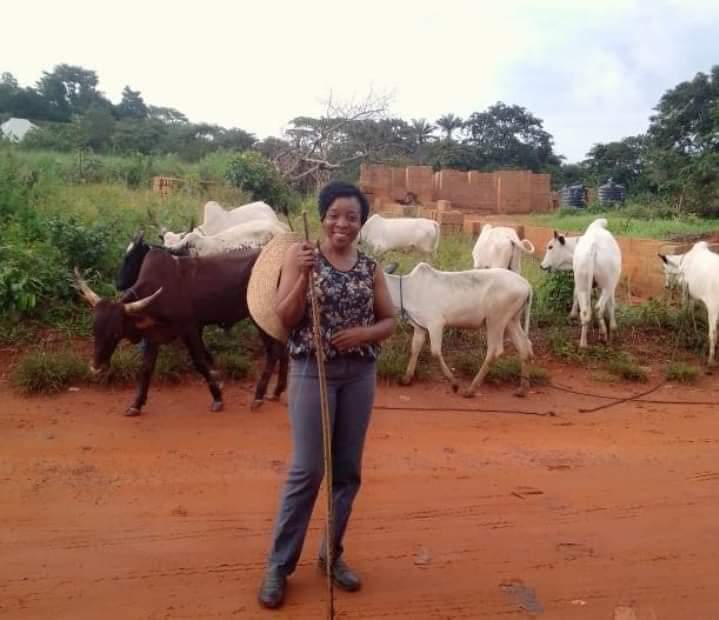
Ekene Obayi – The UNN-Trained Herdswoman Has A Message for Nigerian Women

1

Samuel Nwite interviews Ekene Obayi and her cattle rearing business. She left a big message: “Cattle Rearing is Lucrative, I Want My Fellow Women to Join it”. Like most Nigerians have noted, cattle rearing policy must be agnostic of any tribe since if it is a good business, you will not any town crier to alert people of the opportunities. It is an enterprise, and let the best farmer win!

Yet, the UNN graduate, who may be the first graduate herdswoman I am reading should practice what they have taught in school: ranching and rotational grazing. Nomadic farming should be outdated now in UNN class notes.

Sure, I am NOT particularly celebrating that a graduate of University of Nigeria Nsukka (UNN) is doing farming at this level. Yet, she needs to find acres and run a rotational grazing model. Her training is to make her a strategic leader, not an operator. She can be supported to transition into that role and create opportunities for more people at the lower end of the pyramid.

The interview and more photos on click.

“Cattle Rearing is Lucrative, I Want My Fellow Women to Join it”- Nigeria’s Herdswoman, Ekene Obayi

“Cattle Rearing is Lucrative, I Want My Fellow Women to Join it”- Nigeria’s Herdswoman, Ekene Obayi

5

Nigerian women have continued to create spaces for themselves in men dominated sectors of the economy. Even in the oddest enterprises, where women are least expected to be found, their entrepreneur mettle has pushed them across the bridge, to take position among men.

As the federal government continues to push for economic diversification, and to point at farming as the alternative to the oil-based economy, the response from Nigerians, particularly graduates, is growing. In many areas of farming, including animal farming, there has been an increasing number of graduates, among them women.

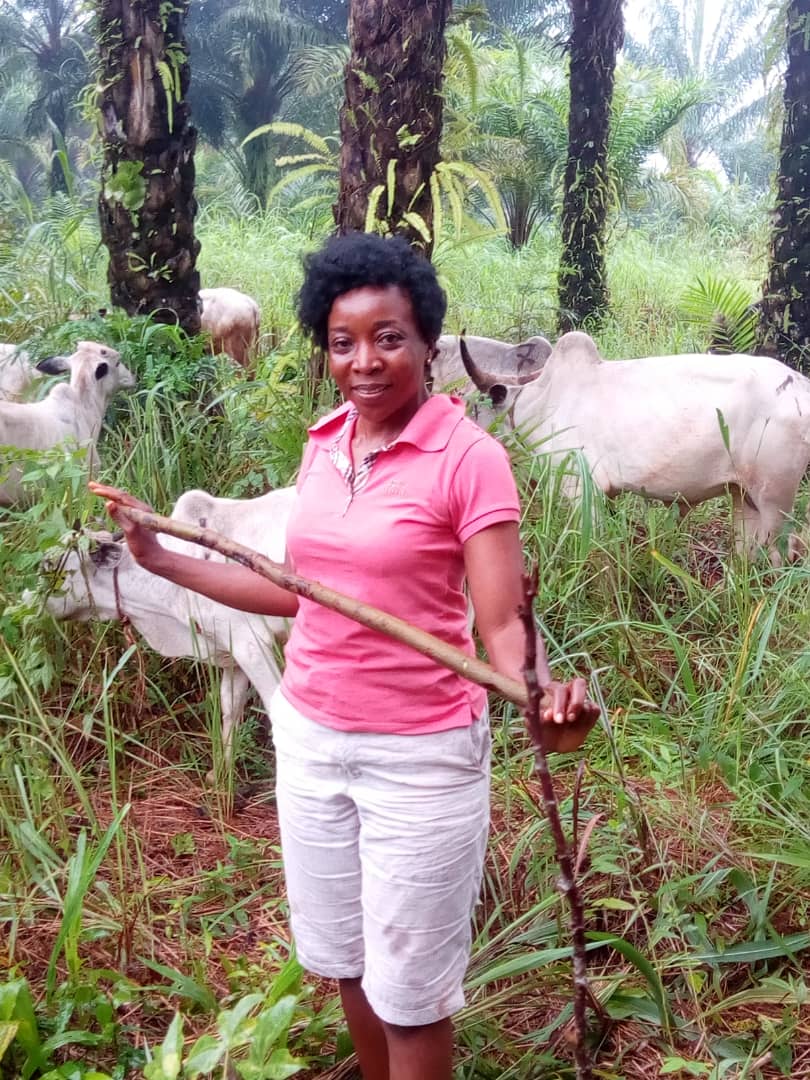
Tekedia had a brief chat with Ekene Aleke Obayi, a graduate of archeology and tourism from the University of Nigeria Nsukka (UNN), who turned a herdswoman, pursuing a cattle rearing enterprise. She explains on the push behind her effrontery to pursue a career in the cattle rearing field perceived as men’s.

How did you find yourself in the business of cattle rearing?

The idea is from my husband’s family. It is a family business. My late father in-law was a cow dealer, both native and breeded cows in Umuezedike Nguru Nsukka. All the male children of my father in-law, except the first son, are doing the cattle rearing business. So that’s how the idea developed.

At what point did you decide to join the business?

My husband is also a cow dealer. After my National Youth Service Corp. (NYSC) in 2017, there was no job. So I decided to follow my husband to farm. I started learning the business from him. I used about three years for training. My own cattle rearing started early this year, on 3rd January 2020.

Do you face challenges dealing with the animals because you’re a woman?

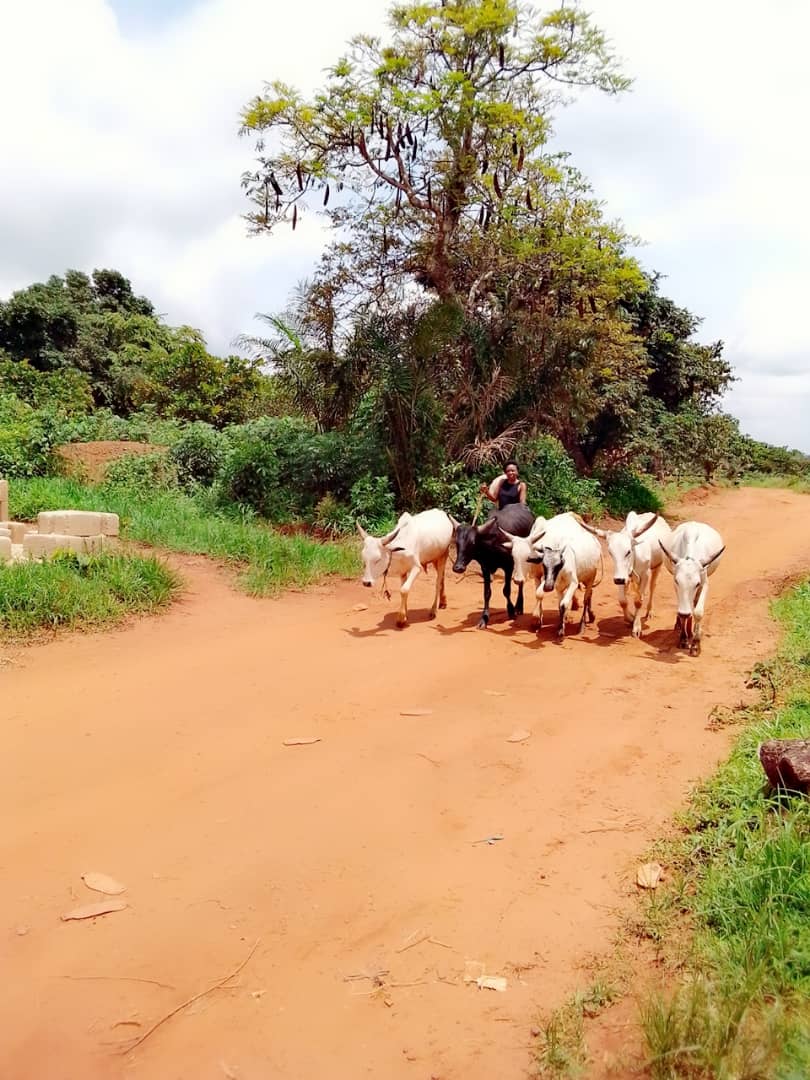
No challenges at all because it is just like other domestic animals. The more you train them, the more they will be closer to you. For example, when they are hungry, I take them to the bush to eat, when they are thirsty; I take them to the stream to drink. During the rainy season, they will stay within my community because we have a lot of land mass, but in the dry season, I will take them from place to place. Like from Nguru to Obimo.

You said all the males in your husband’s family except one are herdsmen; is the business lucrative?

It is a lucrative business because if you buy a cow for N100,000, you will sell it for like N110,000-N120,000, depending on how you bargain with customers. But you can buy some while they are little. The little ones is from N40,000-N50,000, depending on their size. Small ones from 6-7 months are between N40,000-N50,000. After one year they will be ready for sale. But if you’re buoyant enough, you will allow them to grow big enough to give birth. The more they give birth, the more money you will make.

Does being a herdswoman have any effect on how people look at you?

Yes, because people see it as male job, but I’m trying to prove them wrong because what a man can do a woman can do it better. But many praise me and make people patronize me very well.

So far, what has been your biggest challenge in this business?

I would say financial problem. I need N10 million and above to push this business. I have bigger plans I want to implement. That’s why I’m seeking help from the federal government, state government, my governor, Ifeanyi Ugwuanyi, Ohanaeze NdiIgbo, my local government chairman. I want them to support me so that I will expand this business. I have only 10 cows now but wish to have 100 and above. Because I don’t have many, I keep them in the bush, they have ropes on their necks, I will tie them there where they will be eating until the morning. But if I get the funding that I need, I will create a cattle ranch which will create employment opportunity, tourist center and training center for my fellow women and others as well.

What advice do you have for people, especially women about cattle rearing?

People are seeing this business as dirty job, but I’m advising people, especially my fellow women to join me in this business to make money and prove them wrong.

Two Special Weeks – Tekedia Career Week and Tekedia Innovation Week

0

Tekedia runs two special annual programs – Tekedia Career Week (not designed for finding jobs but rather planning careers) and Tekedia Innovation Week for our members. Admission is that a member must have attended a Tekedia Mini-MBA program in that year. The dates are announced in our program curriculum. For the last edition, click here.

Register by early bird deadline to attend 2021 Tekedia Special Weeks free. We will bring leaders of global innovation systems, and HR directors, to help our members advance the course of fixing market frictions, and experience leadership ascent.

Edition 4 (Feb 8 – May 3, 2021)

Tekedia offers an innovation management 12-week program, optimized for business execution and growth, with digital operational overlay. It runs 100% online. The theme is Innovation, Growth & Digital Execution – Techniques for Building Category-King Companies. All contents are self-paced, recorded and archived which means participants do not have to be at any scheduled time to consume contents.

It is a sector- and firm-agnostic management program comprising videos, flash cases, challenge assignments, labs, written materials, webinars, etc by a global faculty coordinated by Prof Ndubuisi Ekekwe

Code Program
MINI Tekedia Mini-MBA costs US$140 (N50,000 naira) per person.
MINR Add extra (optional) $30 or N10,000 if you want us to review and provide feedback on your labs.
MINF Annual Package (includes 3 editions of MINI and optional 2 certificate courses): $280 or N100,000.

Tekedia Advanced Diploma Programs

Each track of Tekedia Advanced Diploma programs runs for 8 weeks (2 months). A track has no Live Zoom session, and it is completely self-paced and online. Upon payment, you have immediate access to start learning.  The program includes class notes, flash cases and videos, but no webinar. There are many tracks. Cost: Each track costs $100 or N36,000 naira per participant. 


DLSM Advanced Diploma in Logistics & Supply Chain Management
DBIS Advanced Diploma in Business Innovation, Growth & Sustainability
DBPM Advanced Diploma in Project Management
DIRM Advanced Diploma in Risk Management
DIBA Advanced Diploma in Business Administration
DIDT Advanced Diploma in Innovation and Design Thinking
DIAT Advanced Diploma in Accounting, Auditing, Forensics & Taxation

Payment options are here: www.tekedia.com/pay

The Lesson from London for Nigeria!

1

The flags used to be very noticeable in Brussels, at the EU headquarters. But the UK has gone and all the flags were brought down. According to the UK Treasury chief Rishi Sunak, the “health emergency is not yet over and our economic emergency has only just begun…largest fall in output for more than 300 years.” In other words, the UK could experience the largest recession in over 300 years! No other country in continental Europe is going through this severe redesign.

Sure, what concerns me with the United Kingdom. My concern is a lesson for Nigeria. More than anytime in human history, there is strength in coming together. Business is nothing but perception; if you are too small, people do not pay much attention. Unlike in the past, if the UK Prime Minister speaks today, you know his only arsenal is the UK. Previously, he could get the EU to hammer you. Simply, his impact has diminished.

As the UK discusses sanctions on Nigeria over the trampling of ENDSARS protesters, few in Abuja have cared. But if the EU is doing that, Nigeria would send emissaries to abort any sanction. In the past, everyone would have thought: if the UK does it, it could influence the EU to follow through. With the UK out of the EU, that risk was gone. London, you can sanction Nigeria, but that should not be a killer!

Nigerians, let us not go alone. We can reform our economic architecture but staying as one country should not be debatable. An Arewa Republic, Biafra Republic and Oduduwa Republic would be inconsequential at the global arena. Those republics can stay as one country under new economic frameworks that deepen our competitive and comparative advantages. At the end, Team Nigeria wins and thrives. 

Today, I shared a roadmap on how that new Nigeria can evolve: abolish “state of origin” and replace it with “state of residence”.

One Policy That Will Change Nigeria For Good – Abolish “State of Origin” for “State of Residence”