DD
MM
YYYY

PAGES

DD
MM
YYYY

spot_img

PAGES

Home Blog Page 603

UK Invests $7.5 Million to Boost Climate-Resilient Farming in Northern Nigeria

0

The United Kingdom has announced a $7.5 million debt investment aimed at enhancing agricultural productivity and climate resilience among smallholder farmers in Northern Nigeria, a region that remains the country’s breadbasket yet one of its most vulnerable to climate change.

The funding, which flows through British International Investment (BII) to the agritech enterprise Babban Gona, is expected to reach up to 140,000 farmers by 2029. It is aimed at dismantling structural barriers that have long constrained rural farmers—limited access to finance, weak input supply chains, inadequate agronomic training, and unreliable market access.

At its core, the initiative is also about future-proofing Nigeria’s food supply against climate risks. Recurrent flooding, prolonged droughts, and shifting weather patterns have already eroded farm productivity and destabilized incomes across much of the north.

Florence Eshalomi, the UK’s newly appointed Trade Envoy to Nigeria, described the investment as a practical extension of the Enhanced Trade Partnership Agreement signed in 2024, which set the tone for a new era of economic collaboration under President Bola Tinubu’s government.

“These first steps show that the UK government is keen to build on our longstanding relationship and cultural ties,” Eshalomi told Nairametrics. “We’re committed to working closely with President Tinubu’s team to secure impactful trade deals and development partnerships.”

She emphasized the symbolic weight of recent engagements—the Foreign Secretary’s and Mayor of London’s visits to Nigeria, as well as the influence of the Nigerian diaspora in the UK—as signs of intensifying bilateral ties.

British Deputy High Commissioner in Lagos, Jonny Baxter, underscored the need for urgent support for smallholder farmers, who are responsible for much of Nigeria’s staple food production.

“The UK is making this $7.5 million debt investment to address key challenges facing smallholder farmers, including poor access to finance, quality inputs, agronomic training, and reliable markets,” Baxter said.

Although northern states produce up to 60% of Nigeria’s maize, he noted that smallholders still face stubbornly low productivity, with climate change magnifying the risks of crop failure.

Struggles with Low Yields and Post-Harvest Losses

For Babban Gona’s Managing Director, Kola Masha, the scale of the challenge is both daunting and urgent. “Northern Nigeria accounts for 50–60% of the country’s maize production, yet smallholder farmers in the region continue to struggle with low yields and post-harvest losses of up to 30%,” Masha explained.

“These farmers operate on small plots with limited access to credit, quality inputs, and agronomic training. Climate risks are compounding these issues, threatening both food security and livelihoods.”

The UK’s capital injection will bolster Babban Gona’s AI-powered service platform, which offers farmers end-to-end solutions—ranging from credit and climate-smart training to improved seed and fertilizer access, as well as post-harvest support like storage and market linkage.

Trade Ties Beyond Agriculture

The investment also fits into a wider story of deepening UK-Nigeria trade relations. In July, the Mayor of London’s office unveiled plans to address long-standing financial bottlenecks that Nigerian firms face when seeking to expand operations in Britain.

During a recent trip to Lagos, Deputy Mayor of London Howard Dawber identified banking access as a major obstacle. Many Nigerian businesses, despite proven credibility and strong balance sheets, continue to face hurdles in opening accounts in London.

He pledged to work with UK regulators to explore flexible risk assessments and technical fixes that could remove these barriers and allow legitimate firms to conduct cross-border business more seamlessly.

To many in Nigeria, the UK’s investment is more than just agricultural financing—it is a signal of renewed external confidence in the country’s private sector at a time when food security is fragile and the climate crisis is accelerating. It also represents a model of how international trade, development priorities, and local entrepreneurship can converge to produce solutions with long-term economic impact.

If successful, Babban Gona’s expansion could help stabilize food prices, reduce rural poverty, and shield vulnerable farmers from environmental shocks, while giving UK-Nigeria relations fresh momentum built on shared development goals.

OpenAI to Acquire Statsig in $1.1bn All-Stock Deal, Names Founder Vijaye Raji CTO of Applications

0

OpenAI announced in a blog post on Tuesday that it agreed to acquire the product testing startup, Statsig, and bring on its founder and CEO, Vijaye Raji, as the company’s Chief Technology Officer of Applications.

OpenAI is paying $1.1 billion for Statsig in an all-stock deal — one of the largest acquisitions ever for the ChatGPT maker — under the company’s current $300 billion valuation, OpenAI spokesperson Kayla Wood told TechCrunch.

The acquisition marks OpenAI’s latest effort to build out its Applications business, helmed by the former CEO of Instacart, Fidji Simo, who started work at the company a few weeks ago. Raji will report to Simo and will head product engineering for ChatGPT, the company’s AI coding tool Codex, and future applications that OpenAI plans to build.

The company says that bringing Statsig’s experimentation platform in-house will accelerate product development across the Applications organization.

As Raji comes on board, OpenAI is making changes to its leadership team.

The company’s Chief Product Officer, Kevin Weil, will become VP of a new group called OpenAI for Science, he announced in a post on LinkedIn. Weil says the goal of his new organization “is to build the next great scientific instrument: an AI-powered platform that accelerates scientific discovery.” Weil says he will work closely with Sebastien Bubeck, an OpenAI researcher and the Former VP of AI and Distinguished Scientist at Microsoft.

“I’m able to do this because the product and design leaders at OpenAI are amazing, and now are complemented by Fidji Simo beginning her role as CEO of Applications,” said Weil. “OpenAI’s products have been my life since I joined, and they’re in great hands.”

Meanwhile, OpenAI’s current head of engineering, Srinivas Narayanan, announced in a post on LinkedIn that he would transition to a new role as the company’s CTO of B2B Applications. In the role, Narayanan says he will collaborate directly with OpenAI’s COO, Brad Lightcap, who oversees many of the company’s relationships with enterprise customers.

OpenAI says the Statsig acquisition is pending regulatory review. Once completed, the company says that all Statsig employees will become OpenAI employees. However, the product testing startup will “continue operating independently and serving its customer base out of its Seattle office,” the company said in a blog post.

This deal draws a notable parallel with Meta’s recent acquisition of Scale AI and the onboarding of its founder, Alexander Wang, into a key leadership role. In Meta’s case, the move was not only about acquiring advanced data-labeling and AI scaling technology but also about securing the vision and leadership of a founder who had built infrastructure critical for AI development.

Meta positioned itself to accelerate its AI ambitions by absorbing both the company and its leadership talent. With its Reality Labs bleeding billions, Zuckerberg appears to be shifting Meta’s core bet toward AI, betting that breakthroughs in LLMs, autonomous agents, and eventually artificial general intelligence (AGI) will define the next era of computing.

Scale AI, now a major partner, provides the data infrastructure necessary to train such systems. Wang, its founder, launched Scale at 19 and turned it into a key supplier of high-quality datasets to firms like OpenAI, Nvidia, and the US government. His move to Meta, insiders say, gives the company deep bench strength in both talent and tools.

OpenAI’s $1.1 billion purchase of Statsig mirrors this approach: it is less about acquiring a product alone and more about embedding the strategic mind behind it — Vijaye Raji — into its leadership core.

Analysts believe that this reflects a growing pattern in the AI sector, where acquisitions are increasingly doubling as leadership and talent pipelines. The integration of founders directly into high-level roles ensures that their product philosophies and technical expertise do not just get absorbed into the larger company but also actively shape its future direction.

U.S. Revokes TSMC’s Export Waiver for China Operations, Raising Uncertainty for Global Chipmakers

0

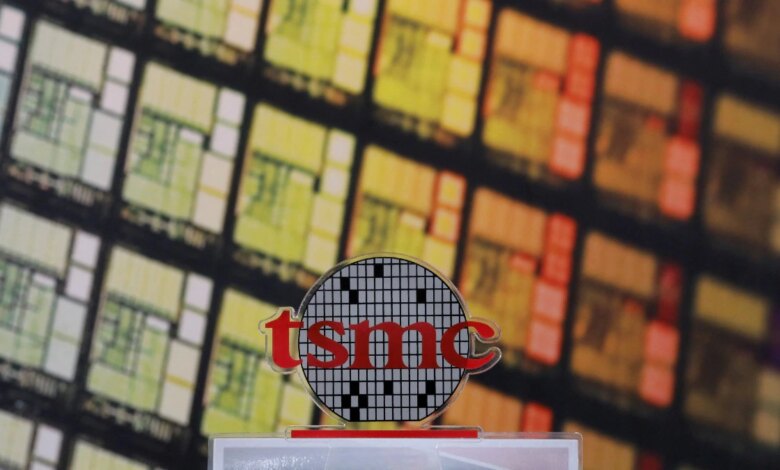
The U.S. has revoked Taiwan Semiconductor Manufacturing Co.’s authorization to ship key equipment to its main China facility, the chip manufacturer said on Tuesday.

The change removes a fast-track export privilege known as Validated End User (VEU) status, effective December 31, TSMC said, meaning future shipments of American chipmaking tools to TSMC’s Nanjing site will require U.S. export licenses.

TSMC said it was evaluating the situation and communicating with the U.S. government, adding that it remains “committed to ensuring the uninterrupted operations of TSMC Nanjing.”

The U.S. granted waivers to TSMC and other foreign chipmakers operating in China after issuing sweeping restrictions on chipmaking equipment to China in 2022.

The authorizations for Samsung and SK Hynix’s China plants were revoked on Friday, with an effective date 120 days later.

The revocations come despite a series of decisions by President Donald Trump to loosen export restrictions on technology, with his administration pledging to rescind Biden-era curbs on global access to AI chips in May and approving licenses last month to sell certain advanced semiconductors to China, including for Nvidia’s H20 chips.

The Commerce Department said Friday that the U.S. planned to grant license applications to allow the foreign companies to operate their existing facilities in China, but not to expand capacity or upgrade technology.

It is unclear how quickly licenses may be approved, potentially slowing deliveries. Reuters last month reported on how thousands of export license applications have been held up, creating a backlog, including for chipmaking equipment.

In June, the news broke that the U.S. was considering revoking the authorizations to the South Korean chipmakers as well as TSMC, making it harder for the foreign chipmakers to operate in China.

The Special Waivers at Risk

After the U.S. imposed export curbs to restrict China’s access to high-end chipmaking tools in 2022, it made an exception for certain non-Chinese manufacturers operating in China. Samsung and SK Hynix—the dominant players in memory chip production—and TSMC, the world’s largest contract chipmaker, received temporary authorizations that let them continue importing U.S. equipment without seeking individual licenses for every shipment.

By 2023 and 2024, the companies had received what the Commerce Department refers to as “Validated End User” (VEU) status, allowing them a more stable and streamlined supply of restricted goods. VEU status not only eased export bureaucracy but also enabled predictable manufacturing operations, as long as the companies adhered to certain conditions, including limits on specific equipment and mandatory compliance reporting.

Lessons from Past U.S. Export Control Reversals

The sudden removal of VEU privileges has revived memories of past U.S. export control reversals that left foreign firms struggling to survive. One of the most prominent examples was ZTE in 2016 and 2018, when Washington banned American suppliers from selling critical components to the Chinese telecom equipment maker. The restriction crippled ZTE’s production lines and nearly pushed the company into collapse until Beijing intervened diplomatically, and ZTE paid a $1.3 billion settlement to regain access.

Another case was Fujian Jinhua Integrated Circuit Co., a state-backed Chinese memory chipmaker, which was added to the U.S. Entity List in 2018. The ban on U.S. chipmaking tools cut off the firm’s access to technology it depended on, stalling its production capacity indefinitely and eventually forcing it into bankruptcy.

Even outside China, Russia’s technology sector in 2022 became a vivid illustration of how U.S.-led controls could devastate entire industries. Following Moscow’s invasion of Ukraine, sweeping restrictions on chip exports to Russia caused the country’s electronics, aerospace, and defense manufacturers to face severe bottlenecks, with reports of factories resorting to dismantling appliances to extract chips.

These precedents highlight the risks for non-Chinese firms like TSMC, Samsung, and SK Hynix. While their operations in China are not directly targeted, the removal of VEU status means their access to U.S. equipment is now subject to the same uncertain licensing process that has left thousands of applications in uncertainty.

For TSMC and its peers, the revocation threatens to inject new instability into their carefully balanced China operations. Although President Trump’s administration has signaled a willingness to relax Biden-era curbs in other areas—such as AI chips—the selective tightening on VEU status illustrates how geopolitical calculations can override earlier waivers.

With the U.S. Commerce Department promising to approve licenses only for “sustaining” existing operations, rather than expanding them, chipmakers face the real prospect of stagnation in their China plants. Industry analysts warn that prolonged delays in license approvals could disrupt supply chains and, in a worst-case scenario, mirror the crippling impact seen in previous cases like ZTE and Fujian Jinhua.

Although TSMC insists it will maintain “uninterrupted operations” in Nanjing, history suggests the company’s ability to do so depends heavily on the pace of U.S. license approvals—and on whether political winds in Washington shift again.

Bitcoin Rebounds Above $111K as Analysts Call Correction ‘Healthy,’ Ether Builds Momentum

0

Bitcoin bounced back on Tuesday, climbing 2.4% in 24 hours to trade above the $110,000 mark after briefly dipping to $107,300 earlier in the week.

Analysts say the pullback reflects a typical correction within historical norms, even as market signals suggest the structure remains “fragile.”

The leading cryptocurrency has been consolidating inside a descending parallel channel, facing resistance near $110,500. A decisive daily close above this level could mark a breakout from the downtrend, paving the way toward the $110,000–$117,000 liquidity zone, where the 50-day and 100-day simple moving averages converge. Clearing this area would improve chances for a rally toward fresh all-time highs.

Analysts Weigh In

CryptoQuant analyst Darkfost noted that Bitcoin’s 12% decline since its August peak of $123,000 is well within the range of historical bull market pullbacks.

He emphasized that corrections of 20–25% are more typical during strong cycles, arguing that speculation about the bull run ending is premature. This correction is nothing unusual. Bitcoin’s upward trend could very well continue, he said, adding that such pullbacks help reset leverage and create fresh entry points for long-term investors.

Also, Crypto influencer Bitcoin Vector pointed out that $110,000 has emerged as a strong resistance zone. He believes downside pressure is easing and upward momentum could resume if Bitcoin closes above $111,000. Meanwhile, liquidity maps show heavy clusters between $110,000–$111,000 and $105,500–$107,000, which could act as short-term reversal points, according to analyst AlphaBTC.

Cointelegraph reports that Bitcoin must reclaim the 20-day EMA at $112,500 to avoid the risk of sliding toward $105,000, or even $100,000 in a deeper correction.

With Bitcoin reaching new highs of $124,128 on Aug. 14, a 50% drop would drag it back to around $60,000 a level last seen in October 2024. That kind of move would leave Strategys Michael Saylor red-faced after declaring in June that winter is not coming back.

However, several other analysts are still holding out for prices above $150,000 by the end of this year.

Ether Quietly Builds Pressure

While Bitcoin wrestles with resistance, Ethereum (ETH) is quietly preparing for its next move. The crypto asset has reportedly taken the lead in investor preference. According to CoinShares, crypto inflows hit $2.48 billion last week, with Ethereum accounting for $1.4 billion—far outpacing Bitcoin’s $748 million.

In August alone, Ethereum attracted $3.95 billion, pushing monthly inflows to $4.37 billion and year-to-date totals to $35.5 billion. By contrast, Bitcoin saw net outflows of $301 million during the same period.

After reclaiming its 2021 all-time high of $4,870 on August 22, ETH has entered a consolidation phase, according to Polymath co-founder Trevor Koverko. He expects a breakout by November, citing strong ETF inflows and growing activity on Ethereum’s Layer-2 networks.

“Ethereum looks poised for a grind higher over the next one to two months,” Koverko said, noting that bullish sentiment among treasury executives is rising rapidly.

Future Outlook

Despite optimism around both BTC and ETH, prediction markets remain cautious. On Polymarket, traders assign a 68% chance that Bitcoin will dip below $100,000 again before 2026, highlighting lingering uncertainty.

For now, Bitcoin appears to be in a liquidity hunt, balancing between support at $107,000 and resistance near $111,000. Whether bulls can reclaim momentum will determine if the correction is just another pause in the uptrend or the start of a deeper retracement.

The Mutation Has Begun: Inside the 5 Best Cryptos to Buy Today as this Presale Roars Toward 1000x Gains

0

What drives a simple meme into a movement worth billions? History shows that once in a generation, digital culture collides with speculative markets to forge tokens that roar past imagination. Dogecoin did it in 2013. Shiba Inu did it in 2021. Pepe set the degen world ablaze in 2023. Now, as 2025 unfolds, a new lineup of contenders is charging toward the spotlight, an eclectic mix of narrative-driven assets, community cult icons, and political wildcards redefining the meaning of value.

Amid this chaotic battlefield, one beast is clawing louder than the rest: BullZilla ($BZIL). Forged in Ethereum’s blue fire, its Mutation Engine ensures the presale price climbs every 48 hours or whenever $100,000 is raised. Starting at $0.00000575, with 24 stages of progressive scarcity, the presale has already entered its stage 1-B. Over 14.8 billion tokens sold and more than $100,000 raised prove that conviction is building. Early believers understand the formula: progressive growth plus rising demand equals explosive potential.

Shiba Inu (SHIB), Pepe (PEPE), Pudgy Penguins (PENGU), and Official Trump (TRUMP) all belong in today’s conversation. Yet the BullZilla ($BZIL) Presale deserves a special spotlight because it embodies the next evolutionary leap of meme coin mechanics. Join early for maximum perks, because this might be the best crypto to buy today before the market mutates again.

1.  How BullZilla’s Scarcity Economics and Mutation Engine Put It Among 2025’s Hottest Presales

Every cycle births a token that captures not just hype but architecture. BullZilla is that creature in 2025. At its core lies the Presale Mutation Engine, a dynamic pricing system that rewards early conviction. Unlike static launches where investors pay the same rate regardless of entry point, Bull Zilla evolves: every $100K raised or every 48 hours triggers a price increase. This mechanic mirrors scarcity economics, early participants multiply their upside as later buyers shoulder higher costs.

At stage 1-B, tokens cost $0.00001242, and the presale has already sold 14.8 billion tokens, raising more than $100,000. With 24 stages mapped, the runway for growth is long. The progressive pricing engine ensures relentless momentum, creating urgency that no white paper alone can capture. Imagine entering Bitcoin at double digits, or Ethereum before ICO mania. Bull Zilla frames its narrative as a cinematic saga, complete with Roar Burn events, the HODL Furnace offering a 70% APY staking rate, and a Roarblood Vault referral system.

What makes this different from Shiba Inu or Pepe is the embedded gamification. Price isn’t just a number; it’s a timer, a fuse burning in real-time. Every second matters. Presales are often criticized for dilution risk, yet BullZilla’s mutation logic flips that narrative: the earlier, the stronger. This is not a launch; it’s an unfolding legend. Buy BullZilla $BZIL now if looking for the best crypto to buy today with early presale opportunities.

2.  Shiba Inu (SHIB): The Dog Empire That Refuses to Fade

Shiba Inu entered the market as a so-called “Dogecoin killer,” but what began as parody grew into a serious ecosystem. With ShibaSwap, a decentralized exchange, and projects like Shibarium, a Layer 2 scaling solution, SHIB has grown beyond its status as a meme coin. With a market capitalization of billions and widespread listings on global exchanges, SHIB is one of the most accessible tokens for both retail and institutional investors.

Community is SHIB’s engine. Known as the “ShibArmy,” its supporters built a movement that rivals cult followings in traditional finance. Massive burns have been introduced to reduce supply, while developers continue to push the token into DeFi and NFT spaces. Skeptics who dismissed SHIB as just another meme coin have been proven wrong by its resilience and innovation.

As nations debate Bitcoin reserves and blockchain adoption accelerates, SHIB remains well-positioned. Its ecosystem creates real utility, its branding ensures cultural relevance, and its burn strategy fuels scarcity. For those hunting the best crypto to buy today, Shiba Inu proves that history still favors the dogs. That’s why SHIB makes this list of trending meme coins for 2025.

3.  Pepe (PEPE): The Meme That Turned Chaos Into Capital

Few tokens encapsulate degen culture like Pepe. Launched without presale, taxes, or promises, it became a lightning rod for speculative mania in 2023. At its peak, Pepe’s market cap surpassed the billion-dollar threshold, reminding investors that a compelling narrative alone can spark wealth creation.

Pepe thrives on volatility. It doesn’t offer staking engines or complex roadmaps; instead, its strength lies in pure memetics. The green frog resonates across internet subcultures, and in crypto, memes matter as much as math. Every exchange listing, every whale buy, every social media wave pushes Pepe back into the spotlight.

In a world where progressive presales like BullZilla dominate the conversation, Pepe plays the opposite role, unpredictable, chaotic, yet capable of minting fortunes. Investors seeking exposure to cultural virality often see PEPE as an entry point. Its unpredictable nature is both risk and opportunity. But one truth remains: Pepe belongs on any list of the best crypto to buy today.

4.  Pudgy Penguins (PENGU): From NFT Darling to Meme Coin Powerhouse

What began as a feel-good NFT collection of cartoon penguins has evolved into a full-blown cultural brand. Pudgy Penguins transformed setbacks into success stories by introducing toys, licensing deals, and now a meme coin ecosystem. This fusion of physical products with digital assets sets Pudgy apart from traditional meme plays.

Pudgy’s real strength is brand equity. While most meme coins rely solely on online communities, Pudgy Penguins have extended their reach into mainstream culture, featuring in toy stores, viral videos, and even forming retail partnerships. This blend of tangible and digital presence could fuel long-term adoption. The transition into tokenization and coin mechanics positions PENGU as more than a speculative gamble.

In 2025, as traditional finance turns its attention to meme ecosystems, Pudgy offers something credible: a pipeline of revenue streams beyond price speculation. Its alignment with NFTs, DeFi, and consumer branding ensures multi-dimensional growth. That’s why Pudgy Penguins earn a spot among the top crypto picks 2025 and stand out as one of the best cryptos to buy today.

5.  Official Trump (TRUMP): Politics Meets Blockchain Speculation

When politics collides with crypto, volatility multiplies. Official Trump (TRUMP) coins capitalize on the polarizing figure of Donald Trump. Love him or hate him, his brand moves markets. The token thrives on attention, and attention is the most valuable currency in the meme economy.

The Trump coin ecosystem taps into election cycles, social debates, and headline news. As political campaigns heat up, speculation around TRUMP tokens often mirrors real-world drama. Unlike utility-driven projects, the value here is derived from spectacle. Investors recognize the unpredictability yet also the potential, especially during politically charged seasons.

Why does TRUMP make this list? Because political memes generate unmatched visibility. In a year where countries discuss Bitcoin reserves and meme coins shape mainstream debates, TRUMP represents a unique bridge between policy and parody. For opportunists hunting the best crypto to buy today, TRUMP cannot be ignored.

Conclusion

Based on the latest research, the BullZilla, Shiba Inu, Pepe, Pudgy Penguins, and Official Trump all carve their place among the best crypto to buy today. BullZilla leads with its Mutation Engine, progressive scarcity, and cinematic roadmap. Shiba Inu continues to expand into utility. Pepe keeps cultural fire alive. Pudgy Penguins bring brand credibility. Official Trump leverages politics as fuel.

The lesson is simple: presales like BullZilla Presale offer early presale opportunities where conviction is rewarded. Established players like SHIB and PEPE show resilience. Narrative-driven projects like PENGU and TRUMP showcase the expanding boundaries of meme finance. Together, they embody why trending meme coins remain at the heart of speculative innovation in 2025.

Those searching for the best crypto to buy today should note one thing: it’s not just about buying a coin, it’s about buying into a story. And right now, the loudest story is BullZilla.

For More Information:

BZIL Official Website

Join BZIL Telegram Channel

Follow BZIL on X  (Formerly Twitter)

Frequently Asked Questions for $BZIL Presale

Why are presales considered powerful wealth multipliers?

Presales offer discounted entry prices. Early investors gain maximum exposure when prices rise post-launch.

What makes BullZilla unique compared to other meme coins?

Its Mutation Engine ensures dynamic pricing that rewards early conviction while embedding scarcity mechanics.

Is Shiba Inu still relevant in 2025?

Yes, with Shibarium and ShibaSwap, SHIB evolved into a utility-driven ecosystem.

Can Pepe repeat its 2023 run?

While unpredictable, Pepe’s memetic strength makes it one of the most volatile and opportunistic plays.

Why are Pudgy Penguins significant?

They extend meme culture into mainstream products, creating a hybrid NFT-token brand.

What’s the risk of political tokens like TRUMP?

They depend heavily on news cycles and political relevance, making them volatile but attention-rich assets.

How can new investors join the BullZilla presale?

By connecting an Ethereum wallet to the official dashboard, funding it with ETH or USDT, and confirming purchases.

Glossary

Progressive Presale: A launch system where token prices increase based on milestones or time.

Token Burn: A supply reduction mechanic that permanently removes tokens from circulation.

HODL Furnace: BullZilla’s staking system offering up to 70% APY rewards.

ERC-20: Ethereum’s token standard enabling interoperability across wallets and exchanges.

Roarblood Vault: BullZilla’s referral system rewarding both participants and referrers.

Supply Scarcity: Economic principle where reduced supply drives demand and price.

Community Vesting: Gradual release of tokens to long-term holders, preventing dumps.

Ethereum Smart Contracts: Self-executing contracts coded on Ethereum’s blockchain.

Disclaimer

This article explores the best crypto to buy today, spotlighting BullZilla’s presale alongside Shiba Inu, Pepe, Pudgy Penguins, and Official Trump. BullZilla’s Mutation Engine fuels dynamic pricing, rewarding early believers with exponential upside. Shiba Inu leverages utility, Pepe thrives on culture, Pudgy Penguins blend brand and blockchain, while Trump coins channel politics into speculation. Together, they represent 2025’s top crypto picks, with presales proving the most powerful wealth multipliers.