DD
MM
YYYY

PAGES

DD
MM
YYYY

spot_img

PAGES

Home Blog Page 6040

In 2018, I Predicted Ebonyi’s Umahi Dumping PDP for APC; Expect Tinubu/Umahi APC Ticket in 2023

0

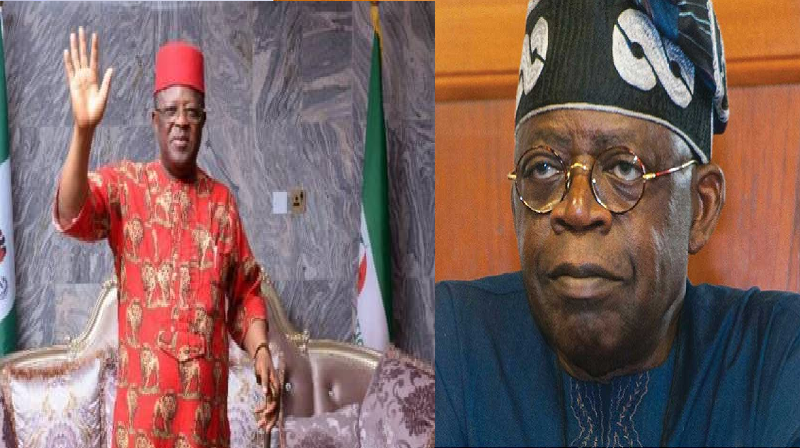
You might have read that the Governor of Ebonyi State, David Umahi, has left PDP for APC. I smile because many people are surprised.

The Ebonyi State Governor, David Umahi, has finally confirmed his defection to the ruling All Progressive Congress(APC) from the Peoples Democratic Party (PDP).

He told journalists in Abakaliki on Tuesday that he had no regrets leaving the PDP.

The governor said he moved to the APC because of “injustice” meted out to the South-east by the PDP.

He said that he had no deal with the APC or any member of the party with regards to the zoning of the presidential position to the region.

He said: “I want to clear the air that I never sought (for) PDP presidential ticket and I will not. So whoever that said that I moved to APC because they refused to zone the ticket to me is being very mischievous.

I predicted this move and wrote thus in October 2018, shortly after the coronation of Buhari and Osinbajo:

By this time in 2022, APC will select Bola Tinubu as the presidential flagbearer of the party for Election 2023. Mr. Tinubu will select a retiring governor from the southeast as his running mate. The main goal is to quench any agitation that 2023 will be the turn for southeast.

The present governor of Ebonyi state will likely be his running mate. Engr David Umahi will win with PDP in 2019 but will decamp to APC shortly. His “friendship” comment on President Buhari was not a lapse.

Largely, the best time to decamp as a governor is during the second term as you may not have to face any regional election. Decamping will be very popular because in my model, I expect Buhari to win in 2019 if he continues to show physical energy as he has recently demonstrated.

We will wait for 2022 for the other parts of the prediction to come to pass. Engr Umahi will run for the presidency on the APC platform. He will lose. Then Tinubu will select him as his running mate. As I wrote in 2018, “Tinubu/Umahi will be formidable”. And from all indications, APC will move power to the southwest.

Ahead on 2023 – The Bola Tinubu and David Umahi Presidential Ticket


Nigeria Evolves on Forex: “Transfers from one customer to another is prohibited”

6
CBN Governor

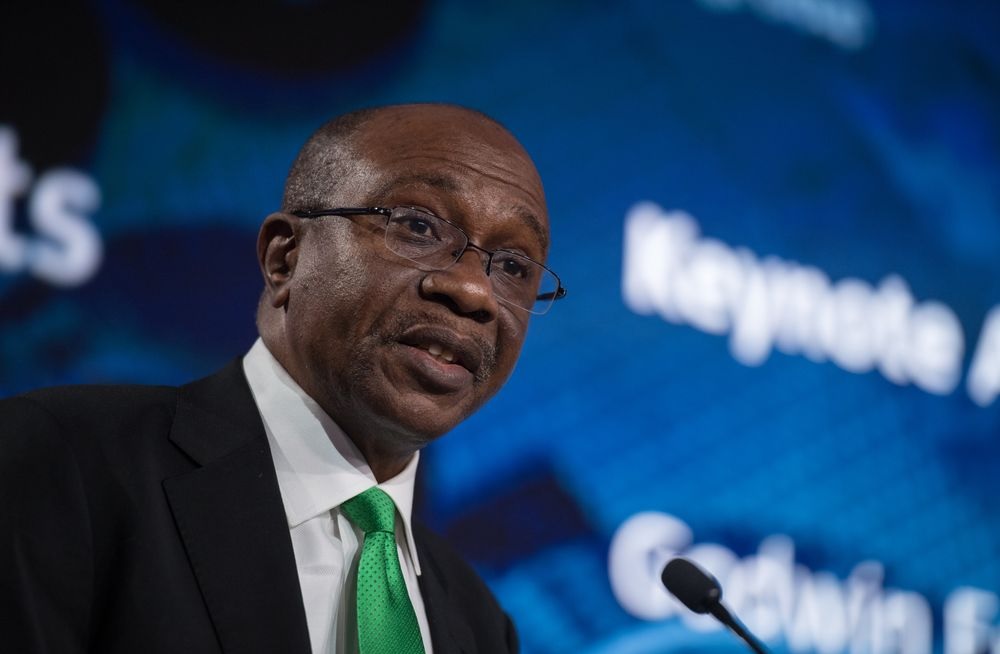
This one seems like a hail mary pass in America football by the Central Bank of Nigeria: banning transfer of  forex (foreign exchange) from one bank customer to another, and the prohibition of forex cash lodgings into domiciliary accounts, by another person, who is not the account owner. As Sun noted, the motivation of this new mandate is to ascertain the utilisation of inflows into customers domiciliary accounts.

The circular states: “Forex inflows cannot be credited to customers until the legitimacy of funds is established.

“They can have unfettered access by telegraphic transfers up to a limit of $40,000 monthly for payment of medical bills, school fees, subscription to professional bodies subject to existing CBN guidelines.

“Transfers from one customer to another is prohibited. Transfer within related companies is allowed subject to a limit of $50,000 per month.”

It recommended that proceeds from non-oil exports should be sold to banks, used for repayment of dollar term loans, and self-utilisation for trade transactions for LC, bills and Form A. Also oil export proceeds from E&P companies are to be used to pay contractors and service providers employed by the oil companies in addition to the recommended uses for non-oil FX proceeds.

Largely, the apex bank has now understood what is happening: one of the best investments in Nigeria, since the beginning of 2020, was simply buying foreign currency and leaving it in your domiciliary account to gain value over the naira. We discussed this the other day in Tekedia Live. 

Possibly, the apex bank has seen piles of value in domiciliary accounts of rich Nigerians even as those accounts are on HODL position as in the bitcoin world. Yes, you buy the US dollars, put them in the dorm account, with no intention to do any business with them, but wait for them to gain value on the naira.

As this passes, I hope one day we do not wake up with a CBN mandate that all monies in dorm accounts be converted into naira. Do not bet against that call!

Yet, it is all hail mary pass until Nigeria starts producing things. We are just building financial models but those have to be based on productive systems. By January, the U.S. government will send me another cheque for the rights to my patent which it licensed. Until we can get to that level of creating innovation, the central bank is simply doing dem go dey pose!

Building Block of IoT Systems

0

The Internet of Things (IoT) refers to sensors or actuators, combined with communication and processing capabilities, thus enabling them perform smart tasks and processes. The IoT market in the Middle East and Africa is worth around $8.5 billion and expected to grow to $17.63 billion by 2023.

In this article, I delve into the building blocks of IoT systems.

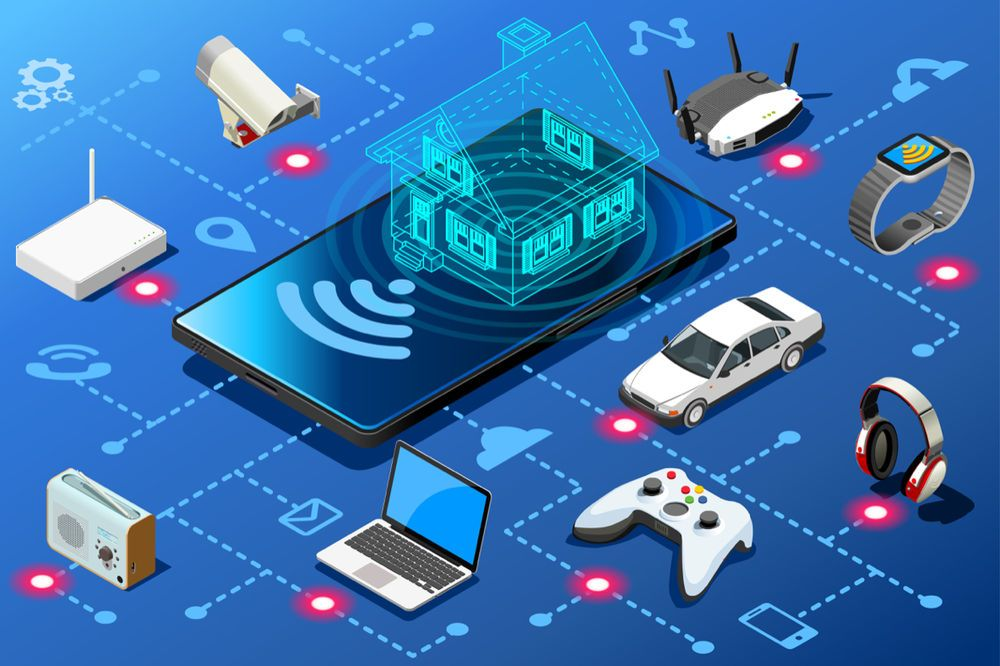
The IoT system is represented below as

Device – Connectivity – Backend system – Application 

Devices: this refer to the sensors or hardware or actuators, combined with power source (e.g. batteries, mains etc.), communication hardware (e.g. esim, chips, isims, sims etc.) ana/or a user interface system (e.g. screen, buttons, keyboard) etc.

Connectivity – This refers to the network responsible for transporting packets to the internet. This could be via cellular networks, fixed or satellites systems. The choice of connectivity, to a large extent, depends on the application of the IoT devices.

For example, high latency applications like health care, rapid response etc., favour the use of cellular networks like NB-IoT, LTE-M, other cellular connections, WiFi etc. whereas low latency applications typically favour the use of networks like Sigfox, LoRa etc. The use of networks like Sigfox, LoRa etc. equally lead to a conservation of energy and power, a critical asset for IoT devices, whereas the use of cellular connections and WiFi lead to a greater power consumption.

For indoor applications, fixed, WiFi and cellular connections are the preferred options, whereas when deploying outdoors, the use of networks like Sigfox, Lora, cellular, satellites networks etc. are preferred.

As highlighted above, the choice of connectivity option could come down to coverage or no coverage, low latency or high latency, low battery life or high battery life, indoor or outdoor, static application or mobile application, good quality of service or poor quality of service etc. Whatever the case, one may need to make some compromise, when selecting the desired connectivity network for a chosen IoT application.

Backend systems – This refers to the servers which collect and analyse data from the sensors and other external sources. These servers reside either within the private or public cloud.

Application – This refers to the system integrators, application development, and software platforms, open APIs etc., which helps in analysing, storing and managing the data.

If well harnessed, the IoT industry could help revolutionise the hardware sector in Nigeria and Africa.

Moderna Vaccine and the Globally Access Disparity

1

A few days after Pfizer announced its anti-COVID vaccine with over 90% effectiveness, Moderna Inc announced its experimental drug with 94.5% prevention efficacy on COVID-19. The two drug makers have announced drugs that far exceed expectations.

The new vaccine has offered hope to the world ravaged by pandemic, especially Africa; where hot temperature would not be a barrier for its storage. The vaccine remains stable in conventional refrigerators for a month and an ordinary freezer for six months, under temperatures of 2 to 8 degrees Celsius (36 to 48?F).

Unlike Moderna, Pfizer’s vaccine must be stored at -70c before delivery, making it difficult to be administered in countries with hotter climes.

Both vaccines were developed with new technology known as messenger RNA (mRNA), and showed more than expected results in clinical trials.

“The results of this trial are truly striking,” says Anthony Fauci, the director of US National Institute of Allergy and Infectious Disease, and the vaccines co-developer. He told reporters several months ago that he would be satisfied with a vaccine that was 70% or 75% effective, and one that prevented 95% of cases would be “aspirational”.

Moderna was one of the first developers to announce that it was working on a COVID-19 vaccine and to move testing to clinical trials in humans. It began a phase III trial that enrolled roughly 30,000 people in July, according to scientific magazine Nature.

At the news of its trial success, Moderna’s shares jumped 8% while the Dow climed 1.6%, the S&P 500 rose 1.17% and Nasdaq gained 0.8%. European markets rose too.

Pfizer and BioNTech shares plunged 4.3% and 16.4% respectively, following the news that Moderna doesn’t need colder temperatures to be preserved.

The tumultuous crisis of COVID-19 is taking a higher toll in the US and Europe, spiking the desperation of the Western countries to have as much of the vaccine as possible.

Moderna is part of the US government’s Operation Warp speed program. The company is expected to produce about 20 million doses for the United States this year. The company said it has already made millions of doses and would ship it if it gets FDA’s approval.

“Assuming we get an emergency use authorization, we’ll be ready to ship through Warp Speed almost in hours so it could start being distributed instantly,” Moderna president Stephen Hoge said.

In Europe, Britain has secured 5 million doses of Moderna according to a statement issued by health minister Matt Hancock on Monday.

“We have today secured an initial agreement for 5 million doses of the Moderna vaccine,” he said.

While many countries are yet to indicate interest in the vaccine, economies around the world could heave a sigh of relief as the availability of the vaccine would mean that the most affected businesses, such as the aviation and hospitality would spring back to life.

But there are still unanswered questions and uncertainties about the vaccine. It is not clear how long the vaccine’s protective effects last; whether it can block people from transmitting the virus; or whether the vaccine works as well in higher-risk groups such as older adults. Moderna reported that, of the 95 cases, 15 were in people over 65, but it didn’t say which arm of the trial these participants were in.

However, the percentage of success in the trials offered hope beyond expectation, and started a vehicle of recovery for ravaged economies and the disrupted global supply chain.

China and Russia have already begun to vaccinate, and with the availability of Pfizer, Sputnik and Moderna vaccines, a large part of the world’s population could be covered by mid next year, if less affluent countries are given access to the vaccines.

While concentration lies on the US and Europe, where the pandemic is still much active, other countries with quite a record of high numbers will become a setback to the total elimination of the virus if they don’t have access to vaccines.

With over 55 million infected around the world, global access to vaccine is necessary to contain the spread of the virus.

Moderna has the capacity to produce more than one billion doses, which will serve the 330 million US population with leftovers of over 700 million. Pfizer vaccine’s storage limitation has made it exclusive to countries with temperate weather, which means, Africa is excluded. So far, a combination of Moderna, Russia’s Sputnik which is said to be also over 90% effective offers hope to disadvantaged countries.

While there is hope that many vaccines under trial will be approved in the near future, a global synergy is required for strategic distribution of the available vaccines, especially for dependent countries with enormous populations like Nigeria.

The Nigeria Deposit Insurance Corp’s Message to Fintechs – “a lot of issues around consumer protections”

3

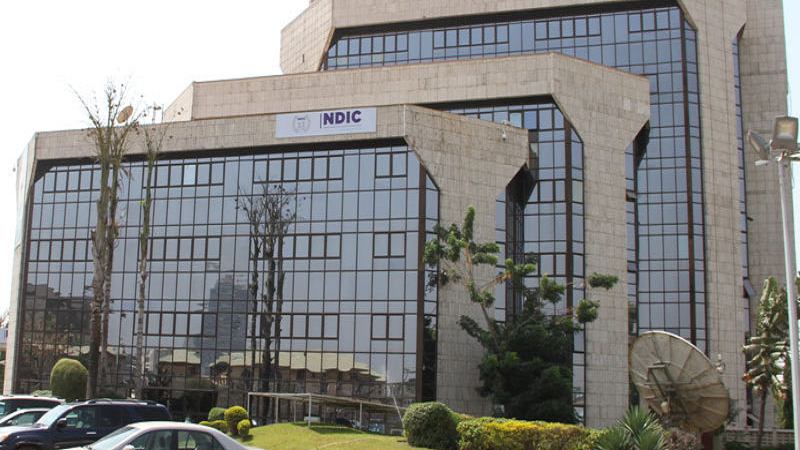
The Managing Director of Nigeria Deposit Insurance Corporation (NDIC), Mr. Umaru Ibrahim, has noted that more regulations are coming in the Nigerian fintech space. He made the disclosure in a speech in Kaduna. Speaking before the Finance Correspondents Association of Nigeria (FICAN) in an event with a theme “COVID-19 & FinTech Disruption: Opportunities and Challenges for Banking System Stability and Deposit Insurance”, he dropped these lines.

The emergence of fintechs is relatively new in this environment and the Central Bank of Nigeria has produced a policy guideline for the registration, licensing, and supervision of fintechs.

We are also involved in that and we partner with other regulatory authorities such as the Securities and Exchange Commission and well the NCC. That is because each and every one of us has a role to play in the licensing, supervision, and regulation of fintechs.

We would continue to develop and improve your knowledge and skills so that you are up to date on what is happening globally and locally in terms of the financial system, so that you can help disseminate information and educate the generality of the public and so that the public remains aware and protected.

There are a lot of issues around consumer protections, even without the emergence of complicated products and services and channels of financial intermediation,…, even to day-to-day ordinary transactions between customers and banks.

The key line is this – “There are a lot of issues around consumer protections”. I do think, since it is NDIC that is speaking, you would expect a new regulatory requirement where funds in digital wallets and online accounts would need to be insured. You cannot argue otherwise when you remember what happened in Thrive Agric.

Sure, it needs to be done with no motive to annihilate the fintech sector with disproportionate high wattage of regulations; think Ant Group in China and the recent evolving regulation. If they get it wrong, the fintechs will just become “micro” banks which would be really bad.

China Halts Ant’s IPO, Unveils New Fintech Regulations