DD
MM
YYYY

PAGES

DD
MM
YYYY

spot_img

PAGES

Home Blog Page 6044

The Really Bad UAE/Dubai “Golden Visa” Policy

4

The United Arab Emirates (read Dubai) has updated its visa policy. Looking at it, it looks enticing but it is actually a very poor policy for professionals. Why do you need a ten year visa in a place you are working and living permanently? Essentially, there is NO path to citizenship within those first ten years – and I think that is a VERY big problem for people that may be considering it.

The United Arab Emirates will extend its “golden” visa system – which grants 10-year residency in the Gulf state – to certain professionals, specialised degree-holders and others, the UAE’s vice president said on Sunday.

Foreigners in the UAE usually have renewable visas valid for only a few years tied to employment. The government in the past couple of years has made its visa policy more flexible, offering longer residencies for certain types of investors, students and professionals.

All holders of doctorate degrees, medical doctors and also computer, electronics, programming, electrical and biotechnology engineers are eligible, UAE Vice President and the ruler of Dubai Sheikh Mohammed bin Rashid al-Maktoum said in a statement.

Also eligible are those with specialised degrees in artificial intelligence, big data and epidemiology, as well as high school students living in the UAE who rank top in the country and students from certain universities with a GPA of 3.8 or higher.

After first announcing a long-term visa plan in 2018, the UAE in 2019 started granting 5- and 10-year renewable visas to certain foreign investors, entrepreneurs, chief executives, scientists and outstanding students.

Do not immigrate to countries where you would work for ten years, and still need to be on a visa. It is a very bad call because what that means is that by the time you cannot work, upon retirement, the system will not pay you since most benefits are reserved for citizens.

Canada and the United States remain the gold standards: they give you a path to citizenship as a permanent resident, and that is a huge benefit.

More so, as I have noted here: PhD is a career insurance. Increasingly around the world, they cannot have enough of them especially those in the technical areas. I do not see how it could hurt anyone who chooses to get one! Even Dubai likes to keep PhDs. But do not fall for their visa policy if you have other options – there is nothing golden in it.

Yes, it is pure exploitation of young people who are increasingly looking for greener pastures. If you must leave Africa, consider Canada and the United States; their immigration & citizenship  policies are better.

The UAE must include a path to citizenship for people who come into the nation to live and work. Permanent residency is not just enough.

Overview of 4th Edition of Tekedia Mini-MBA (Feb 8 – May 3, 2021) [Video]

2

Registration for 4th edition of Tekedia Mini-MBA (Feb 8 – May 3, 2021) begins. Tekedia Mini-MBA is an innovation management 12-week program, optimized for business execution and growth, with digital operational overlay. It runs 100% online. The theme is Innovation, Growth & Digital Execution – Techniques for Building Category-King Companies. All contents are self-paced, recorded and archived which means participants do not have to be at any scheduled time to consume contents.

Learn more and register at the edition page. Note the early registration benefits and deadlines.

Code Program
MINI Tekedia Mini-MBA costs US$140 (N50,000 naira) per person.
MINR Add extra (optional) $30 or N10,000 if you want us to review and provide feedback on your labs.
MINF Annual Package (includes 3 editions of MINI and optional 2 certificate courses): $280 or N100,000.
CERT: Add extra (optional) $60 or N20,000 for each capstone-based Certificate specialty course. You must have attended, begun, or about attending Tekedia Mini-MBA to qualify. The following Certificate tracks are available:


Year 2022: The Inflection Year of Immersive Broadband Connectivity in Africa

0

I predicted that immersive internet connectivity will hit Africa by 2022. That prediction is just coming along as SpaceX Starlink begins beta testing of its satellite broadband program. The price as announced by SpaceX is high but after two generations of this product, I expect the price to normalize. Then, the redesign will begin as terrestrial-based broadband service providers like MTN and Airtel in Africa will have to take drastic actions on their services.

In terms of pricing, SpaceX says in the emails that the cost for participants in this beta program will be $99 per moth, plus a one-time cost of $499 initially to pay for the hardware, which includes the mounting kit and receiver dish, as well as a router with WiFi networking capabilities.

The goal eventually is to offer reliable, low-latency broadband that provides consistent connection by handing off connectivity between a large constellation of small satellites circling the globe in low-Earth orbit. Already, SpaceX has nearly 1,000 of those launched, but it hopes to launch many thousands more before it reaches global coverage and offers general availability of its services.

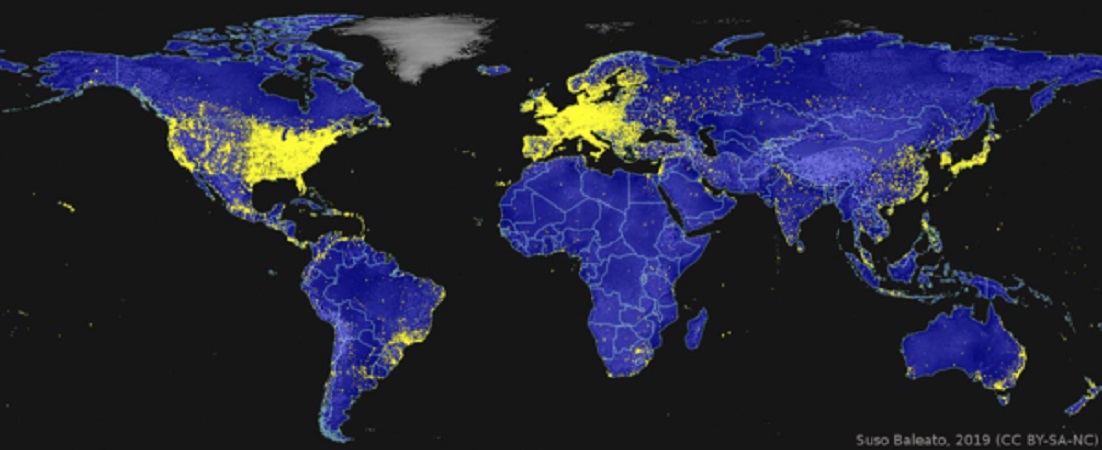
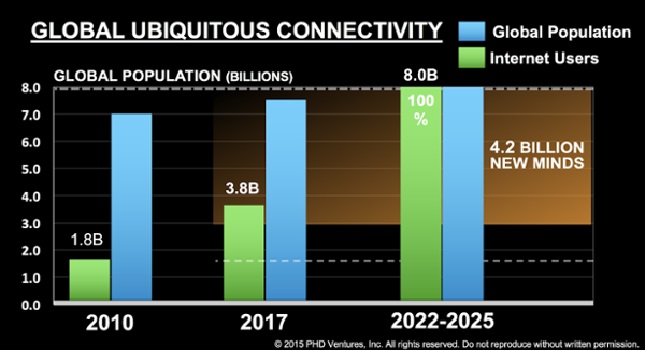
Look at this table below, and the 2022 prediction is looking solid. Simply, by 2022, the global population will be at parity with internet users. The implication is that within the next few years, we would have additional 4.2 billion internet users. Most of them would come from Africa and India.

2022 Will Usher The Era Of Wireless Nigeria, Africa

Your business must find a home on the web; there is no going back. Watch the prediction video again.

Innovators, Tekedia Can Provide You With Amazon AWS Credit As You Build and Grow

1

This only applies now to Tekedia Capital startups which Tekedia Capital invested in.  Attending Tekedia courses does not qualify.

As you begin your week after the restful weekend, let me remind you. Besides all, Tekedia Mini-MBA is a quasi startup accelerator, extending the school core innovate & grow mindset to support innovators. That means, innovators and companies can have access to resources which our Fund provides. If you are in our program, and need support, we will help. We have credits  to support founders and companies in Tekedia Mini-MBA who are bootstrapping or have raised small money. Then, as you grow, we will offer you more credits.

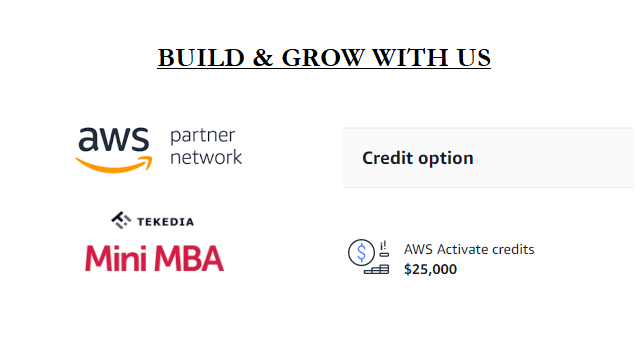
I run an investing fund – and that fund has grown so well that Amazon has shown huge support. When we partner with you, we help you grow. I continue to look for great ideas to support. If we invest, you can also get up to $25,000 worth of Amazon AWS credit. We got an elevation from $10,000 to now issue $25,000 as many of our companies are growing. We can do even more if you need more resources.

From San Francisco to London, Lagos to Berlin, and beyond, we are empowering innovators of the future. Tell me what you are building, and let us see how we can assist you to get to the next level. We have close to three dozen companies in our portfolio and together they have created thousands of jobs, generating $millions of dollars.

If you are building GREAT things, contact Admin. We are here to support you. After a recent elevation by Amazon, we can now give $25,000 AWS credit, originally from $10,000 only to great companies, in any sector, to support their digital playbooks and executions.

AWS is the leading cloud provider in the world.

Have a profitable week ahead from Tekedia Institute.

Livestorm Raises $30m in a Series B Round to Disrupt Market Dominated by Zoom

10

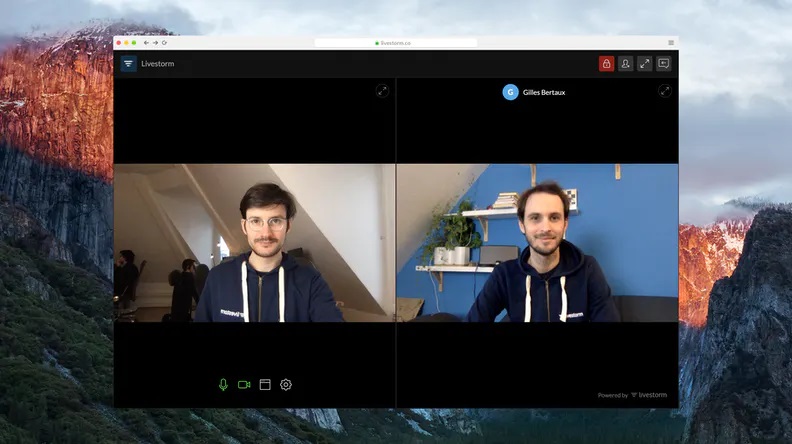
Livestorm, a video communication startup has announced that it has raised $30 million in Series B funding to expand its video meeting services.

“I’m pleased to announce our latest funding round. We’ve raised a $30 million Series B to accelerate product development and our expansion into North America,” said CEO Gilles Barteux.

The round was raised by Aglae Ventures and Bpifrance Digital Venture, with participation from Raise Ventures and IDInvest. The latest funding brings Livestorm’s total amount raised to date to $35 million.

Founded four years ago, Livestorm has been the preferred solution for rapidly changing industries like state and local governments, healthcare, education, and more.

The company said it will be using the latest funding to expand its technology to accommodate more companies and users.

“We’ll be using this latest funding round to develop new features and functionalities to support larger companies. We will create an ecosystem of integrations entirely dedicated to video communication. We believe that the next wave of video communication platforms will focus on more than just video distribution,” it said.

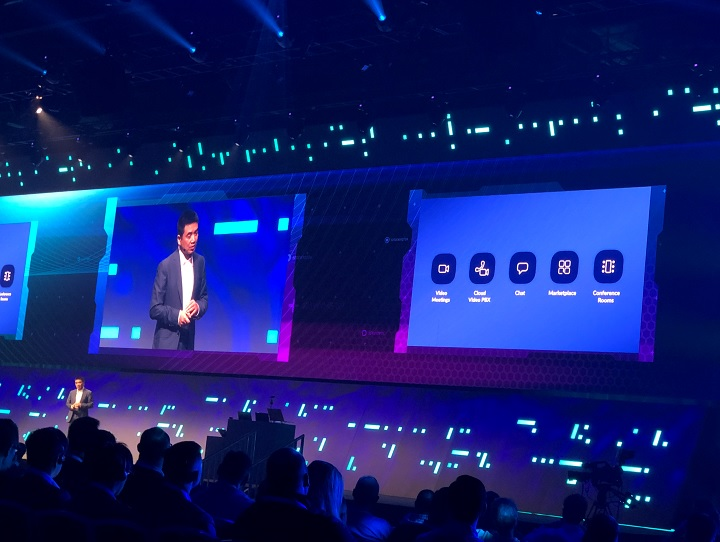
Zoom

As part of its expansion plan, Livestorm said it will increase its marketing presence and scale go-to-market strategies toward mid-market and enterprise clients in Europe and the United States, while hiring aggressively globally.

The company said it has multiplied its revenue 8x since last fall when it raised its €4.6 million Series A fund. It now has a customer base of over 3,500 customers, including Shopify, Honda, Sephora and Fortune 500 companies.

Bertaux told TechCrunch’s Anthony Ha that Livestorm moved from Webinars that it started with to video meeting services.

Livestorm is using an approach different from the traditional teleconferencing technology. The company had used the technology for conducting interviews and sees the product as different from Zoom, Skype and Webex.

“The way we think about it is, webinars and meetings are not use cases,” said Bertaux.

He argued that it’s more meaningful to talk about whether you’re having a team meeting or a training demo or whatever else, and then how many people you want to attend, with Livestorm supporting all those use cases and meeting sizes through different templates.

“We’re trying to remove the semantic distinction of meeting and webinar out of the equation,” Bertaux added.

The video conferencing service is browser based, a sharp contrast with other video tools. It does not require installation of software to be used by presenters or attendees.

While Bertaux acknowledges the dominance of Zoom, saying the company may have built “the best video meeting technology,” he suggested that there has been a shift in the status quo. “The thing is, we’re entering a period where video is becoming a commodity.”

The twist in the technology is that Livestorm is less focused on the core video technology and more on the experience around the video, with in-meeting features like screen sharing and virtual background, as well as a broader suite of marketing tools that allow customers to continue delivering targeted message to event attendees, TechCrunch explained.

Bertaux said it’s like Hubspot, which “didn’t reinvent landing pages” but put the pieces of the marketing stack together around those landing pages.

“In 2021, we want to have the biggest ecosystem of integration on a video product,” he said.

The company is poised to cause disruption in the video conferencing space where Zoom reigns supreme.

The Aglaé Venture partner Cyril Guenoun called Livestorm storm “the HubSpot for video communication.” He added that “video and online events have become essential in 2020, and are here to stay. The Livestorm platform thrives in this environment, providing a seamless solution for meetings and events with all the connectors that marketing, sales, customer service and HR pros need to make video a tightly integrated part of their communications,” he said.