DD
MM
YYYY

PAGES

DD
MM
YYYY

spot_img

PAGES

Home Blog Page 6075

The Mistakes of GE And The New Tribe of Great Managers

1

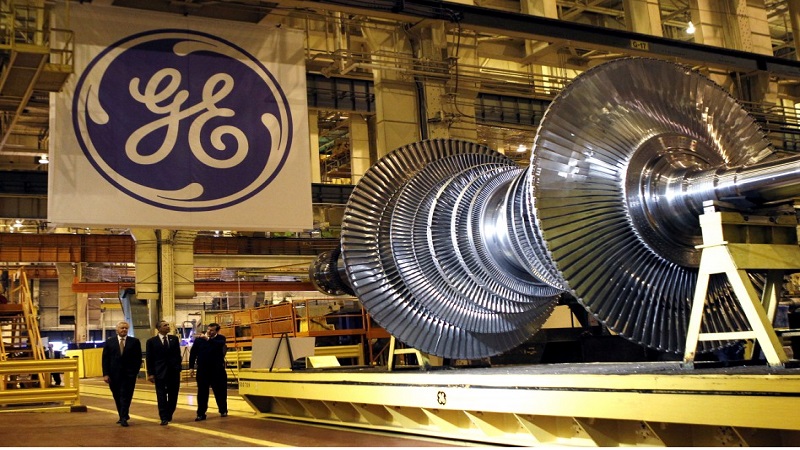
GE (General Electric) used to be the gold standard on the development of management systems and processes. At its zenith, GE was known as a factory where some of the finest business leaders were incubated, nurtured and prepared for leadership. With peerless business management and training systems, GE supplied a generation of CEOs to corporate America. The company pioneered and scaled many industrial age management systems and sold them across the world.  

One of those systems is the Six Sigma: Six Sigma was invented in Motorola, GE through its former leader, Jack Welch, popularized it when the company adopted it. As Toyota perfected its Kaizen and Japan pursued Total Quality Management, GE gave America management systems for growth and success. But that was the old GE; the present GE is sick. A new CEO, Larry Culp, is at work, to fix GE, which has crumbled from market cap of about $600 billion in its golden era to about $60 billion today

Few challenges in the business world are of the magnitude that Larry Culp faced when he took over as chairman and CEO of GE in 2018. The ailing multinational was a shadow of its former self, in the process of shrinking in market cap from $600 billion in its heyday to around $60 billion today, and shedding dozens of business units along the way. 

For a company that prides itself as a center of management system to collapse in this way is unfortunate. The implication is that GE may be out of sync with the tenets of modern business processes. The industrial age may be passing, and now it needs to learn what works. The strategic mistakes over the last ten years have been constant, and if GE does not stop making them, this iconic American company may go. 

But note one thing: the tribes of great managers have evolved; Amazon, Google and Nvidia offer better ones today than the descendants trained on the books of Six Sigma in GE. Yes, sometimes, you can be really good, doing bad things. GE had it bad: sold a financial service subsidiary, GE Capital, just as financial services were becoming the money that grows on trees. It also went big on centralized power plants through the acquisition of Alstom’s power and grid businesses, when the world was moving towards decentralized power via renewals. 

This is a huge lesson – if you are running in the wrong direction, you will lose. Yes, even if you execute well on the business playbooks, the end goal would be catastrophic since the thesis would be out of phase with markets. GE might have operated the businesses “well’ but the market-fit was not there, and accordingly, it missed the ability to fix the right market frictions.

The past is history, what matters is today. IBM has a market cap of about $98 billion while Microsoft, an old peer, is worth excess of $1.6 trillion today. Yes, Microsoft can buy IBM and still have $1.5 trillion remaining! That was a case study in my Grand Playbook of Business in Tekedia Mini-MBA – and it is worth reading. Has you management evolved for modern markets?


 

The GE’s Failing Management Factory

 A Stable Family System – A Panacea for a Deteriorating Society

0

Topic of the article: A stable Family System – A Panacea for a deteriorating society.

Objective (what is the piece supposed to achieve?  To enlighten the public about the indispensable role of family in the society.

Audience (who is the piece targeted at?) The Nigerian government, parents and social educators.

What is the audience looking for?  How the society can be better structured through creating a firm family system for proper breeding.

Thesis/Argument: The family is the bedrock of the community. Families are of paramount importance to the Nigerian society, because they are considered to be the basic unit of society. The future of Nigeria society depends very much on successful parenting and marriages. Parents must raise children according to prevailing societal norms and ways of life

 A stable Family System – A Panacea for a deteriorating society.

The family is an integral piece of the society. Society is a mirror image of our family system firmness.  Since family plays a fundamental role in the formation of a functional society; it is expedient for a growth oriented society to place great emphasis on building a sturdy micro unit of the society (family). Most developed nations recognize the vital role of the family system in building a developed and balanced nation for their citizens. Thus, a large proportion of resources are allocated to the process of creating a good family system, most especially in the area of family institutions empowerment and family orientation programs.

Aptly put by sociologists, societies that hope to boom must nurture offspring dutifully. This is because an unbroken family helps children build up strong moral disposition and gain access to quality education compared to children from wrecked families who are more probable to behave as social deviants. It is pertinent to recognize that children who exhibit deviant behavior pose a greater threat to the leadership and general development of the country.

The family’s greatest threat is divorce. Divorce is one of the social phenomena that no human society is devoid of, because of its close association and intricate ties with social relations between individuals and groups.  The family being the children’s first port of call and a catalyst for integration of individuals into social life, families must be shielded from fundamental issues like divorce, in order for the primary goal to be achieved. In 2010, Centre for Social Justice in the United Kingdom posited that; an individual’s physical, emotional and psychological growth develops within the family milieu. This connotes that our family is the bedrock that shapes our knowledge of unadulterated love, morality, ethics, empathy, respect for dignity and hard work. These traits integrate us positively into school life, work life and the society in general.

Taking a periscopic look into Nigeria’s social environment today. It is unmistakable to point out that the greatest menace of our society is irresponsibility. This great virtue lacking in our society today is the end product of our failing family system. The current family system we have will not just hinder our development at the moment, but also disrupt the future of this great nation. Presently, there is no reliable data on the rate of disjointed family units in the country and it is overt that there is an upsurge in the rate of rambling family units, even though we are prone to living in denial as a society that none of such exist. Though data from the National Bureau of Statistics indicate that just 0.2% of men and 0.3% of women have separated legally. Likewise, well below 1% of couples own up to being separated. This data is in sharp contrast to reality and greatly underscore the high volume of family disunity in the country.

Protecting the future of the nation

It is vivid that most of our children today lack the virtue of respect, honor, responsibility and hard work. These virtues are essential for proper growth and development of an individual in order to prevent failed adulthood. It is of essence for us to acknowledge that failed adulthood comes with unbalanced childhood developmental stages or processes. The calibers of leaders we have in our country today are artifacts of different family units and households. So if our dream of an inclusive and better Nigeria is to see the light of the day, then our family system should start inculcating or instilling the culture of diligence, hard work, responsibility, compassion and respect in their children as they pass through the developmental stages of life.

Conclusion: Nigeria needs to pay more attention to activities (family institutions and orientation programs) that will trim down the rate of family discord, family and parenting delusion towards creating a stronger family system.


References

Durkheim, E (12956) Education and Sociology. Glencoe: Free Press.

http://nigeria-education.org/home

https://www.centreforsocialjustice.org.uk/

https://www.nigerianstat.gov.ng/

AMD to Buy Rival, Xilinx for $35bn, As Competition Intensifies in the Chip Industry

0

Advanced Micro Devices Inc (AMD) announced Tuesday it would buy Xilinx Inc in a $35 billion all-stock deal, marking a major challenge to Intel Corp in the semiconductor industry.

According to Reuters, AMD is expected to close the deal in 2021, and it will create a combined company with 13,000 engineers and a completely outsourced manufacturing strategy that relies heavily on Taiwan Semiconductor Manufacturing Co Ltd (TSMC).

Since early this year, the semiconductor industry has witnessed a lot of changes that have intensified competition, forcing chipmakers to up their game in order to grab a market share.

COVID-19 pandemic has opened more opportunities for players in the chip industry through disruption of businesses, creating needs for alternate ways of doing things as the world comes to terms with the new normal.

The semiconductor industry is seeing a surge in consolidation as chipmakers seek scale and expand their product portfolios to support the increasing number of everyday items that are connected to the internet.

But AMD and Intel have a long history of rivalry in the central processing unit (CPU), of personal computer business.

The deal will put more pressure around Intel who has been feeling the heat of competition from Nvidia. Last month, Nvidia and Softbank were in talks for the sale of ARM, a major move Nvidia intends to use to scale up its market share in the chip industry.

But everyone in the industry has a plan to win more market shares or challenge market leaders.

In 2015, Intel executed its largest deal ever, buying Altera Corp for $16.7 billion.

Lisa Su took over AMD in 2014 as chief executive and has since then put up a challenge to Intel in the fast-growing business of data centers that power internet-based applications and services and are fueling the rise of artificial intelligence and fifth-generation telecommunications networks.

Xilinx has also been working to penetrate data centers with programmable processors that help speed up specialized tasks such as compressing videos or providing digital encryption.

Su told Reuters in an interview that the companies are counting on its strong areas to accelerate products into markets.

“There are some areas where we’re very strong, and we will be able to accelerate some of the adoption of the Xilinx product family. And there are some areas where (Xilinx CEO) Victor (Peng) is very strong, and we believe that we’ll be able to accelerate some of the AMD products into those markets,” she said.

The combined forces of the two companies will mean more trouble for Intel that has fallen years behind AMD and TSMC. AMD started its factories about 10 years ago, and has since then moved up the ladder with better chips. The market desired-chips of AMD has spurred its performance and increased its market share since 2013, at a little less than 20 percent of the CPU market. The shares have gone up 79 percent this year.

The deal means Xilinx shareholders will receive about 1.7 shares of AMD common stock for each share of Xilinx common stock, valuing Xilinx at $143 per share based on a 10-day average for AMD share prices up to October 8, or about 24.8% higher than its $114.55 closing price on October 26. AMD shareholders will own about 74 percent of the combined firm, with Xilinx shareholders owning the remaining 26 percent.

Under the deal, AMD’s Su will lead the combined company as chief executive, with Xilinx’s Peng serving as president responsible for the Xilinx business and strategic growth initiatives. The companies expect the deal to generate $300 million in cost savings.

Peng said meetings between the two companies have revealed that they have similar methods for designing chips.

“I’ll be honest, I don’t think it’s really as challenging as some other combinations. I had one of my leadership teams who was not familiar with AMD say to me after a meeting, ‘Boy, they’re just like us’,” he said.

Shares of AMD dropped 1.8% shortly after markets opened at 9:30 a.m ET, while those of Xilinx went up nearly 12% after the two companies held a joint conference call about the deal.

Alibaba’s Alipay Will Likely Acquire Interswitch or Flutterwave

2

I am feeling it right here – Ant Group, the Chinese “Amazon of Money”, will likely acquire Nigeria’s Interswitch next year. Interswitch has some great properties in Verve, and data, as the pioneer of the electronic payment sector in Nigeria.  While Ant Group (of Alipay) has tons of money to buy anything on its way – it just raised $34 billion, the largest IPO in the last few days – the company may not like to spend about $1 billion possible price tag on Interswitch. But it needs data, and for that, it will not give up.

In a record breaking move, Jack Ma’s Ant Group pulled off the biggest share sale in history, with a $34.1 billion Initial Public Offering (IPO), beating Saudi Aramco’s previous record of $29.4 billion.

The Ant Group has been in market news as it prepared to make its market debut. The regulatory filing released Monday showed the Chinese tech giant priced its dual listing on the Hong Kong Stock Exchange and Shanghai’s Star Market at 80 Hong Kong dollars ($10.32) and 68 yuan ($10.13) per share respectively.

The $34.1 billion IPO puts the company’s value at $310 billion. Ant’s decision to file its initial public offering with Shanghai and Hong Kong markets signals a looming boycott of US markets by Chinese firms. The Chinese government has recently been encouraging its companies to avoid US markets, following the economic and political tensions between the two countries that have put Chinese companies under serious scrutiny in America.

America had made it clear that the Ant Group cannot come to any party. A deal to buy MoneyGram by Ant was killed in 2019 by the US government. With Europe not offering friendly red carpets and the ambition of Ant so huge, a path through Nigeria becomes inevitable. 

Interswitch Verve is a great product and can be scaled all over Africa; Interswitch missed the opportunity as I explained in the monopoly hangover piece. No other sub-Saharan African company has that type of product. So, it is natural that Ant Financial will come for it. Verve offers it a promise to punt Visa and Mastercard; in 2019, Ant processed $18 trillion worth of transactions while the American duo pulled $16 trillion.

But assume that Interswitch is not possible, expect Flutterwave to be on the horizon. The interest in Ant Group’s IPO was so huge that the Hong Kong institutional book was “oversubscribed just one hour after the launch”. That is the level of success Ant has achieved. Interestingly, there is no company in the Western world that comes close to its scale; Ant is nearly 5x the value of Goldman Sachs! Justifying that confidence requires doing some global shopping. Expect Ant to play big in Africa – Interswitch and Flutterwave are my favorite targets.

The book was oversubscribed just one hour after the launch on Monday, two separate sources said, demonstrating investor frenzy for the initial public offering (IPO) of the Chinese fintech giant that has stoked heavy demand for cash and sent Hong Kong money market rates to five-month highs.

Ant Group declined to comment on the planned early closure of the Hong Kong institutional book.

It is looking to raise up to $34.4 billion in Hong Kong and Shanghai, with the offer split between the two cities, giving it a valuation of about $312 billion.

The Ant From Alibaba Beats Saudi Aramco, Raising $34b in World’s Largest IPO

The Airtel Africa’s 11th Consecutive Quarter of Double-digit Revenue Growth

1

How time flies – this was a company which was rumoured to be leaving Africa. Of course, Airtel had no other option than Africa as its home nation of India was under a redesign, with Jio changing the industry with market-shaping products and services. Across all metrics, Airtel had no chance in India! Having no alternative, Airtel retooled its business model, and became a quasi-financial institution which offers telecommunication services. Yes, Airtel outsourced some infrastructure components of its business, improving its CAPEX and by doing that, have money to invest on its customers. The result has been superb: Airtel has logged its 11th consecutive quarter of double-digit revenue growth, HI 2020 data shows.

Airtel Africa has logged its 11th consecutive quarter of double-digit revenue growth. In its H1 2020 financial report, Airtel Africa noted a 16.4% increase in revenue in the first half of its current financial year, and a 19.6% increase in Q2. The operator said mobile revenues increased 15.3% in H1 due to growth in voice and data, while its mobile money operation Airtel Money saw revenue growth of 30.4%.

Growth was recorded across all regions, with Nigeria up 20.2%, East Africa up 21.9% and Francophone Africa up 4.4%. Noting a growth of 12% across its customer base, Airtel Africa now counts 116.4 million customers across 14 markets, which span Eastern Africa, Francophone Africa and Nigeria.

In May 2018, I explained why Airtel Nigeria would continue to grow: asset-light business model where outsourced partners do the core infrastructure works while Airtel stays ahead running the customer experiences. Doing that means it can grow faster because it can deploy dozens of partners (who get paid only when they deliver services) working across Nigeria at the same time. It is a very risky business model as the weakest link is now the weakest delivery partner. But the company has managed any risk very well.

Many quarters ago, Airtel was seen as a company that would abandon Nigeria. In the depth of the recession, the company struggled: it had so many underperforming assets. As the nation exited recession, Airtel upgraded its business model. Today, Airtel is leaving the infrastructure business, outsourcing all to partners across Nigeria. Typically, such enables companies to conserve cash. The impact is now visible in the subscriber numbers. Provided Airtel continues to find partners, it would continue to grow at a faster rate than its peers.

Telecom equipment leasing and outsourcing of critical infrastructure pose risks – your quality is determined by the capabilities of the partners. Most people like to be in charge of their destinies. But today, it is working for Airtel since the services are largely matured with very competent players who can deliver them.

The future of rural telephone and broadband services will move faster for Airtel in Nigeria since doing such will just require signing contracts with partners. The gestation period between investment and revenue is largely out because it does not have to worry about community negotiations, fees and other issues which make simple things hard in Nigeria. Airtel partners would have to deal with many of those issues.

The Airtel Africa transformation is a great case study of the power of business model: you must invest to get a working one. Most times, the problem is not the market but your business model. Blaming customers will not grow the business. Hello, Nigerian insurance companies!