DD
MM
YYYY

PAGES

DD
MM
YYYY

spot_img

PAGES

Home Blog Page 608

The Obi Cubana Locality Playbook in Business [video]

0

One of the most “craziest” CEOs in America in recent memory was the CEO of T-Mobile. John Legere was annoyingly funny. But check his numbers: he rebuilt T-Mobile and redesigned the US telecommunication market. The man will run crazy in front of hotels, attracting attention, just to get local TVs to cover his brand. He pioneered no-contract mobile plans, and did many things that changed how AT&T and Verizon, the industry leaders, engaged with customers.

In Nigeria, Obi Cubana deserves case studies in our business schools. There are many things about his marketing playbook that companies can adopt. His team  went to Scotland and wowed the company board to seal the exclusivity of products in Nigeria. They put on a show and the Scottish press recorded their presence; they brought the deal home.

As you watch this video, think how a company board in Scotland will feel about the readiness of a Nigerian company it wants to do business with. In Harvard Business Review, I wrote that the “The Best Global Leaders are Local Leaders” because every business is local. Yes, demonstrating that native-locality will open doors as you work to reduce inertia to close business deals.

Be more local in your strategy. Do not put a price on your website in USD when you are selling to Nigerians. And do not convert USD with whatever exchange rate they’re using in CBN. Why do we ask learners to pay N120k for Tekedia Mini-MBA when those paying in USD pay $170? Every business is local, and the more you localize, the higher your chance to capture value!

Airtable CEO Howie Liu urges employees to cancel meetings and ‘play’ with AI

0

Airtable CEO Howie Liu is making an unusual demand of his staff: take more time off work—at least from meetings—and dedicate it to playing with artificial intelligence.

In a recent episode of Lenny’s Podcast released Sunday and published by Business Insider, Liu, 36, said he has been actively encouraging Airtable employees to experiment with AI, not just as a tool for productivity, but as a way to reshape the company’s long-term strategy.

“If you want to cancel all your meetings for a day or for an entire week and just go play around with every AI product that you think could be relevant to Airtable, go do it. Period,” Liu said. “That’s the most important thing. Play. Experimentation.”

Liu made clear on the podcast that his approach is not rhetorical. He described himself as Airtable’s most dedicated and, in his words, “intentionally wasteful” user of Airtable AI, the company’s own service.

“I take pride in being the No. 1 most expensive in inference-cost user of Airtable AI,” Liu said. He noted that he was not just the top user within his own company, but “globally across all our customers.”

For Liu, that “waste” is part of the point. He admitted to spending hundreds of dollars at a time on inference costs—AI computations—just to analyze sales call transcripts. To him, the exercise is far from frivolous.

“Hundreds of dollars spent on this exercise is trivial compared to the potential strategic value of having better insights,” Liu explained. “That’s invaluable, right? You could pay a consulting firm literally millions of dollars to get that quality of work.”

The culture he is trying to instill at Airtable mirrors a broader movement among tech CEOs to normalize AI as a routine part of everyday work. Duolingo CEO Luis von Ahn recently revealed that the language learning app organizes weekly AI experiments, cheekily branded “f-r-A-I-days,” where teams spend every Friday morning testing new ways to use AI for efficiency.

The approach reflects a growing recognition in Silicon Valley that AI adoption requires more than occasional pilot projects. Instead, it demands immersion, experimentation, and sometimes deliberate inefficiency—an argument Liu appears determined to embody.

Liu’s commitment to AI exploration comes at a pivotal moment for Airtable itself. He cofounded the company in 2013, initially as a spreadsheet-style application, but in June, Airtable relaunched as what Liu calls a “vibe coding platform.” The company, which employs over 700 people and was valued at nearly $12 billion in December 2021 according to PitchBook, is betting its future on becoming an “AI-native app platform.”

In a statement at the time of the relaunch, Liu argued that AI chat interfaces like ChatGPT may be effective for small, one-off tasks, but scaling AI in organizations requires something more structured.

“This is the real unlock,” Liu said. “AI chat interactions are good for one-off requests, but you need an AI app to scale AI work.”

He pointed to the rise of companies like Lovable and Cursor as evidence that vibe coding—the ability to build apps and workflows through conversational AI—is emerging as the “killer application” of the technology. For Airtable, that shift represents both a threat and an opportunity.

Liu, by encouraging his workforce to experiment—free from the strictures of calendars and deadlines— appears to be betting that play may not just inspire innovation but also help Airtable stake its claim in an increasingly crowded AI-driven software market.

SEC Nigeria Unveils Redesigned Website Amid Crackdown on Fraudulent Schemes

0
SEC Nigeria

The Securities and Exchange Commission (SEC) Nigeria has officially launched its newly redesigned website, a development the regulator describes as a key step toward enhancing digital engagement, boosting regulatory transparency, and strengthening investor protection.

The announcement, made on Monday, underscored the Commission’s commitment to modernizing its operations at a time when Nigeria’s financial markets are grappling with rising cases of unregistered investment promoters exploiting the appetite of citizens for high returns.

According to the SEC, the upgraded platform introduces a sleek, mobile-responsive design, improved navigation, and consolidated resources tailored to investors, market operators, and the wider public. The redesign aims to streamline user experience while reinforcing the Commission’s watchdog role in Nigeria’s capital markets.

“This digital advancement is a significant step in building a more transparent and accessible Commission,” said SEC Director-General Emomotimi Agama. “It enhances our engagement with the capital market and the investing public, and reflects our dedication to continuous improvement in service delivery and communication.”

Key Features of the New Website

The revamped platform comes with:

  • Intuitive Navigation: A simplified menu structure for faster access to key information.
  • Consolidated Resources: Regulatory guidelines, publications, and investor alerts are logically grouped and easier to locate.
  • Mobile Optimization: A responsive design that ensures seamless access across desktop and mobile devices.

Samiya Usman, Executive Commissioner for Corporate Services, stressed that the redesign is not merely cosmetic.

“By simplifying access and logically organizing content, we have created a powerful platform that supports our mission to develop and regulate a fair, efficient, and transparent capital market,” she said.

The SEC has encouraged stakeholders to explore the new platform and utilize its features for accessing regulatory updates, market news, and investor services.

Website Launch Tied to Ponzi Crackdown

The website launch comes amid the Commission’s aggressive clampdown on fraudulent investment promoters exploiting Nigerians’ appetite for high returns.

In 2025 alone, the SEC has flagged multiple platforms for operating illegal schemes without proper registration or regulatory approval. Among the entities identified are:

  • GVEST Global: Recently labeled a Ponzi scheme by the SEC.
  • Pocket Option: Marketed as an online investment adviser/fund manager.
  • Forsman & Bodenfors LTD (F&B): Claims affiliation with a Swedish advertising firm.
  • Crypto Bridge Exchange (CBEX): Involved in massive investor losses.
  • Sapphire Scents Limited: Promotes unregistered investment schemes under the guise of fund management.

The SEC reiterated that these platforms are not authorized to solicit funds or offer investment services in Nigeria.

“Investors engaging with these entities do so at their own risk,” the Commission warned.

This crackdown aligns with the SEC’s broader strategy to enhance market integrity and protect investors, as outlined in the newly enacted Investments and Securities Act (ISA) 2025. The Act expands the Commission’s jurisdiction over Ponzi schemes and strengthens enforcement mechanisms to hold perpetrators accountable.

A History of Ponzi Schemes in Nigeria

Nigeria has a long and painful history with Ponzi schemes, which explains why the SEC is ramping up enforcement today. The most infamous case remains the MMM Nigeria scheme, which collapsed in late 2016 after attracting millions of Nigerians with promises of 30% monthly returns. The crash wiped out billions in savings and left a generation of investors devastated.

Before and after MMM, several other scams thrived. Platforms like Nospecto Oil & Gas, Wealth Solution, and MBA Forex and Capital Investment Limited lured Nigerians with unrealistic returns, only to collapse and leave victims stranded. These schemes preyed on widespread economic hardship, weak regulatory oversight, and the lure of quick profits, making ordinary citizens easy targets.

The SEC has increasingly leaned on digital communication to raise investor awareness, warning the public against unregistered schemes that continue to mushroom across the country.

Stronger Legal Backing Under ISA 2025

The crackdown aligns with the SEC’s broader strategy to safeguard market integrity and rebuild investor trust. Under the newly enacted Investments and Securities Act (ISA) 2025, the Commission’s jurisdiction has been expanded to cover Ponzi schemes and other unregulated investment channels.

The law also strengthens enforcement mechanisms, giving regulators more power to investigate, prosecute, and hold perpetrators accountable.

Some leaders believe that the redesigned website is more than just a facelift. It signals the SEC’s recognition that effective regulation in today’s digital economy requires modern tools—not only to communicate policy but also to track suspicious financial activity, engage with investors, and counter misleading narratives pushed by fraudulent operators.

Bitcoin Faces Short-Term Fatigue as Ethereum Dominates Inflows

0

The Bitcoin market is showing signs of fatigue after briefly dipping near $107,000, just two weeks after reaching an all-time high.

The market has been trading around the $108/$109k zone. Data from the Market Value to Realized Value (MVRV) indicator suggests weakening momentum in the short term. Despite a 13.3% rally from $109,400 to $124,000 in August, MVRV is once again trending lower, signaling that recent gains may have been fueled more by sentiment and institutional ETF-driven legitimacy than by fresh capital inflows.

While this does not necessarily point to a cycle top, it highlights the risk of overstretched valuations without proportional capital support. Historically, such conditions often precede phases of consolidation or correction.

On the technical front, Bitcoin has printed a rare Golden Cross on the weekly chart, where the 50-week moving average crosses above the 200-week moving average. This formation, last seen in 2015, 2016, and 2019, preceded massive rallies of 264%, 2,200%, and 1,190% respectively.

In 2025, the signal has re-emerged, suggesting potential for another strong move, though no breakout has yet been confirmed. Bitcoin currently trades near $109,500 as the market awaits stronger directional cues.

Crypto analyst Gordon highlighted the setup, stating Bitcoin is “at a golden cross,” while noting that “altcoins [are] the most oversold they have EVER been.” He predicts a sharp recovery, suggesting that “the bounce will be glorious… and it will be SOON.”

He added that a move above $110,000 could rally toward $112,500. However, he also stated that $110,100 could act as a resistance if the move fails. A possible higher low around $108,300 was also noted, which would help maintain short-term bullish structure if the price revisits it. Traders expect low volatility until a clear signal.

August kept the Bitcoin seasonal trend intact, slipping ~6.5%. Still, this year’s drop fared better than the past four Augusts. A move above $110,100 and sustained momentum could signal a shift. Until then, Bitcoin remains range-bound with both upside and downside scenarios in play.

Ethereum Takes Lead in Investors’ Preference

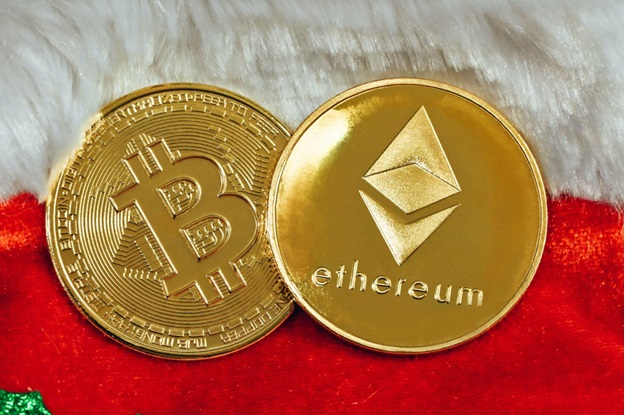
Meanwhile, Ethereum has taken the lead in investor preference. According to CoinShares, crypto inflows hit $2.48 billion last week, with Ethereum accounting for $1.4 billion far outpacing Bitcoin’s $748 million.

Monthly adjusted on-chain transfer volume surpassed $320 billion in August—the highest since May 2021 and the third-largest month on record, according to The Block.

In August alone, Ethereum attracted $3.95 billion, pushing monthly inflows to $4.37 billion and year-to-date totals to $35.5 billion. By contrast, Bitcoin saw net outflows of $301 million during the same period.

Corporate adoption has been a major driver. Public companies’ cumulative ETH holdings jumped from around $4 billion to over $12 billion in August, led by BitMine Immersion and SharpLink Gaming. At the same time, spot ETH ETF volumes surged, with inflows pushing ETFs to now hold more than 5% of Ethereum’s supply.

Notably, analysts interpret the massive inflow to Ether, as part of a “natural rotation” of capital out of Bitcoin and into altcoins. “A lot of this looks like investors locking in profits from Bitcoin’s run and moving into other tokens to catch potential upside,” said Nicolai Sondergaard, research analyst at Nansen.

Altcoins also benefited from optimism around potential U.S. ETF approvals, adding further support to selective growth in the broader digital asset market.

Looking ahead

Despite short-term headwinds for Bitcoin, renewed investor confidence led by Ethereum inflows signals that momentum across digital assets remains strong heading into the next phase of the market cycle.

5 Best Apps to Trade Vanilla Gift Cards for Cash in Nigeria

0

Vanilla gift cards are great for online shopping, subscriptions, and digital purchases, but sometimes cash is more useful. Many Nigerians find themselves stuck with unused cards, wondering where to exchange them safely without losing value.

The truth is, not every platform that claims to trade gift cards is trustworthy. Some offer poor rates, while others delay payments or fail to protect users.

That’s why choosing the right app matters if you want a smooth and secure experience. The good news is that there are reliable platforms where you can sell your Vanilla gift cards at fair rates and get your money fast.

In this article, we’ve put together the five best apps in Nigeria, trusted by thousands of users, so you know exactly where to trade your cards with confidence.

5 Best Platforms to Exchange Vanilla Gift Cards for Cash in Nigeria

Trading Vanilla Gift Cards for cash in Nigeria comes down to trust, good rates, and convenience. Below is a quick comparison of the five best platforms, such as Cardtonic, 1minutepay, SekiApp, FlipEx, and CardCash, based on their payout speed, exchange rates, ease of use, and Google Play Store reviews.

S/N Platform Payout speed Rates Ease of use Google Play Store Review
1 Cardtonic Very Fast Consistent Clean interface, smooth process 4.3 ? (18.9K reviews)
2 1minutepay Fast Fair Simple but limited features Not available
3 SekiApp Moderate Varies by card User-friendly mobile app 4.3 ? (302 reviews)
4 FlipEx Fast Competitive Smooth interface 4.3 ? (414 reviews)
5 Cardcash Fast Decent Easy to navigate Not available

1. Cardtonic:

Cardtonic is one of the most trusted platforms in Nigeria for trading Vanilla gift cards. Its rates are fair and consistent, so you always know exactly what you’re getting without surprises.

Another big advantage is speed. Transactions are processed within minutes, so you don’t have to wait long to receive your cash. On top of that, every trade earns you reward points that can be redeemed later, giving you extra value beyond your payout.
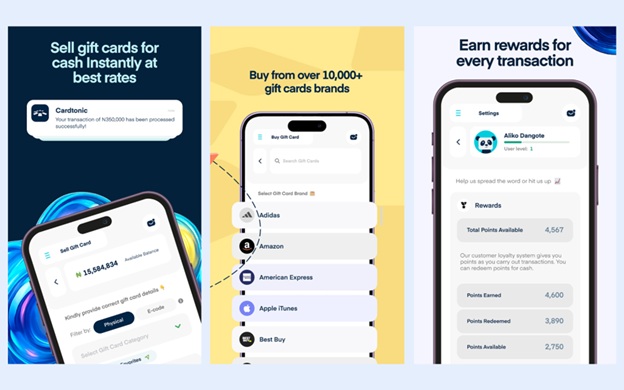
Cardtonic also runs a referral program that pays for life. When someone signs up with your code and starts trading, you earn 10% of their transaction reward points on every single trade they do. As long as they keep trading, your reward points keep stacking, which you can later redeem as cash in your wallet.

Security is another reason Cardtonic stands out. The platform prioritises safe transactions, ensuring your gift cards and money are protected at all times.

Getting started is simple. Download the Cardtonic app from the App Store or Google Play, sign up and verify your account, then select “Vanilla Gift Card” under trade options. Enter the card details, upload, and confirm. The process is beginner-friendly and only takes a few minutes.

2. 1minutepay:

1minutepay is another reliable option for trading Vanilla gift cards in Nigeria. The platform is known for quick payouts, with most transactions processed in a short time.
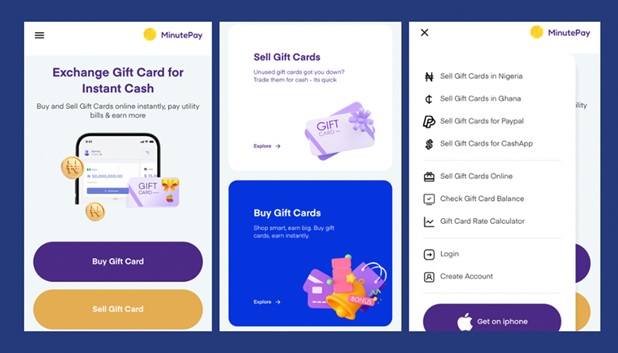
Its rates are fair, though not always as competitive as some alternatives. The app itself is simple and easy to use but comes with limited features, which may not appeal to users who want more flexibility.

However, for those who value speed and straightforward trading without too many extras, 1minutepay remains a good choice. Its reputation for delivering on promises has made it a trusted option for many users.

3. SekiApp:

SekiApp offers a user-friendly mobile app that makes trading Vanilla gift cards easy, even for beginners. Its design is simple to navigate, which helps new users get comfortable quickly.
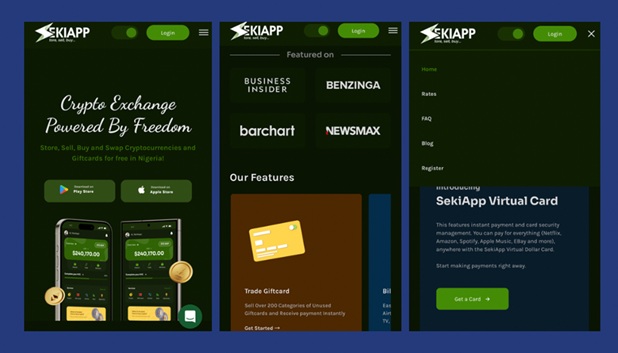
Payout speeds are moderate, so transactions may take a little longer compared to faster platforms. Rates also vary depending on the card type, which means you might not always get the same level of consistency.

Still, SekiApp strikes a balance between usability and reliability. For casual traders who want a smooth and straightforward experience, it’s a solid choice.

4. FlipEx:

FlipEx is a strong option for trading Vanilla gift cards in Nigeria, thanks to its competitive rates and quick payouts. Most trades are processed fast, giving users access to their cash without long delays.
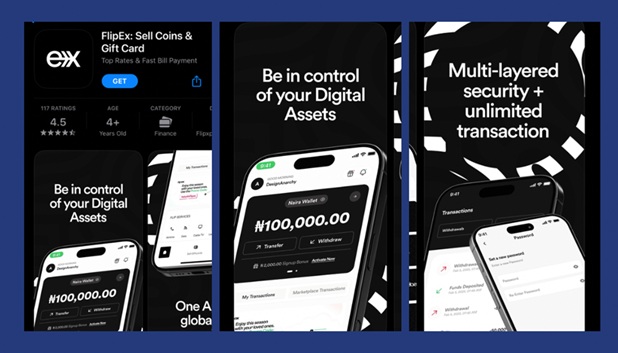
One standout feature is flexibility. FlipEx offers both a mobile app and a website, so you can trade whichever way feels more convenient. The interface is smooth, and customer support is available if you need assistance during a transaction.

Although it’s not as widely known as some bigger platforms, FlipEx has built a solid reputation for reliability. For users looking for fair rates and speed, it’s a dependable alternative.

5. CardCash:

CardCash is another dependable platform for trading Vanilla gift cards in Nigeria. It is known for fast payouts, so users do not have to wait long to receive their money after a trade.
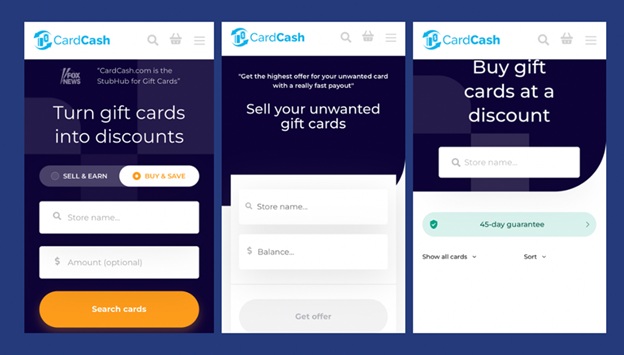
The rates are decent, although not always the highest compared to other apps. What makes CardCash appealing is its ease of use. The interface is simple to navigate, making it beginner-friendly for first-time traders.

With a smooth process and a strong reputation for reliability, CardCash is a solid option for anyone who wants quick and stress-free transactions.

Frequently Asked Questions About Trading Vanilla Gift Cards in Nigeria

  1. What is the Best App to Trade Vanilla Gift Cards for Cash in Nigeria?

The best app to trade Vanilla gift cards for cash in Nigeria is Cardtonic. The platform is fast, reliable, and secure, making it the top choice for anyone looking to trade gift cards in Nigeria.

  1. How Much is a $100 Vanilla Gift Card Worth in Nigeria?

The value of a $100 Vanilla gift card in Nigeria depends on the card type and the country of origin. On average, it ranges between ?8,000 and ?24,500. Physical cards usually sell higher than e-codes. For the most accurate value, check the Cardtonic rate calculator, which updates prices in real time.

  1. Is it Safe to Sell Vanilla Gift Cards Online in Nigeria?

Yes, it is safe to sell Vanilla gift cards online in Nigeria as long as you use a trusted and reliable platform. Always ensure you choose a service with good reviews, secure transactions, and prompt payments to protect yourself and enjoy a smooth experience.

  1. How Long Does it Take to Receive Cash After Trading a Vanilla Gift Card?

Payout time depends on the platform you use. Cardtonic is one of the fastest, with transactions completed in minutes. 1minutepay also pays quickly, while SekiApp and FlipEx may take slightly longer.

  1. Can I Trade Both Physical and E-code Vanilla Gift Cards in Nigeria?

Yes, you can trade both physical and e-code Vanilla gift cards in Nigeria. Both types are accepted, and the value you get will depend on the card category and the overall exchange rate at the time of trade.

Conclusion

Trading Vanilla gift cards in Nigeria is simple once you know the right platforms to use. Apps like Cardtonic, 1minutepay, SekiApp, FlipEx, and CardCash give you fast payouts, fair rates, and safe transactions, making the process stress-free.

Each platform has its strengths, but if you want consistent value, top security, and extra benefits like reward points and lifetime referral earnings, Cardtonic is the best place to start.