DD
MM
YYYY

PAGES

DD
MM
YYYY

spot_img

PAGES

Home Blog Page 6089

Tesla to Export Made-in-China Vehicles to Europe

0

Tesla announced on Monday it would begin to export its Model 3 cars from China to more than 10 countries in Europe this October, marking a major export from China since the US automaker opened its Shanghai factory last December.

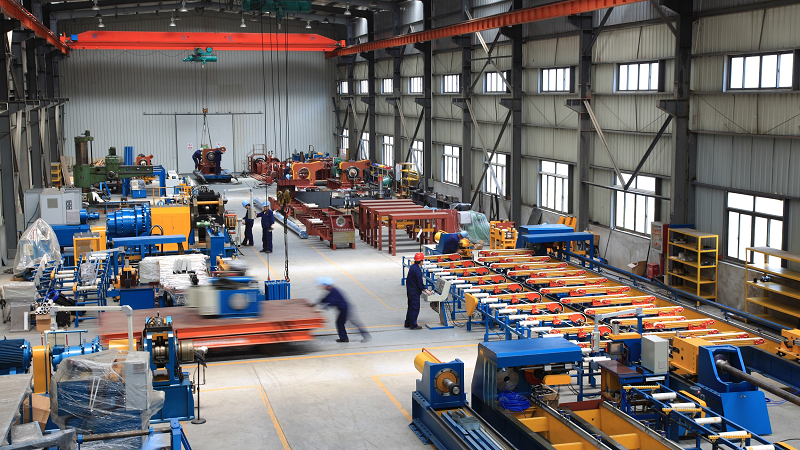
China is gradually becoming a major hub for carmakers, and many of them are planning to sell their made-in China cars beyond Chinese market.

German carmaker BMW is also preparing to export its electric iX3 model, produced at a joint venture plant in Shenyang, China, to Europe, while Daimler is shifting production of its Smart branded city cars to Hangzhou Bay, according to Reuters.

Statement from Tesla said the 10 European countries include Germany, France, Italy and Switzerland.

The Chinese government reviewed its automobile manufacturing policies in 2018, to allow foreign companies to build cars and export to other countries from China, and has gradually improved the policies to be more tolerant since then.
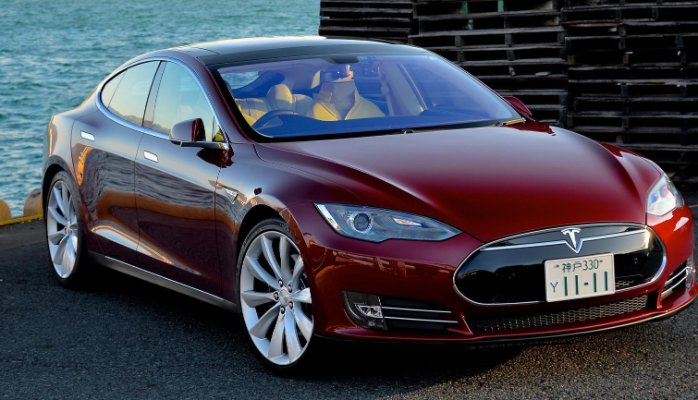
“Support from Chinese government towards the industry, innovative local companies and customers embracing new technologies make China the best market for smart electric vehicles,” Tesla said, adding that it would expand car production, charging and sales networks in China.

In 1994, China issued a policy for its Automotive Industry. The 1994 Auto Policy introduced restrictions on foreign automakers owning more than 50 percent in any Sino foreign joint venture and also limits the foreign automakers to no more than 2 joint ventures for any single type of vehicle in China. There was the 50% + 2 rule, which limited the existence of many foreign automakers.

For years, the 50% + 2 rules were considered a necessary policy to buy local automakers time to gain skills, master the technology, and build the brands that will allow them to compete; before international automakers would be given access to the Chinese market.

Chinese policies on auto-maker and foreign investment were gradually eased as the country attained its goals for the automotive industry.

For instance, in 1995, China introduced the “Foreign Investment Catalogue” which detailed the shareholding limitation on foreign automakers. Since then, the Foreign Investment Catalogue has been amended eight times to reflect China’s evolving views on foreign investment’s role in industrial policy.

Generally, the Chinese policy was considered successful. China gradually became the world largest automaker, a position it has held since 2009. Having achieved its objective to this degree, China has been relaxing its policy on the automotive industry.

In 2018, Chinese authorities jointly issued the Special Administrative Measures for Admittance of Foreign Investment (2018 Negative List). The 2018 Negative List confirmed the pledge to fully remove foreign investment ownership limits on the auto industry over a 5-year transition period.

The relaxation of this rule has enabled foreign companies such as Elon Musk’s Tesla, to establish vehicle manufacturing plants in China, especially for EVs (electric vehicles). And there have been more beneficiaries of the short term policy relaxation window.

Apart from the policy reforms, China introduced subsidies and tax waivers for car manufacturers, which reduced the cost of production and encouraged buyers to embrace the more environmental friendly electric vehicles.

Tesla has won a major automobile market share in China, selling more than 11,000 Model 3 cars last month. It is also expanding its production capacity in the South Asian country with a new factory in Shanghai, where it plans to build its Model Y sport-utility vehicles.

Outside China, the world’s most valuable automaker is also planning to build a factory in Berlin Germany. The German government begins to toe the path of China by introducing subsidies up to 9,000 euros for buyers of electric cars, including Tesla’s Model 3, according to Reuters.

Tesla has a production target of 150,000 vehicles this year from its Shanghai factory. More Western automakers, including those from the US, are preparing to establish in China, even as the tension between Washington and Beijing is escalating.

Police Brutality: A Reflection of True Nigerian Society

0

You don’t dare steal in Nigerian open markets. It’s not because you will be caught and disgraced, but because you are most likely going to get caught and lynched. Maybe not all the markets will kill suspects, but many do. Some will only beat the living daylight out of the person and hand him over to the police, while others will burn him alive. Many will claim they lynched the person because the police will release him, while others will say they wanted to teach the “thief” a lesson. No one will remember the law and its condemnation of extrajudicial killings (aka jungle justice).

I know some people will jump in and claim that jungle justice is meted out on “thieves”, “kidnappers”, “rapists” and so on because the police will collect bribes and let them go. I also know people will say something like, “These people have not done anything to you and that’s why you’re saying all these.” Well, it’s not about me or my experiences; it’s about our culture of disobedience to law, aggression and brutality.

A mother, whose son became unruly and talked back to her raised pestle and runs after the boy; please, what message is she exactly passing on to that child? A father, whose daughter told that the teacher punished her, decided to accompany her to school the following day so he can slap the teacher; please, what information is he passing on to the child and to the other children? That man, whose son complained about being bullied but decided to beat his son for being a weakling and instructed him to fight his bullies; please, what did he expect the child to become? You can fill the gaps but I believe we all get the message.

I know some people will ask what the relationship between police brutality and the few examples cited above is, but I believe they understood that Nigerians train their children to become violent. Apart from that, we train them to break the law. We also give them the impression that we, their parents, can kill them and nothing will happen, hence the mother pursuing her son with a pestle. So here are two messages the examples given above say about Nigerians: we are all above the law and we use brutality to control.

Bringing the above analogy to police brutality may be shady but I will try to make it as clear as possible. However, I think an excerpt from Twitter can paint this picture better.

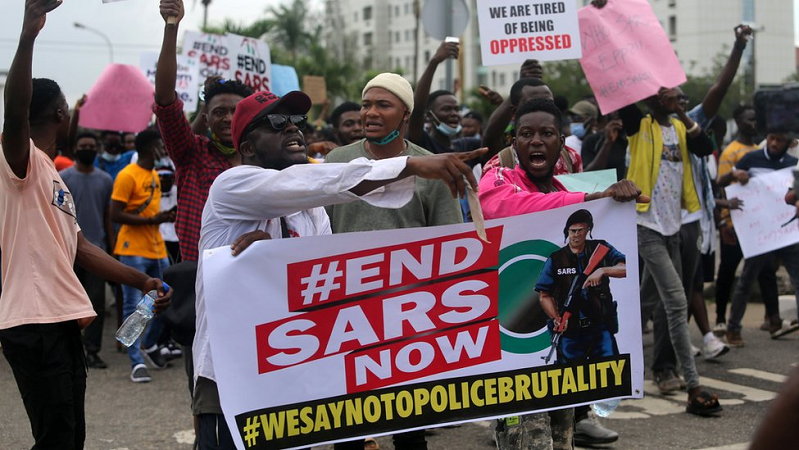
A Twitter user, Dr. Charles Omole, @DrCOmole, came up to voice his opinion concerning the causes of police brutality in Nigeria. In his tweet, he stated, “Many of those protesting SARS brutality are also first to beat and lynch suspected criminals in the public square. Jungle justice is an epidemic in Nigeria. The penchant for taking laws into their hands is not limited to SARS. We must examine ourselves and reform our thinking too.”

Of course you can imagine the type of response he will receive for being bold to make such a statement when a lot of people cowered and would not be honest with the underlying causes of our problems. But one comment from a very young Nigerian caught my attention. This young Twitter user wrote, “Pls how is brutalising innocent citizens the same as brutalising wicked criminals? SARS will hurt and probably kill someone for not giving up their rights. Have {you} seen armed robbers in action? So how can you even try to equate the two?” And so the very young Nigerian decides who should be lynched and who shouldn’t. And believe me, his mindset towards jungle justice was framed and solidified by his parents and the society.

Let’s be honest with ourselves; Nigerians are very aggressive. We treat the gentle in our community as weak. We undermine the authority of the Nigerian police unless it involves SARS. People started renting SARS officials for debt collection when they found out that’s the only police unit Nigerians fear. Even courts cannot instil discipline into Nigerians the way SARS does (no pun intended). We learn things the hard way and so we were hit the hard way.

Now, I am not in support of brutality, be it from the police or from anyone else, I am only saying that we have wired ourselves to be brutal and to only respond to issues when it becomes brutal. Unless we do things in the ideal way, police brutality will not end. We are just running around the vicious cycle. The police brutality is only reflecting the true Nigerian society.

China’s Economy Grew 4.9% in the Third Quarter, Beating IMF’s Forecast

0

China’s economy grew by 4.9 percent in the third quarter of the year compared to the same quarter in 2019, to mark a significant recovery from the plunge of COVID-19.

The economy recorded a 1.7 percent increase compared to the 3.2 percent growth the South Asian country recorded in the second quarter of the year, according to the data published by the National Bureau of Statistics (NBS) on Monday.

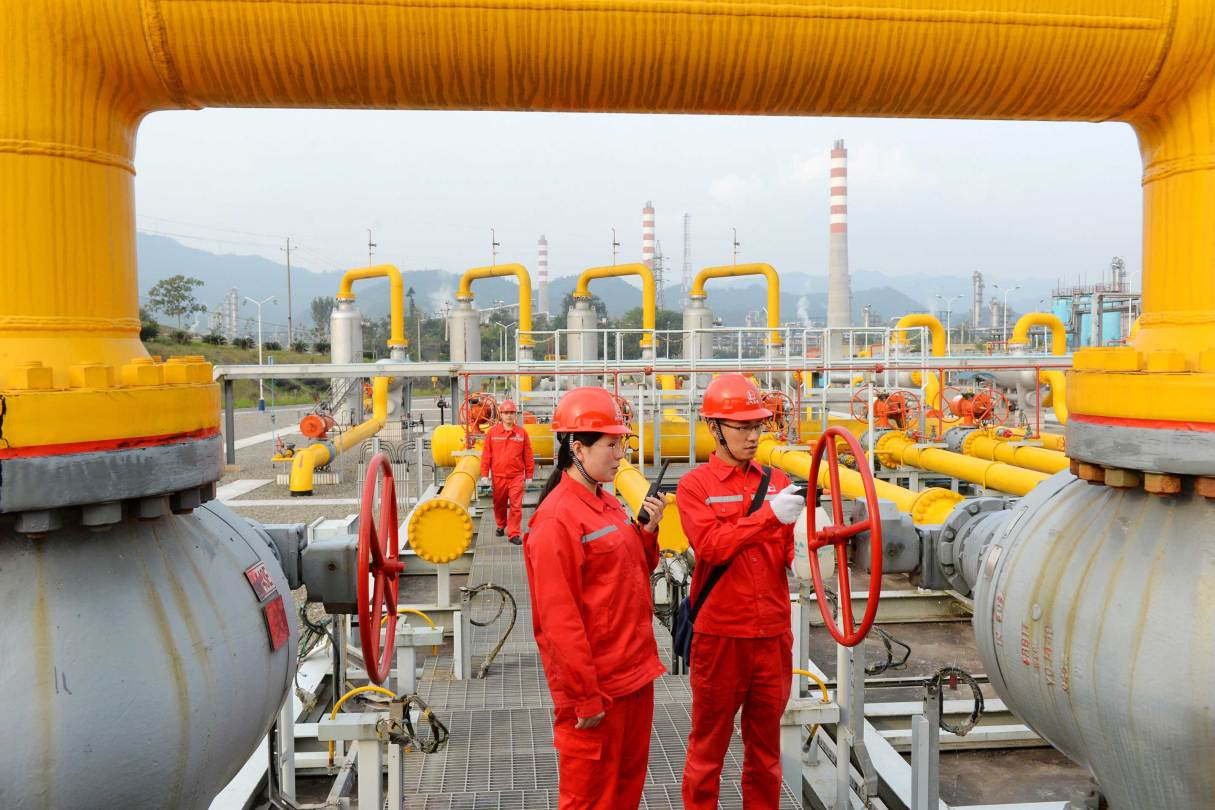
China was the foremost in reopening businesses after prolonged lockdowns aimed at curtailing the spread of coronavirus. The world’s second largest economy set on the path of recovery as local authorities gradually ease restrictions and allow factories and businesses to reopen.

The economy had contracted by 6.8 percent in the first quarter of the year, marking its official contraction since the end of Cultural Revolution in 1976.

“Year-on-year growth was up from 3.2 percent in quarter two, showing that the economic recovery from COVID-19 continues, led by strength in industry driven by robust investment and exports,” said Louis Kuijs, head of Asia economics at Oxford Economics. “But GDP growth was lower than our forecast of 5.3 percent year on year, reflecting slowing infrastructure investment growth and lingering softness in corporate investment and consumption.”

The NBS data noted key areas of the economy that yielded the growth, including export which rose above Bloomberg’s projection.

Industrial production, a gauge of activity in the manufacturing, mining and utilities sectors, grew by 6.9 percent in September from the past year following a 5.6 percent rise in August. That’s 1.1 percent increase above the 5.8 percent estimated by Bloomberg.

The NBS reported that retails’ sales as a key measurement of consumer spending, contributed to the growth as it recorded 3.3 percent rise to improve its August 0.5 percent increase, and beat the 1.7 percent projected by Bloomberg.

Retails recorded its first expansion in August this year, following improved consumer spending that beat other areas of the economy. The third quarter results indicate momentous spending and increase in importation. According to data published by China’s Custom last month, imports rise 13.2 percent in September compared to the same quarter last year. The increase means inbound shipments went up to an all-time high of $203 billion.

Another sector, fixed-asset investment, a gauge of spending on infrastructure, property, machinery and equipment, rose by 0.8 percent in September, indicating an increase from 0.3 percent plunge in the previous months of the year. It’s the sector’s first record of growth in nine months.

The surveyed urban jobless rate was down from the peak of 6.2 percent in February and 5.6 percent in August to 5.4 percent in August.

SCMP reported that the Chinese government has set a target of creating 9 million new urban jobs in 2020, 2 million less than the 2019 target, and maintaining a surveyed urban unemployment rate around 6 percent, compared with 5.5 percent last year. China created 13.52 million new urban jobs in 2019, beating its 11 million target.

However, the report indicated that the surveyed urban jobs do not represent the entire unemployment situation in China, as it excludes millions of migrant workers.

China has managed to remerge from the ravages of the pandemic to surprisingly beat economics projections. Last week, the International Monetary Fund (IMF), said the world’s most populous country’s economy will grow by 1.9 percent this year, trumping its earlier forecast in June by 0.9 percent, and making China the only G20 economy with a positive economic estimate.

Premier Li Keqiang had said at the National People’s Congress in May that China will not set an economic growth target this year, according to SCMP. But China’s central bank governor said Yi Gang said the economy will grow by about 2 percent in 2020.

“I think the accumulative growth for the first three quarters of this year will be positive… for the whole year; we predict China GDP growth of around 2 percent.

“The Chinese economy remains resilient with great potential. Continued recovery is anticipated, which will benefit the global recovery,” Yi said.

The IMF’s World Economic Outlook estimated that the global economy will contract by 4.4 percent this year – more favorable than the 4.9 percent decline it had forecasted in June. The 2021 growth is expected to yield 5.2 percent rebound, or 0.2 percentage points lower than June’s estimate.

The adjustments in June’s forecast figures are mainly as a result of the rebound in China’s economy. With the US and Europe still battling with coronavirus and counting on vaccines, China leads the global economy with the gains from its re-emerging sectors.

Trump Shares America’s TraderMoni, FarmerMoni as Election Draws Closer

0

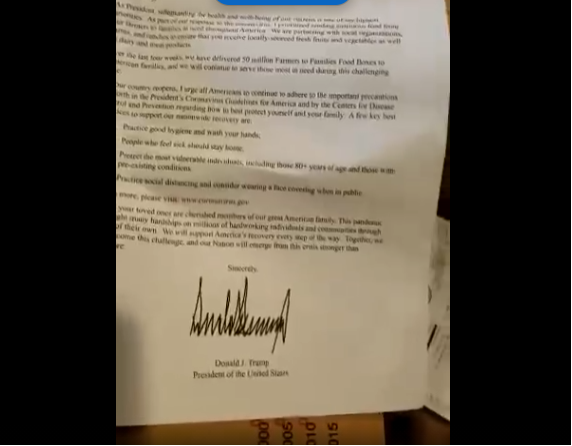
I do not know the family in this video. But as Nov 3 arrives for the U.S. election, I have just realized that Nigeria and America are united by one thing: politicians are funny. In the video, a letter signed by Trump was dropped in a free food basket given to churches to distribute. That is America’s TraderMoni, FarmerMoni, and all those vote-inducing schemes APC (and PDP with different names during their time) used to rig elections of the minds in Nigeria.

But as that happens, I respect the American political system. These guys have modelled my family very well. My wife, Ifeoma, gets a different messaging from what they send to me. They show her pictures of kids and schools; mine is about making things easier to grow a business. Yes, even in the same house, they are able to ultra-target the messaging.

This is an election built on data. They have gotten really close!

Sweden Kicks Huawei and ZTE Out of Its 5G Roll Out

0

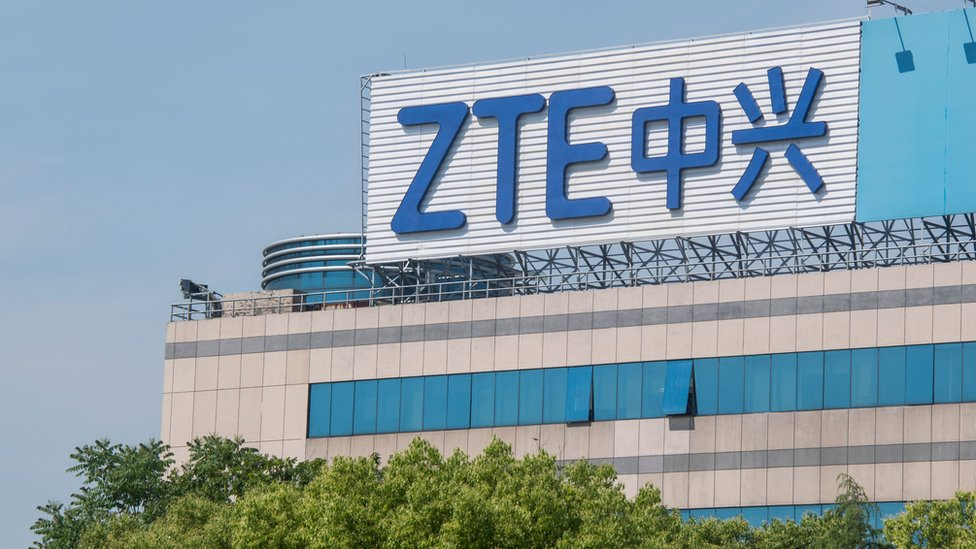
Sweden has become the latest country to ban the use of Huawei equipment for 5G roll out. The European country announced the decision on Tuesday after consultation with its security services.

“In accordance with new legislation, which entered into force on 1 January 2020, an examination of applications has been conducted in consultation with the Swedish Armed Forces and the Swedish Security Service, to ensure that the use of radio equipment in these bands does not cause harm to Sweden’s security.

“New installations and new implementation of central functions for the radio use in the frequency bands must not be carried out with products from suppliers Huawei or ZTE. If existing infrastructure for central functions is to be used to provide services in the concerned frequency bands, products from Huawei and ZTE must be phased out 1 January 2025 at the latest,” the Swedish Post and Telecom Authority (PTS) said in a statement.

Security concerns over the use of Huawei’s 5G infrastructure has been gaining momentum in Europe, following US pressure.

In January, Sweden enacted a law to protect its communication from security breaches. Under that law, a radio license holder must take technical and organizational actions to ensure that the use of the radio does not cause breach of Sweden’s security. Based on national security concerns that have forced many nations to sever ties with Huawei, Sweden can’t guarantee that the embattled Chinese company can be trusted to keep the law.

Sweden’s security service called China “one of the biggest threats against Sweden”.

The development followed London’s decision to oust Huawei from its 5G infrastructure in July. Belgium also announced the ban of Huawei from its 5G deployment earlier this month. The decisions however, may result in slower and higher costs of 5G roll out in Europe, and risk a possible backlash from China who has been fighting to protect Huawei’s global 5G leadership.

“The ban leaves network operators with less options and risks slowing the rollout of 5G in markets where competitions is reduced,” said Ben Wood, chief of research at CCS Insight.

Chinese government may target European commodities in retaliation, especially now that the EU is seeking bilateral partnership to overcome the economic strains of the coronavirus pandemic.

“It could be that some of the European vendors will sell less in China going forward if the Chinese are selling less in Europe going forward,” said Kjell Johnsen, CEO of Swedish-based telecom operator Tele2 in a post-earnings conference call.

The bans on Huawei have placed Finish Nokia and Swedish Ericsson in a lucrative position as their participation in the 5G roll out has increased significantly in the past few months.

The PTS approved the participation of Sweden’s Hi3G Access, Net4Mobility, Telia Sverige and Teracom in the planned spectrum auction of 3.5 GHZ and 2.3 GHz, key bands crucial for the roll out of 5G.

Tele2 and Telenor will participate together as Net4Mobility to secure spectrum for a joint nationwide 5G network.

Tele2 uses Huawei equipment but said, according to Reuters, “that the decision of PTS will not change our plan substantially”.

“Many operators have already proven that when they rip and replace Chinese equipment, it doesn’t have a negative impact on their capital spending,” said John Strand, and industry consultant.

Among the European countries facing the decision to axe Huawei, Germany has been dragging its feet in fear of ruining its chances of developing new business relationships with China.

The WSJ reported in July that China is considering retaliating against European telecom companies, Nokia and Ericsson if the European Union follows the United States and Britain in banning Huawei.

China’s Ministry of Commerce is looking into export controls that would prevent Nokia and Ericsson from sending products it makes in China to other countries, according to the report.

Germany is in economic talks with China aimed at revamping its economy plummeted by the COVID-19 pandemic. The European economic power is wary that any move to disengage Huawei will affect its chances of securing a deal with the world’s second largest economy.

Sweden appears to have little to lose as Ericsson is positioning itself as a gainer of increasing Huawei’s fallouts with many countries. But while some European countries have insouciantly followed the steps of the United States in axing Huawei, others are carefully trying to avoid picking the axe in fear of retaliation from China.