DD
MM
YYYY

PAGES

DD
MM
YYYY

spot_img

PAGES

Home Blog Page 61

Mono Protocol Pushes Toward Stage 19 Completion as Demand for Simpler Web3 Tools Grows

0

Interest in infrastructure-driven crypto presales continues rising as users look for tools that remove the friction of traditional multi-chain workflows. Many newcomers still struggle with wallets, routing issues, network switching, and unfamiliar gas mechanics, creating a gap between Web3’s potential and actual usability. Mono Protocol is stepping directly into that gap, offering one of the best crypto presale options by reshaping how users interact with blockchain networks.

This shift comes at a time when the market is increasingly favoring projects with real utility instead of speculative narratives. Investors are focusing on platforms that solve measurable problems and lay the foundation for long-term adoption. Mono’s approach of turning fragmented chains into a unified environment positions it strongly within current cryptocurrency presales.

Stage 19 Approaches Completion With Steady Participation

The MONO token presale is nearing the end of Stage 19, priced at $0.0550, with $3.73M already raised toward the $3.80M milestone. The structured raise has kept participation consistent as users seek early exposure to platforms capable of simplifying cross-chain activity. This transparent progression continues strengthening confidence across the broader presale crypto market.

Clear updates from the team, including technical improvements and dashboard refinements, have contributed to stable demand throughout the stage. Investors monitoring top crypto presale opportunities often look for consistent development over hype-driven surges. Mono’s steady, methodical advancement aligns well with that preference, pushing participation higher as each milestone approaches.

Unified Balances Reinvent How Users Move Across Chains

Mono Protocol’s core feature—a single balance per token across all supported networks—is resonating strongly with early adopters. Instead of switching chains or hunting for the correct token instance, users interact with one synchronized balance that works everywhere. This eliminates the manual processes that complicate most Web3 experiences and sets Mono apart from other presale cryptocurrency projects.

A unified balance system also reduces failed transfers, incorrect network selections, and user-side mistakes. These are common problems that discourage new participants and create inefficiencies for experienced users. By presenting clean execution that behaves the same across chains, Mono delivers the simplicity Web3 has been missing.

Routing Intelligence Delivers Reliable Execution

Behind the scenes, Mono’s routing engine evaluates conditions across multiple networks to find the optimal execution path. This prevents congestion-related failures and helps transactions settle consistently even during volatile periods. Few crypto presales in 2025 offer this level of automation, making Mono’s approach attractive for both users and developers.

Stable routing is becoming a key requirement for cross-chain activity as more applications span multiple networks. Mono’s ability to handle these complexities internally gives it a long-term advantage compared to projects relying on external bridges or manual routing. This reliability strengthens its standing within top crypto presale discussions centered on infrastructure resilience.

Why Mono Protocol Is Gaining Momentum in the Presale Market

Investors tracking the best crypto presale options are increasingly prioritizing platforms with technical depth and clear solutions to existing problems. Mono Protocol’s architecture directly addresses fragmentation, user confusion, and network instability—issues that have slowed Web3 growth for years. As blockchain ecosystems become more interconnected, tools that simplify participation will attract larger audiences.

With Stage 19 closing in on its target, Mono is positioned to continue building momentum into the next phase of its raise. Its combination of chain abstraction, unified balances, and automated execution has secured its place among the most closely followed cryptocurrency presales of the year.


Learn More about Mono Protocol

Website: https://www.monoprotocol.com/

X: https://x.com/mono_protocol

Telegram: https://t.me/monoprotocol_official
LinkedIn: https://www.linkedin.com/company/monoprotocol/

Cloudflare Outage Questions How Truly Crypto Rails Are Decentralized

0

A brief but widespread Cloudflare outage struck early this morning starting around 8:56 UTC, causing “500 internal server errors” that rippled across the internet. It lasted roughly 20-40 minutes before a fix was deployed, and services are now stabilizing.

Cloudflare’s status page confirms the issue affected their Dashboard and APIs, leading to failed requests for many customers. No evidence of a cyberattack; it stemmed from an internal glitch during scheduled maintenance in data centers like Chicago and Detroit, compounded by a recent change to disable some logging aimed at mitigating a React CVE vulnerability.

Impact on Crypto Apps and Exchanges

Crypto wasn’t the only victim—LinkedIn, Shopify, Canva, Zoom, and even Downdetector itself went dark temporarily—but the sector felt it acutely due to heavy reliance on Cloudflare for traffic routing, security, and API calls.

Coinbase: Login failures and app crashes; users couldn’t access trades or wallets.

Kraken: Partial downtime, with withdrawal and margin functions frozen.

Upbit: Full outage for Korean users, halting trading during peak hours.

Uniswap and other DeFi protocols: Interface loading errors; some couldn’t connect wallets or execute swaps. OpenSea: NFT marketplace inaccessible, blocking buys/sells.

Indian platforms like Zerodha and Groww saw trading halts, amplifying financial losses in active markets. This echoes a larger November 18 outage that also hammered crypto like Arbiscan, DeFiLlama, sparking debates on X about “decentralization” being more hype than reality when front-ends lean on centralized infra like Cloudflare.

DeFi protocols being inaccessible during a Cloudflare outage should not be able to label their protocol as decentralized. Cloudflare outage underway and it’s taking crypto with it… Massive disruption across the board.

By ~9:20 UTC, the root cause was addressed, and sites began recovering. They’re actively watching for aftershocks, with a full post-mortem blog post promised soon. This is the second major hiccup in weeks, raising red flags on single-provider risks.

Cloudflare powers ~20% of the web, so even short blips can cost millions in lost trades like slippage in volatile crypto markets. Crypto infrastructure is much less decentralized than most people think—and Cloudflare outages are the perfect litmus test.

Actual dependency on Cloudflare / centralized points. Infura, Alchemy, QuickNode, Ankr all route through Cloudflare for many chains. Etherscan, BscScan, Arbiscan, Polygonscan ? all behind Cloudflare.

Uniswap.app, Aave.app, OpenSea, Blur, etc. ? nearly all on Cloudflare, graph.network and hosted service still hit by Cloudflare DNS/CDN Chainlink website and some node operators use Cloudflare.

Nearly every major bridge UI (Hop, Synapse, Stargate) ? Cloudflare. Real-world proof points to June 2022 Cloudflare outage ? Uniswap, Discord, and half of DeFi front-ends died while the actual Ethereum blockchain kept running perfectly.

November 18, 2025 outage ? Same story: blockchain fine, front-ends and explorers 100% down. December 5, 2025 ? Third time in six months. The irony in numbers~80–90 % of all DeFi and NFT volume goes through interfaces that die the moment Cloudflare hiccups.

Even “decentralized” front-ends hosted on IPFS still usually resolve DNS through Cloudflare or use Cloudflare gateways. Projects that actually survive Cloudflare outages very few, but they exist. Raw IPFS hashes (ipfs://…) or ENS contenthash pointing directly to IPFS

Some die-hard projects like older versions of dYdX, GMX still work via direct node connection. The blockchain layer is genuinely decentralized. The user-facing internet layer is often more centralized than traditional finance websites.

Until most major dApps move their front-ends to truly decentralized hosting IPFS + ENS contenthash + no Cloudflare DNS/CDN/gateway, every few months we’ll keep getting the same wake-up call:

“Decentralized finance” currently runs on a single company in San Francisco that can accidentally or deliberately turn off half the ecosystem with one bad config change.

That’s the state of crypto infrastructure in 2025—decentralized where it matters most but still painfully centralized where users actually touch it.


World Liberty Financial to Roll Out Suite for RWA Products in 2026

0

According to a Reuters report published today, World Liberty Financial (WLFI)—the crypto venture backed by U.S. President Donald Trump’s family—will launch its suite of real-world asset (RWA) products at the beginning of the first quarter of 2026, which aligns with January.

WLFI co-founder and CEO Zach Witkoff announced this during an event in Dubai, highlighting the project’s focus on tokenizing commodities like oil, gas, and timber for on-chain trading, integrated with its USD1 stablecoin.

This builds on WLFI’s broader 2026 roadmap, which includes a debit card pilot for bridging crypto spending with everyday transactions targeted for Q4 2025 or Q1 2026 and expanding its stablecoin across chains like Aptos.

The RWA push positions WLFI in a fast-growing sector: tokenized real-world assets have a current market cap of around $26 billion, with projections reaching $16 trillion by 2030 due to demand for fractional ownership and liquidity in traditional assets like real estate and commodities.

While the Trump affiliation boosts visibility, it also raises potential regulatory questions in a shifting U.S. landscape. The news is already generating buzz on X, with users calling it “bullish” for $WLFI and speculating on 2026 upside.

While WLFI’s political ties drive hype, no paid KOLs, organic presale buzz, risks include regulatory scrutiny like SEC proposals for RWA exchanges and volatility in tokenized assets. Institutional momentum and ecosystem tools like debit cards could push $WLFI to $0.20+ short-term.

Long-term, WLFI could capture 0.1% of RWAs ~$400B value, implying $100–$250/token valuations. WLFI’s ecosystem includes over $3 billion in market capitalization for its native token ($WLFI) and a stablecoin ($USD1) with $2.98 billion in circulation, making it one of the top stablecoins globally.

The project’s tokenization efforts are positioned as a core pillar, targeting explosive growth in the RWA sector, projected to reach $16 trillion by 2030. WLFI operates a dual-token model designed for stability, governance, and utility. $USD1 Stablecoin: A U.S. dollar-pegged asset backed by U.S. Treasuries, cash equivalents, and real-world reserves.

Custodied by BitGo, it facilitates cross-border payments, DeFi lending, and RWA collateralization. Recent integrations include a $2 billion Binance investment in Abu Dhabi and partnerships with Plume Network using $USD1 as a reserve for pUSD and Mantle. Daily trading volume exceeds $391 million.

WLFI’s RWA framework tokenizes illiquid, high-value assets into blockchain-based digital tokens, enabling fractional ownership, 24/7 trading, and liquidity. The process leverages blockchain for transparency, smart contracts for automated settlement, and $USD1 for price stability.

Focus on commodities like oil, gas, cotton, timber, real estate like the Trump Organization properties, U.S. Treasuries, and carbon credits. Partnerships ensure compliance: Ondo Finance for tokenized yields, JPMorgan/S&P Global for carbon credit pilots, and Plume Network for institutional-grade vaults.

Assets are audited off-chain via legal frameworks like Hong Kong’s LEAP for digital assets and represented on-chain using EVM-compatible chains like Ethereum, Solana, Base. High-value assets are split into tokens for retail access, reducing entry barriers.

Tokens pair with $USD1 for lending, margin trading, and yield farming. Interoperability via Chainlink’s CCIP enables cross-chain use. Modular architecture includes vaults for staking $USD1 into yield-bearing tokens, with regulatory nods.

Protocol revenue from fees funds $WLFI burns, creating deflationary pressure. Institutional integrations like Hut8 treasury reserves at $0.25/token boost adoption. Supports tokenized settlement for derivatives, equities, and deposits, targeting a $400–$500 trillion tokenizable market.

WLFI co-founder Zach Witkoff announced at Binance’s Dubai event that the RWA suite will debut in January 2026—one of three “bombshell” updates. This includes tokenized commodities paired with $USD1 for on-chain trading, timed with RWA market growth which bolster billions in tokenized treasuries.

Institutional momentum — BlackRock rivals and ecosystem tools like debit cards could push $WLFI to $0.20+ short-term. Long-term, WLFI could capture 0.1% of RWAs $400B value, implying $100–$250/token valuations.


Ethereum’s Fusaka Upgrade Goes Live Amid Predict.fun Launch on BNB Chain

0

Ethereum’s latest hard fork, the Fusaka upgrade, activated successfully on the mainnet yesterday at block height 18,200,000 around 21:50 UTC on December 3, 2025.

This marks the network’s second major upgrade in 2025, following the Pectra fork in May, and kicks off Ethereum’s new biannual hard fork cadence—aiming for releases every six months to accelerate development without compromising stability.

Named after a blend of “Fulu” (consensus layer, after a star) and “Osaka” (execution layer, nodding to Devcon 2025’s host city), Fusaka focuses on backend enhancements to supercharge scalability, efficiency, and decentralization.

This is the star of the show. It allows nodes to sample and verify only portions of large data blobs used by Layer 2 rollups like Arbitrum and Optimist instead of downloading everything.

Dramatically reduced node storage and bandwidth needs, enabling Ethereum to handle way more data—paving the way for 100,000+ TPS in the future. It’s a crucial step toward “sharding” without full sharding, as Vitalik Buterin noted.

Since the Dencun upgrade in 2024, blob base fees were stuck near zero (1 wei), creating an unsustainable subsidy for L2s. Fusaka introduces a minimum base fee to stabilize costs and prevent spikes during high gas periods.

The gas limit doubles to 60 million per block, adding more “highway lanes” for transactions and easing congestion. L2 fees could drop another 10x, making DeFi, NFTs, and dApps even cheaper.

Security and UX Tweaks: Adds native support for secp256r1 precompiles for better Web2 wallet compatibility, plus BLS12-377 curves for smoother zero-knowledge proofs. It also includes passkey support for easier mobile sign-ins and minor EVM optimizations like enhanced object formats for cheaper, safer smart contracts.

The upgrade rolled out smoothly across testnets (Holesky, Sepolia, Hoodi) and clients, with only a minor hiccup on Prysm quickly resolved by the multi-client architecture—proof that Ethereum’s decentralization holds up.

No disruptions to dApps or users reported. ETH surged ~6-8% post-activation, breaking $3,200 for the first time in weeks and reclaiming the key $3,000 support level amid broader market recovery. Volume spiked, with analysts calling it a “supply crunch” catalyst due to increased L2 activity and ETH burns from stable fees.

Experts like Alchemy’s CTO Guillaume Poncin say it “alters rollup economics” and strengthens Ethereum as the settlement layer. Long-term, it boosts institutional appeal—ETH ETFs saw fresh inflows, and it’s a green light for 2026’s Glamsterdam fork targeting 6-second blocks.

Traders are eyeing parabolic runs like past upgrades, and devs highlight how it unlocks ZK-provable giga-gas blocks. Fusaka’s blob targets ramp up to 10 on Dec 9 and 14 on Jan 7 for even more capacity.

Predict.fun Launches on BNB Chain

Hot on Ethereum’s heels, BNB Chain welcomed Predict.fun today—a fresh on-chain prediction market that’s already turning heads, thanks to a shoutout from Binance founder CZ Changpeng Zhao.

Built by a former Binance researcher and incubated/invested by CZ’s YZi Labs, it launched with a killer hook: Your staked funds earn yield while your predictions are open, ditching the “idle capital” trap that plagues rivals like Polymarket or Kalshi.

CZ’s X post welcomed it as a BNB-native play, with a cheeky disclaimer: ” Not an endorsement, but the founder’s ex-Binance… and it generates yield.” Bet on crypto events, sports, politics, or pop culture by buying/selling outcome shares prices fluctuate with crowd wisdom.

Unlike traditional markets, your locked BNB/USDT doesn’t rot—it auto-stakes for passive income via DeFi protocols. Think Polymarket meets yield farming, all fully on-chain for transparency.

Over 12,000 users, ~300,000 bets placed, and $300K in volume across two active markets so far. It’s small fry next to Polymarket’s $3B+ or Kalshi’s $587M, but BNB Chain’s ecosystem gives it legs—leading all chains in active wallets nearly doubled YoY and snagging 25% of on-chain tx volume.

Yield solves the “capital inefficiency” gripe—users hate tying up funds for weeks without returns. It taps BNB’s fast, cheap infra for seamless mobile UX they ran a “Skip the Queue” beta for early adopters. Limited stablecoin liquidity on BNB could cap growth, but analysts bet on quick scaling via user incentives and ecosystem integrations.

Degens are calling it a “DeFi twist on Polymarket,” with rotations into BNB pairs on exchanges like BingX. As prediction markets boom fueled by U.S. regulatory scrutiny on Kalshi and Fanatics’ Crypto.com tie-up, Predict.fun positions BNB as a hub for real-world utility.

Nvidia Servers Boost Performance of Chinese and Global AI Models Tenfold

0

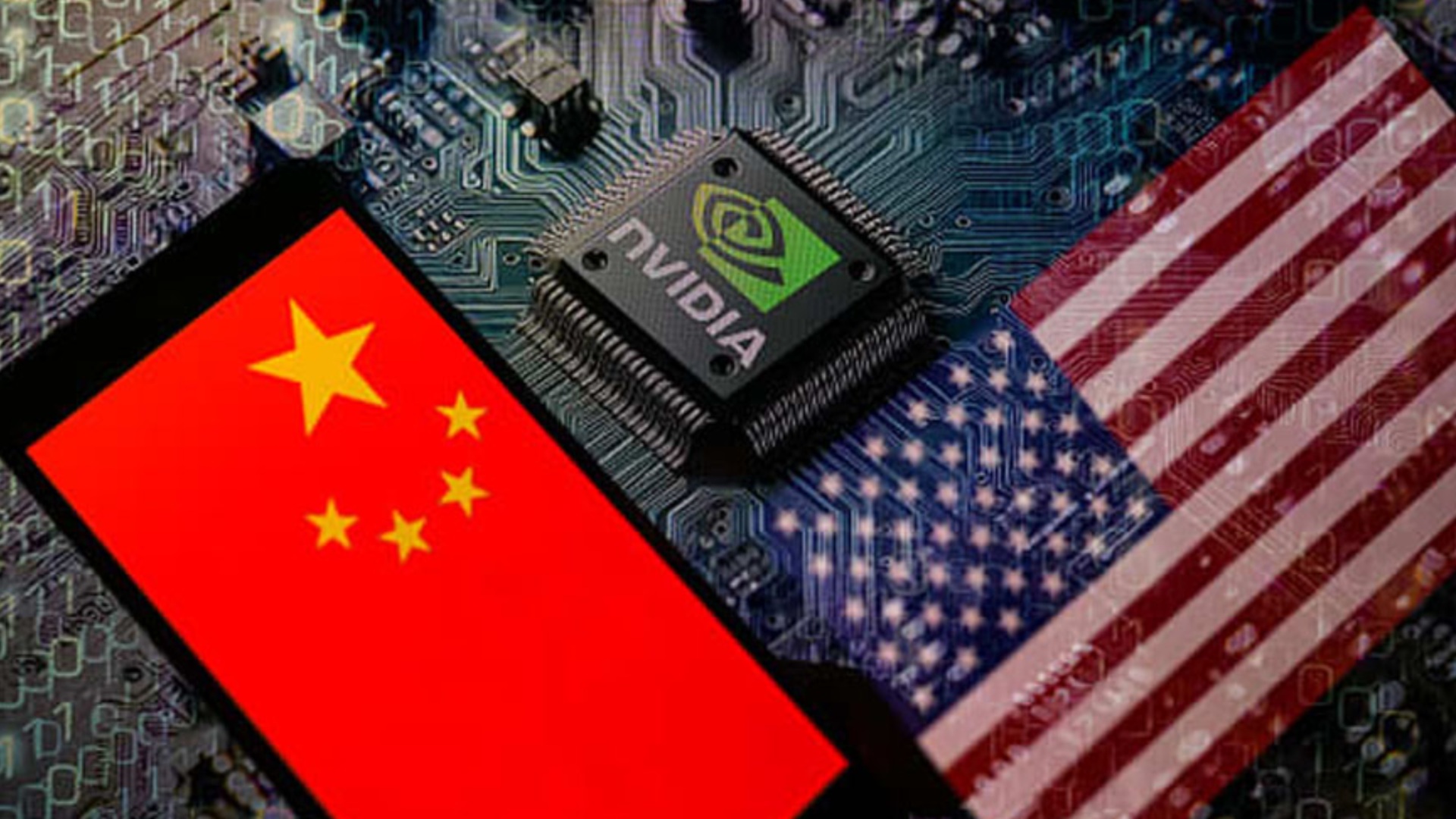
Nvidia on Wednesday released new performance data showing that its newest artificial intelligence server can accelerate the deployment of emerging AI models—including two of China’s most widely used mixture-of-experts systems—by as much as ten times.

The announcement marks another attempt by the company to defend its central role in an industry that is quickly moving from model training to mass-scale usage, an area where Nvidia faces a tougher competitive field.

The company’s findings land at a pivotal moment. For years, Nvidia reigned over the training phase of AI development, supplying hardware that powered nearly every major breakthrough across U.S., European, and Chinese labs. But as AI companies now shift their emphasis to serving models to millions of users, the dynamics have changed. The serving layer is far more cost-sensitive, and rivals such as AMD and Cerebras are positioning themselves aggressively with hardware designed to undercut Nvidia’s dominance.

Nvidia’s latest data centers on mixture-of-experts models, an approach that assigns different segments of a prompt to specialized “experts” within the system. The architecture surged into prominence earlier this year after China’s DeepSeek released an open-source model that stunned global researchers with strong performance, modest training demands, and heavy use of Nvidia hardware. DeepSeek’s ability to push its model to the top of global benchmarks without the massive compute spending seen at U.S. labs reshaped conversations about efficiency.

Since then, the mixture-of-experts race has widened. OpenAI integrated the technique into its newer ChatGPT systems. France’s Mistral adopted it in its own high-performance open-source releases. China’s Moonshot AI—one of the country’s fastest-rising AI firms—entered the field in July with its Kimi K2 Thinking model, which quickly climbed global rankings and drew attention for its ability to scale with lower costs.

Nvidia’s goal is to show that even if mixture-of-experts models reduce the need for training runs, its hardware remains essential once the models go into daily use. On Wednesday, the company said its latest AI server, which combines seventy-two of its top chips into a single system connected by high-speed links, improved the inference performance of Moonshot’s Kimi K2 Thinking model by ten times compared with the previous generation of Nvidia servers. The company has seen similar gains on DeepSeek’s models.

Nvidia attributes the leap to two advantages: the ability to cluster a large number of high-end chips into a single machine, and the ultra-fast interconnects that tie them together. These internal networking features remain areas where the company leads its rivals, especially in systems built for inference at scale.

The shift from training to real-world usage has sharpened interest in these performance claims. Serving models to millions of daily users requires hardware that can guarantee low latency, high throughput, and consistent uptime. It also demands energy efficiency, because power costs rise exponentially as usage expands. Nvidia is wagering that its server architecture will help AI companies meet those challenges without needing to redesign or retrain models for alternative hardware.

Meanwhile, AMD is preparing its own competing server built around clusters of its newest AI chips. The company has said its system will debut next year, and analysts expect AMD to push hard on price competitiveness and interoperability with existing enterprise infrastructure. Cerebras is also expanding its footprint with wafer-scale chips that pitch themselves as simpler alternatives for developers managing large workloads.

The broader question borders on how Nvidia will maintain momentum in a market that is no longer defined solely by training. DeepSeek’s rise underscored how quickly the competitive map can change, and China’s AI ecosystem continues to produce open-source models that spread globally within days of release. At the same time, U.S. and European labs are building mixture-of-experts systems that are far cheaper to scale than older transformer-based models.