DD
MM
YYYY

PAGES

DD
MM
YYYY

spot_img

PAGES

Home Blog Page 612

Meta’s $14.3 Billion AI Gamble Shows Early Cracks, Drawing Parallels to Failed Metaverse Bet

0

Meta’s aggressive push into artificial intelligence, anchored by its $14.3 billion investment in data-labeling startup Scale AI, is showing signs of strain only months after the deal.

What was billed as the cornerstone of CEO Mark Zuckerberg’s campaign to position Meta at the forefront of AI superintelligence now risks becoming another costly experiment, with some analysts warning it could mirror the company’s ill-fated metaverse adventure.

According to TechCrunch, Ruben Mayer, a former Scale AI executive tapped to help establish Meta Superintelligence Labs (MSL), left the company after just two months. His departure adds to a string of talent shakeups inside MSL, where Meta has struggled to integrate high-profile recruits from OpenAI, DeepMind, and Scale AI itself.

Even more troubling, multiple people familiar with the company’s operations told TechCrunch that Meta’s own researchers are increasingly bypassing Scale AI’s data, despite the multibillion-dollar tie-up. Instead, they are turning to competitors Mercor and Surge, whose higher-cost, higher-quality annotation systems are seen as better suited to training advanced AI models.

One insider told TechCrunch that several researchers view Scale’s data as low quality, and there’s been a clear preference for other vendors.

A Fraying Partnership

Meta initially touted its investment as a way to expand its commercial relationship with Scale AI while also luring CEO Alexandr Wang and his top executives into leadership roles at MSL. The hope was that Wang’s track record and network would help Meta attract AI talent at the pace needed to catch up with OpenAI and Google.

But the relationship has shifted rapidly. After Meta’s deal, Google and OpenAI cut ties with Scale AI, and the startup soon laid off 200 workers in its labeling division. Scale’s new chief executive, Jason Droege, has tried to pivot the business toward government contracts, securing a $99 million deal with the U.S. Army.

For Meta, the pivot raises doubts about whether the enormous outlay will deliver the quality data pipeline it desperately needs. Some suggest that Meta has put billions behind a vendor that many of its own researchers don’t want to use.

Internal Chaos

The upheaval comes at a sensitive time. Zuckerberg has grown frustrated with the company’s AI output after the underwhelming release of Llama 4 in April. That disappointment set off a scramble: Meta expanded partnerships with AI voice and image startups, announced a $50 billion Hyperion data center in Louisiana, and stepped up hiring raids on OpenAI and Anthropic.

Yet the influx of new talent has bred tensions. Several recent hires from OpenAI have already quit, citing Meta’s heavy bureaucracy. Longtime staff from its generative AI unit have also departed, feeling sidelined by the new structure. Among the latest to leave was Rishabh Agarwal, a researcher who posted on X that while the vision for superintelligence was compelling, “the biggest risk you can take is not taking any risk.”

“The pitch from Mark and @alexandr_wang to build in the Superintelligence team was incredibly compelling,” said Agarwal. “But I ultimately choose to follow Mark’s own advice: ‘In a world that’s changing so fast, the biggest risk you can take is not taking any risk’.”

Director of product management for generative AI, Chaya Nayak, and engineer Rohan Varma also announced departures in recent weeks.

Déjà Vu: The Metaverse Trap

Investors and analysts are increasingly skeptical. Zuckerberg poured more than $40 billion into the metaverse, rebranding the entire company around the vision, only to see its Reality Labs unit lose more than $10 billion a year without meaningful user adoption. Now, some fear the AI gamble could follow the same trajectory.

Unlike rivals OpenAI and Google, which have already rolled out revenue-generating AI tools, Meta’s AI products remain largely in research or experimental stages. Its AI chatbot integrations across WhatsApp, Instagram, and Messenger have drawn interest but not significant revenue.

However, Zuckerberg and Wang insist MSL’s first major model will launch by year’s end. Success would allow Meta to stake a claim in the AI arms race, where Microsoft-backed OpenAI and Google’s DeepMind still lead. But if Meta continues to struggle with talent churn, vendor disputes, and questions about data quality, its $14.3 billion Scale AI bet could go down as one of Silicon Valley’s most expensive miscalculations.

For now, Wall Street remains unconvinced. Meta shares dipped last week amid reports of further AI unit departures, a reminder that investors may not grant Zuckerberg as much patience this time as they did with the metaverse.

Solana Price Targets $250 While Layer Brett Emerges As The Meme Coin With 120x Potential

0

Everyone wants to know where the Solana price is headed, and whether there is a smarter way to chase real upside. Targets near $250 are back in play as activity returns to the chain. At the same time, a smaller name, Layer Brett, is being floated as a 120x contender with actual rails behind the meme.

Solana (SOL): Solana price eyes $250 on real usage, not wishful thinking

Solana has rebuilt its reputation the hard way. Outages are rarer, throughput is still blistering, and everyday users can feel the speed. DeFi volume, NFT mints, and on-chain games continue to pull people in. That steady flow is why many traders think the Solana price can grind toward $250 as 2025 unfolds.

The case is simple. Solana is fast, cheap, and busy. Developers keep shipping new tooling, wallets are cleaner, and liquidity is deeper across major protocols. When the chain hums, casual users stick around, and that stickiness supports the Solana price during market dips. It is not just narrative. It is habit forming, and that kind of resilience is rare in crypto.

There are limits. Solana is already a large asset. The Solana price doubling is realistic if the cycle cooperates, but 50x dreams do not match the market cap math. That is fine for investors who want a top tier network with momentum and brand power. It is less exciting for traders who want small-cap torque. For them, Solana remains a core hold, not the ticket to life-changing multiples. The Solana price can reach $250 on usage and confidence, but the coin is built for scale, not shock—and that makes it both safe and capped.

Layer Brett (LBRETT): The meme coin with 120x potential and real rails

This is where Layer Brett enters the chat. It has the meme energy traders crave, but it also runs as an Ethereum Layer 2, so the basics are covered: fast transactions, low fees, and a staking dApp that already pays out. That combination is why people keep calling Layer Brett the standout small cap of the season.

Early numbers matter. A presale price near $0.0053 gives Layer Brett room to move if momentum hits. The tokenomics are tuned for early traction, with gamified staking and NFT tie-ins that reward participation. Communities grow when there is something to do on day one, not just a promise. Layer Brett leans into that playbook and makes it clear the project isn’t just riding memes—it’s building a structure designed to last.

The comparison most traders make is practical. Solana looks set for steady gains, but the ceiling is visible. Layer Brett is earlier, lighter, and designed to run when the narrative catches fire. It has the meme, the rails, and the incentive loops to keep people engaged after the first pump. That is why 120x talk does not sound like pure fantasy. It is not guaranteed, of course, but Layer Brett gives high-beta hunters a real shot at asymmetric upside while still delivering usable infrastructure.

Conclusion

If you want scale and staying power, Solana delivers, and the Solana price can plausibly tag $250 on usage alone. If you want torque, Layer Brett makes a different case. It is early, fast, and already making moves where it counts. For this phase of the market, that might be the sharper bet.

Presale: Layer Brett | Fast & Rewarding Layer 2 Blockchain

Telegram: Telegram: View @layerbrett

X: (1) Layer Brett (@LayerBrett) / X


Actors and Forces That Shaped FG-ASUU Agreement in 2009

0

The 2009 agreement between the Federal Government of Nigeria (FGN) and the Academic Staff Union of Universities (ASUU) was a landmark event in addressing the challenges facing Nigerian universities. This accord, aimed at reversing the decay of the university system and improving working conditions for academic staff, was influenced by a network of actors and forces that shaped its development and eventual success.

Key Actors in the Negotiation Process

Central to the agreement were two main negotiation teams representing the Federal Government and ASUU. The government team was led by Deacon Gamaliel O. Onosode, then Pro-Chancellor of the University of Ibadan, while ASUU’s team was initially led by Dr. Abdullahi Sule-Kano. These teams, composed of academic leaders, union representatives, and seasoned negotiators, were directly responsible for articulating demands, presenting counterpoints, and shaping the agreement terms.

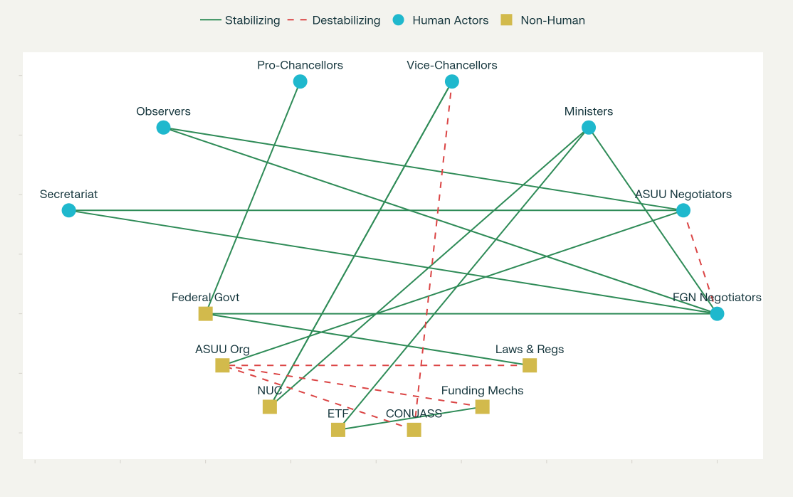
Exhibit 1: Actors and forces that shaped the agreement

Source: FG-ASUU, 2009; Infoprations Analysis, 2025

Supporting these teams were advisers, including vice-chancellors from various Nigerian universities and educational experts, who provided strategic guidance and expertise. Observers from federal ministries such as Labour, Finance, Justice, Education, and related commissions like the National Universities Commission (NUC) and the National Salaries, Incomes & Wages Commission (NSIWC) played roles in ensuring transparency and accountability. A joint secretariat, comprising delegates from both sides and the NUC, functioned as the administrative backbone, coordinating meetings, recording minute details, and maintaining the flow of communications throughout the lengthy negotiation process.

Institutional and Structural Forces

Beyond individual actors, institutional forces significantly shaped the agreement. Government bodies like the Federal Ministry of Education and the Revenue Mobilisation and Fiscal Commission influenced funding frameworks, while legislative and regulatory elements such as the Education Tax Fund (ETF) and the National Universities Commission (NUC) established the framework for financial and academic standards.

Universities themselves were key forces, exerting influence through data provision, internal governance structures, and engagement in implementation efforts. Other stakeholders included private sector players, alumni associations, and philanthropic organizations, whose potential contributions were recognized as vital to supplementing government funding and supporting research and infrastructural development.

Dynamic Interactions: Stabilizing and Destabilizing Influences

The negotiation process was shaped by various forces that either stabilized or destabilized progress. Stabilizing interactions included the establishment of sub-committees focusing on data collection, pension reforms, salary structuring, and academic allowances. These focused efforts allowed the teams to address complex issues methodically and build consensus on critical topics like salary structures and funding requirements.

Institutions such as the ETF Board of Trustees and mechanisms for budget monitoring enforced fiscal discipline and transparency, thus reinforcing stability. Government commitment to increasing education budget allocations and respecting university autonomy also contributed to solidifying the agreement.

Conversely, some destabilizing forces challenged the negotiation. Disagreements arose concerning university autonomy, particularly regarding admission processes regulated by bodies like the Joint Admissions and Matriculation Board (JAMB). Conflicts emerged over circulars and government directives that at times clashed with university governance practices, creating tension around academic freedom.

Fiscal constraints within the Federal Government, coupled with periodic industrial actions such as ASUU’s strike related to unpaid salaries and poor conditions, complicated the path to resolution. Moreover, the delay caused by the withdrawal of ASUU from the talks in early 2008 due to the controversial University of Ilorin 49 staff sacking issue, illustrated the fragile balance of interests at play.

Collaborative Mechanisms and Outcome

The multiplicity of actors and forces necessitated mechanisms to ease collaboration and foster trust. The process adopted informal consultations and allowed for adjournments, enabling parties to consult their principals and consider positions carefully. A monitoring committee, inclusive of representatives from pro-chancellors, vice-chancellors, the NUC, the Federal Ministry of Education, and ASUU, was created to oversee implementation, demonstrating the commitment to accountability.

The resulting agreement outlined comprehensive reforms: a distinct salary structure (CONUASS II), enhanced academic and research allowances, fringe benefits including housing and vehicle loans, extended retirement age for professors, and reinforced university autonomy. Funding strategies incorporated a mix of federal and state budget allocations, education tax fund reforms, private sector engagement, and alumni contributions to ensure sustainability.

The academic community was assured of protections for academic freedom and institutional governance, while provisions for periodic review and conflict resolution processes were instituted to maintain the agreement’s relevance.

5 Best Coins to Invest in Now – The Ultimate Crypto Investments to Watch Now

0

What if the next financial juggernaut doesn’t emerge from Silicon Valley or Wall Street but from the internet’s wildest memes? The last cycle proved that cultural tokens can topple traditional investments. Dogecoin, born from a Shiba Inu joke, soared past the market caps of major corporations. Shiba Inu turned pocket change into fortune. Even Pepe transformed memes into multi-billion–dollar liquidity pools overnight.

This new cycle promises something even bigger, louder, and sharper. A lineup of fresh meme titans is emerging: BullZilla ($BZIL), Official Trump (TRUMP), Fartcoin (FARTCOIN), Apecoin (APE), and Popcat (POPCAT). Each carries a unique story, politics, absurd humor, NFT empires, and viral culture. Yet one towers above all.

That beast is BullZilla ($BZIL). Forged in Ethereum’s fire, it’s engineered with tokenomics that roar louder than any meme coin before it. Starting at $0.00000575, its presale spans 24 stages, with prices rising every $100,000 raised or every 48 hours. The path to 1000x gains isn’t wishful thinking, it’s coded in its DNA. The presale is now live, and those who join early will secure the maximum perks. BullZilla is already redefining what it means to be among the best coins to invest in now.

The $BZIL presale opened with a bang, 3 billion tokens gone and $20,000 raised almost instantly, marking BullZilla’s explosive debut.

1.  The Roarblood Vault: BullZilla ($BZIL)

BullZilla is more than a token, it’s a living, breathing saga wrapped in smart contracts. Its Roarblood Vault ensures that community growth is baked into its mechanics. For every purchase above $50, buyers receive a 10% bonus, while referrers also earn 10%. This dual reward structure transforms word-of-mouth into a powerful growth engine. And unlike presale gimmicks, these rewards don’t vanish post-launch, they continue fueling adoption long after the presale closes.

But the Vault is only one part of BullZilla’s engineered dominance. Its presale mutation engine ensures prices rise with time and demand. Those who hesitate face higher costs; those who act early reap exponential rewards. The Roar Burn Mechanism adds another layer, burning tokens at milestone chapters, reducing supply and tightening scarcity. Meanwhile, the HODL Furnace offers up to 70% APY, turning conviction into profit.

Tokenomics—what BullZilla calls its Zilla DNA, are built for balance and scarcity. Half of the supply (80 billion) fuels the presale. Another 20% supports staking. The ecosystem treasury claims 20% to fund growth. A 5% burn pool powers the Roar Burn, while 5% is reserved for the team, locked for two years. This structure ensures that short-term traders, long-term holders, and the community all win together.

Consider the math. A $4,000 investment at stage one secures 695 million tokens. If BullZilla hits its projected launch price of $0.00527141, that stake exceeds $3.66 million. Even at half the projection, it surpasses $1.83 million. These numbers illustrate why BullZilla is the next 1000x meme coin and a leader among the best crypto to buy today.

Why BullZilla made this list: Its Roarblood Vault, mutation engine, and engineered scarcity make it not just a meme, but a presale powerhouse designed for exponential returns.

2.  Politics on the Blockchain: Official Trump (TRUMP)

Crypto has always thrived on controversy, and no figure generates more of it than Donald Trump. The Official Trump token (TRUMP) merges politics and blockchain, creating a speculative playground tied directly to global headlines. Each campaign rally, press conference, or controversy injects fresh volatility into the token’s price.

The strength of TRUMP tokens lies in attention economics. Memes thrive on visibility, and few names are more visible worldwide than Trump. This ensures constant conversation, constant speculation, and constant trading. Investors know that whenever the political spotlight intensifies, TRUMP tokens often ride the wave.

Beyond speculation, TRUMP tokens symbolize the fusion of real-world influence with digital finance. Political supporters treat it as a badge of loyalty, while traders exploit its volatility. This dual dynamic creates both cultural stickiness and financial opportunity.

Critics may scoff, but meme history shows that cultural resonance is often more powerful than technical utility. Dogecoin wasn’t built on complex mechanics, it was built on recognition and relatability. TRUMP tokens operate the same way, thriving on notoriety and magnetism.

Why TRUMP made this list: Its direct link to political spectacle makes it one of the top crypto picks 2025, offering high-risk, high-reward opportunities tied to global headlines.

   3. Absurdity Unleashed: Fartcoin (FARTCOIN)

In crypto, absurdity often beats logic. Fartcoin (FARTCOIN) proves this rule. What sounds laughable on paper transforms into a viral magnet once unleashed. The humor in its name alone guarantees conversation, memes, and curiosity.

But Fartcoin isn’t just about jokes, it’s about the psychology of investing. Humor lowers barriers to entry. Newcomers who might hesitate at technical jargon are far more likely to throw $50 into something as silly as Fartcoin. Once invested, they become part of the community, amplifying its memes, and fueling liquidity.

The project thrives on social shareability. Twitter posts, TikTok clips, Discord memes, Fartcoin spreads everywhere without marketing budgets. This organic virality has already sparked speculation waves, and as 2025 approaches, its potential only grows.

Consider Dogecoin. It started as a joke, yet it became the face of meme investing. Fartcoin channels the same energy. Its absurdity is its strength, turning humor into hype and hype into liquidity.

Why Fartcoin made this list: It shows how humor-driven absurdity can evolve into serious financial gains, securing its spot as one of the best coins to invest in now.

   4. From NFTs to Currency: Apecoin (APE)

When NFTs became cultural juggernauts, the Bored Ape Yacht Club (BAYC) stood at the top. From that empire came Apecoin (APE), a governance and utility token designed to fuel the Ape ecosystem. Its launch was monumental, with tokens airdropped to BAYC holders, instantly gaining global attention.

What sets APE apart is its hybrid identity: both a meme and a utility token. On one hand, it thrives on the cultural relevance of BAYC. On the other, it powers real use cases across games, NFT marketplaces, and metaverse projects. This dual function ensures it appeals to both degen speculators and long-term builders.

The community behind APE is massive, including celebrities, athletes, and tech leaders. This network effect keeps APE relevant, even during bear markets. As the NFT market prepares for another cycle, APE is positioned to lead the charge. Its liquidity, recognition, and integration across Web3 platforms give it resilience that many meme coins lack.

Apecoin’s trajectory mirrors the idea that memes plus utility equal exponential growth. While others rely solely on viral momentum, APE is anchored by one of the strongest IP brands in digital history.

Why Apecoin made this list: Its role as the BAYC ecosystem token and hybrid meme/utility structure solidify it as a best crypto investment 2025.

    5. Viral Culture Engine: Popcat (POPCAT)

Few memes have captured the internet’s humor as effectively as Popcat (POPCAT). Inspired by a viral cat image with its mouth wide open mid-pop, the meme spread globally. That same energy powered Popcat’s transformation into a token.

POPCAT thrives on simplicity. Its meme is universal, funny, and instantly recognizable. Unlike niche projects, Popcat appeals across cultures and languages, giving it global virality. This universality has translated into active trading communities, meme floods across social platforms, and traction on exchanges.

The power of Popcat lies in its raw cultural engine. Meme coins don’t need complex roadmaps if the meme itself is strong enough. Popcat proves that. While some tokens build ecosystems, Popcat builds laughs, and those laughs turn into liquidity.

Yet it would be wrong to dismiss it as shallow. Memes are identity markers in digital culture, and Popcat taps into that perfectly. Its potential for sudden viral surges is unmatched, making it a speculative powerhouse heading into 2025.

Why Popcat made this list: Its universal virality and cultural staying power make it one of the top crypto picks 2025 for explosive returns.

Conclusion: The Titans of 2025

Based on the latest research, BullZilla, TRUMP, Fartcoin, Apecoin, and Popcat represent the best coins to invest in now as 2025 approaches. Each carries unique strengths—politics, absurdity, NFTs, or cultural virality. Yet one roars louder than the rest: BullZilla.

With its presale live and surging, BullZilla offers early adopters maximum perks. Its Roarblood Vault rewards loyalty and referrals. Its presale mutation engine punishes hesitation and rewards conviction. Its Roar Burn mechanism ensures scarcity deepens with every chapter. BullZilla isn’t just another meme, it’s a cinematic event engineered for exponential growth.

Presales are the ultimate chance to secure wealth before mainstream attention floods in. As nations add Bitcoin to reserves and crypto adoption accelerates, the meme coin titans of 2025 are already rising. This isn’t just a launch. It’s a mutation. And the roar belongs to Bull Zilla.

For More Information:

BZIL Official Website

Join BZIL Telegram Channel

Follow BZIL on X  (Formerly Twitter)

Frequently Asked Questions for BullZilla Presale

What is BullZilla’s presale price?

$0.00000575.

How does the Roarblood Vault work?

10% bonus for buyers above $50 and 10% for referrers.

Why are presales important?

They allow investors to buy before mainstream demand.

What makes TRUMP tokens unique?

They thrive on global political attention and headlines.

Why is Fartcoin popular?

Its absurd humor makes it highly viral and shareable.

What is Apecoin used for?

It fuels governance, gaming, and NFT marketplace integrations.

Why is Popcat a contender?

Its universal meme appeal ensures global virality.

Glossary

  • Progressive Presale: Prices rise with time or funding milestones.
  • Roar Burn: BullZilla’s live supply-burning mechanism.
  • HODL Furnace: Staking rewards of up to 70% APY.
  • ERC-20: Ethereum’s token standard.
  • Referral System: Incentives for buyers and referrers.
  • Roarblood Vault: BullZilla’s referral and loyalty mechanism.
  • Staking APY: Yield from staking tokens.
  • Supply Scarcity: Reduction of tokens to increase demand.
  • Community Vesting: Lock-ups that encourage long-term holding.
  • Ethereum Smart Contracts: Programs enforcing token rules.

Disclaimer

This article examines five of the best coins to invest in now for 2025: BullZilla ($BZIL), Official Trump (TRUMP), Fartcoin (FARTCOIN), Apecoin (APE), and Popcat (POPCAT). BullZilla is positioned as the standout, with its Roarblood Vault referral system, mutation engine presale model (prices rise every $100K or 48 hours), and Roar Burn scarcity mechanics. TRUMP thrives on political attention, Fartcoin on humor-driven absurdity, Apecoin on its NFT empire, and Popcat on cultural virality. The conclusion highlights presales as powerful wealth multipliers and frames BullZilla as the most compelling crypto investment heading into 2025.

The Samsung’s Option As US Pushes for End of Chip Making in China

0

One of the most “elitist” technical jobs in America is mixed signal integrated circuit design. Why? There are just a handful of universities which are in the MOSIS program, funded by DARPA, the US military funding organization, which makes it possible for students to design chips and get them fabricated. If your university in not in the MOSIS program, that is it. And if you are in, you will have access to the most important CAD tool in the world: Cadence. Upon Cadence is the chips of nations designed.

When you finish the schematic design, you do the layout and then generate the files which are then sent to the foundry for manufacturing. (I explained the steps here . ) Trump understands that before the factories receive the files in Taiwan or anywhere, America’s Cadence has done the design job. One European company, ASML, makes the most important equipment (primarily in lithography) used in the manufacturing, and over time, the US does influence where ASML ships its products.

Looking at everything, the news that the US does not want South Korea’s Samsung to run chip manufacturing in China with US equipment is another way of saying Samsung get out of China chip manufacturing: “President Donald Trump’s administration has escalated its technology confrontation with China by revoking authorizations that allowed South Korean chip giants Samsung Electronics and SK Hynix to use American semiconductor equipment in their Chinese plants.”

But Samsung has an option – come to Abia State and build your plants! No restrictions because Nigeria is a friend of Trump’s America!

Comment on Feed

FB:  Emeka… thanks for bringing my attention to this post.

Prof, this is a brilliant breakdown. You’re absolutely right that mixed-signal IC design is one of the most “gatekept” technical careers because of how access to tools, foundries, and training is controlled.

The MOSIS program, Cadence, and DARPA’s early investments created a pipeline where only a handful of universities (and their students) could get hands-on exposure. That exclusivity translates into both scarcity of talent and high strategic importance.

On the geopolitical side, it’s fascinating how design and manufacturing dependencies are structured. Cadence and Synopsys dominate EDA (design), ASML monopolises EUV lithography, TSMC/Samsung/Intel dominate advanced fabs, and the US wields leverage by controlling licensing of critical equipment.

That’s why the “chip war” isn’t just about fabs in Taiwan or Korea—it’s about who controls each link of the toolchain.

But the top priority for countries like Nigeria should be local capacity development in VLSI, chip design, and semiconductor engineering.

A hyper-skilled workforce is a major driver of outsourcing—companies take their design work to where the talent pool exists.

And while Cadence is the gold standard, it’s worth noting that there are also open-source EDA tools, especially within the RISC-V ecosystem, which is built on an open ISA. These tools are not yet at the scale of Cadence/Synopsys, but they lower the entry barrier for training and experimentation.

Your Abia State point is spot on as a provocation: why not think about building alternative hubs in friendlier, less geopolitically constrained regions?

Of course, fabs require billions in CAPEX, water, power, and highly skilled engineers, but Nigeria and other emerging economies could position themselves as strategic partners if they start small—say with packaging, assembly, or even specialised analog/mixed-signal fabs where the barriers to entry are lower.

Over time, building such capacity could break the monopoly of a few nations.

It’s a bold idea—and in this chip war era, the countries that prioritise skills and think outside the established power map may actually create new opportunities.