DD
MM
YYYY

PAGES

DD
MM
YYYY

spot_img

PAGES

Home Blog Page 6122

Virtual Agrofood & Plastprintpack Africa 2020 Event

0

This is a virtual event which will take place between November 22 and November 26 this year.

The event is provided and managed by fairtrade Messe.

The event seeks to provide a virtual environment covering Agrofood, Plastics, Industrial print/labelling and Packaging.

The ‘geo’ coverage is Pan Africa.

Useful Links:

The fairtrade Messe site: https://www.fairtrade-messe.de/

fairtrade Messe LinkedIn page: https://www.linkedin.com/company/fairtrade-messe/

Event LinkedIn page: https://www.linkedin.com/events/6711255172275814400/

Paul Maerz MD LinkedIn page: https://www.linkedin.com/in/paul-maerz/

I have signed up to the Event.

Thanks John

The Man with the Toughest CEO Job in Nigeria

1

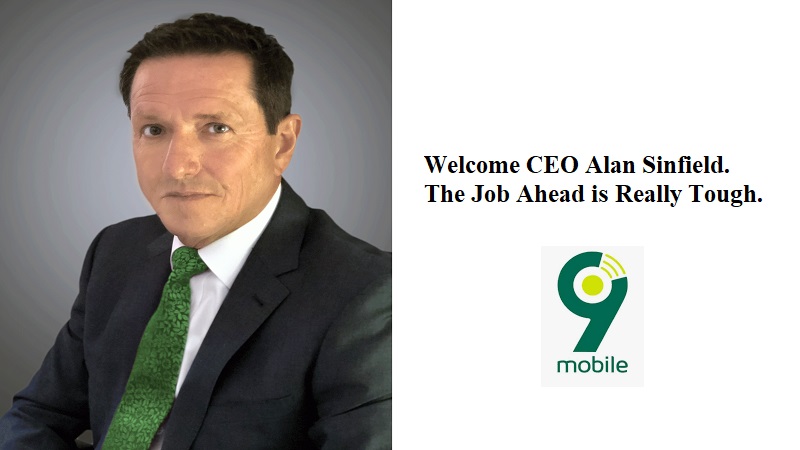
“Yesterday, 9Mobile’s new CEO Alan Sinfield visited Abuja, Nigeria’s capital city, to introduce himself to Isa Pantami, the Minister for Communications and Digital Economy. Sinfield was hired in June to lead the telco back to the heights it was at before debt troubles started in 2017 “, notes TC Daily

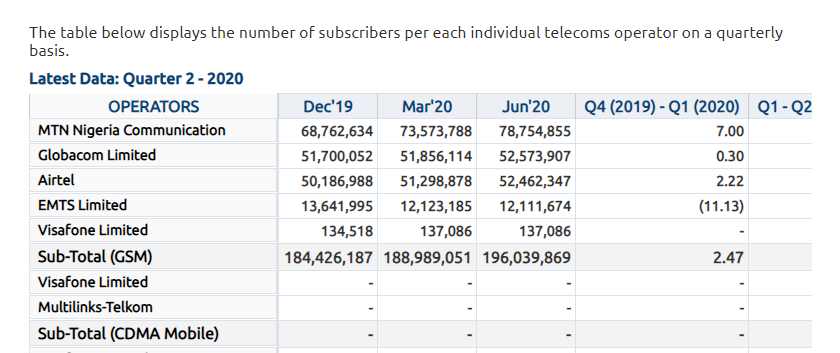
I am waiting for the playbook, and how it would play in this highly contested Nigerian telecoms market. Yes, any new 9Mobile playbook in the Nigerian telecoms sector should be extremely uncommon to thrive.  9Mobile’s new CEO Alan Sinfield has one of the hardest CEO jobs in Nigeria. As of June 2020, MTN had 79 million subscribers. Glo and Airtel followed at roughly 52 million each. 9Mobile had only 12 million, down more than at least 8 million from its peak.

Urgently, 9Mobile has to win customers and find ways to grow the bottomline. But in a nation dominated by MTN, how would that happen? More so, I have never seen any credible 4th national carrier in any major telecoms market in the world.

So, what do you think CEO Alan Sinfield should do?

https://www.cnbcafrica.com/videos/2020/06/03/9mobiles-new-ceo-shares-plans-for-growth/

The Ills of Begging on the Social Media

0

I noticed something during the lockdown that was both hilarious and appalling: many of our young men and women have turned into digital beggars. I don’t know if this was happening before but I just noticed it anyway.

The social media platform that I discovered this development in was Twitter. Then, I noticed that Nigerian youths tell influential and wealthy people to do “giveaway” for them. It got so bad that some of them dropped their bank account details as comments to these people’s posts. Some went as far as telling people to stop disturbing the public with the analysis of the country’s economy and do “giveaway”. This may sound funny, but it is also embarrassing and annoying.

Still on Twitter, I also noticed that some individuals, especially politicians, put up derogatory posts about their opponents and then tell youths to re-tweet their posts and stand the chance of winning monetary prizes. Some may ask these youths to guess who was described in the post in order to win the prize. Nigerian youths do not disappoint here because they come in their thousands to scramble for this money (usually five thousand naira and below).

Some people may not see anything wrong with this begging of a thing but when they remember that the youths in question focused more on asking for money than in picking up the message behind the posts, they will understand why the act should be discouraged. Apart from losing focus, this attitude makes our youths look hungry and lazy. They make themselves look cheap. In fact, it says a lot of wrong things about them.

Another style of begging I’ve noticed is that people record and post videos, where they describe pathetic situations in their lives in order to arouse pity and monetary donations from the public. I usually feel for people that release these videos but from what I can see, not all of them really needed help; some just wanted to raise money from the public. There was the case of a woman that was helped by a social media influencer to raise money for her child’s surgery. According to this influencer, she raised about three million naira for this supposed surgery and handed the money to the child’s mother. But then, the child got better without the surgery and so the money wasn’t used again. A few weeks later, a couple that needed financial assistance to foot their child’s medical bills approached this influencer. The influencer reached out to the first woman and asked that she donate two hundred thousand naira for this child from the three million naira raised for her. Can you believe that this woman told the influencer off, claiming that the money was meant for her family and nobody else? After several disturbances and threats to get the law involved, the woman revealed that she used the money to buy land and a car. This thing actually happened sometime in August this year. And yes, it happened in Nigeria.

Well, I am not totally against digital begging because, sometimes, those that truly need help find it through social media. In those days people go to television houses and worship centres to ask for help. But today, social media has proved to be the best place for that. Even people in developed countries also raise funds for the needy through social media. But then, the thing is actually getting out of hand. People are abusing it.

The case of the woman, who claimed her child needed surgery, shows the extent people can go to in order to “cheat”. One of my friends used to argue that people that brought themselves out to beg have tangible reasons to do so, but it is obvious that such is not always the case. Some people are shamelessly coming out to deceive people into helping them.

The problem that is created by all these false digital beggars is that they close doors for those that really needed help. For instance, this woman that used her sick child to obtain money from the public has blocked the way for the other person that truly needed help. It was probably difficult for this influencer to raise money from the public again and so she resorted to asking one of her beneficiaries to help. Now imagine in a situation where a person that truly needed help was called bluff because of experiences people had from charlatans? This is why there is need to discourage these phoney beggars.

It is hard to tell how to discourage these impostors; but these social media influencers they usually approach should validate the information given to them before reaching out to the public. They should always remember that people make donations most times because they trusted them. They should do their bests to maintain that trust.

As for the Nigerian youths that beg for “giveaways”, they need to understand that they are dragging our names on the mud.

Elite Theory – A Greater Concern Than Godfatherism in Nigerian Politics

0

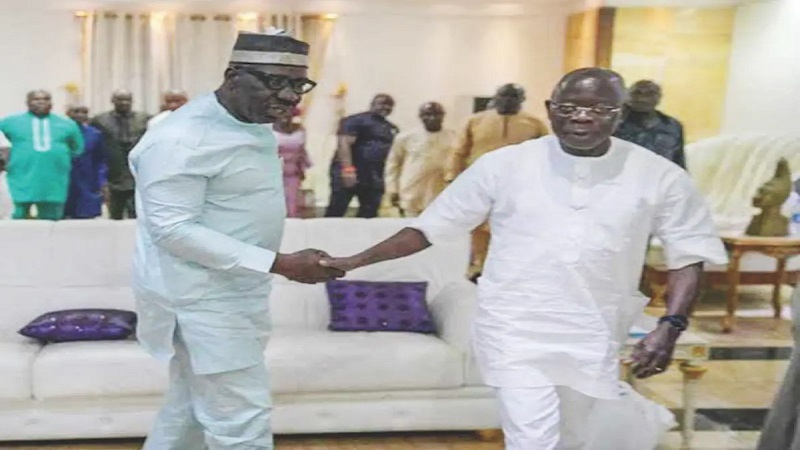
The Independent National Electoral Commission (INEC) declared Governor Obaseki as the winner of Saturday’s gubernatorial election in Edo state. The All Progressives Congress (APC) polled 223619 votes while Peoples Democratic Party (PDP) polled 307955 votes. The atmosphere before and after the election was saturated with   discourse on godfatherism. Political news headlines over the weekend featured godfatherism as the key word – victory over godfatherism, triumph over godfatherism, New dawn; it is the end of godfatherism in Nigerian politics, etc. Paraded in different forms the major takeaway dominating the news was that the battle against godfatherism has been won in Nigeria politics following the victory of Governor Obaseki of the People’s Democratic Party (PDP) at the just concluded governorship polls in Edo state. 

The political phenomenon of godfatherism is a concern for all and sundry. The term “godfathers” originated from Chicago gangsters in the United States led by Al Capone before the World War II period. Discussions about it becomes heightened towards elections even though it is not a new phenomenon in the Nigerian political arena. There is no consensus as to the definition of the word but in simple terms it is a situation whereby an influential individual hand-picks someone to attain leadership in order to exert authority or influence.  The end result of the process is satisfying the political ego of the so-called godfathers. They are called godfathers despite the fact that they do not possess the intrinsic characteristics of a god. Chris Uba, one of the foremost godfathers in the fourth republic’s godfatherism, once acclaimed that “I am the greatest godfather in Nigeria”. His statement followed the 2003 general elections which he claimed was the first time an individual single-handedly put in position every politician in the state. 

Godfatherism in Nigeria dates back to the 1960s when the first set of Nigerian politicians fought for the Independence of the country. The key figures – Obafemi Awolowo Nnamdi Azikiwe and Ahmadu Bello – cultivated the habit of raising political sons from each region of the country. But there seems to be a different motivation to the initiative of the founding fathers to what we see today. The key motivator in the first republic’s godfatherism was to develop and guide the aspiration of the upcoming generation of politicians. It was a mentorship in the political arena. This is in distinct contrast to the fourth republic’s godfatherism. 

The godfathers wield influence across different strata of government. The overwhelming influence of the political godfathers on the office seekers strips them of their independence in governance. It is slavery based on manipulations of their surrogates for selfish agenda. The question that lingers is why do godfathers act through their surrogates  rather than running for the positions themselves. There are many possibilities. Oftentimes, they are not qualified for the position. They do not possess the scaling ability to be sold to the voters and they are obsessed with their “good” names. Godfathers do not want to get their names into liabilities that come with holding public offices.  

When considered critically the problem of godfatherism is an issue for the political elites. Even though the ripple effects of it splay on the masses there is a greater concern for the masses. What’s the motivation of the fighters and defenders of godfatherism? Is the interest of the public the ultimate motivation? Or a mere continual hunger for political power and massaging of their ego while the masses become the instrument of war? Since the inception of the fourth republic in 1999 the political actors in the major political arena have been largely the same. The notable change is transference from one political arena to another. If juxtaposed the political actors in the two leading political parties have been at the other side at certain times. In fact, sometimes, the players of a party might have rained curses upon their current party while away in the opposition party. There are several examples and the just concluded Edo election exemplifies it. 2015 positioned Obaseki (APC) vs Ize-Iyamu (PDP) while in 2020 there was a switch. Same players under different clubs. This should be of concern for Nigerians than fighting or defending godfatherism with the elites in the political game.  

At the top, it is a tiny fraction of people who dictate the political tone of elections. They play on the minds of the public whom they acknowledge when elections are knocking. More than godfatherism we should be concerned about the power elite theory in play. The theory proposes that only a small minority, consisting of individuals of the economic and political networks, holds the most power and that is independent of democratic elections. Nigeria has various routes for citizens interested in governance. This is only true on paper. When considered critically the governance structure has been made to allow only a minority. The country runs on an elite theory of government in contrast to the pluralist theory of government which says that political power rests with competing interest groups in government. 

Vildredo Pareto, Gaetano Mosca and Robert Michels were the cofounders of the Italian school of elitism which became a template for subsequent schools of elitism. The basic ideas of the theory are:

  1. Power lies in position of authority in key economic and political institutions, 
  2. The psychological difference that sets elites apart is that they have personal resources and vested interest in the government. For Pareto, there are two kinds of elites – the governing elites and non-governing elites. Michels later developed his iron law of oligarchy politics. He asserted that rule by an elite, or oligarchy, is inevitable as an iron law within any democratic organization. In simple terms, any organization eventually becomes dominated by the ruling class.

There are three classes of people in the political game. The tiny elites who have been changing teams to dominate the political arena, the relatively small middle group and the masses at the bottom who are used every four year to fulfil the ambition of the tiny elites. The governing elites come largely from the leading politicians, major corporate owners and high ranking military officers. The major powers wielded by the masses are expressing public opinions, voting every four year and being instruments in the hands of the power driven elites.

There is greater concern for the public than joining the political elites in rejoicing the triumph of godfatherism. The political elites understand the game. They know the mechanism of getting through to themselves. History shows this vividly. It seems this is the time to change the political actors of Nigerian politics. It is the only way we can begin to enjoy the fruits of democracy. 

Nicholas Aderinto is a young Nigerian who believes in the transforming power of written words in creating lasting changes in the society. 

Society as the Breeder of Terrorism

0

I stumbled upon the story of Theodore Kaczynski, aka The Unabomber, the lone wolf that terrorised America for 17 years. As I read his story from different sources, I couldn’t help wondering what went wrong. Ted was notorious for mailing home-made bombs to random unsuspecting victims and eluded the authority for almost two decades until luck ran out of him. In fact, if not for his elder brother that “snitched” on him, maybe he would have still been reigning till date. The only thing The Unabomber wanted was for technological development to be stopped. He believed that technology is destroying the world and the only way he could call attention to his message was by killing and maiming with technology. What an irony.

But what is spectacular about The Unabomber was that he is a PhD holder. In fact, Ted is a product of Harvard University, where he obtained his degree in Mathematics. After earning his PhD from University of Michigan, he became an instructor with the University of California, Berkeley. But barely two years after starting this promising job, he resigned for unknown reasons, went into the woods, and lived as a hermit in a small cabin he constructed by himself. It was in this cabin that had no electricity, water, telephone, or any basic amenity, that The Unabomber began to terrorise the world.

Thinking about this promising young man deciding to leave a promising life for a terror-filled one will make a lot of us wonder if he was crazy. But from what the psychologist that tested him during his trials said, Ted had a sound mind. Nobody can actually tell what went wrong, but it is suspected that an experiment he was subjected to while in Harvard must have triggered something that turned him into a radical. But then, he was not the only student that was used for this experiment. So why was he the only person that became a terrorist?

References to his background showed that he grew up in a community composed of people from different races. There is nothing odd about that except that each race lived in their “colonies” kind of. Ted was said to be very brilliant and so he did not mix up properly with his peers in his neighbourhood (he was the nerd that must be bullied). But then, other isolated youngsters did not turn into terrorists as well.

The essence of pointing out all these is that the true causes of terrorism are yet unknown. Most of us believed that it was poverty. For instance, I have heard a lot of people saying that the reason Boko Haram recruits people in Nigeria is because of the economic situation of the country. After reading up The Unabomber story, I changed that ideology. There is a lot more to terrorism than poverty.

The only thing I can still point an accusing finger on as the cause of terrorism is the society. Radicals are not born; they are made. Some people may have reservations about a particular thing but it takes his personal experiences to become a radical. At the same time, it takes an extreme experience to become a terrorist. Sometimes terrorists are bred from information they were fed by others. I can bet you that the reason we have more of religious terrorism than any other one in Nigeria is because religious leaders twist what they tell their followers and push them into radicalism. This has nothing to do with poverty; neither does it have anything to do with education. Remember that The Unabomber was an ex lecturer in Mathematics.

I am not saying that the economic condition of the country is not a contributory factor, but its effect is minor. People are obviously not recruited by terrorists because they are poor, as we were meant to believe. They were recruited because they have been radicalised. What causes this extremism in them is the only thing we need to find out. Until it is known and uprooted, I am afraid we are heading nowhere.