DD
MM
YYYY

PAGES

DD
MM
YYYY

spot_img

PAGES

Home Blog Page 6122

Tekedia Mini-MBA LAW

0

At the onset of Covid-19, we updated Tekedia Mini-MBA syllabus, on the fly, to incorporate courses on how to manage and mitigate the paralysis. Many of our learners appreciated the redesign, and most used the playbooks to win awards and promotions in their firms.

As the drumbeats of sub-optimal relationships  between founders and investors in some companies in Africa, sound louder, we are updating the current editions on the fly. On Monday, two faculty members will discuss commercial law, contracting, agreements, and IPs. Mr. Chukwuemeka Mbah (LLB, BL, LLM)  holds a postgraduate degree in European and International Business LawJeff Chineme Maduka (LLB, BL, LLM) holds a First Class Law degree in Nigeria and  Harvard Law in Banking, Corporate, Finance, and Securities Law.

Selected firms with sub-optimal founder-investor relationship
  • Business & Commercial Law  – Chukwuemeka Mbah (LLB, BL, LLM)
  • Contracting, Negotiation and IP – Jeff Chineme Maduka (LLB, BL, LLM)

Before you sign that agreement, have you asked a sharp-minded lawyer to review it? At Tekedia Mini-MBA, our vision is to empower and nurture innovators across many domains.

The Nigeria’s $200 Million Credit

1

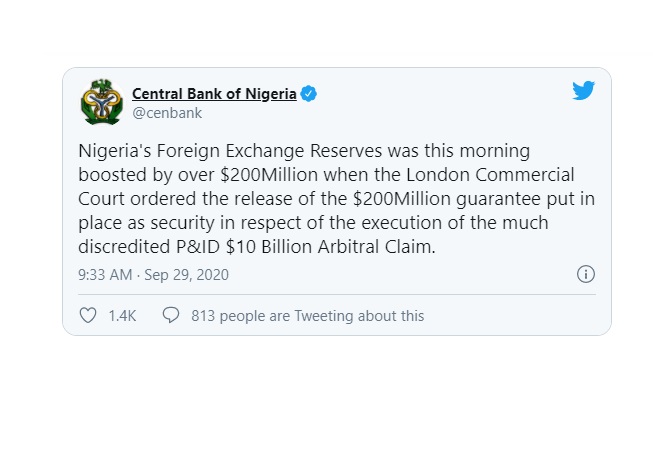
A few weeks ago, Nigeria secured a landmark victory in its bid to overturn a $10 billion arbitration judgment award against it in the P&ID case. Previously, Nigeria was required to put a $200 million security on that sham award execution. But good things happened after the favourable decision. Besides this $200M, “The court also awarded a £70,000 cost in favour of Nigeria in addition to an earlier award of £1.5m.” Yet, with all these goodies, Nigeria is getting into a trap if we do not offer our best moves. 

It is a miracle: P&ID which felt it could pocket more than a third of Nigeria’s budget has been asked by an English Court to pay Nigeria “£1.5 million within 21 days to cover legal costs the FRN incurred as part of their successful application for the extension of time to challenge the arbitration award and procedural hearing earlier in the year”.

If the UK court rules against us when it matters most – dismissal of the $10 billion sham award -, Nigeria will lose the moral standi to claim unfairness. So, nothing has happened and everyone must work hard to ensure total victory especially at the end. This could be a trap: make them feel the system is fair, only to unleash surprises! Yes, people, hold that celebration!

That said, it seems this particular UK court is truly fair unlike what we have seen in the ones trying Malabu and other cases across Europe. In those ones, they convict  the oil majors, fine them for crimes in Nigeria, but ask them to send the fines to their own treasuries with nothing for the Nigerian people. Largely, they come to Abuja, select the right cases, try them in Europe, and make money with no compensation to the people directly affected, with full understanding that Nigeria’s government is weak to do anything.

Nigeria’s Battle with P&ID

Ownership And Control in Nigeria: Before You Sign That Investment Document

1
Selected firms with sub-optimal founder-investor relationship

These companies have one thing in common: investor-founder relationship is sub-optimal, BusinessDay notes.

The situation is also extended to the health sector. PathCare, founded by Richard Ajayi, a renowned Lagos-based medical doctor, was acquired by Europe’s largest lab operator Synlab in 2017. Synlab, owned by private equity firm Cinven, did not publicly announce how much it invested in PathCare, which, as of that time, was Nigeria’s largest private pathology laboratory company.

However, Ajayi had said the company bought back a 26 percent stake held by PathCare South Africa, its former parent company, year before the Synlab deal, according to a Reuters’ report.

I help founders with clarity and visibility to  navigate the challenging waters of venture capital and private equity worlds. Under our private client services, we provide that leadership.  Founders, you need experienced and sharp minds, with a core entrepreneurial antennae even though they may not be heavyweights in the home soils of moneymen.

As you sell part of your company and the investor brings the funds, unless there is  a clear understanding on the values derivable, bad things will happen. Yes, after the press statements and media interviews, companies have to be built. So, as you rush to declare a new fundraise, remember that by next quarter, you MUST answer what you did with that money. If not, there would be trouble.

While it is easy to think the investor is a bad guy, always be reminded that the investor is just doing his or her work. Yes, most times, they raise money from others to invest in companies. In other words, investors are also companies who have to answer to their  limited partners.
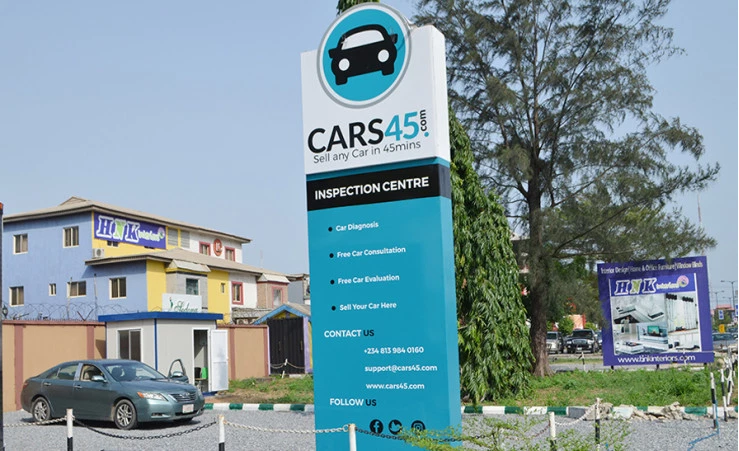
What is it the venture capitalist or the private equity firm bringing to that business? Do you know that investor very well? Have you done your due diligence? Note this: some of the draconian terms and clauses in that document is because the investor is trying everything possible to protect his or her  “money”. That does not make him or her bad. It is your responsibility to explain and provide assurances so that both can attain a better equilibrium with lesser stress.

As this happens, I call on the Federal Government of Nigeria to develop a mechanism to ensure that close to N10 trillion we have in pension funds can be used to support growing startups in Nigeria. Yes, if we commit just 5% for credible growth startups in Nigeria, the pressure to raise foreign funds, at all costs, will go since there would be an alternative capital within Nigeria.

Sure, we need to make sure we do not play the lottery with pension funds. Yet, Nigeria must work out a way to change the funding climate.

At Tekedia Mini-MBA, we are preparing project champions and founders on ways to avoid founder-investor frictions by nurturing them on the legal mechanisms of markets.

Next week in Tekedia Mini-MBA, we will be looking at Business & Commercial Law, and Contracting, Negotiation and IP by two legal minds: Chukwuemeka Mbah (LLB, BL, LLM) and  Jeff Chineme Maduka (LLB, BL, LLM). After the courses, they will return for Tekedia Live. I invite you to pass through Tekedia Mini-MBA as you build. Early registration has started for the next edition.

Max Rides $22 Million Bond – A New Funding Model for Nigerian Startups

2

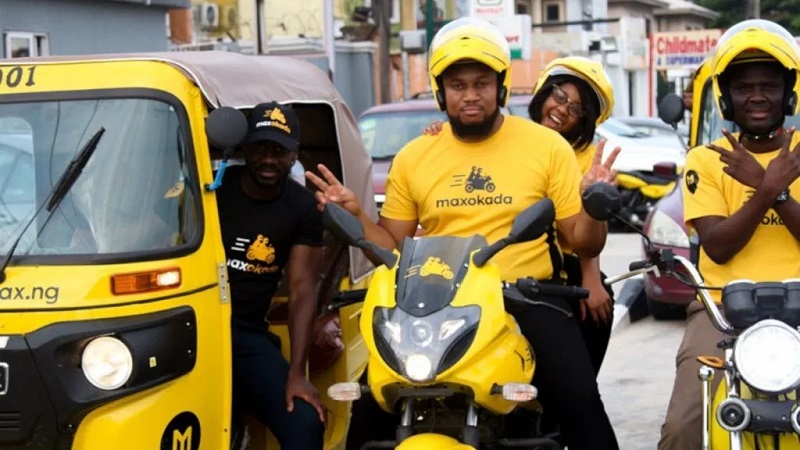
Max, the motorbike-hailing company in Lagos, before it pivoted and expanded into other major cities is inventing something new: private bond placement for Nigerian tech startups. A bond is a fixed income instrument (loan-like) made by an investor to a borrower. Typically, our startups have gone for debts or equity; bond is a new redesign. The news that Max successfully issued a one year $1 million fixed-rate notes under a newly structured $22m bond program shows the bond strategy has a promise.

Metro Africa Xpress (“MAX” or “MAX.ng”), the leading mobility platform in Nigeria and West Africa, today announced the successful issuance of a ?400m 1-year fixed-rate notes (the “?400m Series 1 Bond” or the “Bond”) under its newly structured ?10bn/$22m Private Company Bond program (the “PCB Program”).

The ?400m Series 1 Bond is MAX’s first-ever bond issuance and the first bond issued by a mobility company in Africa. Despite the challenging global economic backdrop, the Bond, distributed through a private placement, received strong interest from highly reputable local and international fixed income investors that are seeking exposure to a high-quality issuer like MAX.

The Series 1 Bond is the first issuance under MAX’s multi-currency ?10bn ($22m) PCB Program, which was structured in line with our mission to build the technology and financing infrastructure for mobility across Africa. Proceeds from the Bond shall be used to fund MAX’s growing asset financing program across 2-wheeler, 3-wheeler and other vehicle classes in Nigeria and beyond, as MAX continues to institutionalize driver financing across the continent.

The transaction and the PCB Programme were both arranged by DLM Advisory (“DLM”), a Nigeria-based SEC-regulated full-service Developmental Investment Bank that combines advisory, origination, underwriting and distribution capabilities. DLM has built a successful track record of structuring, participating in and delivering bespoke and innovative capital raising solutions to sovereign entities as well as public and private organizations. (from The press release)

Largely, private companies, which are not yet ready for the public market, go through the path of bonds when they do not want more dilution of ownership or more precisely sell more shares to investors.

Expect more of this in the next coming months as startups begin to pay more attention to the shares they are selling,, and the broad ownership and control. Indeed, most founders might have sold lots of ownership at low valuation and with their businesses looking promising, they may be hesitant to lose more control. With the debts market exceedingly challenging, private bond placement may be the new normal. Of course, no one knows why Max is going this path instead of the typical equity-based capital raise.

The Frightening Disclosure on Supposedly Healthplus – Alta Semper Agreement

9

A private equity firm which supposedly invested $18 million in Healthplus, the pharmacy chain in Nigeria, claimed the management of Healthplus is not executing as desired. Healthplus Management disputes that assertion, maintaining it was an excuse to do something horrible to the firm. As that happens, litigation is flaring up. The PE, Alta Semper Capital, has “changed” the CEO of the company, and claiming to be the majority shareholder, plans to take control of the company operations. Then, I read this from Nairametrics.

  • The new funding was to enable the company to expand its retail footprint and enhance its competitive position.
  • It had approximately 80 locations across the country at the time and currently has about 90 branches.
  • HealthPlus Ltd is owned by HealthPlus Africa Holdings Ltd, with a 94,998 ownership, while Bukky George owns 5,002 shares; thus, 94.9% ownership and 5.1% ownership respectively.
  • Nairametrics understands that Bukky George owns less than 50% of HealthPlus Africa Holdings, while Alta Semper owns majority shares in the holding company, estimated at between 53% and 55%.
  • Sources inform Nairametrics that HealthPlus makes about N5 billion in revenue annually.

Did it mean the company was worth about $20 million since the new “investment” was $18 million? And the owners lost the majority on that? Healthplus is a category-king company and certainly should be in multiples, in my opinion.

Alta Semper, also known as Idi Holdings, had announced a $18-million investment into the health firm in 2018.

However, founder Bukky George told BusinessDay that Alta Semper Capital LLC UK (AS) announced an $18 million investment in HealthPlus on March 15, 2018, but paid up $10 million as Tranche 1. Tranche 2 was due 12 months later.

She said the pledged funds were never fully disbursed in order to implement the firm’s strategic objectives, stressing that its growth journey had been fraught with serious challenges, unmet expectations, and erosion of market share and brand equity.

If this is true, the Nigerian government should do what they did when Philip Osondu signed out his life, on contract, to play for an European team for life! Yes, a team tricked Osondu with a football contract. And he was never going to be a free man, in football. Quickly, the then Nigeria Football Association (NFA) put a rule that all foreign contracts to Nigerian players must be vetted by NFA to prevent that type of evil. Sure, no one needs government on private commercial deals! 

Here, the problem is not just the equity holding percentage but the voting power of the class of shares. There are many things which look severely troubling here. We hope it ends well as Healthplus is already bleeding value. Yes, few will supply them drugs under this climate unless they prepay.

While there are issues here, I do not think this valuation makes sense for the possibly largest modern pharmacy chain in Nigeria. No wonder, some stakeholders are pushing for changes in the agreement. What is happening here is complex and frightening, and every founder should learn from it.

HealthPlus Warring Factions Should Enter Arbitration Before Value Gets Destroyed