DD
MM
YYYY

PAGES

DD
MM
YYYY

spot_img

PAGES

Home Blog Page 6126

Nigeria’s Unnecessary Bill for a New Anti-graft Agency

0

On Wednesday, the Federal Executive Council approved a bill to establish an agency that will take charge of proceeds recovered by anti-graft agencies in Nigeria.

The bill titled: ‘Proceeds of Crime Recovery and Management Agency Bill’ is designed to take the management of recovered assets and funds off the responsibility of the anti-graft agencies. The Attorney General of Federation, Abubakar Malami was directed to forward the bill to the National Assembly for passage.

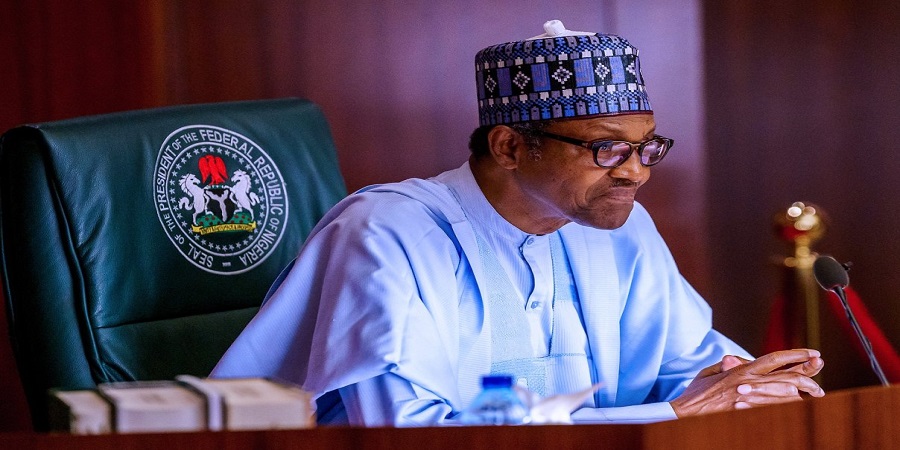
The development was disclosed by Malami after the FEC meeting, presided virtually by president Buhari on Wednesday. The Minister of Justice said currently, recovered assets and funds are in the care of multiple government agencies, but the passage of the bill will ensure that the proceeds are in the care of a responsible agency.

“The bill is targeted and intended to have in place legal and institutional framework. The legal component of it is having a law while the institutional component is to have an agency that will be saddled with the responsibility of managing the assets that constitute proceeds of crime in Nigeria.

“What happens before now is that proceeds of crime are scattered all over, and mostly in the hands of different and multiple agencies of government inclusive of the police, DSS (department of state security), EFCC, (economic and financial crimes commission) and the ICPC (independent corrupt practices commission).

“So, with that kind of arrangement which is ad hoc, there is no agency of government that is saddled with the responsibility of data generation, an agency that can give you offhand the number of landed assets, immovable assets, the amount in cash that is recovered by the Federal Government by way of interim forfeiture. So, it is indeed over time a kind of arrangement that is not uniform and consistent,” he explained.

The Minister of Justice said it will mean a next level of accountability to put in place and agency of government that is exclusively responsible for proceeds of crime.

“It will be a one-stop shop arrangement by which all the assets that are recovered arising from crime that are indeed vested in the Federal Government, you have a one-stop arrangement where you can have an information,” he added.

Though Malami said the bill has been in the pipeline for long, and there had been failed attempts to present the bill to FEC in 2007, 2011, and 2019, and has nothing to do with the current saga surrounding the EFCC, many beg to disagree.

Part of the allegations leveled against the former boss of the EFCC, Ibrahim Magu were of relooting and mismanagement of recovered assets and funds. The report filed by the investigating panel mentioned ‘discrepancies in the records of the EFCC and the Federal Ministry of Finance on recovered funds,’ which includes the declaration of N539 billion as recovered funds instead of N504 billion earlier claimed, and the sale of recovered properties to Magu’s cronies.

The indicting financial misappropriation allegations are believed to be the reason for the FEC’s approval of the ‘Proceeds of Crime Recovery and Management Agency Bill’ even though there had been attempts in the past to pass the bill.

Consequently, Nigerians have kicked against the development as it is seen as further evidence of inadequate anti-graft agency. Nigeria has two anti-graft agencies; the EFCC and the ICPC. The two are believed to be functioning under incapacitation and thus need revitalization.

Many believe that the motive behind the creation of a new agency is ulterior and is based on Malami’s desire to be in control of assets recovered by the anti-graft agencies.

It could be recalled that Malami asked the National Assembly in 2019 to approve a commission of 2.5% of recovered loots proceeds to be paid to the Asset Recovery Unit in his office. Magu also accused the Attorney General of working with the EFCC to dispose of the vessels involved in illegal activities which resulted in Nigeria being sabotaged of recovered assets worth N283 million.

Based on these incidents, and the fact that creating a new agency in the time of economic downturn will increase the burden that the high cost of governance already bestows on Nigeria’s economic growth, many see the new bill as irrelevant.

Human rights lawyer, Inibehe Effiong told Premium Times on Thursday that the Federation Account exists to receive funds and assets recovered from crime, which makes the new bill nonsensical.

“It is nonsense to me: to begin with, if there are assets recovered from criminal suspects and corrupt individuals, they are supposed to be remitted into the Federation Account. It is going to go into the public revenue of the Federation. After that, the national assembly must now appropriate by way of budget. The government on its own does not have powers to start spending.

“If it is about recovery of looted assets, it is nonsensical to create a new agency. EFCC already has the powers to do that under its establishment Act. This is another multiplication of executive agencies which does not have any bearing in fighting corruption. If the federal government is keen on fighting corruption, it is supposed to strengthen EFCC. We don’t need another similar agency,” he said.

Other Nigerians who waded into the matter opine that the bill if passed, will amount to wastage of scarce resources.

“I reiterate that we need to reduce the number of agencies. I have often advocated for the introduction of a new rule: for every new agency you create, scrap at least two existing ones. Still, I would like to read the draft bill first,” former DG of BPSR, Dr. Joe Abah wrote on Twitter.

Adding his voice, Osasuo wrote on Twitter: “It is ridiculous to set up yet another government agency for corruption. This is a government that is borrowing externally to meet recurrent expenditure.”

Nigeria’s Rice Delusion

0

In this piece I argued that the reflexive fixation of Nigeria’s policy makers on import eradication as a solution to our economic problem is misplaced. I submitted that policy intervention should be informed by the peculiarities of our trade reality.

It is arguable that, one of the reasons Nigeria has remained hobbled by the scourge of multidimensional poverty may be the unfortunate mismatch between our manifest trade realities and Government policy interventions. Oftentimes, policy intervention is aimed at curing us of chronic import addiction. The former Minister of Agriculture Audu Ogbeh was seen in a video making the rounds on social media in 2018, lamenting with evangelical zeal   Nigeria’s shameful importation of trade merchandise. What was most embarrassing and unacceptable to Ogbeh is our lowly importation of something as mundane as toothpick. This unrelenting anti-importation crusade that is at odd with our trade reality has fostered a pervasive, erroneous and injurious believe on the street of Nigeria that our lingering economic malaise is nurtured by our insatiable appetite for all things foreign. While it is nominally true that Nigerians have an appetite for foreign consumer merchandise, our trade data for the year 2018, the same year Audu Ogbe launched his anti-Importation tirade shows altogether a different reality.

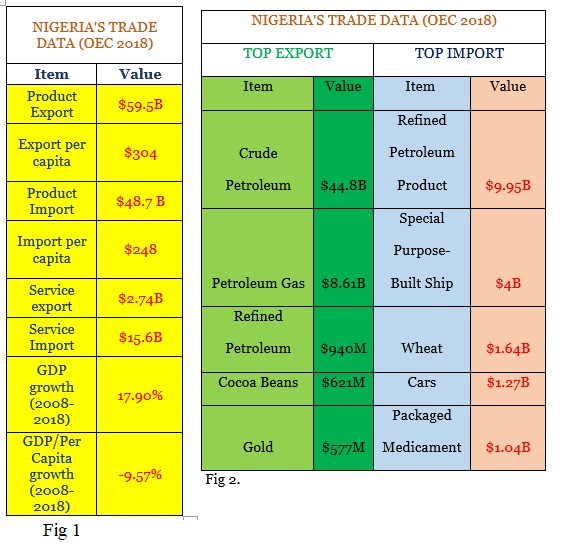
According to  data available on the website of OEC (Observatory of economic complexity),quoted here in Fig.1 Below,  Nigeria experienced  trade surplus in billions of Dollars in 2018.The value of the surplus may not be something to mount a celebratory jamboree over, but surplus it is. Our Trade export per capita is about 50$ more than our trade import per capita. Trade export in absolute terms exceeds imports by a value slightly in excess of $10B. This data, hidden in plain sight rubbishes Ogbhe’s claim that source of our economic growth tragedy is excessive importation. Rather, relative to our potential if we were serious and resourceful enough about economic growth, our import and export value per capita is low. We honestly cannot improve our fortune without a commensurate increase in our import and export value. The example of Indonesia comes to mind in this regard. Her Impressive GDP of 1.04 Trillion was brought about by export and import value four times that of Nigeria. Similarly, the difference between export and import per capita in Indonesia just like Nigeria is less than $100.

The manic pursuit of crude Agrarian protectionist policies cannot help us turn our situation around. Rice delusion and toothpick importation mania has continued to afflict our monetary, fiscal and trade policy handlers to an epidemic proportion. Should our policy handlers not be ashamed that the article of trade that has enjoyed their most generous policy patronage and unproductive incentive is not on the top five list of our import items as FIG 2 below demonstrate. We spend much more importing finished pharmaceutical products and a host of other items than we expend on rice importation but Still, the object of policy infatuation is Rice and rice and more rice. Any wonder then that the returns on our crude Agrarian protectionist policies have been run away food price inflation that has deepened misery and hunger in the land.  We may be better of as a people if the manic incentives thrown at rice are mobilized to deepen our capacity in Cocoa beans (another agricultural) export. The export value of this item is a reflection on some unmaximized comparative advantage in Cocoa bean production. Redirecting the shambolic incentives thrown at rice cultivation to cocoa cultivation with a express goal of quadrupling the $621m export value cocoa could impact more positively on our GDP growth.

Reversing the trend in our import of finished pharmaceutical product is another pursuit that can have a significant impact on our economic growth rate. Giving the purchasing power of Nigerians and the level of development of our health infrastructure one can speculate that the bulk of the finished pharmaceutical product imported to the tune of a billion are off-patent medicines. Because these products are off patent, there is zero intellectual property barrier to manufacture them. All that is require is some tactical reverse engineering capability, which our local drug manufacturers have in abundance.  We import these medicines while our Pharmaceutical manufacturing sector languish in under development. Strategic and important as that sector is, it hardly gets serious attention in government economic development initiatives. The most recent Economic recovery and Growth plan adopted by President Muhammad Buhari in 2017 alienate the pharmaceutical manufacturing sector entirely from policy focus despite Finished pharmaceuticals being on the list of our top five import. That this is a sector where industrial policy intersects with social policies in the health sector seem entirely lost on our economic and trade policy makers. While the Automobile industry,  being one of our high import areas has been patronized by Government with an ambitious strategy and clearly articulated  plan of action, Our Pharmaceutical manufacturing sector with similar import value as not be similarly patronized with specific developmental strategy and plan of action.

This mismatch of Trade realities and policy intervention may explain why, despite an oil windfall, we were only able to grow the economy at a paltry compound rate of 17.9% from 2008-2018. average of 1.79% per annum Indonesia grew at a massive compound rate of 104% within the same time. Ethiopia, our geopolitical neighbor grew at 212% during the same time window. It is utterly impossible to make our great escape from the walloping poverty rate with such an anemic growth rate. Our GDP/per capita growth rate shrunk by 9.57% in the same period decade because our population growth rate exceeded that anemic growth rate. If our population growth rate remains constant (which is undesirable) we must grow at a frenetic 10% year on year to keep crushing poverty at bay. Sadly, none of the policies we pursue at present, in isolation or as a collective can deliver a double-digit growth. Our Agricultural policies while desirable are misdirected and ill-conceived, the mining sector seem rudderless and out of control, and Industrial policies in this  key sector is virtually nonexistent.

The rate limiting step in our growth redemption is to exorcise the demon of Rice delusion and toothpick importation mania from the rank and file of state actors. The lay citizenry must also be continually re-enlightened and re-orientated into sound economic thinking. Through this ritual of re-enlightenment and spiritual deliverance the generality of Nigerians may agree that what is more desirable is a change in the volume and character of our import and export. The next decade should see our import dominated by heavy machineries that will be deployed for the local manufacture of internationally tradable products with higher PCI (Product complexity index).


NIGERIA’S TRADE DATA (OEC 2018)
Item Value
Product Export $59.5B
Export per capita $304
Product Import $48.7 B
Import per capita $248
Service export $2.74B
Service Import $15.6B
GDP growth (2008-2018) 17.90%
GDP/Per Capita growth (2008-2018) -9.57%

Fig 1.

NIGERIA’S TRADE DATA (OEC 2018)
TOP EXPORT TOP IMPORT
Item Value Item Value
Crude Petroleum $44.8B Refined Petroleum Product $9.95B
Petroleum Gas $8.61B Special Purpose-Built Ship $4B
Refined Petroleum $940M Wheat $1.64B
Cocoa Beans $621M Cars $1.27B
Gold $577M Packaged Medicament $1.04B

Fig 2.

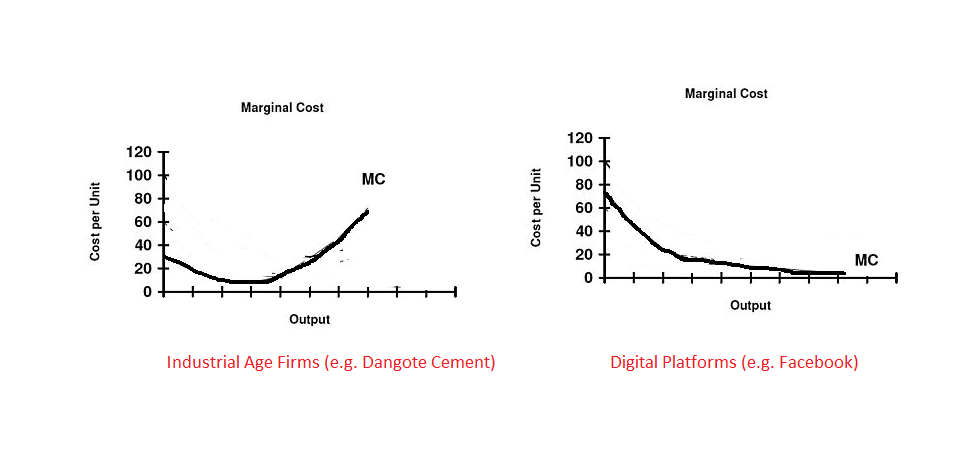
Understand Your Marginal Cost!

0
Marginal cost

As a digital consumer sector entrepreneur, pushing your marginal cost to a good position is a very important strategy. Understand your marginal cost! In this video, I explain how you can build a great business through a better understanding of marginal cost.

The Peril of a freemium business model in Africa

0

A freemium business model works in markets where the anticipatory customers have capacities to upgrade and pay. If you run the model in places where purchasing power is LOW, gestation to profitability long, and funding sources limited, you will likely fail. Be careful as 99.99% of your users could just be comfortable with the free portion with no interest in the premium part. Yes, you may be better off focusing on just 10%, asking them to pay on day one, than trying to win all, and in the process losing many!

Freemium, from free + premium, is a pricing strategy where basic parts of products are given free, while additional features require payment.

Watch this video on pricing.

A startup must invest efforts to understand its customers towards having the optimal pricing strategy. You cannot afford to leave money on the table by pricing timidly. The ability to ascertain value created by your company is the foundation that will help you model how much customers will pay while considering many other factors like growth, product penetration and competition. As always, it is easier to reduce price than to raise it, in a digital product, especially when you do not have a highly differentiated product. This means you may begin high, and after checking the market dynamics, you will adjust accordingly. You must make pricing a science.

Sure, a freemium model can still work but you have to be precise on the inflection point between that free point and pay point on the curve. It is a balancing act which must stimulate a new demand nexus to push that user to pay for the extra features. If you have made most of the core values FREE, capturing value becomes harder via payment.

Mechanics Of Startup Product Pricing

Preservation of Base Transceiver Station: Our Collective Responsibility

0

The advent of the 21st century technological advancement resulted to a leap from the analogue to digital means of communication which is evolving through 2G, 3G, 4G, cellular network and will continue to evolve to 5G, 6G even beyond 7G, until lapse in time in communication is fully redeemed through the use of data technology. 

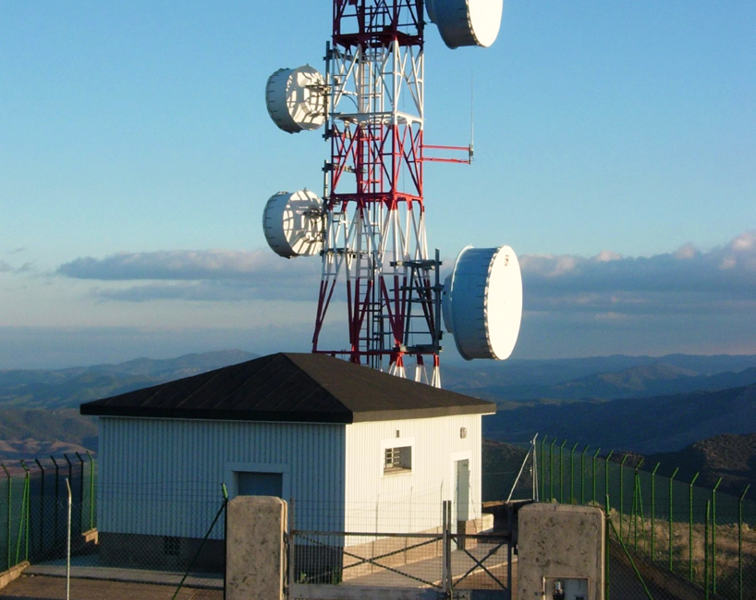
It is no doubt that modern communication technology has reduced space, time and distance in communication, thus grossly impacting the educational, health, entertainment, religious, security and all sectors of the world’s economy. It is therefore of crucial importance to state that these celebrated digitalised platforms are made possible by an infrastructure called a Base Transceiver Station (Base Station) which is a piece of equipment that facilitates wireless communication between user equipment (UE) and a network.

The telecommunication Base Transceiver Station is a vital infrastructure to the development of a nation. It is the bedrock upon which the technological stability and advancement of any nation lies. The Base Station handles the transmission and reception of signals; sending and receiving signals to or from amongst network entities.  These Base Stations even though are erected by service providers to enable network and ensure continuous availability of reception to users, should be considered as a national heritage which must be preserved. Once the Base Station serving a particular community or neighbourhood is non-functional, there is a breach in the communication needs of such community, telephone calls will be hindered in spite of emergencies, ATMs shut down, insecurity is enhanced, computerized operations in offices are frustrated and so on.

Since every facet of human life is now dependent on access to information technology, Base Station which serves as the channel through which information is accessed must be collectively preserved. The understanding of the importance of Base Station makes us know that preservation of it cannot be left exclusively to the law enforcement agencies or service providers but should be a collective responsibility. Citizens both in the urban and rural area, businesses and government at every level must preserve Base Stations within the state as part of the essential state’s infrastructure which must not be tampered with.   

In MTN Nig. Comms Ltd v. Delta State Government, three justices of the court of appeal agreed that Telecommunications Masts are like Electricity Poles and Electricity Transformers. 

A Base transceiver station is not only the lifeline of all form of communication, they are critical to the development of a nation which means the same way trespassers are not allowed to tamper or damage electricity poles or transformer, hindrances by community or anyone to the operations of Base Stations must be refuted. The shutdown of a single base station is tantamount to gradual shutting down of the development of a nation as whole, international relations, foreign investment as well as other key economic activities. In fact, it’s hard to imagine any government, individual or business that has not benefited from the digital revolution. Even sectors as hands-on as agriculture use computers for production records, financial planning, research on technical issues and procurement.

Imagine all reception from Base Stations are shut down, no access to internet, television, or any form of communication, the world will definitely go into paranoia and chaos or seem as if it has come to an end. Communication is a vital element in a nation’s security. One of the first strategies to carry out a coup is to shut down all means of communication. For instance, during the Sudan crisis, the military government ordered a total shutdown of the internet. The internet was cut off after security forces violently dispersed protesters camping in central Khartoum. Also, on 7 January, 2019 at 04:30 GMT, soldiers took control of the national TV (Radiotélévision Gabonaise), announcing their coup attempt. A few hours later, around 07 :00 UTC, the number of Internet connection requests from Gabon dropped sharply, indicating the beginning of an Internet shut down. The Base Stations were shut down to achieve the completion of the coup d’etat.  Thus, when Base Stations are down, the world will be thrown into utter darkness and sent back into the stone age as communication is vital to the smooth running of a society.

To lend credence to the sustenance of governance through telecoms infrastructure, the Office of the National Security Adviser (ONSA) has published that telecommunication facilities are critical national infrastructure (CNI) which are central to national security and deserving of protection by the government. In line with the provisions of the Cybercrime Act of 2015, Telecommunications Infrastructures are designated CNI and therefore, any acts of vandalism or deliberate obstruction of service delivery is deemed unlawful and punishable by law.

It is against this backdrop that the preservation or the continued life of Base Stations is the responsibility of all and sundry i.e. governments, individuals and businesses, as a complete shutdown of access to information will adversely affect all areas of life including national economy and security. 

To reiterate, the lifeline of access to information is absolutely dependent on a functional and well-maintained Base Station. As a matter of fact, it would be needless to say that the importance of Base Station, especially, in the 21st century, cannot be overemphasized. Its importance and impact ranges from providing technological foundation for societal communications, to enable participation and development, providing vital infrastructure for national security and a host of others. 

Conclusively, Base Stations are critical national infrastructure and as such a national heritage which ought to be jealously protected; governments, host communities and private individuals are enjoined to make it a collective responsibility to ensure the protection and preservation of telecommunication infrastructures as it is very critical to the smooth running of all facets of human life.