DD
MM
YYYY

PAGES

DD
MM
YYYY

spot_img

PAGES

Home Blog Page 613

Nvidia’s Jensen Huang Counters Elon Musk: AI and Robots Will Make Us Busier, Not Idler

0

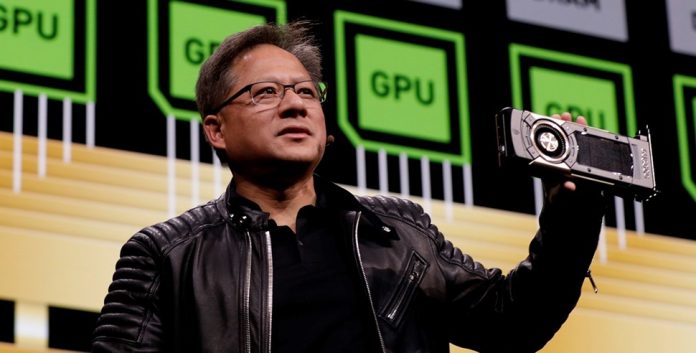
Business and tech leaders have continued to share diverse views about the future of work as AI adoption accelerates. Elon Musk has painted a future where robots do all the work and humans collect free money for doing nothing. Nvidia CEO Jensen Huang, however, thinks that won’t be the case.

Speaking on Fox Business on Thursday, Huang pushed back on the utopian notion that artificial intelligence and robotics will usher in mass leisure. Instead, he argued that humans will likely be busier than ever as AI accelerates productivity and unlocks a flood of new opportunities.

The remarks came during a wide-ranging interview in which Huang discussed U.S. tensions over chip sales to China, Nvidia’s success as a $4 trillion company, and warnings from OpenAI’s Sam Altman about a potential AI bubble. Huang dismissed the bubble fears, insisting that demand for AI infrastructure is only in its early stages.

When asked about Nvidia’s Jetson Thor “robot brain” and the future of robotics, Huang predicted a sweeping transformation.

“Everything that moves will be robotic,” he said. “There will be robotic humanoid robots that are very general-purpose. They’re going to be in hospitals doing robotic surgery. They’re going to be in factories building things. They’re going to be in farms doing agriculture. I mean, it’s just incredible the number of robotic systems.”

According to Huang, every industrial company will eventually rely on robots and AI in its operations, with Nvidia supplying much of the technology to power them. He called it a “really exciting future.”

But pressed on whether such productivity gains could mean shorter workweeks or more free time—ideas long tied to visions of technological utopia and more recently promoted by Musk—Huang suggested the opposite may be true.

“I have to admit that I’m afraid to say that we are going to be busier in the future than now,” Huang said. “And the reason for that is because a lot of different things that take a long time to do are now faster to do. And I’m always waiting for work to get done because I’ve got more ideas. Most countries, most companies have more ideas than we know what to pursue.”

While not ruling out a shift to a four-day workweek, he said the real story will be expanding opportunities.

“The more productive we are, the more opportunity we get to go pursue new ideas,” he explained. “I fully expect GDP to grow. I expect productivity to increase. I actually expect us to have more things to do.”

Still, Huang added, “I’m hopeful for that day too—so that we have four-day work weeks, and so that we could spend more time on the weekends with family and get some reading done, and do some traveling. And nothing is better than that.”

Unlike Musk, whose narrative about “universal basic income” requires political change, Huang focused squarely on the technological and economic implications.

“Life quality will get better, of course, over time,” he said, but added that AI is more likely to transform work than abolish it.

Automation Scares Through History

History offers plenty of echoes. In the 19th century, the mechanization of textile factories triggered widespread unrest across Europe, with the Luddites smashing machines they believed threatened their jobs. In the 20th century, the spread of mainframe computers and later PCs sparked similar fears of mass unemployment. But each wave of automation not only eliminated certain tasks but also created new sectors of work that were unimaginable before.

AI, Huang believes, is following that same arc. While some roles will inevitably shrink, others are already emerging around AI model training, ethics oversight, prompt engineering, and integration into existing industries.

“We came from a world of seven-day work weeks. And now we’re in five-day work weeks. Every industrial revolution leads to some change in social behavior,” Huang said. “Some jobs will go away. Many jobs will be new and invented. But one thing for sure, every job will be changed as a result of AI.”

However, with the growing concern of disruption, analysts warn that, unlike past waves, AI’s ability to scale across white-collar jobs may make the transition more jarring. Generative AI is not just reshaping factories, but also the professions once thought safest—law, medicine, finance, and media—making the stakes higher than in previous technology revolutions.

For Nvidia, which dominates the global market for the chips powering AI systems, Huang’s message is also a reminder of the company’s central role in this transformation. Its hardware has become the backbone of generative AI models like ChatGPT, and its outlook on the workforce debate carries weight not just in Silicon Valley but among policymakers grappling with how to balance innovation with social stability.
BYD Shares Slide as Quarterly Profit Declines Amid Fierce EV Price War in China

0

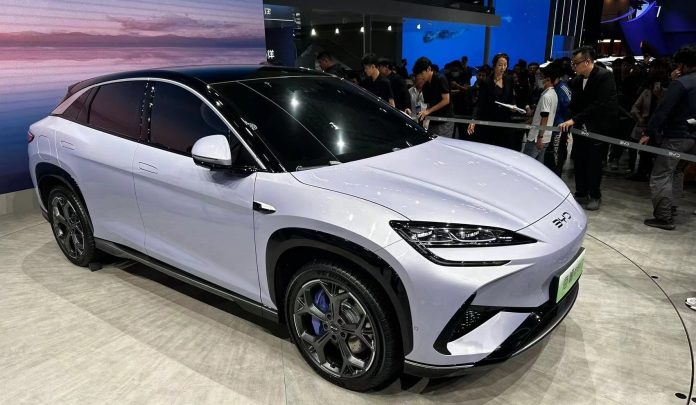
Hong Kong-listed shares of Chinese electric vehicle giant BYD plunged nearly 8% on Monday after the company reported its first quarterly profit decline in more than three years, underscoring the growing toll of an aggressive domestic price war.

The Tesla rival said net profit for the April-June quarter fell 30% year on year to 6.36 billion yuan ($891 million), according to data from LSEG. This came despite a 14% jump in revenue to 201 billion yuan, buoyed by stronger overseas sales.

In its mid-year filing, BYD acknowledged that “increased price competition and frequent occurrences of excessive marketing” had “exerted an adverse periodic impact on the development of the industry.”

The Chinese EV market has been gripped by successive discount battles since early 2023, as carmakers slash prices to attract buyers in an increasingly crowded field. Retail car prices in China have dropped about 19% over the past two years, now averaging 165,000 yuan ($22,900), according to a Nomura report citing Autohome Research Institute data.

Authorities in Beijing have warned manufacturers against fueling excessive price cuts. In May, regulators pledged to punish companies engaged in “unfair competition,” reflecting official concerns that the race-to-the-bottom threatens the health of the industry.

BYD’s Sales and Production Struggles

While BYD’s first-half results showed resilience — with net profit rising nearly 14% to 15.5 billion yuan and revenue up 23% to 371.3 billion yuan — cracks are emerging in its dominant position.

The company’s production fell for the second straight month in August, marking its first consecutive monthly contraction since 2020. BYD produced 353,090 electric and plug-in hybrid vehicles globally last month, down 3.78% from a year earlier, following a 0.9% drop in July.

China sales fell even more sharply, sliding 14.3% year on year in August to 292,813 vehicles — the fourth consecutive monthly decline. Domestic sales account for nearly 80% of BYD’s total, making the slowdown particularly damaging.

Reuters reported in June that BYD had begun cutting shifts at some factories in China and postponed adding new production lines, signs that the company is recalibrating after years of breakneck expansion.

As of August, BYD had achieved just 52.1% of its full-year sales target of 5.5 million vehicles. Analysts at China Merchants Bank International have since cut their forecast by 5% to 4.9 million, citing the company’s “more cautious” approach to inventory.

EV Shift and Global Expansion

One bright spot has been BYD’s shift away from plug-in hybrids (PHEVs) toward fully electric vehicles. Since April, the company has consistently produced and sold more EVs than PHEVs. In August, EV production rose 26% year on year, while sales jumped 34.4%.

Global markets are also becoming more important to BYD’s growth story. The company has opened showrooms across Europe and rolled out models at competitive prices. In July, BYD registered over 13,000 new vehicles in Europe, up 225% from a year earlier, according to the European Automobile Manufacturers Association.

Still, overseas growth has not fully offset the drag at home. “China remains the backbone of BYD’s business,” one Hong Kong-based analyst told Reuters. “Unless domestic sales stabilize, the company will find it difficult to meet its annual targets despite international expansion.”

The profit drop — the company’s first in three and a half years — is being seen by analysts as a turning point. With cutthroat competition at home, regulatory scrutiny over pricing, and production showing its first signs of contraction since 2020, BYD faces its toughest balancing act yet: protecting profitability without losing its edge in the race for global EV dominance.

How To Avoid Prosecution By Trump’s DOJ – According to A Company that Escaped It

0

In Washington, the Justice Department has sent a strong signal that under the Trump administration, corporations, unlike individual executives, should not be the prime target of federal prosecutions. Officials have said so in speeches and written it into policy documents.

Yet despite the rhetoric, only a select few companies have received the prize every white-collar defense lawyer covets: a declination letter, according to a report by Business Insider.

These letters — formal notices that prosecutors will not bring charges — are as rare as they are valuable. They represent the cleanest outcome for a corporation caught in the crosshairs of federal investigators. And in recent years, just two companies have secured them.

One of them is the Universities Space Research Association (USRA), a NASA contractor that manages aviation and space research for a consortium of U.S. universities. The Justice Department, in April, declined to prosecute the nonprofit after one of its employees secretly sold sensitive U.S. Army aviation software to a Chinese university.

The letter — addressed to USRA’s attorney, Clark Kent Ervin of Squire Patton Boggs — lauded the organization for “exceptional and proactive cooperation.” It highlighted steps the nonprofit took: disclosing the misconduct, firing the employee responsible, tightening compliance systems, and fully sharing information with investigators.

For USRA, it was the difference between corporate ruin and a clean slate. For the Justice Department, it was a test case of how the new self-disclosure policy works.

The Secret Sale That Sparked the Case

The saga began in 2017, when Jonathan Soong, a USRA software sales manager, received an email that would alter his life.

Soong’s job was to handle sales of advanced flight software under a U.S. Army contract. The software, used by universities and defense contractors for aeronautical research, was tightly controlled. One institution on the government’s blacklist was Beihang University in Beijing, cited by U.S. officials for its rocket and drone development linked to Chinese military programs.

Soong initially flagged the risks, telling the Beihang representative he could not sell to them. But prosecutors said the Chinese university found a workaround: a proxy company, Beijing Rainbow Technical Development Ltd., that acted as a buyer on its behalf.

Soong approved the deal, and Beihang gained access to the sensitive software. For years, the transaction went unnoticed — until USRA administrators stumbled on it during a compliance review tied to a NASA contract.

An internal investigation followed. When pressed, Soong admitted to the scheme, confessed to pocketing proceeds from other improper sales, and was swiftly dismissed.

“We determined that he was a lone wolf, a rogue employee,” Ervin told BI. “The company itself was not involved in this.”

USRA refunded the government, improved its compliance systems, and disclosed everything to prosecutors. Soong, meanwhile, pleaded guilty to criminal charges, repaid $161,000, and in April 2023 was sentenced by a San Francisco judge to 20 months in prison.

Why USRA Was Spared

Ervin argued that transparency made the difference. “The USRA had nothing to hide,” he said. “The company took swift and proactive measures … and deserved the distinction.”

The Justice Department agreed, issuing the declination letter in tandem with a press release. It credited USRA for firing Soong, disclosing the misconduct voluntarily, and providing exhaustive cooperation during the 18-month internal review.

For white-collar lawyers, it was proof that the new DOJ playbook could work in practice. Companies that voluntarily self-report misconduct, investigate thoroughly, and implement reforms may walk away without prosecution.

Declination Letters: Rare and Precious

In the broader corporate legal world, declination letters are exceedingly rare. In 2024, the Justice Department issued just five, according to its own records — a tiny number considering the volume of corporate investigations.

The USRA was one of only two to receive such treatment under the current Trump administration. The other was Liberty Mutual, which last August disclosed that employees in India bribed public officials. The insurer agreed to disgorge $4.7 million in illicit profits, cooperated fully, and received its own declination.

“We welcome this conclusion,” the company said, calling the outcome a validation of its compliance culture.

The policy shift has been codified. In June, Matthew Galeotti, head of the DOJ’s criminal division, gave a speech unveiling a new chapter in the agency’s manual. The section includes a flowchart outlining exactly how corporations can qualify for declination. The formula: voluntary disclosure, internal remediation, and sustained cooperation.

“This policy also encourages companies to invest in compliance programs, which helps deter misconduct from happening in the first place,” Galeotti said, framing the approach as a public good.

Saving Your Company Prosecution

For corporations, the stakes of DOJ investigations remain high, as a prosecution can destroy a business. Even non-prosecution agreements carry reputational damage. Declination letters, by contrast, offer certainty that the government believes the company itself is clean.

The USRA case demonstrates both the risks of rogue employees and the potential rewards of transparency.

“What the company did next after we discovered this made all the difference in the government’s decision not to prosecute it,” Ervin said.

The lesson from Washington is thus that under Trump-era policy, when misconduct emerges, running to the Justice Department — not away from it — may be the only way out.

What Ambitious Startups Can Learn from the NFL’s International Growth Strategy

0

The new NFL season is about to get underway, and while most of the action and fandom are based in the United States, a significant portion of the NFL is now “international.” Seven games will be played in other countries across the 2025 season, including places like Spain and Ireland for the first time. They are almost guaranteed to be sold out (some already are).

While it might seem like a given that every sports fan in, say, Ireland will want a ticket for the game, it’s actually the culmination of a long, well-thought-out strategy that has taken years, decades, even to pull off. We’d argue that the NFL is light-years ahead of other leagues, including the NBA, in expanding its international footprint, and we believe that there are valuable lessons in its strategy that can be applied to any startup or established business seeking growth in new markets.

Patience Pays Off

One of the interesting characteristics of the NFL’s strategy was taking a long-term approach. People point to the sold-out stadia for the London Games (three per year in the fall) as the hottest ticket in town, but it took years of strategy to reach that point, partnering with broadcasters, doing deals with local stakeholders (two games are played at the Tottenham Hotspur Stadium), and building up a presence in other ways. As to the latter, NFL academies are springing up across many different countries. They won’t produce the next Tom Brady tomorrow, but they establish grassroots connections with local fans.

It’s Not Just About the Games

Hosting a game in London or Berlin a couple of times a year is only the focal point of a wider campaign to drive fan interest. After the Super Bowl, fans will be discussing NFL playoff odds for the new season, the Draft, potential trades, and other topics, but it’s about keeping them engaged via social media and other content, such as movies, previews, podcasts, and more. The NFL has done an excellent job of soft marketing in this way, often tailoring its content to resonate with local audiences.

Spheres of Influence

It is quite interesting to see that the NFL’s 32 teams have agreed to have specific target markets, with deals in place for broadcasting, among other things. For instance, the Rams have Australia, the Jaguars have London. Some territories will have multiple teams, whereas others will have just one. However, it appears that a gentleman’s agreement exists among rival teams, allowing them to focus on specific regions without interference from others. It all comes from a recognition that there is an enormous potential market out there, more than enough to go around.

The Power of Socials

The NFL does, of course, have a massive social media presence, but it’s not just about posting content from @NFL on X. The league maintains a network of social media accounts across various markets, posting content in multiple languages and adjusting it as needed to have a greater impact in specific markets. What’s more, it has partnered with local media to both curate and deliver its content.

Local Adjustments Count

Sometimes, it’s the small things that matter. If you visit the NFL’s website while in the UK, for instance, game times are listed in GMT. Content produced by the NFL is also often written in British English. While most fans would understand the US vernacular, the small touches matter; bringing in local references makes a difference with a target market, fostering a connection between the fans and the product.

Seeing the Bigger Picture

The NFL and other sports leagues used to zealously attempt to remove content from social media, viewing it as a means of losing revenue when the content is not behind a subscription paywall. Yet, now the reverse is true, and fans can get video content of in-game plays on social media minutes after they happen. This matters for international fans, some of whom might not have access to traditional television broadcasts for the games.

The Obi Cubana Locality Playbook in Business [video]

0

One of the most “craziest” CEOs in America in recent memory was the CEO of T-Mobile. John Legere was annoyingly funny. But check his numbers: he rebuilt T-Mobile and redesigned the US telecommunication market. The man will run crazy in front of hotels, attracting attention, just to get local TVs to cover his brand. He pioneered no-contract mobile plans, and did many things that changed how AT&T and Verizon, the industry leaders, engaged with customers.

In Nigeria, Obi Cubana deserves case studies in our business schools. There are many things about his marketing playbook that companies can adopt. His team  went to Scotland and wowed the company board to seal the exclusivity of products in Nigeria. They put on a show and the Scottish press recorded their presence; they brought the deal home.

As you watch this video, think how a company board in Scotland will feel about the readiness of a Nigerian company it wants to do business with. In Harvard Business Review, I wrote that the “The Best Global Leaders are Local Leaders” because every business is local. Yes, demonstrating that native-locality will open doors as you work to reduce inertia to close business deals.

Be more local in your strategy. Do not put a price on your website in USD when you are selling to Nigerians. And do not convert USD with whatever exchange rate they’re using in CBN. Why do we ask learners to pay N120k for Tekedia Mini-MBA when those paying in USD pay $170? Every business is local, and the more you localize, the higher your chance to capture value!