DD
MM
YYYY

PAGES

DD
MM
YYYY

spot_img

PAGES

Home Blog Page 6136

The Central Bank of Nigeria (CBN)’s 11.5% Lending Rate

1
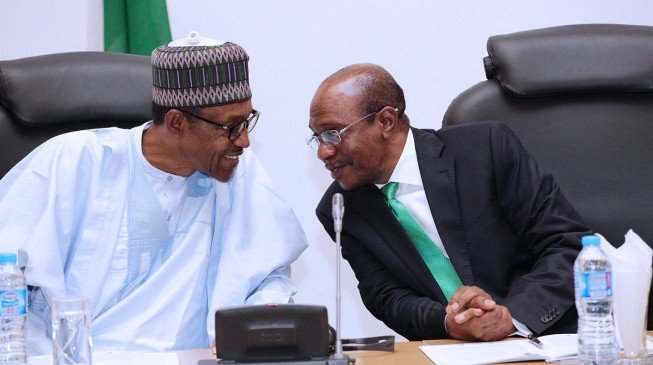
President and CBN boss

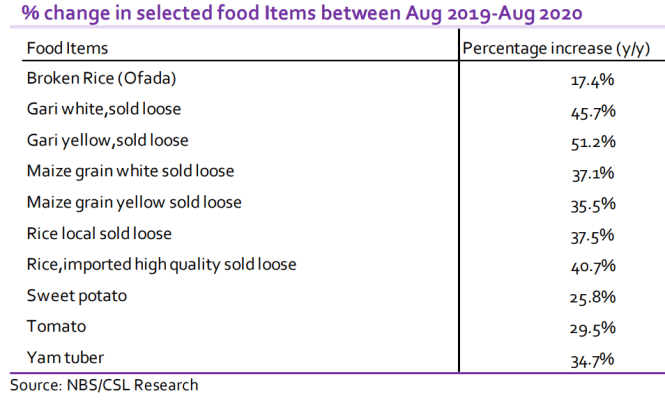
How do you engineer price stability while supporting the recovery of output growth. In secondary school, our economics teachers explained the impact of inflation on the prices of basic commodities. But if you elevate that conversation, you would see that lending rate and inflation are the two most consequential factors Nigeria’s central bank has to deal with right now. In this plot below, you can see how prices of basic food items have gone up. So, if you reduce lending rate, triggering excess supply of money in the economy, there would be more inflationary pull on those prices.

So, what do you do? You raise lending rates. But doing that would prevent companies which need “cheap” money to invest and drive production. Cheap money comes partly from cheaper lending rates. If you push rates high, to manage inflation, you can stifle output growth. If that is sustained, your economy can contract! Yes, recession.

Cheaper rates result in cheaper credits, and cheaper credits improve aggregate demand (your bank can lend to you easily), stimulate production (manufacturers get lower interest rate loans), reduce unemployment (because factories are open), and support the recovery of output growth (with money in consumer purses and factories producing).

With all said, this is what I expect banks to be lending at right now:

  • Lending rate from CBN: 11.5%
  • Cost of deposit insurance (NDIC, etc): 0.5%
  • Expenses: 2%
  • Margin: 3%
  • So, expect your bank’s minimum loan rate to be at least 17%

Of course, there are other sources of capital which can make it possible for banks to lend sub-17%. Typically, funds from DFIs can make that possible but those coming from CBN will be at least 17%.

The Central Bank of Nigeria (CBN) Monetary Policy Committee (MPC), on Tuesday, resolved to tweak its controlling lending rate while retaining its liquidity ratio and cash reserve requirement, to make more money available for lending to critical sectors as the economy braces for a looming recession in the third quarter.

At the end of its September meeting, the MPC said the majority of its members voted to reduce the monetary policy rate (MPR) by 100 basis points, from 12.5 per cent to 11.5 per cent, while adjusting its symmetric corridor around the MPR from +200 and -500 basis points to +100 and -700 basis points.

Also, the committee decided to retain the cash reserve requirement (CRR) at 27.5 per cent and liquidity ratio at 30 per cent.

An Option for Nigeria on The Nigerian Film Corporation Privatization

1

This is a partial call: Nigeria wants to privatize the Nigerian Film Corporation (NFC). Yes, sell it off; I do not think we need it. But if the nation does that, Nigeria cannot empower a private company to regulate the film industry. So, the nation cannot have it both ways: it either finds money to fund NFC OR it privatizes it and forgets about regulating the sector. 

But because not regulating the industry is very dangerous, I will propose an idea: turn NFC into a public-benefit company (think of a farmers cooperative) where all the stakeholders in the film guilds co-own it. In other words, you allow the practitioners to self-regulate with one small department in the Ministry of Information overseeing everything.

In the NFC board, have representatives from film guilds, religious leaders, civil societies and the government. Funding the NFC will come from a special fee on all new films. With that, NFC will do its work and the government will not spend kobo funding bureaucracy.

The Nigerian government has said it is planning to reform the Nigerian Film Corporation (NFC) through commercialisation so it can address its teething challenges and reposition it for improved performance.

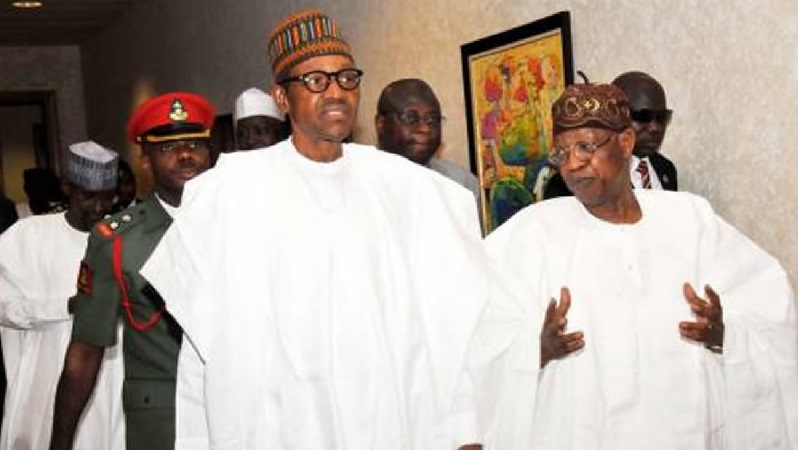
The minister of information and culture, Lai Mohammed, said this on Monday while inaugurating the steering committee on the commercialisation of the NFC.

Mr Mohammed said the commission, which is expected to regulate and organise professional practice in the film industry, is facing numerous challenges, which include its inability to engage in commercial film production and its limited operational functions such as leveraging on the private sector-led growth of the industry.

Another challenge of the agency is its civil service structure that “comes with bureaucratic limitations, budgetary constraints and operational inefficiency.”

He said in order to address these challenges and reposition the NFC for improved performance, the federal government had engaged the services of a business development consultant to conduct due diligence on the corporation and the sector and recommend a strategy that is suitable for its reform and commercialisation.

The World’s Quest for Cleaner Energy Spells Doom for Nigeria’s Oil Economy

0

A gloom future awaits the oil economy as climate change induced environmental concerns spur the world to seek cleaner energy. From factories to transportation to households, the push for replacement of fossil fuel has never been so momentous.

European aerospace giant Airbus announced Monday, the details of three hydrogen-fueled concept planes that could be launched by the year 2035. It’s a hydrogen-based energy design named ZEROe, meaning zero-emission.

Hydrogen is popular in land transportation and has powered a lot of vehicles. As more companies adopt the technology, the aviation industry is beginning to see it as a way out of carbon-emission controversy.

“I strongly believe that the use of hydrogen – both in synthetic fuels and as a primary power source for commercial aircraft – has the potential to significantly reduce aviation’s climate impact,” said Airbus CEO Guillaume Faury.

However, the push for zero-emission vehicles isn’t limited to hydrogen powered engines. Alstom, another Europe-based firm developed the Coradia iLint, a train that converts oxygen and hydrogen into electricity using fuel-cell technology.

The number of low or zero-emission planes is increasing, and new technologies are ushering in other alternatives too. In June, the UK tested its first commercial-scale electric flight, a battery-powered plane. In May, a Cessna 208B Grand Caravan aircraft with a 750-horsepower all-electric motor completed its maiden flight, taking off from Washington.

There is also the Solar Impulse 2, a sun-powered aircraft that circumnavigated the earth in 2016.

As the aviation industry pushes to improve its zero-emission technology, the automobile industry is recording strides that project a near future of little or no combustible vehicles. Deloitte Insights reported that the combined annual sales of battery electric vehicles and plug-in hybrid electric vehicles tipped over the two-million-vehicle mark for the first time in 2019.

There has been remarkable progress in support of electric vehicles from governments, industries and consumers since the past 10 years. Despite the short term impact of COVID-19 on the EV market, there is a progressive pattern of growth that is expected to be sustained throughout the year as more countries and consumers choose electric vehicles.

The progress is noted in the regional growth of the electric vehicles (EV) industry worldwide before COVID ushered in the unprecedented economic downturn that plummeted economies globally.

Deloitte reported that sales of EVs grew by 15% in 2019 compared to 2018, driven by the growth of BEVs in Europe (+93%), China (+17%) and other regions (+22%). While the record seems little, it’s quite significant to the 2030 EV goal as many countries and companies sign up.

On the other hand, industries and homes are becoming more welcoming to solar and hydrogen powered electricity, a situation which also has a significant bearing on oil demand.

Against this backdrop, oil companies are beginning to downsize their operational cost and to build new low-carbon businesses.

Reuters reported that Shell is exploring ways to reduce spending on oil and gas production by 30% to 40% for its upstream sector, its largest division. For the downstream sector, the company plans to cut 45,000 service stations, the biggest in the world, from its network. This will mean limiting its oil production to a few key places that include Nigeria, Gulf of Mexico and the North Sea.

Earlier in the year, Shells’ European rivals BP and Eni announced their plans to reduce focus on oil production and develop low-carbon businesses.

These developments and moves call for concern for oil producing economies like Nigeria. The oil rich West African country has been severely hit by the drop in oil prices due to the pandemic. Nigeria’s GDP is about 90% dependent on oil export, a situation that puts its destiny in the hands of oil buyers.

India is one of Nigeria’s oil biggest importers but the South Asian country is stricken with environmental pollution menace emanating from vehicle emission and industrial waste. And as part of Indian government’s efforts to curtail the pollution, it has joined the 2030 EV goal, aiming to make the country 100% electric vehicle nation 30 years from now.

This, like every other step the world has taken toward cleaner energy spells doom for Nigeria’s oil-based economy. The Africa’ biggest oil producer has recorded little gain in its effort to diversify its economy. Though President Muhammadu Buhari’s administration has been advocating agriculture as a way out, it seems more like re-echoing an age old mantra as infrastructural deficiencies and poor farming mechanisms stand in the way of progress.

The plunge in oil prices forced the Nigerian government to slash its oil benchmark from $57 to $30bp and cut 20% of the capital budget. Against this backdrop, the country is borrowing to fund its infrastructural projects and recurrent expenditure, which depicts more financial troubles for the coming years.

While transition to cleaner energy is a discussion for future generations in Nigeria, energy economics experts have called on the government to shift focus from oil and consider technology among other choices to avoid the looming doom.

“We need to get our economics right and have a judicious balance between politics and economics in order to transform our country. Politics should no longer outweigh economics and technological considerations.

“We need to look away from oil as a revenue generator but as value addition to the development of Nigeria. Countries have done it. Our federal constitution is about sharing and not producing. We should rework our constitution to bake the cake and not share the cake.

“Take a holistic view of our production, example in agriculture. Add value to agriculture and not the way it is talked about now,” former president of Nigerian Association of Energy Economics, NAEE, Prof. Akin Iwayemi said.

Nigeria’s BIG Challenge and The Illusion of Empowering Millions

0

This is not looking good. Mr. President, Nigeria needs a new playbook. Do not ignore this trajectory. Sudan is a good case study – acute food crisis is something no one wants in Nigeria.  My thesis remains: find  few credible farmers and support them, and stop this illusion of empowering millions of farmers at once. I know doing that will not win votes but Nigeria needs to recalibrate fast.

When you want to empower one million traders with $200, instead of focusing on the top promising few with capacity to scale, you end up wasting resources as nothing changes. We have been running that policy for decades and nothing has changed. We can all believe whatever we want to believe. But the fact is that food prices are going up despite some “alternative facts” created by political hitters. That trajectory is very dangerous right now.

Sudan’s fallen ruler, Omar al-Bashir, won many fights for three decades. He mastered the politics of UN. He overcame America and South Sudan. He triumphed over IMF and World Bank. He fought rebels, friends and enemies – and won. But at the end, he fell because of BREAD. Yes, bread – so simple and harmless- brought down one of the last surviving yoyo men of Africa.

This piece by Awoyemi Olumide has some insights Nigeria needs to consider.

In this piece I argued that the reflexive fixation of Nigeria’s policy makers on import eradication as a solution to our economic problem is misplaced. I submitted that policy intervention should be informed by the peculiarities of our trade reality.

It is arguable that, one of the reasons Nigeria has remained hobbled by the scourge of multidimensional poverty may be the unfortunate mismatch between our manifest trade realities and Government policy interventions. Oftentimes, policy intervention is aimed at curing us of chronic import addiction. The former Minister of Agriculture Audu Ogbeh was seen in a video making the rounds on social media in 2018, lamenting with evangelical zeal   Nigeria’s shameful importation of trade merchandise. What was most embarrassing and unacceptable to Ogbeh is our lowly importation of something as mundane as toothpick. This unrelenting anti-importation crusade that is at odd with our trade reality has fostered a pervasive, erroneous and injurious believe on the street of Nigeria that our lingering economic malaise is nurtured by our insatiable appetite for all things foreign. While it is nominally true that Nigerians have an appetite for foreign consumer merchandise, our trade data for the year 2018, the same year Audu Ogbe launched his anti-Importation tirade shows altogether a different reality.

Nigeria’s Rice Delusion


Agricultural Real Estate: A Sankofa Innovation of FarmKonnect In The Agritech Sector

0

‘’It is not wrong to go back for that which you have forgotten’’ – a Ghanaian Proverb.

Introduction to Sankofa

In one of the early epochs of the former Gold Coast (now Republic of Ghana) in Sub-Saharan Africa, the illumine minds coined the word “Sankofa” which later became a compass to reach innovative ideas for economic growth. Sankofa is a word in the Twi language of Ghana that translates as ‘’To reach back and get it done’’. The ideal of Sankofa is depicted by a bird that has its head turned backward carrying a precious egg in its mouth. The Sankofa bird is one of the most widely dispersed adinkra symbols that has appeared in modern jewellery, tattoos, and clothing; it has been adopted by various cultures to represent the need to reflect on the past to build a successful future. In other words, the Sankofa philosophy entails an inquiry into the past for what is good and bringing it into the present in order to make positive progress through the benevolent use of knowledge.

A History of Social relations of production

The illumine minds have one thing in common, that is, they often show an unbiased recourse to history, especially when analyzing the present or attempting to peek into the future. In his historical materialism, a definitive work on the evolution of societies, Karl Marx, a German philosopher and founder of communism, postulated that as society advances its mode of production (infrastructure) it (correspondingly) adjusts its social relations of production (Superstructure) to fit in the subsisting economic reality. For instance, the movement of society from the agrarian economy to the industrial economy necessitates a corresponding movement from a labour-intensive work ethic and kinship system to a capital-intensive work ethic and social network system. Thus, the transition of Africa’s agricultural system from a collective labour system to a collective (crowd) funding system can be analyzed within the scope of the historical materialism.

In the pre-colonial epoch of Africa, the kinship system underpinned the wealth of nations which was largely from Agricultural activities. Among the Yoruba people of the western African region, the idea of Aro and Owe was adopted by farmers to embark on a large agricultural project that may be impossible for an individual or take him or her many years to complete. Owe is a system whereby kinsmen form a consolidated workforce to break into piecemeal a large farmland or farm project. The Egbas and the Owus which form a fragment of the modern Ogun state in Southwest Nigeria had an interesting culture of having a prospective bride’s groom to work on his in-laws’ farmland for several days before his marriage proposal can be considered. This practice was largely due to the mode of production that prevailed at that period.

However, in the wake of colonialism and economic expansion of Europe into Africa following the industrial revolution, the adoption of machines for mass production ushered in a new social relation of production. As machines substitute human labour for production, economic power became increasingly concentrated in the hands of few individuals who had the resources to buy and maintain the machines. The economy transitioned from a labour-intensive work ethic to a capital-intensive work ethic. And because the force of production became largely dependent on capital rather than personal affinity, the kinship system subsided for the emergence of capitalism.

The Rise of Agritech Companies and the coinage of Agricultural Real Estate 

Since the economic transitioning (from labor-intensive to capital-intensive), Africa’s agricultural economy has suffered a huge setback due to a shortage of capital investment that can position the sector for increased commercial-scale practices. Commercial agriculture has been mainly within the purview of the government and few individuals who control huge financial resources. A lot of the local investors have been more attracted to other sectors like energy, fintech, education etc mainly due to the perceived differentiation in risks. In Nigeria for instance, despite accounting for about 25 percent of the nation’s GDP, agriculture received less than 4 percent of the total credit provided by commercial banks in 2018. Overall, farmers have always struggle to raise credit without government support.

In light of the above-stated problems, several Agritech companies have emerged in the last couple of years to provide digital solutions to smallholder farmers while accelerating the transition to commercial-scale Agriculture. The growing number of Agritech businesses across Sub-Saharan Africa has led to increase in agritech investment. In 2019 for instance, about 65 Million US Dollars was invested in Agritech in Africa with Kenya, Nigeria, and Ghana topping the Agritech start-ups, having more than 60 percent of active start-ups in the continent. The increase in the number of Agrictech businesses to help African farmers to have access to funds, farm inputs

Among these growing Agritech companies in Africa is FarmKonnect Agribusiness Nigeria. FarmKonnect Nigeria aims to promote food security and nutrition through agricultural real estate of modern technology and methodology while making profiting from agriculture easier and more consistent to all and sundry without any limitation. FarmKonnect developed a unique agribusiness model it calls Agricultural Real Estate. Agricultural Real Estate (AgRE) is simply defined as a system of collective farming whereby several individuals with common interest in Agriculture pool resources together to sponsor a large-scale (commercial) agriculture for increased productivity and higher profit margin that otherwise may not be possible for each of the individuals alone.

FarmKonnect Agricultural Real Estate (AgRE) embraces four major stakeholders in the Agricultural value chain which include the following:

Sponsors/Investors. These are people with the funds, and they provide the capital to sponsor agricultural real estate business or a portion of a large agricultural project. Sponsors can include the government, NGOs, private individuals, corporate businesses, etc.

Farmers. The actual farmers engage in farming activities including processing and distribution.

Elite. They are the people providing inputs and extension services, IT, Agricultural finance, insurance, equipment supply, etc.

Consumers. They are the end-users of the produce from the farms.

Essentially when the investors provide capital to sponsor agricultural real estate with FarmKonnect, FarmKonnect aggregates all the skills and know-how, brings in the best technologies and methodologies that ensure that the level of food production and supply meets the level of food demands by the consumers and that the investors make their expected profit from the production cycle.

Historically, Agricultural Real Estate is not a new idea; it is an age-long practice that is just being recalled to our consciousness. Adapting a leaf from the historical Owe system, the Agricultural Real Estate is predicated on the collective sense of ownership that develops in the people when they come together to sponsor a large agricultural project. However, unlike the Owe system where labour exchange (driven by kinship) is the rule of thumb, Agricultural Real Estate of FarmKonnect is geared towards addressing the problem of low capital investment in Africa’s agribusiness sector through collective funding and agricultural inclusion of all and sundry. AgRE facilitates leverages in technologies and methodologies as well as cost-benefit maximization, resulting in better yield and profitability.

Conclusion

One of the ways to ignite innovations is to reflect about the past to bring forth what is good and replicate it in the present in a way that conforms to the subsisting economic reality. The Agricultural Real Estate, in principle, is the same collective system of farming of the traditional society which has simply taken a new form by adjusting to the new social relation of production.