DD
MM
YYYY

PAGES

DD
MM
YYYY

spot_img

PAGES

Home Blog Page 6137

What Guardian, Vanguard, Punch, ThisDay can Learn from New York Times as NYT Adds Gaming

1

Under the aggregation construct, the companies which control value are not usually the ones who created them. Google News and Facebook control news distribution in Nigeria than Guardian, ThisDay and others. Because the ICT utilities “own” the demand and the customers, the advertisers focus on them, hoping to reach the readers through them. Just like that, the primary news creators have been systematically disintermediated (i.e. sidelined) as they earn less and less from their works. But aggregators like Facebook and Google smile to the bank. 

The reason this happens is because of the abundance which the Internet makes possible. If suppliers of news are infinite (anyone can share content now via Twitter, blogs, LinkedIn, etc  with minimal gatekeepers), what matters to readers who can simplify the experiences of discovery. Whenever there is a major news break, people typically begin by searching on Google, not by visiting each newspaper. Google then takes them to the website with the best information. Advertisers now understand that the real value created is with Google which simplifies the discovery process. This has affected the revenue base of many global publishers. We have seen paywalls being added on the websites of these firms to improve revenue.

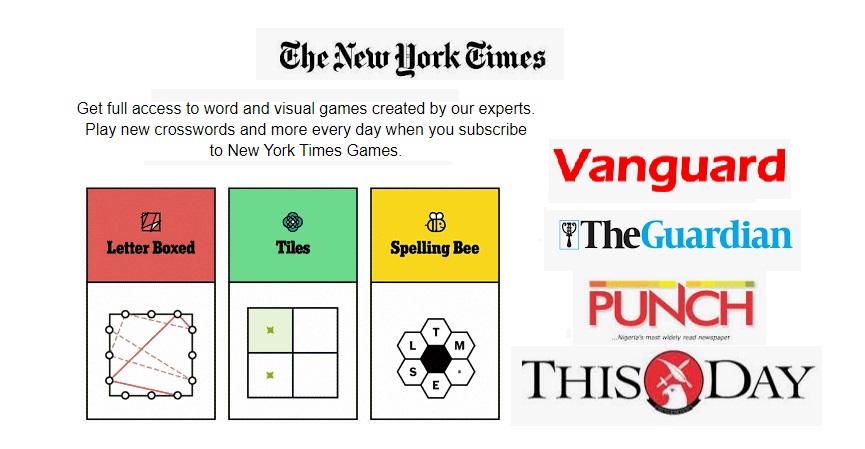
News leaders like New York Times understand this redesign. Yes, who control demand, not necessarily supply, win. It has been investing to own and control demand (i.e. the users). That way, it becomes a platform of itself. This explains why it now offers gaming in its platform. Yes, become a paying customer and you will have many games to play along. The company simply wants to control and influence demand because it wants them to stay longer to sell them things. And to explain why this is a clear strategy, it sends emails telling potential subscribers to subscribe partly to have the opportunity to play these games.

The Nigerian newspaper brands have something they can learn here: news platforms are evolving. The age of just news which Google could disintermediate is gone. You need to offer a clear differentiator to keep those readers coming. Here at Tekedia, we have a mini-school we call Tekedia Mini-MBA. If you are a newspaper and want to partner with us, we are open.

In the digital age, what matters is not who controls supply, but who controls demand. Supply is largely infinite as there are many ways to get to the web, and because it is infinite, users congregate to platforms to help them navigate and make sense of the web.

In 1980, before the digital age as we have it today, the most powerful people in media were newspaper publishers. They were the people you needed to reach to get your message to the world. They decided what everyone read on the dailies and they were powerful. They controlled supply and by controlling supply, they shaped everything including advertising.
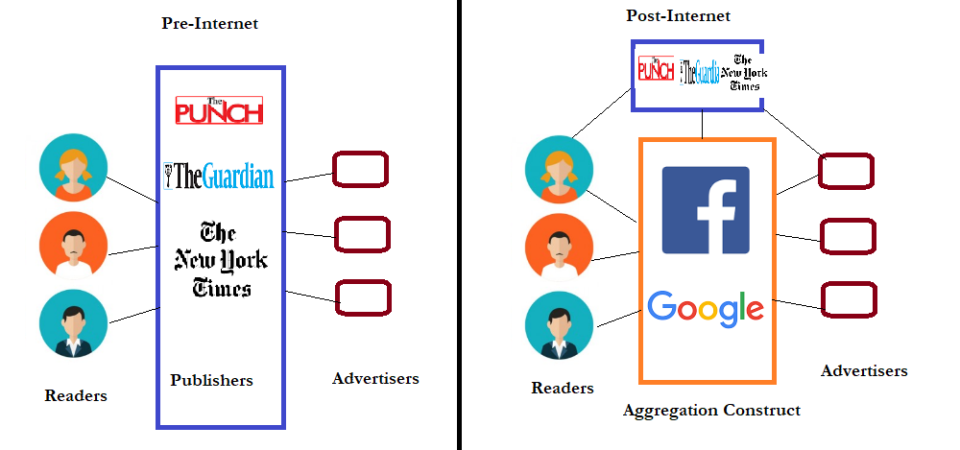
 

The Aggregation Construct

Optimize Your 2021 Growth Model in Nigeria

0

2021 could be exceedingly challenging in Nigeria as companies after companies declare losses. Briscoe Motors  suffered a loss of N1.27 billion in 2019. Guinness  suffered a pre-tax loss of N17 billion. Except banking and telecoms, every other sector is largely under water. If taxes go really down, even funding basic public sector projects will stall. I encourage founders to optimize how they deploy capital in the economy. You cannot over-stimulate growth and run faster than Nigeria because there is a systemic whirlwind blowing right now. Do not blitzscale because Nigeria will not possibly scale well in the next 3 years to give you absorption space.

Why Blitzscaling Struggles in Nigeria


Learn Cloud Security with Suraj Ajisebutu of Laurel IT World

0

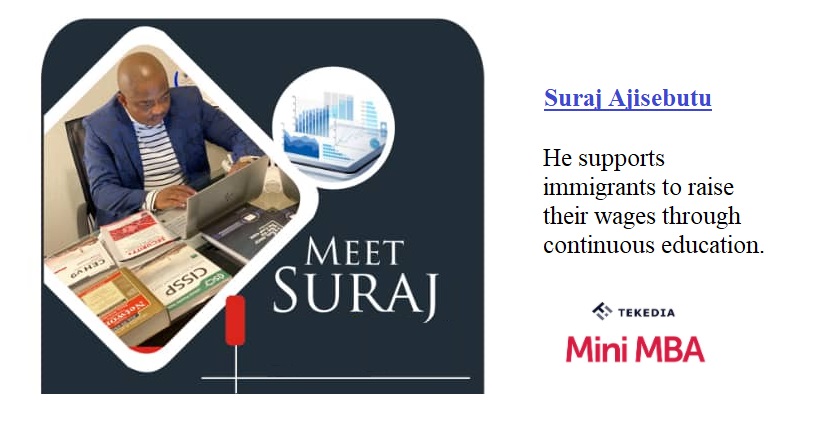
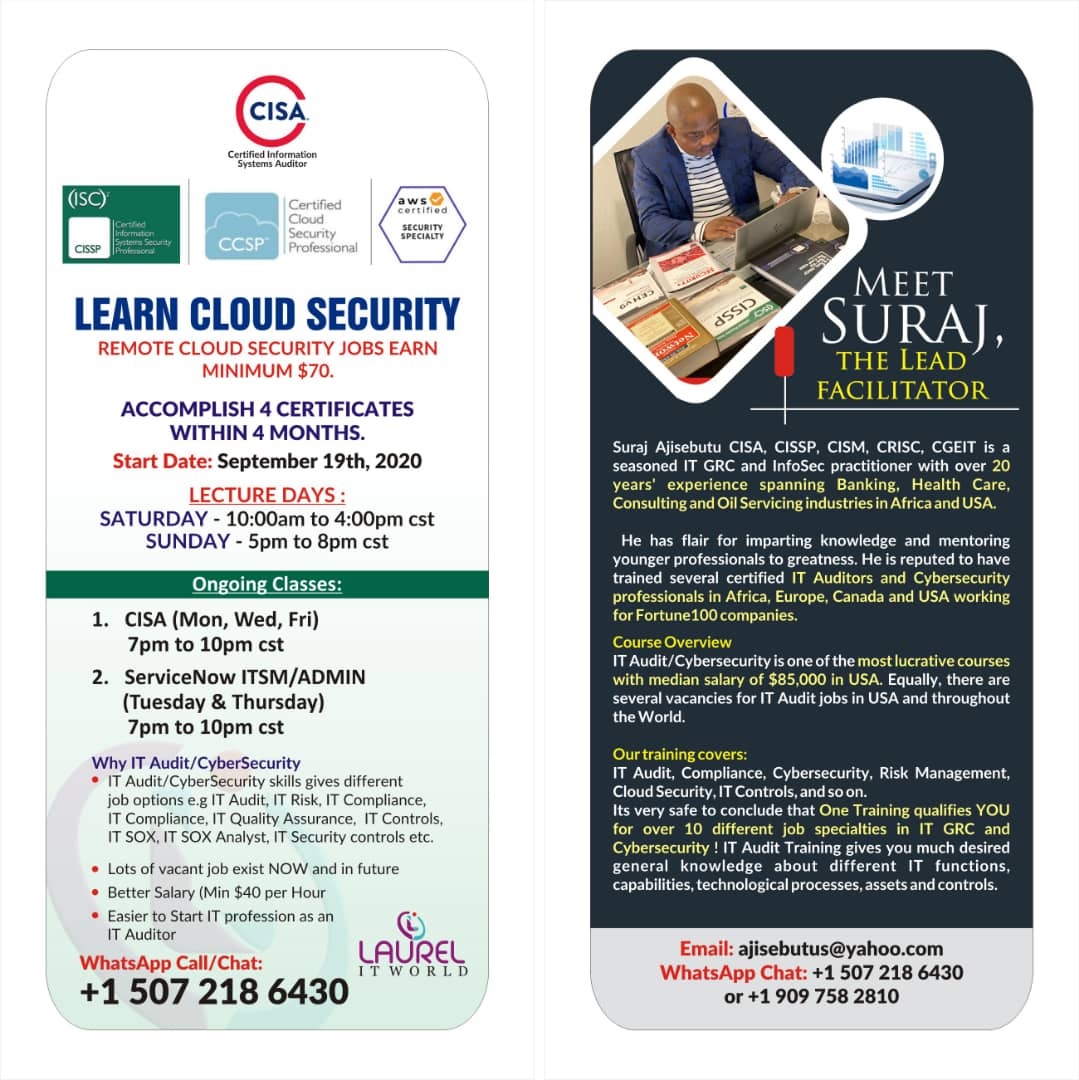
Good People, this is not one of those promos. This is supporting a really amazing African on a mission. Suraj is a technology luminary and he has used his spare time to help many Africans in North America. With him, immigrants who came to the beautiful America have transitioned from a minimum wage of $10 per hour  to a higher scale of $40. He is certified in the leading cybersecurity domains. But he did not stop on digital security. Yes, on his quest to help people, he sent dozens of these immigrants and PAID for their Tekedia Mini-MBA training. He wanted them to understand business and speak business language in America. So, this post is to support his mission and also to tell those who may need his services to connect. His brochure and contacts are on click.

A Texas Businessman Sponsors 30 People To Tekedia Mini-MBA

Lagos State Permits Worship Places to Fully Open, Schools Partially

0
school kids feeding

The Lagos State government has announced full reopening of places of worship and also secondary schools. The State governor, Mr. Babajide Sanwo-Olu made the announcement on Saturday during a briefing.

He said that Muslims can now pray five times a day in the mosques while Christians are free to hold all their weekly services in the churches.

The governor said all public and private schools should reopen from Monday, September 21, 2020, but only students in Junior Secondary School Three (JSS3) and Senior Secondary School Two (SS2) are permitted to have physical classes in public schools.

According to him, the arrangement is to allow the students to prepare for their transitional exams. The JSS 3 students are to use the window to prepare for Basic Education Certificates Examination (BECE), which is scheduled for October 12, 2020. SSS 2 students will use the period to prepare for their transitional exam to SSS 3.

The arrangement however, allowed private schools to reopen fully, though there is suggested guideline for stakeholders to implement a phased protocol for the classes or alternate school days for the students in order to avoid crowding.

On the other hand, pre-primary schools, including nursery, daycare centers and kindergarten are not allowed to reopen in both public and private schools.

Mr. Sanwo-Olu said it is necessary to give details of the rules and protocols in order to clear confusion.

“It has become necessary to issue clarifications regarding the resumption of schools, in order to clear any confusion that may have arisen since the resumption date was announced. Public schools will adopt a phased protocol for resumption of physical classes. Students in JSS 3 and SSS 2 in public schools in Lagos are to resume physical classes from September 21.

“In the same vein, all private primary and secondary schools are permitted to resume from September 21. We have strongly advised school owners and managers to put safety and open in phases similar to the announced schedule for public schools.

“School owners and managers are advised to seriously consider implementing a staggered daily resumption schedule, classes on alternate days during the week, and utilization of distance learning methods as a complement to physical classes. All pre-primary – nursery, daycare and kindergarten – classes and schools in both public and private schools must remain closed,” he said.

The governor said the State Government has made arrangements for the safety guidelines and hygienic protocols to be monitored by the Office of Education Quality Assurance (OEQA), and will permit the restricted classes to resume when it’s sure that all protocols are being observed.

“For all other public school classes in primary school and JSS 1, JSS 2, and SSS 1, announcements for resumption will be made as soon as the State Government is satisfied that all necessary resumption protocols have been put in place. In the meantime, these yet-to-resume classes in public schools are expected to continue their lessons on our various distance learning platforms (online, radio, television and WhatsApp) pending the announcement of dates for physical resumption,” he said.

Meanwhile, Mr. Sanwo-Olu warned that for places of worship to reopen fully, they must abide by safety measures.

“As regards our places of worship, we are now also permitting the mosques to resume their five times a day prayers and in case of churches, they are now also permitted to resume their midweek services. we must not forget that the coronavirus pandemic is still very much with us, and we must therefore strive to prioritize the safety of all our children, teachers, parents, and the entire society,” he said.

On Saturday, September 19, 2020, Nigeria recorded 189 new cases to continue its streak of low numbers that started weeks ago. However, there have been 57,145 cases so far, resulting in 1,095 deaths.

The consistent decline of new cases has spurred the governments to remove the restrictions on businesses, schools and religious places. Lagos being the epicenter has witnessed a drastic increase in the number of discharged persons. Over 15,600 persons have been discharged, indicating dramatic decline in the number of Covid-19 related deaths.

Nevertheless, Mr. Sanwo-Olu said the state government will continue to make adjustments as required, but the gradual resumption of social, educational, and economic activity must never be taken as an excuse to let down our guard against the pandemic.

Differentiating Between Bribes and Tips

2

Mr. Bean (Rowan Atkinson) checked into a hotel in one of his movies. While he was admiring his room, his car’s steering wheel was returned to him by a porter. But the young man did not leave immediately because he was expecting a tip from him. Unfortunately for him, Mr. Bean did not know the ethics of tipping workers, especially those in the hospitality industry. The young man decided to remind Mr. Bean that he was yet to give him “something” so he cleared his throat several times, drawing Mr. Bean’s attention. But then, Mr. Bean, in his usual manner, misunderstood or chose to misunderstand the young man and instead of giving him money, he gave him menthol sweets to help him clear his throat very well.

One thing about comedies, including Mr. Bean’s farce, is that they are performed to address and correct issues in the society. In this case of Mr. Bean and the porter, it is hard to say who should be corrected and which issue should be addressed. But, if you ask me, I will say that both Mr. Bean and the porter needed corrections. Mr. Bean should have known the usual ethics in the hospitality industry while the porter shouldn’t have asked for a tip. Tips come from the heart; it is not coerced. That’s the message behind this essay.

A few days ago, I received my regular news updates from Google and was shocked to see the case of a young man sacked by his employer because he received a tip ($100) from David Adedeji Adeleke, aka Davido. This young man called on Davido to come to his aid by telling his employer that he “did not beg” him for the money. The young man in question works in an airport and it was revealed that his employer banned them from receiving tips.

I don’t know why the young man’ employer and so many other Nigerian employers felt that tips should be criminalised in the country. Both the private and public sector in this country frown at it. Some people will tell you that tips will compromise your stand on certain issues, but I don’t see how a sign of gratitude, which was given after services have been rendered, can compromise decisions. Maybe the problem we have here is that we see tips and bribes as one and the same thing. This then calls for the need to differentiate the two.

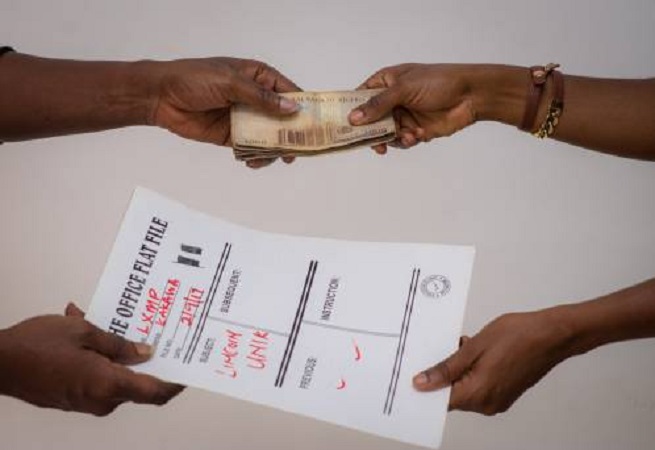
Bribery is wrong. The reason is that it makes people do what they shouldn’t have done. It tackles a person’s moral belief and conscience. In fact, my father never called it a bribe; to him, a bribe is “commit”. He will say something like, “he will commit the man to do the work”, “the man has been committed”. This simply means that bribery is an incentive given before a service is rendered so as to compromise the person’s decision. Hence, for it to be called a bribe, there must be an intention to “coerce” and it must be done “before” the service was rendered (even if it was a promise of “something”).

But when it comes to tips, the intention is to show gratitude and to encourage. Furthermore, tips are given after services have been rendered. A lot of us feel so much gratitude, or even admiration, for the way a person did his work. We know that person is going to be paid by his employer for the work he did but we want the person to realise how we felt about what he did. For those reasons, we sometimes dip our hands into our pockets and hand workers money or other forms of gifts. It is not coercion. You didn’t make the person serve you the way he did; but you will definitely make him do his works better, even to others.

But the question still remains, “Why do Nigerian employers criminalise tips?”