DD
MM
YYYY

PAGES

DD
MM
YYYY

spot_img

PAGES

Home Blog Page 6138

Nigerian Undergraduates Need to Focus More on Relevant Skills Acquisition Than Grades – Habeebah Odusoga

1

She graduated on top of her set with a first class in Mass Communication. She has moved on to get a second degree in the same discipline while working by the side. She now works for TVC Nigeria. She shares her experience with Rasheed Adebiyi. Here are the excerpts.

Could you tell us about yourself?

My name is Habeebah Adesewa Odusoga, I’m a broadcast journalist and I currently work at TVC Communications. I’m from Ogun State, I’m a Muslim, and the last child in a family of four. I graduated from Fountain University, Osogbo where I acquired a BSc in Mass communication as a first class student. I also have a Masters degree from the University of Lagos. I love reading and learning particularly improving my skills. I can learn from anyone, anywhere and on anything.

We learnt you graduated with a First Class. What is your opinion about grades as you have found yourself in the industry now?

Yes, Alhamdulillahi. I graduated with a First class and I can boldly say this has helped my journey in the industry. Although, it is not just about the grades. You’ll find people in the industry who didn’t even study Mass Communication and are doing well in the field. In my opinion, one should really match up their grades with skills that would be useful in the industry. I believe to achieve a first class is no child’s play and for a course like mine you’d have to be good in writing skills, presentation skills, creativity, ability to play on words etcetera. All of these were required to be a first class student in my class then in the university. And to come out with a first class, yes the grade was a contribution but definitely not the ultimate thing. You need to build yourself further. Up your game, challenge yourself, go beyond the four walls of the classroom.

If you have a chance to get another first degree, which one would you vote for between grades and skills?

Well, fortunately or unfortunately the top requirement in the labour market is the skill and not the grade particularly. Although I may be wrong as far as some discipline is concerned, but I think many people would ask about your skills first before your grade. It goes hand in hand I would say. But if I’d choose one, I’ll choose skills over the grades. The skills have worked for me more than the grades. I bet many of my employers cannot even remember if I am a first class student. You have to prove it to them with your skills. So yes, it’s the skills for me.

You earned a first degree from Fountain University, a private institution,  and then moved on to the University of Lagos for your Master’s Degree. What is your take on the private versus public universities debate?

It’s not even pride. I can’t talk for all private universities. But I can boldly say being the first set of mass communication student in Fountain University, there wasn’t much of a difference in what I had already learnt in my first degree. But of course I had the opportunity to learn from veterans in the discipline at the University of Lagos, but that’s not to say I didn’t get first hand learning from my first degree. In fact, talking of skills acquisition, I got all I needed in my first degree. Skills in broadcast presentation, writing, video editing, voice over, audio editing, photoshop, newspaper and magazine production, even cinematography. So it was all emcompassing. It’s 50 50 for me.

In the midst of huge complaints of unemployment by many graduates, you crossed the path from first to second degree and your dream job. What is your advice for recent undergraduates and young graduates in navigating the loop between higher education and labour market?

First I can be considered to be a lucky one. But aside this, it’s much more about attitude and hardwork. I had two different internships. I was able to portray myself well to my employers. I worked really hard such that I almost didn’t have free time. I also had good relationship with the staff. I was respectful and didn’t have any bad record. So it was easy for me to go back and seek employment. Additionally, I was also able to gather some required skills that are useful in the industry during my undergraduate studies and that worked well for me. In summary, it is hardwork and attitude. So my advice for any undergraduate is to take advantage of your internship days. It’ll work for you. You can also volunteer to work for any organisation of your choice. Remember, it’s not always about the money. Money will come, but gain yourself a space first and you’ll be proud of yourself
How President Buhari Can STOP Oil Truck Explosions on Nigerian Roads

2

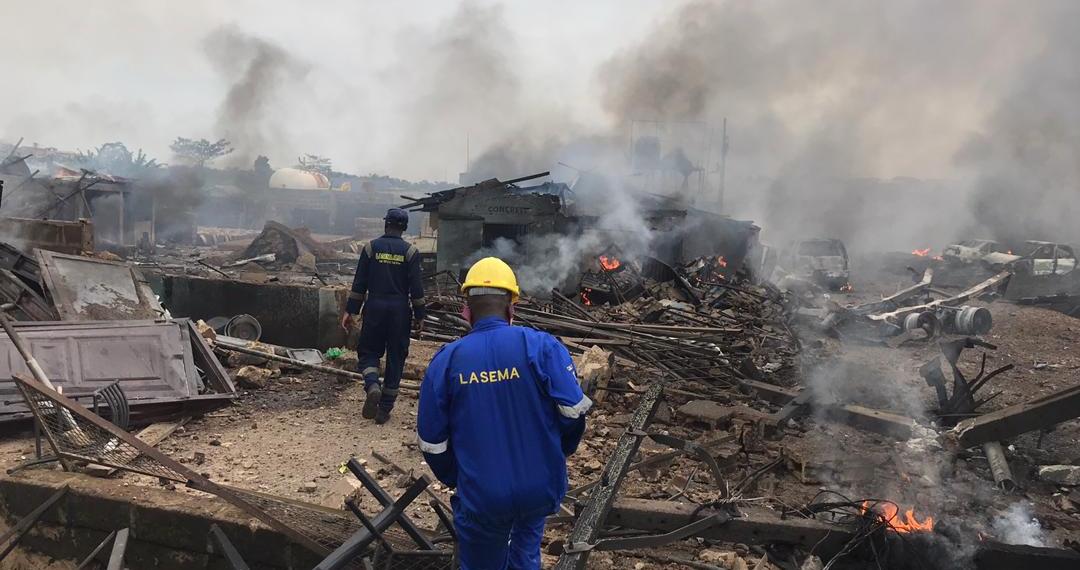
It happened in Lokoja a few days ago. Yes, another oil truck exploded and killed many people. As I write, Lagos is in pain as an oil truck has done the usual: exploded on our roads. “On arrival at the scene, it was observed that there was a gas explosion at the aforementioned address. Further investigation revealed that an unknown truck conveying gasoline had a lone accident and exploded. The impact of the explosion led to fire at adjoining buildings and several vehicles were burnt,” LASEMA said in a statement.

This evil will not stop until Nigeria leads. My proposal has remained simple: courts should allow victims to directly sue the corporate owners of the trucks and judges should make space for a total transfer of ownership of the companies to compensate the victims. In other words, if the company does not have much to compensate, the court could simply award the whole company to the victims.

If you do that, companies will start paying attention to this mayhem.  At the moment, there is no real penalty and that is the reason we keep having falling trucks in densely populated communities, killing many across Nigeria. Largely, the only way to fix this paralysis is to go after the wallets of the owners of these trucks. Once we do that as a nation, this oil truck explosion on our roads will disappear.

Mr. President, your sympathy press statement is not what we want. You need to take ownership, and fix this urgently.

The Richest Man in China Makes Bottled Water – Now, Respect Naija’s Pure Water Maker

2

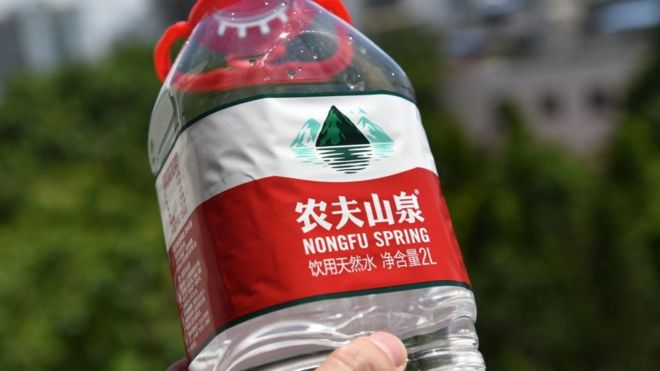
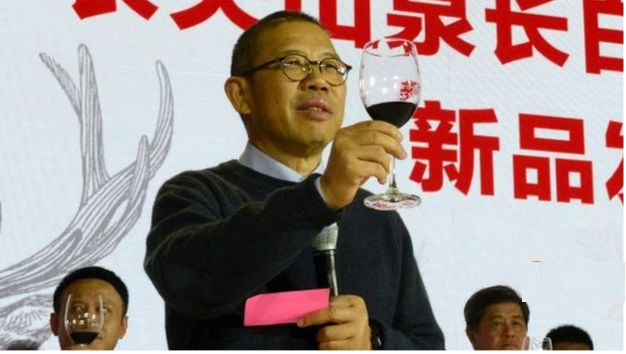
The richest man in China sells bottled water. Yes, Zhong Shanshan is ahead of Alibaba founder Jack Ma  on the mantle. Bottled water has brought $58.7 billion in his empire: “Nongfu Spring shares jumped 54% on the first day of trading earlier this month when they were listed on the Hong Kong stock exchange.” Who says a pure water manufacturer in Nigeria cannot ride to the mountaintop? Now, you know those to respect when you see them….Besides coding, there are many ways to ride higher.

The richest person in China is a bottled water tycoon, knocking Alibaba founder Jack Ma from his mantle. Zhong Shanshan founded Nongfu Spring in 1996 in the Zhejiang province on China’s Eastern coast. The Bloomberg Billionaires Index now puts Mr Shanshan in top spot with wealth of $58.7bn (£46.2bn).

Zhong Shanshan founded Nongfu Spring in 1996 in the Zhejiang province on China’s Eastern coast.

The Bloomberg Billionaires Index now puts Mr Shanshan in top spot with wealth of $58.7bn (£46.2bn).

The recent stock market listing of his bottled water firm and a controlling stake in a vaccine maker have helped boost his fortunes.

Nicknamed the “Lone Wolf”, Mr Zhong is now Asia’s second-richest person behind India’s Mukesh Ambani, the billionaire behind Reliance Industries.

LinkedIn Comment on Feed

Before everyone here gets excited about selling “pure water” you should know something. Rising incomes and fear of tap water is what’s driving bottled water consumption in China. Moreover, Nongfu Spring has a 30 year permit to extract water from 10 of China’s most famous unspoilt body of water and is also affiliated with the CCP. As Prof Ndubuisi will say the company has a moat against competition or in Naija lingo, “Zhong get government connect”.

My Response: Please pure water business in Nigeria is very complicated indeed!

The Urgency of Fixing Nigeria’s Manufacturing Sector As Index Falls

1
Aba shoes sector would grow with partnerships [source: technomy]

We hail our digital companies but the fact remains that most would not create enough jobs without strong physical components. In the late 1970s,  General Motors used close to one million workers to serve about 300k customers. Today, Facebook uses just sub-40k workers to serve more than 4 billion customers. Apple uses about the same number, but Foxconn which Apple relies upon on the physical elements of its business has excess of one million in its payroll.

That brings me to the big news that Nigeria’s manufacturing sector is further contracting. Besides  the impact of Covid-19, the sector has been struggling for years. The border closure did not help the very small manufactures who focused on the niche markets in the western and central African regions. Covid-19 only exacerbated a trajectory that has been ongoing for years. Of course we do know the big elephant in the room: electricity  – the weakest link in Nigeria’s manufacturing sector.

The Manufacturing Purchasing Managers’ Index (PMI) in September stood at 46.9 index points, indicating a contraction in the Nigerian manufacturing sector for the fifth month.

This was disclosed by the Central Bank of Nigeria (CBN) in its September PMI report released on Wednesday.

According to the report, four out of the 14 sub-sectors surveyed reported expansion (above the 50 per cent threshold) in September.

It listed the expansion order as electrical equipment; transportation equipment; cement and nonmetallic mineral products.

So, the point is this: Nigeria needs jobs and most of those jobs are not going to come from our digital startups. Rather, the old industrial players would be expected to provide many assists as in the game of football. Aba shoe sub-sector needs to be fixed just as many clusters across the nation.

Aba could be great and has the sparks of genius to compete with Italy and Spain in the leather industry. I have offered some clear strategies to redesign the sector. Establish a vehicle that will galvanize the different shoe making entities into brands. Each brand will push for higher quality through better tools and training and advocate more collaboration among players. A requirement that a brand buys from the entities will be established. It will be similar to a merchant buying farm outputs from farmers even as the merchant has provided seeds to the farmers at planting season. Through strategic advertising and marketing, Aba will reach its promise.

Nigeria needs to work!

Fixing Aba Shoe And Leather Industry

The Challenge Ahead in Nigeria with Labour’s Planned Protest

2

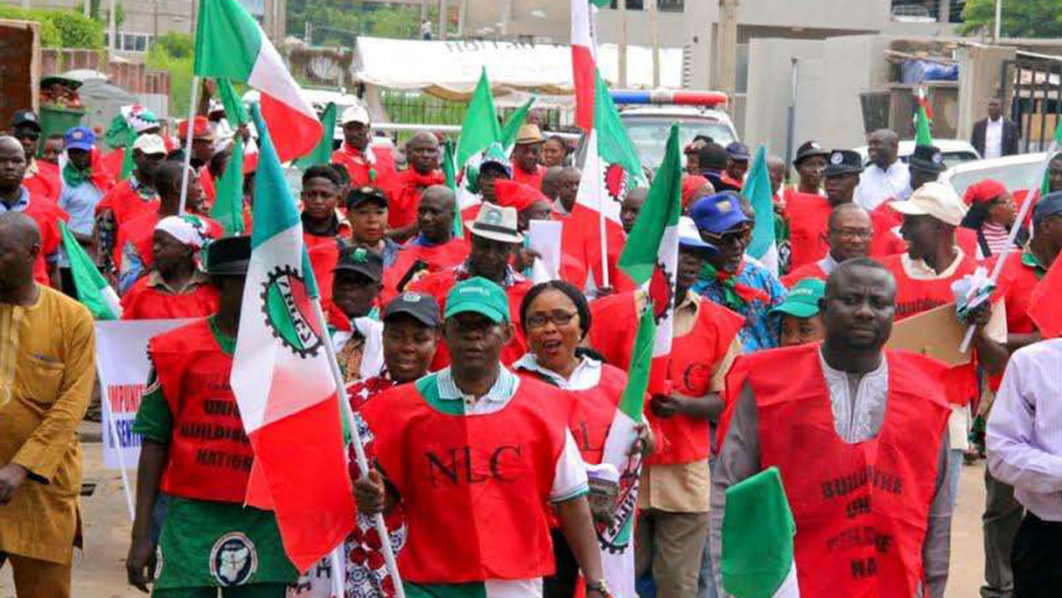
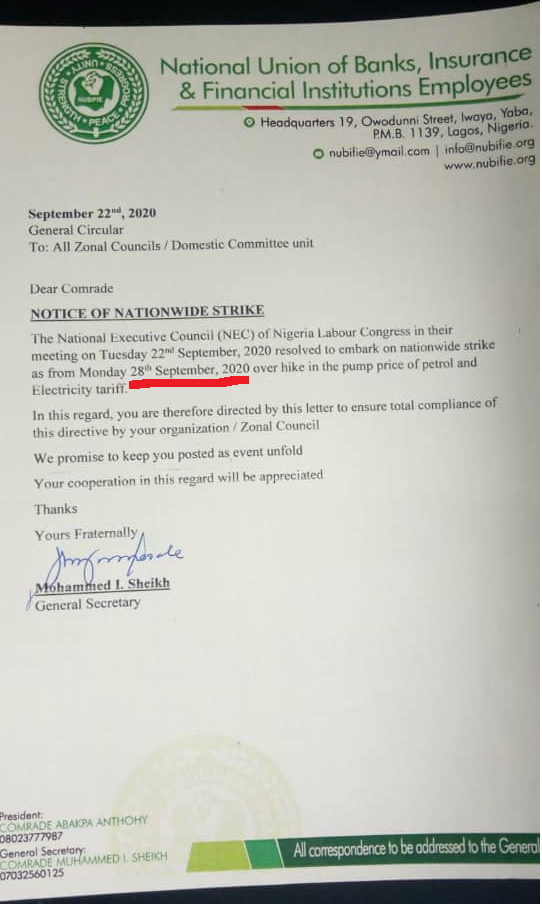
It is a very big concern and this one could set Nigeria back by at least five years. How do we get Nigeria Labour Congress (NLC) and Trade Union Congress of Nigeria (TUC) to reconsider the imminent strikes? Yes, barring any rapprochement, Labour plans to begin a nationwide strike on Monday to protest against Federal Government ordered hike in prices of petrol and electricity tariffs. The TUC had noted that it would join the protest. To make this more challenging, NLC does not want to meet to negotiate more (of course, it has been doing that for ages with no results).

Nigerian labor and trade organizations have been mobilizing its members and the entire labor and trade ecosystem in Nigeria, for a nationwide strike action aimed at forcing the federal government to reverse the recently increased petroleum pump price and electricity tariff.

The Nigeria Labour Congress (NLC), on Tuesday announced the decision of its Central Working Committee (CWC), to commence a nationwide indefinite strike and mass protest from September 28, after it was approved by its National Executive Council (NEC).

First, I support NLC because if you look at data, Nigerian workers are getting poorer seasonally due to rising inflation, currency deterioration, etc, which are worsening faster than pay increments. Yet, the root causes of these paralyses are what Labour is protesting against. If we remove fuel subsidy (killing the institutionalized corruption along), Labour will benefit. More so, if we get electricity to the point where pricing is at parity and evidently reflective, investors will come to fix our electricity supply industry.

Indeed, we need to get Labour to understand that the government’s call on prices of petrol and electricity is necessary to structurally improve Nigeria. We have been trying subsidies on electricity and petrol since 1960, with nothing to show. Labour needs to allow this new experiment for at least two years.

Notwithstanding, President Buhari needs to improve his gameplan. He needs to learn that Nigeria is not a military barrack. Though he never likes to speak to the media, he could have carried these men and women along, and provided them opportunities to communicate to their constituencies. He likes to create artificial crises when there should be none. Consultation and collaboration would have managed this tension. His government will not recover if these strikes go ahead as the nation is already struggling across many domains.

But the issue now is how to get Labour to abandon this strike. What should Nigeria do now since the option of reversing these tariffs makes no sense?

Comment on LinkedInf Feed

Prof from the labour position, they are not against the deregulation and price hike but what do govt have on the table to cushion the hardship? Is there a plan to make refineries work to reduce or stop importation of fuel? Has Govt cut down on the cost of governance? Govt didn’t do the needful.

My Response: Absolutely – that is where I blamed Buhari for his style of not getting people together on a table to talk. He may have some ideas but he never communicates. Without that communication, you create a vacuum. I still think we need weekly briefing in Aso Rock