DD
MM
YYYY

PAGES

DD
MM
YYYY

spot_img

PAGES

Home Blog Page 614

Reinvention of Crypto Exchanges is Driving Mainstream Adoption and Innovation

8

Crypto exchanges are undergoing significant transformations to adapt to evolving market dynamics, regulatory landscapes, and user demands. Exchanges are increasingly catering to institutional investors, who are driving significant capital inflows.

For instance, platforms like Bullish are targeting institutional clients with stable, recurring revenue models, leveraging sophisticated infrastructure like segregated cold storage and prime-broker desks to meet fiduciary standards. This shift is fueled by the introduction of spot Bitcoin ETFs and growing institutional adoption, with trading volumes reaching $19 trillion in 2024, more than double the previous year’s $8.7 trillion.

Exchanges are navigating fragmented global regulations to maintain competitiveness. The EU’s Markets in Crypto-Assets (MiCA) regulation, fully enforced by December 2024, has made Europe attractive for exchanges, with countries like Luxembourg and France serving as entry points. Similarly, Dubai’s Virtual Assets Regulatory Authority offers rapid approvals and zero corporate tax, positioning it as a hub for Middle East operations.

Exchanges like Bullish are also pursuing licenses like New York’s BitLicense to expand market access. Exchanges are expanding beyond traditional trading. For example, Binance has introduced tools like the Binance Wallet Extension for seamless Web3 access, supporting DeFi and cross-chain asset management.

Coinbase is enhancing DEX trading on its Base platform to offer broader asset access. Some exchanges are also integrating tokenized real-world assets (RWAs) and stablecoin services, with firms like Mastercard providing infrastructure for stablecoin payments in regions like Europe and Africa.

In response to hacks and fraud, exchanges are bolstering security. Binance, for instance, is part of the Beacon Network, a real-time crypto crime response system developed with TRM Labs to prevent illicit fund transfers. Meanwhile, exchanges are addressing vulnerabilities exposed by incidents like the $44 million CoinDCX breach in India, focusing on robust infrastructure and compliance with anti-money laundering (AML) and know-your-customer (KYC) requirements.

Major financial institutions are partnering with exchanges to bridge crypto and traditional finance. JPMorgan’s collaboration with Coinbase to allow Chase credit card funding for crypto purchases starting in fall 2025 is a notable example. Additionally, firms like Citigroup are exploring stablecoin custody, reflecting a broader trend of mainstream financial players entering the crypto space.

Exchanges are supporting new financial instruments like tokenized equities and ETFs. For example, Kraken and Backed have partnered with TRON DAO to broaden access to tokenized equities, while the SEC’s “Project Crypto” aims to modernize securities regulations for crypto-based trading, potentially enabling tokenized asset markets.

Some exchanges are going public to gain legitimacy and attract capital. Bullish’s NYSE debut in August 2025, with a valuation of $13.16 billion, underscores this trend, with other firms like Gemini and Grayscale also filing for IPOs. This move aligns with a pro-crypto regulatory shift in the U.S., boosting investor confidence.

Mainstream financial integration accelerates, with banks like JPMorgan and Citigroup entering the space, potentially legitimizing crypto as an asset class and driving broader market growth (e.g., $19 trillion in 2024 trading volume).

Diversified services like DeFi wallets (e.g., Binance Wallet Extension), tokenized RWAs, and stablecoin payments expand access to financial tools, especially in underbanked regions like Africa. Crypto could democratize finance, but complexity and regulatory barriers may limit adoption among less tech-savvy users, creating a digital divide.

As exchanges innovate with new products (e.g., tokenized equities, ETFs) and go public, smaller or less adaptable platforms may struggle to compete, leading to mergers or exits. A few dominant exchanges could emerge, potentially reducing consumer choice but improving service quality and reliability. Innovation may slow if consolidation stifles competition.

The long-term impact depends on how exchanges balance user needs, compliance, and technological advancements. These changes reflect a broader maturation of the crypto industry, driven by institutional interest, regulatory clarity, and technological advancements.

However, challenges like security risks, regulatory uncertainty, and the need to balance retail and institutional demands persist. Exchanges that successfully innovate while maintaining robust compliance and security are likely to lead the next phase of the crypto market’s evolution.
China Unveils Breakthrough All-Frequency 6G Chip, Pushing Boundaries of Global Connectivity

0

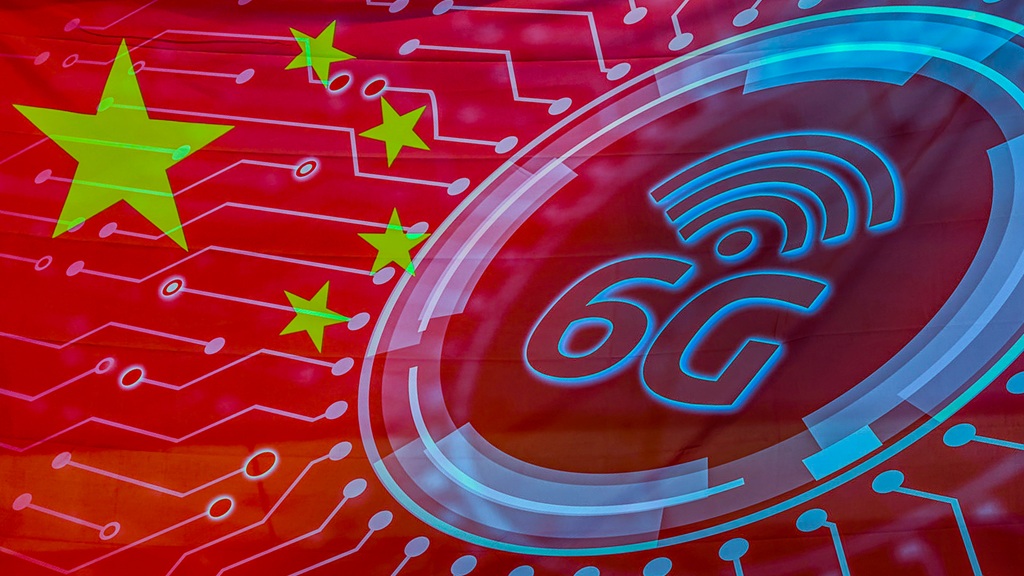
Chinese researchers have built the world’s first “all-frequency” 6G chip, capable of mobile internet speeds above 100 gigabits per second, according to the South China Morning Post.

The team, led by scientists from Peking University and City University of Hong Kong, integrated the entire spectrum from 0.5 GHz to 115 GHz into a thumbnail-sized device—work that traditionally required nine separate radio systems.

The 11mm by 1.7mm chip consolidates millimetre-wave and terahertz communications with low-frequency microwave bands, enabling seamless switching between ranges suited to both remote coverage and ultra-high-speed use cases.

“There is an urgent need to tackle 6G development challenges,” said Professor Wang Xingjun of Peking University, citing surging device demand and the need to combine strengths across bands.

Higher frequencies bring huge bandwidth and very low latency for things like VR or robotic surgery; lower bands enable wide-area reach into mountains, subsea links, and even space.

At the core is photonic-electronic fusion. A broadband electro-optic modulator converts wireless signals to optical, which are processed through photonic components and transmitted via mixing between tunable lasers. All functional units sit on a single chip.

In testing, communication quality remained stable across the spectrum, the system tuned 6 GHz of frequency in 180 microseconds, and a single channel exceeded 100 Gbps. Guangming Daily reported the system can “rapidly, accurately and noiselessly” generate signals anywhere in the 0.5–115 GHz range. It also features “frequency-navigation” to hop instantly to a clear channel under interference.

The device supports multipurpose programmability and dynamic frequency adjustment, making it suitable for dense venues. The researchers say it establishes a hardware base for AI-native networks that adjust parameters on the fly and perform real-time environmental sensing. Next, they aim to build plug-and-play modules no larger than a USB stick for phones, base stations, drones, and IoT devices.

The geopolitical positioning in the 6G race

This breakthrough lands in the middle of a strategic contest over who sets the standards and supplies the base hardware for 6G. It underlines Beijing’s argument that China remains ahead in end-to-end “G-network” industrial capacity—from chip R&D and base-station radios to massive-scale deployments—while Washington, Seoul, and European capitals push their own roadmaps.

United States. The U.S. approach centers on a coalition model that marries big-tech platforms, cloud and semiconductor leaders, and telecom vendors to steer standards, spectrum policy, and interoperable architectures. Washington has prioritized open and virtualized RAN, export controls on advanced chips, and funding for domestic semiconductor capacity to keep U.S. firms central to AI-wireless convergence. American labs and companies lead in AI accelerators and cloud, which will be pivotal in 6G’s “AI-native” control plane.

The Chinese chip’s photonic-electronics fusion directly touches that frontier, raising the stakes for U.S. efforts to channel 6G toward open interfaces and domestic compute.

South Korea. Seoul has paired national strategy with industrial execution through Samsung and the big carriers, emphasizing early field trials, device-network co-design, and terahertz experimentation. Korea’s edge is speed from lab to street-level pilots and tight device-network integration. China’s all-frequency chip targets the same advantage by collapsing multi-band complexity into one module that can roam from low bands to terahertz without radio swaps.

Europe. The EU’s strengths lie in standards diplomacy and network equipment via Nokia and Ericsson. Brussels has leaned on coordinated spectrum policy, security vetting, and large research programs, aiming to codify energy efficiency, resilience, and interoperability into 6G blueprints.

A Chinese, photonics-driven “any-band” chip presses Europe to decide whether to double down on indigenous components or rely on third-country silicon while preserving vendor diversity in RAN.

Why Beijing can claim momentum in “G-network” leadership

China’s communications push is long-running. The country scaled 4G rapidly and then built the largest 5G footprint by sites and subscribers. Huawei, in particular, led the 5G rollout with broad portfolios in radios, core, transport, and devices, becoming the top global RAN supplier by share during much of the deployment window. That rise was checked when the United States moved to curb Huawei’s global reach through entity-list restrictions, export controls on advanced chips and design tools, and diplomacy urging allies to limit or exclude Huawei from 5G networks.

Several European countries tightened rules, and some operators ripped and replaced Huawei gear. The curbs dented Huawei’s global expansion, but inside China—and in parts of Asia, Africa, and Latin America—the vendor continued to ship at scale and iterate its technology stack.

The new all-frequency 6G chip underscores that China’s research pipeline remains deep and coordinated across universities, labs, and industry. Analysts believe that integrating 0.5–115 GHz on a single photonic-electronic platform is a strong signal that Chinese teams are aiming to collapse hardware complexity and push multi-band, AI-steered networks into practical modules. If these parts reach mass production and plug cleanly into base stations and devices, Beijing will have a tangible lever in standards talks and early trials.

What this means for the race ahead

It is believed that if China can translate this lab-proven chip into robust field hardware, it gains negotiating power in spectrum and standards forums and a head start on modules that roam seamlessly across low, mid, mmWave, and terahertz. The U.S. will lean on AI compute leadership, cloud-RAN, and open interfaces to keep networks flexible and vendor-diverse. South Korea will sprint on early commercialization and device-network polish. Europe will work to anchor security, energy efficiency, and supply-chain resilience into the rulebook.

The chip’s AI-native design is the battleground: whoever marries radios, photonics, and edge/cloud AI orchestration most effectively will shape not only 6G performance but also the economics of deployment in rural areas—the very gap this device is built to narrow.

Characteristics of the World’s Greatest Enduring Companies

0

The pursuit of corporate endurance is not merely a game of market capitalization but a deep exercise in engineering a company’s very DNA. The world’s greatest enduring firms, from technology giants to industrial leaders, are defined not by their fleeting profits but by their ability to navigate and shape market systems. They understand that winning is not about simply competing within an existing ecosystem; it is about establishing a new architecture of commerce that others must follow. This foundation of systemic control creates an unassailable moat against competitors and provides the bedrock for long-term survival.

This longevity is powered by a relentless, dual-pronged focus on innovation and execution. Enduring companies are perceptively innovative, constantly pushing for new solutions to unmet needs, yet they are also ruthlessly pragmatic in their application. Their business model is a simple playbook: they solve market frictions by building platforms and services that their customers cannot imagine living without. This customer obsession is not a slogan but an operational truth, driving every strategic decision and ensuring that the company’s value proposition remains fresh and indispensable.

Ultimately, the blueprint for an enduring company is built on a simple premise: a great company is the sum of its awesome products and superior execution. Vision is translated into a clear mission, and that mission is executed with discipline and tenacity. It is this combination of forward-looking vision and flawless, on-the-ground delivery that transforms a mere business into a category-king, securing not just a place in the market but also a place in the annals of business history.

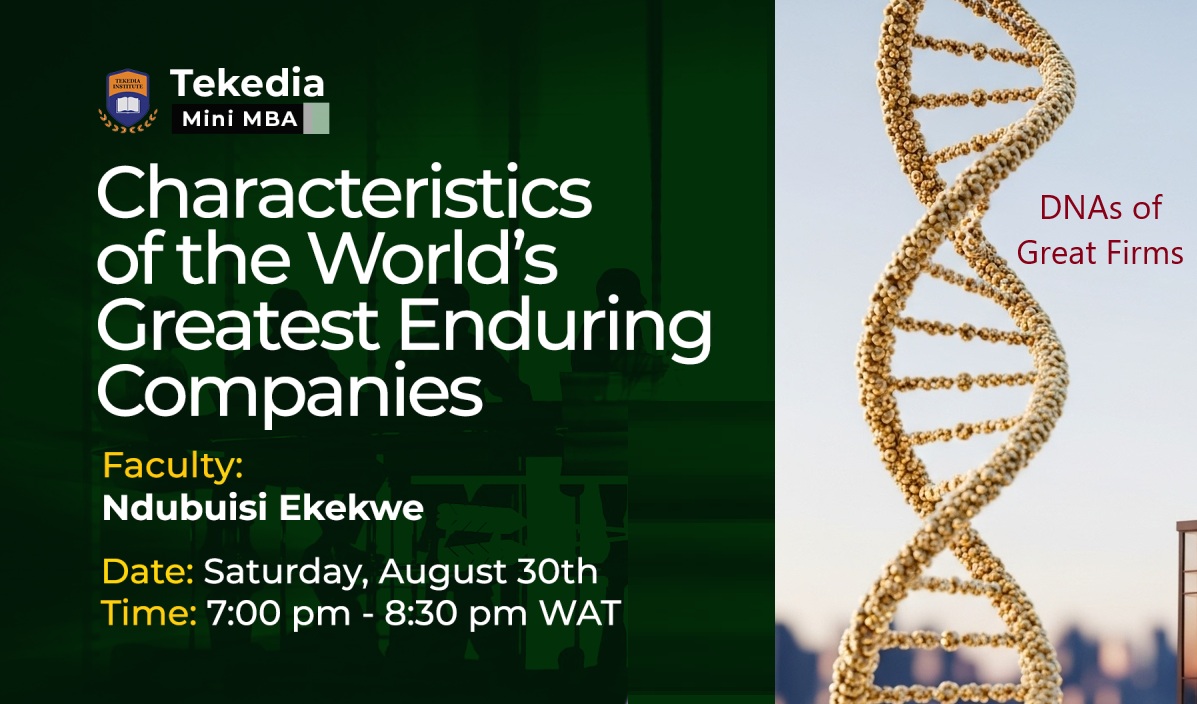
Today, at Tekedia Institute Mini-MBA, I will explain four things which define greatness in companies and how those firms become category-kings in markets. Register for the next edition of Tekedia Mini-MBA which begins next month here.

Sat, Aug 30 | 7pm-8.30pm WAT | Characteristics of the World’s Greatest Enduring Companies – Ndubuisi Ekekwe

China to Launch New K Visa on October 1, Targeting Young Global Tech and Science Talent

2

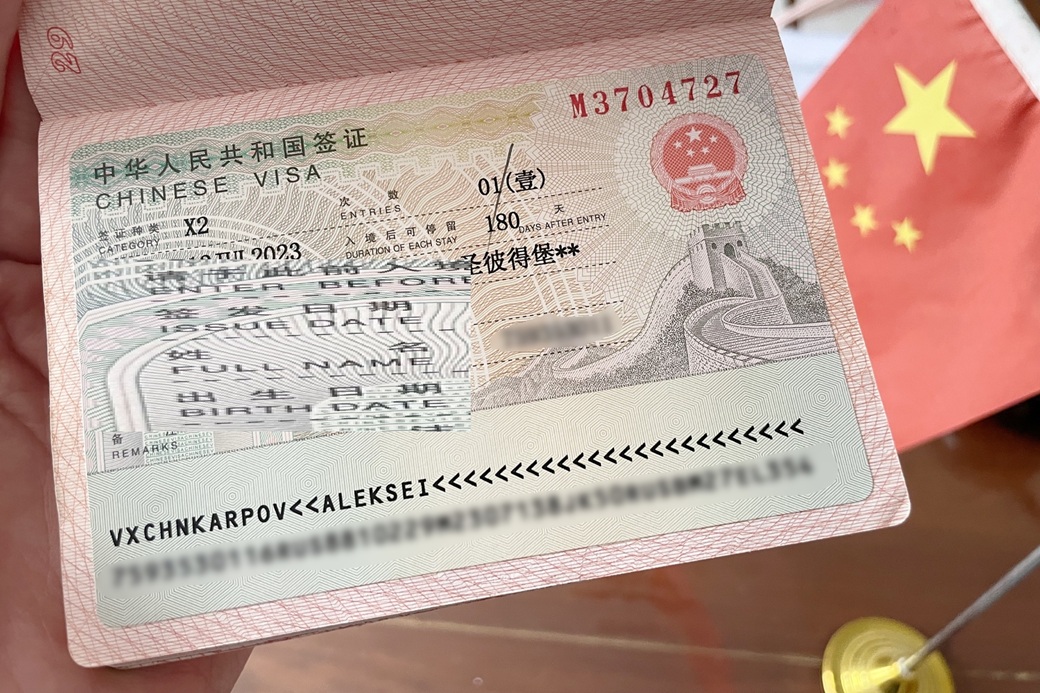
China is set to introduce its new K Visa on October 1, 2025, in a move widely seen as part of its strategy to open its economy further and compete for global talent.

The visa is designed to attract young professionals in science, technology, and entrepreneurship, marking a shift towards policies similar to talent visa schemes in the U.S., Europe, and Singapore, which have long been magnets for skilled migrants.

Unlike traditional Chinese work visas, the K Visa removes the hurdle of employer sponsorship. Applicants will not need a job offer or invitation from a local employer before applying, making it easier for independent researchers, entrepreneurs, and innovators to gain entry. Holders will also enjoy multiple entries, longer validity, and extended stays, enabling participation in research collaborations, academic exchanges, cultural projects, and business ventures.

The eligibility criteria highlight China’s focus on the next generation of innovators. The scheme primarily targets individuals under 45 years old, with advanced degrees from top global universities or work experience in high-level research labs and leadership roles in science or technology sectors.

This mirrors international practices, where countries like the U.S. offer O-1 visas for individuals with extraordinary ability, the EU promotes Blue Cards for skilled professionals, and Singapore markets its Tech.Pass to attract top global tech talent.

China’s approach reflects a growing recognition that access to global knowledge and human capital is as critical as domestic investment in innovation. Beijing aims to position itself as a global hub for science, technology, and entrepreneurship, in line with its ambition to rival Western economies in critical sectors such as artificial intelligence, renewable energy, biotech, and advanced manufacturing.

The visa’s introduction is also part of a broader liberalization effort. By July 2025, China will have signed visa-free or mutual exemption agreements with 75 countries, complementing the new program. At the same time, inbound travel is surging: 38.05 million international trips were recorded in the first half of 2025, up 30.2% year-on-year, signaling revived foreign interest in China’s economy and opportunities.

For young professionals worldwide, the K Visa opens a new frontier. Just as the U.S., Europe, and Singapore have used talent visas to draw some of the brightest minds into their economies, China is now competing on the same playing field, offering international innovators a pathway into its expanding technology and research ecosystem.

Key Features of the K Visa

Multiple Entries: One of the standout aspects of the new program is its flexibility. Visa holders will be able to enter and exit China multiple times over the visa’s validity period, encouraging ongoing international collaboration and cross-border innovation.

Longer Validity and Extended Stays: The K Visa grants extended validity periods, allowing foreign professionals to remain in China for longer durations without frequent renewals. This makes it ideal for long-term projects, joint research initiatives, and entrepreneurial ventures.

Ease of Access: Unlike other visa types, the K Visa does not require applicants to secure a job offer or invitation from a Chinese employer. This opens the door for independent talent, recent graduates from top universities, and early-career innovators seeking opportunities in China’s growing technology ecosystem.

Crashes, Lawsuits, and Lagging Tech: Tesla’s Struggle to Save Its “Full Self-Driving” (FSD) Reputation

0

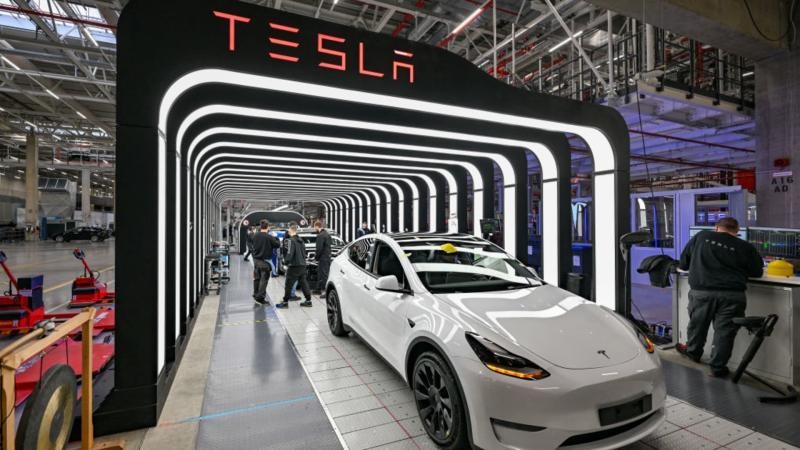
On a humid night in 2019, a Tesla Model S sedan sped through a Key Largo intersection at over 60 miles per hour. Behind the wheel was George McGee, who admitted he had dropped his phone while driving and thought Tesla’s Enhanced Autopilot system would stop the car if an obstacle appeared. It didn’t. The vehicle slammed into a parked car and the couple standing beside it, killing 22-year-old Naibel Benavides and gravely injuring her boyfriend, Dillon Angulo.

Earlier this month, a Miami federal jury ruled that Tesla bore partial responsibility for the crash and ordered the company to pay $242.5 million in damages. For Elon Musk’s automaker, the verdict is more than a financial blow—it strikes at the heart of Tesla’s boldest bet: convincing the world that its self-driving technology, branded “Full Self-Driving” (FSD), is both safe and revolutionary.

Tesla has now filed a motion to appeal, asking a Florida federal court to toss out the jury’s decision or order a new trial. In filings, its legal team from Gibson Dunn argues the Model S was not defective, that driver error caused the crash, and that damages should be slashed. Compensatory damages, they argue, should not exceed $69 million, which would lower Tesla’s liability to $23 million. Punitive damages, they say, should also be capped under Florida law.

For the plaintiffs, the verdict represented accountability. “This was not an indictment of autonomous vehicles, but of Tesla’s reckless and unsafe development and deployment of its Autopilot system,” said Brett Schreiber, lead trial counsel for the family.

The case is one of several courtroom battles casting a shadow over Tesla’s claims that FSD will one day eliminate road fatalities. And it arrives at a moment when consumer confidence in the brand—and its technology—is in decline.

The consumer backlash

Tesla has long marketed FSD as a breakthrough that would give drivers something close to a “personal chauffeur.” Owners can buy the system outright or subscribe for $99 a month, gaining access to automated lane changes, traffic-aware cruise control, and navigation on city streets. Yet manuals warn users to keep their hands on the wheel and eyes on the road, a contradiction that critics say shows Tesla overselling its system.

A new survey from Slingshot Strategies suggests that the marketing gap is catching up with the company. Out of 8,000 Americans polled, 35 percent said FSD makes them less likely to buy a Tesla, compared to just 14 percent who said it would increase their interest. Nearly half of the respondents said they believe such technology should be outright illegal. Among active EV shoppers, the numbers were scarcely better: only 20 percent said FSD made them more likely to buy a Tesla.

Evan Roth Smith, who led the research, said the findings point to a disconnect between Tesla’s bold claims and consumer perceptions.

“The company has the worst reputation of any EV maker in the U.S.,” he said.

That reputational slide comes at a vulnerable time. Tesla’s European sales plunged 40 percent in July, marking a seventh consecutive monthly decline, while competition from BYD in China and Hyundai-Kia in the U.S. is intensifying. Musk’s controversial political statements and open support for far-right groups in Germany have only deepened the brand’s headwinds in key markets.

The “self-driving” laggard

While Musk routinely calls FSD a “life-changing product” that can operate “in all conditions,” industry peers have steadily pulled ahead. Alphabet-owned Waymo, often treated as an underdog to Tesla, has quietly built a more reliable autonomous service. In Phoenix and San Francisco, Waymo operates fully driverless ride-hailing cars that carry paying passengers—without safety drivers in the front seat.

Baidu’s Apollo Go has launched robotaxis across several Chinese cities, likewise advancing to real-world deployments. Tesla, by contrast, is still testing supervised ride-hailing in Austin, Texas, and the San Francisco Bay Area. Vehicles there still require human operators, either as supervisors or behind the wheel.

For Musk, the stakes are existential. He has said Tesla’s future depends on delivering autonomous driving at scale. The automaker still relies almost entirely on EV sales for revenue, and its product lineup is aging. A new Model Y variant was recently launched in China, but Musk admitted it may “never” reach U.S. production given the company’s push toward self-driving.

Yet convincing consumers is proving harder than engineering software. Tesla executives have acknowledged that even among its own customer base, adoption of FSD is weak.

Musk said on a recent earnings call that the vast majority of people don’t know it exists. CFO Vaibhav Taneja added that many owners who could subscribe simply haven’t.

Tesla is now pushing harder. The company is promoting FSD through service appointments, targeted outreach, and financing offers that bundle the system into new purchases. Last week, Tesla advertised 0% APR on the Model 3—if buyers added FSD or transferred it from a previous car.

Still, regulators, juries, and consumers remain wary.

A fragile future

The Florida wrongful death verdict is not the first courtroom test Tesla has faced over Autopilot, and it won’t be the last. U.S. safety agencies continue to probe Tesla crashes, while lawmakers debate stricter advertising and safety rules for partially automated systems.

The irony is that the trial’s outcome was not framed as an attack on autonomy itself—plaintiffs emphasized that companies like Waymo show it can be done responsibly—but on Tesla’s approach. As Schreiber put it: “The jury heard the facts and decided this was a case of shared responsibility… That doesn’t erase the role Autopilot… played.”

Tesla’s bet on self-driving is a wager on timing: that consumers will embrace FSD before rivals like Waymo or Baidu lock in market dominance. But as lawsuits mount, sales soften, and surveys show distrust growing, Tesla faces a sobering reality. Its fiercest competition may not be the regulators in Washington or Brussels—but the perception, now hardening among buyers, that Elon Musk’s vision of autonomy is less about safety and more about selling hope.