DD
MM
YYYY

PAGES

DD
MM
YYYY

spot_img

PAGES

Home Blog Page 6142

Digital Divide in Education – The Covid-19 Reality

0

Information technology has transformed learning. Visual classrooms, learning apps, learning accountability platforms, access to mentorship, these are few ways amidst many through which technology has revolutionized education. To those who have access to the technological services required to deliver this it is indeed life transforming. When the coin is flipped, to those without access to the services, nothing has changed. In fact, to this group, the introduction of information technology created another hurdle to overcome to seeing their dreams come into fulfilment. There is a new stratification of information. It is those who have information that rule the world. Quality education cannot be achieved in the absence of equity. When we assume the opposite we have to redefine the meaning of the word quality.

Digital divide in education refers to the gap that exists between students who have good access to technology and those who do not. Between the two divides, students write the same exam, compete for the same jobs and see it out in life under the same conditions. The contributing factors to this can largely be categorized into geographical or socio-economic. When considered in detail the socio-economic factors are the most potent. The upper socio-economic class have capital to access the necessary technological services needed for learning thereby have access to the best information which leads to better learning while the lower socio-economic class are stuck. The irony is that jobs are not stratified. The upper and lower socio-economic class students are expected to compete equally.

The digital divide in education pre-exists the pandemic even though the pandemic has widened the gap. For a country like Nigeria it means more students are out of learning. Before the pandemic, a UNICEF report states that 10.5 million of Nigerians aged 5-14 years are not in school with only 61% of 6 to 11-year-olds regularly attending primary school even though primary education is officially free and compulsory. In the north of the country, there’s only a net attendance rate of 53 percent. When Nigeria recorded her first COVID-19 case in February, it took only nearly a month after to see schools shut down. The Federal Ministry of Education announced the temporary shut down of schools in the country on March 19 which took effect from March 23. Nigeria was not the only country to take this move, more than 190 countries closed schools from the lowest to the highest levels in the race to curb the surging pandemic that accounted for about 1.5 billion students staying at home.

The closure of schools has had its ripple effects. While staying at home meant end of learning for some students, learning has continued for some. According to estimates by UNESCO Institute for Statistics and the International Telecommunication Union, almost half of the world’s students face hindrances to online learning. Globally, about 826 million – 50 per cent – do not have access to a household computer, while 43 per cent – about 706 million – do not have access to the internet at home. In sub-Saharan Africa, 89 per cent of learners do not have access to household computers and 82 per cent lack Internet access. Mobile phones seem to have a lot to offer in learning but about 56 million learners worldwide live without access to mobile networks, with almost half living in sub-Saharan Africa.

Most schools have switched to online learning since then but the question remains – what is the effort to see that learning continues regardless of where you live or who you are? The longer schools stay closed, the wider the information gap created. Students without digital access have had nothing to gain from the clamour and campaign for online learning, they have only fallen behind in the pyramid of learning. There are kids in various villages who are caught in the web of both geographical and socio-economic barriers to accessing technological services. This does not point only to those in the rural areas, there are students in the urban centres who cannot afford the services due to socio-economic factors. Taking the just concluded WASSCE as a case study, students without digital access have been home without learning and wrote the same exam with their colleagues who have been learning for months. It is only a matter of when the results come out that the effects of this stratification will come to light.

Some have proposed using traditional media for learning, but the question is how much can be delivered through these platforms? What about the epileptic power supply? As schools gradually reopens, the students are not returning the same way they left. Some are returning better and brighter while some have lots of work to do. The gap created during the pandemic may stretch for forever. While efforts are being put into ensuring good health delivery across countries we should not forget the damages the pandemic has done to education. And as we prepare the world for the next pandemic, we should prepare to respond to the educational damages associated with it.

If access to education is a right of everyone, the current pandemic has revealed there is still work to be done. Bridging the digital divide has to be a priority for every stakeholder in the educational sector. As we brace up to be well positioned to respond to the next pandemic we must make preparations to equip every student to be able to learn from home. There is no quality education in the absence of equity.

Nicholas Aderinto is a young Nigerian who believes in the transforming power of written words in creating lasting changes in the society.
The Lesson from a Nigerian Village On How US Can Manage Its Bushfire Problems

0

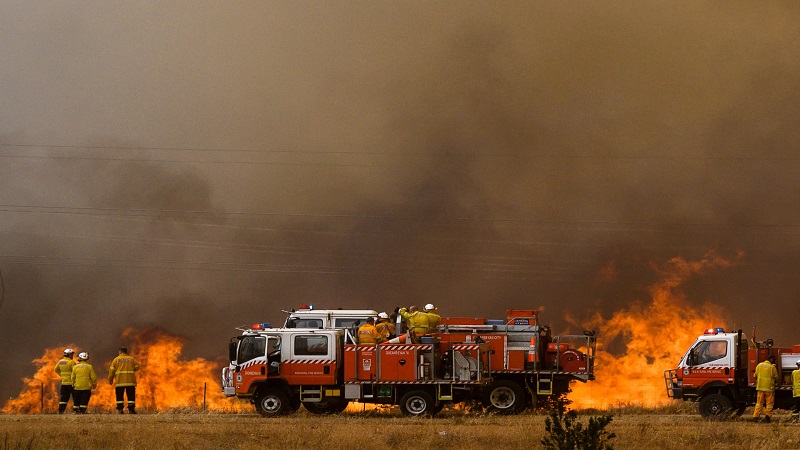
There is something I believe the United States can learn from my Nigerian village: we manage bushfire better. Yes, over the last few years, bushfire has become an epidemic in the western part of the United States. There is hardly any year bushfire does not find ways to distort communities in Oregon, California and other nearby states. I think it is time the U.S. tries something new because its frameworks are not working. I recommend my village as a case study.

In Ovim, Abia state, forest management was NEVER done to prevent bushfire as most experts try to achieve in the U.S. Rather, what villagers do is simple: execute seasonal controlled burns with well orchestrated forest thinning processes which naturally come during farmland fallow cycles. So, during farming rotation, fires are set on farmlands, and they do all to control the spread by creating cut-out paths.

Typically, the village town crier goes around alerting communities the day the fire would be set, and men would be on alert after a path has been defined for the fire cut-out. As the fire burns, they monitor the path and if things get out of hand, they quickly create new paths to cut off the fire.

This is something the U.S. needs to consider. Yes, while we blame global warming and other factors for the increasing bushfires, forest management could be revamped. In most parts of Eastern Nigeria, seasonal bush burning (typically every 4-6 years, tracking fallow cycles) has kept uncontrolled bushfires been under control. The United States should consider that framework in its forest management. 

Apple to Open Online Store in India

0

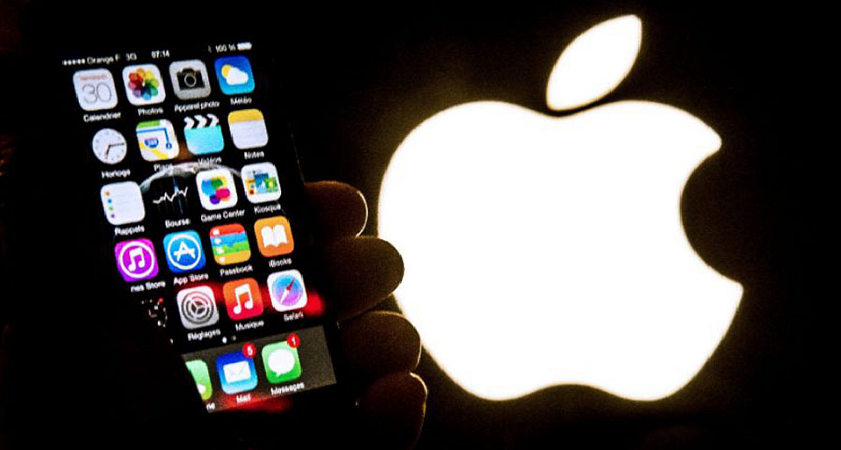
Apple announced on Friday it will launch its first online store in India on September 23, marking its major step to expand in the South Asian country.

Recent conflict between China and India appears to have opened opportunities for non-Chinese smartphone companies to expand their market share in India.

The Indian smartphone market is dominated by Chinese companies like Xiaomi and Oppo that have used affordable prices to win over Indian consumers.

Before now, the California-based company has used third party vendors and ecommerce operators such Amazon and Walmart to sell its products in India.

Apple accounts for only one percent of all smartphones shipment to the huge Indian market, far behind Chinese companies and South Korea’s Samsung.

Therefore, the world’s most valuable company selects September 23, which coincides with India’s holiday season to unveil its online store in the country.

Apple plans to offer more than sales through the retail platform. The company said other services on the online store will include personalizing some devices, including iPads, with engravings, and assistance will be offered in English and Hindi to allow customers to personalize their device according to their preferences. The website will also allow customers to configure Mac laptops according to their needs.

India has become a top choice destination for tech companies following Prime Minister Narendra Modi’s digital economy campaign.

However, Apple’s decision to open an online store will cause disruption in India’s online retail ecosystem, particularly for brick-and-mortar retailers. The pandemic and e-tailers already have a serious bearing on them.

In May, Samsung and Facebook partnered to train over 200,000 brick and mortar stores selling its phones to use social media for sales and marketing.

While there has been an increase in online activities including smartphones sales in India, the cost of devices has become a major challenge. As part of its strategy, Samsung initiated installment-payment for its customers and incentive schemes designed to attract more consumers to its base, including offering students discounts on some devices.

Apple doesn’t seem to be ready to lower the cost of iPhones or introduce other incentives to woo consumers. Its objective seems to be about opening an online store where its customers can purchase its devices in India. So the smartphone competition will be among players who have devices for the majority poor Indians.

However, market experts believe that Samsung stand more chance to gain the market with its strategy.

“Samsung is India’s No. 2 smartphone brand after Apple by image. So a phone priced between 6,000 rupees to 15,000 rupees from Samsung is very well placed today to capture market share from Chinese rivals,” said brand strategist Harish Bijoor.

The cheapest iPhone in India costs about 31,500 rupees, while the cheapest Xiaomi is around 7,500 rupees. So the smartphone market competition is between Samsung and Chinese companies, and by extension, Jio Reliance that has partnered with Google to produce affordable smartphones en masse for poor Indians.

Apple assembles some of its smartphone models, including the iPhone 11, at Taiwanese contract manufacturers Foxconn and Wistron’s plants in south India. Foxconn plans to invest $1 billion to expand the plant.

While Samsung has a mega mobile phone manufacturing plant in New Delhi, where it tests new devices and assembles them for export.

Facebook to Open Office in Lagos in 2021

0

Facebook is planning to open an office in Lagos Nigeria as part efforts to expand its business in Africa, the social media company announced on Friday.

The office, which will serve as a support center for the Sub-Saharan region is expected to become operational in the second half of 2021. The Silicon Valley giant said the office will be home to several teams across its business including sales, partnership, policy and communications. And it will also be the first in the continent with a team of engineers.

Facebook’s head of new product experimentation, Ime Archibong said the Lagos office will present many opportunities in digital innovations, especially for Sub-Saharan’s young talents.

“The opening of our new office in Lagos, Nigeria presents new and exciting opportunities in digital innovations to be developed from the continent and taken to the rest of the world. All across Africa we’re seeing immense talent in the tech ecosystem, and I’m proud that with the upcoming opening of our new office, we’ll be building products for the future of Africa, and the rest of the world, with Africans at the helm. We look forward to contributing further to the African tech ecosystem,” he said.

The Lagos office will be the second in the African continent, after its Johannesburg, South African office was opened in 2015.

Since 2018, Facebook has been investing and promoting innovative ideas through partnership with other tech companies in Lagos. The company unveiled the NG_Hub in 2018, in partnership with CcHub, and in 2019 launched the Small Business Group (SBG) Operations Center in Lagos, in partnership with Teleperformance.

The SBG is designed to support small and medium businesses across Sub-Saharan Africa through community programs as well as marketing training programs, all aimed at enabling SMBs to accelerate the growth and development of their businesses.

The social media giant said it has made tremendous investment progress since 2015, when it opened its first office in Africa, which supports the continent’s tech ecosystem. The office has been responsible for providing reliable connectivity infrastructure and helping businesses to grow locally, regionally and globally.

The progress was recorded in three major programs which include the SMB Grants in Nigeria and South Africa, which provides a combination of cash and ad credits to help over 900 small business impacted by COVID-19 pandemic.

The development of 2Africa, the world’s largest subsea cable project that will deliver much needed internet capacity and reliability across a large part of Africa. And ongoing training programs across the continent which support students, SMBs, digital creative, female entrepreneurs, start-ups and developers.

Nunu Ntshingila, regional director, Facebook Africa said the new Lagos office will help in delivering services to the social media’s clients across the continent.

“We’re delighted to be announcing our new office in Nigeria. Five years on from opening our first office on the continent in Johannesburg, South Africa, we’re continuing to invest in and support local talent, as well as the various communities that use our platforms.

“The office in Lagos will also be key in helping to expand how we service our clients across the continent,” Nunu said.

Nigeria is a strategic location for the tech ecosystem and Lagos is at the helm. But while there has been tremendous interest in the city so far, infrastructural factors have stymied the desire of many tech companies from setting up office in Lagos. The 2020 Smart City Index report ranked Lagos 109th of 109 cities, a 7 points drop from its 102nd position in 2019. The report highlighted priority areas such as security, affordable housing, unemployment, road congestion and health services as reasons behind the significant drop.

Who is a Non-Resident in Nigeria for the Banking Self-Certification Form?

1

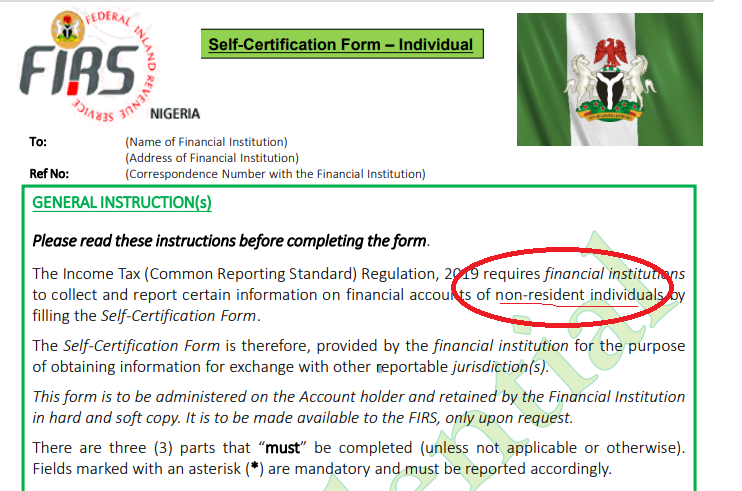
Many questions after I posted Nigeria’s self-certification form for bank deposits. Many have asked “who is a non-resident in Nigeria?” People, that is a very hard question which naturally should not be. I will attempt it, not legally, but operationally.

You can download the form here – a copy of the self-certification form (pdf). As you can see, the government is not deceiving anyone. This is just a pure class of communication mistake. The form is clearly written “non-resident” which means it does not apply to Nigerians. They sent a copy to us to assuage Nigerians who are already running to withdraw money from their bank accounts. Please this is under control – government is not coming after your deposit. Hope we learn from this as a nation. If this is not well managed, some banks could have issues. Share with others.

On that form, Non-Residents should be seen as Non-Nigerians who have financial relationships in other countries. It would have meant anyone not living full time in Nigeria as they have in the U.S. and other advanced nations but the problem here is that Nigeria does not have data to know that a Nigerian who lives in US but visiting and operating an account in GTBank with his Nigerian PASSPORT is non-resident.

The bank will assume the person is a resident citizen. And because most diasporas open these accounts with their Nigerian passports, differentiating becomes hard. So, at the end, the non-residents will apply MAINLY to non-Nigerian passport holders.

Sure, there are Nigerians who run diaspora bank accounts. I do not think that is the target here since the government expects the affected people to go to their banks to complete the forms. Possibly, they would be verified with BVN. You will not expect someone to leave London to travel to Lagos to do that! https://www.tekedia.com/a-copy-of-the-nigerias-self-certification-form-individual/#comment-50261

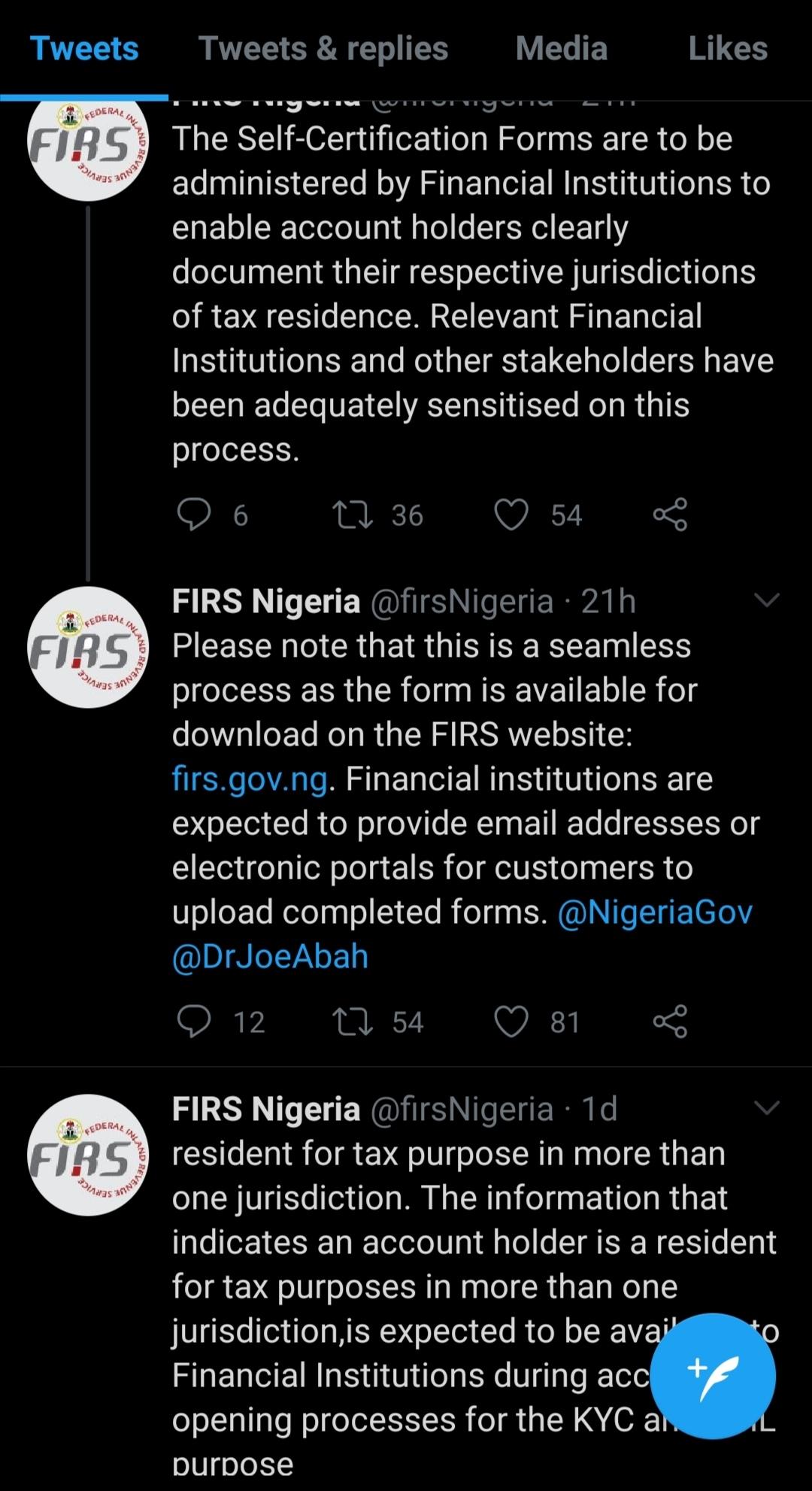
The tax agency clarifies.