DD
MM
YYYY

PAGES

DD
MM
YYYY

spot_img

PAGES

Home Blog Page 6147

The Great Unification As ARM Arms Nvidia for New AI Era

1

Intel faces a tough future as Nvidia becomes the absolute category-king in the modern microprocessor business; Nvidia market cap is about $300 billion for Intel’s $209 billion. With ARM in the arms of Nvidia, there is a new order right now. Yes, Nvidia is acquiring one of the most important technology companies in the world right now for $40 billion. ARM which makes a spectacular Central Processing Unit (CPU) technology is largely the operating system of modern mobile computing. 

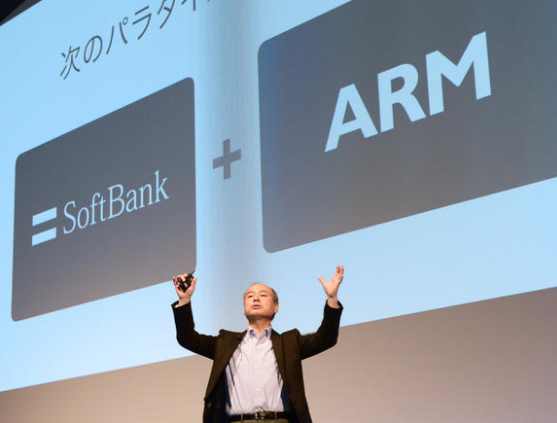
With Nvidia’s AI technology being armed by these CPUs, you have a new basis of competition in the market, with industry-shaping implications for players like Intel. As that happens, Softbank goes home with a “profit” of $8 billion. The Japanese company (there is nothing soft in its name with its fat bank account) bought ARM for $32 billion four years ago.

Uniting NVIDIA’s AI computing with the vast reach of Arm’s CPU, we will engage the giant AI opportunity ahead and advance computing from the cloud, smartphones, PCs, self-driving cars, robotics, 5G, and IoT.

NVIDIA will bring our world-leading AI technology to Arm’s ecosystem while expanding NVIDIA’s developer reach from 2 million to more than 15 million software programmers.

Our R&D scale will turbocharge Arm’s roadmap pace and accelerates data center, edge AI, and IoT opportunities.

Arm’s business model is brilliant. We will maintain its open-licensing model and customer neutrality, serving customers in any industry, across the world, and further expand Arm’s IP licensing portfolio with NVIDIA’s world-leading GPU and AI technology.

Read more here.

SoftBank Closes $40 Billion Deal to Sell ARM to Nvidia

TikTok Connects To Oracle as Microsoft Was Soft For A ByteDance

1
The brand is growing

ByteDance will not sell TikTok’s US operations to Microsoft according to a blog entry by Microsoft.

ByteDance let us know today they would not be selling TikTok’s US operations to Microsoft. We are confident our proposal would have been good for TikTok’s users, while protecting national security interests. To do this, we would have made significant changes to ensure the service met the highest standards for security, privacy, online safety, and combatting disinformation, and we made these principles clear in our August statement. We look forward to seeing how the service evolves in these important areas.
Update…Oracle wins the bid, New York Times reports. If this goes through, it may be an illusion to think that anything changed except the percentages for Team USA and Team China. I just think that the AI will remain hidden somewhere in Beijing or one Chinese city. But Mr. President will have something positive during a campaign rally: yes, I forced TikTok out of the hands of a communist party.

 The Chinese owner of TikTok has chosen Oracle to be the app’s technology partner for its U.S. operations and has rejected an acquisition offer from Microsoft, according to Microsoft officials and other people involved in the negotiations, as time runs out on an executive order from President Trump threatening to ban the popular app unless its American operations are sold.

It was unclear whether TikTok’s choice of Oracle as a technology partner would mean that Oracle would also take a majority ownership stake of the social media app, the people involved in the negotiations said. Microsoft had been seen as the American technology company with the deepest pockets to buy TikTok’s U.S. operations from its parent company, ByteDance, and with the greatest ability to address national security concerns that led to Mr. Trump’s order.

“ByteDance let us know today they would not be selling TikTok’s U.S. operations to Microsoft,” Microsoft said in a statement. “We are confident our proposal would have been good for TikTok’s users, while protecting national security interests.”

The Konga Inflection Point [Video]

0

In my Grand Playbook of Business and The Leading Business Models of the 21st Century lectures, I explained how innovators are redesigning the ordinances of markets. Konga seems to have cracked the code on how to run ecommerce ventures in Nigeria and Africa. Happy to share this video which was made for our members in Tekedia Mini-MBA; registration for the next edition has just started. I am happy to share with our public community. Read here for the context of this video.

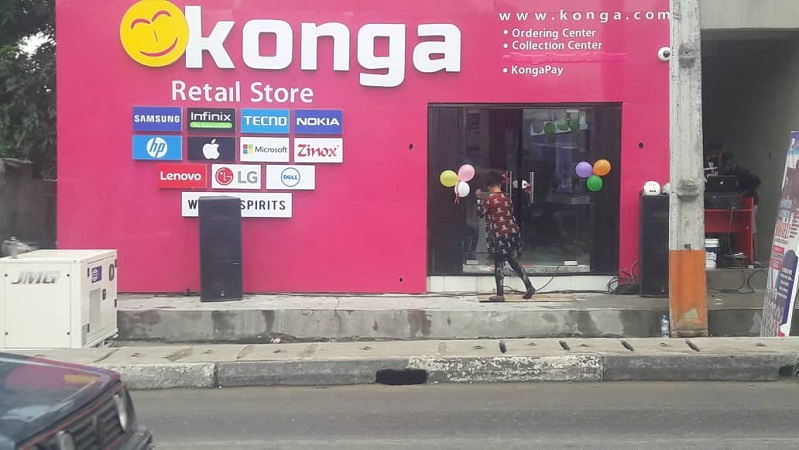
Sim Shagaya is correct with this tweet but interestingly the Konga of today is totally different from the one he ran.  So, let us not extrapolate that the old Konga could have gotten to this evolving destination.  The Konga which I posited should be sold, then, is totally not what we have now. The current Konga runs on a hybrid model, taking advantage of many physical stores across Nigeria through the Zinox Group.

Those stores help reduce marginal cost and improve unit economics. So, it is key we do not muddle it up with assumption that ecommerce is suddenly becoming profitable because Konga is. The fact is this: today’s Konga is not a pure play ecommerce company. It is a hybrid physical business with a super-online order placement portal. Yes, it is NOT asset-light, and certainly pays many real estate bills.

LinkedIn Comment on Feed

Impressively delivered brilliant perspective. Well done and thank you Prof. I think businesses in Africa needs to learn two core business success skills; Innovation and Calculated risk taking. Taking a vivid view at e-commerce, the digital part of the whole model is just like 25-30%, which is absolutely useless if your supply chain and logistics network which takes the remainder is not well thought out. It still baffles me to see that Konga is just trying to make such transition.

My utmost respect for Coca-cola and Walmart in that wise. I think where they probably got carried away is the fact that the transactions happen online. But at the same time, I think it’s pretty obvious that you don’t get your goods delivered to customers via cloud. And as much as you are trying to create an extensive network, you should try to leverage to have a shared risk, most especially, through horizontal integration. You clearly can’t succinctly execute this by playing a one man show. It will crash.

Confusion Currently Trailing The Nigerian Education Sector

0

On the 19th of March, 2020, the Federal Ministry of Education ordered for the immediate closure of all schools in the federation in order to protect the children from contracting COVID-19. Many schools were still in session when this directive came; in fact all schools were still in session at that time. However, some schools have started their examination before this circular was passed. In any case, most students and pupils have not yet completed their second term for the 2019/2020 session.

The directive from the Federal Ministry of Education was immediately adhered to. Schools were closed down with the hope that COVID-19 will soon pass by so that life will go back to normal. Well, as we all know, days turn to weeks and weeks become months. By the end of the day, our students in all levels of academic pursuit stayed at home, doing close to nothing academically, for six months now. And the number of months is still counting, hence the purpose of this essay.

During the lockdown, some private schools in Nigeria decided to keep their students “busy” and also earn some money out of it. These schools used different virtual methods to “teach” their students and give them exams. However, one thing nobody could tell was what will happen when schools finally resume. Some people said that schools will go back to finish up their second term and hurry up the third term. Others said that second term will be waived so that students will start up third term activities. They were all speculation because no one knows what the Federal Ministry of Education will say. There was this amount of trust people had in the ministry because it was strongly believed that the “experts” there would make some adjustments to time tables and curriculums so that students won’t miss much when they go back to school. No one, except maybe those up there, expected this confusion that students and their parents are facing today.

According to BBC news (Pidgin) of 4th September, 2020, the National Coordinator of the Presidential Task Force on COVID-19, Dr. Sani Aliyu, on Thursday 3rd September, 2020, announced that reopening of schools is at the discretion of state governments and school administrators. In fact, according to the BBC, Dr. Sani Aliyu instructed that school administrators and state governments should prepare to reopen schools. He didn’t actually tell them to reopen schools. If you ask me, I will say that he indirectly told schools that wish to reopen that they are “on their own”. His directive is filled with ambiguities.

From what BBC news (Pidgin) revealed, a lot of private universities are still waiting for the Presidential Taskforce on COVID-19 to give them the go-ahead to reopen. They have been ready to resume long ago but they don’t know when they should do that. Right now, these schools don’t know if they should wait for the Federal Ministry of Education, the Presidential Task Force on COVID-19, or the state government to give them the go ahead to reopen or if they should just call their students back to school since they are ready to do so.

Another confusion I am seeing is that some students in some states are going to school while those in other states stay at home. For instance, Anambra State will reopen schools fully on Monday 14th September, 2020, while Enugu State is yet to say anything. These students, though from different states, will still sit for the same external exams, such as WAEC and NECO, at the same time. My question here is why won’t the Federal Ministry of Education give schools directives to resume at the same time just the way it directed them to close simultaneously?

Another major problem facing our education system right now is the session/term these students are going into. I learnt that pupils in exit primary classes are beginning to write common entrance examinations and that some are preparing for First School Leaving Certificate Examination. I don’t know what these stand for but I hope it does not mean that students in secondary schools will be pushed up the next classes. Primary schools can do that because the pupils will still meet what they missed in their next class, even though it will be at a little higher level. But once a student misses a topic in secondary school, he has missed it. I hope our experts in the Federal Ministry of Education will bear that in mind as they look the other way while our system gets dragged in the mud.

SoftBank Closes $40 Billion Deal to Sell ARM to Nvidia

0

SoftBank Group Corp is getting close to a deal which will see it sell Arm Holdings to Nvidia Corp. for over $40 billion. The Japanese conglomerate has been in talks with Nvidia for weeks now as it seeks to sell off some of its subsidiaries to offset its financial troubles.

The Wall Street Journal reported that the cash-and-stock deal is expected to close on more than $40 billion. The deal will mean a big win for SoftBank who bought ARM for $32 billion four years ago, and has been struggling with the British company.

SoftBank and Nvidia started talking in July, as Nvidia is seeking to consolidate its play in the semiconductor industry. ARM is an English tech company with a great reputation in chip making. It makes chips for modern devices including smartphones, an area where Nvidia is yet to find foothold.

But there was a challenge; Bloomberg reported that ARM’s customers, including Apple, Samsung, Qualcomm, Advanced Micro Devices and Intel could demand assurances that a new owner would continue providing equal access to ARM’s instruction set. It was the concern that led to SoftBank buying ARM the last time it went up for sale, because it is a neutral company. This concern appears to have delayed the deal for weeks, but sources familiar with the negotiation told WSJ a deal will be announced in coming days.

COVID-19 pandemic has opened more opportunities for players in the chip industry through disruption of businesses, creating needs for alternate ways of doing things as the world comes to terms with the new normal.

Market Watch noted that the semiconductor industry is seeing a surge in consolidation as chipmakers seek scale and expand their product portfolios to support the increasing number of everyday items that are connected to the internet. This means there are rooms to expand in IoT.

Analysts believe that purchasing ARM would help Nvidia to accelerate innovative ideas.

“With Nvidia’s low-cost fabless model enabling it to focus on R&D, engineering and programming, the fit with Arm would be perfect,” said Neil Campling, an analyst at Miraband Securities.

Nvidia has turned a big name in chip making, becoming the world’s largest graphics chipmaker. The California-based company has witnessed more than twenty-fold surge in stock, according to Bloomberg, giving it the opportunity to take on bigger deals. Nvidia’s market value has increased over time to more than $260 billion, making it more valuable than Intel.

Much of its success is attributed to architectural diversity into smart cars, data centers and networking gear. New Street Research LLP said the company will significantly rise if it pursues an initial public offering next year, and estimates its valuation to rise more than $68 billion by 2025.

ARM has been enjoying patronage from big tech companies as its designs become top choice for Android and iOS systems. Recently, Apple announced it is dropping Intel as it intends to switch its Mac computers over to ARM-based chipsets.

So if the deal is successful, it will become one of the biggest deals of the year. Another of the year’s biggest deals was the $22 billion purchase of Maxim Integrated Products Inc. by fellow chipmaker; Analog Devices Inc. Analysts said ARM could go public as early as next year, but the deal will likely attract scrutiny from antitrust regulators and potential pushback from ARM’s customers.

NVIDIA founder and CEO Jensen Huang sent the following letter to NVIDIA employees today:

Hi everyone,

Today, we announced that we have signed a definitive agreement to purchase Arm.

Thirty years ago, a visionary team of computer scientists in Cambridge, U.K., invented a new CPU architecture optimized for energy-efficiency and a licensing business model that enables broad adoption. Engineers designed Arm CPUs into everything from smartphones and PCs to cloud data centers and supercomputers. An astounding 180 billion computers have been built with Arm — 22 billion last year alone. Arm has become the most popular CPU in the world.  

Simon Segars, its CEO, and the people of Arm have built a great company that has shaped the computer industry and nearly every technology market in the world.

We are joining arms with Arm to create the leading computing company for the age of AI. AI is the most powerful technology force of our time. Learning from data, AI supercomputers can write software no human can. Amazingly, AI software can perceive its environment, infer the best plan, and act intelligently. This new form of software will expand computing to every corner of the globe. Someday, trillions of computers running AI will create a new internet — the internet-of-things — thousands of times bigger than today’s internet-of-people.  

Uniting NVIDIA’s AI computing with the vast reach of Arm’s CPU, we will engage the giant AI opportunity ahead and advance computing from the cloud, smartphones, PCs, self-driving cars, robotics, 5G, and IoT.

NVIDIA will bring our world-leading AI technology to Arm’s ecosystem while expanding NVIDIA’s developer reach from 2 million to more than 15 million software programmers.

Our R&D scale will turbocharge Arm’s roadmap pace and accelerates data center, edge AI, and IoT opportunities.

Arm’s business model is brilliant. We will maintain its open-licensing model and customer neutrality, serving customers in any industry, across the world, and further expand Arm’s IP licensing portfolio with NVIDIA’s world-leading GPU and AI technology.

Arm’s headquarter will remain in Cambridge and continue to be a cornerstone of the U.K. technology ecosystem.NVIDIA will retain the name and strong brand identity of Arm. Simon and his management team are excited to be joining NVIDIA.

Arm gives us the critical mass to invest in the U.K. We will build a world-class AI research center in Cambridge — the university town of Isaac Newton and Alan Turing, for whom NVIDIA’s Turing GPUs and Isaac robotics platform were named. This NVIDIA research center will be the home of a state-of-the-art AI supercomputer powered by Arm CPUs. The computing infrastructure will be a major attraction for scientists from around the world doing groundbreaking research in healthcare, life sciences, robotics, self-driving cars, and other fields. This center will serve as our European hub to collaborate with universities, industrial partners, and startups. It will also be the NVIDIA Deep Learning Institute for Europe, where we teach the methods of applying this marvelous AI technology. 

The foundation built by Arm and NVIDIA employees has provided this fantastic opportunity to create the leading computing company for the age of AI. The possibilities of our combined companies are beyond exciting.  

I can’t wait.

Jensen