DD
MM
YYYY

PAGES

DD
MM
YYYY

spot_img

PAGES

Home Blog Page 6157

The Best Import for Africa – How To Preserve Knowledge

2

How can the European Union help Africa? It turns out that the only effective weapon Europe can sell to Africa is mechanism for the creation, accumulation and utilization of Knowledge. Yes, Africa is not building Mines of Knowledge, making it harder to have tools to create a predictable future.

The centerpiece of new changes in Africa is the realization that mines of knowledge will always triumph over mines of gold or crude oil, in enabling sustainable economic developments. When the Rwandan government embarked on a mission to provide fast internet services via fiber-optic cable, it was working to tap into the ingenuity of its citizens. As the engineers dug the land to lay the cables, and not explore minerals, the country was extending the reach of its marketplace, not just within Africa, but internationally.

As I explained on Tekedia Mini-MBA Live this morning, the native orthopedic “surgeon” in my village had died with her knowledge. And the only woman who knew the best herbs to cure snake bites also went with her knowledge. They all went with the knowledge, leaving the community barren.

How can you grow without building on previous knowledge?  Go back to your university, they might have burnt your thesis to make space in the library. We must master how to preserve knowledge.

A Comment on LinkedIn Feed

The first thing to do is to learn how to calibrate and assign value, from there, we will be able to know things that are sacred and treat them as such.

Why do schools burn most of those works? It’s largely because they meant nothing to the custodians, they were done simply to get the grades, and never to advance the society; there’s no need to be delusional here.

It’s our inability to calibrate and assign value that causes us to keep teaching things we cannot defend their relevance, yet we keep doing them.

Knowledge Management is not a new domain, it has been around for a while, but you must first make sense of what you really want to preserve, else you fill up everywhere with worthless and irrelevant things.

Why are we afraid to retire professors even when they are in their seventies? Because we do not have a Knowledge Management system that codifies every useful work and processes the older fellas had done, so no way for the younger folks to quickly grasp decades of works and improve on them, instead they are always starting afresh.

Updating curriculums and pretending to teach what seem to be trending doesn’t mean we are preserving knowledge, doing the latter requires something more nuanced and intentional too.

The Realities of Future Workplace: Human Capital Readiness for Sustainable National Growth

0

The concept of “workplace” is a compound word, which comprises two variables; “work” – denoting an activity and “place” – representing a location. Against this backdrop, denoting this concept clearly and accurately remains the absolute prerequisite for effective understanding of the successive analysis. In the future, “work” will no longer be a place we go, but an activity that we do. Consonant with this view, work is, and always has been, one of the most defining features of our lives (Gratton, 2010). Gone are the days when the vast majority of employees made the daily commute to a corporate office, sharing a communal space on a regular basis. Even though the future of work is unclear, organizations that study possible futures, share knowledge and inspire co-operative learning are the ones likely to survive the test of time (Van der Merwe & Verwey, 2007). Thanks to globalization; working 8am to 5pm has been most employees’ reality for many years. But now those same workers — who used to arrive early or stay late at the office to get all their work done — are pushing the boundaries of where, when, and how they work (The New Workplace Reality, n.d.).

Throughout the history of business, employees had to adjust to managers, and managers had to adjust to organizations. In the future, this will be reversed with managers and organizations adapting to employees (Morgan, 2014). The import of this is that, for an organization to flourish and prosper in this 21th century, it must rethink and challenge all it knows about work. For instance, according to the Census Bureau (The New Workplace Reality, n.d.), an average remote worker is more likely to spend part of their time in the office and the rest of it juggling work and home life. Against this backdrop, two noteworthy findings from Gallup survey 2017 reveals that not only are more employees working remotely than ever before, but they’re also doing so more often. The survey of over 15,000 American workers found that 43% have worked off-site at some point in the last year. The figure is even higher — up to 61% — in industries that are more conducive to working remotely, such as finance, real estate, IT, and media. The survey also found a shift in the amount of time employees spend working remotely: the number of employees working remotely less than one day a week dropped, while those who work remotely four to five days a week increased by about the same amount (The New Workplace Reality, n.d.). Needless to say, remote working is here to stay!

However, to be successful in this virtual environment, employees need the ability to take calls, answer email, and participate in meetings outside of “traditional” business hours and locations. They need to be able to reach their colleagues, partners, and clients regardless of where they are or what type of device they are using. And they insist on a form of work-life integration that boosts their productivity while minimizing any extra time spent in the corporate office. It is in the light of the foregoing that this essay is set to explore the human capital readiness for sustainable national growth. However, before getting into the real subject of discussion, a brief overview of the definitional problematic will be provided to increase the knowledge and operationalization of the concept of human capital and sustainable national growth.
Human capital is getting wider attention with increasing globalization and also the saturation of the job market due to the recent downturn in the various economies of the world (Marimuthu, Arokiasamy & Ismail, 2009). Countries in the “global north” and countries in the “global south” put emphases on a more human capital development towards achieving a sustainable national growth by devoting necessary time and efforts. Consonant with this view, human capital development is one of the fundamental solutions to enter the international arena. The human capital explains the underlying stock of skills that the labor force possesses and is regarded as a resource or asset. The flow of these skills is forthcoming when the return to investment exceeds the cost (both direct and indirect) (Goldin, 2014). In the same vein, The Global Human Capital Report (GHCR) (2017) opines that “Human Capital” is the knowledge and skill people possess that enable them to create value for sustainable national growth. As a result of this, the governing class is required to create the conditions or society that allows people to have quality jobs that stimulate the economy as well as not harming the environment. Against this backdrop, sustainable national growth refers to meeting the needs of the present without compromising the ability of future generations to meet their needs (C. Okereke, Personal Communication, 2019). Of importance, however, is that sustainability proponents emphasize that population size should not become so great that it destroys the carrying capacity of the earth and its ability to support future generation. Thus, the environment is not a resource we inherited from our ancestor, but a resource we hold in trust for future generation (S. Okodudu, Personal Communication, 2019). Having understood the concept of human capital and sustainable national growth, the paper shall now proceed to delineate some of the ways human capital can engender sustainable national growth.

Before delving into the analysis proper, it is imperative to begin with an ancient Chinese proverb, by Fermin Diez.

“If you want one year of prosperity, grow wheat,

If you want ten years of prosperity, grow trees and,

If you want one hundred years of prosperity grow people” (Diez, 2014).

The foregoing Chinese proverb clearly indicates the relevance for an increasing human capital development in the workplace. The human capital encompasses the notion that there are investments in people – in education, training, health etc. – and that these investments increase an individual’s productivity. The term “human capital” is used today as if it were always part of our lingua franca. But it wasn’t. Not that long ago, even economists scoffed at the notion of “human capital.” As Theodore Schultz noted in his American Economic Association presidential address in 1961 many thought that free people were not to be equated with property and marketable assets (Schultz, 1961). To them, that implied slavery. But the concept of human capital goes back at least to Adam Smith. In his fourth definition of capital he noted: “The acquisition of … talents during … education, study, or apprenticeship, costs a real expense, which is capital in [a] person. Those talents [are] part of his fortune [and] likewise that of society” (Smith, 1776).
Nevertheless, the earliest formal use of the term “human capital” in economics is probably by Irving Fisher in 1897. It was later adopted by various writers but did not become a serious part of the economists’ lingua franca until the late 1950s when it was popularized by Jacob Mincer’s Journal of Political Economy article “Investment in Human Capital and Personal Income Distribution” (Goldin, 2014). In Gary Becker’s Human Capital: A Theoretical and Empirical Analysis, with Special Reference to Education, published in 1964 (and preceded by his 1962 Journal of Political Economy article, “Investment in Human Capital”), Becker notes that he hesitated to use the term “human capital” in the title of his book and employed a long subtitle to guard against criticism (Becker, 1962). Nevertheless, Schultz’s article (1961) demonstrates the importance of the concept of human capital in explaining various economic anomalies. Some are easy to figure out, such as why both migrants and students are disproportionately young persons. Some are more difficult, such as why the ratio of capital to income has decreased over time, what explains the growth “residual,” and why Europe recovered so rapidly after World War II. Some are even more difficult, such as why labor earnings have risen over time and why they did not for much of human history. As is clear from most of these issues, the study of human capital is inherently historical.

However, the Global Human Capital Index provides a holistic assessment of a country’s human capital across its population. As such, it enables effective comparisons across regions, generations and income groups. The methodology behind the rankings is intended to serve as a basis for time-series analysis that allows countries to track progress, relative to their own performance as well as that of others (GHCR, 2017). There are several distinctive aspects to the notion of human capital, as such, extrapolating from the Global Human Capital Report (GHCR) (2017), the Global Human Capital Index (GHCI) regards relevant skills as a dynamic asset people have and develop over time, not as innate talent that is fixed. This means people’s human capital in the form of relevant skills is likely to produce higher returns if invested optimally, starting early in life, and may also experience depreciation if not kept current and developed continuously. Also, the GHCI are based on the notion that it is neither through “cheap labor” nor through attracting a narrow set of the “best and the brightest” and winning a “war for talent” that countries can optimize their long-term human capital potential, but through building up deep, diverse and resilient talent pools and skills ecosystems in their economies that allow for inclusive participation in good quality, skilled jobs by the largest possible number of people. Furthermore, implicit in the above is an assumption by the GHCI of the intrinsic value of human productivity and creativity and a human-centric vision of the future of work that recognizes people’s knowledge, talents and skills as key drivers of a prosperous and inclusive economy. As such, maximizing human capital ought to be, and should remain, a top priority for business and policy leaders. The relevance of the essay is determined by transformation of the human capital into the key economic resource of development for sustainable national growth of the postindustrial society. Thereby, disclosing the content of evolution of the human capital as a scientific concept and phenomenon of the economic life. The necessity to maintain economic growth and improve its quality in globalization requires restructuring of the international and national economies that can provide them with greater stability and competitiveness. For this reason, one of the priority lines of the scientific research is the study of causes and consequences of structural changes, which cause transition to a postindustrial stage of development of society and knowledge economy (Perepelkin, Perepelkina & Morozova, 2016). In the same vein, the basis for successful implementation of such transformation can be comprehensive development of the human capital. At the same time, the intensification of its accumulation requires deeper understanding of the essence of the human capital on conceptual and practical level. The transition from the traditional economy, which is based on productive process, to the knowledge economy, which uses ideas and innovation as driving force, requires maximizing human potential. The objective of maintaining and increasing the standard of well-being depends on intellectual capabilities, multiplied during self-directed continuing education, on readiness of employees to use the accumulated potential in their professional activity and, for a sustainable national growth (Perpelkin et al., 2016). However, the main problem of the study of the human capital as a phenomenon of the economic life or as a catalyst for sustainable national growth is that on the one side there is the economy, creating external environment and conditions for its reproduction, and on the other side, the human capital with its inherent development motivation. The import of the foregoing is that the formation of the human capital occurs at the same time under the influence of external factors (investments, information, education, healthcare, and culture) and internal factors of self-development (unique capabilities, creative work, and self-education).

In consonant with the above analysis, Romer’s endogenous growth model will be espoused to x-ray the correlation between human capital and sustainable national growth. The central idea of the Romer model is that technological progress is at the heart of economic growth. As a result, this model acknowledges that a large portion of inventions is the result of purposeful research and development activities carried out in reaction to economic incentives. Thus, this changes the role for human capital, which enters into these models as a catalyst of technological progress rather than as an independent source for sustainable national growth. Nelson & Phelps (1966) was the first to contend that people’s educational attainment may have a significant influence on their ability to adapt to change and introduce new technologies. Accordingly, a higher level of human capital would speed up the process of technological diffusion in the economy. This would enable countries lagging behind the world technology frontier to catch up faster to the technological leader. However, in the model developed by Nelson & Phelps, the evolution of the best-practice level of technology is left exogenous, so that human capital only plays a role in helping countries narrow the gap to the technological frontier (Nelson & Phelps, 1966).

Romer has extended this concept beyond the adoption of existing technologies to the creation of new ones, starting from the observation that research and development activities require highly skilled labor as the single most important input (Romer, 1990). A major implication of this approach is that technological progress, and thus sustainable national growth, depends on the stock of human capital (as opposed to its accumulation). In Romer’s model, the economy has three sectors: a final-goods sector, an intermediate goods sector, and a research sector (Romer, 1990). The research sector uses human capital and the existing stock of knowledge to produce designs for new capital goods, which are sold to the intermediate-goods sector. The latter uses the designs and the economy’s savings to produce intermediate capital goods, which are combined in the final-goods sector with labor and human capital to produce final output. The disaggregation of capital into typologies of intermediate inputs which have additively separable effects on output is the distinctive feature of Romer’s production technology (Schutt, 2003). As can be seen from the above analysis, the number of different intermediate capital goods in the economy depends on the stock of knowledge. The crux of Romer’s model is that a rise in the stock of human capital will permanently speed up sustainable national growth. Whereby, a rate effect requires an increase in the rate of accumulation of human capital.

Conclusively, the human capital is a key factor for growth, development and competitiveness. This link works through multiple pathways at the individual, firm and national level. Learning and working provide people with livelihoods, an opportunity to contribute to their societies and, often, meaning and identity. Workers’ skills lead to productivity and innovation in companies. At the national level, equality of opportunity in education and employment contribute to a sustainable national growth and positive social and political outcomes (GHCR, 2017). That notwithstanding, by “human capital” we mean not individuals themselves but the knowledge and skills they possess that enable them to create value in the workplace for sustainable national growth (Angrist, Patrinos & Schlotter, 2013). This requires investment both on the side of individuals and by public and private stakeholders across people’s lifetimes. The essay thus treats human capital as a dynamic rather than fixed concept. It recognizes that human capital is not defined solely through formal education and skilling but can be enhanced over time – growing through use and depreciating through lack of use.

REFERENCES

Angrist, N., Patrinos, H. A., & Schlotter, M. (2013). An expansion of a global data set on educational quality: a focus on achievement in developing countries. The World Bank.

Becker, G. S. (1962). Investment in human capital: A theoretical analysis. Journal of political economy, 70(5, Part 2), 9-49.

Diez, F. (2014). Human Capital Management in Asia: The War for Talent Continues in This High-Growth Region. In A. Manuti and P. Davide de Palma (Eds.), Why Human Capital Is Important for Organizations (pp. 137-150). Palgrave Macmillan, London.

Goldin, C. (2014). Human capital. In C. Diebolt and M. Haupert (Eds.), Handbook of cliometrics, 1-27.

Gratton, L. (2010). The future of work. Business Strategy Review, 21(3), 16-23.

Marimuthu, M., Arokiasamy, L., & Ismail, M. (2009). Human capital development and its impact on firm performance: Evidence from developmental economics. Journal of international social research, 2(8).

Morgan, J. (2014). The future of work: Attract new talent, build better leaders, and create a competitive organization. New York, NY: John Wiley & Sons.

Nelson, R. R., & Phelps, E. S. (1966). Investment in humans, technological diffusion, and economic growth. The American economic review, 56(1/2), 69-75.

Perepelkin, V. A., Perepelkina, E. V., & Morozova, E. S. (2016). Evolution of the Concept of “Human Capital” in Economic Science. International Journal of Environmental and Science Education, 11(15), 7649-7658.

Romer, P. M. (1990). Endogenous technological change. Journal of political Economy, 98(5, Part 2), S71-S102.

Schultz, T. W. (1961). Investment in human capital. The American economic review, 51 1-17.

Schutt, F. (2003). The importance of human capital for economic growth. Inst. für Weltwirtschaft und Internationales Management.

Smith, A. (1776). An Inquiry into the Nature and Causes of the Wealth of Nations. New York: Oxford University Press, Vol. II. Retrieved on 26th September, 2019 from http://www.ibiblio.org/ml/libri/s/SmithA_WealthNations_p.pdf.

The Global Human Capital: Preparing people for the future of work. (2017). Retrieved on 26th September, 2019 from http://www3.weforum.org/docs/WEF_Global_Human_Capital_Report_2017.pdf

The New Workplace Reality. (n.d.). Retrieved on 26th September, 2019 from https://www.tpx.com/wp-content/uploads/2017/09/The-New-Workplace-Reality.pdf

Van der Merwe, L., & Verwey, A. (2007). Leadership meta-competencies for the future world of work. SA Journal of Human Resource Management, 5(2), 33-41.


TECNO Unveils A Future Strategy And 5G Era In Emerging Markets

0

TECNO, a global premier smartphone and smart device brand, today debuted its strategic launch of TECNO Smart AIoT ecosystem strategy, marking TECNO’s strategic expansion of its business portfolio to AIoT area. Riding on its unique strengths and resources, as well as its accumulated market insights in emerging markets, TECNO is committed to bringing customers the most desirable AIoT products and smart connection solutions with best quality at competitive price.

Looking at the quick evolution into 3G/4G and even 5G era in emerging markets, TECNO unveils a forward-looking “1+N” AIoT strategy with a customer-oriented obsession, wherein “1” means that customers shall be taken as the core; “N” means N types of living scenarios the customers will experience which includes home interconnection, commerce, education, travel, sport, leisure, entertainment and more in their current and future life. Along with the strategy launch, TECNO also brings a ranges of new products including smart audio, smart wearables and first smart routing solution of 5G CPE with ultra high speed.

“We have constant investment and dedication to our long-term commitment to global emerging markets, with AIoT being one of TECNO’s strategic priorities in next few years. Standing at the revolutionary point into a new smart living era, we understand consumers’ real needs to high-quality smart products at competitive price, and we have great confidence and unique advantages to provide consumers there with more visionary and desirable mobile solutions.” Stephen HA, General Manager of TECNO Mobile commented.

AIoT is increasingly becoming more mainstream globally including emerging markets, leading human into a more connected future and lifestyle. According to IDC, by 2025, there’s projected to be 41.6 billion connected IoT devices. While, in emerging markets like Latin America, Middle East and Africa, performance to price ratio is an important factor that cannot be ignored, according to GFK research.

TECNO’s First 5G CPE: Ultra high speed, compatible of 3G/4G/5G and highly cost-effective

The launch of TECNO 5G CPE will be a game changer to innovate the broadband connections in global emerging markets, especially in African counties.
With the introduction of 5G, the ecosystem will continue to grow at a much faster rate as 5G will enable the connection of every object, person and machine. It benefits multiple areas includes smart home, intelligent medical, agriculture, transportation, finance and industrial networking of things. With these scenarios being part of TECNO’s “1+N” strategy, the release of 5G CPE plays the prominent role.

In addition, being aware of the low popularity of optical network and incomplete infrastructure versus high network connection cost in emerging markets especially in African markets, TECNO 5G CPE brings an innovative network connection solution which enables ultra-high speed and compatibility, efficient data exchange while extremely low connecting cost to end users. This will put TECNO at very advantageous position to become one driving force behind construction of the end-user network connectivity infrastructure with local carriers. Right now, TECNO has just announced its 5G CPE available and target to work with main carriers to gradually cover several emerging markets- the pilot markets will be South Africa, Thailand and Russia, the future markets will cover Sri Lanka, Nigeria, Kenya, Uganda, Morocco, Myanmar,etc.

Competitive Strength of 5G CPE
* Ultra-high Speed & Compatibility- With the super speed of 5G, TECNO 5G CPE can truly realize the ‘Triple-Gigabit’ network speed. For example, users can download a movie within only 4 seconds with the 5G network. In terms of compatibility, the SA&NSA dual networking makes 5G/4G/3G all compatible. The high-performance dual-core processor of TECNO 5C CPE can also realize super strong WIFI coverage.
High Cost-effectiveness- With market price more than half of other brand’s 5G CPE under similar excellent product performance, TECNO 5G CPE shows a remarkable price advantage compared with other industry players. With TECNO 5G CPE, more enterprises and households can get access to truly wireless ultra-fibre broadband experience in the near future, making information transmission much easier, super cost-effective and more efficient.

TECNO Introduced A Range of Smart Audio and Smart Wearables to Accelerate AIoT Ecosystem’s Development

Bearing the real market reality and consumer demand in mind, TECNO aims to build the foundation of the AIoT ecosystem by providing comprehensive product categories and accelerate smart devices and smart connection developments with focus on the mostly expected top two categories of ‘personal + home’ in the near term.

Most Recently, TECNO announced new devices of TWS HiPods H2, Smart Watch and Smart Band under the product development philosophy of ‘simply extraordinary’, bring refreshing, smart connecting and convenient experience to their everyday life.

TECNO Audio Products – TECNO has launched HiPods H2 True Wireless Stereo (TWS) Bluetooth Earbuds in July in global emerging market. It boasts with the latest TWS technology, providing smart connectivity, strong durability, pure stereo sound effect and sleek designs, bringing extraordinary ‘WIRELESS’ audio experience to all ears.

TECNO Smart Wearables – TECNO smart watch (TECNO Watch 1) and smart band (TECNO Band 1) will also be unveiled soon in global emerging markets, aiming to be the ideal portable mate of consumers for sports, leisure and daily life. Both the smart watch and smart band features the ultra-long battery life, health management functions including heart rate variation detection, sleep quality monitoring, the special function of 24-hour smart temperature monitoring and abnormal temperature alarm which aims to provide necessary alert to users’ daily health monitoring under the current situation of Covid-19.

In the near future, TECNO will be introducing more cool and stylish smart devices, ranging from Bluetooth- related products (TWS, headphones, speakers), MBB products (MIFI, CPE) , to smart home gadgets, empowering consumers with excellent smart devices using experience under the era of smart connection.


*from TECNO press release

Covid-19 Outbreak and The Transportation Industry – Effect, Challenges and Prospect

0

Coronavirus disease 2019 (COVID-19) is defined as illness caused by a novel coronavirus now called “severe acute respiratory syndrome coronavirus 2 (SARS-CoV-2; formerly called 2019-nCoV), which was first indentified amidst an outbreak of respiratory illness cases in Wuhan City, Hubei Province, China (Cennimo, 2020). It was initially reported to the World Health Organization (WHO) on December 31, 2019. On January 30, 2020, the WHO declared the COVID-19 outbreak a global health emergency. On March 11, 2020, the WHO declared COVID-19 a global pandemic, it first such designation since declaring H1N1 influenza a pandemic in 2009 (Gallegos, 2020; Wee, McNeil & Hernandez, 2020)

The illness caused by SARS-CoV-2 was recently termed COVID-19 by the WHO, the new acronym derived from “Coronavirus Disease 2019”. The name was chosen to avoid stigmatizing the virus’s origins in terms of populations, geography, or animal association (Ceninimo, 2020). On February 11, 2020, the Coronavirus Study Group (CSG) of the International Committee on Taxonomy of Viruses issued statement announcing an official designation for the novel virus: severe acute respiratory syndrome coronavirus 2 (SARS-CoV-2).

WHO Director-General Dr. Tedros, in his regular briefing cautioned that “the world cannot go back the way things were. There must be a “new normal” – a world that is healthier, safer and better prepared”. Accordingly, on April 23, 2020 WHO published a situation report on the novel Coronavirus Disease 2019 (COVID-19) with a global outbreak of 2,544,792 confirmed cases and a death toll of 175,694 (WHO, 2020). Also, the Nigeria Centre for Disease Control (NCDC) on April 24, 2020 recorded a total of 981 confirmed cases, 197 discharged and 31 deaths. However, a handful of people that tested positive to the virus, are now testing negative to the virus. Though, a worldwide accepted vaccine is yet to be produced.

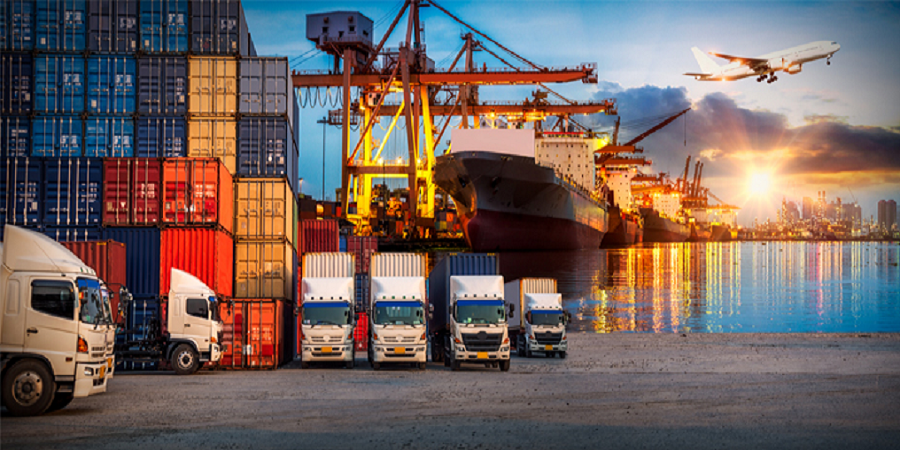
The COVID-19 crisis has wreaked havoc on healthcare and economies worldwide, including a vital component of human activity, transportation. The transportation sector remains the one industry that keeps all other elements as well as the entire system in constant motion and it is very difficult to conceive of a situation where transportation does not play a major role in the life of any nation or society.

Developing nations seeking to develop their economies, must as a matter of urgent necessity give priority to the transportation sector. Studied have shown that developing societies have not sufficiently tapped into the potential of the transport sector, as a result it is not fully maximized in those regions (Okotie, 2019). The Nigeria’s transport system has long suffered as a result of inadequate investment in infrastructure which has constituted huge challenge to economic growth. Transportation therefore occupies a very strategic position in modern day life and is often described as that part of economic activity that is concerned with increasing human satisfaction by changing the geographical position of good, people and services. It is the hub upon which all other activities are spatially arranged.

As coronavirus (COVID-19) continues to extend it global reach, the impact is being absorbed in every corner of the economy, and the transportation sector has been one of the primary victims of COVID-19, with marked decline in exports and imports, even in domestic mobility of good, people and services. For instance, reports have indicated that Nigerian retailers are running low on consumer goods; manufacturers are suffering depletion of imported component parts necessary for production and; exporters are facing logistics challenges in exporting commodities (Okotie, 2019).

The speed with which these impacts have hit the world is unprecedented, especially because the different modes of transport (airlines, railways, maritime, pipelines, private and public transport systems) have all experienced drastic fall of customers and patronage. It is in the light of the foregoing that this paper is set to outline the effect, challenges and prospect of COVID-19 outbreak on the transportation industry.

THE EFFECT OF THE COVID-19 OUTBREAK ON THE TRANSPORTATION INDUSTRY IN NIGERIA

a) Due to the lockdown in many countries, the demand for passenger transport has been adversely hit by the push for social distancing.

b) It has resulted negatively in shutting down of most transport modes of operation.

c) The freight segment has had a mixed short-term effect in terms of transportation demand.

d) There has been reduction in service delivery level.

e) There is a surge in demand for truck drivers in transportation of essential goods.

f) There has been a restriction on the number of passengers on taxi, buses, tricycle (keke) etc.

g) Due to the “limited or no” transport modes; people have been exposed to walking in roads with neither pollution nor congestion.

CHALLENGES OF THE COVID-19 OUTBREAK ON THE TRANSPORTATION INDUSTRY IN NIGERIA

a) After the COVID-19 pandemic situation normalizes, the perception of risk associated with crowed areas could lead to shift in preferences towards personal travel modes. That is, people may avoid using public transport modes to avoid crowds.

b) Drivers in taxi, bus, tricycle (keke) services are economically suffering in the short term due to the COVID-19 lockdown. However, it cannot be said if these modes may face long term economic challenges in terms of reduced travel demand.

c) People may also avoid shared mobility modes like taxi, bus, tricycle (keke) etc.

THE PROSPECT OF THE COVID-19 OUTBREAK ON THE TRANSPORTATION INDUSTRY IN NIGERIA

Some of the ways Nigeria’s transport system can adapt to the impacts of the COVID-19 pandemic is by:

a) Revaluating and restructuring the entire transport system by the government in participating and getting more involved in its development.

b) Collaboration and partnership with more advanced transport nations.

c) Encouragement of more professionalism in the transport sector.

d) Proper regulation and monitoring of the various transport modes of mobility.

e) Deployment of modern technology and communication systems in driving the sector.

f) Enacting and formulating modern policies and also tailoring it to fit our environment.

g) Establishment of a think-tank group to develop more strategies in building a more sustainable and globally competitive transport system.

Finally, the call for advanced 21st century network of roads, airports, maritime space, train routes and land transportation network is very important in our cities, towns, small communities and the rural areas in such environment. Investments in transportation infrastructure is surging globally and the need for Nigeria to begin to look inwards in investing a sizeable part of its resources in the development of modern transportation systems and structures are essential to drive the economy of our beloved nation upward as well as upgrade and extend the life of the old structure.

For the record, global economies today are driven by digitization and fast moving technological innovations, which in turn drives new and modern systems of transport for goods, services and people. In both urban and rural communities around the world, the challenge of moving people and cargo efficiently, safely and sustainably while providing transportation for all segments of society and not just for the rich elite or top government officials alone, remains a challenge which demands new solution in our increasingly globalized, urbanized, and environmentally compromised society.

REFERENCES

Ceninimo, D. J. (2020). Coronavirus disease 2019 (COVID-19). Retrieved on April 21, 2020 from https://emedicine.medscape.com/article/2500114-overview

Gallegos, A. (2020). WHO declares public health emergency for novel coronavirus. Retrieved on April 21, 2020 from https://www.medscape.com/viewarticle/924596

Okotie, F. (April 11, 2019). Strategic importance of the transportation sector to Nigerian economy. Business Day. Retrieved on April 21, 2020 from https:// businessday.ng/opinion/article/strategic-importance-of-the-transportation-sector-to-nigerian-economy/

Wee, S., NcNeil Jr. D. G., & Hernandez, J. C. (2020). WHO declares global emergency as Wuhan coronavirus spreads. The New York Times. Retrieved on April 21, 2020 from https://www.nytimes.com/2020/01/30/health/coronavirus-world-health-organisation.html

World Health Organization (WHO), (April 23, 2020). Coronavirus disease 2019 (COVID-19) ituation report – 94. World Health Organisation.


SPECIAL REPORT: A New Playbook for Conducting and Managing Revolution Protest in Nigeria

0

Considering the rots in Nigerian systems, it would be an understatement to say that the country and her citizens are not facing significant socioeconomic and political problems after independence. One of her dreaded socioeconomic problems has been unemployment over the years. “Corruption in both public and private and at the individual levels, industrial decay, and neglect of the agricultural sector are among many others have been identified as factors responsible for unemployment.” The resultant effects, according to many sources, have been widespread poverty, youth restiveness, high rate of social vices and criminal activities.

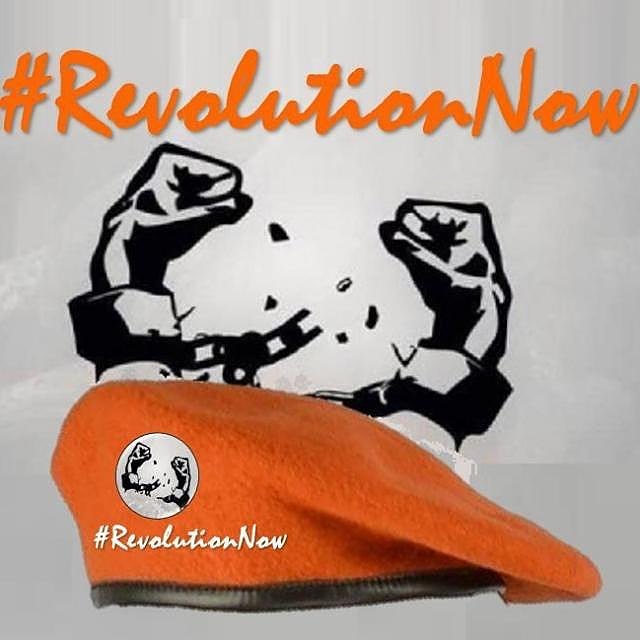
According a recent study, “If not controlled, apathy, cynicism and revolution might become the consequent.” In line with this background and other issues analysed by our analyst, this piece considers motives of the RevolutionNow Group led by Omoyele Sowore and media [Nigerian and foreign newspapers], and the Nigerian Police behind staging #Revolutionnow protest, framing the protest and managing it between August 5, 2020 to August 31, 2020.

Revolutionary Pressures and Social Movements

Before the independence in 1960, Nigeria had and still having several political and human rights activists after the independence. From Betty Abah to Monday Owens Wiwa, achievements and failures of these activists have been documented. In Nigerian social movement and revolutionary history, Aba Women Riot of 1929 remains the most celebrated social movement against poor governance.

The riot was recently recognised by the United Nations as a remarkable led-women movement in the world and one of the movements that ensured the place of women in societies, where their fundamental human rights are being denied. Aba Women Riot of 1929 happened because the British colonial administration represented by Captain J. Cook, an assistant District Officer, wanted to tax women. This was perceived by the women as social and economic injustice.

According to several accounts, the riot led to the death of 51 women. Several years later, Ken Saro-Wiwa co-founded the Movement for the Survival of the Ogoni People, calling for the recognition of environmental and social rights of the Ogoni people in the southern part of Nigeria. Saro-Wiwa and his members fought the war with every resource they laid their hands on. Unfortunately, they did not win the war because they were executed by the regime of General Sanni Abacha in 1995.

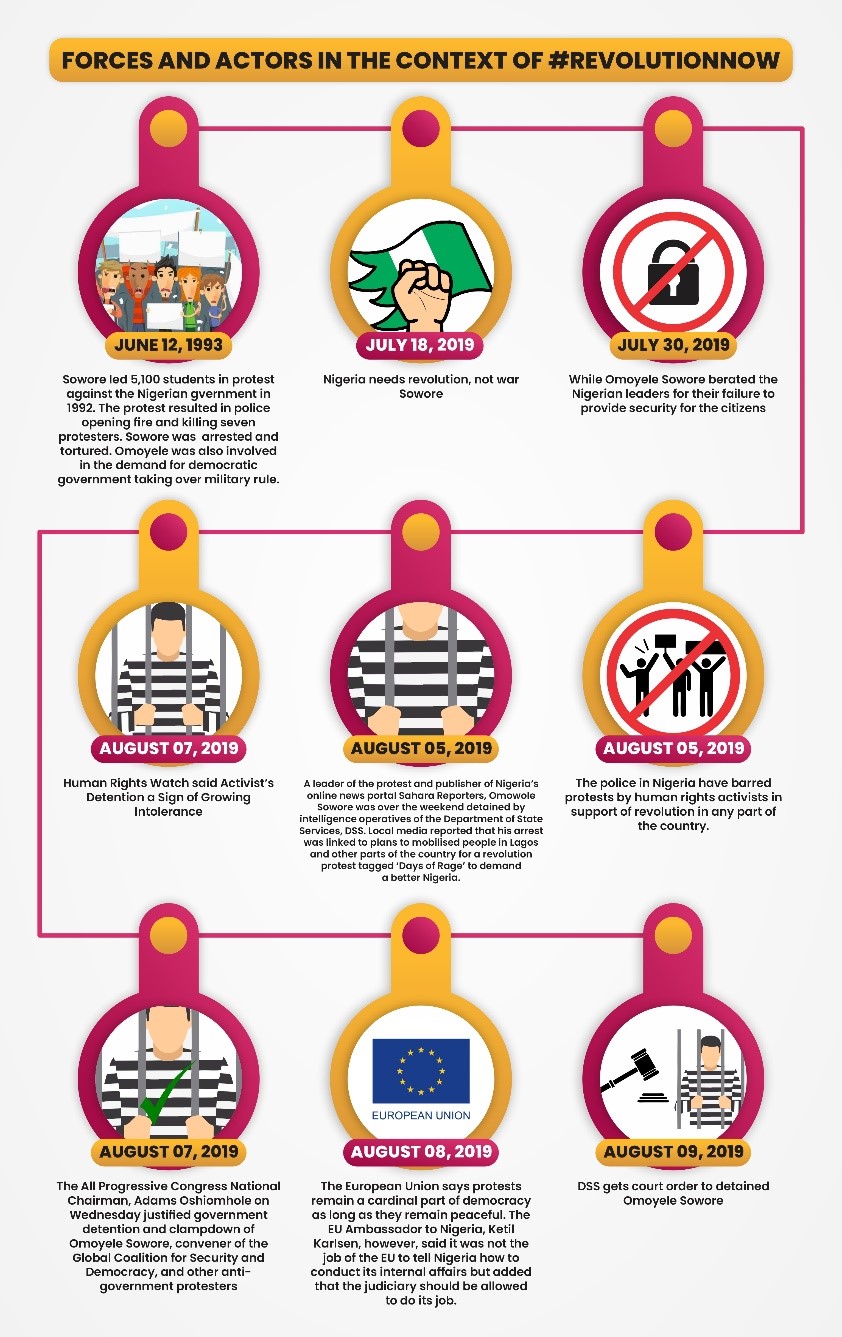
Between 1990 and 1995, while Saro-Wiwa and his co-activists from the Ogoniland were fighting the military government of General Sanni Abacha, Omoyele Sowore was in the University of Lagos as a student. Information has it that as a student leader, Omoyele Sowore was part of the students who joined national social movement against the then military government.

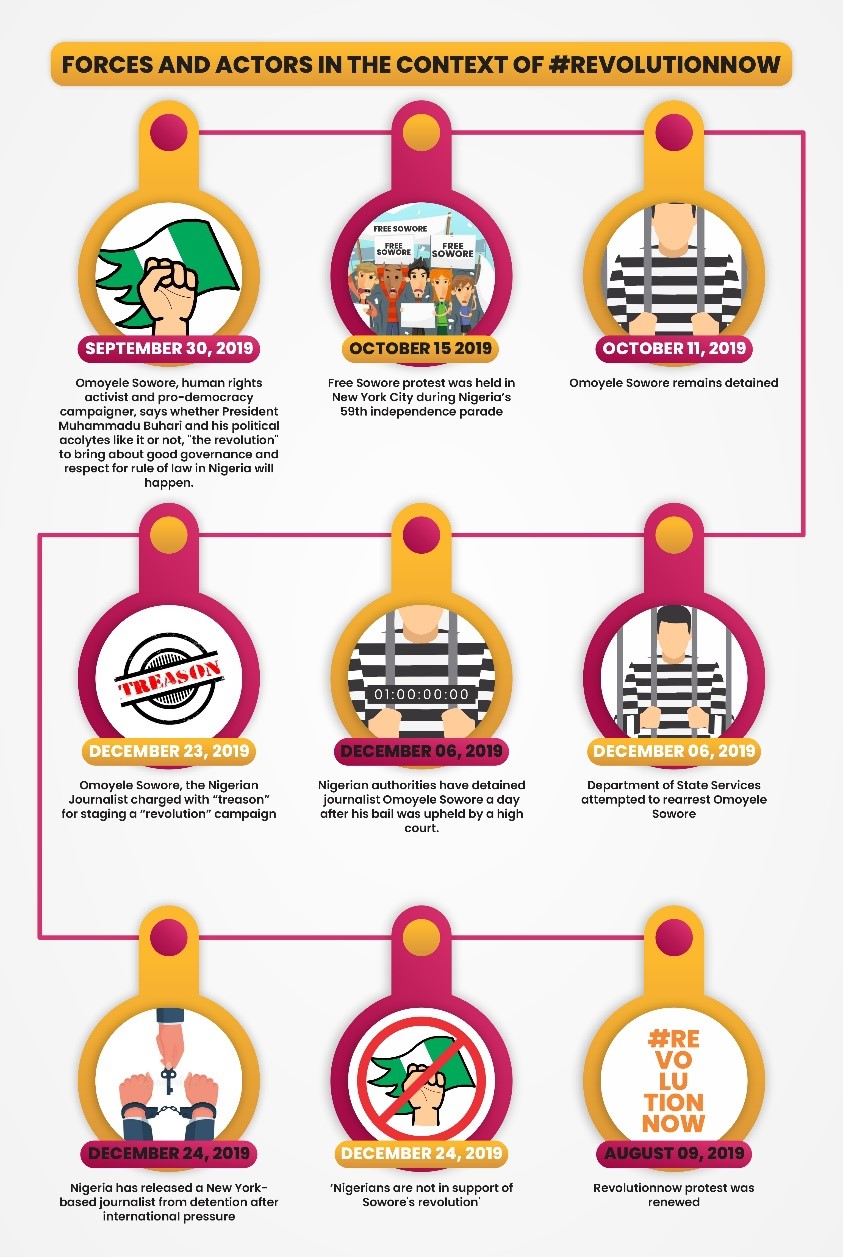
Omoyele Sowore, appears to be another political and social activist, who believes in strong social movement and revolution as means of making socioeconomic and political structures effective in Nigeria [see his trajectory of calling for good governance and consequences in Forces and Actors in the Context of #Revolutionnow section].

From 1992 to 2020, activities of Sowore have been on why political elites and followers should ensure better systems and leadership structure for the country’s growth and development in all ramifications. His recent #RevolutionNow protest focuses on three core areas that political leaders must address to ensure political, social and economic justice.

In the first phase, which has 8 demands, #RevolutionNow Movement Group wants the current political leaders to return fuel prices and electricity tariffs to their levels in 1999, ensure the immediate payment of all outstanding salaries of workers and pensions of retirees and abolished tuition fees in all public universities and secondary schools among others. The second phase, which is dubbed end special privileges for the ruling class, has 4 demands. In the phase, the Group wants an end to training of public officials’ children in private schools in Nigeria or in schools in foreign countries. They also want an immediate end to the use of police or military personnel as private security guards for these officials.

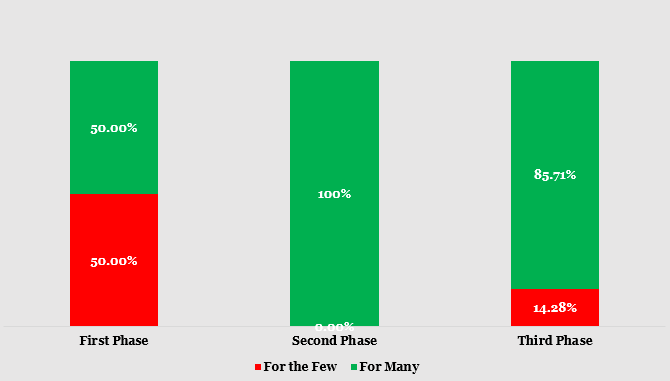
From the 7 demands allotted to the third phase, which is dubbed as return political power and national wealth to the working people, Sowore and his members want complete and uncompensated repossession by the working people of all national resources stolen by the ruling class and abolition of the death penalty except for the embezzling or privatisation of the public wealth. The Group presented a total of 19 demands. Out of this, our analysis reveals that 26.31% would benefit the few Nigerians, while 73.68% would benefit many Nigerians [see Exhibit 1].

Exhibit 1: Demands and Categories of Beneficiaries


Source: Revolutionnow Group, 2020; The Nation, 2020; Infoprations Analysis, 2020
Key: First Phase=End anti-people economic policies, Second Phase=End special privileges for the ruling class, Third Phase=Return political power and national wealth to the working people


Source: Nigerian Newspapers, 2020; Infoprations Analysis, 2020

Source: Nigerian Newspapers, 2020; Infoprations Analysis, 2020

Our Data and Measures

Nigerian and foreign newspapers were the first source of our data. As the fourth estate of the realm, media are expected to play their social and development participant roles in the revolution protest. This is one of the reasons for considering them in our analysis. Another reason is that not every Nigerian will be at the locations [States where the Revolution protest took place are; Lagos, Osun, Ondo and Cross River] where the Revolution protest took place. A number of people would prefer reading and watching the protest through print and broadcast media across the country.

For years, news media have been criticised for framing social and political protest in negative ways, most especially through photojournalism. From social and public affairs analysts, the media portrayal can “shape the public’s understanding of the protest when they [protest] were framed as dramatic or violent in images. We measured this in our analysis. The three phases [end anti-people economic policies, end special privileges for the ruling class and return political power and national wealth to the working people] also formed our data source. Images published by the Nigerian newspapers and foreign ones such as the BBC, African News among others were specifically extracted and analysed.

The Measures and Categories

  1. VP: Violent protest
  2. PP: Peaceful protest
  3. PPC: Police prepared for conflict
  4. PMLO: Police maintaining law and order
  5. PAHP: Police attacking and harassing protesters
  6. PCPSP: Protesters carrying placards that showed socioeconomic problems
  7. PCPP: Protesters carrying placards that showed political problems
  8. PMC: Presence of the main conveners. This was specifically measured with the consideration of presence of Omoyele Sowore and other members of the Group, especially those with costume meant for the protest
  9. Enthusiasm: Protesters are being happy and ready for the protest. This was specifically measured through the examination of their jubilation and other elements that established eagerness to participate in the protest
  10. Fear: Protesters are fearing of security agencies, especially police, presence.
  11. Sadness: Protesters are not happy about how the police are handling the protest and also about the socioeconomic and political situations in the country. This was specifically measured using sorrow element exhibited by the protesters [showing on their faces].
  12. Anger: Protesters are furious about how the police and other security agencies are handling protesters. This was specifically measured using annoyance element exhibited by the protesters [showing on their faces].

From category a to h [see The Measures and Categories], our focus is to understand the dominant frames used by the journalists and their media establishments to construct the protest for public understanding. Using the frames are essential because of their potential of increasing online participation. By online participation, we expect people who are not in the protest’ locations to seek for information about the protest and use the information for online protest in form of posting and sharing messages associated with the protest. Enthusiasm, fear, anger and sadness are also used to explicate public understanding of the protest through virtual sphere.

For proper understanding of the virtual sphere, public searches about the protest became our last data source. We extracted Nigerians’ interest in the protest from Google Trends [and used as proxy data] from August 5, 2020 to August 31, 2020. The interest ranged from 0-100. After several weeks of tracking and mining images from the newspapers, we found 81 images. We used these images only because other images were republished several times by the media to depict the protest. From the first category to the last category [see The Measures and Categories], we used presence and absence as keys to represent what we aimed at knowing from each image. However, we coded violent and peaceful protest distinctively. The uniqueness in coding the two categories lie with the fact that we need to see whether the Group became violent while protesting as against what they told the public [peaceful Revolutionnow protest].

Emerging Frames

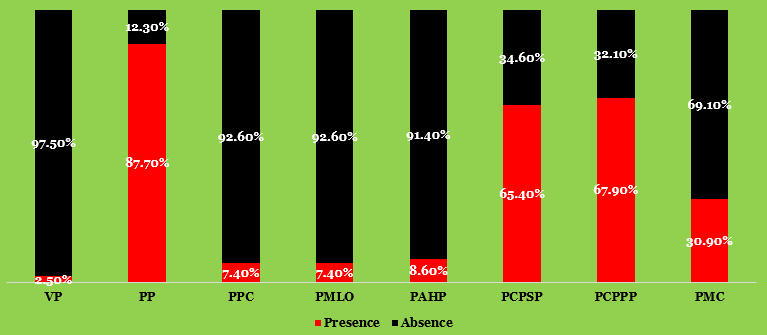
Analysis shows that the media framed the protest as peaceful while the protesters were found to display placards that depict political problems more than socioeconomic problems. With the presentation of political issues more than socioeconomic challenges, our analyst notes that the media want the public to see the protest as against political elites or actors more than what socioeconomic actors [especially the business owners who are also expected to make significant changes to issues affecting people at the bottom of the pyramid]. Only 2.50% of the 81 images showed that the protesters were violent. Analysis also establishes that the media did not want the public to see Omoyele Sowore as the main actor of the Group during the protest. This position was arrived at by our analyst because 69.10% of the images did not have Sowore as part of the protesters. With this, the media has made the public realised that Sowore should not be considered as the only person who can lead revolution protest in Nigeria.

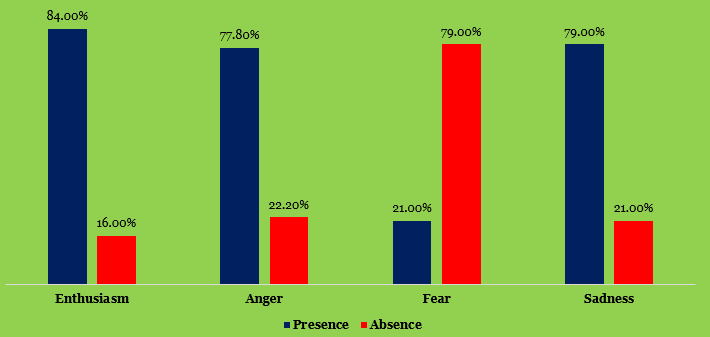
It is disheartening to know that the media presented police less within the PPC and PMLO frames [see The Measures and Categories]. Instead, they were presented as attacking and harassing the protesters. This representation re-emphasises the year-long police brutality during popular protest in Nigeria. Our analysis also points out that the media represented the protesters as being eager and ready to carry out the protest and sad about the socioeconomic and political situations in the country. We also found that they were annoyed about how the police attacked and harassed them during the protest [see Exhibit 3].

Exhibit 2: Emerging Frames

Source: Nigerian and Foreign Newspapers, 2020; Infoprations Analysis, 2020
Key: VP = Violent protest PP=Peaceful protest PPC=Police prepared for conflict PMLO=Police maintaining law and order PAHP=Police attacking and harassing protesters PCPSP=Protesters carrying placards that showed socioeconomic problems PCPP=Protesters carrying placards that showed political problems PMC= Presence of the main conveners

Exhibit 3: Constructed Mood

Source: Nigerian and Foreign Newspapers, 2020; Infoprations Analysis, 2020

To further understand the emerging frames, our analyst explored the place of constructed moods in the frames. From 71 images that established the protest as peaceful, 91.1% show that protesters were eager to carry out the protest and happy. Over 78% and 80% of these images indicate that protesters were sad and annoyed. The sadness and annoyance manifested in 100% and 85.7% of 7 images that established police as attacking and harassing the protesters.

One of the surprising insights from our analysis is that in 6 images that established police as preparing for conflict, protesters in the images were ready to carry out the protest and happy as well whereas the readiness and happiness was 77.8% when we examined 9 images, portraying police as maintaining law and order.

Examination of the main issues of the protest shows that from 53 images that showed protesters as carrying placards which established political problems in the country, the protesters’ readiness and happiness was framed in 94.5%. This is not quite different for socioeconomic problems [53 images]. Over 92% of the images showed readiness and happiness of the protesters. With 81.8% out of 55 images, protesters were portrayed as being sad when they carried placards that presented political problems more than socioeconomic problems [81.1% of 53 images had sadness mood].

What happened when the protesters were sad and annoyed about issues in their three phases? How did police react to the protesters’ moods? Our analyst explores these questions and found surprising insights. When protesters were angry, police were 0.27 times attacking them. When they were sad about the socioeconomic and political problems, there was no attack from the police. When police prepared for conflict, protesters were 0.57 times fearing them. When protesters carrying placards that showed socioeconomic and political problems, they were more than 7 times happy about the protest. When the main conveners were present, protesters were 3 times happier about the protest.

Pictures and Protest: Understanding Emerging Frames Through Public Information Seeking about Revolution

As the protest was carrying out in the physical sphere, as we noted earlier, we expect public interest through the Internet to surge about the protest, socioeconomic and political issues the Group wants the political leaders to address. In our analysis, we found that the public had significant interest in President Muhammadu Buhari, revolution and protest than in Omoyele Sowore [see our earlier selected period].

While the interest in Sowore and revolution indicated strong connection, we did not find such for President Buhari and revolution. This signifies that the public preferred understanding revolution through Sowore than the President. This is understandable considering the fact that Sowore is the main actor and expected to be in public minds as the protest was being staged across the country. This insight is not quite different from what we found when we analysed public interest in the actors [President Buhari and Omoyele Sowore] along with the interest in protest. Analysis shows that one percent interest in President Buhari reduced interest in protest by 23.3%. It was 17.4% increase in protest when the public sought information about Sowore.

In our analysis, we also discovered that the media framing of the protest as peaceful facilitated public interest in Sowore and President Buhari by 65.3%. When protesters were framed as carrying placards that showed political problems, the interest was 74.7% in the two actors. The interest was 74.1% when socioeconomic problems frame was used by the media. When pictures showed that protesters were sad about socioeconomic and political problems, public interest in protest was 1.5%. When pictures showed that protesters were angry about socioeconomic and political problems, public interest in protest was 8.1%. When pictures showed that protesters were angry about socioeconomic and political problems, public interest in the revolution was 0.0%. When pictures showed that protesters were sad about socioeconomic and political problems, public interest the in revolution was 0.0%. When pictures showed that protesters were ready to carry out the protest and happy about it, public interest in protest was 0.1%. When pictures showed that protesters were ready to carry out the protest and happy about it, public interest in revolution was 3.2%.

Strategic Option: A New Playbook for Revolution Protests

When we situated the entire analyses and insights in the context of the view of many public affairs analysts and veteran journalists, we concluded that the profound truth is that a number of Nigerians are not ready for revolution protests, especially carrying them out through virtual sphere.

In the words of Fisayo Soyomo, an award-winning Nigerian journalist, “Nigeria’s problems are extreme; therefore, solving them requires extreme measures, including revolutionary protest. While street protests are important, I personally believe the biggest revolution needed in Nigeria is the revolution of self — the revolution of values, intellect and the mind. Our problem is more than Muhammadu Buhari; it is that warped sense of values that drives many of us to place self over the country.”

Therefore, stakeholders in social and revolutionary movement need to renew their playbook. As a matter of fact, media community needs to do more in terms of representing the views of genuine social and political activists. The police need to reevaluate their responses to social and political protests. In this regard, members of the security agency must be trained on better approaches for handling angry protesters.  Citizens, who are not involved in physical protests but are online, also need to show level of commitment to genuine protests that have the tendency of changing socioeconomic and political status of the country.