DD
MM
YYYY

PAGES

DD
MM
YYYY

spot_img

PAGES

Home Blog Page 6158

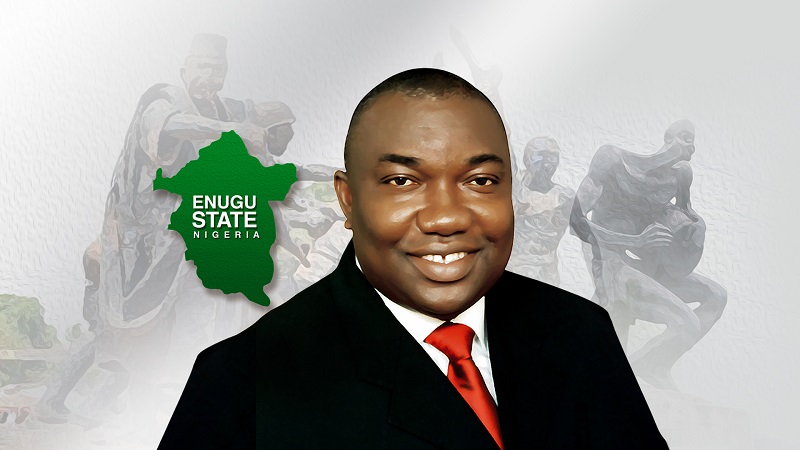
A Call to Privatise Waste Management in Enugu State

2

While I was in Ibadan, waste collectors came to our compounds to pick up our refuse. Then, what we used to do was that every compound had a barrel at its front, where the occupants threw in their wastes. These collectors come every Tuesdays and Thursdays, or Mondays and Fridays, depending on their schedules, to empty these barrels (whether filled or not). They come in their big trucks, lift up these barrels (they preferred plastics) and pour their contents into the trucks. In those days, you don’t see dirt lying about in Bodija because these waste collectors were good at their jobs. They even come with brooms to gather refuse in case some drop on the floor.

But then, I think why there was this kind of arrangement was because these waste collectors were from private companies. I can’t really say but I think Oyo State Government gave licence to private individuals to collect and dispose of wastes. So all we had to do was “subscribe” to one of these companies and have our wastes removed right from the front of our house.

When I left Ibadan for Koroduma, one of the towns in Nasarawa State that shares a border with FCT, I didn’t see private waste collectors with big trucks. Then, people have two, or rather three, options for refuse disposal. It is either they take their wastes to the “government” dumpsites, which originally contained government’s dumpsters, or they throw them into the river or gutters when rain falls. But the option that was most convenient for us then was that of engaging the services of small private waste collectors, known as “Mai Shara”. They come in their wheelbarrows and collect waste directly from people’s door steps. They don’t do theirs compound by compound and you don’t subscribe to them. If you have refuse, keep them somewhere rats will not access them and then wait for Mai Shara to pass. This wasn’t the best option but it was convenient.

Then coming down to Enugu, I saw something entirely different. Permit me to express my disappointment at not seeing well established private waste collectors here. You may also be surprised to hear that people look at me as if I’ve developed horns anytime I tell them that the Enugu State Government should give out licence to private individuals to oversee the collection and disposal of wastes from households and business arenas. People are comfortable with the way things are, which should not be like that at all.

Let me give you a little glimpse into the situation of things in Enugu.

Here in Enugu, a government agency known as ESWAMA, which is an acronym for Enugu State Waste Management Agency, takes care of waste disposal (and not collection). What this agency does is that it mounts few dumpsters for waste collection and then empties them when they are filled. I can’t tell how often they do this but they try anyway. However, these dumpsites, even the ones in front of people’s compounds, are gagging sites. You can’t pass them without holding your breath. This wouldn’t have been the case if the Oyo State method was adopted.

People that live in Enugu may feel comfortable with how things are with their waste disposal method because they have not tasted the convenience of not loading their cars with decayed matters in their bid to locate a dumpster. People here may not really believe that it is possible that they can have dustbins in front of their compound and the place will not be turned into dumpsites later (this was an argument someone gave me). Some people even said it was impossible that people can conveniently have their trash cans emptied by private contractors. Well, I don’t really blame them; I blame the government that left its regulatory job and decided to source for income.

Well, it is not too late to make changes. All Enugu State Government, and other state governments that maintain this practice, have to partner with private individuals to get this job done. This will even generate more income for the government, which is better than the way ESWAMA uses task forces to collect revenue. If this job is given to private individuals, they will only remove the wastes of their subscribers. Those that didn’t pay will have to find ways of handling their wastes. Of course, it is not possible for people to throw their refuse into another person’s dustbin because the person that is paying will guard his property very well.

This essay is just a call for the privatisation of waste collection, not just in Enugu, but in every part of the country.
US Lawmakers Initiate Bill to Address Chinese President As “General Secretary”

0

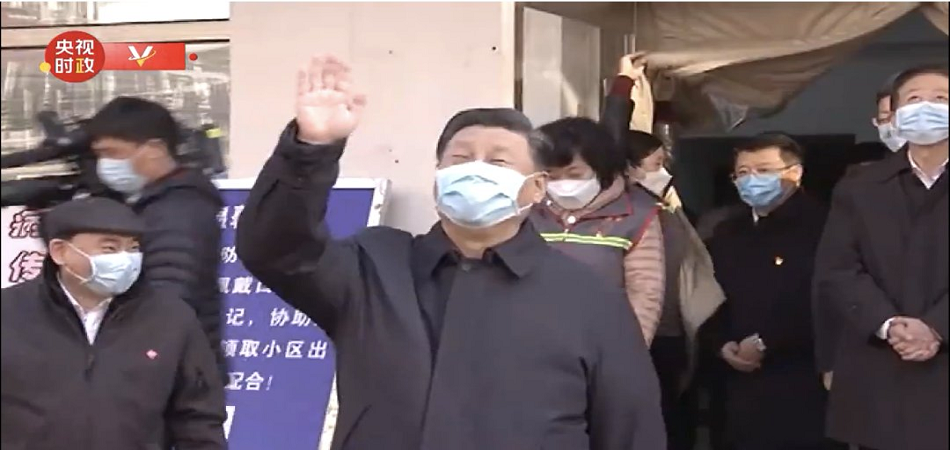
The United States congress is pushing a bill that will strip Chinese president Xi Jingping of the title ‘president.’ The bill called “Name the Enemy Act,” is expected to, when passed, prohibit the federal government from using the title ‘president’ to address Xi Jingping. The bill said Xi will alternatively be referred to as “General Secretary.”

“The Federal Government may not obligate or expend any funds for the creation and dissemination of United States Government documents and communications that refer to the head of state of the People’s Republic of China as anything other than “General Secretary of the Communist Party”, or alternatively, as “General Secretary.””

The bill was introduced by Republican Rep. Scott Perry of Pennsylvania on August 7, as a way of showing the US’ disapproval of China’s human rights violations including the abuse of Uighurs and Kazaks.

“The leadership of the People’s Republic of China has gone unchallenged in its perverse pursuits of human rights abuses across decades. Addressing the head of state of the People’s Republic of China as a ‘president’ grants the incorrect assumption that the people of the state, via democratic means, have readily legitimized the leader who rules them,” the bill reads.

The bill mentioned the use of Chinese armed forces to constantly infringe upon the sovereignty of surrounding countries, citing the April 2020 incident, where the Chinese maritime surveillance sank a Vietnamese fishing boat off the paracel Islands.

However, the move appears unlikely to take anything from Xi, who has acquired titles for himself since he came into power in 2012, though it bears authoritarian remarks.

The title ‘president’ has a democratic bearing that the Chinese government has failed to manifest, and the morality in referring to Xi, who has been at the top of authoritarian rule for years, as president has been called into question. Critics argue that addressing Xi as president allows him to project an image of openness and representative leadership to the international community which stands in stark opposition to who he truly is.

“China is not a democracy, and its citizens have no right to vote, assemble, or speak freely. Giving General Secretary Xi the unearned title of ‘president’ lends a veneer of democratic legitimacy to the CCP and Xi’s authoritarian rule,” said the US-China Economic and Security Review Commission, in a 2019 report to Congress.

But in China, Xi’s titles do not include the word ‘President’ while past Chinese leaders bore the official English title since 1980 when the South Asian country began opening up its economy, the head of the Chinese Communist Party has been differently addressed.

CNN did a history recap on the titles held by Xi in Chinese, and none represents exactly the English word ‘president.’ For instance, the three main titles Xi is known by are guojia zhuxi, meaning State Chairman; Zhongyang junwei zhuxi, commander-in-chief of the people’s Liberation Army (PLA); and zong shuji, the head of China’s ruling political party.

These titles are used to address Xi according to each occasion. But for English speakers and the state-run media, the title of number one man in China is president.

While the bill is going to make a strong statement about the United States’ view of Chinese authoritarian rule headed by Xi, addressing him as ‘General Secretary’ has a little weight to change the status quo.

Logistics Aggregation: A Cost-Effective Model For Moving Goods Across Africa’s Borders

0

If you’re a small-scale importer in Africa, you may have wondered why after placing an order for a product from China, you wait weeks to receive it, even when flights come to Africa from China regularly. This is not to mention the steep cost of freighting goods by air from China, which has been on the rise recently.

Your importation agent has more to do with these costs and shipping times than you might realize.

The Cost Of Fragmented Logistics

Many of the freight agents used by small-scale importers and retail consumers have small client bases. This means those agents have to wait to accumulate the required volume of orders needed to negotiate a reasonable price with airline operators or flight carriers. Even when they do get the required volume, they are often at the mercy of the flight carriers and might not get the best deal both in the speed of delivery and the price. In turn, the buyer must pay more and wait longer to receive their products.

This might just seem like a problem for the buyer until you take a holistic view of what the absence of a defined logistics system could be costing Africa, and particularly Nigeria, where my digital freight platform and logistics aggregation company is based. Besides importation, there are locally made products that could be in hot demand outside Nigeria but never get there because the hassles of freighting goods outside the country are even higher than those of bringing them in. There also is the possibility of global e-commerce brands doing more business in Africa, but the absence of a defined logistics system frustrates the process. For instance, long wait times and sometimes poor service delivery currently discourage Nigerians from using global retailers.

The Aggregation Model

This is where logistics aggregators come in. These providers allow agents and small-scale importers to simply plug in and play. How does this help the situation? Generally, large aggregators are internationally accredited and have offices in major business cities. Being accredited is the first step to getting better deals with carriers and airlines.

An aggregator, which has the capacity to make complete payment to carriers upfront, is then able to decide the timing of shipments. This cuts shipping time because the aggregator could choose to have the products shipped weekly, while local delivery businesses are left to take the goods to customers’ doorsteps.

Although this model is not yet common in this part of the world, it has the potential to significantly improve logistics for Africa. Aggregator companies could further unify charges and fees for all. A unified system would not only help retailers import with speed and at a lower cost, but they could also get credit facilities from aggregators.

Airlines and carriers could bypass negotiating with unaccredited agents who cannot meet them on their terms and instead carry out such negotiations with the larger aggregators. Small-scale importers could simply attach themselves to the system already in place. Even big brands could have increased penetration into Africa, and customers would be more encouraged to buy with the knowledge they would not have to wait as long or pay more for logistics than the products cost.

This model works both ways and could also encourage exportation out of the country at guaranteed speed and safety, in a cost-effective manner.

What To Look For When Choosing An Aggregator

The aggregator model is still emerging, so it can be difficult to find an aggregator to suit your needs. But generally, there are several key things to look for when choosing an aggregator partner. First, because the aggregation model is complicated, you want to be sure the company you choose has the technological capacity required to effectively execute the aggregation. Research the technology it uses to see how efficient its process is. You also want to find out whether it has the proper insurance, safety regulations and financial framework in place to ensure goods smoothly get to where they need to go.

Although this model is in its early stages on the continent, aggregation shows strong potential for improving and unifying logistics for Africa’s importers and exporters. By cutting down on delivery time and price, consumers and businesses both stand to benefit.

Samuel Ajiboyede
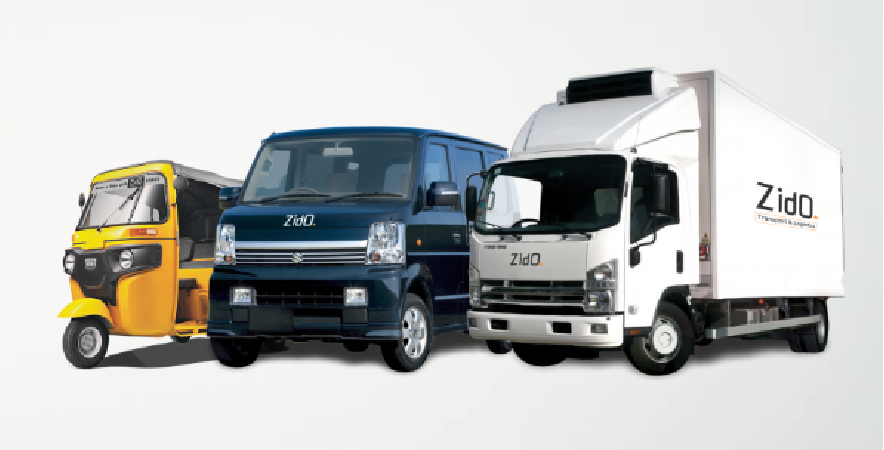
CEO, Zido Logistics

Stemming the Impunity of Security Agencies on Civilians

0

Through out history, it has been the inaction of those who could have acted, the indifference of those who should have known better, the silence of the voice of justice when it mattered most, that has made it possible for evil to triumph.—Haile Selassie

The Latest Victim

This piece is dedicated to the memory of Collins Osagie and those before him, victims of military and police brutality on defenceless civilians. According to the Punch you paid the supreme price for having the audacity to mediate in a disagreement between a soldier and a trader.

Recollection

While reading this bad news, my mind raced back to my childhood days growing up in the barracks. I have witnessed not a few agonizing torture of civilians. A particular one stands out because my Dad had to intervene to prevent it from turning ugly.

It was a cold Sunday morning with the rain pouring throughout the night and ceasing at the break of dawn. As we stepped out for church behold, our next door neighbours, two of them in full military fatigue, were torturing a civilian. They first emptied the containers of water my Mom had collected from the rain on the poor victim, put him in the gutter, stamped and kicked him with their boots and whipped him with their belts that had metals. It was a terrible sight for my siblings and I.

My Dad ordered them to stop and demanded to know his offence. They said he was their friend that stole their properties when they were in Kaduna. They had looked for him for two years until they got an Intel that he was in town.. They mobilized and picked him up before the cock crow. As their superior, my Dad said the torture was enough they should let him go. So imagine, if soldiers could treat a friend in such a manner, then your bet is as good as mine: we are all “bloody civilians!”

The Purpose of the Military

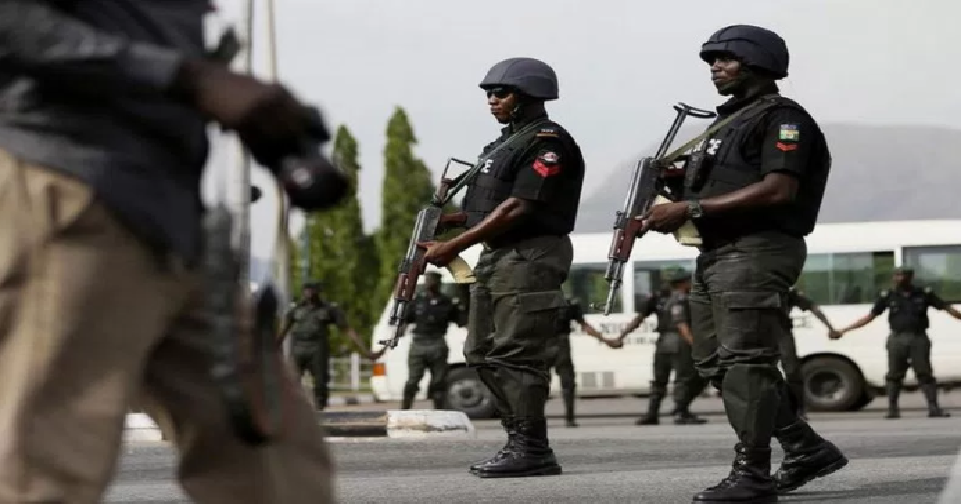
The role of the armed forces, that’s, the Army, Navy, and Airforce, as contained in the Constitution of the Federal Republic of Nigeria as amended, Section 217-220 does not include the abuse of the rights of the citizens. Such abuse isn’t exclusive to the military but all uniformed security institutions in the country. This impunity must be stemmed completely.

The Need for the Reorientation of the Rank and File

The abuse of power is a clear misconception of its purpose. In the military hierarchy, we have the officer corps and the other ranks, the former are more professional and refined than the latter. It’s the rank and file we see on the street everyday and are susceptible to abuse by civilians, this is so because the officer corps is prohibited from using public transportation. The civil populace have highly esteemed the military compared to the Nigeria Police Force. The atrocities of the police against the citizens have made them public enemy number one. However, it’s worrisome that the Nigerian military, judged to be the most disciplined and professional institution in the country should allow its good reputation to be dragged in the mud by its rank and file. This group of soldiers need the refinement that is exclusive for the officers.

Conclusion

As the nation grapples with insurgency and security in the entire north of the country with resources stretched to its limits in the face of the Covid-19 pandemic, the appeal by the military authority for the citizens to help it with Intel will only fall on deaf ears if a more serious approach is not taken to end the abuse of our fundamental human rights and build a cordial relationship with us. I do not insinuate that the military authority is doing nothing about this. I am aware of the existence of the Civil Military Relations Department of the Nigerian Army, more need to be done for the entire armed forces.

“He who’s slow to anger is better than a warrior, and he who controls his temper is greater than one who’s captures a city. —Proverbs 16:32

The superior training a soldier gets should make him conform to the quote above.

Nigeria’s N31 Trillion Debt Burden

0
Naira

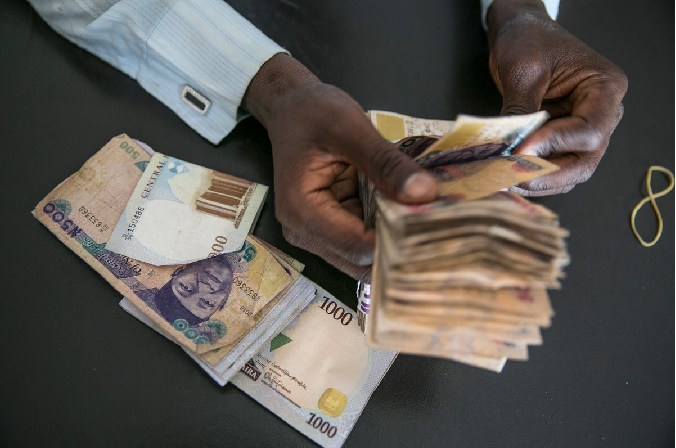
Nigeria’s total public debt stock stood at N31 trillion as of June 30, 2020, according to a report released by the Debt Management Office (DMO) on Tuesday.

The report thus indicates an increase of N2.38 trillion compared to the first quarter of the year. The debt stock which includes the total debt of the federal and state governments saw such a massive rise due to COVID-19 induced borrowing.

The DMO’s report includes Nigeria’s Actual External Debt Service Payments for Q1 2020 as well as Nigeria’s External Debt Stock for the period ending June 30, 2020.

“The data shows that in naira terms, the total public debt stock which comprises the debt stock of the Federal Government, the 36 state governments and the FCT stood at N31, 009trn or $85.897bn. The corresponding figures for March 31, 2020, were N28.62trn or $79.303bn,” the DMO said.

The additional N2.381 trillion or $6.593 billion was as a result of the borrowed $3.36 billion from the International Monetary Fund (IMF) and domestic borrowing used to finance the revised 2020 budget, the DMO explained. It added that the figures include the issuance of the N162.557 billion Sukuk, and promissory notes issued to settle claims of exporters. And it expects the debt stock to grow.

“The DMO expects the public debt stock to grow as the balance of the new domestic borrowing is raised and expected disbursements are made by the World Bank, African Development Bank and the Islamic Development Bank which were arranged to finance the 2020 Budget.

“Recall that the 2020 Appropriation Act had to be revised in the face of the adverse and severe impact of COVID-19 on government’s revenues and increased expenditure needs on health and economic stimulus, among others,” it said.

The debt profile significantly rose by 155.86% to stay at N18.9 trillion in five years, starting from July 2015.

While the federal government holds the larger part (81.52%) of the total debt sum, State governments have notably increased their share to 18.48%. It is therefore N25.28 trillion for the federal government and N5.73 trillion for the states and Federal Capital Territory.

On domestic debt, Lagos State has the highest debt stock as of June 30, 2020, with N493.3 billion in its profile followed by Rivers and Akwa Ibom States, with N266.9 billion and N239.2 billion respectively.

The five-year debt increase has resulted in debt servicing gulping a large sum of capital from the Appropriation Act. Nigeria spent N921.93 billion on domestic debt servicing in the first half of the year. The government said the combined expenditure in both domestic and external debt servicing amounts to N1.57 trillion for the first six months of the year.

Punch reported the Minister of State for Budget and National Planning, Mr. Clem Agba, acknowledging that the government has spent N1.57 trillion on debt servicing for the first six months of 2020. He added that the government’s retained revenue was N1.81 trillion or 68% of prorated target.

The development has triggered backlash from Nigerians as high cost of governance takes most of the borrowed fund, and a little has been invested in infrastructure projects.

“The borrowing is getting too much,” said Prof. Akpan Ekpo, an economist and Chairman of the Foundation for Economic Research and Training. “If you really need to borrow, you must justify it, and there should be transparency about what you are borrowing for.”

Government’s attempt to justify the recent spending has been centered on COVID-19 pandemic. Social Economic Rights and Accountability Projects (SERAP), in August 10, made Freedom of Information requests on how the government has handled coronavirus dedicated funds. In response to the request, the federal government said it spent N31 billion in four months (April-July 2020), but did not give a breakdown of the spending. However, the response means that 84% of the N36.3 billion of both donated and dedicated funds for COVID-19 response has been spent, leaving a balance of N5.9 billion in the special account.

Accountability and reducing the cost of governance in Nigeria is a subject of discussion that the government appears not ready to have, and it is baring venomous fangs on the economic development of the country.

The DMO said the states and federal government are expected to borrow more money in the future. With the oil economy still staggering, it means this trend of increasing domestic and external debt will continue, and recurrent expenditure will be sustained at the expense of infrastructural development.