DD
MM
YYYY

PAGES

DD
MM
YYYY

spot_img

PAGES

Home Blog Page 6166

The Need to Regulate the Production and Sale of Skin Bleaching Cream

0

A friend told me about her house help that uses a popular brand of cheap bleaching cream and what it did to her skin. According to her, the help’s skin was so discoloured and wrinkled that she couldn’t allow her to handle the house cooking or feed her baby. She said that when it became too unbearable for her to see the help in that form, she decided to change her cream for her. So, my friend seized her help’s cream and gave her another one that had no bleaching effect. Well, the help left a few weeks after my friend’s decision and, you know the most amazing part of the story, she returned the new cream my friend gave her, intact. She did not even break the seal on the cream. She preferred staying dry to using a non-bleaching cream.

I have always wondered why women, and even men, bleach their skins. I have always asked if they did not see people, whose skins were damaged by bleaching creams. I have asked if they thought that bleaching creams will give them flawless light-complexioned beautiful skins. I mean, why do they even believe that what is inside a bottle can change their original skin colour and still make them look good? Worst of it all is that most of them go for very cheap ones.

I know that most people that change their complexions seek for social acceptance but, unfortunately, they earn themselves social rejection. As a child, I was taught how to find people that bleached their skins (check back of the ankles and elbows) and when we see them, we start singing “Iru Fanta okpa Coke” (Fanta face and Coke leg). We make mockery of them even though we do that from a distance. But society never accepts people that changed their skin colour.

Whenever I see people that bleached their skin, I wonder if they know how pathetic they look. I doubt if they know that they have developed red-toned skins that look as if they were stretched. Their veins and arteries are visible and greenish-blue in colour. In fact, the criss-cross intersection of their veins reminds one of the pictures of road networks of a city at night. Their palms and feet remind an onlooker of a well-roasted boli (roasted unripe plantain). Their skins are multicoloured; many look like they were painted by customers for a TV show. Worse of all, they smell. Yes, a little increase in temperature and the people that bleach sweat profusely and smell like the meat you left inside a poly bag overnight.

A lot of health practitioners have been campaigning against bleaching the skin. The side effects of this are more than giving the person a rainbow-coloured zebra-crossing complexion, where no part of the body is evenly toned. The effects are also more than ageing the skin. From what I have heard from health practitioners, bleaching the skin affects and damages internal organs too. From their explanations, the skin can absorb this cream and the active ingredients will find their way into the bloodstream. Apart from causing skin cancer, these active ingredients can affect the kidney, bladder and liver. So why would someone want to alter his melanin just because he or she wants to look…good? I don’t think so.

It may be hard to discourage people from bleaching their skins, but it can be controlled. When Nigerians started committing suicide with Sniper, the government banned it from the open market. Right now, you can’t see Sniper displayed on counters or moved around in push trucks and wheel barrows. It may still be in circulation but it is out of reach of a lot of people. Why then has the government not done to bleaching cream what it did to Sniper?

People may say that those that want to bleach their skins should be allowed to do so. Of course, this is a logical argument considering that cigarettes are still sold in every nook and cranny of the country despite its health hazard. But, how many times have you heard the government insisting that the companies that make bleaching cream include its health hazard on the label? How come these manufacturers are allowed to lie to people with pictures of the “before” and “after” of beautiful women, who they claimed used their products? What is the job of the Standard Organisation of Nigeria (SON) if not making sure that products are up to the standard they claimed? People may take decisions to kill themselves, but they should be given an opportunity to reconsider those decisions.

Of course, the job of the government should be to make it hard for those that buy bleaching cream to do so. It can decide to regulate its production and sale. It may decide that only pharmaceutical companies should produce and sell it. It may insist that people should buy it only with a doctor’s prescription. The government can do a lot of things to take these products off the open market and discourage its production. Right now, every Tom, Dick and Harry can buy chemicals and mix up a bleaching cream, pour the liver-killer into a bottle, paste a beautiful label on the bottle and then throw the product into the open market. Our overzealous young men and women will rush that product and, tomorrow, they will come out with damaged external and internal organs.

Opera Launches Nanobank As it Divests Nigerian Subsidiary

0

Opera, a leading global internet brand has announced the launch of a new addition to its number of businesses. The Norway-based company announced through its Q2 financial report, the creation of Nanobank, to reach more markets around the world.

“Opera today announces the formation of Nanobank, creating the largest emerging markets dedicated fintech companies in the world. Nanobank is being created by consolidating the relevant businesses and technology platforms from Opera with those of Mobimagic, reaching a combined registered user base of approximately 50 million people,” the company said in a statement.

Opera is focusing on fintech in the wake of COVID-19 disruptions. Combined earnings of Mobimagic and Opera generated $209 million in revenue and a pre-tax profit of $68 million in 2019, and $120 million in revenue on $10 million loans disbursed with a total value of $686 million, the company said.

The impressive result has inspired Opera to seek expansion into new markets. The chairman and CEO of Opera, Yahui Zhou said fintech offers the company enormous space to make profit, and they intend to expand into new markets through the consolidation of their successful companies.

“Our ambition and potential in the fintech space enormous. We are now taking the next steps to further boost this business – making it even larger, consolidating profitability between two highly successful companies, and realizing benefits of scale to support attractive cash generation,” Zhou said.

He explained that Nanobank will operate as a separate company, to enable flexibility for both Nanobank and Opera, including the chance to take strategic investors or float shares.

The company said it is looking to do financial businesses beyond microlending, though it has yielded significant growth despite the downturns of COVID-19. Nanobank expects to fuel growth through scaling in existing markets, continued geographic expansion, and from the launch of financial services beyond microlending.

Opera will own 42% of the equity interest in Nanobank, while Mobimagic’s shareholders will own a combined 58%. The company said it expects to report a one-time gain in the third quarter as a result of the Nanobank transaction, currently estimated to exceed $100 million as Nanobank becomes an equity accounted investee for Opera.

Opera’s CFO, Fred Jacobsen said that the company’s users’ metrics have stayed strong and year-over-year revenue trends have improved monthly since it plummeted in April, due to the impact of coronavirus.

However, the company reported a slow recovery of its microlending revenue, and said 42% of it would be replaced by the newly introduced Nanobank results.

“Microlending revenue and OPEX will be replaced by our 42% of Nanobank’s results as of August 20th” as it is expected to show “strong sequential revenue growth in the third quarter and expand margins as the business scales back up.”

Among the newly introduced initiatives are OList and European fintech, which is expected to start generating limited revenue in the 2H of the year, although 2021 is the targeted year. Opera’s co-CEO, Song Lin said the initiatives have been encouraged by the inflow of 379 million active users as of July, and the European fintech is being tested in Spain as the company aims to capture European markets.

“We continue to push forward on our new initiatives such as OList and European Fintech, and we are pleased with the progress we’ve made over the last several months. We are now testing our initial and innovative buy-now-pay-later product, in our first major market, Spain.

“We’ve acquired a small number of users already with plans for a formal launch later in the year, all of which is aimed at having European Fintech become a significant contributor to revenue next year,” he said.

Lin acknowledged that the push to expand into European and North American markets has been spurred by the growth in Africa and Asia where it has many thriving products especially, financial services.

Although Opera recorded 10% revenue decrease to $55.4 million, the overall performance of its businesses resulted in the reported gains.

However, Opera said it has made a $6.1 million divestment from a Nigerian subsidiary without mentioning a name. Therefore, it has left many wondering which of its Nigerian subsidiaries it could be.

Analysis run by Techcabal pointed at Okash. Opera’s Q2 report highlighted the progress of its services in Nigeria, excluding Okash. The software company acquired OKash from OPay in December 2018 for $9.5 million, but the lending service has proved to be lagging behind its counterparts in India and Kenya.

The Q2 report noted that Kenya with OPesa and India with Cashbean have been Opera’s biggest market in lending, with average loans of $40 and $50 respectively, while Nigeria’s Okash was notably omitted. Opera mentioned countries it’s planning to take its Nanobank operations to, and Nigeria isn’t one of them.

This development suggests that the divested company must have been OKash, and that OPay must have snapped it up.

Join Tekedia Mini-MBA edition 3

0

Tekedia Mini-MBA is a sector- and firm-agnostic open program comprising videos, flash cases, pulses, challenge assignments, labs, written materials, webinars, etc delivered exclusively online over 4 months, by a global faculty coordinated by Prof Ndubuisi Ekekwe.

All contents are self-paced, recorded and archived which means participants do not have to be at any scheduled time to consume contents. Tekedia Mini-MBA costs US$140 (N50,000 naira) per person.

REGISTER here and join.

Tekedia Academic Programs


Difficulty in doing a PhD is same anywhere in the world, but more difficult in Nigeria – An Interview with Professor Ojebode

1

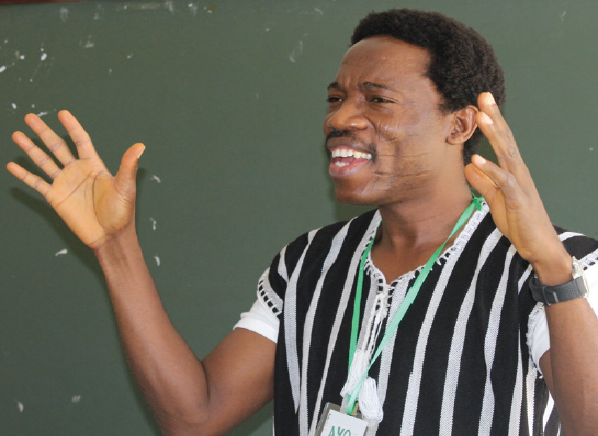
Professor Ayobami Ojebode is the immediate past Head of Department of Communication and Language Arts at the University of Ibadan. During his 9 years of being the Head of the Department 41 PhD graduates and 13 first class degrees were produced. Professor Ojebode has been deploying his skills, knowledge and experience in development communication and studies towards sustainable development in Nigeria and Africa since 2002. In this piece, he speaks with Tekedia on how to produce quality PhD graduates and the need for embracing professional PhD certification in Nigeria.

Excerpts

Tekedia: Recently, you completed nine years of heading the Department of Communication and Language Arts. Can you take us through how it started?

Ojebode: Well, it was a short story that became long. Living is like conducting research. You know where you start, you never know where it will end. I was appointed Acting Head of Department in 2011 for two years. In 2013, I completed the term and I was to either leave or get a renewal. There was a prolonged strike and no meetings could be held. All Heads of Departments at that time whose terms were up stayed on because of the strike. By the end of the strike, the Department met (led by the Dean) and I was asked to step aside. The meeting came to a unanimous decision to recommend to the Vice Chancellor that my term be renewed for another two years. The VC sent a letter to inform me that my term had been for a period of one year, and thereafter for two years. It was a shock. That was how I got to spend 5 years on that seat. At the end of the 5 years, I had been promoted professor, and was the only fulltime full professor in the Department. The Vice Chancellor, following tradition, appointed me full Head of Department for 4 years. That was how we came to the 9 years you talked about. I did not want or wish for it; and I did not like it but then things went that way.

Tekedia: Over the years, stakeholders in the education sector have been saying that the sector is underfunded. As a former head of an academic unit in the University of Ibadan, what was your experience on getting timely funds from the University to run the department? What was your experience sourcing for funds using external sources, especially your past students?

Ojebode: The university system in Nigeria is certainly underfunded and mis-funded. These are two different things. The Federal Government and the States, and I must say, goaded by the Academic Staff Unions of Universities assume the responsibility of paying every student’s tuition. In other words, they wanted a tuition-free university system. Till this very hour, ASUU still supports, I almost said, demands that tuition-free regime in support of poor students. However, government has not been able to rise up to the demands of this tuition-free boast of theirs. Universities are forced to find ways of augmenting what the government gives – and one must quickly add that this is not peculiar to Nigeria. In the US, public universities do not depend totally on any government. They charge heavy fees and still have to scout around for grants and foundation supports and so on from all sorts of sources. In my own case, I had to look for fund for a number of projects that we executed down to what can go for even capital project such as provision of inverter and solar panels for staff; purchasing a departmental car; inviting professionals to spend time with students etc. We hardly ever had anything in the official wallets of the department that could cater for all these needs. I said that universities are also mis-funded. You might be wondering what that means. Our university system has been set up pretty much like civil services with its bureaucratic clogs and hindrances. These all create stupendous wastages.

Take for instance, and I am sure this will offend people, a situation where number of non-teaching staff far exceeds that of teaching staff. And this is what you have in all government universities. You must pay salaries. Some of these staff rise to levels and occupy positions where they must ride cars and have drivers and secretaries and messengers. The university must pay for all of these. It is only just and fair that you pay people since you employed them. And don’t ask me if we need these people. Once people are employed, they must somehow find work to do. So, you have employed seven people to do the work of two. Good. Instead of that file to move from Table 1 to Table 2 and get completed, it must move from Table 1 to 2 to 3 to 4 up until 7 people have to justify their pay. You see? So, so much money is spent in the university that has absolutely nothing to do with the vision and mission and calling of the university. And I am not blaming the non-teaching staff or denigrating them. I am simply saying we have set up a system that thrives on avoidable delay and wastage, a behemoth like the NNPC, that drains much more than it produces. Do you know that if a classroom is leaking, the Vice Chancellor does not have the power to take money meant for replacing official cars to mend the leaking roofs? In the Faculty of Arts, in 2018-19, academic staff had to contribute money to fix dilapidated classrooms. I headed the committee that was in charge of that, and I was very proud of my colleagues.

Tekedia: This year your department will be celebrating its 45 years of existence. What have been the contributions of the Department to global academic community and Nigerian society?

Ojebode: It is difficult to talk about ourselves. Let me show you something. Talking about our contributions to the global academic community, our products have headed or are heading nearly two-thirds of Departments of Mass Communication or Communication Arts or Language Arts in this country. Two of our products have been vice chancellors. Others have been directors of institutes and so on. Outside of Nigeria, our products are doing extremely well in the academia. In the industry, both home and abroad, our products are leaders with distinction. In marketing communication, in public relations, and in both print and broadcast journalism, they are distinguishing themselves.

The first person to obtain a First Class degree in the Department rose to a top-level position in the extractive industry as a public relations person and then went on to serve as Director General of the largest television network in Africa. Even before they graduate, our students start clinching awards in tough national and international competitions. For instance, Nneamaka Okafor, came first in the 2012 selection test for the Cannes Lion’s International Festival of Creativity. The second and the third positions were also won by our students.

In 2018, we emerged the Best School of the Year at the year’s Creativity Week, at the annual advertising event organised by Chini Productions in collaboration with the Roger Hatchuel Academy of France.  One of the four students who represented us, Miss Ayomikun Akinlosose, won the Silver Medal at the event and that entitled her to a fully funded trip to the Dubai Lynx Festival in 2019. Miss Ayoyemi Oladipo won the Advan Award for Marketing Excellence in 2018 while Nifemi Williams was the second runner-up at that competition. This year, Ayoyemi Oladipo won the first prize in the Miami Ad Scholarship Competition. I can go on and on. I can tell you of Gbenga Adeoba, one of the most quiet students I have ever taught but a young man deep in thought and gifted in words. He was the winner of the 2019 Sillerman First Book Prize for African Poets. Or Kunle Shittu, or Chris Ogunlowo or Damilola Banjo or Tunde Bada.

Tekedia: It’s a common knowledge that getting a first class in social sciences, arts and humanities courses is difficult. But recently a report says under your headship you produced 13 first class graduates in 9 years. Can you walk us through the strategies and tactics you and the staff employed to attain the feat?

Ojebode: I agree with you that obtaining the first class is a difficult task, especially in the Humanities in the University of Ibadan. In our case, it once appeared that it was meant for the gods because for some 36 years, we managed to produce only two. But in 9 years, we added 13 to that number. Well, I honestly cannot explain how it happened. We did not hold a meeting in the Department or anywhere to say, ‘now we must produce first class’. Even if we decided as a department that we must now produce first class, you know these students take many, many courses outside. For graduates in the first class, you must score very high in all these internal and external courses. What I can say however is that all those who have obtained the first class in the Department have gone on to prove their mettle as postgraduate students and as people in the industry. They have been amazing ambassadors.

Tekedia: Now, let us discuss doing PhD programmes in Nigerian universities and doing PhD programmes in foreign universities. Any similarities and differences?

Ojebode: Here and everywhere, a good PhD is a huge amount of work. It takes a heavy toll on the student and also on the supervisor. Those who complete the PhD without tales of difficulties are rather few. Such stories hover around lack of materials, difficult learning environment, and difficult supervisors. I was of the opinion that doing a PhD in Nigeria is more difficult than doing it in any other place in the world because of the factors I just enumerated until I began to listen to colleagues from other parts of the world. Last week, in our doctoral academy, we were mourning the death of a PhD student in Pakistan who committed suicide after staying on the PhD for fifteen years. One is not sure if that extreme action was connected to the PhD, was due to something else or was a product of a combination of many factors. This just suggests that the PhD is a demanding degree everywhere. I think private universities in Nigeria have the fastest PhD lane right now.

Tekedia: What do you think students and stakeholders in Nigeria need to do to improve PhD training in the country?

Ojebode: I can tell students to work hard, and to define for themselves a vision for their PhD. Have clear goals, and good time management right from the start. Do not come to the supervisor without a convincing idea of what you want to study. You have a Master’s degree, remember. Your confidence and mastery of the content and methods go a long way in determining how people, including your supervisor regard you. Universities also have to work out a framework that monitors supervisors and ensure that imperious supervisors are checked. It should be possible for a student being unduly delayed by a supervisor to have a complaint loop that is taken up at the postgraduate school. A department in the University of Ibadan once read a riot act to students over delay of their studies but it was an indirect riot act to the supervisors.

And it worked somewhat. The fastest PhDs we have produced have also turned out to be the best. In other words, staying long on a PhD does not necessarily improve the quality. Importantly, that administrative “suspension” between the time the final draft is made and the time the defence is organised must be shortened. In UI, it is called registration of title of thesis. It sometimes takes as short as three months; it other times take as long as 18 months. What’s that! Shortening this delay will take the efforts of everyone involved: the student, the supervisor and the department who should ensure that the abstract is top level, and the faculty and the graduate school who should ensure rapid turnaround, and limit comments to those made by experts and near-experts in the field. In a university I know, not UI, a PhD student in literary studies was asked to take their abstract to someone in Physics. I mean, iambic penta-metre sounds pretty much like science but …

Tekedia: In developed countries, we have seen that a number of Universities are doing professional PhD, accepting publications for PhD certification. What is your view on this? Can Nigeria emulate these universities?

Ojebode: Yes, professional PhDs are growing in popularity. And there is nothing wrong in Nigeria considering them. They come in a variety of ways: while some are project-based, others are publications based. Heavy theorisation with detailed methodological specifications is often absent. Concerns have also been expressed about quality assurance in these PhDs, same as for academic PhDs. It is a major concern; universities who are opening up these programmes just to generate funds are not likely to assure quality.

Steps To Create An Effective AI Application

0
AI would anchor many areas of legal practice (souce: law)

AI or artificial intelligence is the simulation of human-like intelligence processes and decision making done by machines, especially computer systems. These processes include learning, reasoning, and self-correction. Some of the applications of AI include expert systems, speech recognition, and machine vision. Developing an artificial intelligence application can be a difficult task, often requiring a team of software engineers carefully working in tandem. Here are the four key steps to create an effective AI Application:

  1. Problem-solution fit

Reaching a problem-solution fit means that you have already built an MVP (minimum viable product), you have found your early adopters (people to use your MVP), you have managed to solve a problem that your early adopters have, and you have managed to charge enough for your solution so that users are happy.

  1. Data-gathering / AI building Game

This will be your first generation of AI. At this point, you will still have to give some human inputs to your AI application so it can learn and adapt. Train your model and as it receives more data and learns your human inputs, your results will start getting more accurate.

  1. Product Build

After you have a working AI, it is time to make it more accessible for your user base. Package your AI into a product, so it is as simple as opening an application and getting the required information. This means designing a user interface and have a unique selling point when compared to the other similar applications.

  1. Develop Ways for Improving AI

Once your final AI Application has launched, you will start getting lots of information. Much of this information will be completely new, hence you need a way to make sense of it and use it to further improve your application and it’s AI accuracy. Figure out where to store this new information, retrain AI whenever necessary, and test how the new versions of your AI application perform when directly compared to its older versions.