
DD
MM
YYYY

PAGES

DD
MM
YYYY

spot_img

PAGES

Home Blog Page 6172

Tekedia – A Disruptive Product In An ‘eduflation’ Market – JOHN MC KEOWN

3

A couple of things happened recently that caused me to reflect on the nature of The Tekedia Mini MBA, a course delivered remotely that I applied to and joined.

I watched a TEDx talk by one Sir Ken Robinson entitled ‘Do schools kill creativity?’ which questions the subject hierarchy and delivery methodologies of generic educational systems globally.

The second thing is I reflected on my own history, and acknowledged that I am to some extent the result of a disruptive product of the last millennium.

My graduate qualification for a start, isn’t a ‘university’ degree. I left my teens in a backward but fast changing Ireland, with both established heavy industry and engineering on one hand, and newly arriving companies in FMCG, chemicals, pharmaceuticals and computer hardware, distressed and dismayed with the candidate quality created by Universities. They viewed them as being too academic and detached from real world usable skills. So the Department of Education embarked on a mass evolution to throw lots of new degree level courses, with a focus on application, at the Vocational Educational Community, previously mostly aimed at trade skills.  They were not ready.

In a panic to deliver on the metrics of campaign promises, the Government then decided to dump an ‘overflow’ of these courses on An Comhairle, or ‘AnCo’ for short. The problem was AnCo was set up to deliver something completely different. It offered entry level courses specifically to assist with employment challenges, typically teaching ‘top-ups’ in literacy and numeracy, basic modern trade and customer servicing skills, basic clerical skills, and other preparation for the semi-skilled labour market.  Indeed, applicants had to prove they were unemployed for a minimum of six months to secure a place. It’s mission was to make the unemployable -employable! It was even questionable that their in-house tutors were educated to the level of these new degree level courses being added to their duties!

So AnCo leaders did something very disruptive for the time, though less unusual now – They contracted out the courses to a range of Management Consultancy Companies with track record and expertise in the course topics. I was schooled in Industrial Engineering under a Scottish company named Management Systems Dynamics.

Their approach was very application driven. Moreover, I was lucky to spend my Industrial Placement assigned to Murphy’s Brewery Cork. I gained exposure to all parts of process, sales and distribution, as well as their unique ‘third party portfolio’ business encompassing a wide range of products for which they acted in the Irish Market. I also got to see what an ‘acquisition’ looked like, up close and personal, as I served through the take-over by Heineken, and the lead transition between Pat Earley and Gerhard Koenderink.

So I understand the value of disruptive educational products with the power to shake up job markets and the entrepreneurial landscape.

‘Eduflation’ is what I call the increasingly reducing collective value (inflation) of a portfolio of typical university products as job seeker currency in the job market.

Sir Ken Robinson: ‘Suddenly degrees aren’t worth anything…When I was a student, if you had a degree, you had a job, if you didn’t have a job, it’s because you didn’t want one… (now)… you need an MA where previously you needed a BA, … and you need a PhD for the other… it’s a process of academic inflation, and it indicates the whole structure of education is shifting beneath our feet.’

The final line is damning and suggestive that ‘PhD required’ is not the end of ‘eduflation’ but merely the start of a phenomenon gathering pace.

Eddie Cross, the renowned economist recently said he was bored by stories about barrow loads of Zimbabwe Dollars needed to buy a toilet roll… will we have to start preparing for barrow loads of PhDs needed to secure a job?

One thing that Ken Robinson doesn’t mention, is the entrenched perception of PhD holders as ‘too academic’ and (outside of the medical field) the strong association with being a career educator and at some stage, becoming a professor. So are we heading for a ‘damned if you have and damned if you haven’t for many professions?

He did however say: We need to radically rethink our view of intelligence’

On the educational community (Professors) he says… I used to be one… They live in their heads… they look on their bodies as a form of transport for their heads… it’s a way of getting their heads to meetings!’

So where does that leave us all in terms of educational status? How much will be enough? Is there an end?

Here are a few pointers:

Firstly I see career education as a lifelong journey that shadows a career, not as something to be completed prior to having one. They feed off each other. A first degree is generally ‘pure’ (mine wasn’t!).  A masters (especially STEM) is generally applied. A Doctorate depending on context, can be either.

I completed my first degree in the last millennium and my masters in this one. Employment or running a business creates a bedrock on which to build a postgraduate experience. I see little value in extra academic credentials that haven’t extracted value from work experience.

A qualification portfolio is like a bunch of vehicles in a second hand (tokunbo) car lot. If none are selling, then the answer isn’t to increase inventory. The obstacle to closing sales is something else. For those who specifically need career opportunity over self-employment, this needs to be explored.

So:

  1. Align educational and career progress together so they make a joint life journey.
  2. Less is more, ‘barrow loads of PhDs’ isn’t realistic for one lifetime! Make (limited) choices robust against eduflation on quality and relevance.
  3. Value disruptive learning opportunities which deliver well on journey value, application impact, cost and time, and ability to be multi-tasked against other responsibilities competing for time.
  4. Have a life!

The Tekedia Mini MBA in my own words.

I discovered the Tekedia Mini MBA as I was looking to gain career value from an increase in available time caused by the advent of the pandemic. I knew Tekedia owner (Prof. Ndubuisi Ekekwe) only as a frequent content creator on LinkedIn and responded to his posts from time to time. I had not had dialogue with him.

Being the second iteration of the program, there was limited opinion in the public domain, and I made a decision to sign up based on face value of the website content, some limited discussion I had with Tekedia admin. by email, and attracted by the very affordable course cost.

The course runs a period slightly in excess of four months. Each week consists a number of video lectures on essential topics. They are supported by other documents (usually pdf) and a bibliography of mixed media suggested reading/watching/listening. There are assignments.

Three live webinars take place every week. Two by course lead contributors (usually topical by those who have provided the lectures), and one by Prof. Ndubuisi Ekekwe which is more general.

The lead contributors are about 80% Nigerian and 20% other which are mostly US. The co-learner community for this edition are about 85% Nigerian, 10% Other African and 5% Other, based on my perception, and this is subject to dynamic change as the editions progress.

There is also a small pool of webinar moderators who are all Nigerian, and Prof. Ndubuisi Ekekwe sometimes moderates himself.


Sir Ken Robinson: ‘Do schools kill creativity?’

After a short topical intro by the course lead contributor, a Q&A/discussion period follows where course lead and co-learners dynamically contribute and debate. These include real life business challenges and concerns in the here and now, across multiple sectors, mostly in Nigeria, though references are also made to other markets and business models in Africa and the world at large.

Separately the co-learner community have whatsapp groups. Tekedia is currently perfecting its own cross platform whatsapp type service.

Participation is not graded, though there are (optional) ‘labs sessions’ which engage on completed assignments and feedback is provided by Tekedia. There are also follow-on specialist courses (Captsone Projects) available to Mini – MBA ‘graduates’.

My first direct exposure to Nigeria began in 1997. I married a Nigerian at the turn of the millennium and  have children schooling in Nigeria. I am titled in Nigeria and acknowledged in print for contributions to a number of industry sectors. I won’t bore the readership with more detail!

Nevertheless, I’ve not done ‘the whole nine yards’. I haven’t written JAMB, I haven’t attended a Nigerian ‘bricks and mortar’ University and I haven’t served NYSC!

The opportunity to participate in a Nigerian led program with predominantly Nigerian co-learner group ticks extra boxes and fills gaps for me as a non-indigene tied to the market through personal circumstances.

For anybody currently in Nigeria or indeed Africa, this is a great opportunity, particularly if you are running your own business, or are a Project Champion (Intrepreneur).  There is a strong focus on Virtual Business and New Tech. It is also very relevant for anybody wishing to understand this market and learn directly from real business people with real challenges.

In the spirit of ‘Less is more’;  making choices robust against eduflation  and Valuing disruptive learning opportunities;  Tekedia Mini MBA is not one to miss.
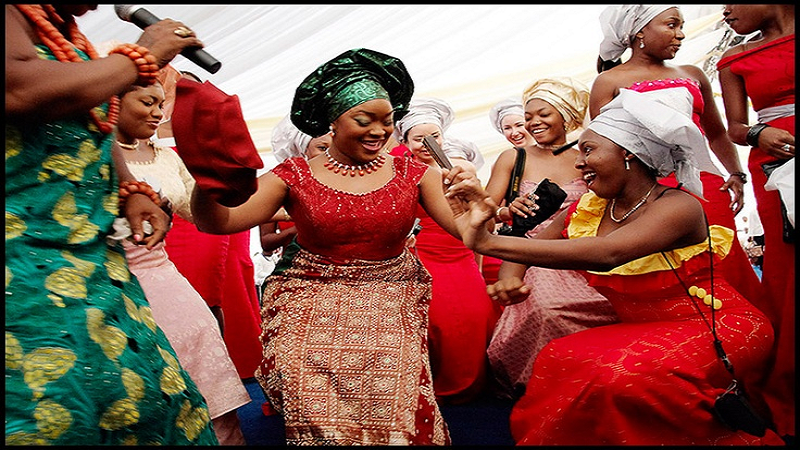
 

The Supreme Court of Nigeria Missed Opportunity on Igbo Tradition

3

 “No matter the circumstances of the birth of a female child, such a child is entitled to an inheritance from her late father’s estate.” From Supreme Court ruling

The Nigerian Supreme Court has attempted a bold call on a tradition: female children must have rights to the inheritance of their fathers in the Igbo Nation. The implementation would be exceedingly challenging. The fact is this: most Igbos expect their daughters to marry, and never to return from their husbands’ homes. So, the tradition makes it this way: stay in your husband’s place and we do not want you back. At the same time, they do not expect the daughter to bring anything belonging to her husband back to them.

In a landmark ruling, the Supreme Court of Nigeria has upheld the judgment of the Appeal Court respecting the right of a female child to her father’s inheritance. The Apex Court judgment has however, disrupted a long-held tradition of the Igbos that prohibits female children from inheriting their father’s properties.

The Supreme Court ruled that the tradition contradicts Nigeria’s constitution and it is discriminatory. It said the practice is a clear violation of section 42(1)(a) and (2) of the 1999 Constitution.

Gladys Ada Ukeje, the daughter of late Lazarus Ogbonna Ukeje had filed a suit challenging her family’s decision to disinherit her from her father’s estate based on the Igbos’ native law. The trial court had ruled in her favor, but the widow of late Mr. Ukeje, Mrs. Lois Ukeje, and her son; Enyinnaya Ukeje appealed the ruling of the trial court.

But with asset structures changing, everything is complicated since unlike in the old ancestral world, a father now owns stocks which are easier to transfer. So, a man can give his stocks to his married daughter if he thinks the son cannot manage them well. This is already happening in most educated families: daughters are getting portions of their father’s assets and wealth. But since most properties in rural areas are not formalized, and with the daughters expected to be married out, rights to properties domiciled in father’s ancestral homes remain harder for the female child to access. How are you to quantify your father’s house for sharing  when you live in another town? In Nigeria’s balance sheet, that property is valued at nothing, being non-formalized.

Igbo traditional marriage

Yet, the irony is that the Igbo Nation accords huge rights to female children, especially when they are married. They name their daughters “Nneka” which means “mother is greater”. The implication is that a man can lose his kingdom, and the only safe option is to run to his mother’s place. This means, you may be living in your father’s land but true safety is in the mother’s place. That reverence to daughters remains till today when elders gather, and before the oldest man drinks palm wine, he will first ask for any “Nwa-ada” present. Nwa-ada means “son to our daughter”.  You need to take care of Nwa-ada because the boy could be the one to welcome you to the daughter’s new home (i.e. his father’s house) should bad things happen.

All humans – male or female – are equal before law. I will have a piece to explain why even though the Igbo Nation seems not to pass inheritance from father to married daughter (not common these days), Igbos see daughters as “greater”. We name our daughters “Nneka” which means “mother is greater” and by tradition the safest place is your mother’s, not father’s. More so, before the oldest man breaks a kola nut/drinks palm wine in any gathering, Nwa-ada, the daughter’s son, is invited, jumping ahead of everyone. You need to make him happy so that if bad things happen and you run the the married daughter, his son will be open to welcome you!

Then, the most consequential: all mother’s inheritance are exclusive for daughters. So, if you look carefully, the real issue is not that a father’s inheritance goes to sons (since mother’s goes to daughters), the problem is this: gender inequality is pervasive that what mothers leave behind is never significant. Imagine a scenario where mothers are earning more than fathers, it would be sons who will wage a fight asking for equity.

Then, you may ask: why not lump mother & father wealth together? The problem has to do with entrepreneurial polygamy where different women were married to help expand farmlands. Linking … ok, let’s stop. (my earlier post on LinkedIn)

All Together

As I have noted, the core problem is not really who controls the father’s estate but the pervasive gender inequality in Africa which makes it harder for women to accumulate wealth. What the Supreme Court has done is simple: only the father could accumulate wealth and estate. What happens when the mother is the one who has accumulated wealth? Typically, such goes to the daughter in the ancestral Igbo tradition. 

My point is this, the Supreme Court of Nigeria would have used one stone to kill two birds by ruling thus: No matter the circumstances of the birth of a child (male or female), such a child is entitled to an inheritance from his or her parent’s estate (mother or father). But by making its ruling focusing on the father’s estate, it leaves open for a son to sue a sister who gets inheritance from the mother.  

Most mothers, in Igbo Nation, WILL their estates to their daughters. So, if a family has a scenario where the mother does own the estates, the son loses, if tradition is followed. The Supreme Court could have ruled and fixed this anomaly once and for all. It certainly got distracted because Igbo Nation, Nigeria, Africa and indeed the world have sustained the evil of gender inequality, with the assumption that only a father’s estates would be in contention. 

(Of course, most daughters are supported during Idu Nwanyi (marriage ceremony) where parents buy goods for the daughter as she leaves her parent’s home to begin a new home with her husband. While that should not be seen as sharing inheritance, the fact remains that the Igbo tradition does honor women, because the joy of every family, is to ensure that the daughter has assets to help her support her new husband in the new home. Yet, this only works when the daughter is being married. Where the daughter is not getting married, such favours are not extended, explaining the thesis that the Igbo tradition expects daughters to be married).

Sure, most times, the Court rules on the case at hand! But for me, while the lady got her good call,  the Court did not go all the way. But pray and hope, no one needs a Supreme Court to help a brother or sister!

But I may be very theoretical here: in practice, no man will sit on his father’s estate and see his sister suffer. So, the fact this case went to the Supreme Court shows the need for the Court to have fixed this gender rated issue once and for all.

And as it does that, it needs to write to the National Assembly to make laws that would fix gender inequality which makes it harder for women to accumulate wealth as men. 

The Lagos State’s Missing Helicopters

0

In 2015, the Lagos State Government under the leadership of Governor Akinwunmi Ambode, acquired three helicopters for security and medical emergencies. The acquisition of the helicopters was hailed by Lagosians as it would help first responders to beat Lagos’ crazy traffic.

That’s what it was meant to be, and what Lagosians believe it is until on Monday, when the Lagos State House of Assembly summoned the Chief of Staff to the Governor Babajide Sanwo-Olu, Mr. Tayo Ayinde; the Commissioner for Economic Planning and Budget, Mr. Sam Egube; Commissioner for Special Duties, Mr. Tayo Bamgbose-Martins; and the management of the Lagos State Security Trust Fund over the helicopters.

According to Punch, the concern was raised by the Chief Whip of the House, Mrs. Mojisola Meranda, under matters of Urgent Public Importance on Monday, during the plenary.

She said that the helicopters are missing, and their whereabouts should be investigated as well as the contractual agreement between the Lagos State Government and companies designated for their maintenance.

“In 2015, three helicopters were bought under Governor Akinwunmi Ambode to strengthen security in the state. But the helicopters are nowhere to be found now.

“I will want us to look at it and get the concerned parties to tell the house House the location of the three helicopters to see if they are just lying fallow or if the state government has entered into an agreement with an entity on the equipment and see to what extent the agreement has been working,” Mrs. Meranda said.

The Speaker of the House of Assembly added his voice to the issue, demanding answers to the whereabout of the helicopters. He said they were meant for security and commercial purposes and the Lagos State House of Assembly should know what the situation of the assets is.

“We need to know what has happened to the helicopters,” he said, and directed the Clerk of the House, Mr. Azeez Sanni to give an account on the helicopters.

While there is hope that the helicopters could be lying in waste on some tarmac somewhere, the development calls to mind a similar incident that took place years ago.

In 2004, MT African Pride, a seized Russian ship laden with 30,000 barrels of oil disappeared from the custody of the Nigerian Navy without a trace. It was an embarrassing moment for Nigeria that charges was instituted against responsible naval officers.

A comedian made a joke story from the incident; he talked about a commercial motorcyclist whose okada (motorcycle) was stolen. He had gone to a police station to report the theft and was chased away by a policeman who said that a motorcycle is so insignificant to be bothered about. After all, if a whole ship could disappear in Nigeria without a trace, there’s no need looking for a missing motorcycle.

And the police officer was right, the okada would never be found just as so many other things that disappear in Nigeria.

It is the 16th anniversary of the missing ship incident, and Lagos State Government is having a helicopter episode. Nigerian public officials are notorious for keeping government assets they used while in the office; from cars to every other thing movable, but helicopters could be an exception.

As emergency situations still abound in Lagos, it is hoped that the three helicopters will be found and returned to their designated services.

I want everyone to #Believe. It is a new dawn for transportation in Nigeria.

0

Tomorrow, Aug 27, Vetifly will run its debut flight. I had hoped I would be in person to fly with you, but with the international airports closed, that would not happen. From our Board of Directors, we wish everyone flying with Vetifly to fly into GREATER promise and abundance. We come with a great vision and will serve our nation and continent in great ways. Thank you all for the amazing support we have received.

The fascinating young lady going out to do the amazing tomorrow, thank you. Let me hold that one until after tomorrow. We are truly thrilled. Thank you Nigerians. Thank you GOOD People – you are the best.

As Vetifly helicopters leave the solid  bounds of the land to reach skywards, I want everyone to #Believe. It is a new dawn for transportation in Nigeria. Download our app and book your flight.

Download Vetifly App and Book Your Helicopter Ride – Operations Commence Aug 27

Nigeria’s Supreme Court Upholds The Rights of Igbo Female Children to Fathers’ Inheritance

27
Igbo traditional marriage

In a landmark ruling, the Supreme Court of Nigeria has upheld the judgment of the Appeal Court respecting the right of a female child to her father’s inheritance. The Apex Court judgment has however, disrupted a long-held tradition of the Igbos that prohibits female children from inheriting their father’s properties.

The Supreme Court ruled that the tradition contradicts Nigeria’s constitution and it is discriminatory. It said the practice is a clear violation of section 42(1)(a) and (2) of the 1999 Constitution.

Gladys Ada Ukeje, the daughter of late Lazarus Ogbonna Ukeje had filed a suit challenging her family’s decision to disinherit her from her father’s estate based on the Igbos’ native law. The trial court had ruled in her favor, but the widow of late Mr. Ukeje, Mrs. Lois Ukeje, and her son; Enyinnaya Ukeje appealed the ruling of the trial court.

Consequently, the Appeal Court upheld the judgment of the trial court, prompting the duo to appeal to the Supreme Court. The long legal battle that started in 2004 with the file number SC 224/2004 ended in a historic verdict which does not give only Gladys a right to her father’s inheritance, but every other female child of Igbo race.

In its ruling, the Apex Court held that the Appeal Court has been right in its judgment that nullified the Igbo tradition that prohibits females from inheritance.

The panel made up of Justices Samuel Walter Nkanu Onnoghen, Clara Bata Ogunbiyi, Kumai Bayang Aka’ahs and John Inyang Okoro and others, agreed with the lead decision.

Justice Bode Rhodes-Vivour, reading the verdict said: “No matter the circumstances of the birth of a female child, such a child is entitled to an inheritance from her late father’s estate.”

Rhodes-Vivour added: “Consequently, the Igbo customary law, which disentitles a female child from partaking in the sharing of her deceased father’s estate is breach of Section 42(1) and (2) of the Constitution, a fundamental rights provision guaranteed to every Nigerian.

“The said discriminatory customary law is void as it conflicts with Section 42(1) and (2 of the Constitution. In the light of all that I have been saying, the appeal is dismissed. In the spirit of reconciliation, parties are to bear their own costs.”

While the ruling has voided the practice of disentitlement of a female child in Southeast Nigeria, it has also created a new conflict. The tradition has been upheld for ages, and consequently many have found the Supreme Court’s judgment unacceptable.

Igwe Simeon Osisi Itodo, the traditional ruler of Aji autonomous community in Igbo-Eze North Local Government Area of Enugu State, told Vanguard that the Supreme Court ruling will not change the custom of Ndigbo, and any effort to enforce it will bring chaos.

“There are traditions which had existed before the law. Before the emergence of law courts, Igbos have their tradition and custom which cannot be wiped out because of Supreme Court ruling.

“We are not against that ruling but we would not abolish our customs and traditions which all of us met. You can imagine a married woman coming back to her father to share his property with the sons.

“We would not allow it because it would breed chaos and troubles in our communities. If there are customs that allow such inheritance, let the people continue the practice but it won’t work in Igboland. In India, women pay the dowry but the reverse is the case here. We would not abolish our unique customs because of court ruling,” he said.

While there are many voices in support of the court’s judgment, many have acknowledged the difficulty in its implementation.

Another Monarch, Igwe Christopher Nnamani of Likke Iheaka, in Igbo-Eze South Local Government Area of Enugu State, who added his voice to the development said the Igbo custom that denies females’ right to their fathers’ property has been unfair, and needs to be changed. But he acknowledged that it would be difficult to introduce something new in place of the old custom.

“This unfair treatment of female children does not happen in Northern or Western parts of Nigeria. This explains why females with affluence lord it over their male counterparts in Igboland when they remember the injustice they have suffered in the past.

“If a male becomes the eldest man in his community, he would be entitled to some privileges, which may come in form of royalties but the reverse is the case for the women in Igboland. The challenge is how to implement it now because it now because it is an old tradition in Southeast Nigeria,” he said.

The tradition has been based on the fact that a girl-child will be married off, maybe far away from home where she cannot play the custodian of the inheritance. Moreover, for Ndigbo, a female child’s inheritance lies with her husband who is believed to have inherited his father’s property.

However, a twist in the custom that birthed the judgment is the urban setting, where Igbo fathers own properties far away from home, where inheritance is not governed by native laws and practices.

Additionally, the 21st century ushered in a new era of thinking and a brigade of rights activists ready to fight till the last drop of blood to kill the old norms that have subjugated women.

However, it is not the first time the Supreme Court is ruling in favor of Igbo women in this matter. There has been such a judgment in the past, but it has failed to change the custom particularly in the Southeast. And based on the views of the custodians of Igbo customs, the recent Apex court ruling may have little effect on the tradition.