DD
MM
YYYY

PAGES

DD
MM
YYYY

spot_img

PAGES

Home Blog Page 6176

The Apple’s Tax And The Facebook Stunt

3

Just a few months ago, Apple presented itself as a vanguard of user privacy. That is an easy call when you deal with proprietary software packaged in an exclusive hardware with no advertisement. If that is the case, you certainly do not need to mine users’ data. Tim Cook, Apple CEO, explained that Apple would not sell your data, throwing it to Facebook and Google which need users’ data in their business models. Google tried to explain that using users’ data to subsidize services, or make them free, unlike fashionista pricing, legendary in Apple, was fair game. 

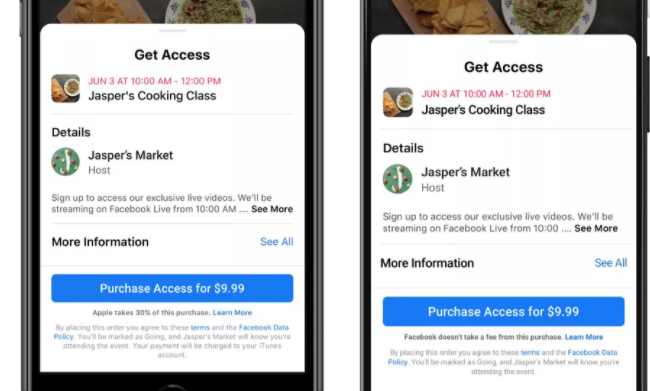
But Apple did not care, attacking Facebook and Google on their business models. But things seem to be changing – welcome to a new world. Yes, Facebook is playing a stunt game, telling the iOS world that Apple is taking a 30% cut on all in-app purchases, thereby reducing their take-home pays. Without warning, Apple banned the update.

Facebook Inc on Thursday told Reuters that Apple Inc rejected its attempt to tell users the iPhone maker would take a 30% cut of sales in a new online events feature, forcing Facebook to remove the message to get the tool to users.

Facebook said that Apple cited an App Store rule that bars developers from showing “irrelevant” information to users.

“Now more than ever, we should have the option to help people understand where money they intend for small businesses actually goes. Unfortunately Apple rejected our transparency notice around their 30% tax but we are still working to make that information available inside the app experience,” Facebook said in a statement.

Largely, Facebook is intentionally piling pressure on Apple, sustaining the Epic Games’ battle to see Apple drop its 30% tax on in-app purchases. Facebook has a message to Apple: do not think because you do not run ads, and accordingly will not need user data the way we do, that you do not have your own problems. Yes, if Apple waives its 30% (which will be an own-goal, as in African football), all products on Apple Store, possibly, will see reduced costs.

Left and right: nothing is perfect. It is simply a question of season and time. Apple is learning one thing: even asking people to pay, without the option of giving their data for freebies, may not be perfect.

“I’m completely enjoying the #TekediaMiniMBA outstanding materials” – A Testimonial

0

Thank you Segla Segla MBB,PMP, MBA for the kind words on Tekedia Mini-MBA from Tekedia Institute. This is amazing  – and awesome. It goes to our faculty and all co-learners. Tekedia Mini-MBA is largely a community service I must note. Our mission is to co-learn, co-share and rise together. In today’s Tekedia Live with edition 3 members, a member asked a question on pricing and how to arrive at the optimal number. In my response, I brought up Bigi Cola, Lacasera and Coke to explain.

Quickly, a member wrote: “ I thought you live in the U.S. How come you know the prices of Bigi Cola, Lacasera and Coke per bottle” in Nigeria. I wrote back: “It is an honour that for all the programs in the world, you decided to join us. It is our responsibility to demonstrate that by being prepared, always”.

We will keep getting better. Thanks.

Source: LinkedIn

Central Bank of Nigeria Orders Bureau de Change to Sell Dollar at N386/$1

8
Nigeria Naira US Dollar

The Central Bank of Nigeria (CBN) said it will resume sales of forex to bureau de change (BDC) operators as Nigeria sets to lift restrictions on international flights.

The apex bank made the announcement via a circular signed by the director, Trade and Exchange Department, O.S Nnaji, which was shared with operators of BDC and the general public. The CBN said the exchange of currencies will happen on Mondays and Wednesdays.

“As part of efforts to enhance accessibility to foreign exchange particularly to travelers following the announcement of the limited resumption of international flights by the Honourable Minister of Aviation commencing with Abuja and Lagos, the CBN hereby wishes to inform the general public that gradual sales of foreign exchange to licensed BDC operators will commence with effect from August 31, 2020.

“Consequently, purchase of foreign exchange shall be on Mondays and Wednesdays in the first instance. The BDCs are to ensure that their accounts with the banks are duly funded with the equivalent Naira proceeds on Fridays and Tuesdays accordingly.

“Meanwhile, Authorized Dealers (banks) shall continue to sell foreign currencies for travel related invisible transactions to customers and non-customers over the counter upon presentation of relevant travel documents (passport, air ticket & visa),” the circular said.

It added that All Authorized Dealers and BDC Operators are hereby advised to ensure strict compliance with the provisions of extant regulations on the disbursement of foreign exchange cash to travellers as any case of infraction will be appropriately sanctioned.

As part of efforts to contain the economic strains and forex crisis emanating from COVID-19 pandemic, the Central Bank also ordered BDCs to sell dollar at N386.

“Please, be advised that the application exchange rate for the disbursement of proceeds of IMTOs for the period, Monday, August 31, to Friday, September 4, is as follows:

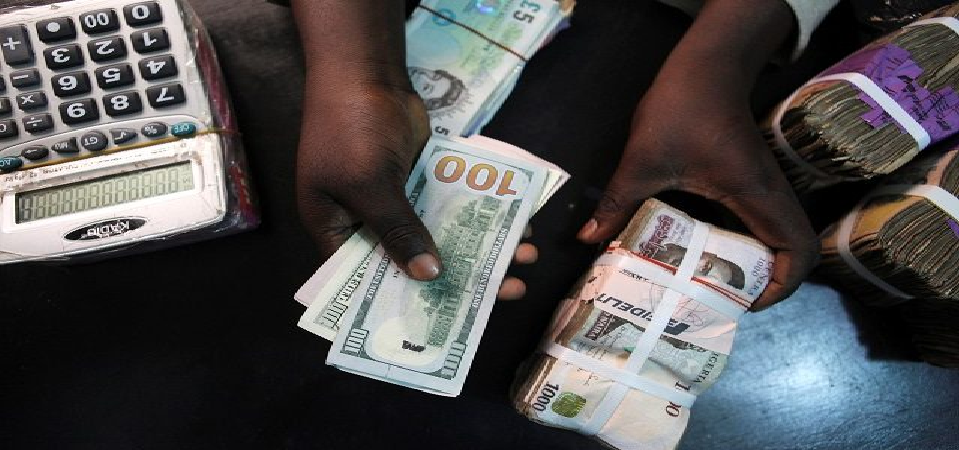
“IMTOs to banks N382/1USD; banks to CBN N383/USD; CBN to BDCs N384/1USD; BDCs to end users N386/$1; volume of sale for each market is USD 10,000 per BDC,” the circular added.

The central bank has been pushing monetary policies aimed at stopping Nigeria from falling into recession, and curtailing the impact of COVID-19 pandemic as the N2.3 trillion Economic Stimulus Plan appears meager to the challenges.

Nigeria’s Bureau of Statistics (NBS) reported that the GDP shrank 6.10% year-on-year in Q2 2020; setting the country up for recession if the economy records further decline. The report indicated a drop of 8.22% points compared to Q1 2020 which was 1.87% and Q2 2019, which was (2.12%).

The decline is as a result of the ravages of COVID-19 pandemic on the oil market, which is Nigeria’s GDP highest earner. NBS reported that the oil sector recorded 6.63% contraction, year-on-year in Q2 2020, a decrease of -13.80% points relative to the rate recorded in the corresponding quarter of 2019.

Consequently, the oil sector contributed a meager 8.93% to the total GDP of in the second quarter of 2020, five percent lower than what was recorded in same quarter the previous year.

The non-oil sector also shrank -6.05% in real terms in the reference period, marking its first decline in real non-oil GDP growth since Q3 2017. The report said the non-oil sector grew at -70.70% points lower compared to the rate recorded during the same quarter of 2019, and -7.60% points compared to the first quarter of 2020.

The rate of the decline indicates that Nigeria is on the verge of plunging into its worst recession in 4 decades. The International Monetary Fund (IMF) said in its June outlook that the Nigerian economy would witness a deeper contraction of 5.4%, two percent higher than the 3.4% it projected in April.

Increasing rate of job loss smiting the Nigerian labor market indicates the impact of the shrinking economy. The NBS labor statistics reported that unemployment rose 27.1% at the end of Q2 2020. The decline in unemployment was enhanced by the exodus of some companies from Nigeria. Naira devaluation exposed multinational companies operating in Nigeria to harsh realities, forcing them to leave Nigeria for countries with stable foreign exchange.

The IMF has urged Nigeria to maintain a unified forex to make its business environment attractive. In July, the apex bank devalued naira to N380/$1, in a bid to curtail the multiple exchange rates that have characterized Nigeria’s money market. But the BDCs were still selling at rates around N470/$1 due to dollar scarcity.

Tekedia Institute Welcomes WeForGood – Grant Opportunities Available

0

From Monday, innovators and project champions from WeForGood International, will begin a 3 month management journey with Tekedia Institute. The organization is led by Temitayo Ade-Peters. WeForGood brings people and organisations together to act on causes they care about, in fulfillment of the Sustainable Development Goals, and for the overall wellbeing of communities.

At the Tekedia Institute, we are honoured to be serving organizations like WFG to deepen manpower capacity. Last year, WFG coached and provided grants of over $250,000 to startups and organizations in Africa.  This year, to improve efficiency, Tekedia Institute would be working with it to train the innovators. From the pool, it would now make its grants.

IHS Nigeria is providing 50% tuition while Shecluded provides loans to women participants who need support for the N50,000 or $140 training. Registration for the first batch closes on August 31, 2020; class begins the same day. For batch 2, registration closes on September 11, 2020 while classes begin on September 14, 2020. Any question on payment, registration, etc, email training@weforgood.org

Registered WFG innovators, your Board is here.

WeForGood Digital Board

WeForGood Digital Board

6

Dear WeForGood Innovators, Greetings. On behalf of our faculty from around the world, I am honoured to welcome you to this page, for WeForGood Tekedia Mini-MBA. Beginning Aug 31, 2020, we will start a  journey to co-learn and co-share on the mechanics of markets, innovation, business operations, and growth. We will examine emerging business frameworks, […]

This post is only available to members.