DD
MM
YYYY

PAGES

DD
MM
YYYY

spot_img

PAGES

Home Blog Page 6189

Why Some People Avoid LinkedIn!

2

I learnt about LinkedIn through a friend. He invited me several times to join the platform but I ignored it. One day, I visited the site and wondered what was going on there: everybody was a “Big Man”. Jejely, I walked away and never looked back. I couldn’t imagine the business I have with a place, where CEOs, top company directors and people with intimidating CVs, meet and discuss Big Man’s matter. Anyway, that was in 2010/2011.

My friend got tired of dragging me to LinkedIn and obviously felt that I wasn’t a serious person. Not that I didn’t want to be big, but at that time, all I needed were people that would show me the way to personal and professional development. I was still experimenting with a lot of things and the least thing I needed then were people that have achieved greatness making people like us feel invisible. So I ignored LinkedIn because I saw it as a place I will come to when I have achieved. What a mistake.

I came back again to LinkedIn after several years. That was around 2015. I somehow learnt that LinkedIn can help people find jobs so I came with alacrity, hoping to land a better job. I created my profile when I came and tried to stay on board for some time. But I got disillusioned when all I could see were people posting their foreign certificates and photos taken with CEOs of big companies; narrating how their planned board meetings with top CEOs were successful; talking about anchoring or talking at events attended by Big Men, and what have you. I walked away again. But this time, LinkedIn didn’t walk away from me; it already had my email address so it sends me notifications every now and then. I told myself it will get tired one day and leave. But it didn’t.

I finally got hooked by LinkedIn in 2017/2018, when my younger sister told me about her friend that got a United Nations’ job that was posted on LinkedIn. She was actually surprised and appalled when she learnt that I haven’t been a LinkedIn fan. To keep her off my back, I came back to LinkedIn again and then coincidentally read the posts of some young Nigerians like Chinedu Ihekwoaba, and was like my mates are here, let me tag along a little bit. To be honest, I started noticing that either LinkedIn has changed or there were good things in it before that I didn’t see. But if you ask me, I will say that the latter was the case.

The fact that a lot of people, both young and old, still avoid LinkedIn, which is a platform that could change their lives for the better, shows that LinkedIn is still not attracting and retaining the people that need it. Whenever I try to invite people to LinkedIn, I always receive responses that sounded like mine before. I also realised that, just me, a lot of people have created accounts with the platform but do not bother visiting their pages. Some people believe the platform is not real while others feel that it was created to intimidate a certain category of people. I have even heard a person say that people come there to brag about their achievements.

Those people that felt that LinkedIn is not real believe that people don’t get jobs or find clients on LinkedIn. It will be hard to change their views because they have not or do not know any persons that found jobs on LinkedIn. Well, the only way to change their minds is to convince them to stay on the platform long enough to see its magic.

As for those that believe that LinkedIn is a place to brag and intimidate people, well, I don’t blame them. I also felt that way before. But truth be said, some people, in their bid to win clients or just chase clouts, exaggerate or lie about their achievements. I can attest to this because I have seen many so-called influencers copying and pasting posts from another person without crediting the original owner. In a situation where those posts are about jobs and achievements, it will be hard to know who is truly honest and who is not.

But one can never over emphasize the benefits of LinkedIn to everybody: be it job seekers, workers, entrepreneurs, and so on. I can attest that I have developed a different outlook to life as a result of being there. Connecting and following intelligent and visionary people in the platform have influenced me for the better. There are so many good things in the platform, but then, people need to learn to sieve through the noise in order to pick the values.
The $25 Covid-19 Palliatives for Nigerian Lawyers

2

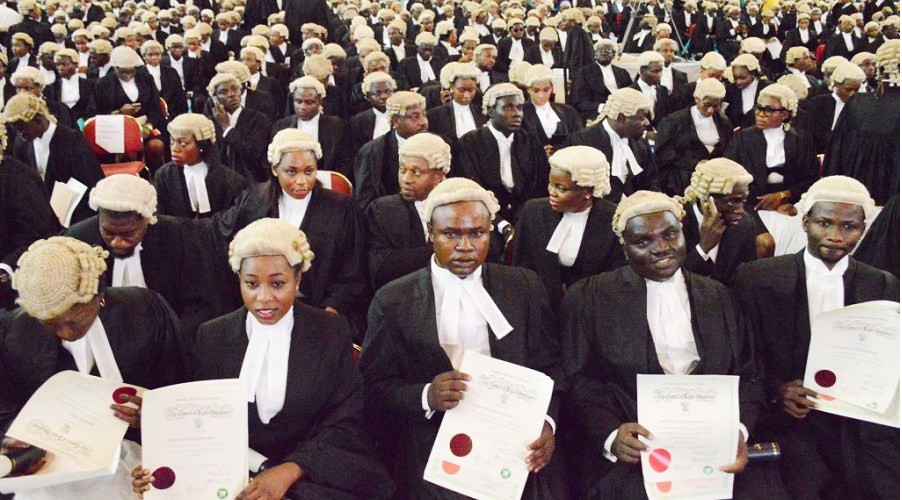
If Nollywood had produced a movie with a title “$25 Covid-19 Palliatives for Lawyers”, I might have said that it was not possible. But it seems, anything is possible these days in Nigeria. Yes, a ‘total of 5,839 lawyers have started receiving N10,000 as “their share of the COVID-19 pandemic relief,” Paul Usoro, the president of the Nigerian Bar Association has said’. This initiative was funded by mostly senior lawyers in the nation. It is my hope that our lawyers are not that impoverished to have specifically filled forms for $25!

“These 5,839 younger colleagues constitute the first batch of the 1-4 years Post-Call young-lawyer recipients of these relief funds,” said Mr Usoro.

“I have already received directly and through third parties, including Branch Chairmen, messages of appreciation from the palliatives’ beneficiaries.”

Mr Usoro said the plan is to ensure that all the eligible lawyers receive their share of the relief fund not later than next week, the week of the NBA annual general conference.

“The slight delay in paying everyone is because we have had issues with the bank details of some of the eligible beneficiaries; these are being sorted out by the NBA National Secretariat directly with the lawyers.

“We also had a number of duplicated applications and unqualified applications (mainly lawyers who are overage including 2005 and 2008 Post-Call lawyers). These unqualified lawyers are being weeded out from the list of beneficiaries in order to share the palliatives only to the eligible lawyers i.e 1-4 years Post-Call lawyers.”

“Special thanks also go to the members of the NBA Welfare Committee for their selfless services. Apart from the fact that most of them also donated generously to the fund, none of the SAN members of the Committee accepted or asked for any allowance whatsoever for their Committee assignment.”

The Trump’s Huawei Attack and China’s Options

0
US has also pushed against Huawei

It is coming together: China will have to make a call on Apple or even Microsoft as the U.S. continues to cage Huawei. The U.S. government has closed the loophole which has allowed Huawei to get chip supplies for its business. As that happens, the rumored interest from Microsoft and Twitter for TikTok has now included Oracle, the enterprise software giant. The U.S.  had ordered TikTok’s owner, ByteDance, to sell the app in 90 days from Aug. 14.

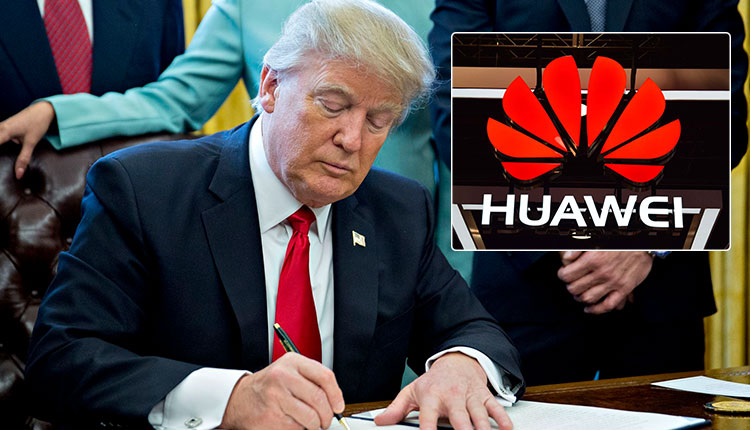
The Trump’s administration has announced further ‘semiconductor restriction’ that has added nails to Huawei’s coffin.

On Monday, the US Bureau of Industry and Security (BIS) in the Department of Commerce announced that the embattled Chinese company and its non-US affiliates on the Entity List have been restricted access to items produced domestically and abroad from US technology and software.

In addition, BIS added another 38 Huawei affiliates to the Entity List, which imposes a license requirement for all items subject to the Export Administration Regulations (EAR) and modified four existing Huawei Entity List entries.

The question now is for how long would China wait before it returns fire. China has options but China would also be smart to just chill as the risk is very high for the country.  If it retaliates, the US could wipe out the values of all Chinese listed companies in the country, causing massive wealth destruction for Chinese. I personally do think that is the destination for Trump if he wins reelection.

How would China respond? Ban Microsoft Windows or Apple iPhone? Not really because those would be own-goals to China. For every Windows sold, China makes money because the machines which power Windows are largely assembled in China for Dell, HP, Lenovo and others. Of course, despite the latest re-localization, China remains the lab for assembling Apple products. I think China will just chill – it has met an unpredictable American leader that cannot be modeled by any communist party algorithm. That would be wisdom because any nonsense move, Trump can delist all Chinese companies in Wall Street!

My prediction is that China will not do anything but just hope that Trump loses the election; it needs the U.S. more than the U.S. needs it. Yes, if the U.S. extends the Huawei ban to all Chinese technology firms, the sector will freeze in China and the country would not want that. Cadence and Synopsys control the global market for advanced CAD tools for analog chip design at more than 99%, especially for high end chip designs. While Mentor, Magma and others register on the chart, Cadence is the leader. Interestingly, the top five players are Americans. The implication is that this U.S.-China confrontation is asymmetric at the core technology layer.

Uber and Lyft’s California Threat

0

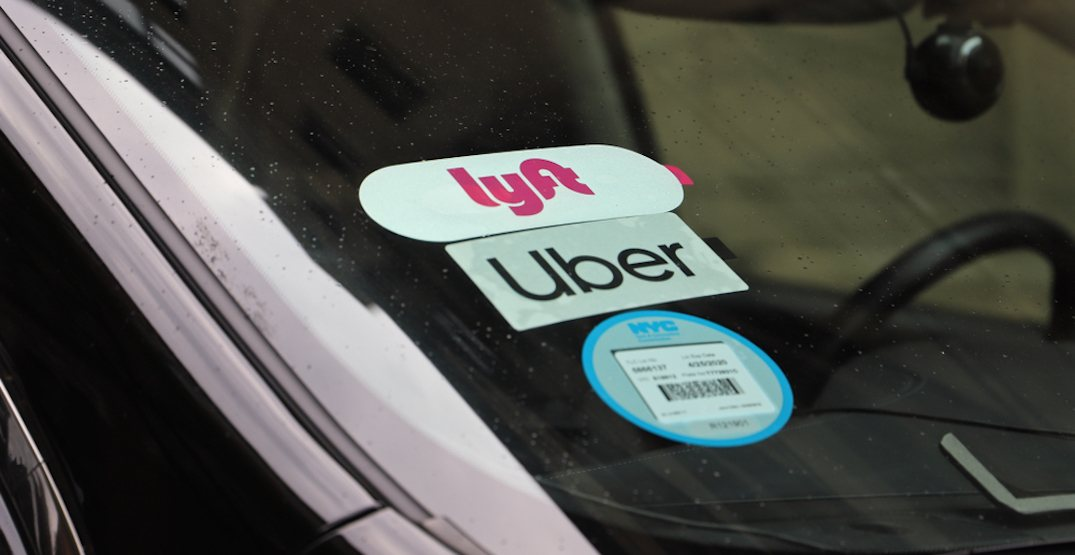
Uber and Lyft could be in real trouble, pushing them to come together as one company. I have expected them to become one company by next year unless something dramatic happens.

In July 2017, I wrote why Uber and Lyft will merge. I had put the date as 2022. On LinkedIn, the call was challenged: many believed that antitrust/competition regulators would not allow that. Of course, I gave a reason: these pairs battled until they went to parties – Elance/Odesk (now UpWork),  Groupon / LivingSocial,  Sirius / XM, Rover / DogVacay, and DraftKings/FanDuel. I did not see any core strategic advantage in Uber and Lyft that would keep them profitably sustainable, as they battled each other, destroying value in the process.

According to Fortune, the companies may temporarily shut down their ride-hailing services in California as soon as this week.

The move depends on whether a state judge grants them an appeal or more time to reclassify their drivers from contractors to employees, as has been required by law since January. If they lose or if no ruling is made by Thursday, the services said they would go dark in the state until they have the systems in place to pay and track drivers as employees. The services say they’re not ready for the switch, even though they’ve had almost a year to prepare.

“At first I thought this was an empty threat,” said Mark Shmulik, an analyst at brokerage firm AB Bernstein. “But assuming appeals court says ‘no’, I actually do believe Uber and Lyft will shut down temporarily in California.”

[…]

If voters don’t pass Prop 22, Uber and Lyft likely would pull out of rural areas, which typically have low demand, and raise prices in the state’s urban areas to offset the extra costs. Uber may also try to push more drivers to work for both its rides and food delivery services to reduce costs, Shmulik said.

The risk for these two companies is simple: if California makes this happen, the probability of other states pushing for the same ordinance goes high. And if that scales across America, the business model of Uber and Lyft collapses.

The US Announces New ‘Crippling’ Sanctions Against Huawei

1

The Trump’s administration has announced further ‘semiconductor restriction’ that has added nails to Huawei’s coffin.

On Monday, the US Bureau of Industry and Security (BIS) in the Department of Commerce announced that the embattled Chinese company and its non-US affiliates on the Entity List have been restricted access to items produced domestically and abroad from US technology and software.

In addition, BIS added another 38 Huawei affiliates to the Entity List, which imposes a license requirement for all items subject to the Export Administration Regulations (EAR) and modified four existing Huawei Entity List entries.

BIS also imposed license requirements on any transaction involving items subject to Commerce export control jurisdiction where a party on the Entity List is involved, such as when Huawei (or other Entity List entities) acts as a purchaser, intermediate, or end user.

These actions, effective immediately, prevent Huawei’s attempts to circumvent U.S. export controls to obtain electronic components developed or produced using U.S. technology.

The new restrictions are in furtherance to the ones announced earlier in the year.

In May 2020, BIS amended the longstanding foreign-produced direct product (FDP) rule to target Huawei’s acquisition of semiconductors that are the direct product of certain U.S. software and technology.

Monday’s amendment further refines the FDP rule by applying the control to transactions: 1) where U.S. software or technology is the basis for a foreign-produced item that will be incorporated into, or will be used in the “production” or “development” of any “part,” “component,” or “equipment” produced, purchased, or ordered by any Huawei entity on the Entity List; or 2) when any Huawei entity on the Entity List is a party to such a transaction, such as a “purchaser,” “intermediate consignee,” “ultimate consignee,” or “end-user.”

This amendment further restricts Huawei from obtaining foreign made chips developed or produced from U.S. software or technology to the same degree as comparable U.S. chips.

“Huawei and its foreign affiliates have extended their efforts to obtain advanced semiconductors developed or produced from U.S. software and technology in order to fulfill the policy objectives of the Chinese Communist Party,” said Commerce Secretary Wilbur Ross.

“As we have restricted its access to U.S. technology, Huawei and its affiliates have worked through third parties to harness U.S. technology in a manner that undermines U.S. national security and foreign policy interests. This multi-pronged action demonstrates our continuing commitment to impede Huawei’s ability to do so,” he added.

According to BIS, the new 38 Huawei affiliates across 21 countries were added to the Entity List because they present a significant risk of acting on Huawei’s behalf contrary to the national security or foreign policy interests of the United States. There is reasonable cause to believe that Huawei otherwise would seek to use them to evade the restrictions imposed by the Entity List.

The Temporary General License (TGL) has now expired. This rule further protects U.S. national security and foreign policy interests by making a limited permanent authorization for the Huawei entities on the Entity List. This limited authorization is for the sole purpose of providing ongoing security research critical to maintaining the integrity and reliability of existing and currently “fully operational networks” and equipment.

In a concurrent rule, BIS revised the Entity List to require a license when a party on the Entity List acts as a purchaser, intermediate consignee, ultimate consignee, or end user to an EAR transaction.

This aligns with the additional restrictions imposed in the revisions to the FDP, when any of the Huawei entities on the Entity List are a party to the transaction, such as by acting as purchaser, intermediate consignee, ultimate consignee, or end user.

This latest restriction may be the end of Huawei as it is already struggling with its technology due to shortage of chips supply. China’s push to boost its semiconductor industry is yielding insignificant results, which means Huawei’s hope to lead the global 5G roll out rests on chips produced through US tech software.

Paul Triolo, head of geotechnology at Eurasia Group described the latest restriction as “a lethal blow to China’s most important technology company.” Adding that it is “potentially the most serious effort by the US government to choke off the company’s ability to obtain advanced semiconductors for all of its business lines.”

Huawei was counting on third party chip production to stay in business following the first US restriction. But the latest BIS move shows that Washington will leave no stone unturned in its quest to cripple China’s aim to lead the global 5G technology.

The Trump administration is adamant even though it is clear that the restriction would put the US semiconductor industry in jeopardy.

John Neuffer, president and CEO of Semiconductor Industry Association of the United States, said chip sales to China have been responsible for the growth of the US semiconductor industry, and it would be disrupted by these latest restrictions.

“These broad restrictions on commercial chip sales will bring significant disruption to the US semiconductor industry… chip sales to China drive semiconductor research and innovation here in the [United States], which is critical to America’s economic strength and national security,” he said.

The obvious threat the restrictions pose to the US labor market appears not to matter to Washington as long it halts Huawei’s lead in the telecom industry.

US companies have been lobbying for licenses to supply Huawei with smartphone chips, following the May restrictions. Qualcomm and Micron among other chipmakers have been heavily impacted by the restriction as they lose billions of dollars to the disrupted supply chain.

While the US has succeeded in pressuring some of its allies to boot out Huawei, the company still has a grip on many big markets, particularly in developing countries. But with this latest restriction, it will be difficult for Huawei to live up to its technology expectations, especially on 5G.