DD
MM
YYYY

PAGES

DD
MM
YYYY

spot_img

PAGES

Home Blog Page 6197

Joe Biden Picks Kamala Harris As a Running Mate

0

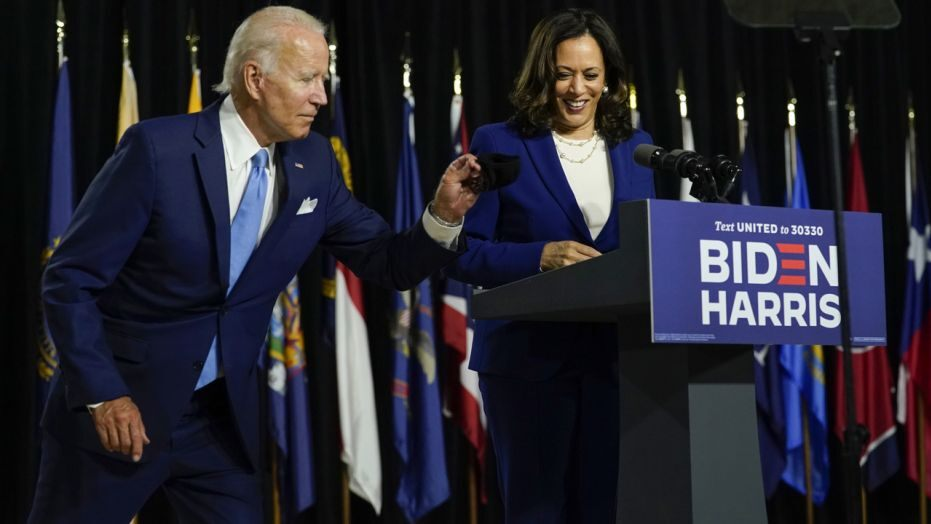
Democratic presidential candidate Joe Biden has picked Kamala Harris as his running mate. A move meant to bridge the divide heating up the American political space and beyond for some time now.

“I’ve decided that Kamala Harris is the best person to help me take this fight to Donald Trump and Mike Pence and then to lead this nation starting in January 2021,” Biden wrote.

Harris is a California Senator who contested the primaries against Biden, the nomination will make her the first Black South Asian American woman to run on a major political party’s presidential ticket.

Biden had promised to run with a woman and chose Harris, 55 to appeal to many voters who are concerned about his age. The choice of Harris serves other purposes that include closing the gender disparity in the American presidential system and tuning down the racial tension that has risen disproportionately in the last few years.

The California Senator is the third woman to serve as a vice presidential candidate for a major political party in the United States, after Geraldine Ferraro who was chosen in 1984 as the Democratic vice president and in 2008, Sarah Palin, who was picked by Republican presidential candidate Mitt Romney.

Former president Barack Obama said Biden ‘nailed this decision’ choosing Harris who is ‘more than prepared’ for the job.

“Joe Biden nailed this decision. By choosing senator Kamala Harris as America’s next vice president, he’s underscored his own judgment and character,” Obama wrote in a statement. “Reality shows us that these attributes are not optional in a president. They’re requirements of the job. And now Joe has an ideal partner to help him tackle the very real challenges America faces right now and in the years ahead.”

Sources told CNN that Harris was confidentially chosen from a bevy of women that included California Rep. Karen Bass, the chairwoman of the Congressional Black Caucus, Georgia Democrat Stacey Abrams, Illinois Sen. Tammy Warren, New Mexico Gov. Michelle Lujan Grisham as well as Florida Re. Val Demings.

Harris is the first South Asian-American woman and second Black woman in history to serve in the US Senate. Having an Indian mother and a Jamaican father, she grew up in Oakland California and attended the historical Black college Howard University and the University of California, Hastings College of the Law.

She started her law career at the Alameda County District Attorney’s Office and in 1998, moved to the San Francisco District Attorney’s Office. Her law career got to a prominent point in 2010, when she became the first woman and the first African-American elected to serve as attorney general for the state of California.

However, Harris has come as a surprise pick to many following her attack on Biden during the Democratic primaries in June 2019, where she fiercely criticized Biden’s work with segregationist senators and mentioned his fight of decades ago against busing to desegregate.

Against the pushback from many of his loyalists, Biden, preached the forgiveness message and urged everyone to move on. He highlighted Harris’ works as an attorney as part of the reason she was chosen for the job of a vice president.

“Back when Kamala was Attorney general, she worked closely with Beau. I watched as they took on the big banks, lifted up working people, and protected women and kids from abuse. I was proud then, and I’m proud now to have her as my partner in this campaign,” he said.

Harris highlighted her move on the big banks as part of her greatest achievements as the attorney general of the state of California, pursuing predatory lenders after the financial crash of 2008, which led to larger settlements of $20 billion from the big banks for Californians after the foreclosure crisis.

CNN reported that her fight against racial injustice came from what she called “a stroller-eye view” of activism from a very young age. Harris’ mother, Shyamala Gopalan Harris, a breast cancer specialist and her father, Donald Harris, who became an economics professor at Stanford, were part of the Civil Rights Movement protest, there, she said she had the elementary lessons of activism that has made her part of the campaign against racial injustice.

The spouses of Biden and Harris, Jill Biden and Emhoff tweeted at each other on Twitter following the news of her nomination.

A barrage of well wishes has followed since then, especially by #winwithblackwomen movement.

Biden 77, made a strategic choice nominating Harris. The Washington Post reported the significance of Black women in US polls despite making up just 7% of the population. They have voted at higher rates than other racial groups at about 60% in the past five presidential cycles. The report noted also that they are loyal to the Democratic Party with 94% voting for Hillary Clinton in 2016.

Harris in a tweet on Tuesday thanked Biden for choosing her while expressing confidence in his ability to unify the American people.

“Joe Biden can unify the American people because he’s spent his life fighting for us,” she tweeted. “And as president, he’ll build an America that lives up to our ideals.”

“I’m honored to join him as our party’s nominee for vice President, and do what it takes to make him our commander-in-Chief.”
The Kenya’s Amazing 30% ICT Equity – A New Order for Africa

3

This is the biggest deal in the evolution of the African tech systems since Bill Gates pioneered, through Windows and Intel/IBM chips, personal computing in ways anyone could participate.  Yes, foreign companies planning to do business in the Kenyan ICT sector must be required to surrender 30% shareholding to Kenyans, corporates or individuals. This new ordinance is captured in the National Information Communications and Technology Policy Guidelines 2020, which was published last week, spelling out new regulatory mandates for players in the ICT sector: “It is the policy that only companies with at least 30 per cent substantive Kenyan ownership, either corporate or individual, will be licensed to provide ICT services.”

The ICT policy further says foreign companies will be given three years to meet the local equity ownership threshold, and may apply to the CS for a one-year extension with appropriate acceptable justifications. “For listed companies, the equity participation rules will conform to then extant rules of the Capital Markets Authority,” explains the policy.

[…]

“This will take the form of rules that allow companies to be licenced for certain services and only pay for the licence when they commence operations or achieve benchmark goals within predefined time frames,” explains the policy.

The State anticipates the policy will create 20 Kenyan multi-national ICT companies, 300 mid-sized firms, 5,000 small and medium enterprises and 20,000 startups.

This is expected to increase the number of startups through easing their barrier to entry. The policy also proposes a government venture capital fund that will invest in start-ups for a portion of the equity on a first-loss basis in case the startup fails.

This may not be palatable but Africa needs to have tough conversations for its future. A few weeks ago, a “Kenyan company” was acquired. As I researched for a piece, I noticed that 100% of it was owned by non-Kenyans. The Board has no single Kenyan; I decided not to run the piece as there was nothing Kenyan in it; it was a foreign company with operations in Kenya, deceiving journalists that it was “African”.

I expect Nigeria to arrive at the same conclusion by 2023. Yes, the wealth being created in the technology space today, in Nigeria, is largely not Nigerian. More than 70% are controlled outside Nigeria. From registering startups in the U.S. to using entirely foreign boards, I expect changes because if we do not act, we will get only marginal benefits as a nation. I will be happy to help the government write the brief, free, if it is serious.

I salute Kenya for this move. it is going at the root: OWN something and keep some home.

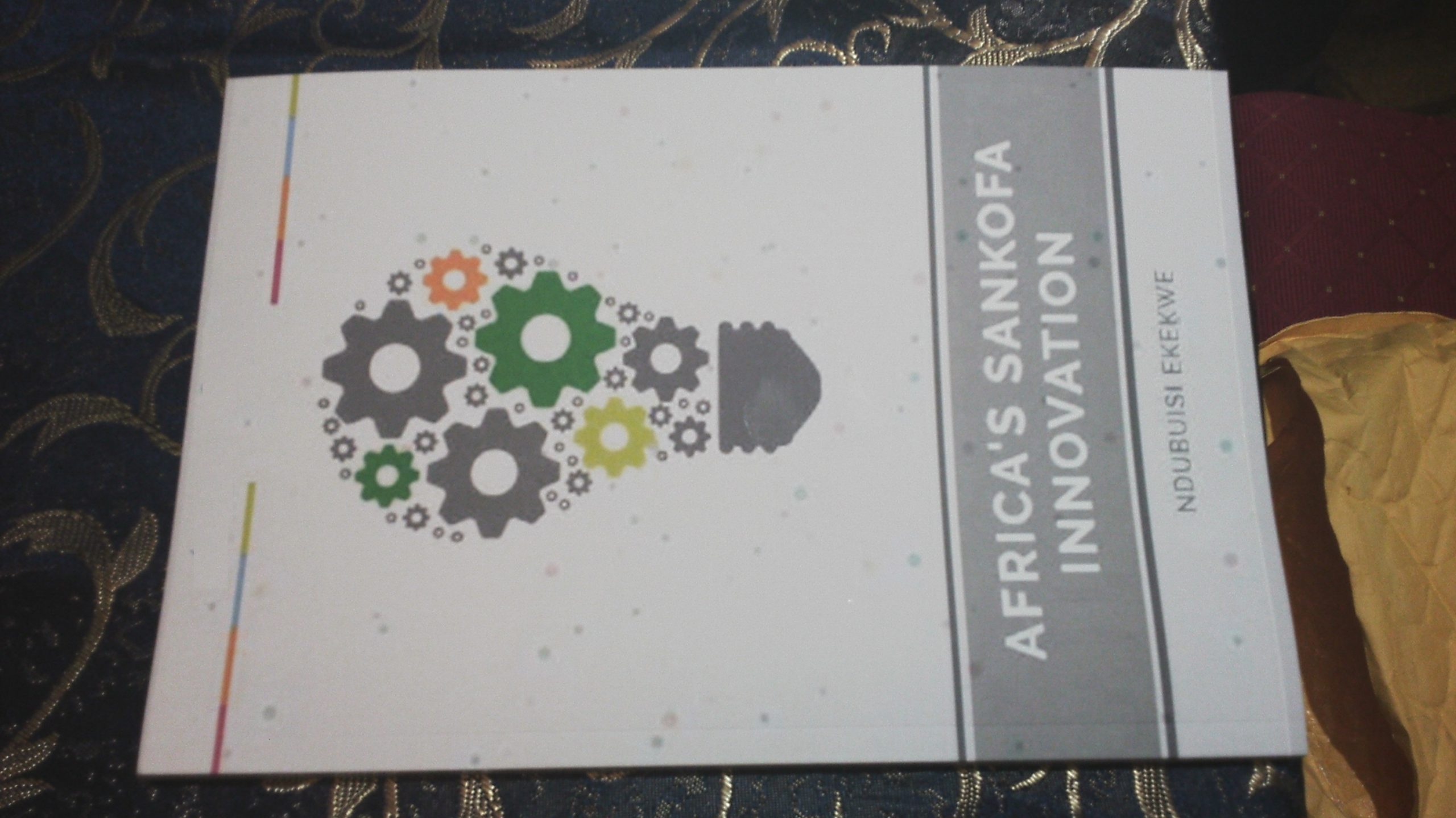
Get My Book – “Africa’s Sankofa Innovation”

0
Free for all Mini-MBA edition 2 participants

Sankofa is a word in the Twi language of Ghana that translates as “Go back and get it” (san – to return; ko – to go; fa – to fetch, to seek and take) and also refers to the Asante Adinkra symbol represented either with a stylized heart shape or by a bird with its head turned backwards carrying a precious egg in its mouth. Sankofa is often associated with the proverb, “Se wo were fi na wosankofa a yenkyi,” which translates as: “It is not wrong to go back for that which you have forgotten.” (Wikipedia)

Sankofa innovation which is “reach back and get it” type innovation. It emphasizes continuous improvement by looking back and learning from past experiences.

Read my book and understand Sankofa Innovation. If you have registered for Tekedia Mini-MBA, you get it free. Start reading.

Why the ENDSARS Campaign is not a Good Choice in Nigeria

0

I am from Awkuzu, in the Oyi Local Government Area of Anambra State. The famous Awkuzu SARS is in my hometown. In fact, the road that passed beside the SARS office leads to my village. If I need to go anywhere from my hometown, I stay at the front of the SARS office to board a vehicle. I’m only stating these so you will know that I am not a JJC when it comes to SARS and their doings in my town.

I will, however, enjoin you not to prepare your mind to hear dark stories about SARS. Nigerians have done enough justice to that so I will avoid repeating the obvious. I am, however, not going to sing their praises because we all know that SARS officials have done a lot of harm to the citizens of this country.

The first time I heard about SARS was from my father. Then he called them “Shoot At Sight” (SAS). To my father, that a criminal has a god father that protects him and bails him out of the police net is because the person has not met SARS. According to him, once SARS arrests a deadly criminal, especially the ones that murder their victims, that person will never be heard from again. Now, my father wasn’t saying these because he loved telling stories; he obviously must have known deadly people that were removed from society by SARS.

My mother still believes that Awkuzu SARS station was located there because of how bad that area was. People that know Awkuzu know that you dare not stop at the popular Awkuzu Junction in the night. To be honest, if your vehicle spoils along the Awkuzu axis of the expressway, you have to drag it, using whatever means possible, out of Awkuzu. Then, the bustling Awkuzu junction empties out around 7pm. If you find yourself in that place from 8pm and decide to board okada, well, you’re on your own. That was how bad my town was in those days.

But then, Awkuzu is cool now. I can come into my town by 10 pm and even walk from the junction, through the road that passes beside SARS office and head for my village. I wouldn’t have dared this before. SARS actually made it possible now. Even students from Chukwuemeka Odumegwu Ojukwu University, Igbariam Campus, avoid issues with SARS. That is why you hardly hear of cult wars in that school. SARS is actually sitting on their necks.

Now, SARS has not been a nursemaid for Awkuzu. They showed us pepper, trust me. Then, parents that have young boys were afraid because their sons may fall into SARS nets. Night live was seriously reduced to the lowest ebb then. SARS usually comes raiding in the night and they pack up boys in beer parlours and places like that. But, to be honest, I have not heard of an innocent person from my kindred, who was arrested by SARS and never returned. The only thing then is that if SARS comes for raiding or wants to arrest suspects, they pick up all the young boys and men within the vicinity and then allow the innocent ones to go later (after they must have bailed themselves out with a huge amount of money). But the main people they came for in those raids/arrests are usually not granted bails, at least not immediately. Our annoyance then was why SARS would pick up both the innocent and the non-innocent and then make money out of the innocents.

The problem I see with SARS is their use of intimidation and brutality. But they are not the only ones that do that; every security agency in this country intimidates and brutalises the masses. Even private security agencies use unnecessary force to execute their authorities.

But let’s look at the ENDSARS campaign that is ongoing for some time now. We know that SARS officials have been accused of several extrajudicial killings. They have been called out for their brutality towards the youths, especially the young men. Evidence is even there to show that they are guilty of these accusations. But is that the reason to scrap it off? Well, I don’t think so.

It will be an utmost lie for someone to say that SARS isn’t working in Nigeria. Their inception is for a reason and I believe they are performing their primary duties. The things that SARS officials do, an ordinary olopa cannot even dream of doing half of them. Scraping SARS off will only ensure a massive return of crimes (not that we don’t have massive crimes anyway). But I fear what will happen if SARS ceases to exist.

Like we all know, there are bad eggs in every profession. Among bankers we have found fraudsters. Rapists have been discovered among teachers. Murderers exist among health practitioners. And people have lost their properties to their family lawyers. But then, do we have to scrap banks, schools, hospitals and courts of law because of the bad eggs that work in them? Of course the answer is “No”. This is why we should channel our energy towards weeding out bad eggs in SARS instead of asking for the special force to be closed down.

We Provided Funding To Support A Startup Today

1

Today, we provided funding to a startup undergoing training in Tekedia Mini-MBA. Over the last 6 weeks, the team has grown revenue in a niche area on payment and remittance. Our experience with receiving payment across Africa on Tekedia Mini-MBA has pushed me to declare that nothing has truly happened on African intra-payment. From Ghana to Cameroon to Tanzania, and beyond, Africa remains far away when it comes to payment.

We lost members from Tanzania as they were unable to pay. In Cameroon, we were saved as we have a country manager. The same happened in Ghana, etc. In Congo DR, a friend had to help: his fellow citizens pay him; he pays us via PayPal USA. The story is the same: inter-border payment within Africa remains primitive.

With that experience, I started looking into the payment and remittance nexus. We will announce this firm when the team gets ready this week. Tekedia Mini-MBA besides being a management training school is also an accelerator. We have data now to begin to support innovators.

I call young people to continue to build; the future has abundance.