DD
MM
YYYY

PAGES

DD
MM
YYYY

spot_img

PAGES

Home Blog Page 620

Nvidia CEO Says There’s “Real Possibility” For Export of Blackwell Processors to China

0

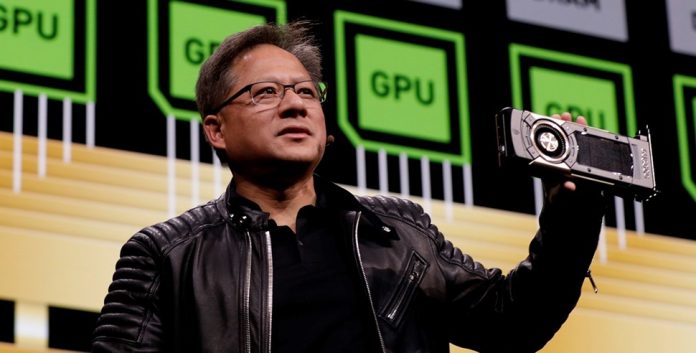
Nvidia Chief Executive Jensen Huang said there is a “real possibility” the company could bring its most advanced Blackwell processors to China, even as the U.S. government continues to restrict the export of high-end chips.

The remarks highlight both the opportunities and risks facing the world’s most valuable chipmaker as it navigates intensifying friction between Washington and Beijing.

On a Wednesday call following Nvidia’s blockbuster quarterly earnings, Huang, once again, argued that enabling China’s AI developers to use Nvidia hardware was in America’s strategic interest.

“The opportunity for us to bring Blackwell to the China market is a real possibility,” he said. “We just have to keep advocating the importance of American tech companies to be able to lead and win the AI race, and help make the American tech stack the global standard.”

Huang predicted China’s AI market — already the world’s second largest — could surge by 50% next year, estimating a $50 billion opportunity in 2024 alone. “And if it’s $50 billion this year, you would expect it to grow, say, 50% per year,” he added.

The comments came after Huang personally lobbied the White House in July and August for export licenses for Nvidia’s H20, a chip tailored for China in response to U.S. restrictions imposed in 2023. In August, President Donald Trump and Huang struck a deal: Nvidia would receive licenses to sell H20s in exchange for 15% of all China H20 revenue going to the U.S. government.

Trump has hinted he might allow Blackwell exports under a similar framework, but only in a watered-down form.

“The Blackwell is super-duper advanced. I wouldn’t make a deal with that,” Trump said in August, before suggesting he might approve a “somewhat enhanced in a negative way” version.

Nvidia confirmed it has received some licenses but said Washington has not yet codified how the 15% revenue cut will be collected.

“USG officials have expressed an expectation that the USG will receive 15% of the revenue generated from licensed H20 sales, but to date, the USG has not published a regulation codifying such requirement,” said finance chief Colette Kress.

Revenue Boom Without China

Despite the uncertainty, Nvidia reported $54 billion in quarterly revenue, up 56% from a year ago — achieved without a single H20 sale to China. Instead, the company redirected $180 million in H20 inventory to a customer outside China, generating $650 million in sales.

Nvidia’s forecast for the quarter again excluded China H20 sales, but Kress said the company could sell between $2 billion and $5 billion worth of chips depending on geopolitics.

“If we had more orders, we can build more,” she added.

Blackwell, Rubin, and the Next Chips

In Taipei on Friday, Huang visited foundry partner TSMC, thanking the chipmaker for producing six new designs — including a next-generation GPU and a silicon photonics processor that will power Nvidia’s upcoming Rubin-architecture supercomputers.

“This is the first architecture in our history where every single chip is new and revolutionary,” Huang said. “We’ve taped out all of the chips.”

Reuters reported that Nvidia is already developing a Blackwell-based chip for China, tentatively named B30A, more powerful than the H20. Huang confirmed the company is in talks with Washington about offering a successor to the H20, though he stressed: “It’s up to, of course, the U.S. government, and we are in dialogue with them, but it is too soon to know.”

Beijing Pushback

Nvidia only resumed H20 sales in July after receiving Trump’s approval, but the chip quickly ran into new hurdles. Chinese regulators and state media raised security concerns, warning local firms against purchasing it. Nvidia has insisted its chips pose no backdoor risks.

In response to the warnings, Nvidia asked Foxconn, Amkor Technology, and Samsung Electronics to halt certain H20-related work. Foxconn had been assembling parts, Amkor handled packaging, and Samsung supplied high-bandwidth memory. Huang said Nvidia had sufficient inventory in place and would order more “when we receive the orders.”

“We constantly manage our supply chain to address market conditions,” an Nvidia spokesperson said. “As both governments recognize, the H20 is not a military product or for government infrastructure.”

The situation reflects Nvidia’s delicate balancing act: securing approvals in Washington while persuading Beijing that its chips are essential for China’s AI industry. Huang has argued that banning exports entirely would only accelerate the rise of Chinese competitors.
Bitcoin Faces Third Straight Weekly Loss as Ethereum Shines with Record Onchain Activity

0

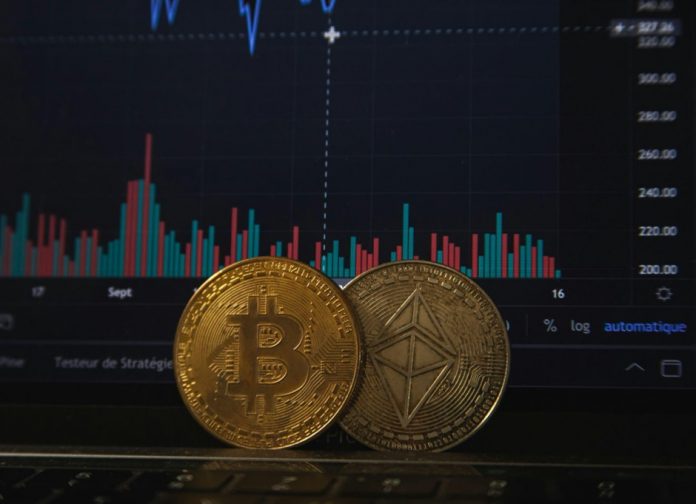
Bitcoin is on track for its third consecutive week of losses, trading about 11% below its Aug. 14 all-time high of $124,500, according to data from Cointelegraph Markets Pro.

Despite reclaiming the $113,000 mark on Thursday after dipping to a six-week low, investor sentiment remains cautious as miners offload coins at the fastest pace in nine months.

BTC’s price recently slipped under the critical $114,000 support level, a zone that had held strong for six weeks, as it currently trades at $110,023. Traders now say the next moves hinge on whether this level flips back into support.

Bitcoin bulls are defending $109K support nicely. A weekly close above $114K would be big,” said trader and YouTuber Sam Price, pointing to strong buy pressure below $109,000. Popular analyst Rekt Capital echoed the sentiment, warning that failure to reclaim $114K could prolong BTC’s correction phase.

MN Capital founder Michael van de Poppe described $112,000 as “crucial,” cautioning that a breakdown below this threshold could trigger a “very ugly correction across the board.”

At the macro level, remarks from Federal Reserve Governor Christopher Waller added to uncertainty. Waller signaled support for a 25 basis-point rate cut in September, while ruling out the need for a larger 50-point cut for now. Investors are also awaiting the Fed’s preferred inflation measure for further cues.

Notably, Bitwise Chief Investment Officer Matt Hougan, alongside analysts Ryan Rasmussen, Josh Carlisle, Mallika Kolar, Andre Dragosch, and strategist Juan Leon, reveals that Bitcoin is no longer a retail-driven market, with institutional flows now dominating price action.

Rerport from Cointelegraph revealed that over 75% of Bitcoin trading volume on Coinbase comes from institutional investors, a level historically associated with major price movements. This level of participation has reached an intensity that demand currently exceeds daily mining production by up to six times, creating significant supply-demand imbalances.

Strategy (formerly MicroStrategy) continues leading corporate accumulation, signaling its fourth monthly Bitcoin purchase on Monday, bringing total holdings to over 632,457 BTC valued at more than $71 billion. The company represents over 53% unrealized gains on its Bitcoin investment, totaling $25 billion in unrealized profits.

Ethereum Outpaces Bitcoin with Explosive On-chain Growth

While Bitcoin battles resistance, Ethereum (ETH) is flashing strength across multiple metrics. Monthly adjusted on-chain transfer volume surpassed $320 billion in August—the highest since May 2021 and the third-largest month on record, according to The Block.

Other key Ethereum milestones include:

  • 30-day transactions are hitting fresh highs.
  • Monthly active addresses are reaching their second-highest level ever.
  • Total value locked (TVL) holding near all-time highs.

Corporate adoption has been a major driver. Public companies’ cumulative ETH holdings jumped from around $4 billion to over $12 billion in August, led by BitMine Immersion and SharpLink Gaming. At the same time, spot ETH ETF volumes surged, with inflows pushing ETFs to now hold more than 5% of Ethereum’s supply.

The rally has also been supported by multi-year low transaction fees, making on-chain activity cheaper and more accessible.

From a technical perspective, analysts remain upbeat. Crypto analyst Jelle pointed to a bullish “megaphone pattern” targeting $10,000, while Jackis argued that ETH is “insanely bullish for years to come” after breaking out of a 4.5-year institutional accumulation range.

Looking Ahead

While Bitcoin struggles to reclaim key support levels amid miner selling and macro uncertainty, Ethereum continues to build momentum on the back of corporate demand, ETF inflows, and robust network activity suggesting the market narrative may be shifting in ETH’s favor.

Macron Urges EU to Consider Retaliation Against U.S. Digital Sector After Trump’s Tariff Threats

0

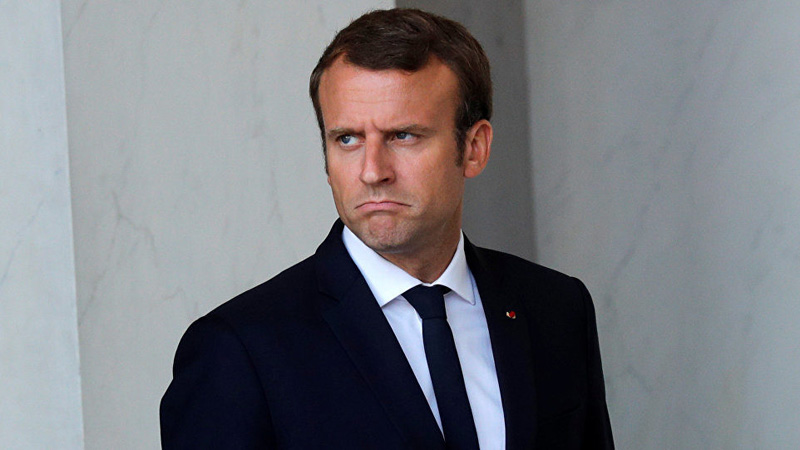
French President Emmanuel Macron has urged his ministers to weigh retaliatory measures targeting the U.S. digital sector after President Donald Trump threatened new tariffs on countries with digital regulations and taxes affecting American technology giants.

At a Cabinet meeting on Wednesday, Macron said Europe “should not exclude taking a look at the digital sector” in its response, according to a senior French official who spoke to Politico on anonymity due to the sensitivity of the discussions. Macron cited the EU’s negative trade balance in services with the U.S., while noting that Washington has pressed to reduce Europe’s trade surplus in goods, particularly automobiles, pharmaceuticals, and food.

A source close to Macron confirmed that exploring retaliation against U.S. digital players aligns with his current stance. The French president is expected to raise the matter with German Chancellor Friedrich Merz during bilateral talks this week at Fort Brégançon and Toulon.

Trump, who has long criticized Europe’s regulatory regime, threatened Monday to impose substantial tariffs and export restrictions on countries that maintain digital taxes or rules he says “discriminate” against U.S. technology companies such as Google, Meta, Amazon, and Apple.

“Digital taxes, legislation, rules or regulations are all designed to harm, or discriminate against, American technology,” Trump wrote on Truth Social. He argued that while Europe and the UK impose levies such as the 2% digital services tax, China’s tech giants are “outrageously given a complete pass.”

He added: “Unless these discriminatory actions are removed, I, as president of the United States, will impose substantial additional tariffs on that country’s exports to the USA, and institute export restrictions on our highly protected technology and chips.”

The comments came just weeks after Washington and Brussels finalized a trade deal setting a baseline 15% tariff on EU exports to the U.S. The agreement was published in a joint statement last week, making Trump’s latest outburst a jolt for EU officials who thought a temporary truce had been reached.

Trump has repeatedly blasted Europe’s Digital Services Act (DSA) and Digital Markets Act (DMA), arguing they censor U.S. citizens and unfairly target American companies. France, Italy, and Spain have also introduced national digital services taxes, which Washington has labeled protectionist.

In the UK, the Trump administration has criticized the digital services tax introduced in 2020. Earlier this year, reports surfaced that Prime Minister Keir Starmer privately offered U.S. tech companies a reduction in the DST headline rate to ease tensions, while continuing to apply the levy to firms from other countries.

Despite Trump’s aggressive posture, many EU governments remain reluctant to enter a trade war. Brussels has so far held back from activating its Anti-Coercion Instrument — a legal “trade bazooka” that could restrict intellectual property rights or investment access for U.S. tech firms. European Commission President Ursula von der Leyen has previously said “all instruments are on the table” but has stopped short of direct retaliation, wary of jeopardizing U.S. cooperation on Ukraine.

Macron, however, has been consistently vocal about Europe’s need to assert itself. He has hinted that the EU failed to project enough strength in the last trade negotiations, saying Europe “was not feared enough” to secure better terms.

In the UK, Liberal Democrat leader Ed Davey urged the government not to “kowtow” to Trump’s “bullying” by weakening Britain’s DST.

“The prime minister must rule out giving in to Donald Trump’s bullying by watering down Britain’s digital services tax,” Davey said. “Tech tycoons like Elon Musk rake in millions off our online data and couldn’t care less about keeping kids safe online. The last thing they need is a tax break. The way to respond to Trump’s destructive trade war is to work with our allies to stand up to him.”

The standoff underscores how digital regulation, once a niche area of policy, has become a frontline issue in transatlantic trade relations.

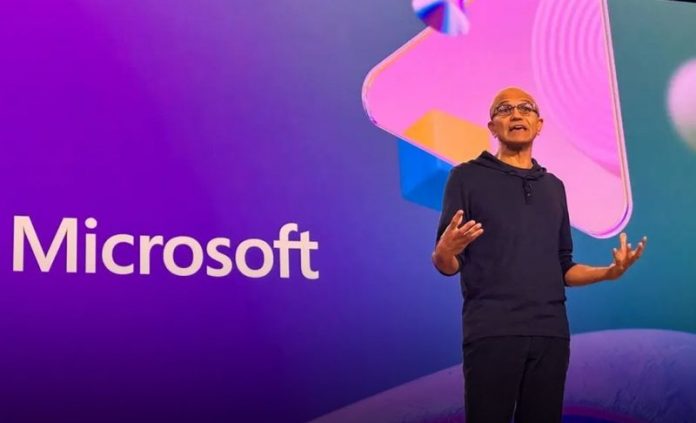
Microsoft Tests Homegrown AI Model MAI-1, Signaling Shift from OpenAI Reliance

0

Microsoft, long reliant on OpenAI’s artificial intelligence models to power its flagship AI offerings, is charting a new course as it seeks to lessen that dependence.

On Thursday, the company announced that it has begun publicly testing a homegrown AI model, signaling an ambition to bolster its own AI pipeline while still maintaining its deep partnership with OpenAI.

The new model, called MAI-1-preview, is being tested on LMArena, a website where people can conduct evaluations and compare performance across models. Microsoft described the experiment as an early step toward enhancing its Copilot assistant, particularly for consumer use.

“We will be rolling MAI-1-preview out for certain text use cases within Copilot over the coming weeks to learn and improve from user feedback,” the company said in a blog post.

Developers have also been invited to request early access through a dedicated form.

Microsoft’s expanding AI journey

The unveiling of MAI-1-preview marks a pivotal moment in Microsoft’s AI journey, particularly through Copilot, its productivity-driven assistant. Microsoft’s Copilot began as an AI layer embedded in Office apps like Word, Excel, and Outlook, designed to help draft emails, generate reports, and analyze spreadsheets. From there, the company broadened its scope by weaving Copilot into Windows 11, giving users system-wide AI support. Later, it integrated Copilot into its Edge browser and extended the tool into enterprise solutions.

Now, Microsoft is signaling ambitions that stretch beyond software, eyeing broader consumer devices, including TVs and other platforms, where Copilot could become a daily-use digital assistant. MAI-1-preview is expected to serve as a foundation for this next phase, giving Microsoft greater independence in shaping how Copilot evolves.

A careful shift away from OpenAI reliance

Microsoft remains one of OpenAI’s most important backers and strategic partners. The company has poured more than $13 billion into OpenAI, providing the startup with cloud infrastructure to run its models. OpenAI, in turn, powers key Microsoft services, including Bing, Windows 11, and other products.

But competition is now quietly emerging. Microsoft itself acknowledged OpenAI as a competitor in its annual report last year—placing it alongside Amazon, Apple, Google, and Meta—after years of listing only traditional tech rivals. The shift underscores how even close partnerships in the AI space are becoming complex as both companies chase leadership in a crowded field.

OpenAI, valued at about $500 billion, has also diversified its partnerships. To meet surging demand, it now uses cloud providers beyond Microsoft, such as CoreWeave, Google, and Oracle. Its popular ChatGPT assistant reaches about 700 million people weekly, placing pressure on Microsoft to accelerate innovation in its own models.

Performance and infrastructure

On Thursday, MAI-1-preview was ranked 13th for text workloads on LMArena, falling behind models from Anthropic, DeepSeek, Google, Mistral, OpenAI, and xAI. While the ranking shows that Microsoft’s model still has ground to cover, the company insists this is just the beginning of its push into large-scale in-house AI.

Microsoft noted that the model was trained with the help of 15,000 Nvidia H100 GPUs and is supported by a cluster of Nvidia GB200 chips. The company highlighted these investments as proof of its roadmap for bigger and more sophisticated AI models.

“We have big ambitions for where we go next — model advancements, an exciting roadmap of compute, and the chance to reach billions of people through Microsoft’s products,” said Mustafa Suleyman, CEO of Microsoft’s AI unit, in a post on X.

Suleyman emphasized that MAI-1-preview is “our first foundation model trained end to end in house.” This represents a significant evolution for Microsoft, which has previously experimented with smaller open-source language models under the Phi brand.

Microsoft’s growing independence in AI has been fueled by strategic hires. Suleyman himself joined Microsoft after leading Inflection AI, a startup that competed with OpenAI. Before that, he co-founded DeepMind, the AI research company acquired by Google in 2014.

Since his arrival, Suleyman has expanded Microsoft’s AI unit significantly, bringing in around two dozen experts from Google’s DeepMind lab. The recruitment drive reflects Microsoft’s determination to become not only a major AI distributor through OpenAI but also a core innovator in its own right.

AI Predicts Ripple (XRP) Will Outperform Bitcoin (BTC) by 5x, While Little Pepe (LILPEPE) Targets 17,900% Gains

0

Recent AI-driven analysis suggests Ripple (XRP) could outperform Bitcoin (BTC) by a factor of 5x, highlighting growing institutional interest and adoption potential. While Bitcoin’s trajectory remains cautious, XRP’s integration into cross-border settlements positions it for significant upside. Meanwhile, Little Pepe (LILPEPE) is moving even faster in the short term, having just sold out stage 11 and now entering stage 12 at $0.0021, up 110% from stage 1.

With a listing price of $0.003, investors at this stage are guaranteed a 42.9% ROI, but projections indicate potential returns well above 2x, as momentum continues to accelerate. The project has already raised over $22.9 million and sold more than 14.5 billion tokens ahead of schedule, suggesting that current participants could see gains that far exceed the baseline, combining rapid execution with strong market demand.

XRP Outshines Bitcoin in 2025: A Strategic Shift in Crypto Investment

Bitcoin (BTC) is trading at approximately $115,088, reflecting a decline of about 1.8% from the previous close. In contrast, Ripple’s XRP is priced at $3.02, showing a modest decrease of 1.6%. Analysts are projecting that XRP could reach up to $5 by the end of 2025, driven by increasing institutional adoption and its integration into cross-border payment systems.

This potential growth rate significantly outpaces Bitcoin’s, which is expected to experience a more gradual increase, with some forecasts suggesting a peak around $135,000 by the end of the year . The divergence in growth trajectories highlights XRP’s emerging role as a more agile and potentially higher-yielding investment compared to Bitcoin’s more established, yet slower, ascent.

While Bitcoin’s market dominance remains robust, XRP’s strategic positioning in the financial sector offers a compelling case for investors seeking higher returns in the evolving cryptocurrency market.

Little Pepe (LILPEPE): $22.9 Million Raised

Little Pepe (LILPEPE) continues to gain momentum, with Stage?11 of its presale selling out within days. Over 14.5?billion tokens have been sold, raising total funds past $22.9?million. Stage?12 is now live at $0.0021, a 110% increase from the first round. Buyers at this stage can expect a 42.9% return when the token lists at $0.003, with demand already driving the next price step to $0.0022.

Purpose-Built Layer?2 for Speed and Efficiency

Operating on a dedicated Layer?2 network, Little Pepe (LILPEPE) supports high transaction volumes quickly and affordably. Its fast, scalable system ensures smooth performance for both users and developers, even during peak activity.

Launchpad Utility and Fair Trading

Little Pepe (LILPEPE) includes its own Launchpad, offering new projects a platform to grow. Built-in anti-sniper measures protect early trading from automated bots, fostering a fairer environment for all participants.

CertiK Audit, Analyst Attention, and Growing Visibility

The rapid presale stages have drawn analyst interest, with some projecting post-launch valuations near $2. LILPEPE’s CertiK audit adds trust and transparency, while a Freshcoins.io review awarded a trust score of 81.55 for its smart contract and platform protections. A recent CoinMarketCap listing has further increased visibility and accessibility for new supporters.

$777,000 Giveaway for Early Participants

To reward early supporters, Little Pepe (LILPEPE) is hosting a $777,000 giveaway. Ten winners will each receive $77,000 in tokens. Eligibility requires a minimum $100 presale purchase and completing a few social steps, with extra engagement improving winning odds.

Exchange Listings Secured

Plans are in place for listings on at least two major centralized exchanges, including one of the largest worldwide. With zero transaction taxes and low trading fees, accessing and trading LILPEPE will be simple from launch.

Little Pepe (LILPEPE) is live in Stage?12 at $0.0021, offering a guaranteed 42.9% ROI at its $0.003 listing price. With $22.9?million raised, a purpose-built Layer?2 network, and a $777,000 giveaway for early supporters, now is the time to join the presale and secure your stake before the token launches.


For more information about Little Pepe (LILPEPE) visit the links below:

Website: https://littlepepe.com

Whitepaper: https://littlepepe.com/whitepaper.pdf

Telegram: https://t.me/littlepepetoken

Twitter/X: https://x.com/littlepepetoken