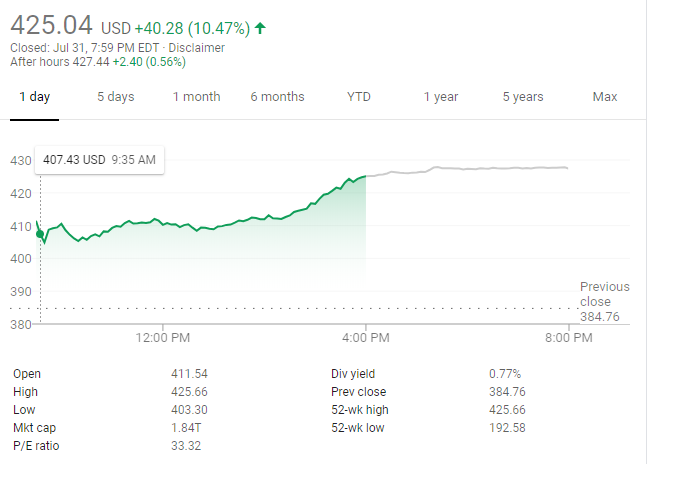
Apple now rules the world of business, after it broke many records this week. Today, Apple is worth $1.84 trillion. But that comes with a burden to the man – Tim Cook – who has taken Apple to the mountaintop. Mr Cook has cooked something so amazing that Wall Street is eating and loving it. Yes, he has prepared a special Apple, and they paid to eat, and are eating more. Today, Apple is the most expensive “apple” in the world, and the wonders of a nation called America.
Yet, Mr. Cook has to go back to the drawing board because this success is a burden across many metrics. The good news is that he knows that: “We’re conscious of the fact that these results stand in stark relief during a time of real economic adversity. We do not have a zero sum approach to prosperity and especially in times like this we’re focused on growing the pie, making sure our success isn’t just our success”.
Unbelievable in a time when the world is largely broken! Respect the brilliance of America. Next two more quarters, Apple could be hitting $2 trillion. Congrats Apple.
Apple has toppled Saudi Aramco as the world’s most valuable company after its stock hit a record high on Friday, smashing Wall Street’s expectations.
Apple stock went up $412.22 a share, to put its market capitalization at $1.762 trillion to trump Saudi Aramco’s record.
According to data from Refinitiv, Saudi Aramco has held the position of most valuable public company since last year, and had a market capitalization of $1.760 trillion as of its last close.
Analysts had expected revenue to drop 2% to $52.6 billion on average. And earnings per share of $2.58, up 18%, crushed the average forecast of $2.07. But Apple’s 11% growth put its earnings at $59.7 billion for the second quarter.
Apple along other big US tech companies has shown resilience in the face of the COVID-19 pandemic that has brought economies to staggering point, including many publicly listed companies
Update: We report that our team has selected a teacher in Ogun state. The recipient, Mr. Joshua, teaches and facilitates learning for pupils in an underserved community in Ogun State, Nigeria.
A donor wants to send a full-time teacher in primary or secondary school in any rural community in Nigeria to participate in Tekedia Mini-MBA (Aug 10 – Dec 3). The only requirement is that the recipient does a capstone that looks into the Impact of Covid-19 on education in rural Nigeria, and how the private sector (not government) could help.
There is no requirement that the recipient has to share or publish the work though. Nonetheless, the donor wants to hear the voice of teachers and what could be done before a generation is distorted academically. Interested or know a teacher? Email my team. By Aug 5, they will do a draw and select the recipient.
The first time I came across the phrase “business model”, the thought that came to my mind was modeling. I was taught a very important concept during my university days in econometrics class; it was about model and modelling.
The experts said the model is the representation of the real world situation in a design or equation form. We have models such as architectural plans, economic models, which are in the form of equations; we have other forms of models.
When it comes to business models, the meaning is very close to the above models. As Harvard Business Review and FourWeekMba have analysed the concept to mean how a business can unlock value.
At Tekedia, we have come to see the business model as the nervous system of a business; it is a design of how a business will solve market frictions in the market in order to unlock value.
Can you answer these questions? What is the use of an architectural building plan? To me, it is to serve as a guide in building the real house.
When well designed and executed, the builders end up building the expected house. That is what a business model does. When well designed and executed, it can build a billion dollar business.
Our interest today is to know the simplified template to develop a business model.
Simplifies Template for Designing a Business Model
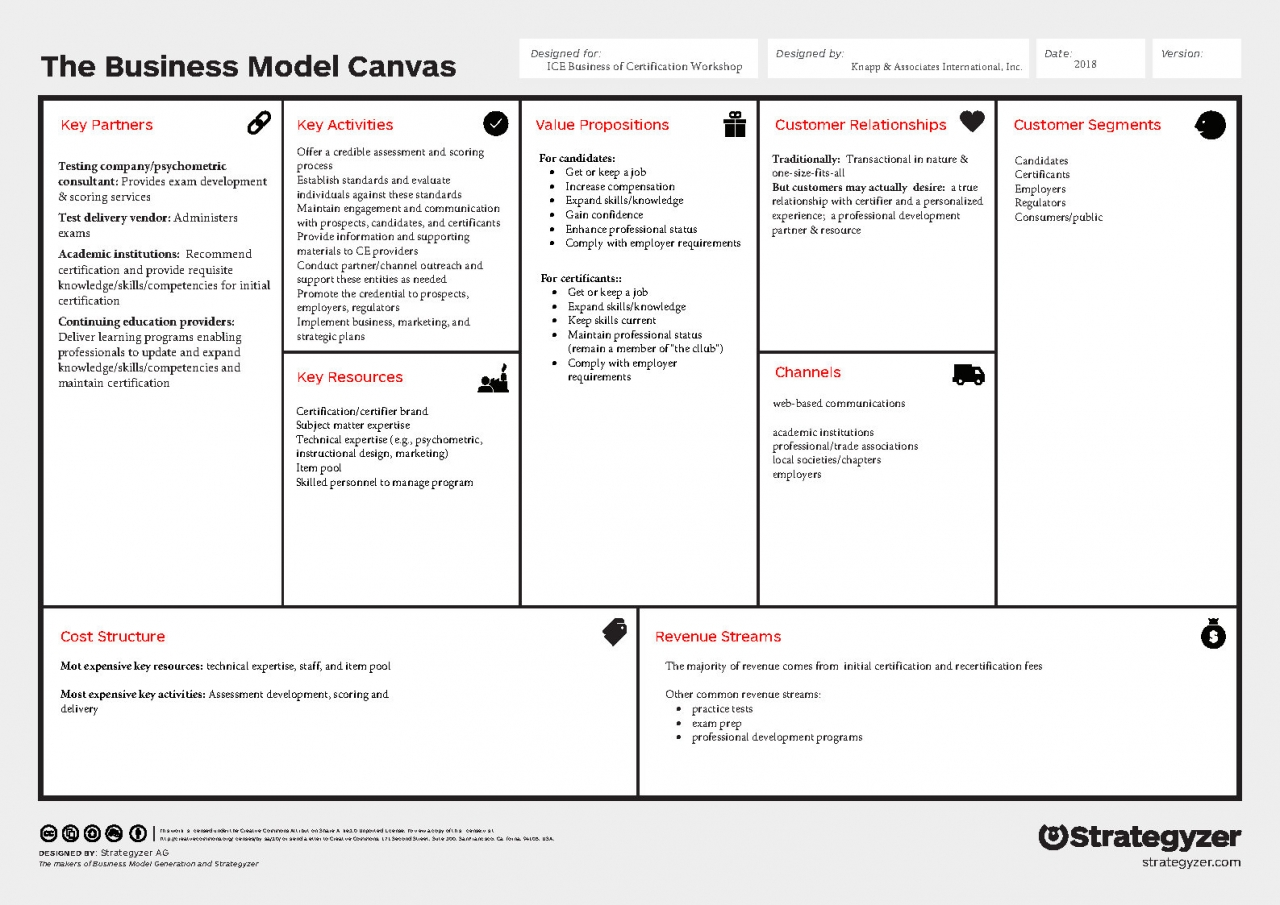
A sample of business model canvas
To gain mastery in doing anything, try to have a simplified template. Here are the dots that you need to connect in your business models. This serves as an upgrade to business model canvas.
Step 1: Market Friction
The term market friction is simply the problem you want to solve in the market. Business models are built on certain problems discovered in a market. Those problems serve as the foundation upon which other things will be built.
For example, in 1975, Bill Gates and Paul Allen discovered the need for software for microcomputers. They built Microsoft’s business model on that market friction.
Step 2: Value Chain
The value of a business is in its chain, that is why they call it value chain. The beauty of the value chain is that it divides the processes of a particular business into segments. It now allows entrepreneurs to focus on solving problems of individual segments.
Step 3: Value Proposition
Value proposition is the value that the target market will get from your solution. For example, Uber makes it convenient for people to order a ride. Pollstalker makes it easy to compare product prices across the globe.
Step 4: Products
The products should emanate from the value propositions and the ideas of solutions you imagined. It is always by you answering this question: how do we solve this problem in real terms? Bitcoin makes it possible to have a peer to peer transaction. This has eliminated the need for intermediaries.
Step 5: Target Market
Who are the people that need this solution? Business solutions or products are developed for markets. Your modelling should identify who needs the solutions.
Step 6: Key Activities
At this stage, we need to know what we are going to do in order to provide the solution to the market target in practical terms. Do we need to develop a digital platform? Do we need to build a team? Do we need to raise money? What are your key activities?
Step 7: Key Resources
As you model key activities, have it in mind that it works with key resources. You need key resources to execute key activities. For instance, you need developers (key resources) to develop digital platforms (key activity). You need funds to pay for what you use.
Step 8: Key Partnership
What are the things that you will need from others in order to be able to provide the solution? Partnership is taking what you don’t have from others and giving them what they don’t have. It is a win-win situation. Model this in your business model.
Step 9: Customer Services
Your solution is not complete if your customers are not happy. That means you need to model what you need to do in order for your customers to be happy using your solution.
Step10: Revenue Model
How will the business make money? How will the business unlock value? How will entrepreneurs and investors make money from solving this problem? This is called revenue modelling. For instance, Uber makes money from commission; Facebook and Google make money from ads, etc
Step 11: Cost Structure
What is the cost of providing the above solution? How much will it cost to provide that product and take it to the target market?
Consider Fixed Cost(FC) and Variable Cost(VC) when modelling this.
Step 12: Financing Model
How do you finance the business? What are the strategies you will adopt to raise money to launch your minimum viable product? We have equity financing, debt financing, crowd funding and creative financing.
When you follow the above steps, you will end up having a comprehensive business model that shows you a map or the nervous system of your business.
A good business model is the first success of a successful business.
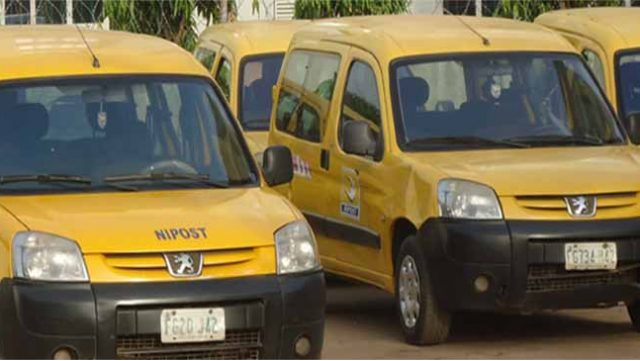
The increase in the licence fees for courier and logistics services by NIPOST is not going down well with Nigerians and no one should blame them for that. Apart from the sum of twenty thousand naira that will be paid for obtaining registration form, a huge sum of money will be paid for obtaining licence and another large sum paid annually to maintain the licence. According to the recent licence fees, courier and logistics companies of different categories will pay thus:
Category of Licence New Licence Fee (N) Licence Renewal (N)
International A 20,000,000.00 8,000,000.00
National B 10,000,000.00 4,000,000.00
Regional C 5,000,000.00 2,000,000.00
State D 2,000,000.00 800,000.00
Municipal E 1,000,000.00 400,000.00
Special SME F 250,000.00 100,000.00
A look at these charges will make you wonder whether NIPOST wants to send people out of business. Or whether they went for divination and were told that Nigerians are planning to jump into the courier and logistics business so they will be forced to pay whatever they are charged. It is possible that the two options were the reasons behind this fee increase. But we all know that there is no way only NIPOST can handle logistics services in Nigeria, unless we want to shut down that sector. However, from the look of things, NIPOST wants to send its competitors out of business or bully them into sharing their profits with the agency.
The major drama from this fee increase started when Dr. Pantami Isa Ali, the Minister of Communication and Digital Economy, got wind of the increase and declared it illegal. He called on the Chairman and Post-Master General of NIPOST to suspend the fees increase until they sort it out with him and the mother ministry. But from reports coming from different corners, NIPOST paid no heed to the minister’s order. Reports have shown that NIPOST officials have started harassing courier companies and are seizing their rides. Dr. Pantami also revealed on his Twitter page that NIPOST is claiming that it has the constitutional power to increase fees without seeking the approval of the minister. So, as it is now, either people pay NIPOST that amount of money or they find other businesses.
You know, the sudden increase in licence fees for logistics and courier services is a good example of the proverbial man that ate the forbidden fruit, found it luscious and then goes about seeking for more. If you look at what is going on in the country right now, you will agree with me that NIPOST is just rearing its ugly greedy head because it has tasted the Stamp Duty charges that are placed on almost everything right now. NIPOST has learnt that Nigerians can be easily extorted and nobody will do anything about it. But what they forgot is that it is not about collecting plenty of money, but about managing it well. For instance banks remit stamp duty to NIPOST but the organisation still looks run down. So it is good for them to know that increasing licence charges cannot cause them to improve on their services?
NIPOST claimed that they needed to increase these fees as a way of regulating courier and logistics services when they have not yet regulated the agency’s mode of operation. Apart from that, who destroys what he is to protect? Does NIPOST need to run down people’s businesses in order to regulate them? Besides, what has increased in licence fees got to do with regulations? Is NIPOST actually listening to good consultants? Or does the management just sit down and fix prices without thinking of its effect?
We all know that the problem with NIPOST is poor services and mismanagement. The agency needs to go inwards and work on itself and not try to pull down those that know how to run the business. Increasing the licence charge will still not improve NIPOST courier and logistics services; it will rather cripple businesses in the country and increase the unemployment rate. It is quite unfortunate that as people are struggling to survive this trying time, Nigerian government agencies’ device means to make lives more difficult for Nigerians. NIPOST is just bullying its competitors; it’s high time the regulatory power is taken away from it. NIPOST should not regulate its competitors.