DD
MM
YYYY

PAGES

DD
MM
YYYY

spot_img

PAGES

Home Blog Page 6209

Why Brands Struggle and Depart Nigeria

6

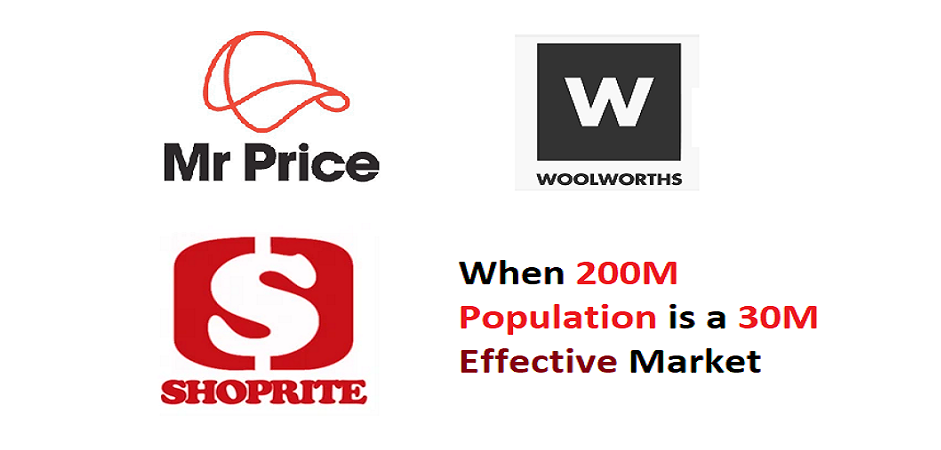
The companies with the logos above have one thing in common: they are largely retailers which left southern Africa for a voyage in Nigeria, and have since returned or about returning. Mr. Price left in June. Woolworths had departed in 2013, and Shoprite is packing. Besides them are other pockets of aspirational journey-makers, foreign and indigenous, which have also faded. Yes, more than 80% of NEW companies collapse within five years of formation in Nigeria.

Nigeria has the largest startup ecosystem in Africa coming ahead of Kenya, South Africa & Rwanda. There are plenty of positives however the reality remains that 80% of these new startups and businesses fail within the initial three years of starting

When we push for reforms, people make it seem like Nigeria has time. Our Vice President, Prof Yemi Osinbajo, is working on his excellent engagement with the startup community. But he needs to show more boldness and tackle problems. His recent statement where he is complaining how big people are influencing the appointments of judges is not leadership. He was essentially saying: see, they pressure us, and we do not appoint the best judges because we are pressured. We need to hear: in this government, all your pressures will not reach us; we will appoint the best judges for the nation. Until we can show that leadership, Nigeria will continue to fade.

So, as we see the exodus and death of companies, I remind everyone that Nigeria has about 30 million people who earn income and can pay for anything. Any model built outside that 30 million will disappoint. I have explained how I arrived at this 30 million number here. With the pandemic affecting that 30 million number, which carries the other 170 million citizens, you will then understand the challenge we have in the near future.

For foreign brands, they come with the model that the market is huge. But when they come, they feel what we have been feeling: Nigerian market is a latent opportunity which is yet to be unlocked. The purchasing power of the citizens remains abysmal and as the years go, Nigerians are getting poorer, as the population rate is growing faster than the economic growth rate. The implication is this: mass poverty is accelerating, and any “luxury product” will struggle. Yes, your superior value proposition has priced many out of range.

In simple English, the number of people in Nigeria is growing faster than the money (goods and services) Nigeria is making; so Nigerians would keep getting poorer until at least 2022. For economic well-being to improve, you need economic growth to be more than population growth. That way, everyone has a little more to share every passing year. When the opposite happens, everyone has a bit less year after year. It’s like you are a bachelor earning say N100,000 monthly and living life. Then let’s say 5 years later, your salary has doubled to N200,000. Are you actually better off? Possibly. But what if during that period, you get married, wifey becomes a career mum to two kids and your hungry brother comes to stay with you? Your per capita income goes from N100k monthly (N100,000 divided by 1 person) to N40k monthly (N200,000 divided by 5 people). In this case, your family population growth (500%) has far exceeded your economic growth (100%) and you’re almost in crisis. If you think it sounds like a terrible situation to be in, you are absolutely right!

When you hear that Bukka food is better than campus canteen, give the guy time to discover a rich uncle. Then, you will understand that winning is about MVQ (Minimum Viable Quality).

The fact is this: any product quality that does not correlate with cost (or value derivable) makes no sense. I have designed accelerometers (motion inertial sensors) where my employer gave me diverging product specification targets: one version was for $0.60, another for $260. The one for $0.60 was made for toys while the $260 was engineered for use in pacemakers (heart monitoring systems). In the cheap one, it was a very crappy product that was built to last for weeks. But in the expensive one, knowing a human life depends on it, it was designed never to fail with many redundancies and checks.

Without the cost context you can think that the cheap one was a poor job. It is indeed not a great quality product but that was by design. That is what the market for toys wants because the kids rarely use them for days before they are discarded. It is a mass market product which has to be affordable to make sense. That does not mean that you cannot make very expensive toys only few can afford. But what is the purpose? Put a $260 XL in a toy which would be dumped within days?

The deal is this: the construct of quality has no meaning until the price of the product is put into considerations. I always ask entrepreneurs to build for the Minimum Viable Quality (MVQ) bounded by the product target price which market will respond. You can build rockets to fly around the world: that is an engineering possibility. But does that make a business sense if no one can afford it? Ask the makers of Concorde for answers.

The Precious 30 Million Nigerians

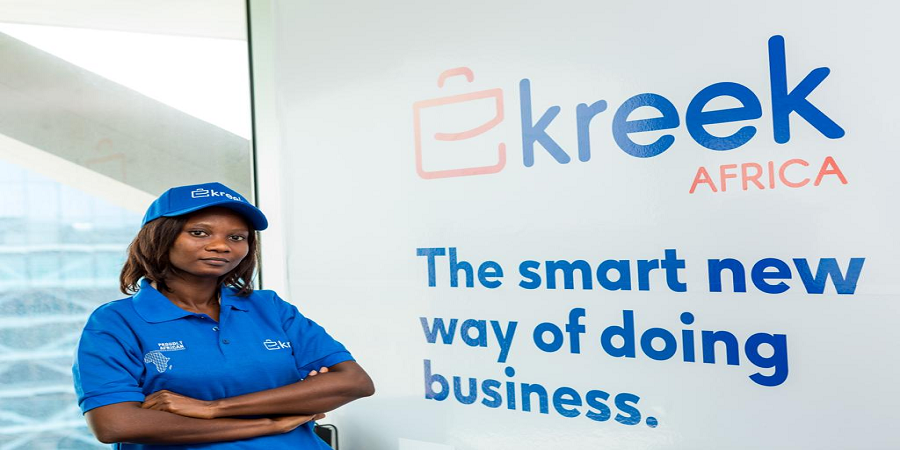
Kreek Africa – A Smart Way of Doing Business

0

The COVID-19 pandemic has taught the world, especially business community, a lot. With stay-at-home and social distancing protocols becoming the order of the day, employees and companies alike, all over the globe, are suffering the consequences. Business can no longer go on as usual, and for most, the slowdown has turned into something more worrying.

One of the biggest problems the pandemic has caused is employment insecurities. And while things are easing up, the conversation about the traditional work structure has been brought to question. Conversations are being started about how sustainable that structure is, especially during emergencies. During this pandemic, many businesses have broken down under the pressure to save cost and they have done this by laying off so many. This has increased the already large population of the unemployed in Africa, thereby leaving the economy even more vulnerable.

Also, when it comes to productivity, some businesses have taken a hit and the time wasted to get things back in order has cost even more. This is why there is a need to find a more sustainable way of doing business, a smart way.

Self-employment is looking like the way forward for those who have lost their jobs and this is already an employment option for many Africans. Therefore, the number of people considering this option increases. While it is almost normal elsewhere in the world, with many platforms available for freelancers to put their skills and qualifications to use, Africa is still having difficulties in this area. Many African freelancers who don’t have any option than to use the Western platforms don’t get the same opportunities as their Western counterparts and are also more likely to experience discrimination. The pandemic, and all these other issues has brought to light the fact that when the whole world is facing the same problem, self-reliance becomes paramount. Therefore, an opportunity has opened up for Africa to create its own solutions and this makes platforms like Kreekafrica.com very necessary.

Kreek Africa presents a platform for African businesses and Freelancers to connect and transact business. With a lot of employees being laid off, there are a lot of skills that more or less will be wasted without the right opportunity. Business are also short on staff, but still do not have enough resources to keep too many in-house employees. Kreekafrica.com thereby creates the opportunity for these two parties to come together to collaborate. Hiring freelancers takes some of the cost of keeping employees in-house, especially when it comes to paying utilities etc.

It is also relatively cheaper to get a freelancer complete a project. Freelancing also presents a flexible employment option, with regard to working hours and eliminates commuting which takes some time off work. Therefore, productivity does not have to be compromised on for all parties involved. Small and large businesses alike can benefit from this shift and individuals will can now have control over who to work for, and for how long.

With technology becoming more widespread on the continent, implementation of this smart way of doing businesses is not going to be much of a problem. A lot of Africans, especially the youth, which forms a large population, are already privy to how to use technological equipment. Internet connection is also quite widespread across the continent for shifting to remote work is not going to be much of a problem. But without initiatives like Kreek Africa, the resources and potential that Africa has to change situations into their favor might all go to waste. It is therefore a welcome solution to the employment issue in Africa, especially during times like these.

  • Contact Person: Wilfred Attipoe
  • Email: media@kreekafrica.com
  • Contact number: +230-58690130

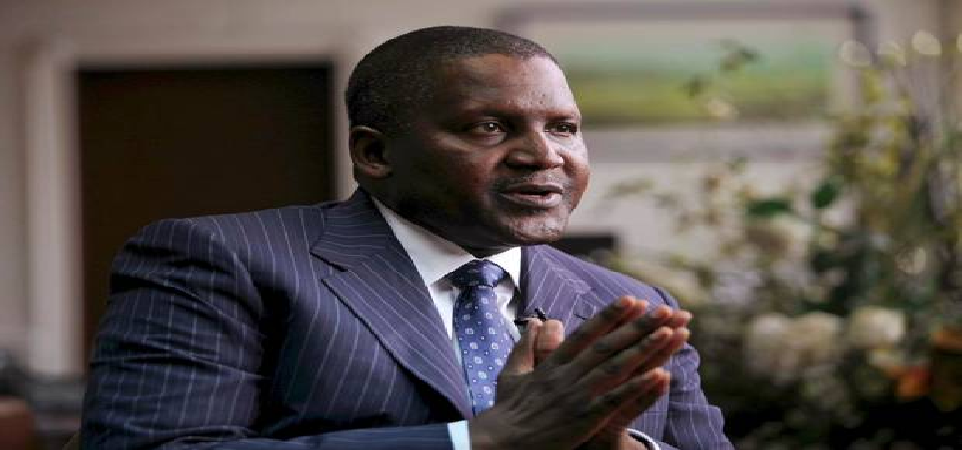
“To succeed in business, you must build a brand and never destroy it” – Aliko Dangote

0

“To succeed in business, you must build a brand and never destroy it. One competitive advantage I had when I ventured into manufacturing was my brand ‘Dangote,’ which I diligently built in the course of my trading commodities.” – Aliko Dangote

From “The Dangote System: Techniques for Building Conglomerates” by Ndubuisi Ekekwe.

Begin reading here.

Comments on LinkedIn Feed

Anthony Christopher Nwosu No issues. You do not need to agree with me. And of course, I was not asking for that. I am simply putting our constructs based on my understanding. My thesis of Dangote System is that it works in Africa, whether executed by Dangote or anyone. Dangote lost to Indomie Noodles, lost in Lead Merchant bank, lost in Dangote capital and many firms. If getting govt help was that all he uses to win, he would have a 100% strike rate. In 3 decades, he won battles and lost many.

But a time came when he won and he gave govt his terms. Ethiopia pays his electricity bills to have him. When you solve BIG problems in economies, govt “serves” you. Amazon HQ2 began a competition for who will give Amazon the highest tax waiver. Boeing gets $100M from WA state to stay in the state. All conglomerates get favours because they operate UPSTREAM.


Amazon received tax waivers for HQ2 because that was all it wanted. Amazon is a conglomerate. Every conglomerate gets governments to serve it because it operates upstream. “Aircraft maker Boeing says it wants to end a $100-million tax break it gets from its home state. The World Trade Organization says the tax break Washington state gives Boeing violates its rules. The WTO restricts government support for exports.Feb 24, 2020” https://www.wltz.com/2020/02/24/boeing-asks-to-end-100-million-tax-break/

If you call it corruption, just do not have Dangote Group alone, have all Fortune 500 Global which are conglomerates!


“Dangote enjoyed the Monopoly of a corrupt system” Not really. Dangote rose into a conglomerate from trading and began to tax Nigeria just as Boeing, GE, Amazon tax America, It is called conglomerate tax where they tax economies they work. Tell me how many companies in U.S. got tax waivers like Amazon for HQ. Tell me how many get $100M like Boeing gets yearly from WA state. These things are common, GLOBALLY, when you evolve as a conglomerate.


“New Jersey Offers $7 Billion Tax Break for Amazon’s HQ2 … tax abatement valued at about $1 billion, and a city wage tax waiver also valued at about $1 billion” http://seattlebusinessmag.com/business-operations/new-jersey-offers-7-billion-tax-break-amazons-hq2-0 . That is conglomerate tax. They tax economies to serve economies. It is GLOBAL. That is $7 billion but that was not enough for Amazon.

Class Begins Monday (Aug 10), 12 noon Lagos time – Registration Continues; Join

0

The 3rd edition of Tekedia Mini-MBA begins tomorrow (Monday) at 12 noon Lagos time. If you have registered, at 12 noon Lagos time, visit the Board and begin the journey on the mechanics of business innovation, operational execution and leverageable growth. Registration continues; join here.

Tekedia Institute – home of quality education.

https://www.tekedia.com/mini-mba-3/

China’s Export Surges, But Its Low Import May Brew Fresh Trouble with the U.S.

0

China has continued to record unprecedented economic growth in its fight for recovery from the ravages of coronavirus. China’s exports in July saw a surge spurred by lockdown goods demands from around the world.

The outbound shipment rose 7.2 percent from last year. The surprising record was powered by rising overseas demands for medical supplies and goods needed during lockdowns.

The surge came after exports witnessed minor growth at 0.5 percent in June. But imports fell back at 2.7 percent at the same period.

Data released by the Chinese Customs Administration on Friday showed that imports contracted by 1.4 percent a year earlier in US dollar terms, worse than it was projected by analysts.

SCMP reported that China’s trade balance for July stood at $62.33 billion, an increase from $46.2 billion in June.

Economists said the growth has been masterminded by shipment of medical supplies to other countries still under the scourge of coronavirus. And as economies gradually open the need to fill the vacuum of exhausted non-medical supplies, (especially electronics) saw Chinese export of goods increase in the second quarter.

“In July, the export strength was largely driven by electronics – especially ‘automatic data processing equipment,’ mobile phones, household appliances, audio and video devices – and high-tech products, with traditional categories like plastic and textile also contributing well,” said Louis Kuijs, Asia-pacific analyst at Oxford Economies.

China is reaping the benefits of its strict approach to COVID-19 pandemic’s containment. The Southeast Asian giant started opening its industries and services early, as soon as there was significant decline in the hard hit cities, particularly Wuhan. The early recovery placed China in the position to export supplies to countries contending with emerging cases of the virus.

However, as economies around the world begin to open, supply demand of depleted goods surged, especially household items, pushing many countries to import from China, as it appears to be the only economy functioning in the capacity to meet the demands.

But in a poll conducted by Bloomberg, a group of economists had predicted that Chinese exports would experience 0.7 percent plunge in dollar terms while import is expected to rise by 0.8 percent.

While there has been significant progress in the global supply chain, Chinese shipment has been hit with near collapse situations due to decline in demand from developed markets.

However, SCMP reported that China’s exports to the United States rose by 12.5 percent in July, while imports from the US rose by 3.6 percent, even though there’s pressure from Washington on Beijing to close the trade deficit. Most of US’ companies are still struggling to get back to business, which gives China’s export an edge.

Orders for agricultural products went up in July, as demand for corn and soybean rose. Analysts said the surge does not reflect in shipment, which means the products were consumed locally.

Meanwhile, there has been a decline in purchase of energy that China is struggling to meet 5 percent of its target in the energy sector. Two commodities it has witnessed import surge are meat and grain that rose 94.48 percent and 16.2 percent respectively in the first seven months of the year, according data from Chinese Customs.

Nevertheless, the sustainability of the export surge is not certain as it depends mainly on medical supply. For the second quarter of the year, supply of medical equipment and protective gear resuscitated the export. By July, there has been a 78 percent increase year-on-year in shipment of medical devices.

Notwithstanding, the shipments are beginning to plunge as more countries curtail coronavirus, lift lockdowns and open economies, and local products are appearing more on virtual markets. Analysts at Panjiva Research said US seaborne shipments of ventilators, gowns, masks, and goggles all fell in July compared to June, even though many states are still recording spikes in the number of coronavirus cases.

Panjiva said that US import of ventilators nosedived 26.6 percent in July from June, upon the previous record of 0.8 percent dip from May to June.

Beijing will meet Washington around August 15 to discuss their trade deal. Part of the agreement is that their progress will be assessed every six months to determine the future of the deal. With China lagging in its import quota from the United States, and Donald Trump blaming the current American economic situation on ‘China virus,’ the deal may take a new turn.